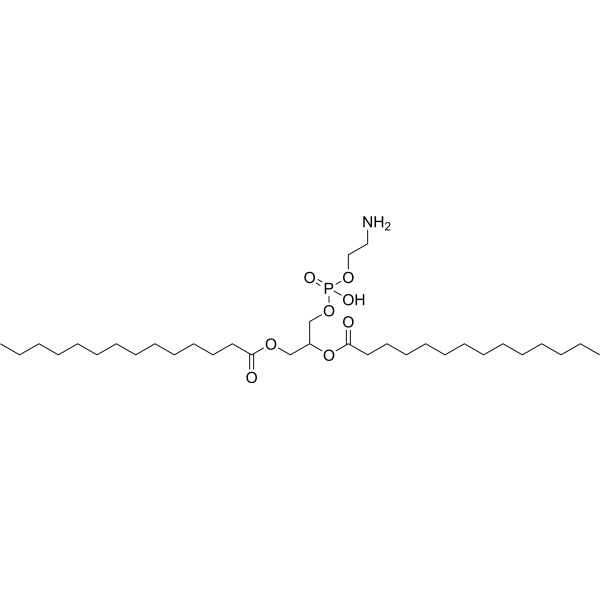
Liposome
Liposomes (NPs typically 100–500 nm in diameter) are fabricated from the self-assembly of phospholipids, which consist of a polar phosphate head group and hydrophobic lipid tails. In aqueous environments, the hydrophobic tails self-orient, resulting in a spherical structure comprised of an aqueous core surrounded by a lipophilic bilayer membrane. Liposomes are both biocompatible and biodegradable (e.g., at certain pH and temperature), which can be controlled by modifying the lipid composition. Furthermore, liposomes are amenable to various modifications that improve their efficacy as drug delivery carriers.
All Product Categories
-
Liposome Related Products (1266)
Related Products (1266)

-
AA-T3A-C12
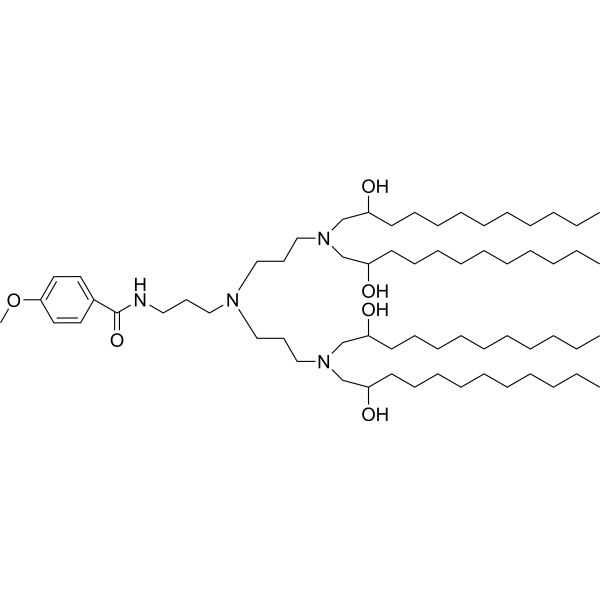 0 ImagesAA-T3A-C12 is an anisamide ligand-tethered lipidoid (AA-lipidoid). AA-T3A-C12 mediates great RNA delivery and transfection of activated fibroblasts.
-
1,2-Dierucoyl-sn-glycero-3-phosphocholine
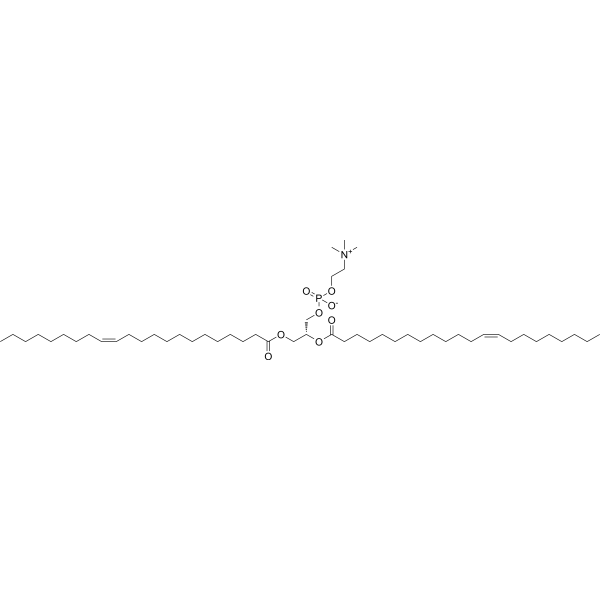 0 ImagesSynonyms: DEPC; L-Dierucoyl lecithin; Dierucoyllecithin1,2-Dierucoyl-sn-glycero-3-phosphocholine (DEPC) is the composition of liposome membrane. 1,2-Dierucoyl-sn-glycero-3-phosphocholine is used for the preparation of liposomes and studying the properties of lipid bilayers. The GO (glucose oxidase) in the 1,2-Dierucoyl-sn-glycero-3-phosphocholine liposome shows the high activity.
-
Lipid 8
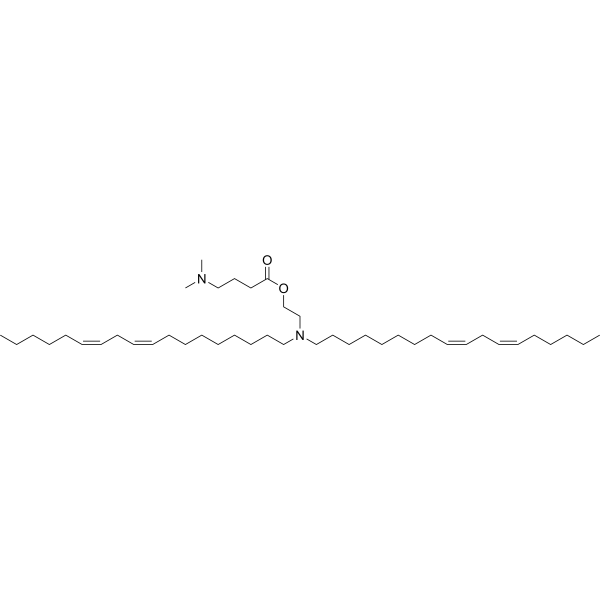 0 ImagesLipid 8 is an ionizable amino lipid that can be used to synthesize lipid nanoparticles (LNPs). Lipid 8 is applicable to research in drug delivery.
-
5A2-SC8 TFA
 0 ImagesCat. No.: HY-145799APurity: 99.52%5A2-SC8 TFA is an ionizable amino lipid in lipid nanoparticles (LNPs) that shows high delivery potential and low in vivo toxicity, enabling efficient delivery of small RNAs such as siRNA and miRNA into tumor cells. 5A2-SC8 TFA LNPs can confer a unique delivery fate of RNA within the liver, thereby changing the therapeutic outcomes in cancer models.
-
Ionizable lipid-1
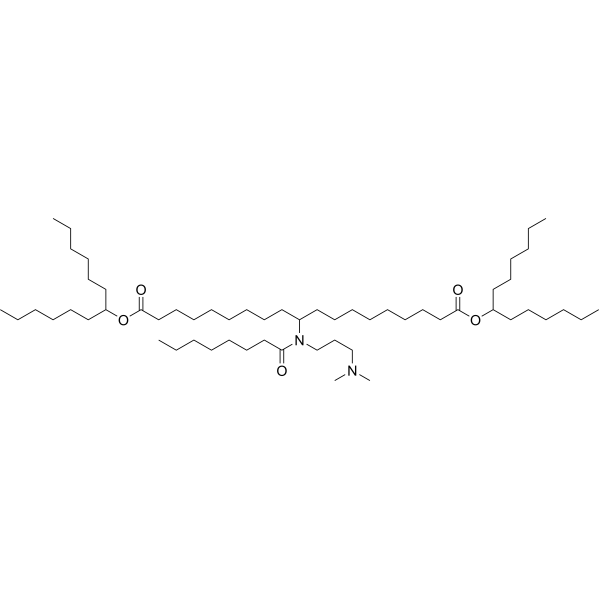 0 ImagesIonizable lipid-1 (compound II-10) is an ionizable lipid (pKa=6.16) that can be used to prepare lipid nanoparticles (LNP) with bilayer structure.
-
DSPE-PEG2000-triGalNAc ammonium
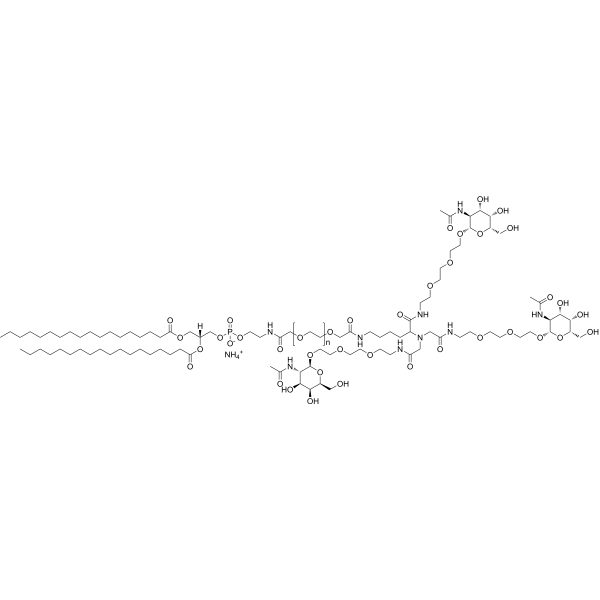 0 ImagesDSPE-PEG2K-triGalNAc ammonium is a polar lipid composed of DSPE and tri-N-acetylgalactosamine that can be used to construct liposomes target to asialoglycoprotein receptor (ASGPR).
-
18:0 mPEG2000 PE ammonium
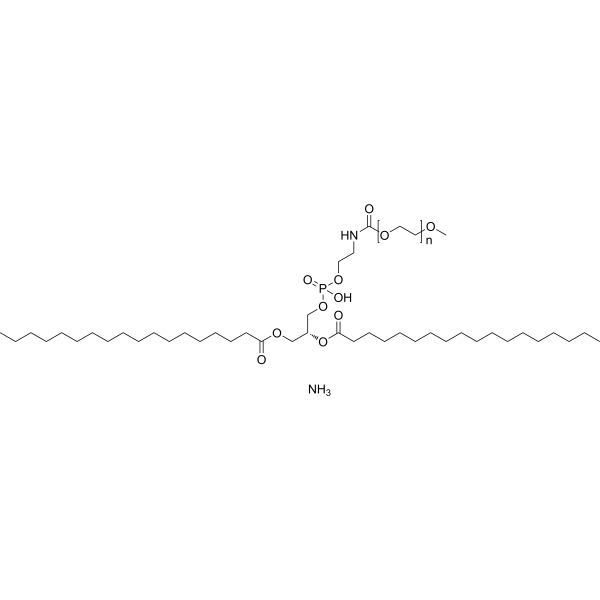 0 ImagesSynonyms: DSPE-mPEG2000 ammonium; 1,2-Distearoyl-sn-glycero-3-phosphoethanolamine-N-[methoxy(polyethylene glycol)-2000] ammonium18:0 mPEG2000 PE (DSPE-mPEG2000) ammonium is a polyethyleneglycol/phosphatidyl-ethanolamine conjugate. 18:0 mPEG2000 PE ammonium can be used for drug delivery.
-
Dihexadecyl hydrogen phosphate
 0 ImagesDihexadecyl hydrogen phosphateIt is an organic compound belonging to phospholipids. It's often used as an emulsifier, which means it helps mix two substances together that don't usually mix well, such as oil and water. Dihexadecyl hydrogen phosphateIt has several applications in the food industry, especially in the production of processed foods where it improves texture and stability. Additionally, it has applications in the pharmaceutical industry where it can be used ain the generation of micelles, liposomes, and other types of artificial membranes.
-
PEP1
 0 ImagesCat. No.: HY-P5366Purity: 99.88%PEP1 is an amphipathic α-helical peptide containing 31 residues. The interaction of PEP1 with POPC-supported lipid bilayers (SLBs) is concentration-dependent: at low concentrations, it inserts into SLBs to generate compressive stress; at medium concentrations, it saturates the membrane surface to maintain constant stress; and at high concentrations, it solubilizes SLBs. PEP1 can be used for research on the mechanism of membrane-peptide interactions.
-
DSPE-PEG-COOH, MW 2000
 0 ImagesCat. No.: HY-W591461Purity: 99.95%DSPE-PEG-COOH, MW 2000 is a phospholipid polyPEG which can be used to prepare liposomes or nanoparticles. The terminal carboxylic acid can react with primary amine groups to form a stable amide bond.
-
Lipid 10
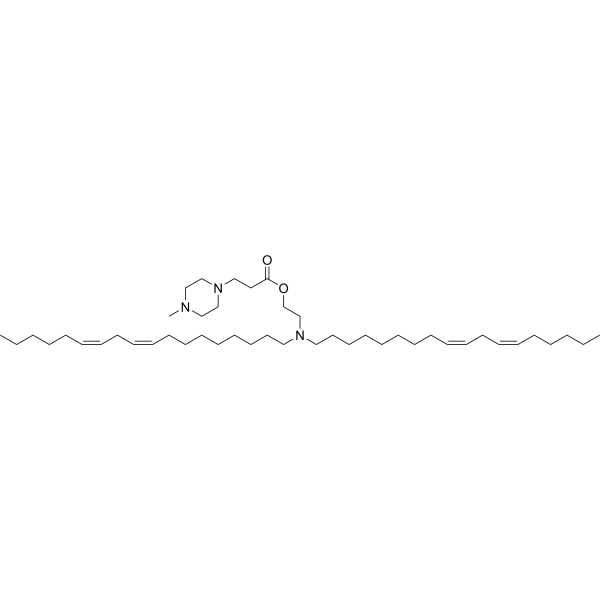 0 ImagesCat. No.: HY-150115CAS No.: 2430034-02-7Lipid 10 is an ionizable amino lipid used for the generation of Lipid nanoparticles (LNPs).
-
1-Oleoyl-2-palmitoyl-sn-glycero-3-PC
 0 Images1-Oleoyl-2-palmitoyl-sn-glycero-3-PC derives from an oleic acid. 1-Oleoyl-2-palmitoyl-sn-glycero-3-PC can be used for the synthesis of liposomes.
-
1-Palmitoyl-2-oleoylphosphatidylethanolamine
 0 ImagesSynonyms: POPE1-Palmitoyl-2-oleoylphosphatidylethanolamine (POPE) is a PE-based synthetic phospholipid that can intercalate with other amphiphilic molecules to form stable bilayers at physiological pH. 1-Palmitoyl-2-oleoylphosphatidylethanolamine can be used in drug delivery research.
-
di-Pal-MTO
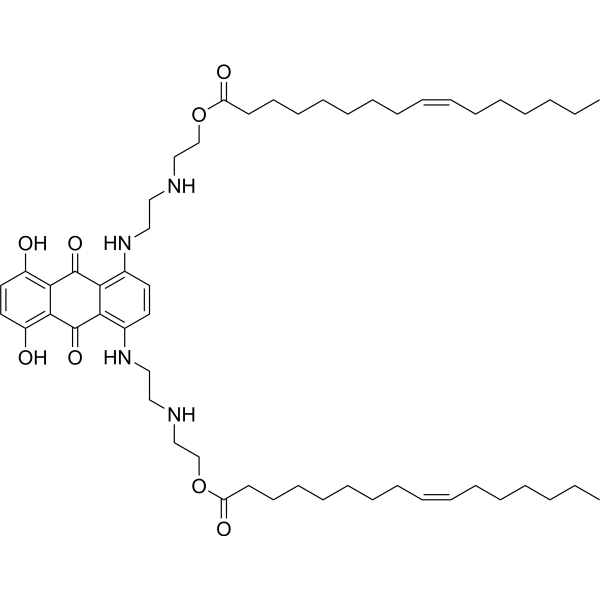 0 Imagesdi-Pal-MTO is a palm oil-based lipid produced by combining the anticancer agent mitoxantrone (MTO) with palmitoleic acid. When nanoparticles of mono-Pal-MTO and di-Pal-MTO are combined in a molar ratio of 1:1, they show effective siRNA cell delivery and enhance anticancer activity.
-
Transfectam
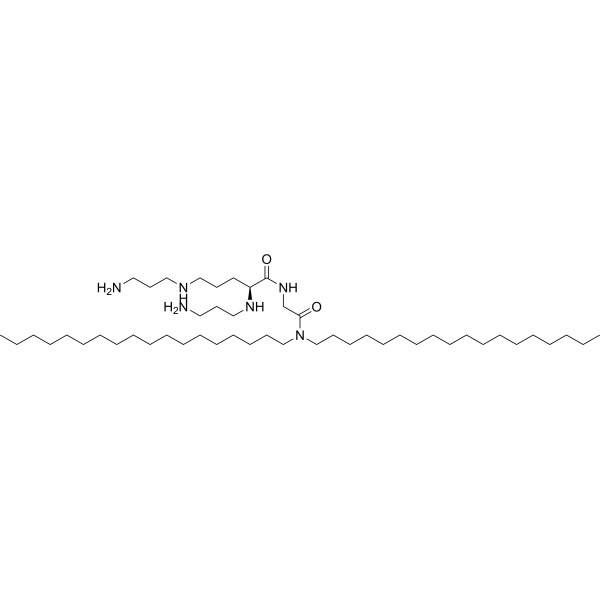 0 ImagesTransfectam is a cationic lipid able to interact with DNA to form complexes that mediate efficient gene transfer into various eukaryotic cells.
-
1,2-Dibehenoyl-sn-glycero-3-phosphocholine
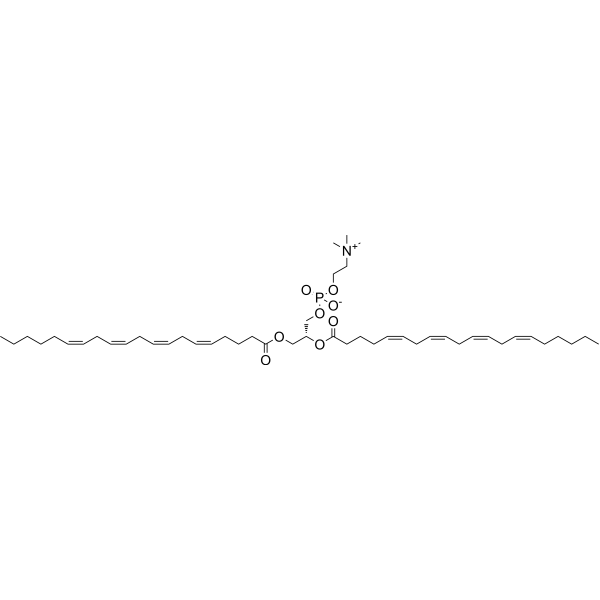 0 ImagesCat. No.: HY-157721CAS No.: 17688-29-8Synonyms: DBPC1,2-Dibehenoyl-sn-glycero-3-phosphocholine (DBPC) is a phospholipid found in cell membranes. 1, 2-dibehenoyl-SN-glycero-3-phosphocholine can be used to generate micelles, liposomes, and other types of artificial membranes.
-
1-Oleoyl-2-hydroxy-sn-glycero-3-PG sodium
 0 ImagesSynonyms: 18:1 Lyso-PG; 1-Oleoyl-2-hydroxy-sn-glycero-3-phospho-(1'-rac-glycerol); 1-Oleoyl-2-hydroxy-sn-glycero-3-phosphoglycerol1-Oleoyl-2-hydroxy-sn-glycero-3-PG (18:1 Lyso PE) sodium is a lysophospholipid containing oleic acid (18:1) at the sn-1 position. It can be used in the generation of micelles, liposomes, and other types of artificial membranes, including lipid-based drug carrier systems.
-
1-Stearoyl-2-docosahexaenoyl-sn-glycero-3-phosphoethanolamine
 0 ImagesCat. No.: HY-157624CAS No.: 96998-01-5Synonyms: 18:0-22:6 PE1-Stearoyl-2-docosahexaenoyl-sn-glycero-3-phosphoethanolamine (18:0-22:6 PE) is a lipid compound that can be used for liposome preparation. Liposomes are the main component of vesicles with concentric phospholipid bilayer membranes, which can be used to construct drug delivery systems for anti-cancer and anti-infection fields. Highly polar water-soluble loads can be captured in the internal aqueous space of liposomes, while lipophilic loads can be distributed into the lipid bilayer and become part of the lipid bilayer. Especially for the delivery of antisense oligonucleotides, it can overcome the problems of inefficient cellular uptake and rapid loss in the body.