



Liposome
Liposomes (NPs typically 100–500 nm in diameter) are fabricated from the self-assembly of phospholipids, which consist of a polar phosphate head group and hydrophobic lipid tails. In aqueous environments, the hydrophobic tails self-orient, resulting in a spherical structure comprised of an aqueous core surrounded by a lipophilic bilayer membrane. Liposomes are both biocompatible and biodegradable (e.g., at certain pH and temperature), which can be controlled by modifying the lipid composition. Furthermore, liposomes are amenable to various modifications that improve their efficacy as drug delivery carriers.
All Product Categories
-
Liposome Related Products (1266)
Related Products (1266)

-
DSPE-PEG-Maleimide ammonium (MW 2000)
 0 ImagesCat. No.: HY-166648APurity: 99%DSPE-PEG-Maleimide ammonium (MW 2000) is a functional lipid component and a thiol-reactive crosslinker. DSPE-PEG-Maleimide ammonium (MW 2000) undergoes Michael addition with the thiol groups of thiolated or cyclic RGD peptides to form stable thioether bonds and DSPE-PEG (2000)-RGD. DSPE-PEG-Maleimide ammonium (MW 2000) is applicable to research on drug delivery.
-
DOTAP chloride (GMP Like)
 0 ImagesCat. No.: HY-112754AGLCAS No.: 132172-61-3Synonyms: 1,2-Dioleoyl-3-trimethylammonium-propane chloride (GMP Like)DOTAP chloride (GMP Like) is the GMP Like class DOTAP chloride (HY-112754A). GMP small molecules works appropriately as an auxiliary reagent for cell therapy manufacture. DOTAP chloride is a cationic lipid with good membrane fusion ability and biocompatibility. DOTAP chloride (GMP Like) can be used as an excipient for transient and stable transfection DNA (plasmids, bacmids) and modified nucleic acids (antisense oligonucleotides) without the use of helper lipid.
-
1-Palmitoyl-sn-glycerol 3-phosphate
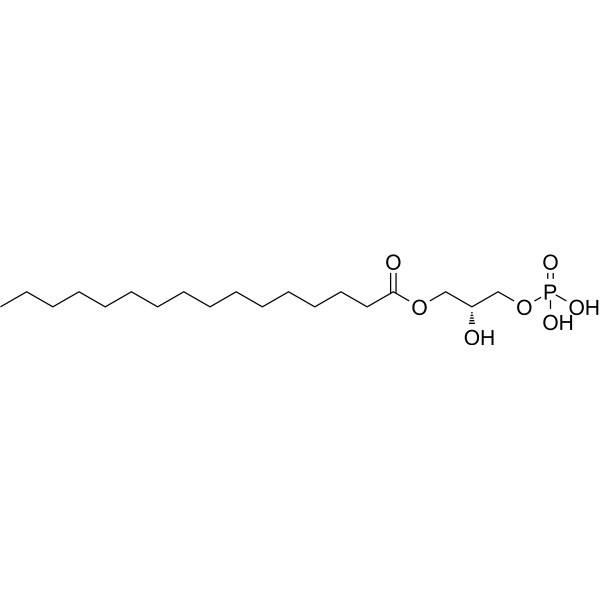 0 ImagesSynonyms: 1-P-GPA1-Palmitoyl-sn-glycerol 3-phosphate (1-P-GPA) is a phospholipid and lipid membrane precursor. 1-Palmitoyl-sn-glycerol 3-phosphate integrates into POPC liposomes, causing significant changes in membrane curvature. 1-Palmitoyl-sn-glycerol 3-phosphate induces platelet aggregation, but its activity is 30-fold lower than that of 1-hexadecyl-sn-glyceryl-3-phosphate.
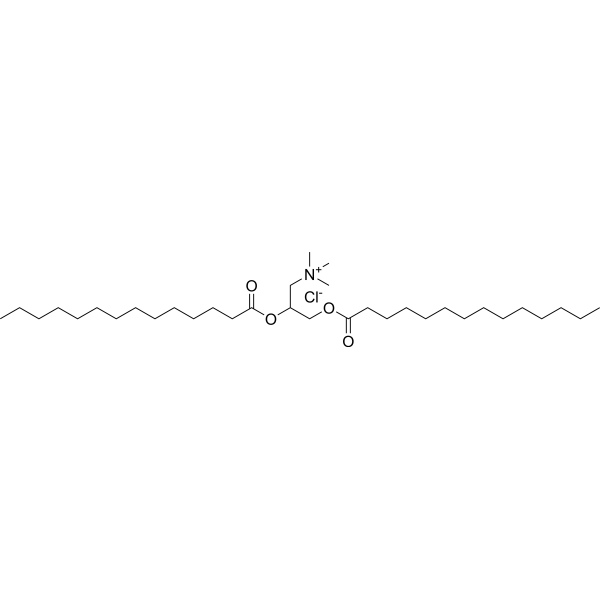
-
PEG(2000)-C-DMG
 0 ImagesPEG(2000)-C-DMG is a PEGylated derivative of 1,2-Dimyristoyl-sn-glycerol (HY-128468). PEG(2000)-C-DMG can be used in combination with other lipids in the formation of lipid nanoparticles (LNPs) for the delivery of siRNA.
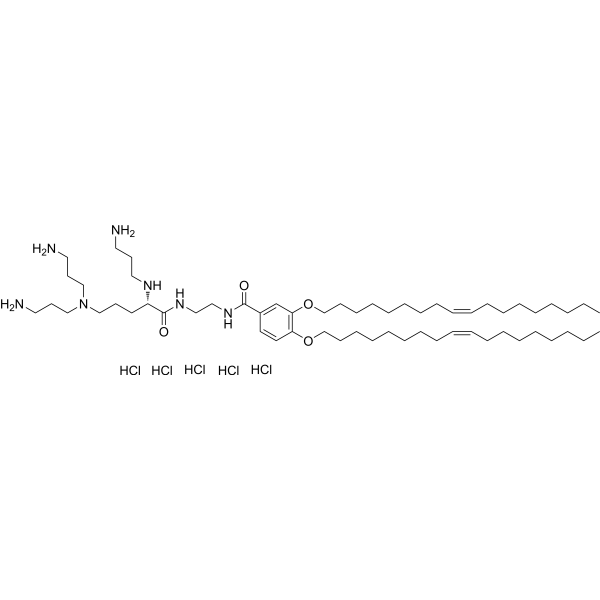
-
DSPE-PEG2000-APWHLSSQYSRT
 0 ImagesCat. No.: HY-177203DSPE-PEG2000-APWHLSSQYSRT is a PEG compound which composed of DSPE and 12-amino acid cardiac targeting peptide (APWHLSSQYSRT). DSPE-PEG2000-APWHLSSQYSRT can be used for drug delivery.
-
18:1 EPC chloride
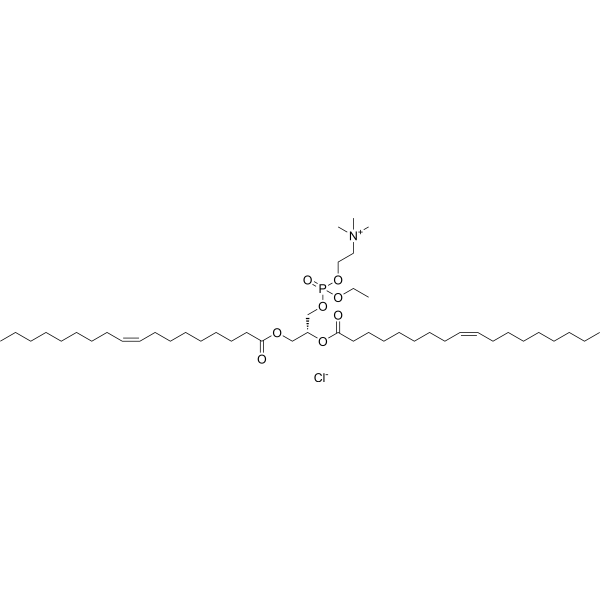 0 Images18:1 EPC chloride is a cationic alkylated phospholipid and also an egg yolk phosphatidylcholine. 18:1 EPC chloride can be used in research on liposomes and drug delivery.
-
DSPE-PEG-Folate, MW 5000
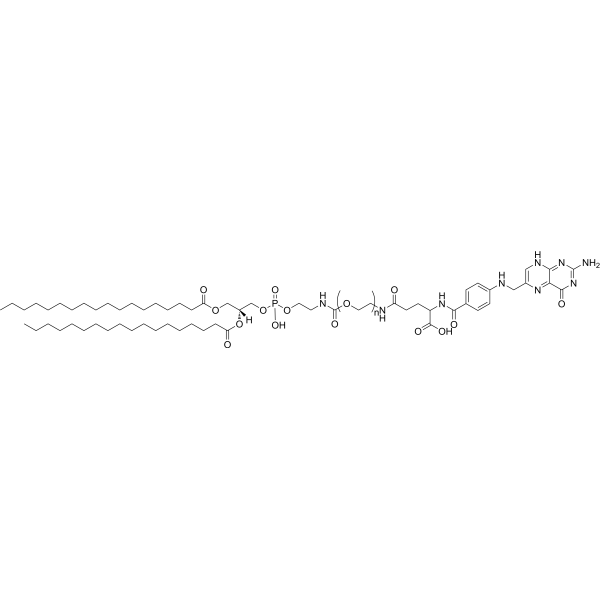 0 ImagesCat. No.: HY-W440890DSPE-PEG-Folate, MW 5000 is a PEG derivative containing folic acid. DSPE-PEG-Folate, MW 5000 has a targeting effect and bind to folate receptors in cancer cells. DSPE-PEG-Folate, MW 5000 form micelles/lipid bilayer and can be used to targeted drug delivery system research.
-
16:0 DAP
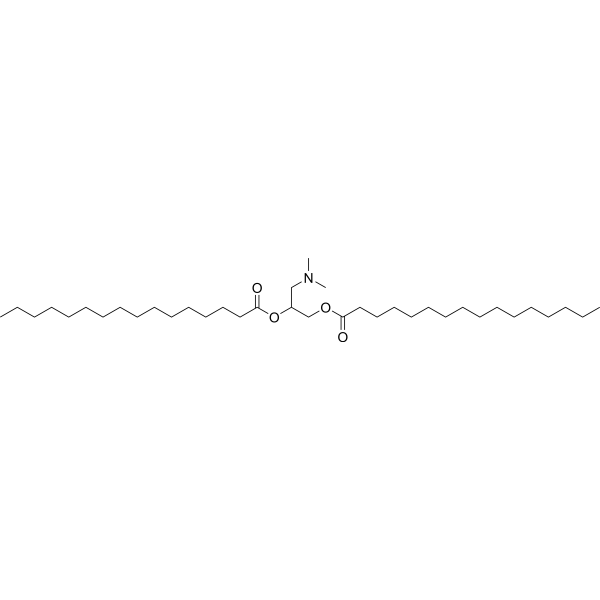 0 Images16:0 DAP is an ionizable cationic lipid. 1,2-dipalmitoyl-3-dimethylammonium-propane serves as a barcode lipid, enabling LC-MS quantification in ocular tissues.
-
DOBAQ
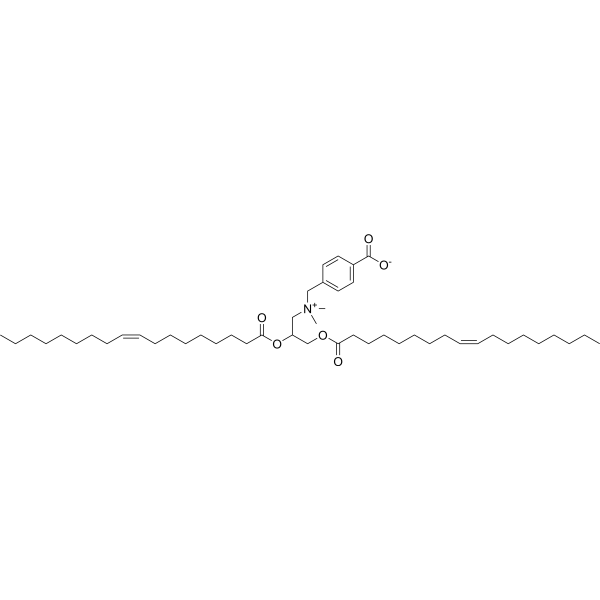 0 ImagesCat. No.: HY-144025CAS No.: 1360461-69-3DOBAQ, a cationic lipid, is a pH-sensitive lipid. DOBAQ can be used for liposomes applied in drug delivery.
-
4A3-Cit
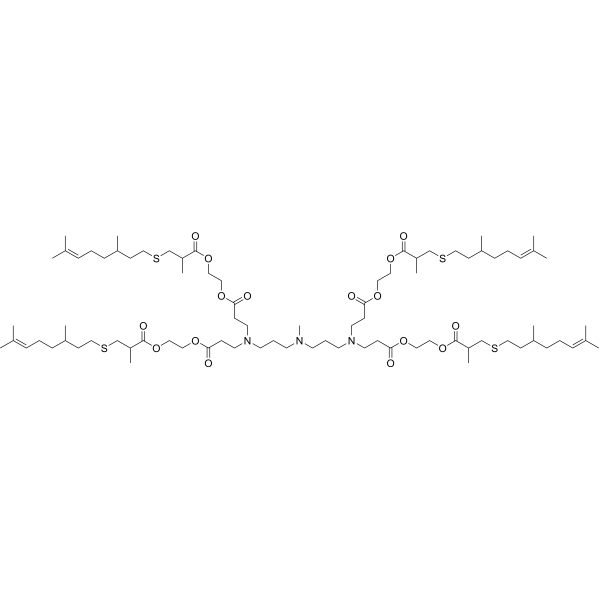 0 Images4A3-Cit is an ionizable lipid used for the generation of lipid nanoparticles (LNPs).
-
LNP Lipid-7
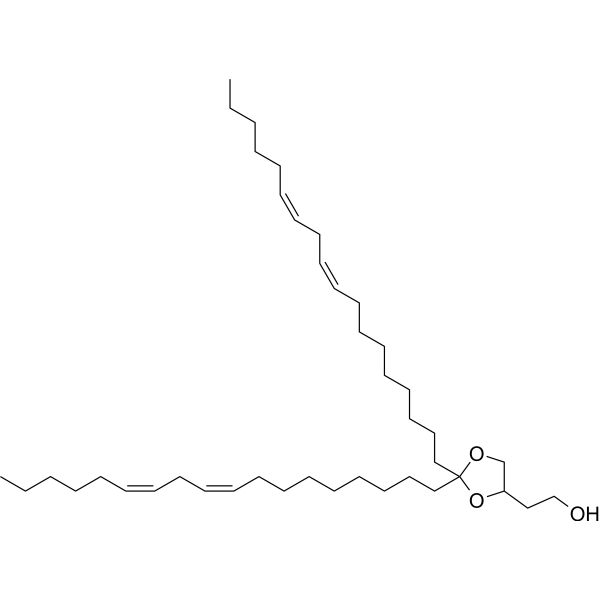 0 ImagesCat. No.: HY-153852CAS No.: 1190203-55-4LNP Lipid-7 is a cationic lipid. LNP Lipid-7 can be used to prepare lipid nanoparticles (LNPs) for the delivery of drugs such as nucleic acids.
-
4A3-SC7
 0 Images4A3-SC7 is a polymer of 4A3 amine and is an ionizable lipid component. 4A3-SC7 can be used to prepare lipid nanoparticles (LNPs) to construct a selective organ targeting (SORT) LNP platform.
-
DSPE-m-PEG3400-NHS
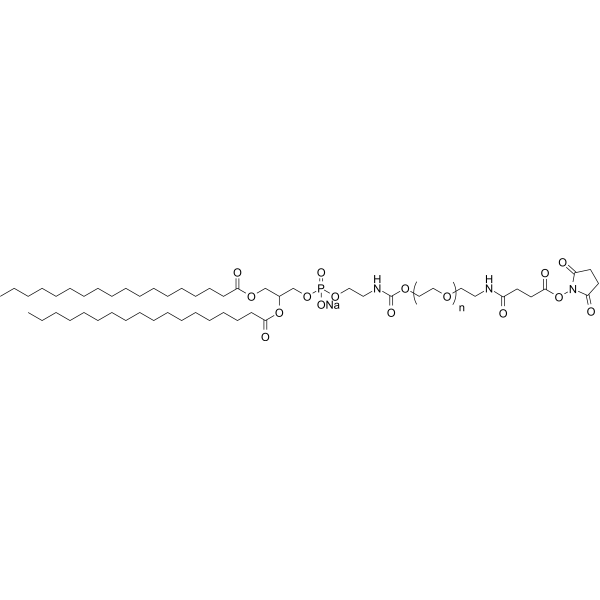 0 ImagesCat. No.: HY-W441015APurity: 99.41%DSPE-m-PEG3400-NHS is a pegylated phospholipid derivatives which can be used to prepare liposome or lipid nanoparticles for targeted drug delivery system, such as DNA or mRNA vaccine.
-
113-N16B
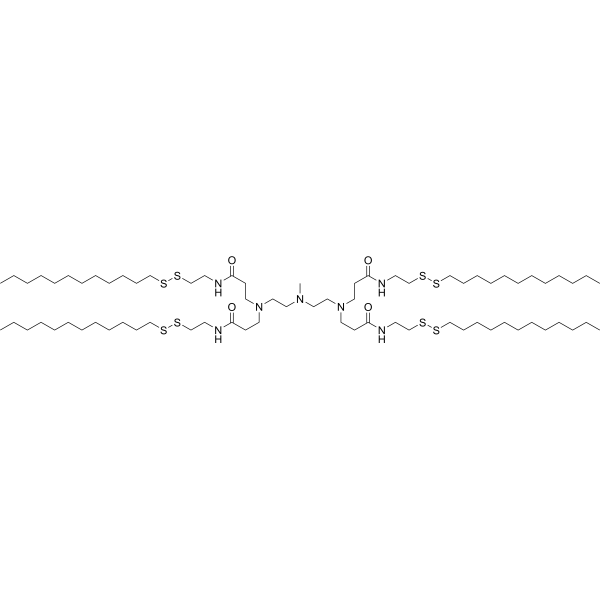 0 ImagesCat. No.: HY-153737Purity: 98.0%113-N16B is an ionizable cationic lipid that can be used for the synthesis of lipid nanoparticles. 113-N16B delivers mRNA to pulmonary endothelial cells. 113-N16B can be formulated as a component into hybrid lipid nanoparticles for lung-specific delivery of mRNA (including MFSD7C mRNA and luciferase mRNA) in mice. 113-N16B is applicable to research related to lymphangioleiomyomatosis, sickle cell disease, and hemolysis-induced lung injury.
-
1-Palmitoyl-2-hydroxy-sn-glycero-3-phospho-(1'-rac-glycerol) sodium
 0 ImagesSynonyms: 1-Palmitoyl-2-hydroxy-sn-glycero-3-PG sodium; 16:0 Lyso PG; PG(16:0/0:0); 1-Hexadecanoyl-sn-glycero-3-phospho-(1'racglycerol) sodium1-Palmitoyl-2-hydroxy-sn-glycero-3-phospho-(1'-rac-glycerol) (16:0 Lyso PE) sodium is a lysophospholipid containing palmitic acid (16:0) at the sn-1 position. It can be used in the generation of micelles, liposomes, and other types of artificial membranes, including lipid-based drug carrier systems.
-
YSK 12C4
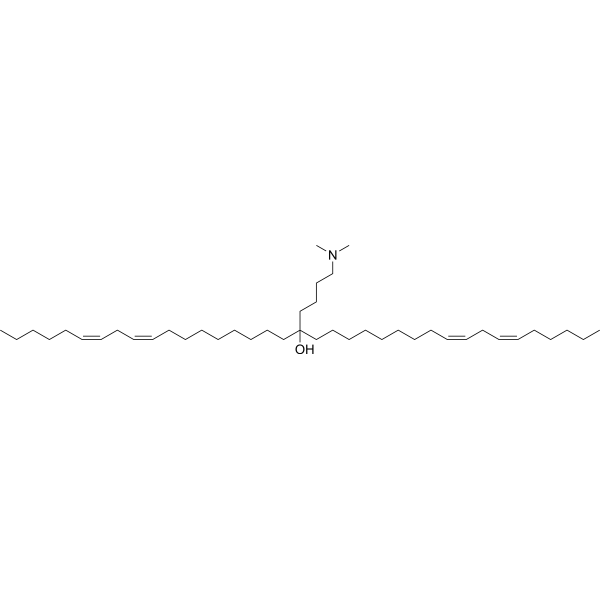 0 ImagesYSK 12C4 is an ionizable cationic lipid primarily used to enhance siRNA cellular delivery via multifunctional envelope-type nanodevices (MEND). YSK 12C4 promotes siRNA uptake and endosomal escape, effectively silencing genes in human immune cell lines.
-
1-Palmitoyl-2-linoleoyl-sn-glycero-3-PC
 0 ImagesSynonyms: PLPC1-Palmitoyl-2-linoleoyl-sn-glycero-3-PC (PLPC) is a phosphatidylcholine phospholipid. 1-Palmitoyl-2-linoleoyl-sn-glycero-3-PC and oxidized derivatives serve as models for investigating lipid peroxidation, membrane structure, and phospholipase A2 activity. 1-Palmitoyl-2-linoleoyl-sn-glycero-3-PC can be applied in research on atherosclerosis, oxidative stress, and the properties of lipid bilayers.



