



mAChR1 Inhibitor
- 1
-
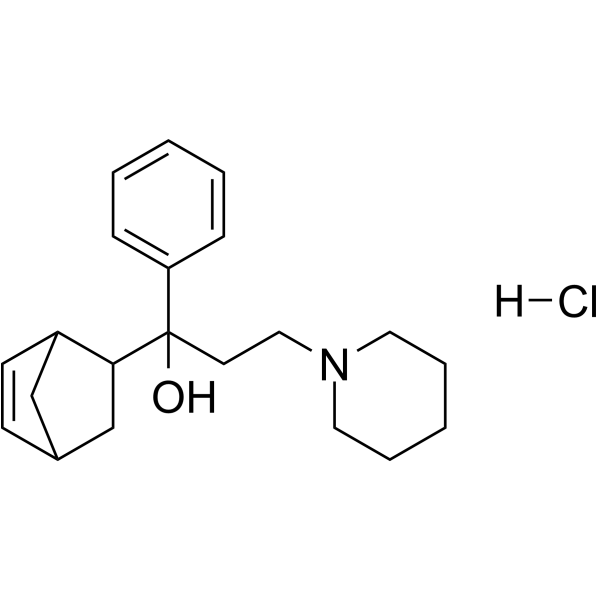
Biperiden hydrochloride
 0 Images
Biperiden (KL 373) hydrochloride is a non-selective muscarinic receptor antagonist that competitively binds to M1 muscarinic receptors, thereby inhibiting acetylcholine and enhancing dopamine signaling in the central nervous system. Biperiden hydrochloride has the potential for the research of Parkinson's disease and other related psychiatric disorders.
-
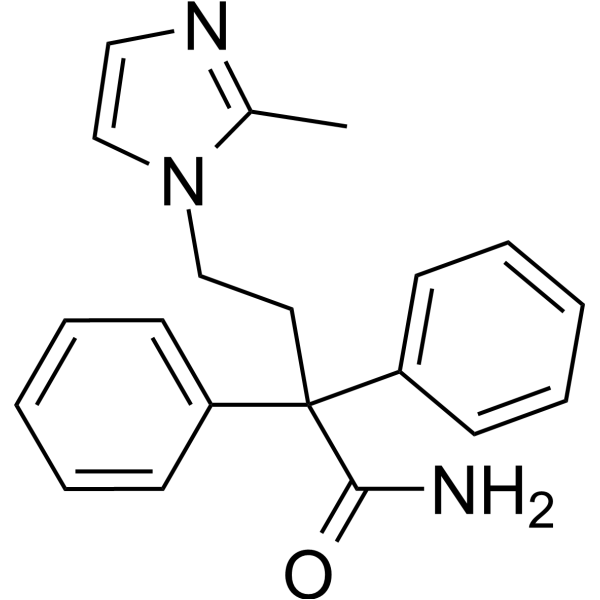
Imidafenacin
 0 ImagesSynonyms: KRP-197; ONO-8025
Imidafenacin (KRP-197; ONO-8025) is an orally active inhibitor of muscarinic (mAChR) M1 and M3 receptors. Imidafenacin potently inhibits bladder contraction in vivo and exerts an antidiuretic effect by enhancing the signaling pathway of vasopressin (antidiuretic hormone). Imidafenacin can be used in research related to overactive bladder.
-
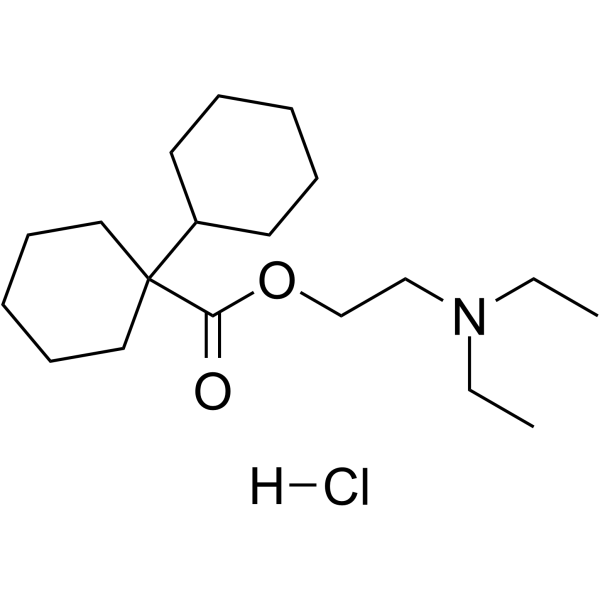
Dicyclomine hydrochloride
 0 Images
Dicyclomine hydrochloride is a potent and orally active muscarinic cholinergic receptors antagonist. Dicyclomine hydrochloride shows high affinity for muscarinic M1 receptor subtype (Ki=5.1 nM) and M2 receptor subtype (Ki=54.6 nM) in brush-border membrane and basal plasma membranes, respectively. Dicyclomine is an antispasmodic agent and relieves smooth muscle spasm of the gastrointestinal tract in vivo.
-
Trihexyphenidyl-d5 hydrochloride
 0 ImagesCat. No.: HY-B1277SPurity: 99.88%
Trihexyphenidyl-d5 hydrochloride is deuterium labeled Trihexyphenidyl hydrochloride (HY-B1277). Trihexyphenidyl hydrochloride is a selective and orally active M1 muscarinic receptor antagonist with an IC50 of 3.7 nM for rat cerebral cortex M1 muscarinic receptors. Trihexyphenidyl hydrochloride modulates cholinergic activity, countering acetylcholine supersensitivity in neural pathways. Trihexyphenidyl hydrochloride improves movement disorder, inhibits McN-A-343 (HY-107648)-induced pressor responses, vagally-induced bradycardia and vasodilatation. Trihexyphenidyl hydrochloride can be used for the research of Parkinson's disease..
-
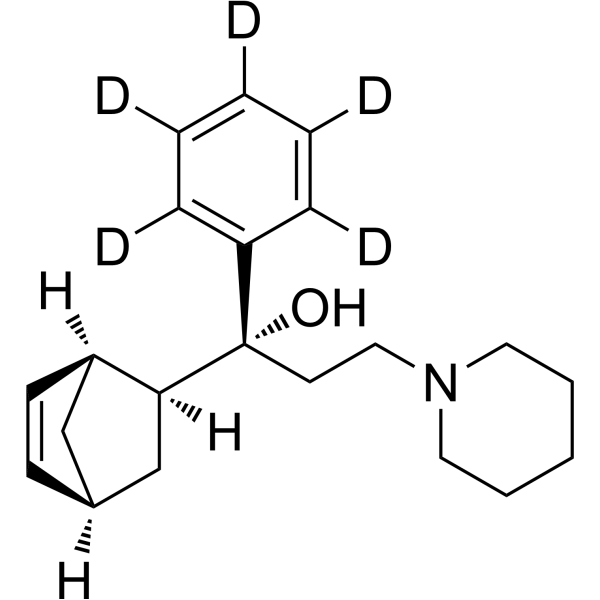
rel-Biperiden EP impurity A-d5
 0 ImagesCat. No.: HY-13204S2
rel-Biperiden EP impurity A-d5 is deuterium labeled Biperiden (hydrochloride).
-
VU0415248
 0 ImagesCat. No.: HY-182587CAS No.: 1359087-83-4
VU0415248 is a selective muscarinic acetylcholine receptor 1 (M1) inhibitor. VU0415248 inhibits acetylcholine-induced calcium mobilization in cells expressing human and rat M1 muscarinic acetylcholine receptors, with an IC50 of 0.4 and 0.18 μM, respectively. VU0415248 is applicable to the research of Parkinson's disease, movement disorders and fragile X syndrome.
-
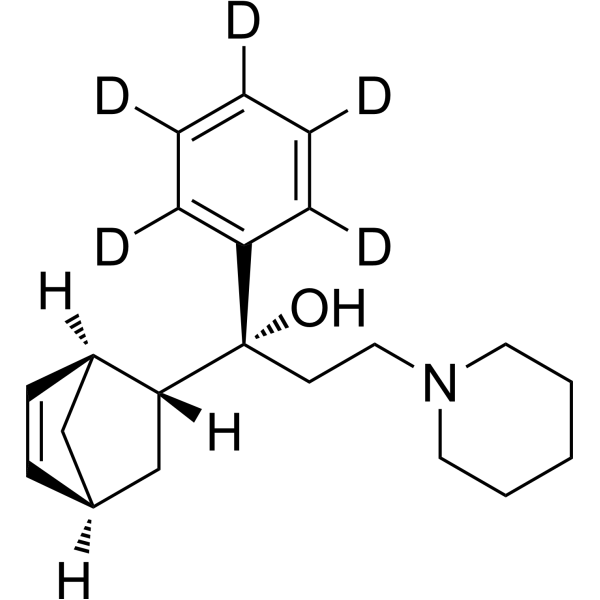
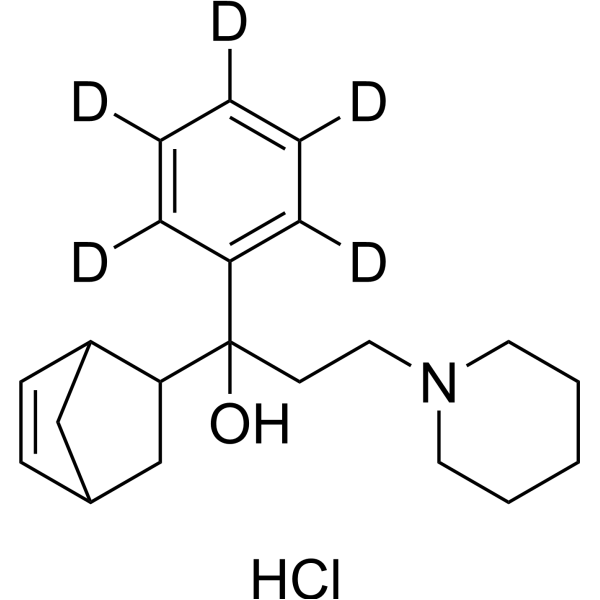
rel-Biperiden EP impurity B-d5
 0 ImagesCat. No.: HY-13204S3
rel-Biperiden EP impurity B-d5 is deuterium labeled Biperiden (hydrochloride).
-
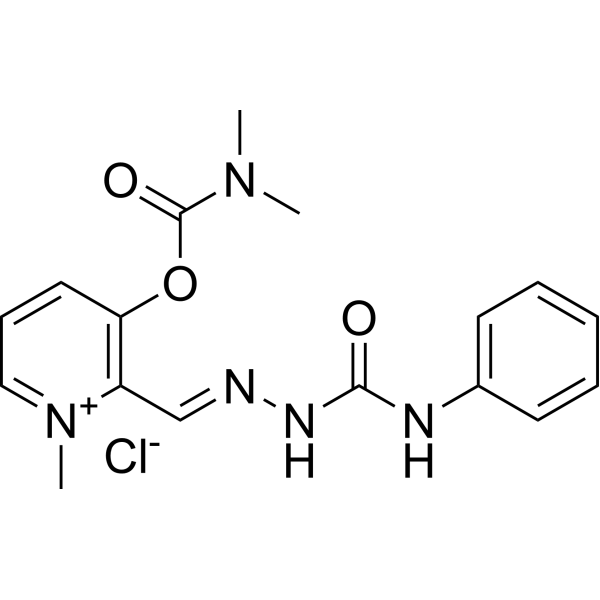
MHP 133
 0 ImagesCat. No.: HY-101653CAS No.: 147340-43-0
MHP 133 is a agent with multiple CNS targets, and inhibits acetylcholinesterase (AChE) with Ki of 69 μM; also active against muscarinic M1 and M2 receptors, serotonin 5HT4 receptors, and imidazole I2 receptors.
-
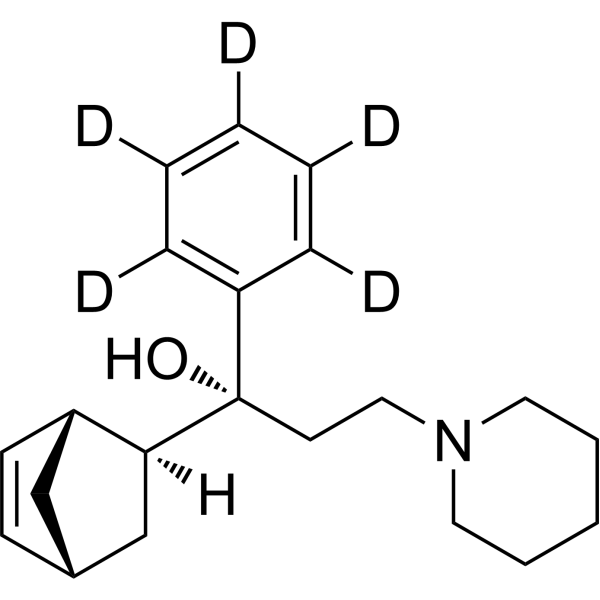
rel-Biperiden-d5
 0 ImagesCat. No.: HY-13204S1
rel-Biperiden-d5 is deuterium labeled Biperiden (hydrochloride).
-
Sofpironium tosylate
 0 ImagesCat. No.: HY-167849CAS No.: 2409055-48-5Synonyms: BBI-4000 tosylate
Sofpironium (BBI 4000) tosylate is an anticholinergic agent used in the study of primary axillary hyperhidrosis (PAH). Sofpironium tosylate reduces sweating by inhibiting M3 muscarinic receptors in eccrine glands at the application site. Sofpironium tosylate also has a high afnity for the M1, M2, M4 and M5 subtypes.
-
Scotanamine D
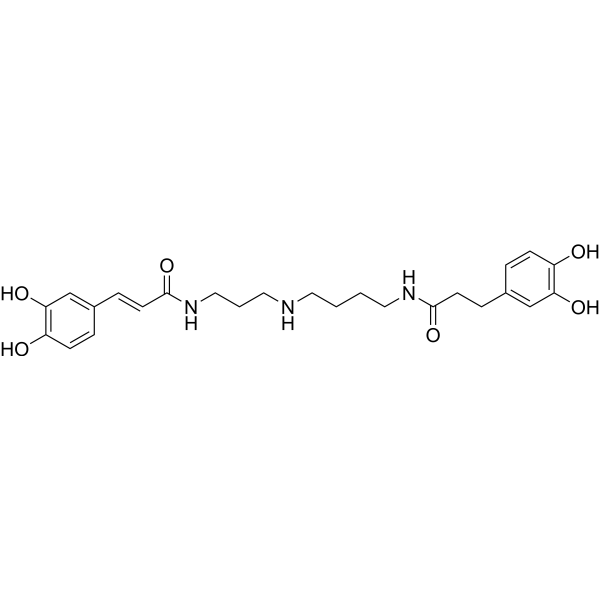 0 ImagesCat. No.: HY-N12302CAS No.: 1698873-84-5Synonyms: N1-Dihydrocaffeoyl, N10-caffeoyl spermidine
Scotanamine D (N1-Dihydrocaffeoyl, N10-caffeoyl spermidine) is a spermidine alkaloid. It can be isolated from S. tangutica. Scotanamine D potently and selectively inhibits the activity of the M1 muscarinic acetylcholine receptor, with an IC50 of 32 nM. It can be used in studies related to Parkinson's disease.
- 1



