



Nur77/NR4A1 Agonist
-
Cytosporone B
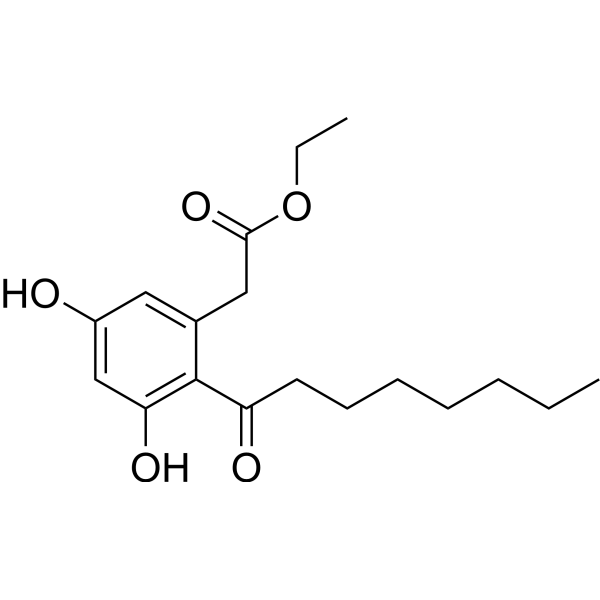 0 ImagesSynonyms: Csn-B; Dothiorelone G
Cytosporone B (Csn-B; Dothiorelone G) is a naturally occurring nuclear orphan receptor Nur77/NR4A1 agonist with an EC50 of 0.278 nM.
-
DIM-C-pPhOCH3
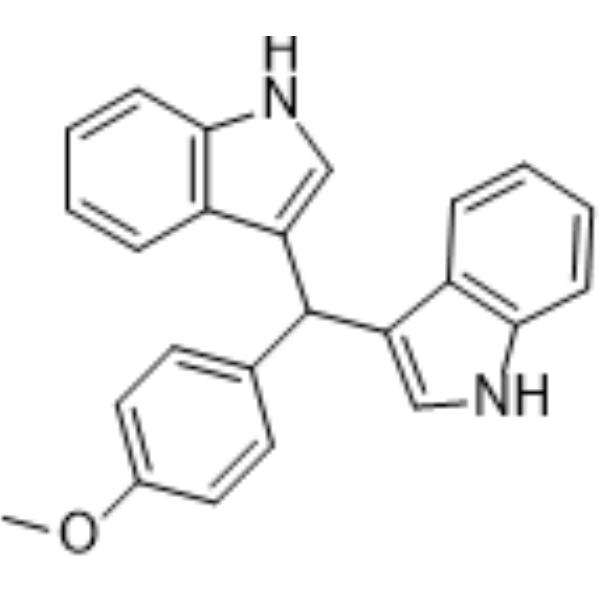 0 Images
DIM-C-pPhOCH3 is a Nur77 agonist. Nerve growth factor-induced Bα (NGFI-Bα, Nur77) is an orphan nuclear receptor.
-
NR4A agonist-2
 0 ImagesCat. No.: HY-181588
NR4A agonist-2 is a selective pan-NR4A agonist designed based on Vidofludimus (HY-14908), with a Kd of 0.10 μM against NR4A1, and EC50 values of 0.098 μM, 0.092 μM and 0.09 μM against Nur77, Nurr1, NOR-1, respectively. NR4A agonist-2 exhibits 47-fold selectivity over DHODH, and shows no cytotoxic activity at concentrations up to 10 μM. By binding to a specific surface pocket in the ligand-binding domain of Nurr1, NR4A agonist-2 inhibits the formation of Nurr1 homodimers, activates response elements such as NBRE, NurRE, DR5, and then potently induces the expression of neuroprotective genes including BDNF, SOD2, thereby exerting neuroprotective activity. NR4A agonist-2 can be used in the research of neurodegenerative diseases such as Parkinson's disease, dementia and multiple sclerosis.



