



SOD
Superoxide Dismutase
SOD (Superoxide dismutase), an antioxidant enzyme, are a group of metalloenzymes that defenses against reactive oxygen species (ROS)-mediated injury. SOD can catalyze the dismutation of superoxide radicals (O2˙-) into hydrogen peroxide (H2O2) and oxygen (O2). The chemical moiety of SOD contains some metal ions such as Cu2+, Zn2+, Mn2+, and Fe2+ in the active site, which mediates the dismutation process. On the basis of these metallic cofactors, SOD can be classified into three distinct types, SOD1 (Cu/Zn-SOD), SOD2 (Mn-SOD), and SOD3 (Fe-SOD)[1][2].
References:
- [1]. Younus H. Therapeutic potentials of superoxide dismutase. Int J Health Sci (Qassim). 2018 May-Jun;12(3):88-93. [Content Brief]
- [2]. Saurav Suman, et al. Chapter 14 - Biotic stresses on plants: reactive oxygen species generation and antioxidant mechanism. Frontiers in Plant-Soil Interaction. Molecular Insights Into Plant Adaptation. 2021, 381-411.
All Product Categories
-
SOD Related Products (228)
Related Products (228)

-
Antibodies (4)
-
Isoeucommin A
 0 ImagesCat. No.: HY-N19615CAS No.: 134859-90-8Isoeucommin A is a lignan compound. Isoeucommin A activates the Nrf2/HO-1 pathway and induces phosphorylation of GSK-3β. Isoeucommin A reduces the levels of pro-inflammatory cytokines TNF-α, IL-1β and IL-6, decreases the oxidative stress marker MDA, increases the antioxidants SOD and GSH, and alleviates oxidative stress in mesangial cells. Isoeucommin A alleviates renal tissue injury, improves impaired renal function and enhances the viability of renal tubular epithelial cells in diabetic nephropathy models. Isoeucommin A can be used in the research of diabetic nephropathy.
-
Anti-inflammatory agent 107
 0 ImagesCat. No.: HY-179502Anti-inflammatory agent 107 is an orally active anti-inflammatory agent. Anti-inflammatory agent 107 inhibits and NF-κB with a superior binding affinity of -9.4578 kcal/mol. Anti-inflammatory agent 107 reduces levels of inflammatory biomarkers (TNF-α, IL-6, INF-γ, NF-κβ, C-reactive protein and Erythrocyte Sedimentation Rate) and enhances the endogenous antioxidant defense system by elevating SOD (Superoxide Dismutase), CAT (Catalase) and GSH (Glutathione) activities. Anti-inflammatory agent 107 not induces liver toxicity and demonstrates hepatoprotective effects. Anti-inflammatory agent 107 dose-dependently ameliorates leukocyte infiltration and tissue edema. Anti-inflammatory agent 107 can be used for anti-inflammatory research.
-
EUK-189
 0 ImagesCat. No.: HY-19382CAS No.: 186350-27-6EUK-189 is a synthetic superoxide dismutase (SOD) and catalase mimetic. EUK-189 can block oxygen/glucose deprivation (OGD)-induced ERK1/2 dephosphorylation, ATP depletion and eliminate ROS production. EUK-189 exhibits neuroprotective effect and can inhibit delayed radiation injury. EUK-189 can be used for the research of neurological disease, such as ischemic stroke.
-
CLR01 sodium
 0 ImagesCat. No.: HY-182304CAS No.: 1338489-62-5CLR01 sodium is a blood-brain barrier-permeable anti-aggregation agent. CLR01 sodium inhibits the de novo aggregation of Amyloid-β 40/42, α-synuclein, IAPP, tau protein and SOD1. CLR01 sodium reduces amyloid plaque burden in the cortex of triple-transgenic mice and improves the memory and motor abilities of these mice. CLR01 sodium can be used in research related to Alzheimer's disease, Parkinson's disease, and amyotrophic lateral sclerosis (ALS).
-
Picoxystrobin-d3
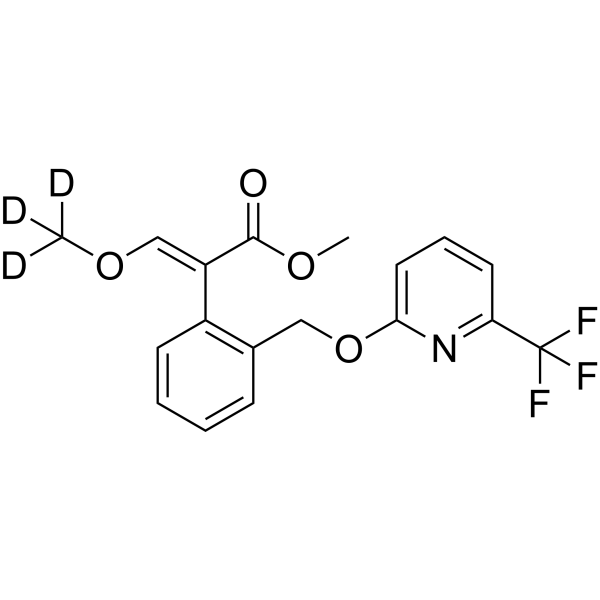 0 ImagesCat. No.: HY-136355SPicoxystrobin-d3 is the deuterium labeled Picoxystrobin (HY-136355). Picoxystrobin is a strobilurin fungicide. Picoxystrobin controls plant diseases by inhibiting mitochondrial respiration. Picoxystrobin is highly toxic to zebrafish embryos, causing developmental abnormalities, oxidative stress, and immunotoxicity.
-
SOD1-aggregation-IN-1
 0 ImagesCat. No.: HY-179533SOD1-aggregation-IN-1 (compound 20) is a potent SOD aggregation inhibitor. SOD1-aggregation-IN-1 inhibits MG132 (HY-13259)-induced mutant SOD1 intracellular aggregation in PC12-SOD1G85R YFP cells with an EC50 of 2.63 μM. SOD1-aggregation-IN-1 can be used for amyotrophic lateral sclerosis (ALS) research.
-
AChE/BChE-IN-34
 0 ImagesCat. No.: HY-181167AChE/BChE-IN-34 is an acetylcholinesterase (AChE) and butyrylcholinesterase (BChE) inhibitor with IC50s of 5.97 μM and 4.57 μM, respectively. AChE/BChE-IN-34 functions as an antioxidant, oxidative stress inhibitor, reduces MDA levels, and elevates SOD and catalase in hippocampal tissue. AChE/BChE-IN-34 acts as a cognitive function enhancer, improves learning and memory in a Scopolamine (HY-N0296)-induced animal model. AChE/BChE-IN-34 is non-toxic in neuroblastoma cells across a specified concentration range. AChE/BChE-IN-34 can be used for the research of Alzheimer's disease.
-
Soy Superoxide Dismutase
 0 ImagesCat. No.: HY-E70944Soy Superoxide Dismutase (EC 1.15.1.1) catalyzes the dismutation of superoxide radicals to hydrogen peroxide and molecular oxygen. Superoxide Dismutase plays a critical role in the defense of cells against the toxic effects of oxygen radicals. Superoxide Dismutase competes with nitric oxide (NO) for superoxide anion (which reacts with NO to form peroxynitrite), thereby Superoxide Dismutase promotes the activity of NO.
-
EUK-124
 0 ImagesCat. No.: HY-130439CAS No.: 186299-35-4EUK 8 and EUK 134 are synthetic catalytic scavengers of reactive oxygen species with superoxide dismutase (SOD) and catalase mimetic activity.1 EUK 124 is a structural analog of EUK 8 and EUK 134 with significantly reduced activity. EUK 124 and EUK 8 inhibit superoxide-mediated reduction of an electron acceptor (i.e., SOD mimetic activity), with IC50 values of 5 μM and 0.7 μM, respectively.
-
NF-κB-IN-20
 0 ImagesCat. No.: HY-175833NF-κB-IN-20 is an orally active NF-κB inhibitor. NF-κB-IN-20 directly binds to the Keap1 protein, activating the Keap1/Nrf2/HO-1 antioxidant pathway, and simultaneously inhibiting the NF-κB inflammatory pathway, thereby synergistically reducing oxidative stress and inflammatory responses. NF-κB-IN-20 M11 inhibits the expression of IL-6, IL-1β, and TNF-α, significantly reduces the level of ROS, and restores the mitochondrial membrane potential. NF-κB-IN-20 can be used for the study of acute lung injury (ALI).
-
CF-Vanillin
 0 ImagesCat. No.: HY-181474CAS No.: 1323378-95-5CF-Vanillin is an orally active hypolipidemic/hepatic protector with strong binding affinity for PPAR-α. CF-Vanillin exerts antioxidant and anti-inflammatory effects by activating the Nrf2/HO-1 signaling pathway. CF-Vanillin reduces triglyceride and total cholesterol levels and alleviates liver injury. CF-Vanillin can be used in the research of diseases such as hyperlipidemia and liver injury.
-
α-D-Glucosyl hesperidin
 0 ImagesCat. No.: HY-N18905CAS No.: 161713-86-6α-D-Glucosyl hesperidin is an orally effective structural modification derivative of Hesperidin (HY-15337) with anti-apoptotic (apoptosis) and antioxidant activities. α-D-Glucosyl hesperidin upregulates the expression of the Bcl-2 gene, while downregulating the expressions of the Bax and caspase-3 genes. α-D-Glucosyl hesperidin increases total antioxidant capacity, SOD and catalase levels, and decreases malondialdehyde and glutathione levels. α-D-Glucosyl hesperidin improves sperm motility, viability and plasma membrane function, while restoring reproductive organ weight and seminiferous tubule structure. α-D-Glucosyl hesperidin increases fertility index and exerts a synergistic protective effect with Proanthocyanidins (HY-N0794) in male rats with testicular ischemia-reperfusion injury. α-D-Glucosyl hesperidin can be used in the research of testicular ischemia-reperfusion injury.
-
Antifungal agent-165
 0 ImagesCat. No.: HY-184308CAS No.: 3123321-73-0Antifungal agent-165 is an antifungal agent with in vitro activity against Rhizoctonia solani. Antifungal agent-165 inhibits catalase (CAT) activity, drives intracellular ROS accumulation, and induces oxidative damage. Antifungal agent-165 disrupts fungal hyphal morphology, compromises cell membrane integrity, and triggers cellular content leakage in Rhizoctonia solani. Antifungal agent-165 can be used for the research of potato black scurf disease.
-
Mycosporine 2 glycine
 0 ImagesCat. No.: HY-161612CAS No.: 149092-45-5Mycosporine 2 glycine is an anti-inflammatory agent and TYRP1 inhibitor. Mycosporine 2 glycine inhibits the expression of inflammatory genes and reduces nitric oxide production. Mycosporine 2 glycine binds tightly to the active pocket of TYRP1 and inhibits the activity of melanogenesis-related enzymes. Mycosporine 2 glycine can be used in the research of hyperpigmentation and inflammation-related diseases.
-
Ecliptasaponin A (Standard)
 0 ImagesCat. No.: HY-N1508RCAS No.: 78285-90-2Ecliptasaponin A (Standard) is the analytical standard for Ecliptasaponin A (HY-N1508). Ecliptasaponin A is an orally active pentacyclic triterpenoid saponin. Ecliptasaponin A exerts anti-tumor activity by activating ASK1/JNK pathway, inducing apoptosis and autophagy in lung cancer cells. Ecliptasaponin A exerts anti-inflammatory/anti-fibrotic effects and protects the cardiovascular system by inhibiting the HMGB1/TLR4/NF-κB pathway, and the expression of COX-2 and MMP-9. Ecliptasaponin A can enhance SOD activity, reduce MDA levels, and alleviate oxidative stress damage. Ecliptasaponin A exerts chondroprotective effects by inhibiting the expression of MMP13 and regulating inflammatory factors. Ecliptasaponin A improves ovarian function and regulates sex hormones by upregulating the expression of ESR1 receptors.
-
Haplopine
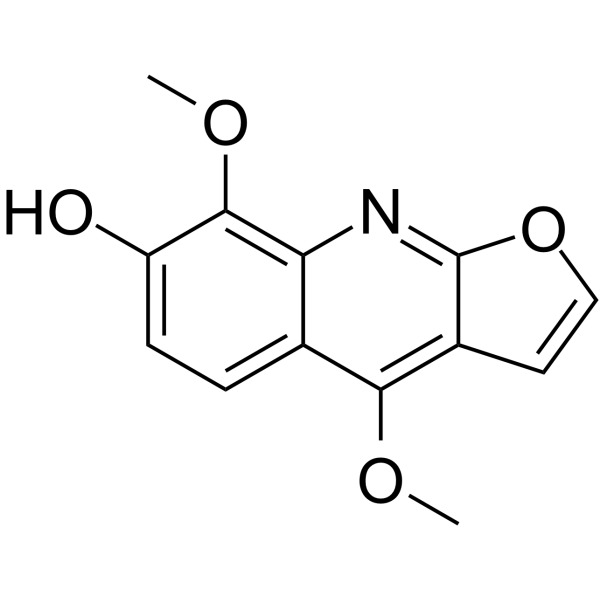 0 ImagesHaplopine is a substance with anti-inflammatory, antioxidant and photoactivated antibacterial activities. It also acts as an inhibitor of UGT1A7 and a photoactivated restriction endonuclease inhibitor. Haplopine inhibits the mRNA/protein expression of IL-6, TSLP, GM-CSF, G-CSF, IL-4, IL-13 and COX-2, while upregulating the mRNA/protein expression of SOD, CAT and HO-1. Haplopine inhibits the glucuronidation reaction catalyzed by UGT1A7 through competitive hydrophobic binding. Haplopine exerts photoactivated restriction endonuclease inhibitory effects by binding to DNA. Haplopine exhibits photoactivated activity against methicillin-resistant Staphylococcus aureus. Haplopine alleviates symptoms of atopic dermatitis. Haplopine can be used in research related to atopic dermatitis and methicillin-resistant Staphylococcus aureus infections.
-
S-Diclofenac (Standard)
 0 ImagesSynonyms: ACS 15 (Standard); ATB-337 (Standard)S-Diclofenac (Standard) is the analytical standard of S-Diclofenac. This product is intended for research and analytical applications. S-Diclofenac (ACS 15) is a hybrid molecule of an H2S donor and the NSAID diclofenac. S-Diclofenac activates the p53 signaling pathway, and inhibits the activation of JNK. S-Diclofenac exhibits antioxidant and anti-inflammatory activities.
-
ALR2-IN-9
 0 ImagesCat. No.: HY-175862CAS No.: 2135481-84-2ALR2-IN-9 is a potent ALR2 inhibitor (IC50 = 21.8 nM) with excellent antioxidant activity (EC50 for DPPH radical scavenging = 2.8 μM). ALR2-IN-9 interacts directly with Reactive Oxygen Species (ROS)/Reactive Nitrogen Species (RNS) and interrupts the free radical chain reactions, and as an endogenous enzymatic antioxidant regulator, which regulates enzyme functions of CAT and SOD. ALR2-IN-9 regulates PI3K/Akt/Nrf2 pathway to attenuate hyperglycemia-mediated mitochondrial superoxide overproduction in vitro, and ameliorates CuSO4- and H2O2-induced oxidative stress in vivo. ALR2-IN-9 prolongs lifespan of C. elegans via the regulation of stress response genes such as PMK-1. ALR2-IN-9 is a promising anti-aging drug candidate. ALR2-IN-9 can be used for diabetic complication research.
-
Epimedin A (Standard)
 0 ImagesCat. No.: HY-N0257RCAS No.: 110623-72-8Epimedin A (Standard) is the analytical standard of Epimedin A (HY-N0257). This product is intended for research and analytical applications. Epimedin A, one of the main flavonoid active components in Herba Epimedii, is orally active. Epimedin A can inhibit osteoclastogenesis, differentiation, and bone resorption. Epimedin A also possesses anti-inflammatory activity. Epimedin A can be used in the research of osteoporosis and inflammatory diseases.
-
Methiocarb
 0 ImagesMethiocarb (Mercaptodimethur) is an orally active carbamate insecticide. Methiocarb exerts dose-dependent toxic effects on onions. In addition to inhibiting acetylcholinesterase to induce cholinergic excitation, Methiocarb can induce lipid peroxidation in liver, kidney, brain and testicular tissues and alter reduced glutathione levels by generating ROS. Methiocarb can be used for agricultural pest control and research on oxidative stress-related cellular damage in mammals.




