



Protein Polybromo-1
Protein polybromo-1 (PBRM1, also known as BAF180) is a defining subunit of the PBAF chromatin-remodeling complex and functions in transcriptional activation and repression through regulation of chromatin structure and DNA-nucleosome topology[1][2][6]. PBRM1 contains six bromodomains that recognize acetylated lysine residues on histones and other nuclear proteins, thereby linking epigenetic histone modifications to chromatin accessibility and transcriptional control[2][3][4]. Mechanistically, bromodomain-mediated recognition of acetylated histones contributes to selective targeting of chromatin regions, and bromodomain 2 preferentially recognizes histone H3 lysine 14 acetylation (H3K14ac), a mark associated with transcriptional activation[4]. In disease contexts, PBRM1 is widely regarded as a tumor suppressor, and recurrent mutations are particularly prevalent in clear cell renal cell carcinoma, where disruption of PBRM1-associated chromatin regulation is linked to altered transcriptional programs[5]. Experimental studies further indicate that PBRM1-deficient PBAF complexes can activate the NF-κB pathway through aberrant genomic targeting in renal cancer models[5]. Compared with related SWI/SNF-family subunits, PBRM1 is distinguished by its unique architecture comprising six bromodomains together with two BAH domains and an HMG-associated region, supporting specialized chromatin-recognition functions within the PBAF complex[3]. The bromodomains of PBRM1 are therefore important research targets for investigating epigenetic regulation, chromatin remodeling mechanisms, and the functional consequences of cancer-associated variants[2].
References:
- [1]. Uniprotkb.
- [2]. Bursch KL, et al. Cancer-associated polybromo-1 bromodomain 4 missense variants variably impact bromodomain ligand binding and cell growth suppression. J Biol Chem. 2024;300(4):107146. [Content Brief]
- [3]. Protein Polybromo-1 gene information.
- [4]. Charlop-Powers Z, et al. Structural insights into selective histone H3 recognition by the human Polybromo bromodomain 2. Cell Res. 2010 May;20(5):529-38. [Content Brief]
- [5]. Protein Polybromo-1 gene information from NCBI.
- [6]. Thompson M. Polybromo-1: the chromatin targeting subunit of the PBAF complex. Biochimie. 2009 Mar;91(3):309-19. [Content Brief]
- [7]. Bursch KL, et al. Cancer-associated polybromo-1 bromodomain 4 missense variants variably impact bromodomain ligand binding and cell growth suppression. J Biol Chem. 2024;300(4):107146.
-
Protein Polybromo-1 Related Products (6)
Related Products (6)

-
G-6599
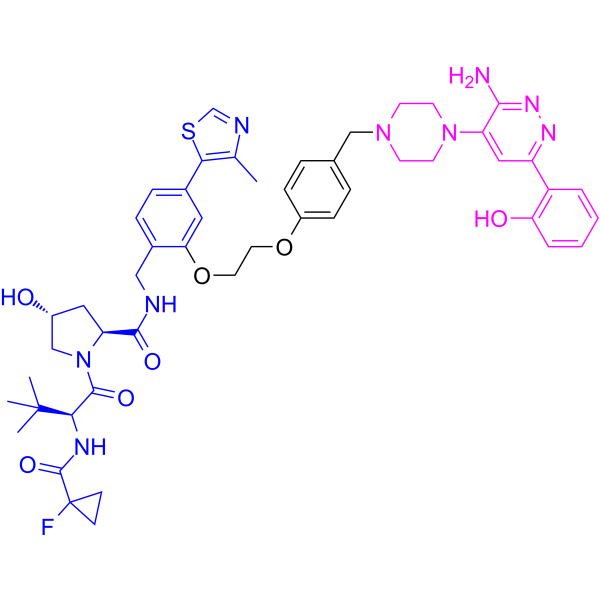
 0 ImagesCat. No.: HY-173351CAS No.: 2901806-51-5G-6599 is a covalent molecular glue degrader targeting SMARCA2/SMARCA4, with DC50 values of 0.017 nM and 0.057 nM against SMARCA2 and SMARCA4 in SW1573 cells, respectively. G-6599 exhibits proteome selectivity for SMARCA2, SMARCA4, and PBRM1. G-6599 induces the assembly of the SMARCA2-FBXO22 ternary complex, enabling ubiquitination and proteasomal degradation of both proteins via the ubiquitin-proteasome pathway without the need for biotransformation. G-6599 shows antiproliferative effects in relevant cancer cell models. G-6599 can be used for research on androgen-dependent prostate cancer and SMARCA4-mutant non-small cell lung cancer.
-
BRM/BRG1 ATP degrader-1
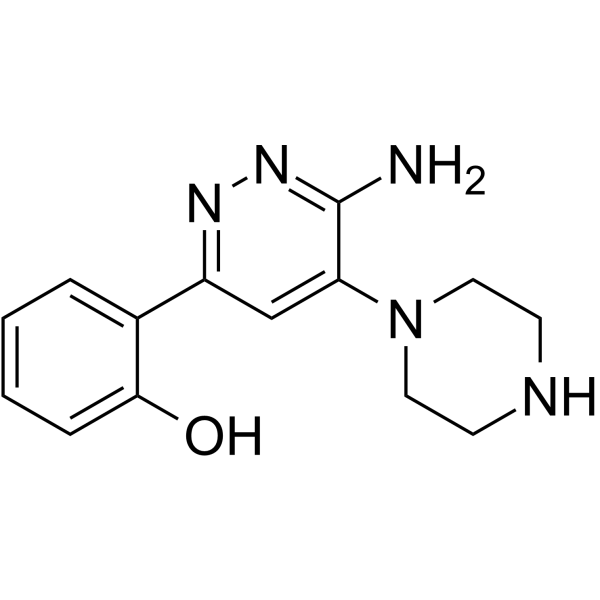
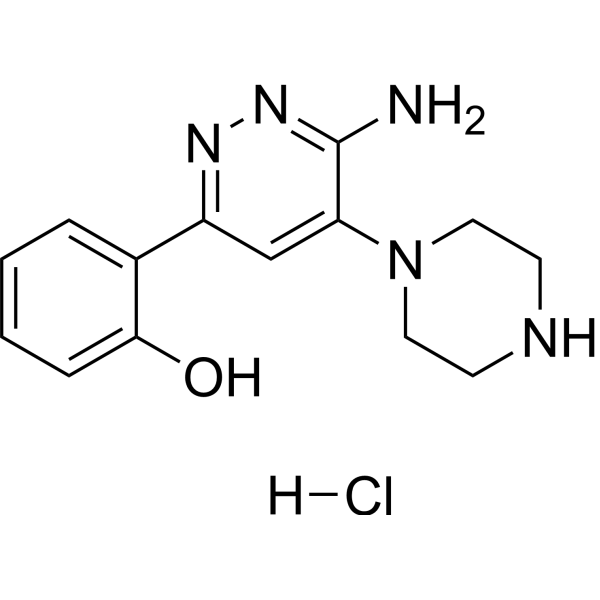
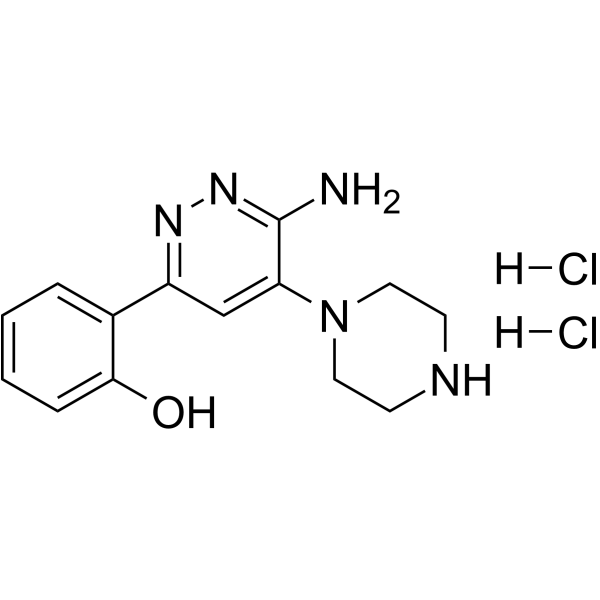
 0 ImagesCat. No.: HY-180428CAS No.: 2901804-30-4BRM/BRG1 ATP degrader-1 is a phenol derivative that effectively degrades the BRM protein. BRM/BRG1 ATP degrader-1 exerts degradation-inhibiting effects on BRM IF and BRG1 IF in SW1573 cells. BRM/BRG1 ATP degrader-1 can be used in studies related to BRM-mediated diseases, such as non-small cell lung cancer.



