



Transmembrane Glycoprotein
Transmembrane Glycoprotein
Transmembrane glycoproteins are important components of cell membranes and are characterized by oligosaccharide chains covalently linked to polypeptide chains. Glycosylation sites are mainly located in their extracellular regions, achieved by N-linked glycosylation (linked to asparagine residues) or O-linked glycosylation (linked to serine or threonine residues). Sugar chains not only provide structural stability to proteins but also confer functional specificity. Many transmembrane glycoproteins are receptors, such as G protein-coupled receptors (GPCRs) and receptor tyrosine kinases (RTKs). Most (clusters of differentiation)CD molecules are also transmembrane glycoproteins expressed on the surface of antigen-presenting cells[1][2].
Referencias:
- [1]. L Franco, et al. The transmembrane glycoprotein CD38 is a catalytically active transporter responsible for generation and influx of the second messenger cyclic ADP-ribose across membranes. FASEB J. 1998 Nov;12(14):1507-20. [Content Brief]
- [2]. Kumi Oshima, et al. SHPS-1, a multifunctional transmembrane glycoprotein. FEBS Lett. 2002 May 22;519(1-3):1-7. [Content Brief]
All Product Categories
-
Transmembrane Glycoprotein Inhibitors
(232)
View all products
-
Transmembrane Glycoprotein Agonists
(8)
View all products
-
Transmembrane Glycoprotein Antagonists
(7)
View all products
-
Transmembrane Glycoprotein Activators
(10)
View all products
-
Transmembrane Glycoprotein Modulators
(5)
View all products
-
Transmembrane Glycoprotein Ligands
(17)
View all products
-
Productos relacionados con Transmembrane Glycoprotein (379)
Productos relacionados con (379)

-
B3GNT2-IN-1
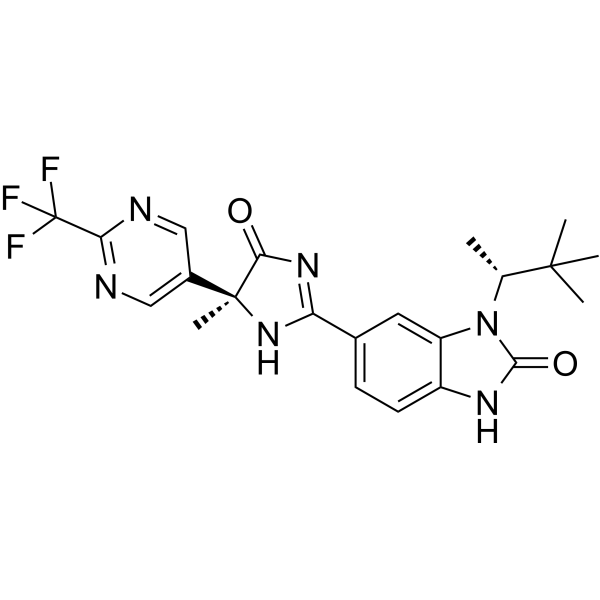 0 ImagesB3GNT2-IN-1 is a β-1,3-N-acetylglucosaminyltransferase 2 (B3GNT2) inhibitor with an IC50 of 0.009 μM. B3GNT2-IN-1 is applicable to research related to rheumatoid arthritis, ankylosing spondylitis and psoriasis.
-
RO-5429083
 0 ImagesReferencia número: HY-P991558Pureza: 98.43%Synonyms: RG-7356RO-5429083 (RG-7356) is a humanized monoclonal antibody targeting CD44. RO-5429083 binds to the extracellular domain of CD44 and inhibits constitutive EGFR phosphorylation. RO-5429083 suppresses tumor growth in xenograft models and can be used in research related to head and neck squamous cell carcinoma and acute myeloid leukemia.
-
Feladilimab
 0 ImagesSynonyms: Anti-ICOS/CD278 Reference Antibody (feladilimab); GSK3359609Feladilimab (Anti-ICOS/CD278 Reference Antibody (feladilimab); GSK3359609) is humanized IgG4 anti-ICOS/CD278 agonist monoclonal antibody. Feladilimab can be used for the research of cancer.
-
Vibostolimab
 0 ImagesReferencia número: HY-P99202No. CAS: 2231305-30-7Vibostolimab is an anti-TIGIT (T cell immunoglobulin and ITIM domain) monoclonal antibody. Vibostolimab shows antitumor activity, and can be used in non-small cell lung cancer (NSCLC) and melanoma research.
-
Indatuximab
 0 ImagesReferencia número: HY-P990607Pureza: 98.04%
-
Tetanus Toxin (830–844) TFA
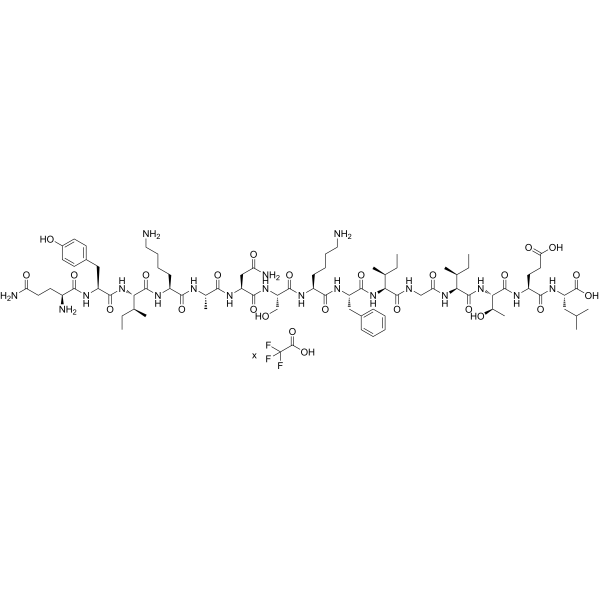 0 ImagesReferencia número: HY-P5425ATetanus Toxin (830–844) TFA is a biological active peptide. (tetanus toxin-derived peptide TT830–844 CD4+ T-cell epitope. This promiscuous CD4+ T-cell epitope can bind to a wide range of HLA–DRB molecules and is thus expected to activate CD4+ T-cell responses in a large part of the human population).
-
NEP(1-40)
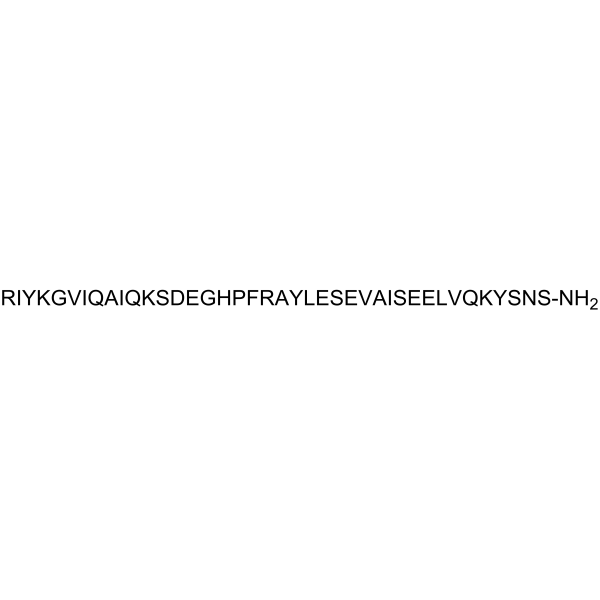 0 ImagesNEP(1-40) is a Nogo-66 receptor (NgR) antagonist peptide, reversing the injury-induced shift in distribution of microglia morphologies by limiting myelin-based inhibition.
-
Anti-PVRIG Antibody (COM701)
 0 ImagesReferencia número: HY-P990496Pureza: 99.14%Synonyms: COM701
-
Anti-AGER/RAGE Antibody (XT-M4)
 0 ImagesReferencia número: HY-P990328Pureza: ≥99.0%Synonyms: XT-M4Anti-AGER/RAGE Antibody (XT-M4) is a humanized antibody expressed in CHO cells, targeting AGER/RAGE. Anti-AGER/RAGE Antibody (XT-M4) contains a huIgG1 heavy chain and a huκ light chain, with a predicted molecular weight (MW) of 150 kDa. The isotype control for Anti-AGER/RAGE Antibody (XT-M4) can be referenced as Human IgG1 kappa, Isotype Control (HY-P99001).
-
Anti-Mouse CD86/B7-2 Antibody (GL-1)
 0 ImagesReferencia número: HY-P990260Pureza: 99.17%Anti-Mouse CD86/B7-2 Antibody (GL-1) is a rat-derived IgG2a κ type antibody inhibitor, targeting to mouse CD86/B7-2. Anti-Mouse CD86/B7-2 Antibody (GL-1) can be used for the researches of inflammation and immunology, such as allergic pulmonary inflammation.
-
1,10-Decanediol
 0 Images1,10-Decanediol is a diol compound that can react with α-ketoglutarate (aKG) to generate polymeric microparticles (termed paKG MPs) for the sustained release of aKG, thereby promoting immunosuppressive regulation. Additionally, paKG MPs can bind to dendritic cells (DCs), reducing their glycolysis and mitochondrial respiration in vitro. These metabolic changes lead to the modulation of MHC-II and CD86 expression in DCs and alter the frequency of regulatory T cells (Tregs) as well as T-helper type 1/2/17 cells in vitro. 1,10-Decanediol can be used in research within the field of immunometabolism. can be used as a surfactant/stabilizer in the synthesis of nanomaterials.
-
SBI-183
 0 ImagesSBI-183 is an orally active inhibitor of QSOX1 (Kd: 20 μM). SBI-183 suppresses the proliferative and invasive phenotype of renal cancer cell lines, including triple negative breast cancer cell line, lung adenocarcinoma cell line and pancreatic ductal adenocarcinoma. SBI-183 inhibits tumor growth in two human xenograft mouse models of renal cell carcinoma in vivo .
-
ONC-841
 0 ImagesReferencia número: HY-P991480ONC-841 is a blood-brain barrier-permeable, humanized monoclonal antibody targeting SIGLEC10. As an immune checkpoint inhibitor, ONC-841 restores the functions of immune effector cells such as T cells and enhances anti-tumor immune responses by blocking inhibitory signals mediated by SIGLEC10. ONC-841 restores the phagocytic and migratory activities of microglia, and promotes the phagocytosis of Amyloid-β and Tau protein aggregates by microglia. ONC-841 is applicable to research related to solid tumors and Alzheimer's disease.
-
Anti-CDCP1/CD318 Antibody (38 E11)
 0 ImagesReferencia número: HY-P990361Pureza: ≥99.0%Synonyms: 38 E11The Anti-CDCP1/CD318 Antibody (38 E11) is a CHO-expressed human antibody targeting CDCP1/CD318. The Anti-CDCP1/CD318 Antibody (38 E11) contains a huIgG1 heavy chain and a huκ light chain, with a predicted molecular weight (MW) of 150 kDa. The isotype control for Anti-CDCP1/CD318 Antibody (38 E11) can be referenced as Human IgG1 kappa, Isotype Control (HY-P99001).
-
Polzastobart
 0 ImagesReferencia número: HY-P990061No. CAS: 2640981-19-5Synonyms: JTX 8064Polzastobart (JTX-8064) is a humanized IgG4 monoclonal antibody and LILRB2 (ILT4) antagonist. Polzastobart specifically binds to and antagonizes LILRB2, relieves ILT4-mediated myeloid immunosuppression, and promotes the polarization of macrophages from an M2-like phenotype to an M1-like phenotype. Polzastobart induces macrophage polarization, IFNγ signaling, and T cell inflammation-related pharmacodynamic responses in ex vivo human renal cancer, lung cancer, and head and neck cancer tissues. Polzastobart can be used in studies related to tumor-associated macrophages and tumor immunity. For the isotype control of Polzastobart, refer to: Human IgG4 (S228P) kappa, Isotype Control (HY-P99003).
-
CD39-IN-1
 0 ImagesCD39-IN-1 is a selective CD39 inhibitor with an IC50 value of 68.7 nM. CD39-IN-1 exerts antiproliferative effects on tumor cells and shows low toxicity to normal cell lines. CD39-IN-1 inhibits CD39-mediated eATP hydrolysis in the ATP-adenosine pathway. CD39-IN-1 is applicable for tumor-related research.
-
hT84.66-M5A
 0 ImagesReferencia número: HY-P991068Pureza: 99.59%
-
Hyaluronan-binding peptide, biotin labeled TFA
 0 ImagesReferencia número: HY-P5351AHyaluronan-binding peptide, biotin labeled TFA is a biological active peptide. (This peptide is a hyaluronan-binding peptide biotinylated through a C-terminal GGGSK linker. Hyaluronan (HA) is a nonsulfated glycosaminoglycan expressed in the extracellular matrix and on cell surfaces. HA plays a role in fertilization, embryonic development, wound healing, angiogenesis, leukocyte trafficking to inflamed tissues, and cancer metastasis. This peptide has been shown to block HA binding to CD44 receptors and inhibit T cell proliferation.).
-
Anti-CDH6/K-Cadherin Antibody
 0 ImagesReferencia número: HY-P991108Synonyms: HKT288 Antibody; LTV977
-
Epinastine hydrochloride
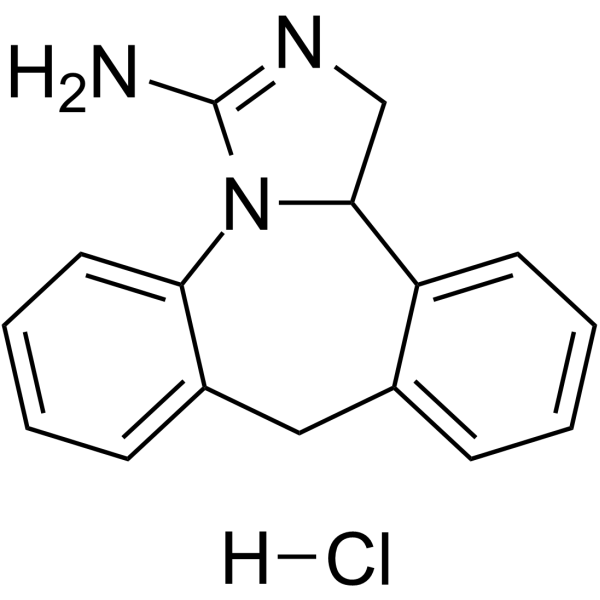 0 ImagesSynonyms: WAL801 hydrochlorideEpinastine hydrochloride (WAL801 hydrochloride) is a selective and orally active histamine H1 receptor antagonist, CD96/PVR inhibitor and mast cell stabilizer. Epinastine hydrochloride has high affinity for neuronal octopamine receptors in locusts (Ki = 2 nM) and honeybees (Ki = 1.1 nM). Epinastine hydrochloride inhibits TARC, IL-8, and IL-4. Epinastine hydrochloride activates anti-colon cancer immunity and inhibits Substance P (HY-P0201)-induced scratching behavior and increased vascular permeability. Epinastine hydrochloride can be used in the research of allergic diseases.



