



Transmembrane Glycoprotein
Transmembrane Glycoprotein
Transmembrane glycoproteins are important components of cell membranes and are characterized by oligosaccharide chains covalently linked to polypeptide chains. Glycosylation sites are mainly located in their extracellular regions, achieved by N-linked glycosylation (linked to asparagine residues) or O-linked glycosylation (linked to serine or threonine residues). Sugar chains not only provide structural stability to proteins but also confer functional specificity. Many transmembrane glycoproteins are receptors, such as G protein-coupled receptors (GPCRs) and receptor tyrosine kinases (RTKs). Most (clusters of differentiation)CD molecules are also transmembrane glycoproteins expressed on the surface of antigen-presenting cells[1][2].
References:
- [1]. L Franco, et al. The transmembrane glycoprotein CD38 is a catalytically active transporter responsible for generation and influx of the second messenger cyclic ADP-ribose across membranes. FASEB J. 1998 Nov;12(14):1507-20. [Content Brief]
- [2]. Kumi Oshima, et al. SHPS-1, a multifunctional transmembrane glycoprotein. FEBS Lett. 2002 May 22;519(1-3):1-7. [Content Brief]
All Product Categories
-
Transmembrane Glycoprotein Inhibitors
(232)
View all products
-
Transmembrane Glycoprotein Agonists
(8)
View all products
-
Transmembrane Glycoprotein Antagonists
(7)
View all products
-
Transmembrane Glycoprotein Activators
(10)
View all products
-
Transmembrane Glycoprotein Modulators
(5)
View all products
-
Transmembrane Glycoprotein Ligands
(17)
View all products
-
Transmembrane Glycoprotein Related Products (379)
Related Products (379)


-
Vadastuximab
 0 ImagesSynonyms: Anti-Human CD33 Recombinant AntibodyVadastuximab (Anti-Human CD33 Recombinant Antibody) is a humanized monoclonal antibody targeting CD33. Vadastuximab can be used to synthesize an ADC compound, Vadastuximab talirine.
-
Lirilumab
 0 ImagesCat. No.: HY-P99208CAS No.: 1000676-41-4Synonyms: IPH2102Lirilumab (IPH2102) is an anti-KIR monoclonal antibody, and shows antitumor activity. Lirilumab can be used in Leukemia, squamous cell carcinoma of the head and neck (SCCHN) research.
-
Lintuzumab
 0 ImagesSynonyms: SGN-33; HuM-195; GLK-33 AntibodyLintuzumab (HUM-195) is an anti-CD33 humanized monoclonal antibody. Lintuzumab reduces the production of TNFα-induced pro-inflammatory cytokines and chemokines by AML cells. Lintuzumab promotes tumor cell killing through antibody-dependent cellular cytotoxicity (ADCC) and phagocytosis (ADCP) activities against MDR and MDR+ AML cell lines and primary AML patient samples. Lintuzumab enhances survival and reduces tumor burden in mice.
-
Cibinetide
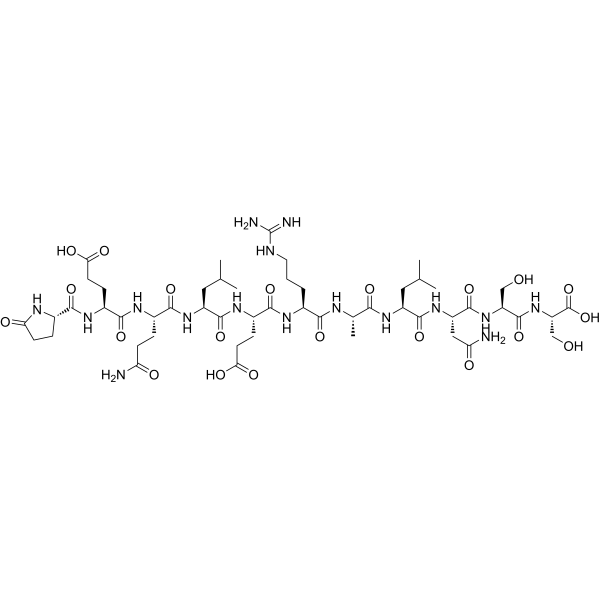 0 ImagesSynonyms: ARA290Cibinetide (ARA290) is an erythropoietin (EPO) derivative that acts as a specific agonist of the erythropoietin/CD131 heteroreceptor. ICibinetide can be used in the research of neurological disorders.
-
HA-CD44 interaction inhibitor 1
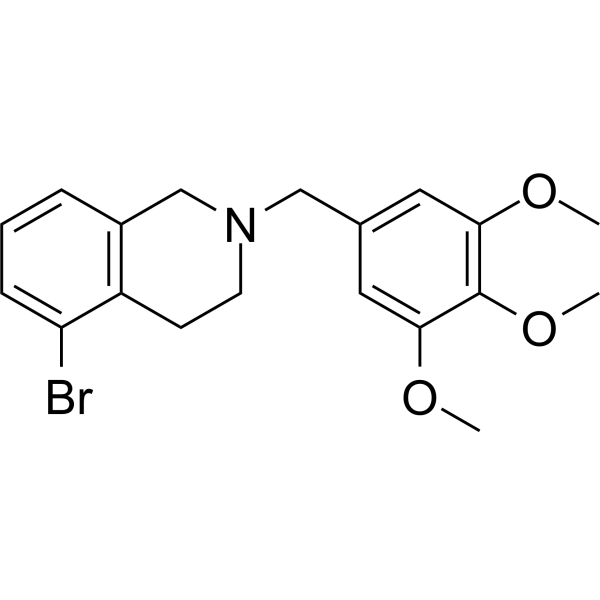 0 ImagesHA-CD44 interaction inhibitor 1 is a CD44 inhibitor that can inhibit the interaction between Hyaluronic acid (HA) (HY-B0633A) and CD44. HA-CD44 interaction inhibitor 1 exerts an antiproliferative effect on CD44+ cancer cell lines. HA-CD44 interaction inhibitor 1 can be used for the research of cancer.
-
Tinurilimab
 0 ImagesSynonyms: BAY 1834942Tinurilimab (Bay 1834942) is an anti-CEACAM6 (carcinoembryonic antigen-related cell adhesion molecule 6) humanized IgG2 monoclonal antibody. CEACAM6 is an immune checkpoint regulator suppressing the activity of effector T-cells against tumors. Tinurilimab shows an increased tumor cell killing effect in the tumor-cell/T-cell co-culture system.
-
Anti-Mouse CD40 Antibody (FGK4.5/FGK45)
 0 ImagesCat. No.: HY-P990680Purity: 98.35%Anti-Mouse CD40 Antibody (FGK4.5/FGK45) is an agonistic rat-derived IgG2a monoclonal antibody targeting mouse CD40. Anti-Mouse CD40 Antibody (FGK4.5/FGK45) enhances T cells responses, dendritic cells maturation and NK cells activation. Anti-Mouse CD40 Antibody (FGK4.5/FGK45) can be used for the researches of cancer, infection, inflammation and immunology, such as CT26 tumor, vesicular stomatitis virus (VSV) infection and transplantation.
-
ASP-8731
 0 ImagesASP-8731 is an orally active BACH1 inhibitor. ASP-8731 activates antioxidant, anti-inflammatory and globin gene pathways by relieving the inhibitory effect of BACH1 on NRF2-mediated gene transcription. ASP-8731 significantly upregulates the expression of HMOX1, FTH1 and various globins (such as HGB, HBG, HBA), increases fetal hemoglobin (HbF) levels, and effectively induces F-cell production in hydroxyurea-unresponsive cells. Meanwhile, ASP-8731 reduces inflammatory responses and white blood cell counts by downregulating VCAM1, ICAM-1 and the phosphorylation level of NF-κB(p65), and blocks heme-induced glutathione depletion and microcirculatory stasis. ASP-8731 holds potential for inhibiting sickle cell disease and related hematological disorders.
-
Anti-Mouse TIGIT Antibody (1G9)
 0 ImagesCat. No.: HY-P990155Purity: 99.71%Anti-Mouse TIGIT Antibody (1G9) is a mouse-derived agonistic TIGIT IgG1 κ type antibody. Anti-Mouse TIGIT Antibody (1G9) blocks CD155 binding to TIGIT. Anti-Mouse TIGIT Antibody (1G9) shows potent anti-infection and anti-immune effects in septic and experimental autoimmune encephalomyelitis.
-
Anti-CD8α Antibody (OKT-8)
 0 ImagesCat. No.: HY-P990855Anti-CD8α Antibody (OKT-8) is an anti-human CD8α IgG2a monoclonal antibody. Anti-CD8α Antibody (OKT-8) can reduce the secretion of IFNγ. Anti-CD8α Antibody (OKT-8) can deplete CD8+ T cells. Anti-CD8α Antibody (OKT-8) can be used for researches on inflammation conditions and cancer such as B non-Hodgkin lymphomas (B-NHLs). The recommend isotype control of Anti-CD8α Antibody (OKT-8): Mouse IgG2a kappa, Isotype Control (HY-P99978).
-
Epinastine
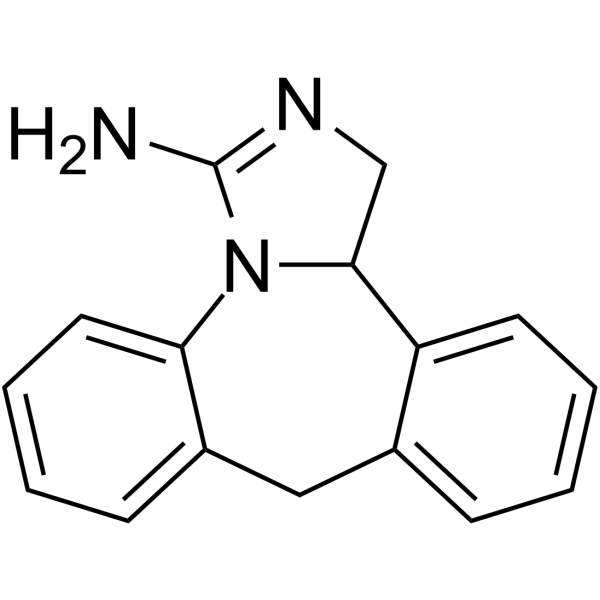 0 ImagesSynonyms: WAL801Epinastine (WAL801) is a selective and orally active histamine H1 receptor antagonist, CD96/PVR inhibitor and mast cell stabilizer. Epinastine has high affinity for neuronal octopamine receptors in locusts (Ki = 2 nM) and honeybees (Ki = 1.1 nM). Epinastine hydrochloride inhibits TARC, IL-8, and IL-4. Epinastine activates anti-colon cancer immunity and inhibits Substance P (HY-P0201)-induced scratching behavior and increased vascular permeability. Epinastine can be used in the research of allergic diseases.
-
Dapirolizumab
 0 ImagesDapirolizumab is an antibody targeting CD40L (CD154). Dapirolizumab can be used in research related to systemic lupus erythematosus.
-
Eluvixtamab
 0 ImagesCat. No.: HY-P99910CAS No.: 1679391-73-1Synonyms: AMG-330Eluvixtamab (AMG-330) is a bispecific T-cell engager. Eluvixtamab binds to CD33 and CD3 on T cells, thereby promoting T cell-mediated cytotoxicity against CD33+ cells. Eluvixtamab can be used in the research of tumors such as relapsed/refractory acute myeloid leukemia.
-
Opicinumab
 0 ImagesSynonyms: BIIB033Opicinumab (BIIB033) is a human IgG1 monoclonal antibody targeting LINGO-1. Opicinumab binds LINGO-1 to block its negative regulatory signaling, suppress axonal degeneration, enhance axonal regeneration, promote remyelination, and exert neuroprotective effects. Opicinumab maintains axonal protective effects during co-administration with methylprednisolone. Opicinumab can be used for the research of multiple sclerosis, acute optic neuritis, and optic neuritis..
-
Anti-Mouse CD8a Antibody (53-6.7)
 0 ImagesCat. No.: HY-P99129Purity: 98.18%Anti-Mouse CD8a Antibody (53-6.7) is an anti-mouse CD8a IgG2a antibody inhibitor derived from host Rat. Anti-Mouse CD8a Antibody (53-6.7) binds to CD8αβ stabilizes a conformation with a higher affinity for interaction with MHC class I. Anti-Mouse CD8a Antibody (53-6.7) induces the phosphorylation and activation of TCR proximal signaling pathway components Lck and ZAP70 in polyclonal memory T cells. Anti-Mouse CD8a Antibody (53-6.7) depletes CD8+ T cells and neutralizes cytokine in mice.
-
Polatuzumab vedotin (solution)
 0 ImagesPolatuzumab vedotin solution is an antibody-drug conjugate targeting CD79b. It contains a humanized anti-CD79b IgG1 monoclonal antibody linked to monomethyl auristatin E (MMAE), a potent microtubule inhibitor. The antibody portion is Polatuzumab (HY-P99042), and the drug-linker conjugate for ADC is VcMMAE (HY-15575). Polatuzumab vedotin solution has the potential for the research of Large B-cell lymphomas (LBCL).
-
Thrombospondin (TSP-1)-derived CD36 binding motif
 0 ImagesThrombospondin (TSP-1)-derived CD36 binding motif is a bioactive hexapeptide. Thrombospondin (TSP-1)-derived CD36 binding motif interferes with the interaction between cells and the extracellular matrix by binding to CD36 and angiostatin, thereby affecting the cell adhesion and migration process. Thrombospondin (TSP-1)-derived CD36 binding motif inhibits platelet aggregation. Thrombospondin (TSP-1)-derived CD36 binding motif exerts an anti-tumor effect against colon cancer.
-
Anti-CD44 Antibody (Hermes-1)
 0 ImagesCat. No.: HY-P990859Anti-CD44 Antibody (Hermes-1) is a kind of rat IgG2a κ chimeric antibody, targeting to human CD44. Anti-CD44 Antibody (Hermes-1) blocks the binding of hyaluronan to CD44. Anti-CD44 Antibody (Hermes-1) restores (Platelet-derived Growth Factor-BB)-induced β-receptor activation and motility in fibroblasts. Anti-CD44 Antibody (Hermes-1) causes partial loss of the anti-aging effect of hyaluronic.
-
Meplazumab
 0 ImagesCat. No.: HY-P991501Purity: 98.70%Synonyms: HcHAb18Meplazumab (HcHAb18) is a humanized anti-CD147 IgG1 antibody a Kd of 0.47 nM. Meplazumab shows anti-SARS-CoV-2 and antitumor activity. Meplazumab conjugated with DM1 can form an antibody-conjugated drug ( HcHAb18-DM1), which induces G2/M phase cell cycle arrest and exerts antiproliferative activity in cancer cells. Meplazumab can be used for the researches of COVID-19 pneumonia and non-small cell lung cancer.



