



Transmembrane Glycoprotein Activator
-
Gum arabic
 0 Images
Gum Arabic is an orally active complex branched polysaccharide. Gum Arabic can be isolated from the Acacia senegal tree. Gum Arabic upregulates the expression of maturation markers (CD86, CD40, and CD54), promotes ERK1/2 phosphorylation, and inhibits Apoptosis. Gum Arabic exhibits antimalarial effects against Plasmodium berghei ANKA. Gum Arabic exhibits hepatoprotective, renal, and cardiovascular protective activities. Gum Arabic improves obesity. Gum Arabic is commonly used as a stabilizer and thickener. Gum Arabic can be used in the research of brain tumor imaging.
-
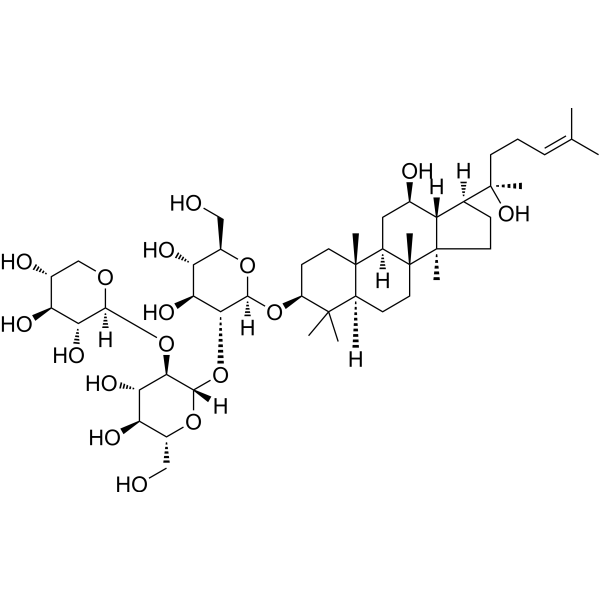
Notoginsenoside Ft1
 0 Images
Notoginsenoside Ft1 is an orally active bioactive saponin. Notoginsenoside Ft1 inhibits the PI3K/AKT/mTOR signaling pathway, activates the p38 MAPK and ERK1/2 signaling pathways, and increases the proportion of CD8+ T cells, thereby inducing apoptosis and lysosomal cell death in various cancer cells, and promoting angiogenesis. Notoginsenoside Ft1 causes vasodilation by activating glucocorticoid receptors (GR) and estrogen receptor beta (ERβ) in endothelial cells. Notoginsenoside Ft1 increases intracellular Ca2+ accumulation, reduces cAMP levels by activating a signaling network mediated through P2Y12 receptors, and promotes platelet aggregation, thereby exerting a procoagulant effect. Notoginsenoside Ft1 inhibits ferroptosis (ferroptosis) in renal tubular epithelial cells by activating the TGR5 receptor, thereby demonstrating a renal protective effect. Notoginsenoside Ft1 acts as a TGR5 agonist and an FXR antagonist to combat obesity and insulin resistance.
-
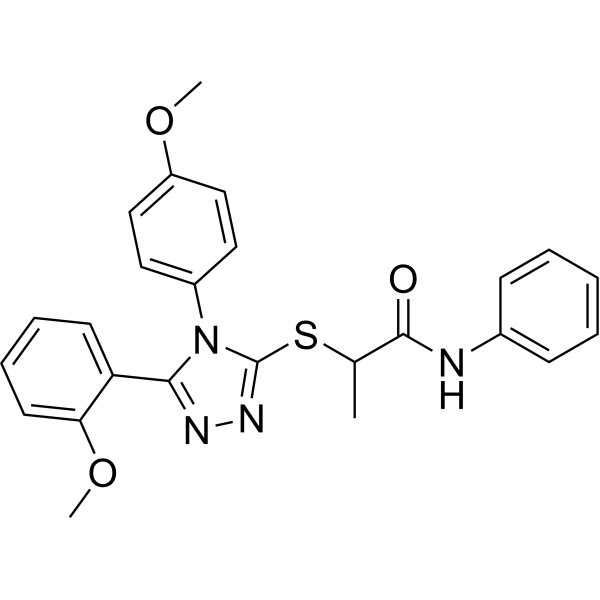
ASN02563583
 0 Images
ASN02563583, a compound that regulates the activity of the GPR17 receptor, has a IC50 value of 0.64 nM in [35S]GTPγS binding assay. ASN02563583 can be used in the study of neurological diseases.
-
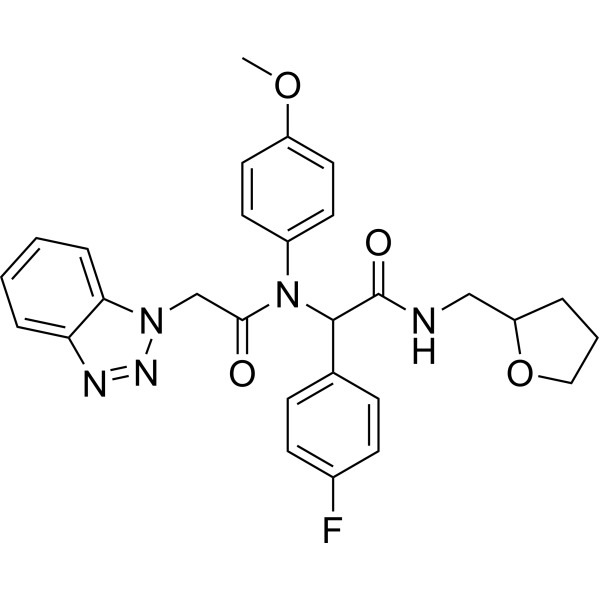
ASN04885796
 0 Images
ASN04885796 (compound IV) is an GPR17 activator with an EC50 of 2.27 nM for GPR17 induced GTPγS binding. ASN04885796 has neuroprotective property and can be used for research of neurological diseases.
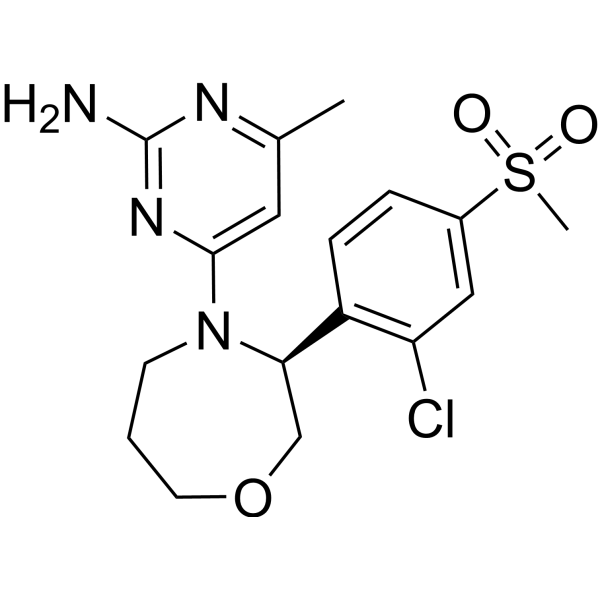
-
GPR110 peptide agonist P12
 0 ImagesCat. No.: HY-P10495CAS No.: 1778685-49-6
GPR110 peptide agonist P12 is a peptide that acts as a GPR110 agonist. GPR110 peptide agonist P12 can significantly enhance the initial rate of GPR110 stimulated G protein GTPγS binding. GPR110 peptide agonist P12 mimics the action of natural ligands, causing the extracellular domain (ECD) of the GPR110 to dissociate from the seven transmembrane domains (7TM), exposing the β-strand-13/stalk region at the N-terminus of the 7TM domain, which acts as an agonist to activate G protein signaling. GPR110 peptide agonist P12 can be used in the study of developmental disorders and cancers related to GPR110.
-
Tyrosylprotein Sulfotransferase 2
 0 ImagesCat. No.: HY-E70190Synonyms: EC:2.8.2.20; TPST2
Tyrosylprotein Sulfotransferase 2 (TPST-2) is a subtype of TPST. Tyrosylprotein Sulfotransferase is a 54- to 50-kDa integral membrane glycoprotein of the trans-Golgi network found in essentially all tissues investigated, catalyzing the tyrosine O-sulfation of soluble and membrane proteins passing through this compartment.
-
[Gln144]-PLP (139-151)
![[Gln144]-PLP (139-151)](https://file.medchemexpress.com/product_pic/hy-p10315.gif "Click to View [Gln144]-PLP (139-151) Product Detail") 0 ImagesCat. No.: HY-P10315CAS No.: 170033-42-8Synonyms: Q144-PLP(139-151)
0 ImagesCat. No.: HY-P10315CAS No.: 170033-42-8Synonyms: Q144-PLP(139-151)[Gln144]-PLP (139-151) is an experimental antigen used to study T cells respond to both autoantigens and cross-reactive non-autoantigens. [Gln144]-PLP (139-151) activates T cells by binding to T-cell Receptor (TCR), which triggers an immune response. [Gln144]-PLP (139-151) can be used to study the regulation of autoimmune diseases.
-
Stalk peptide
 0 ImagesCat. No.: HY-P10430
Stalk peptide is a GPR110 activator. Stalk peptide is released from GPCR Autoproteolysis INducing domain by autocatalytic process and then Stalk peptide is inserted into the ligand-binding pocket of the receptor to activate the receptor. Stalk peptide can promote nerve growth and synaptic formation. Stalk peptide can be used to study neurodevelopmental and neurodegenerative diseases.
-
Yinyanghuo C
 0 ImagesCat. No.: HY-N13016CAS No.: 149182-47-8
Yinyanghuo C is a prenylated flavonoid isolated from the leaves of Epimedium sagittatum. Yinyanghuo C increases the mRNA expression levels of endothelial cell markers and enhances cancer-associated angiogenesis in the 4T1 breast tumor-bearing model.



