



c-Fos Antibody (YA3595)
(Synonyms: p55; AP-1; C-FOS)
Based on 1 Customer Validation
c-Fos Antibody (YA3595) is a Mouse-derived and non-conjugated IgG1 monoclonal antibody, targeting to c-Fos.
-
Host:
Mouse
-
Isotype:
IgG
-
Application:
WB, IHC-P, FC, ELISA
-
Reactivity :
Human
-
Formulation:
Supplied in PBS with 0.05% sodium azide.
-
Conjugation:
Non-conjugated


To place orders, for customer services and technical support, please contact: MedChemExpress USA
Tel: 609-228-6898 E-mail: [email protected] [email protected]





Applications
| Application |
WB

WB: Western Blot
|
IHC-P
IHC-P: Immunohistochemistry-Paraffin
|
FC
FC: Flow Cytometry
|
ELISA
ELISA: Enzyme Linked Immunosorbent Assay
|
|---|---|---|---|---|
| Dilution Ratio | 1:500-1:2000 | 1:200-1:1000 | 1:200-1:400 | 1:10000 |


Product Details
c-Fos Antibody (YA3595) is a Mouse-derived and non-conjugated IgG1 monoclonal antibody, targeting to c-Fos.
-
Host Mouse

-
Clonality Monoclonal

-
Species ReactivityHuman
-
Observed Molecular WeightObserved band size: 58 kDa
Note: Due to possible protein modifications or aggregation, the molecular weight should be confirmed by actual measurement, and the predicted value is for reference only.

-
Calculated Molecular Weight Predicted band size: 41 kDa

Purified recombinant fragment of human FOS aa 116-298.
affinity purified.
Non-conjugated
Unmodified
IgG


Product Properties
-
Appearance
Solution
-
Formulation
Supplied in PBS with 0.05% sodium azide.
-
Concentration
Batch-dependent, Please check the COA for the concentration of each lot. Check Lot Concentration
-
Storage & Stability
Stored at -20°C for 1 year. Avoid repeated freeze / thaw cycles.
-
Shipping
Shipping with blue ice.


Verification Images
-
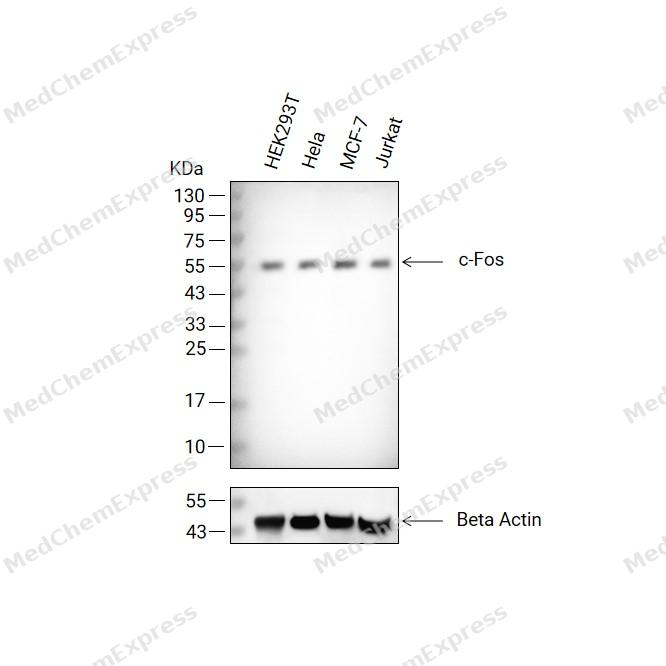 Western blot analysis of extracts from HEK293T (lane2(20μg), Hela (lane3(20μg), MCF-7 (lane4(20μg) and Jurkat (lane5(20μg) using c-Fos Antibody (HY-P83898). Proteins were transferred to a PVDF membrane and blocked with 5% non-fat milk in TBST at 4°C overnight. The primary antibody (1/1000) and Loading control antibody (Beta Actin, HY-P80993, 1/10,000) was used in 5% non-fat milk in TBST for 2 hour at room temperature. Goat Anti-Mouse IgG-HRP Secondary Antibody (HY-P8004, 1/10,000) was used for 1 hour at room temperature.
 -
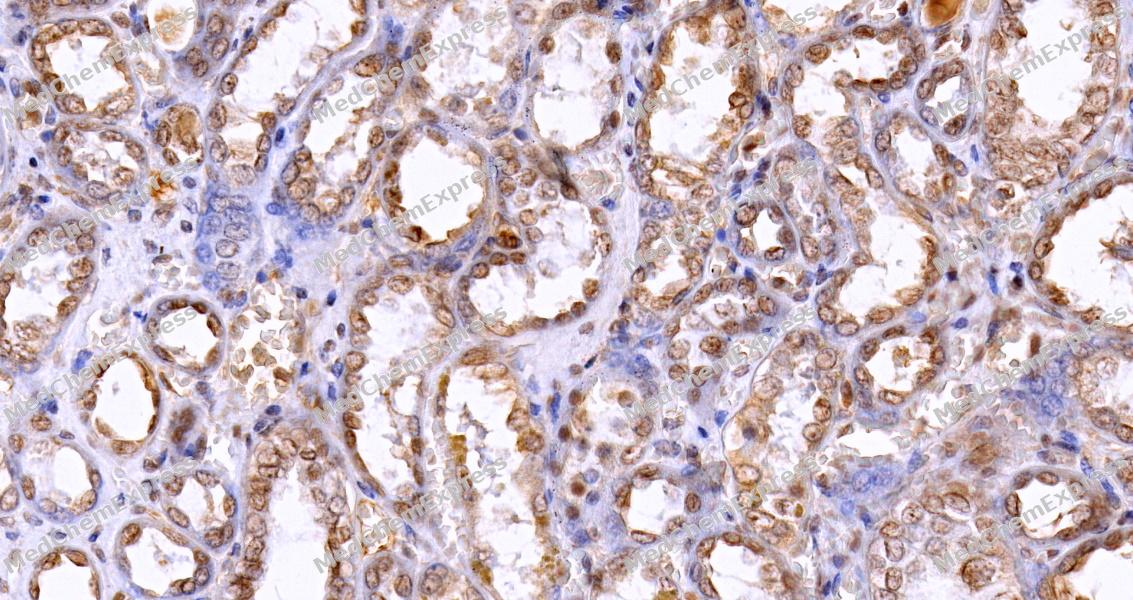 Immunohistochemical analysis of paraffin-embedded human kidney tissue using c-Fos Antibody (HY-P83898, 1/500) . The section was pretreated using heat mediated antigen retrieval with sodium citrate buffer (PH 6.0)for 8 minutes. The tissues were blocked with quick block buffer for 0.5 hours at room temperature, washed with PBS and PBST, and then incubated with the primary antibody overnight at 5℃. The detection was performed using an HRP conjugated compact polymer system. DAB was used as the chromogen. Tissues were counterstained with hematoxylin and mounted with DPX.
 -
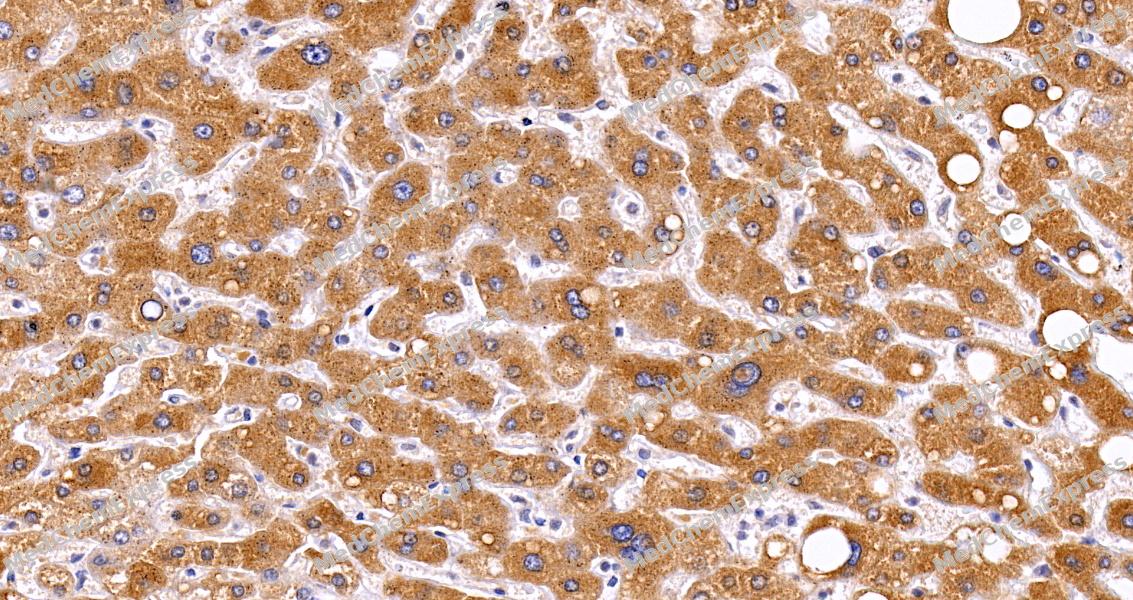 Immunohistochemical analysis of paraffin-embedded human liver tissue using c-Fos Antibody (HY-P83898, 1/500) . The section was pretreated using heat mediated antigen retrieval with sodium citrate buffer (PH 6.0)for 8 minutes. The tissues were blocked with quick block buffer for 0.5 hours at room temperature, washed with PBS and PBST, and then incubated with the primary antibody overnight at 5℃. The detection was performed using an HRP conjugated compact polymer system. DAB was used as the chromogen. Tissues were counterstained with hematoxylin and mounted with DPX.
 -
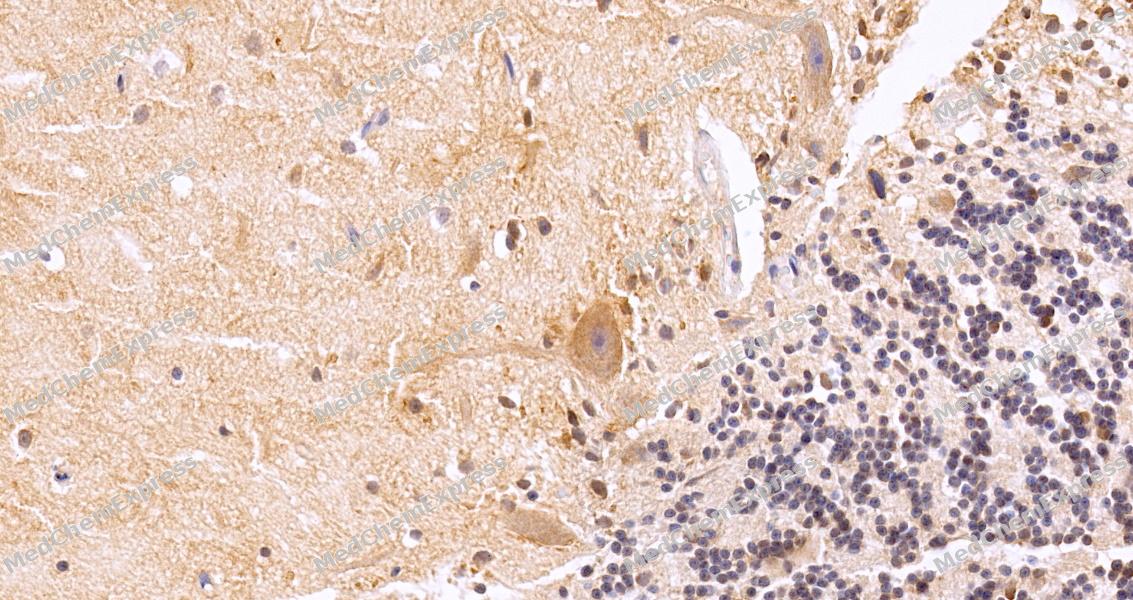 Immunohistochemical analysis of paraffin-embedded human cerebellum tissue using c-Fos Antibody (HY-P83898, 1/500) . The section was pretreated using heat mediated antigen retrieval with sodium citrate buffer (PH 6.0)for 8 minutes. The tissues were blocked with quick block buffer for 0.5 hours at room temperature, washed with PBS and PBST, and then incubated with the primary antibody overnight at 5℃. The detection was performed using an HRP conjugated compact polymer system. DAB was used as the chromogen. Tissues were counterstained with hematoxylin and mounted with DPX.
 -
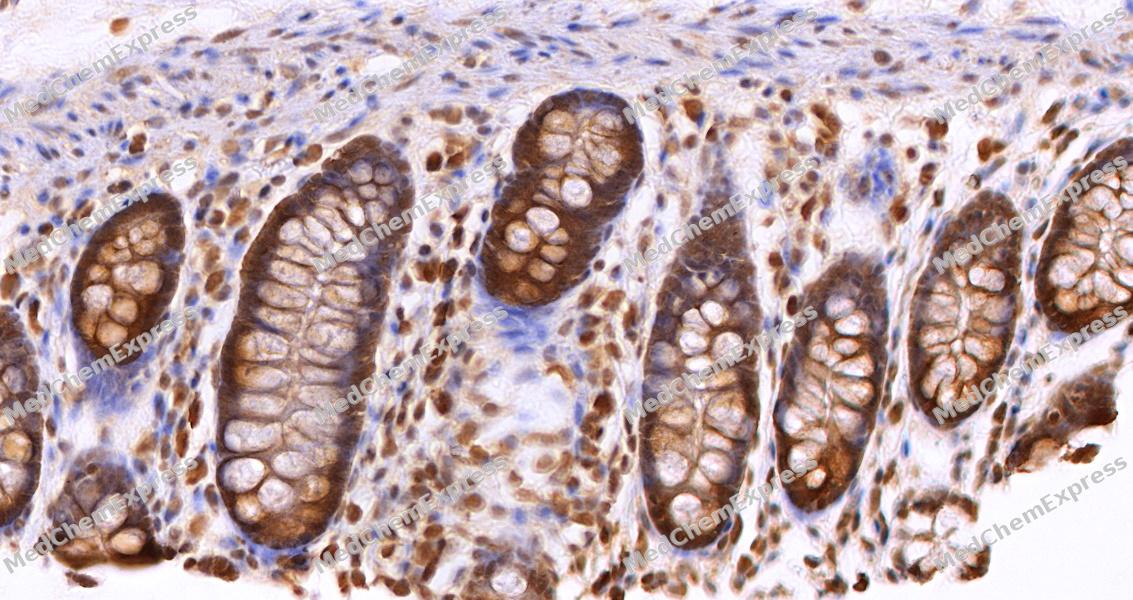 Immunohistochemical analysis of paraffin-embedded human colon tissue using c-Fos Antibody (HY-P83898, 1/500) . The section was pretreated using heat mediated antigen retrieval with sodium citrate buffer (PH 6.0)for 8 minutes. The tissues were blocked with quick block buffer for 0.5 hours at room temperature, washed with PBS and PBST, and then incubated with the primary antibody overnight at 5℃. The detection was performed using an HRP conjugated compact polymer system. DAB was used as the chromogen. Tissues were counterstained with hematoxylin and mounted with DPX.
 -
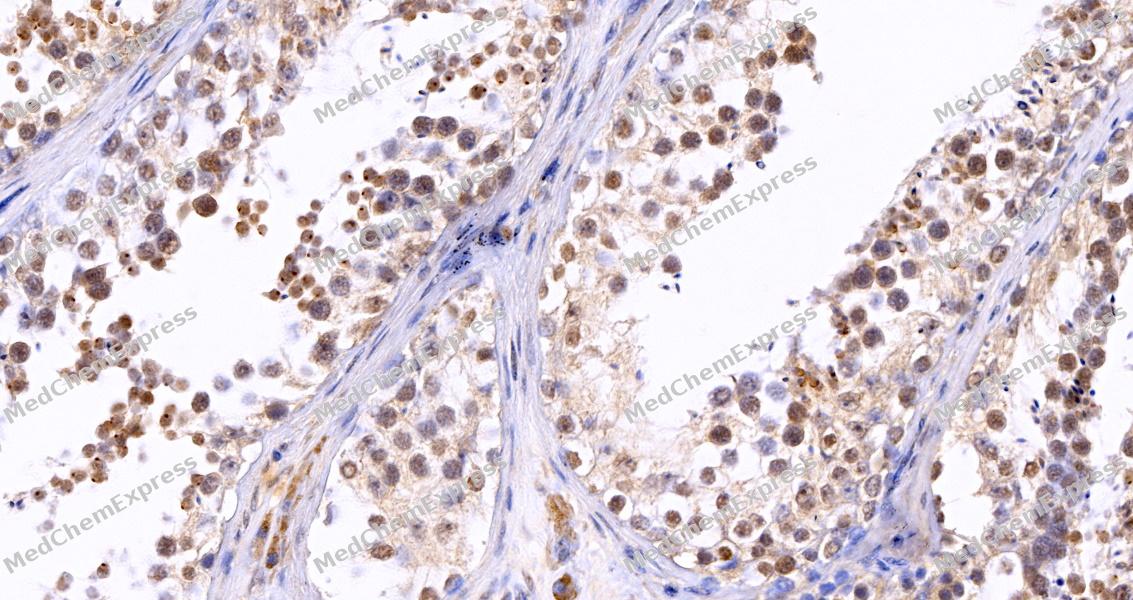 Immunohistochemical analysis of paraffin-embedded human testis tissue using c-Fos Antibody (HY-P83898, 1/500) . The section was pretreated using heat mediated antigen retrieval with sodium citrate buffer (PH 6.0)for 8 minutes. The tissues were blocked with quick block buffer for 0.5 hours at room temperature, washed with PBS and PBST, and then incubated with the primary antibody overnight at 5℃. The detection was performed using an HRP conjugated compact polymer system. DAB was used as the chromogen. Tissues were counterstained with hematoxylin and mounted with DPX.
 -
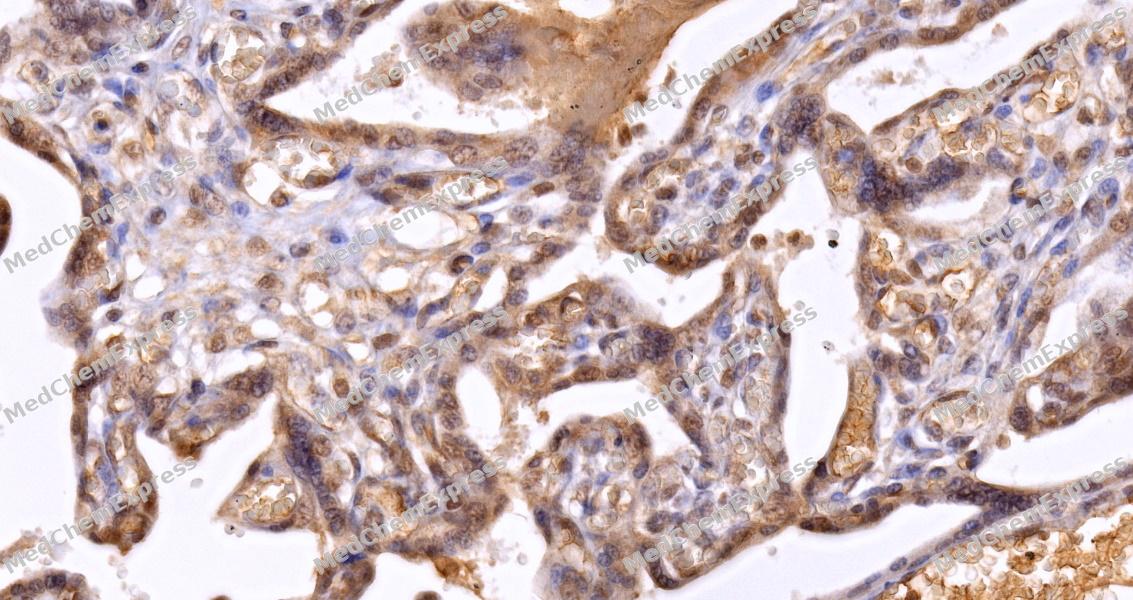 Immunohistochemical analysis of paraffin-embedded human placenta tissue using c-Fos Antibody (HY-P83898, 1/500) . The section was pretreated using heat mediated antigen retrieval with sodium citrate buffer (PH 6.0)for 8 minutes. The tissues were blocked with quick block buffer for 0.5 hours at room temperature, washed with PBS and PBST, and then incubated with the primary antibody overnight at 5℃. The detection was performed using an HRP conjugated compact polymer system. DAB was used as the chromogen. Tissues were counterstained with hematoxylin and mounted with DPX.


Background
-
Function
c-Fos is an immediate-early gene product and transcription factor that functions as a central mediator of stimulus-dependent gene expression, linking transient extracellular signals to long-term cellular responses through regulation of downstream target genes[1]. Mechanistically, c-Fos belongs to the Fos family and forms the activator protein-1 (AP-1) transcription factor complex through dimerization with Jun family proteins, thereby regulating genes involved in cellular differentiation, proliferation, development, plasticity, and survival[4][3][2]. c-Fos expression is rapidly induced by neuronal activity, calcium- and cAMP-dependent signaling, and other environmental stimuli, making it a widely used molecular marker of cellular activation and stimulus-transcription coupling in experimental systems[1][3]. In disease and experimental models, c-Fos has been extensively employed to map activated neuronal populations during seizures, learning, memory formation, and behavioral responses, providing a framework for investigating neural circuit function and activity-dependent transcriptional programs[1][3]. Compared with related Fos family members, including FosB, Fra-1 (FOSL1), and Fra-2 (FOSL2), c-Fos contains a C-terminal transactivation domain and exhibits distinctive transcriptional regulatory properties within AP-1 complexes[4]. For experimental applications, c-Fos is primarily used as an activity-dependent biomarker rather than a direct pharmacological target, enabling quantitative assessment of cellular activation, neural network recruitment, and stimulus-responsive signaling pathways in neuroscience and molecular biology research[3][5].
-
Subcellular Localization
Nucleus; Endoplasmic reticulum; Cytoplasm, cytosol
-
Isoforms & Post-Translational Modification
P01100 has 3 isomers: P01100-1: 40695 Da (predicted); P01100-2: 28986 Da (predicted); P01100-3: 36301 Da (predicted).
Phosphorylated in the C-terminal upon stimulation by nerve growth factor (NGF) and epidermal growth factor (EGF). Phosphorylated, in vitro, by MAPK and RSK1. Phosphorylation on both Ser-362 and Ser-374 by MAPK1/2 and RSK1/2 leads to protein stabilization with phosphorylation on Ser-374 being the major site for protein stabilization on NGF stimulation. Phosphorylation on Ser-362 and Ser-374 primes further phosphorylations on Thr-325 and Thr-331 through promoting docking of MAPK to the DEF domain. Phosphorylation on Thr-232, induced by HA-RAS, activates the transcriptional activity and antagonizes sumoylation. Phosphorylation on Ser-362 by RSK2 in osteoblasts contributes to osteoblast transformation (By similarity);Constitutively sumoylated with SUMO1, SUMO2 and SUMO3. Desumoylated by SENP2. Sumoylation requires heterodimerization with JUN and is enhanced by mitogen stimulation. Sumoylation inhibits the AP-1 transcriptional activity and is, itself, inhibited by Ras-activated phosphorylation on Thr-232;In quiescent cells, the small amount of FOS present is phosphorylated at Tyr-10 and Tyr-30 by SRC. This Tyr-phosphorylated form is cytosolic. In growing cells, dephosphorylated by PTPN2. Dephosphorylation leads to the association with endoplasmic reticulum membranes and activation of phospholipid synthesis -
Subunit
Heterodimer; with JUN (By similarity). Component of the SMAD3/SMAD4/JUN/FOS complex required for synergistic TGF-beta-mediated transcription at the AP1 promoter site (PubMed:9732876). Interacts with SMAD3; the interaction is weak even on TGF-beta activation (PubMed:9732876). Interacts with MAFB (By similarity). Interacts with TSC22D3 (via N-terminus); this interaction inhibits the binding of active AP1 to its target DNA (By similarity). Interacts with CDS1 and PI4K2A (By similarity). Interacts (via bZIP domain and leucine-zipper region) with the multiprotein chromatin-remodeling complexes SWI/SNF: SWI/SNF-A (BAF) subunits SMARCB1, SMARCC2 and SMARCD1 (By similarity). Interacts (via bZIP domain and leucine-zipper region) with ARID1A (By similarity)
-
SwissProt ID
-
Synonyms
p55; AP-1; C-FOS


Documentation
-
Data Sheet (261 KB)
-
SDS (251 KB)
- English - EN (251 KB)
- Français - FR (251 KB)
- Deutsch - DE (251 KB)
- Norwegian - NO (251 KB)
- Español - ES (251 KB)
- Swedish - SV (251 KB)
- Italian - IT (251 KB)
- Korean - KR (251 KB)
- Portuguese - PT (251 KB)
-
User Guide for Antibodies (1077 KB)
References
[2]. Curran T, et al. Fos: an immediate-early transcription factor in neurons. J Neurobiol. 1995 Mar;26(3):403-12. [Content Brief]
[4]. Srivastava SK, et al. Genetic regulation of spy gene expression in Escherichia coli in the presence of protein unfolding agent ethanol. Gene. 2014 Sep 10;548(1):142-8. [Content Brief]
[5]. Cruz-Mendoza F, et al. Immediate early gene c-fos in the brain: focus on glial cells. Brain Sci. 2022;12(6):687. [Content Brief]
[6]. Lara Aparicio SY, et al. Current opinion on the use of c-Fos in neuroscience. NeuroSci. 2022;3(4):687-702. [Content Brief]

 Powered by Bioz
