



MMP-1 Antibody (YA3394)
(Synonyms: MMP1; CLG; Interstitial collagenase; Fibroblast collagenase; Matrix metalloproteinase-1; MMP-1)Based on 1 Customer Validation
MMP-1 Antibody (YA3394) is a Rabbit-derived and non-conjugated IgG monoclonal antibody, targeting to MMP-1.
-
Host:
Rabbit
-
Isotype:
IgG
-
Application:
WB, FC, ICC/IF, IHC-P
-
Reactivity :
Human
-
Formulation:
Supplied in 10mM PBS, pH 7.4, 150mM sodium chloride, 0.05% BSA, 0.02% sodium azide and 50% Glycerol.
-
Conjugation:
Non-conjugated


To place orders, for customer services and technical support, please contact: MedChemExpress USA
Tel: 609-228-6898 E-mail: [email protected] [email protected]





Applications
| Application |
WB

WB: Western Blot
|
IHC-P
IHC-P: Immunohistochemistry-Paraffin
|
ICC/IF
ICC/IF: Immunocytochemistry/
Immunofluorescence |
FC
FC: Flow Cytometry
|
|---|---|---|---|---|
| Dilution Ratio | 1:500-1:1000 | 1:50-1:100 | 1:50-1:200 | 1:50-1:100 |


Product Details
MMP-1 Antibody (YA3394) is a Rabbit-derived and non-conjugated IgG monoclonal antibody, targeting to MMP-1.
-
Host Rabbit

-
Clonality Monoclonal

-
Species ReactivityHuman
-
Observed Molecular WeightObserved band size: 54 kDa
Note: Due to possible protein modifications or aggregation, the molecular weight should be confirmed by actual measurement, and the predicted value is for reference only.

-
Calculated Molecular Weight Predicted band size: 54 kDa

A synthesized peptide derived from human MMP1 aa110-145.
Endogenous
affinity purified
Non-conjugated
Unmodified
IgG


Product Properties
-
Appearance
Solution
-
Formulation
Supplied in 10mM PBS, pH 7.4, 150mM sodium chloride, 0.05% BSA, 0.02% sodium azide and 50% Glycerol.
-
Concentration
Batch-dependent, Please check the COA for the concentration of each lot. Check Lot Concentration
-
Storage & Stability
Stored at -20°C for 1 year. Avoid repeated freeze / thaw cycles.
-
Shipping
Shipping with blue ice.


Verification Images
-
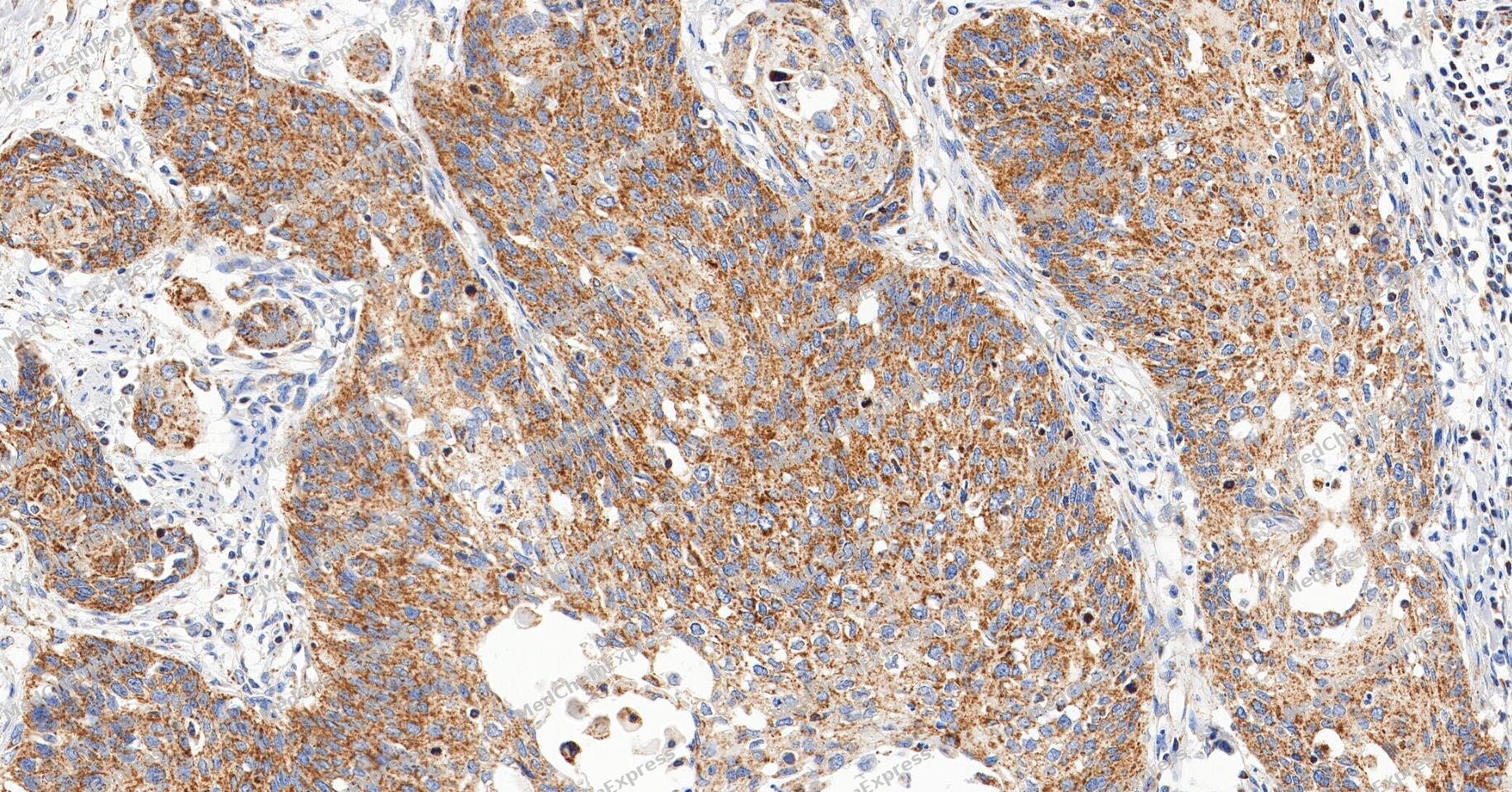 Immunohistochemical analysis of paraffin-embedded human cervical cancer tissue using MMP-1 Antibody (YA3394). The section was pre-treated using heat mediated antigen retrieval with Tris/EDTA buffer (pH 9.0) for 20 minutes. The tissues were probed with the primary antibody (HY-P80754A, 1/100) overnight at 4℃. The detection was performed using an HRP conjugated compact polymer system. DAB was used as the chromogen. Tissues were counterstained with hematoxylin and mounted with neutral balsam.
 -
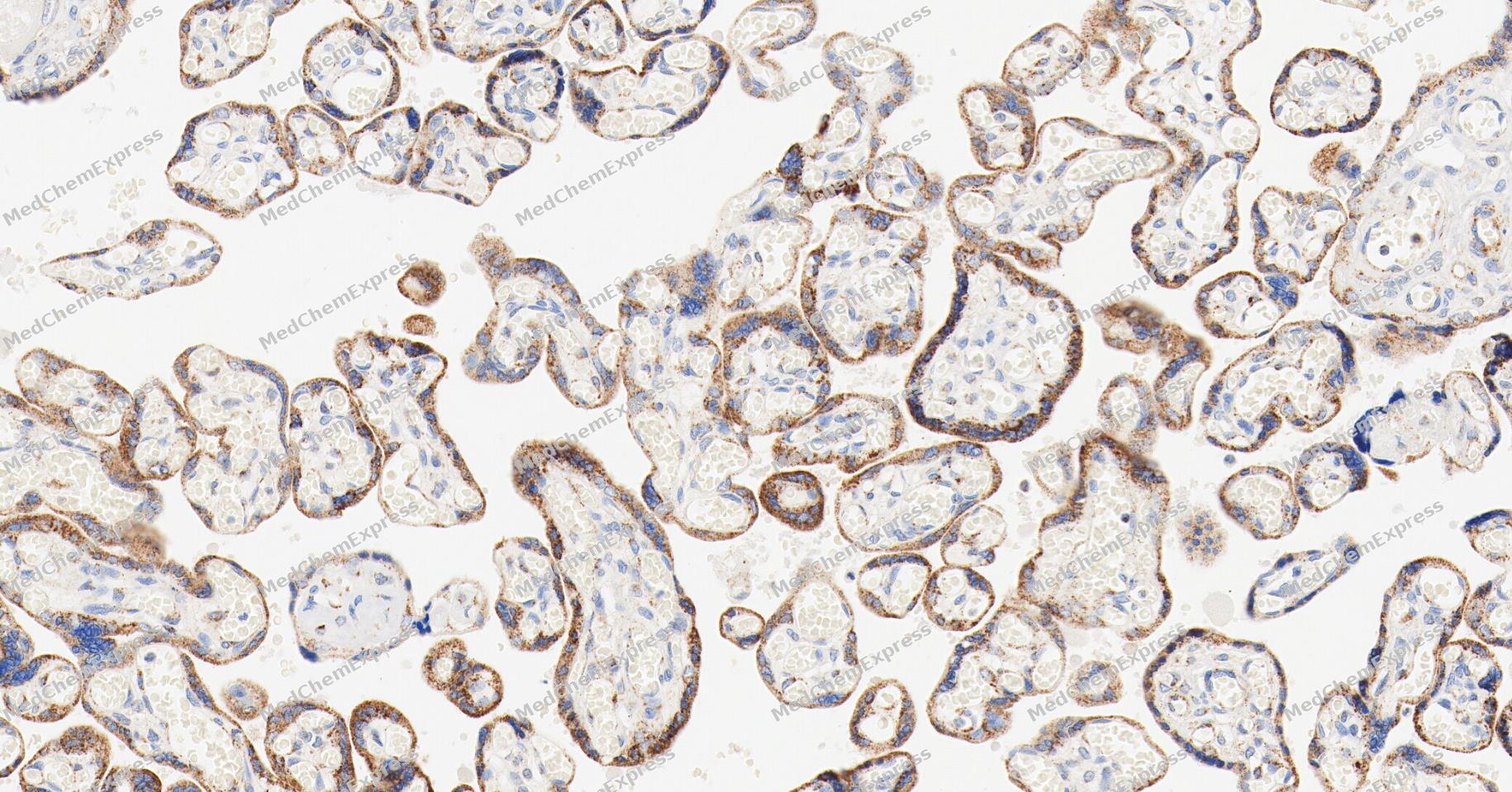 Immunohistochemical analysis of paraffin-embedded human placenta tissue using MMP-1 Antibody (YA3394). The section was pre-treated using heat mediated antigen retrieval with Tris/EDTA buffer (pH 9.0) for 20 minutes. The tissues were probed with the primary antibody (HY-P80754A, 1/100) overnight at 4℃. The detection was performed using an HRP conjugated compact polymer system. DAB was used as the chromogen. Tissues were counterstained with hematoxylin and mounted with neutral balsam.
 -
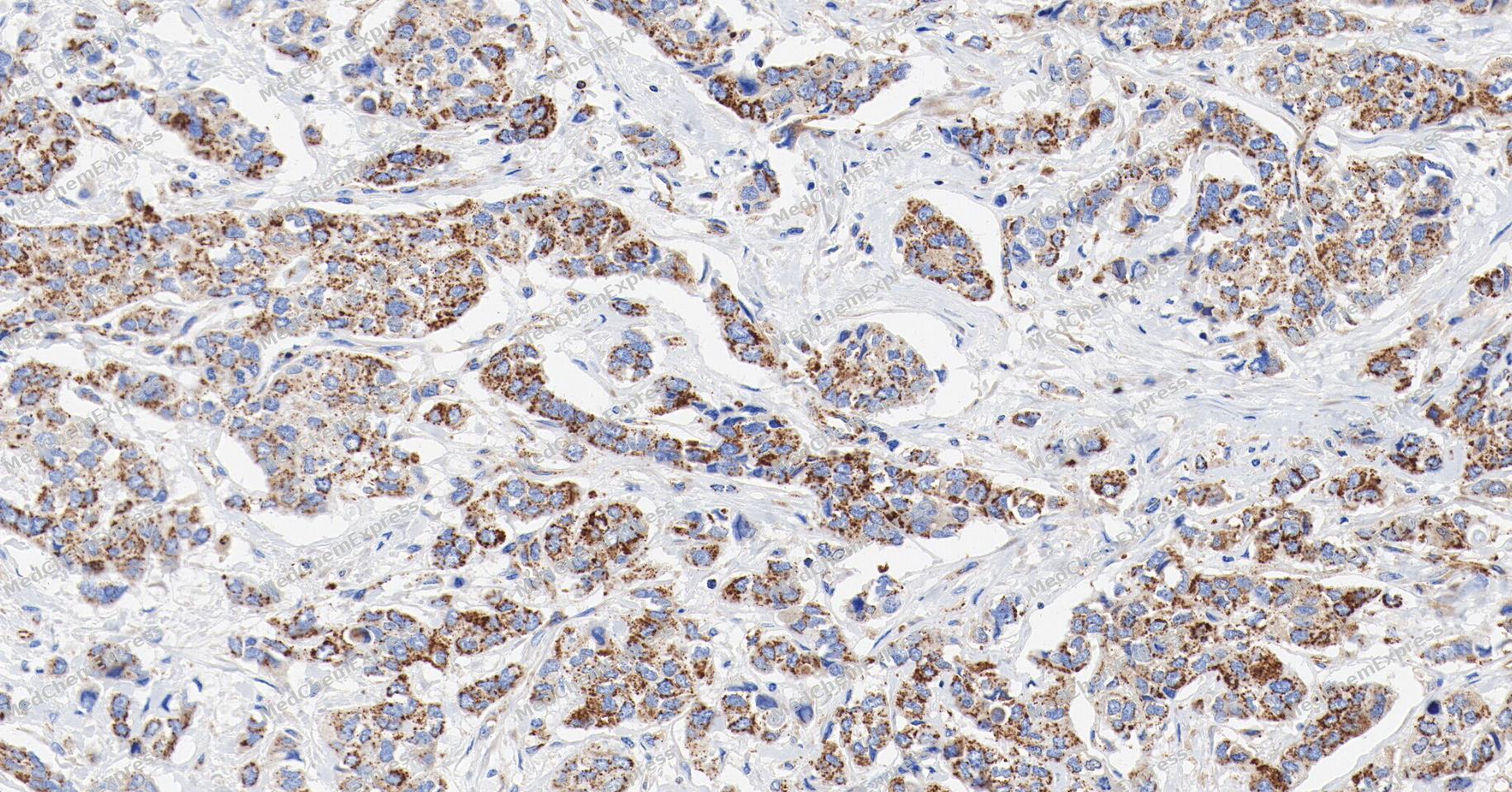 Immunohistochemical analysis of paraffin-embedded human breast cancer tissue using MMP-1 Antibody (YA3394). The section was pre-treated using heat mediated antigen retrieval with Tris/EDTA buffer (pH 9.0) for 20 minutes. The tissues were probed with the primary antibody (HY-P80754A, 1/100) overnight at 4℃. The detection was performed using an HRP conjugated compact polymer system. DAB was used as the chromogen. Tissues were counterstained with hematoxylin and mounted with neutral balsam.
 -
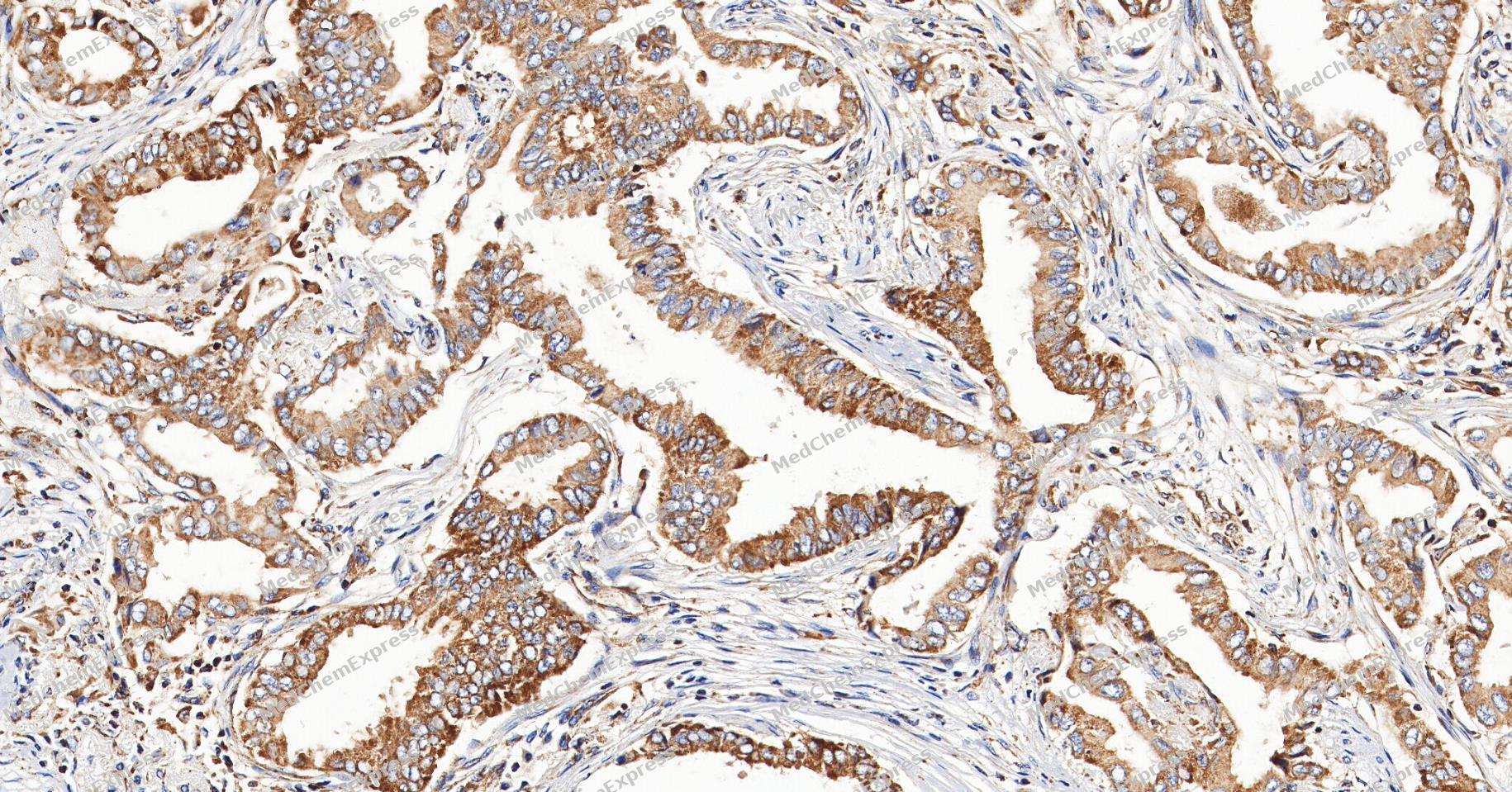 Immunohistochemical analysis of paraffin-embedded human lung cancer tissue using MMP-1 Antibody (YA3394). The section was pre-treated using heat mediated antigen retrieval with Tris/EDTA buffer (pH 9.0) for 20 minutes. The tissues were probed with the primary antibody (HY-P80754A, 1/100) overnight at 4℃. The detection was performed using an HRP conjugated compact polymer system. DAB was used as the chromogen. Tissues were counterstained with hematoxylin and mounted with neutral balsam.
 -
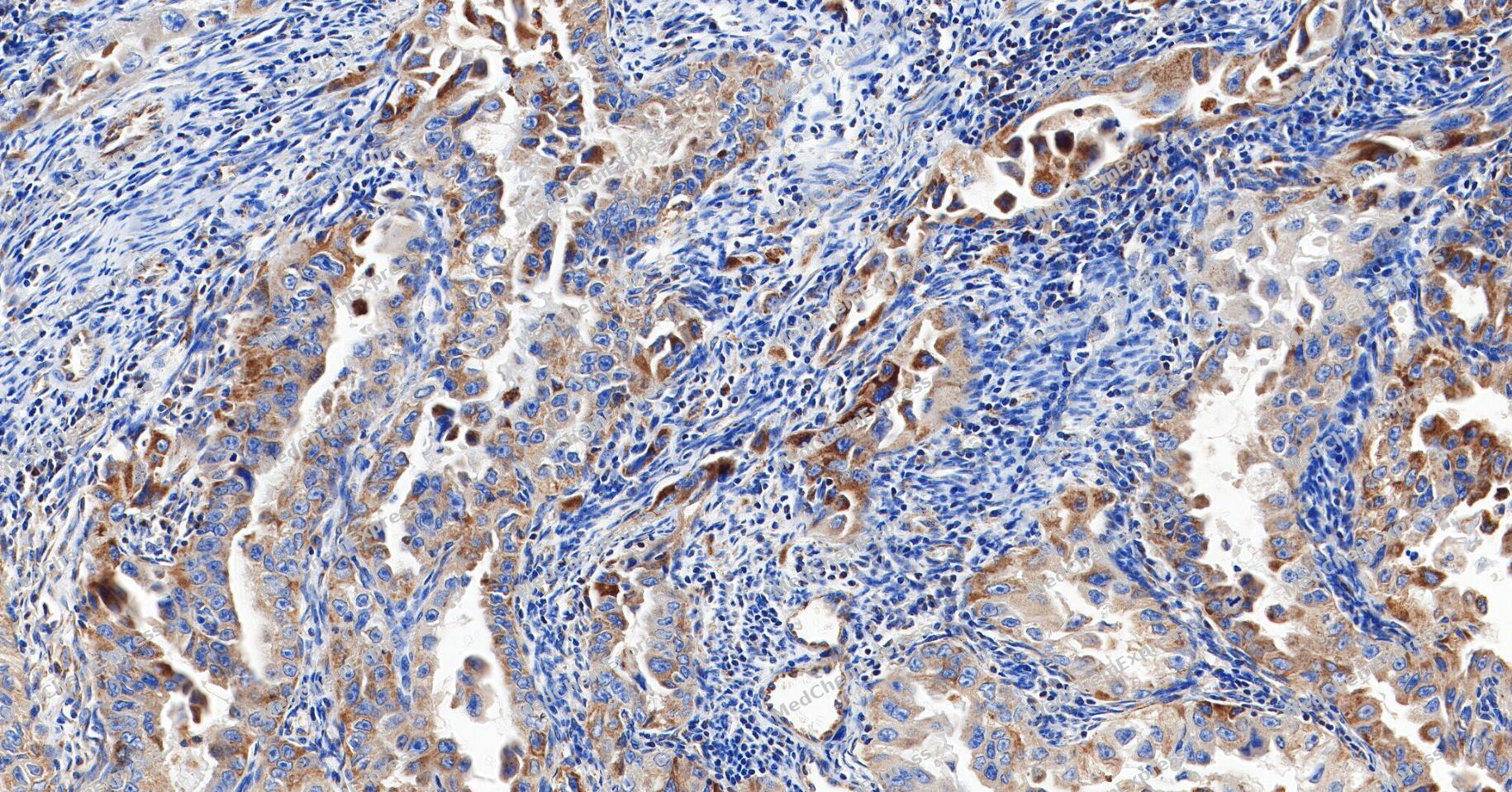 Immunohistochemical analysis of paraffin-embedded human ovarian cancer tissue using MMP-1 Antibody (YA3394). The section was pre-treated using heat mediated antigen retrieval with Tris/EDTA buffer (pH 9.0) for 20 minutes. The tissues were probed with the primary antibody (HY-P80754A, 1/100) overnight at 4℃. The detection was performed using an HRP conjugated compact polymer system. DAB was used as the chromogen. Tissues were counterstained with hematoxylin and mounted with neutral balsam.
 -
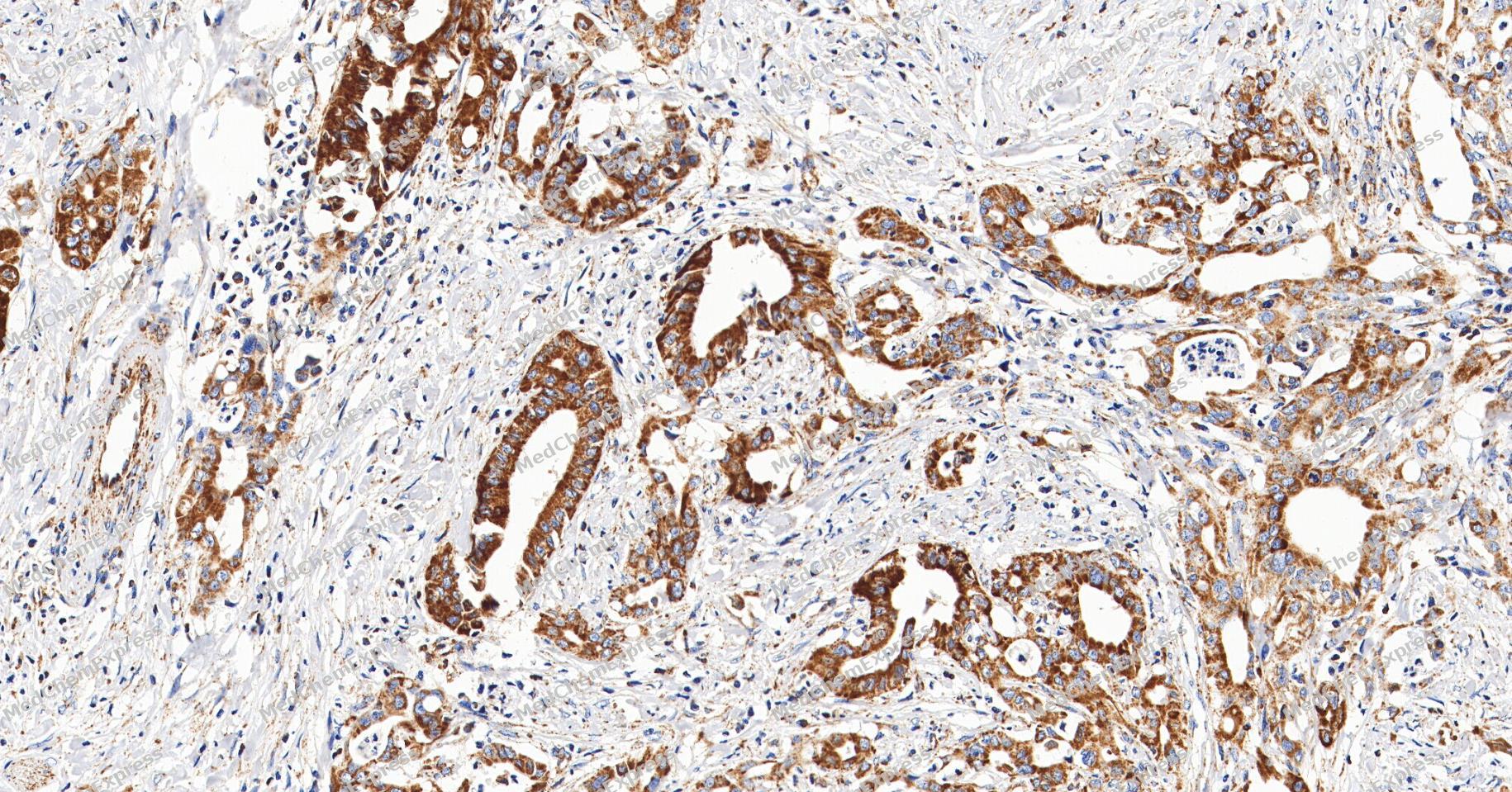 Immunohistochemical analysis of paraffin-embedded human liver cancer tissue using MMP-1 Antibody (YA3394). The section was pre-treated using heat mediated antigen retrieval with Tris/EDTA buffer (pH 9.0) for 20 minutes. The tissues were probed with the primary antibody (HY-P80754A, 1/100) overnight at 4℃. The detection was performed using an HRP conjugated compact polymer system. DAB was used as the chromogen. Tissues were counterstained with hematoxylin and mounted with neutral balsam.
 -
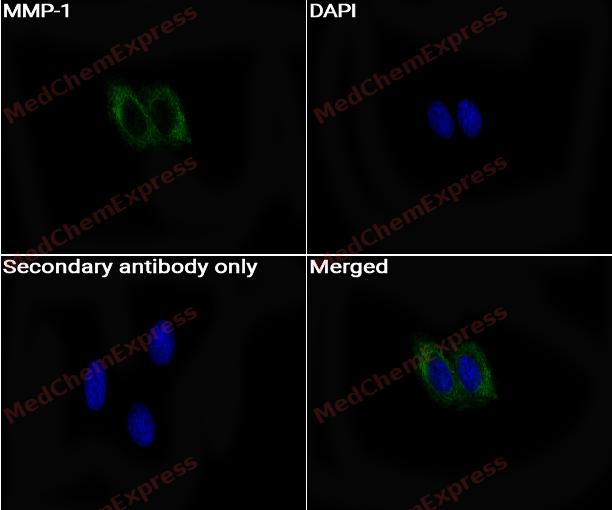 Immunocytochemistry analysis of HepG2 cells labeling MMP-1 with MMP-1 Antibody (HY-P80754A) at 1/50 dilution. Cells were fixed in 4% paraformaldehyde for 15 minutes at room temperature, permeabilized with 0.1% Triton X-100 in PBS for 15 minutes at room temperature, then blocked with quick block buffer for 10 minutes at room temperature. Cells were then incubated with MMP-1 Antibody (HY-P80754A) at 1/50 dilution in quick block buffer overnight at 4 ℃. AF488-conjugated Goat Anti-Rabbit IgG H&L(HY-P8002, Green) was used as the secondary antibody at 1/1,000 dilution. PBS instead of the primary antibody was used as the secondary antibody only control. The Nuclear counterstain was DAPI (Blue).
 -
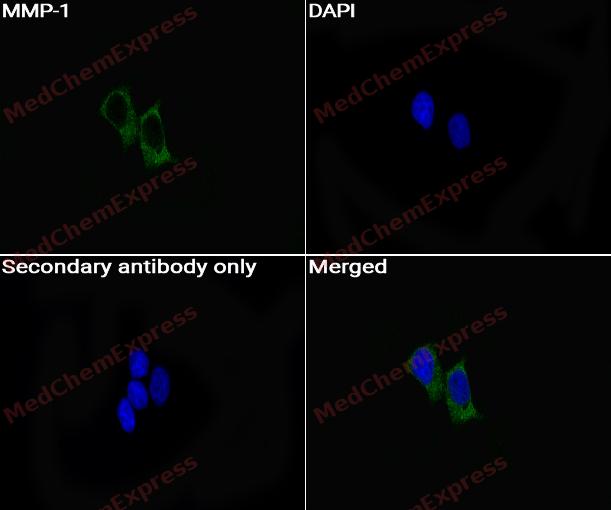 Immunocytochemistry analysis of MCF-7 cells labeling MMP-1 with MMP-1 Antibody (HY-P80754A) at 1/50 dilution. Cells were fixed in 4% paraformaldehyde for 15 minutes at room temperature, permeabilized with 0.1% Triton X-100 in PBS for 15 minutes at room temperature, then blocked with quick block buffer for 10 minutes at room temperature. Cells were then incubated with MMP-1 Antibody (HY-P80754A) at 1/50 dilution in quick block buffer overnight at 4 ℃. AF488-conjugated Goat Anti-Rabbit IgG H&L(HY-P8002, Green) was used as the secondary antibody at 1/1,000 dilution. PBS instead of the primary antibody was used as the secondary antibody only control. The Nuclear counterstain was DAPI (Blue).


Background
-
Function
Matrix metalloproteinase-1 (MMP-1), also known as interstitial collagenase or collagenase-1, is a zinc-dependent extracellular matrix protease that cleaves fibrillar collagens, particularly types I, II, and III collagen[1][2]. MMP-1 initiates collagenolysis by disrupting the triple-helical structure of collagen, enabling subsequent extracellular matrix remodeling during tissue repair and pathological processes[2][3]. Mechanistically, MMP-1 activity is regulated at transcriptional and enzymatic levels, including control by signaling pathways such as AP-1-associated transcriptional regulation[4]. In disease models, increased MMP-1 expression contributes to extracellular matrix degradation in rheumatoid arthritis, tumor invasion, metastasis, and other destructive tissue remodeling conditions[1][4]. MMP-1 promotes keratinocyte migration by enabling movement across type I collagen matrices, demonstrating its role in wound repair models[3]. Compared with related collagenases such as MMP-8 and MMP-13, MMP-1 is broadly expressed by multiple cell types and preferentially functions as an interstitial collagenase involved in degradation of stromal collagens[1][2]. Unlike membrane-type MMPs such as MT1-MMP, MMP-1 is a secreted collagenase that primarily acts within extracellular matrix environments[1][5]. For experimental applications, MMP-1 activity is commonly investigated using genetic regulation studies, collagen degradation assays, and pharmacological inhibition approaches with broad-spectrum or selective metalloproteinase inhibitors[3][6]. MMP-1 inhibition strategies have been explored to study extracellular matrix remodeling mechanisms, although clinical translation of MMP inhibitors remains limited by specificity and safety challenges[2].
-
Subcellular Localization
Secreted, extracellular space, extracellular matrix
-
Subunit
(Microbial infection) Interacts with HIV-1 Tat
-
SwissProt ID
-
Synonyms
MMP1; CLG; Interstitial collagenase; Fibroblast collagenase; Matrix metalloproteinase-1; MMP-1
-
Research Field
Primary Antibody; Rabbit Monoclonal Antibody


Documentation
-
Data Sheet (261 KB)
-
SDS (252 KB)
- English - EN (252 KB)
- Français - FR (252 KB)
- Deutsch - DE (252 KB)
- Norwegian - NO (252 KB)
- Español - ES (252 KB)
- Swedish - SV (252 KB)
- Italian - IT (252 KB)
- Korean - KR (252 KB)
- Portuguese - PT (252 KB)
-
User Guide for Antibodies (1077 KB)
References
[1]. Brinckerhoff CE, et al. Matrix metalloproteinases: a tail of a frog that became a prince. Nature Reviews Molecular Cell Biology. 2002;3(3):207-214. [Content Brief]
[2]. Amar S, et al. Matrix metalloproteinase collagenolysis in health and disease. Biochim Biophys Acta Mol Cell Res. 2017 Nov;1864(11 Pt A):1940-1951. [Content Brief]
[3]. Pilcher BK, et al. The Activity of Collagenase-1 Is Required for Keratinocyte Migration on a Type I Collagen Matrix. Journal of Cell Biology. 1997;137(6):1445-1457. [Content Brief]
[4]. Sun Y, et al. p53 down-regulates human matrix metalloproteinase-1 (Collagenase-1) gene expression. Journal of Biological Chemistry. 1999;274(17):11535-11540. [Content Brief]
[5]. Nagase H, et al. Matrix metalloproteinases. Journal of Biological Chemistry. 1999;274(31):21491-21494. [Content Brief]
[6]. Pardo A, et al. MMP-1: the elder of the family. International Journal of Biochemistry Cell Biology. 2005;37(2):283-288. [Content Brief]

 Powered by Bioz
