



GANT 58
Based on 9 publication(s) in Google Scholar
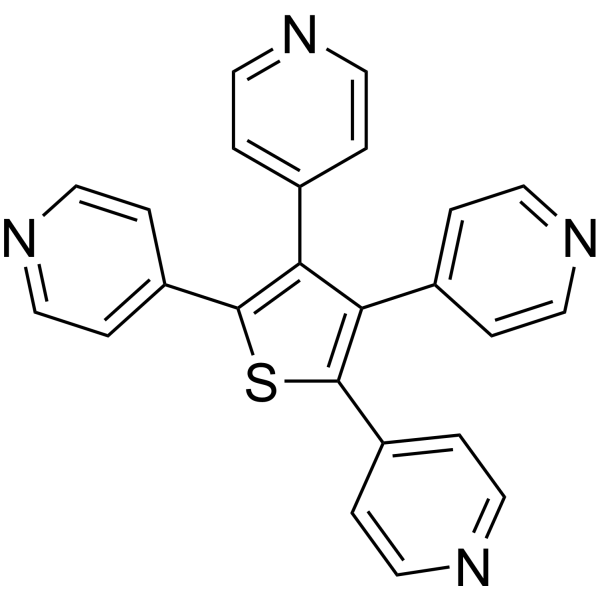
GANT 58 (NSC 75503) is a potent GLI antagonist that inhibits GLI1-induced transcription with IC50 of 5 μM.
Nur für Forschungszwecke. Wir verkaufen nicht an Patienten.
- Reinheit : 99.37%
- CAS. Nr.: 64048-12-0
- Formel: C24H16N4S
- Molecular Weight:392.48
-
Speicherung:Powder -20°C, 3 years , 4°C, 2 years ; In solvent -80°C, 2 years , -20°C, 1 year

To place orders, for customer services and technical support, please contact: MedChemExpress USA
Tel: 609-228-6898 E-mail: [email protected] [email protected]


-
 Biologische Aktivität
-
Chemical Information
-
Lösungsmittel & Löslichkeit
- Protokoll
- Reinheit & Dokumentation
- Verweise
-
 Help & FAQs


-
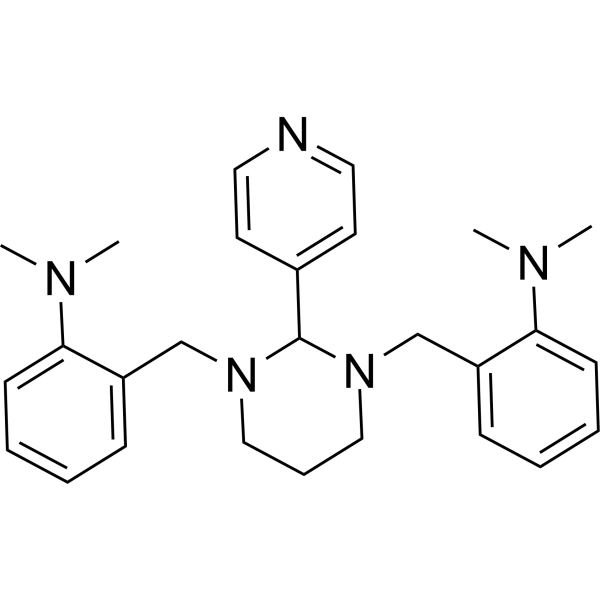
HY-13901
GANT 61Gli1/2 Inhibitor -
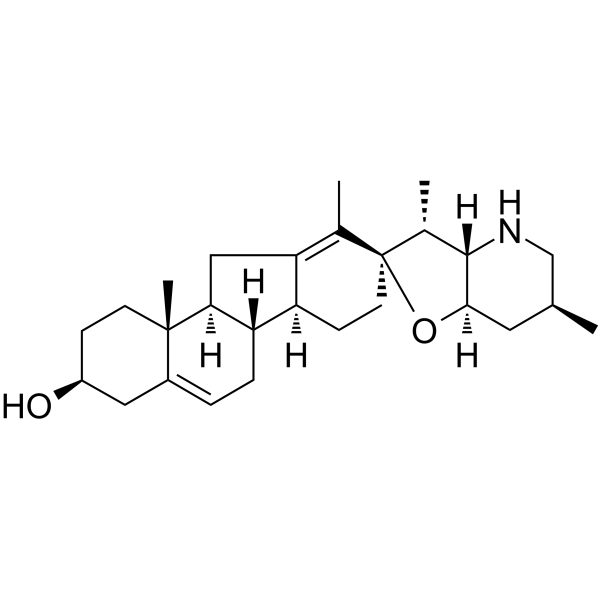
HY-17024
CyclopamineHedgehog Pathway Antagonist -
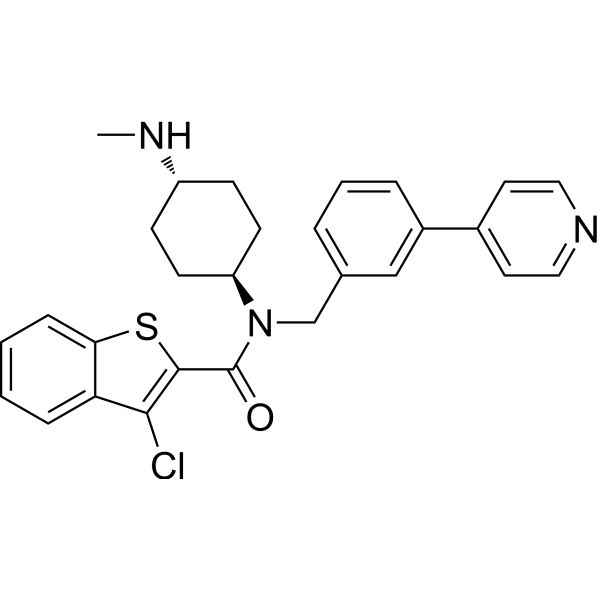
HY-12848
SAGSmoothened Agonist -
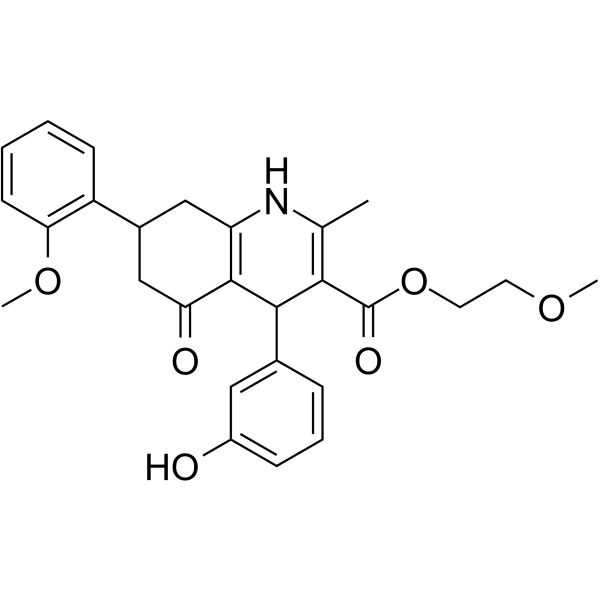
HY-107551
Hh Pathway-IN-1Hedgehog Inhibitor -
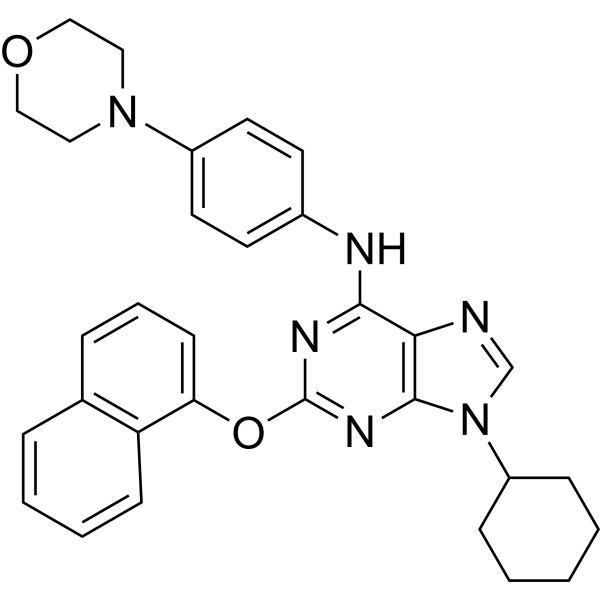
HY-15108
PurmorphamineSmoothened Receptor Agonist -
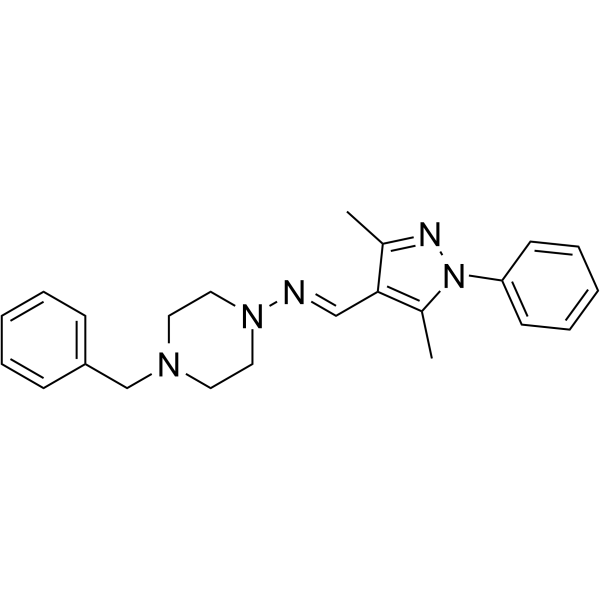
HY-100224
SANT-1Smo Antagonist -
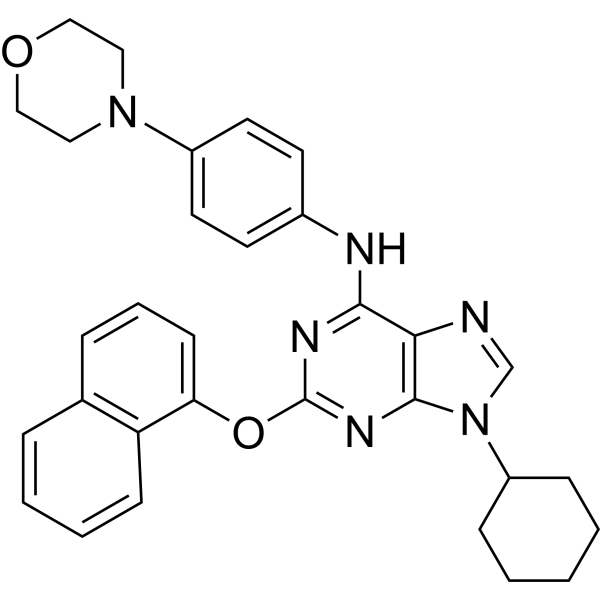
HY-15108G
Purmorphamine (GMP)Smo Receptor Agonist (GMP) -
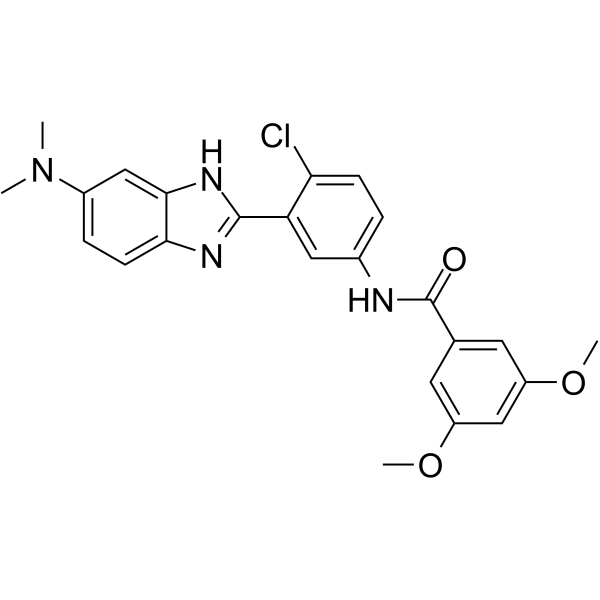
HY-15412
HhAntagSMO Antagonist -
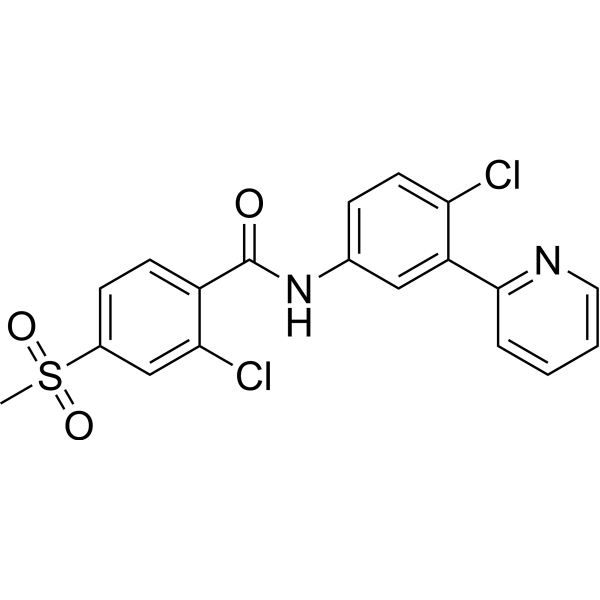
HY-10440
VismodegibHedgehog Inhibitor -
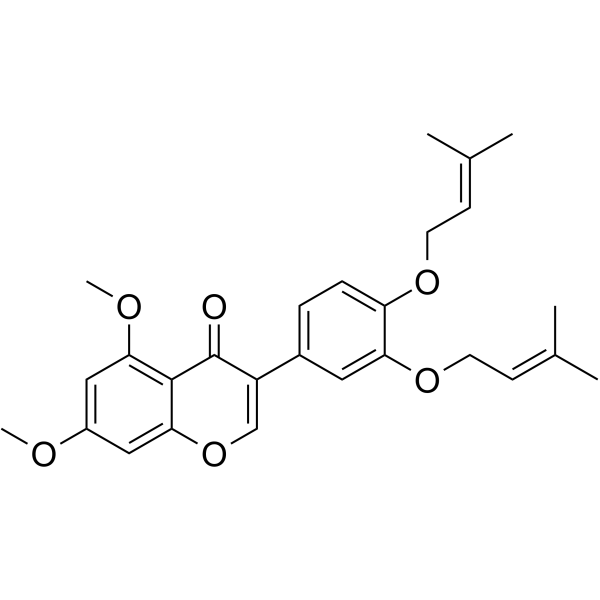
HY-122590
Glabrescione BGli1-DNA Interaction Inhibitor -
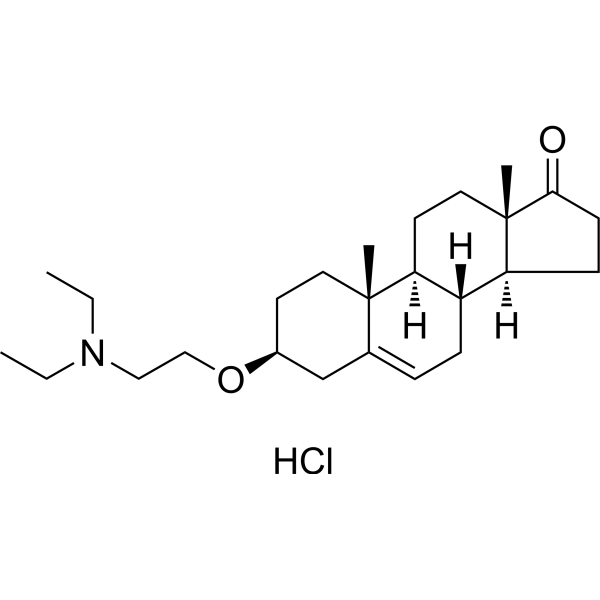
HY-107433
U18666ACholesterol Transport Inhibitor -
HY-13242
TaladegibSMO Antagonist
Publications Citing Use of MedChemExpress (MCE) GANT 58
More- MedComm. 2024 May 13;5(5):e535. [Abstract]
- Cell Death Dis. 2018 May 29;9(6):639. [Abstract]
- Acta Pharmacol Sin. 2026 Mar 11. [Abstract]
- Int J Oncol. 2023 Mar;62(3):43. [Abstract]
- Arthritis Res Ther. 2024 Jan 25;26(1):36. [Abstract]
- J Mol Cell Cardiol. 2022 Oct:171:16-29. [Abstract]
- Biochem Biophys Res Commun. 2020 Dec 17;533(4):770-778. [Abstract]
- Elife. 2023 Nov 6:12:e92142. [Abstract]
- bioRxiv. 2023 Feb 7.
 Customer Validation & Images

-
IF


Biologische Aktivität
Beschreibung
IC50 & Target
IC50: 5 μM (Gli)[1]
Cellular Effect
|
Cell Line

|
Type | Value | Description | References |
|---|---|---|---|---|
| Shh Light II | IC50 |
5 μM
Compound: 129, GANT58
|
Inhibition of SHH in mouse Shh Light2 cells by GLI-responsive firefly luciferase reporter gene assay
Inhibition of SHH in mouse Shh Light2 cells by GLI-responsive firefly luciferase reporter gene assay
|
[PMID: 19309080] |
In Vitro
GANT58 is a downstream inhibitor of Hh signaling. GANT58 is an indeed inhibitor of Hh signaling downstream of Smo and Sufu. GANT58 mainly acts at the nuclear level because transcription induced by GLI1 with a mutated nuclear export signal is still blocked. GANT58 efficiently inhibits in vitro tumor cell proliferation in a GLI-dependent manner and successfully blocks cell growth using human prostate cancer cells harboring downstream activation of the Hh pathway[1].
GANT58 (NSC75503) has been shown to inhibit transcriptional activation by GLI1 (as well as by the other GLI species). GANT58 has been shown to inhibit GLI transactivation[2].
MedChemExpress (MCE) has not independently confirmed the accuracy of these methods. They are for reference only. Further protocols information, click here.
In Vivo
MedChemExpress (MCE) has not independently confirmed the accuracy of these methods. They are for reference only.


Chemical Information
-
CAS. Nr. 64048-12-0
-
Appearance Solid
-
Molecular Weight 392.48
-
Formel C24H16N4S
-
Color Light yellow to yellow
-
SMILES
C1(C2=C(C(C3=CC=NC=C3)=C(S2)C4=CC=NC=C4)C5=CC=NC=C5)=CC=NC=C1
-
Synonyms
NSC 75503
-
Versand
Room temperature in continental US; may vary elsewhere.
-
Speicherung
Powder -20°C 3 years 4°C 2 years In solvent -80°C 2 years -20°C 1 year


Publications (9)
-
Journal Impact Factor
-
Most Recent
-
MedComm
Transcription factor EHF drives cholangiocarcinoma development through transcriptional activation of glioma-associated oncogene homolog 1 and chemokine CCL2. [Abstract]2024 May 13;5(5):e535. PMID: 38741887 -
Cell Death Dis
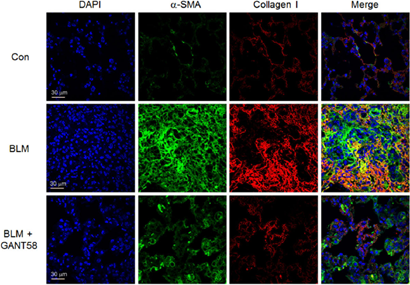
The hedgehog and Wnt/β-catenin system machinery mediate myofibroblast differentiation of LR-MSCs in pulmonary fibrogenesis. [Abstract]2018 May 29;9(6):639. PMID: 29844390
GANT 58 purchased from MedChemExpress. Usage Cited in: Cell Death Dis. 2018 May 29;9(6):639. [Abstract]
The expression of α-SMA and Collagen I is determined by immunofluorescence staining. Lung-resident mesenchymal stem cells (LR-MSCs) are cultured with TGF-β1 for 7 days, along with or without the treatment of GANT58 (10 μM).
-
Acta Pharmacol Sin
2026 Mar 11. PMID: 41813972 -
Int J Oncol
Keratin19 promotes pancreatic cancer progression and poor prognosis via activating the Hedgehog pathway. [Abstract]2023 Mar;62(3):43. PMID: 36825581 -
Arthritis Res Ther
Endoplasmic reticulum aminopeptidase 2 regulates CD4+ T cells pyroptosis in rheumatoid arthritis. [Abstract]2024 Jan 25;26(1):36. PMID: 38273310 -
J Mol Cell Cardiol
Induction of GLI1 by miR-27b-3p/FBXW7/KLF5 pathway contributes to pulmonary arterial hypertension. [Abstract]2022 Oct:171:16-29. PMID: 35810662 -
Biochem Biophys Res Commun
Microcystin-leucine-arginine induces liver fibrosis by activating the Hedgehog pathway in hepatic stellate cells. [Abstract]2020 Dec 17;533(4):770-778. PMID: 32988585 -
Elife
GLI1 facilitates collagen-induced arthritis in mice by collaborative regulation of DNA methyltransferases. [Abstract]2023 Nov 6:12:e92142. PMID: 37929702 -


Lösungsmittel & Löslichkeit
In Vitro:
Ethanol : 20 mg/mL (50.96 mM; Need ultrasonic)
DMSO : 9.09 mg/mL (23.16 mM; Need ultrasonic; Hygroscopic DMSO has a significant impact on the solubility of product, please use newly opened DMSO)
Please refer to the solubility information to select the appropriate solvent. Once prepared, please aliquot and store the solution to prevent product inactivation from repeated freeze-thaw cycles.
Storage method and period of stock solution: -80°C, 2 years; -20°C, 1 year. When stored at -80°C, please use it within 2 years. When stored at -20°C, please use it within 1 year.
Please refer to the solubility information to select the appropriate solvent. Once prepared, please aliquot and store the solution to prevent product inactivation from repeated freeze-thaw cycles.
Storage method and period of stock solution: -80°C, 2 years; -20°C, 1 year. When stored at -80°C, please use it within 2 years. When stored at -20°C, please use it within 1 year.
Konzentration (Stammlösung) × Volumen (Stammlösung) = Konzentration (Ziellösung) × Volumen (Ziellösung)
In Vivo:
Select the appropriate dissolution method based on your experimental animal and administration route.
- For the following dissolution methods, please ensure to first prepare a clear stock solution using an In Vitro approach and then sequentially add co-solvents:
- To ensure reliable experimental results, the clarified stock solution can be appropriately stored based on storage conditions. As for the working solution for In Vivo experiments, it is recommended to prepare freshly and use it on the same day.
- The percentages shown for the solvents indicate their volumetric ratio in the final prepared solution. If precipitation or phase separation occurs during preparation, heat and/or sonication can be used to aid dissolution.
Add each solvent one by one: 10% EtOH 40% PEG300 5% Tween-80 45% Saline
Solubility: 2 mg/mL (5.10 mM); Clear solution; Need ultrasonic
This protocol yields a clear solution of 2 mg/mL.
Taking 1 mL working solution as an example, add 100 μL EtOH stock solution (20.0 mg/mL) to 400 μL PEG300, and mix evenly; then add 50 μL Tween-80 and mix evenly; then add 450 μL Saline to adjust the volume to 1 mL.
Preparation of Saline: Dissolve 0.9 g sodium chloride in ddH₂O and dilute to 100 mL to obtain a clear Saline solution.
Add each solvent one by one: 10% EtOH 90% (20% SBE-β-CD in Saline)
Solubility: 2 mg/mL (5.10 mM); Clear solution; Need ultrasonic
This protocol yields a clear solution of 2 mg/mL.
Taking 1 mL working solution as an example, add 100 μL EtOH stock solution (20.0 mg/mL) to 900 μL 20% SBE-β-CD in Saline, and mix evenly.
Preparation of 20% SBE-β-CD in Saline (4°C, storage for one week): 2 g SBE-β-CD powder is dissolved in 10 mL Saline, completely dissolve until clear.
Add each solvent one by one: 10% DMSO 40% PEG300 5% Tween-80 45% Saline
Solubility: ≥ 0.91 mg/mL (2.32 mM); Clear solution
This protocol yields a clear solution of ≥ 0.91 mg/mL (saturation unknown).
Taking 1 mL working solution as an example, add 100 μL DMSO stock solution (9.1 mg/mL) to 400 μL PEG300, and mix evenly; then add 50 μL Tween-80 and mix evenly; then add 450 μL Saline to adjust the volume to 1 mL.
Preparation of Saline: Dissolve 0.9 g sodium chloride in ddH₂O and dilute to 100 mL to obtain a clear Saline solution.
Add each solvent one by one: 10% DMSO 90% (20% SBE-β-CD in Saline)
Solubility: ≥ 0.91 mg/mL (2.32 mM); Clear solution
This protocol yields a clear solution of ≥ 0.91 mg/mL (saturation unknown).
Taking 1 mL working solution as an example, add 100 μL DMSO stock solution (9.1 mg/mL) to 900 μL 20% SBE-β-CD in Saline, and mix evenly.
Preparation of 20% SBE-β-CD in Saline (4°C, storage for one week): 2 g SBE-β-CD powder is dissolved in 10 mL Saline, completely dissolve until clear.
For the following dissolution methods, please prepare the working solution directly:
It is recommended to prepare fresh solutions and use them promptly within a short period of time.
The percentages shown for the solvents indicate their volumetric ratio in the final prepared solution. If precipitation or phase separation occurs during preparation, heat and/or sonication can be used to aid dissolution.
In Vivo Dissolution Calculator
Please enter the basic information of animal experiments:
-
-
-
-
Recommended: Prepare an additional quantity of animals to account for potential losses during experiments.
Please enter your animal formula composition:
-
%DMSO +
Recommended: Keep the proportion of DMSO in working solution below 2% if your animal is weak.
-
%+
-
+%Tween-80 + +
-
%Saline +
The co-solvents required include: DMSO, . All of co-solvents are available by MedChemExpress (MCE). , Tween 80. All of co-solvents are available by MedChemExpress (MCE).
Working solution concentration: 0.22 mg/mL
Method for preparing stock solution: mg drug dissolved in μL DMSO. Stock solution concentration: mg/mL.
1. Take μL DMSO stock solution;
2. Add μL .
μL , mix evenly;
3. Then add μL Tween 80, mix evenly;
4. Then add μL
Please ensure that the stock solution in the first step is dissolved to a clear state, and add co-solvents in sequence. You can use ultrasonic heating (ultrasonic cleaner, recommended frequency 20-40 kHz), vortexing, etc. to assist dissolution.

Protokoll
-
Cell Cytotoxicity Assay
Cytotoxicity assays are usually based on the assessment of cell membrane damage, which can also be indirectly detected by measuring cell viability. Detection methods include MTT assay, CKK-8 assay, LDH assay and ATP assay, etc.


Reinheit & Dokumentation
-
Data Sheet (287 KB)
-
SDS (393 KB)
- English - EN (393 KB)
- Français - FR (393 KB)
- Deutsch - DE (393 KB)
- Norwegian - NO (393 KB)
- Español - ES (393 KB)
- Swedish - SV (393 KB)
- Italian - IT (393 KB)
- Korean - KR (393 KB)
- Portuguese - PT (393 KB)
-
Handling Instructions (2659 KB)
Verweise
[1]. Lauth M, et al. Inhibition of GLI-mediated transcription and tumor cell growth by small-molecule antagonists. Proc Natl Acad Sci U S A. 2007 May 15;104(20):8455-60. [Content Brief]
[2]. Joo J, et al. GLI1 is a central mediator of EWS/FLI1 signaling in Ewing tumors. PLoS One. 2009 Oct 27;4(10):e7608. [Content Brief]


Complete Stock Solution Preparation Table
Please refer to the solubility information to select the appropriate solvent. Once prepared, please aliquot and store the solution to prevent product inactivation from repeated freeze-thaw cycles.
Storage method and period of stock solution: -80°C, 2 years; -20°C, 1 year. When stored at -80°C, please use it within 2 years. When stored at -20°C, please use it within 1 year.
| Optional Solvent | Concentration Solvent Mass | 1 mg | 5 mg | 10 mg | 25 mg |
|---|---|---|---|---|---|
| DMSO / Ethanol | 1 mM | 2.5479 mL | 12.7395 mL | 25.4790 mL | 63.6975 mL |
| 5 mM | 0.5096 mL | 2.5479 mL | 5.0958 mL | 12.7395 mL | |
| 10 mM | 0.2548 mL | 1.2740 mL | 2.5479 mL | 6.3698 mL | |
| 15 mM | 0.1699 mL | 0.8493 mL | 1.6986 mL | 4.2465 mL | |
| 20 mM | 0.1274 mL | 0.6370 mL | 1.2740 mL | 3.1849 mL | |
| Ethanol | 25 mM | 0.1019 mL | 0.5096 mL | 1.0192 mL | 2.5479 mL |
| 30 mM | 0.0849 mL | 0.4247 mL | 0.8493 mL | 2.1233 mL | |
| 40 mM | 0.0637 mL | 0.3185 mL | 0.6370 mL | 1.5924 mL | |
| 50 mM | 0.0510 mL | 0.2548 mL | 0.5096 mL | 1.2740 mL |


GANT 58 Related Classifications
HY-13282 Related Classifications
 Powered by Bioz