



CGP 39551
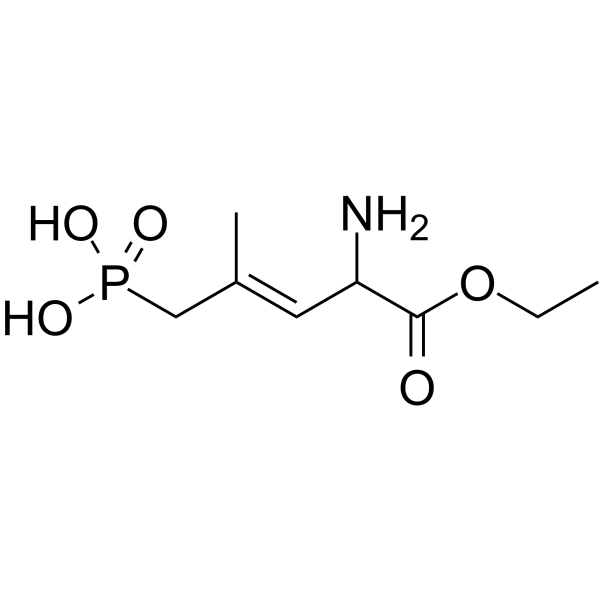
CGP 39551 is a potent, orally active, competitive N-methyl-D-aspartate (NMDA) receptor antagonist with potent anticonvulsant activity. CGP 39551 shows measurable inhibitory activity at both L-[3H]-glutamate (Ki=8.4 μM).
Nur für Forschungszwecke. Wir verkaufen nicht an Patienten.
- CAS. Nr.: 127910-32-1
- Formel: C8H16NO5P
- Molecular Weight:237.19
-
Speicherung:
Please store the product under the recommended conditions in the Certificate of Analysis.

To place orders, for customer services and technical support, please contact: MedChemExpress USA
Tel: 609-228-6898 E-mail: [email protected] [email protected]


-
 Biologische Aktivität
-
Chemical Information
- Reinheit & Dokumentation
- Verweise
-
 Help & FAQs


-
HY-B1776A
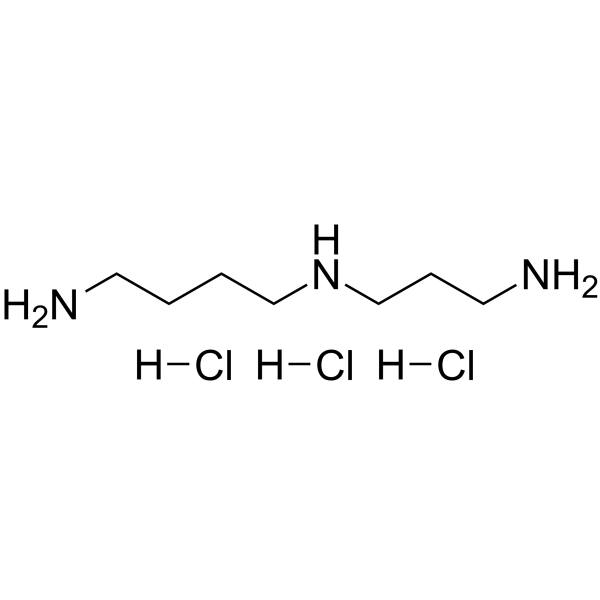
Spermidine hydrochlorideAntioxidant Agent -
HY-100834
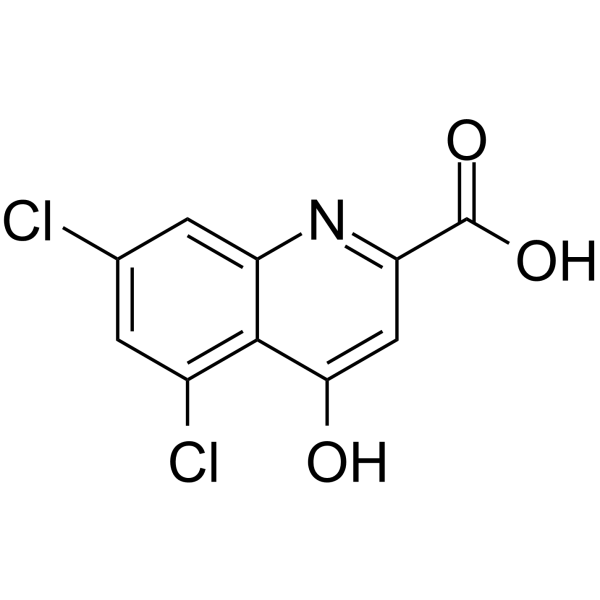
5,7-Dichlorokynurenic acidNMDA Receptor Antagonist -
HY-13457
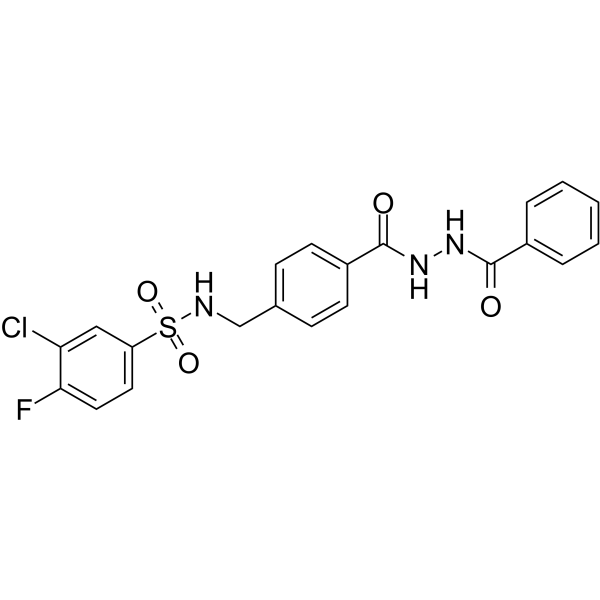
TCN 201NMDA Receptor Antagonist -
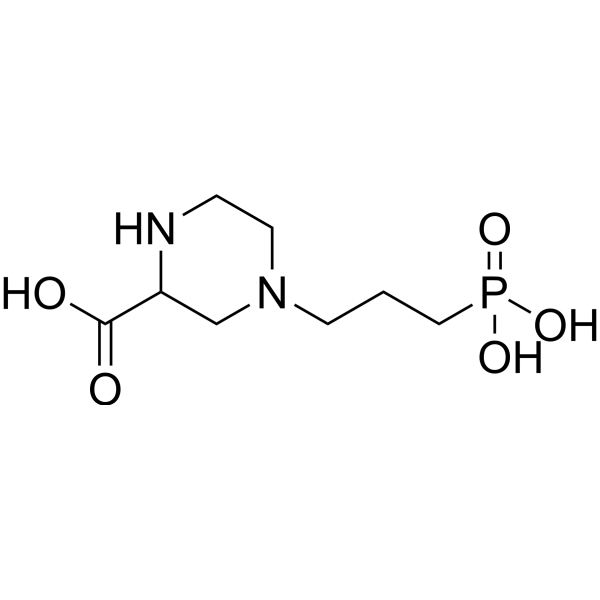
HY-100797
(RS)-CPPNMDA Antagonist -

HY-B1776AR
Spermidine hydrochloride (Standard)Antioxidant Agent -
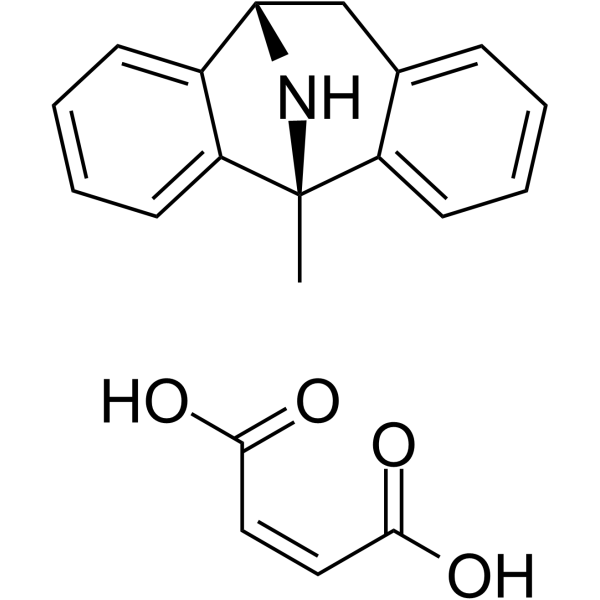
HY-15084A
(-)-Dizocilpine maleateNMDA Receptor Antagonist -
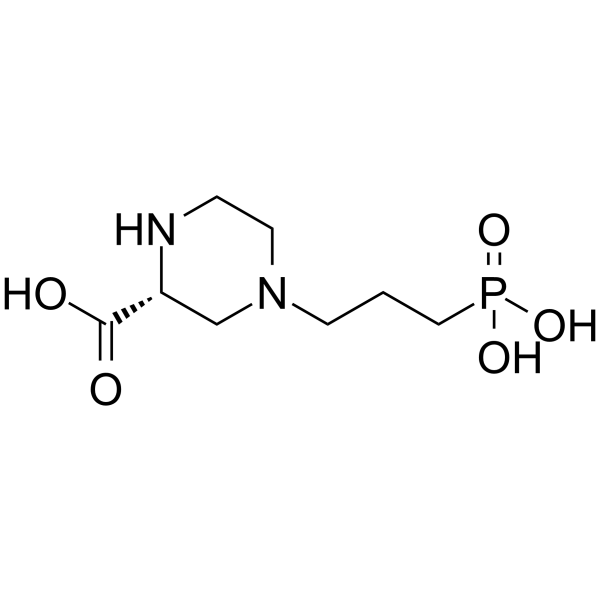
HY-100814
(R)-CPPNMDA Receptor Inhibitor -
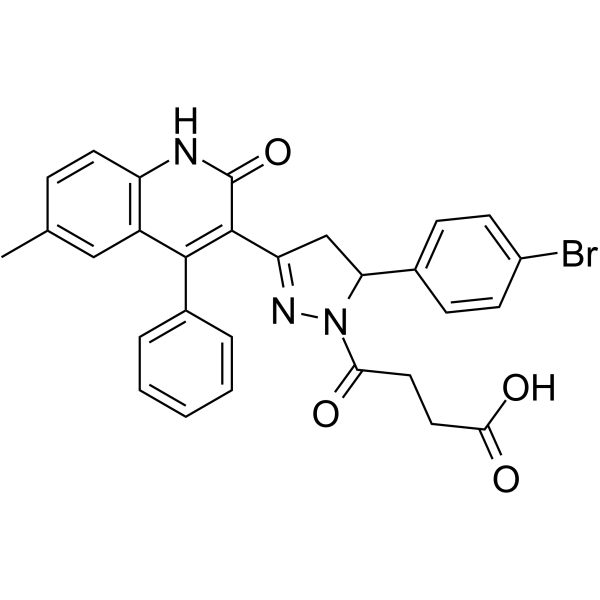
HY-107711
DQP-1105GluN1/GluN2C Antagonist -
HY-30006
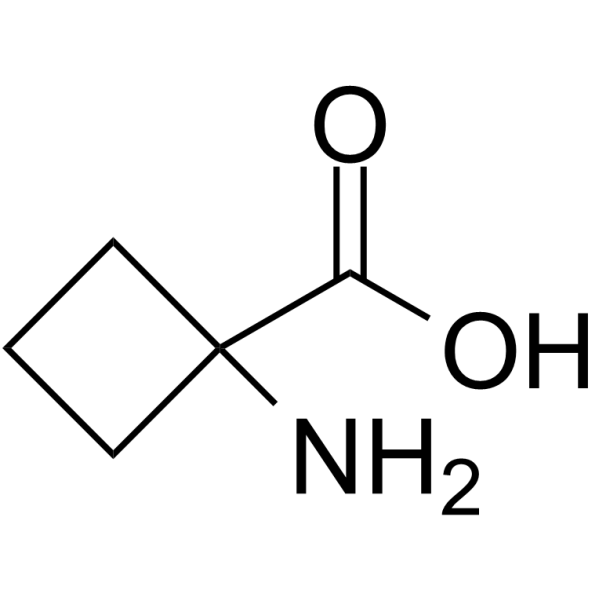
1-Aminocyclobutanecarboxylic acidCyclobutane-type Amino Acid -

HY-15086
SelfotelNMDA Antagonist -
HY-100920
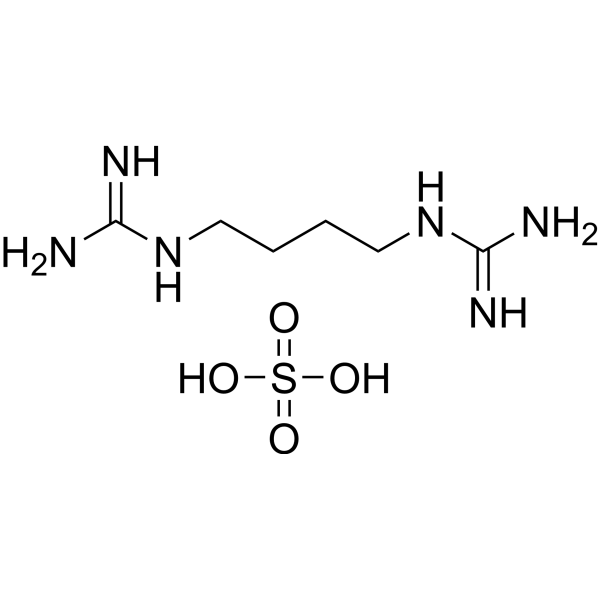
Arcaine sulfateNMDA Receptor Antagonist -
HY-101178
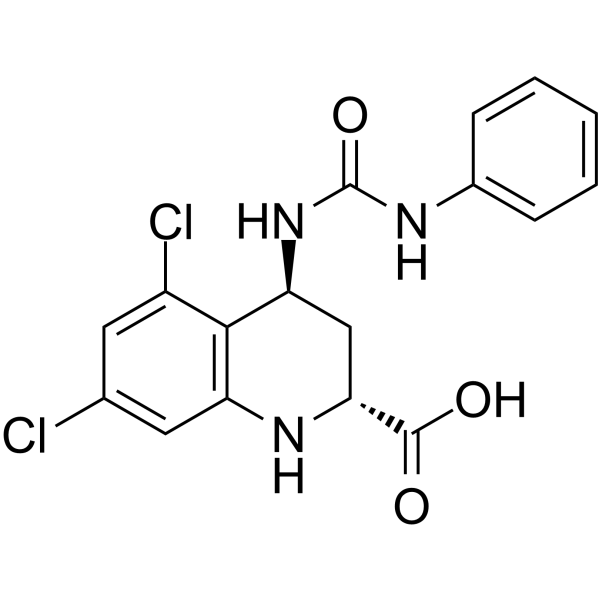
L-689560NMDA Antagonist
Alle iGluR Isoform-spezifische Produkte anzeigen
More

Biologische Aktivität
Beschreibung
In Vitro
CGP 39551 inhibits the binding of the selective NMDA receptor antagonist, [3H]-CPP to rat brain postsynaptic densities (PSDs) with a Ki of 310 nM[2].
MedChemExpress (MCE) has not independently confirmed the accuracy of these methods. They are for reference only. .
In Vivo
Following chronic neonatal treatment with CGP 39551, adult rats show increased behavioral responses to the D2 dopamine receptor stimulation[3].
MedChemExpress (MCE) has not independently confirmed the accuracy of these methods. They are for reference only.


Chemical Information
-
CAS. Nr. 127910-32-1
-
Molecular Weight 237.19
-
Formel C8H16NO5P
-
SMILES
CCOC(C(N)/C=C(C)/CP(O)(O)=O)=O
-
Versand
Room temperature in continental US; may vary elsewhere.
-
Speicherung
Please store the product under the recommended conditions in the Certificate of Analysis.


Reinheit & Dokumentation
Verweise
[1]. G E Fagg,et al. CGP 37849 and CGP 39551: novel competitive N-methyl-D-aspartate receptor antagonists with potent oral anticonvulsant activity. Prog Clin Biol Res. 1990;361:421-7. [Content Brief]
[2]. G E Fagg, et al. CGP 37849 and CGP 39551: novel and potent competitive N-methyl-D-aspartate receptor antagonists with oral activity. Br J Pharmacol. 1990 Apr;99(4):791-7. [Content Brief]
[3]. R Dall'Olio, et al. Chronic neonatal blockade of N-methyl-D-aspartate receptor by CGP 39551 increases dopaminergic function in adult rat. Neuroscience. 1994 Nov;63(2):451-5. [Content Brief]

Calculators
Konzentration (Stammlösung) × Volumen (Stammlösung) = Konzentration (Ziellösung) × Volumen (Ziellösung)


CGP 39551 Related Classifications
HY-107703 Related Classifications
 Powered by Bioz