



Lalistat 1
Based on 2 publication(s) in Google Scholar
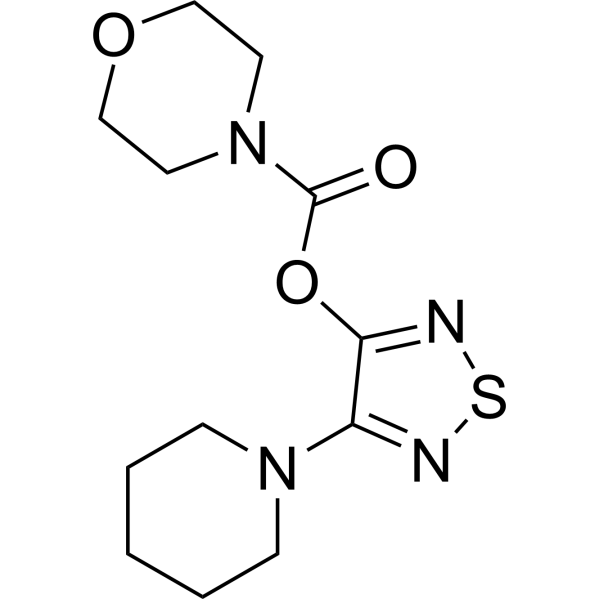
Lalistat 1 is a potent, selective, and competitive inhibitor of lysosomal acid lipase (LAL) and against purified human LAL (phLAL) with an IC50 of 68 nM. Lalistat 1 is a inhibitor of immunoglobulin A1 protease (IgA1P) proteases for H. influenzae, has less effects on other serine hydrolases (trypsin or β-lactamase, etc.). Lalistat 1 can be used for the research of niemann-pick type C (NPC) disease.
Nur für Forschungszwecke. Wir verkaufen nicht an Patienten.
- Reinheit : 99.75%
- CAS. Nr.: 501104-16-1
- Formel: C12H18N4O3S
- Molecular Weight:298.37
-
Speicherung:
-20°C, sealed storage, away from moisture
* In solvent : -80°C, 6 months; -20°C, 1 month (sealed storage, away from moisture)

To place orders, for customer services and technical support, please contact: MedChemExpress USA
Tel: 609-228-6898 E-mail: [email protected] [email protected]


-
 Biologische Aktivität
-
Chemical Information
-
Lösungsmittel & Löslichkeit
- Protokoll
- Reinheit & Dokumentation
- Verweise
-
 Help & FAQs


-
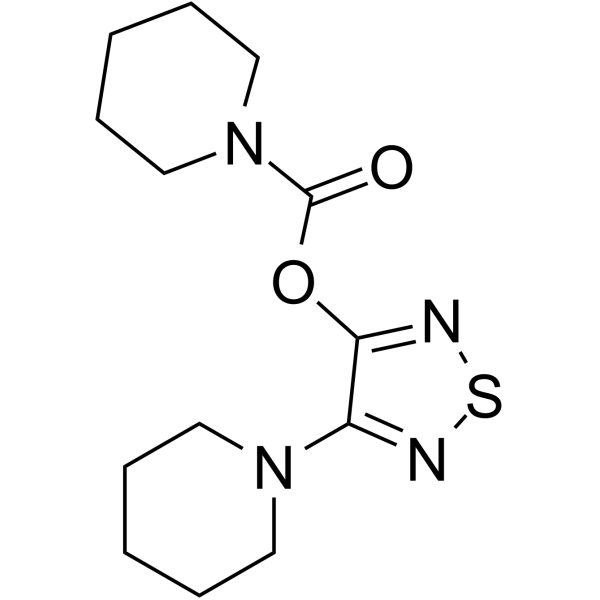
HY-128144
Lalistat 2LAL Inhibitor -
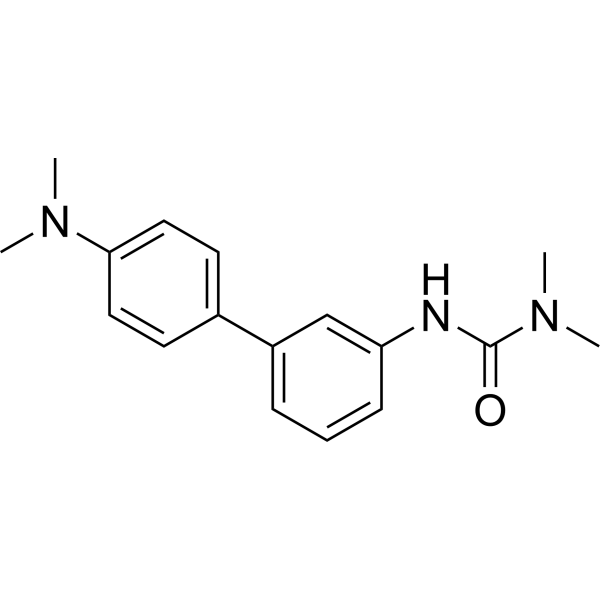
HY-15859
AtglistatinATGL Inhibitor -
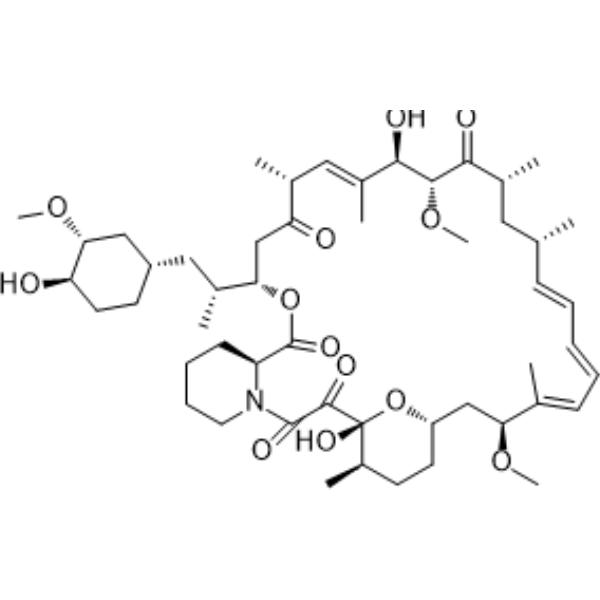
HY-10219
RapamycinmTOR Inhibitor -
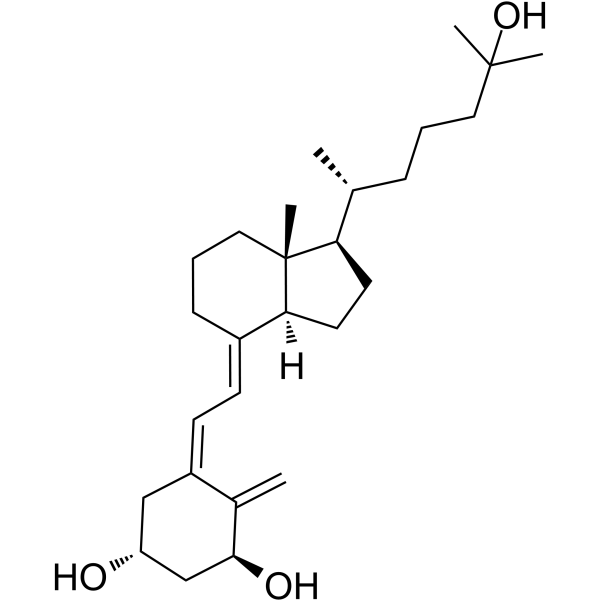
HY-10002
CalcitriolVDR Agonist -
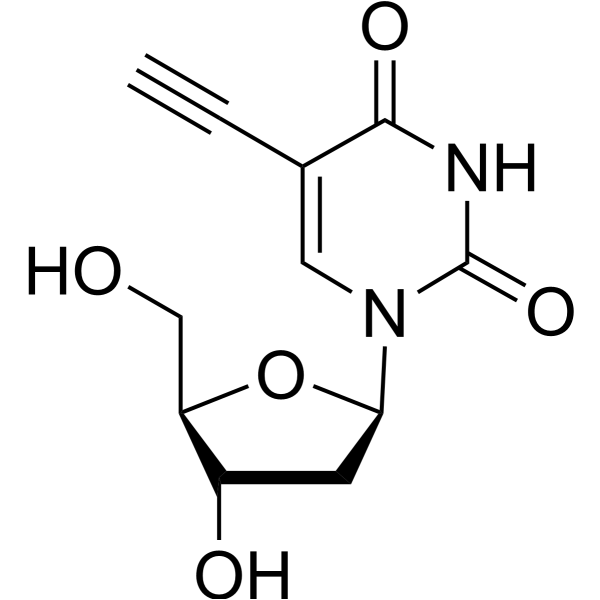
HY-118411
5-Ethynyl-2'-deoxyuridinePROTAC Linkers -
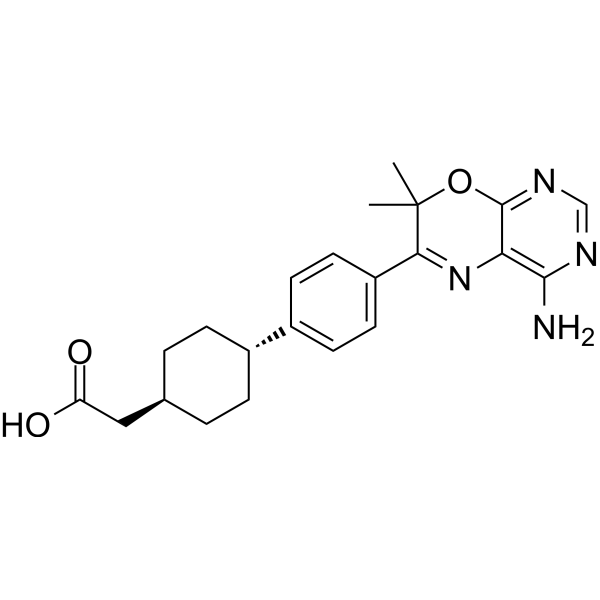
HY-32219
T863DGAT1 Inhibitor -
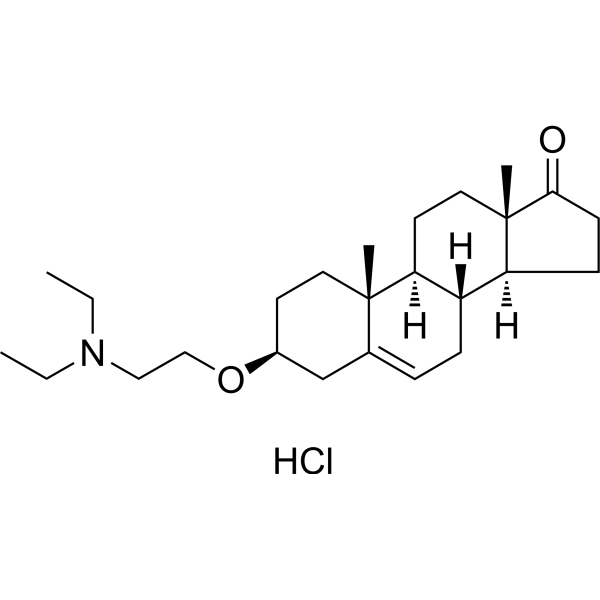
HY-107433
U18666ACholesterol Transport Inhibitor -
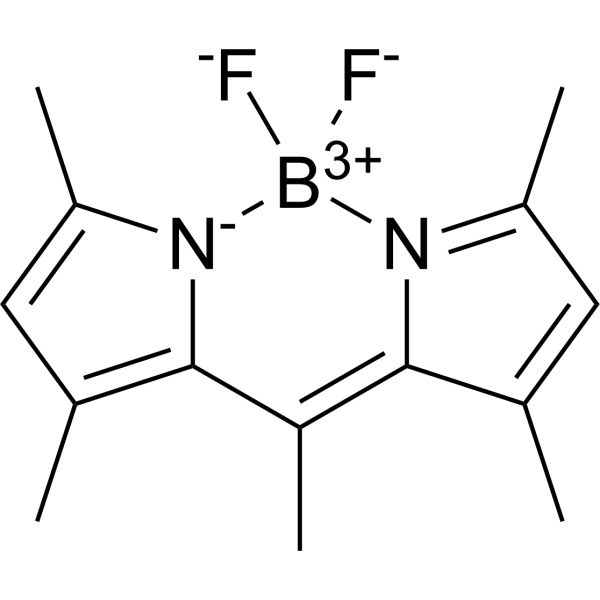
HY-W090090
BODIPY 493/503Neutral Lipid Dye -
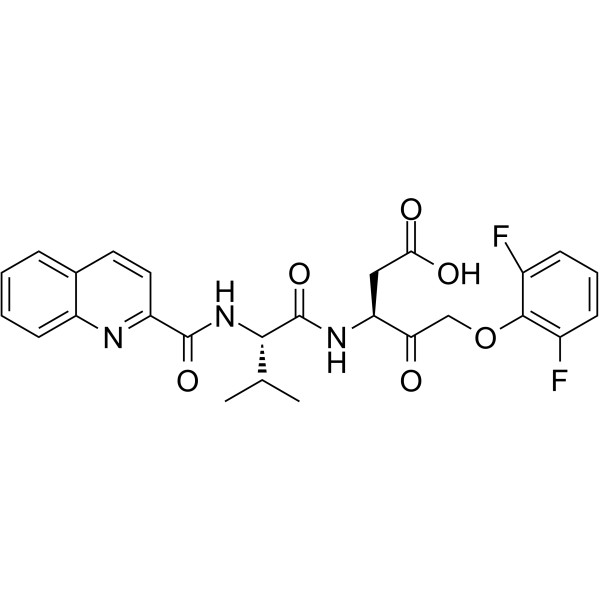
HY-12305
Q-VD-OPhPan-caspase Inhibitor -
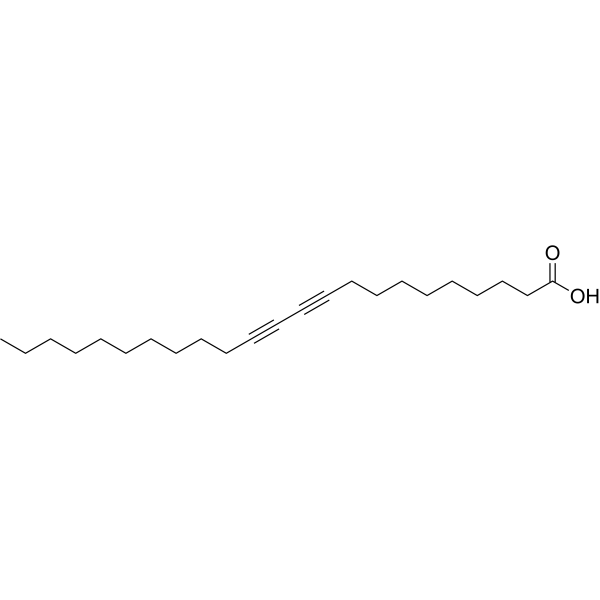
HY-135425
10,12-Tricosadiynoic acidACOX1 Inhibitor
Publications Citing Use of MedChemExpress (MCE) Lalistat 1
MoreAlle Beta-lactamase Isoform-spezifische Produkte anzeigen
More

Biologische Aktivität
Beschreibung
IC50 & Target
IC50: 68 nM ( human LAL)[1]
In Vitro
Lalistat 1 (0-100 μM) shows activity against different non-typeable H. influenzae (NTHi) IgAP variants from clinical isolates in Elisa assay. It shows a dose-dependent inhibition of IgA1P B1 and B2, but at higher inhibitor concentrations, consistent with the higher expression levels of these variants. Nearly complete inhibition of IgA1P B1 and B2 is observed at 50 μM, with complete inhibition at 100 μM[1].
MedChemExpress (MCE) has not independently confirmed the accuracy of these methods. They are for reference only. Further protocols information, click here.


Chemical Information
-
CAS. Nr. 501104-16-1
-
Appearance Solid
-
Molecular Weight 298.37
-
Formel C12H18N4O3S
-
Color White to off-white
-
SMILES
O=C(N1CCOCC1)OC2=NSN=C2N3CCCCC3
-
Versand
Room temperature in continental US; may vary elsewhere.
-
Speicherung
-20°C, sealed storage, away from moisture
* In solvent : -80°C, 6 months; -20°C, 1 month (sealed storage, away from moisture)


Publications (2)
-
Journal Impact Factor
-
Most Recent


Lösungsmittel & Löslichkeit
In Vitro:
DMSO : 20 mg/mL (67.03 mM; Need ultrasonic and warming; Hygroscopic DMSO has a significant impact on the solubility of product, please use newly opened DMSO)
Please refer to the solubility information to select the appropriate solvent. Once prepared, please aliquot and store the solution to prevent product inactivation from repeated freeze-thaw cycles.
Storage method and period of stock solution: -80°C, 6 months; -20°C, 1 month (sealed storage, away from moisture). When stored at -80°C, please use it within 6 months. When stored at -20°C, please use it within 1 month.
Please refer to the solubility information to select the appropriate solvent. Once prepared, please aliquot and store the solution to prevent product inactivation from repeated freeze-thaw cycles.
Storage method and period of stock solution: -80°C, 6 months; -20°C, 1 month (sealed storage, away from moisture). When stored at -80°C, please use it within 6 months. When stored at -20°C, please use it within 1 month.
Konzentration (Stammlösung) × Volumen (Stammlösung) = Konzentration (Ziellösung) × Volumen (Ziellösung)

Protokoll
-
Cell Cytotoxicity Assay
Cytotoxicity assays are usually based on the assessment of cell membrane damage, which can also be indirectly detected by measuring cell viability. Detection methods include MTT assay, CKK-8 assay, LDH assay and ATP assay, etc.
-
Human pluripotent stem cell neural induction and neuron differentiation
Human pluripotent stem cell neural induction can be achieved by blocking BMP and TGFβ/Activin/Nodal SMAD signaling, which suppresses non-neural differentiation and promotes early neuroectodermal identity; the expected readout is loss of pluripotency markers such as OCT4 and induction of neural markers such as PAX6, followed by neural progenitor and neuron marker acquisition during differentiation. This protocol uses dual-SMAD neural induction as the core induction method, followed by cortical neuron differentiation as a representative neuron differentiation model; published cortical protocols describe generation of cortical progenitors, temporally ordered cortical projection neurons, action-potential firing, synaptogenesis, and neural network formation over an approximately 80-day process.
-
Lysosome and acidic-vesicle live-cell staining
Lysosome and acidic-vesicle live-cell staining detects acidic intracellular compartments by using membrane-permeant acidotropic probes that accumulate in low-pH vesicles, including lysosomes, late endosomes, autolysosomes, and acidic phagosomes. LysoTracker staining is commonly used as an intensity-based readout of acidic lysosomal compartment abundance or enlargement, while acridine orange produces green fluorescence in less concentrated compartments and red fluorescence after concentration-dependent accumulation in acidic vesicular organelles. Loss or reduction of acridine-orange red signal can be used as a readout of lysosomal membrane permeabilization or reduced acidic-vesicle integrity. This protocol is designed for live cultured cells and can be adapted for fluorescence microscopy, high-content imaging, plate-reader readout, or flow cytometry when the selected literature supports the readout. Because these dyes report acidotropic accumulation rather than lysosome identity alone,


Reinheit & Dokumentation
-
Data Sheet (277 KB)
-
SDS (393 KB)
- English - EN (393 KB)
- Français - FR (393 KB)
- Deutsch - DE (393 KB)
- Norwegian - NO (393 KB)
- Español - ES (393 KB)
- Swedish - SV (393 KB)
- Italian - IT (393 KB)
- Korean - KR (393 KB)
- Portuguese - PT (393 KB)
-
Handling Instructions (2659 KB)
Verweise
[1]. Anton I Rosenbaum , et al. Thiadiazole carbamates: potent inhibitors of lysosomal acid lipase and potential Niemann-Pick type C disease therapeutics. J Med Chem . 2010 Jul 22;53(14):5281-9. [Content Brief]
[2]. Livia Shehaj, et al. Small-Molecule Inhibitors of Haemophilus influenzae IgA1 Protease.ACS Infect Dis. 2019 Jul 12;5(7):1129-1138. [Content Brief]


Complete Stock Solution Preparation Table
Please refer to the solubility information to select the appropriate solvent. Once prepared, please aliquot and store the solution to prevent product inactivation from repeated freeze-thaw cycles.
Storage method and period of stock solution: -80°C, 6 months; -20°C, 1 month (sealed storage, away from moisture). When stored at -80°C, please use it within 6 months. When stored at -20°C, please use it within 1 month.
| Optional Solvent | Concentration Solvent Mass | 1 mg | 5 mg | 10 mg | 25 mg |
|---|---|---|---|---|---|
| DMSO | 1 mM | 3.3516 mL | 16.7578 mL | 33.5157 mL | 83.7891 mL |
| 5 mM | 0.6703 mL | 3.3516 mL | 6.7031 mL | 16.7578 mL | |
| 10 mM | 0.3352 mL | 1.6758 mL | 3.3516 mL | 8.3789 mL | |
| 15 mM | 0.2234 mL | 1.1172 mL | 2.2344 mL | 5.5859 mL | |
| 20 mM | 0.1676 mL | 0.8379 mL | 1.6758 mL | 4.1895 mL | |
| 25 mM | 0.1341 mL | 0.6703 mL | 1.3406 mL | 3.3516 mL | |
| 30 mM | 0.1117 mL | 0.5586 mL | 1.1172 mL | 2.7930 mL | |
| 40 mM | 0.0838 mL | 0.4189 mL | 0.8379 mL | 2.0947 mL | |
| 50 mM | 0.0670 mL | 0.3352 mL | 0.6703 mL | 1.6758 mL | |
| 60 mM | 0.0559 mL | 0.2793 mL | 0.5586 mL | 1.3965 mL |


Lalistat 1 Related Classifications
HY-116815 Related Classifications
 Powered by Bioz