



MSC-4381

Based on 1 Customer Validation
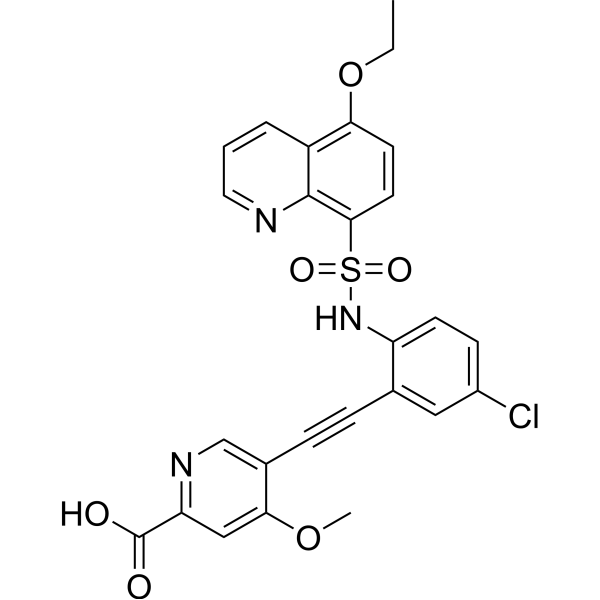
MSC-4381 (MCT4-IN-1), a chemical probe, is an orally active and selective monocarboxylate transporter 4 (MCT4/SLC16A3) inhibitor with an IC50 of 77 nM and a Ki of 11 nM. MSC-4381 targets to the cytosolic domain of MCT4. MSC-4381 results in lactate efflux inhibition and reduction of cellular viability in MCT4 high expressing cells. MSC-4381 has the potential for MCT4 transporter inhibition research. MSC-4381 is a click chemistry reagent, it contains an Alkyne group and can undergo copper-catalyzed azide-alkyne cycloaddition (CuAAc) with molecules containing Azide groups.
Nur für Forschungszwecke. Wir verkaufen nicht an Patienten.
- Reinheit : 98.09%
- CAS. Nr.: 2445185-57-7
- Formel: C26H20ClN3O6S
- Molecular Weight:537.97
-
Speicherung:Powder -20°C, 3 years , 4°C, 2 years ; In solvent -80°C, 6 months , -20°C, 1 month

To place orders, for customer services and technical support, please contact: MedChemExpress USA
Tel: 609-228-6898 E-mail: [email protected] [email protected]


-
 Biologische Aktivität
-
Chemical Information
-
Lösungsmittel & Löslichkeit
- Protokoll
- Reinheit & Dokumentation
- Verweise
-
 Help & FAQs


-
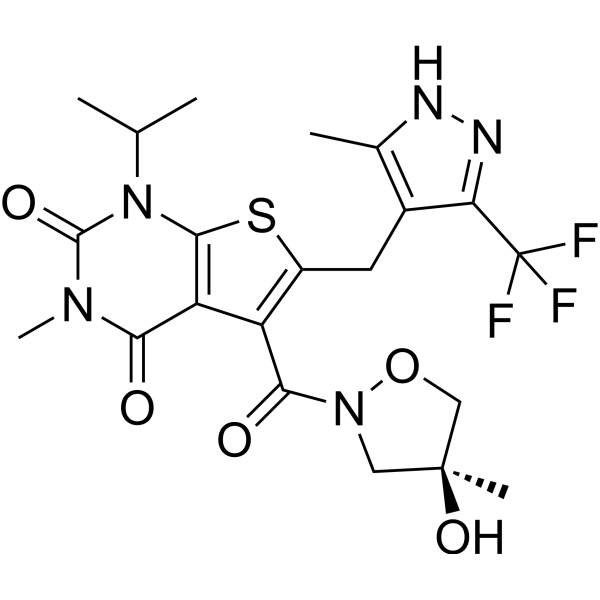
HY-12750
AZD3965MCT1 Inhibitor -
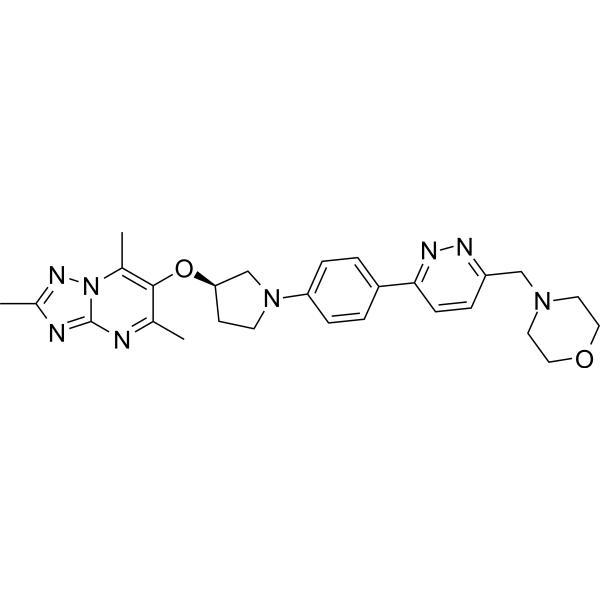
HY-148517
AZD0095MCT4 Inhibitor -
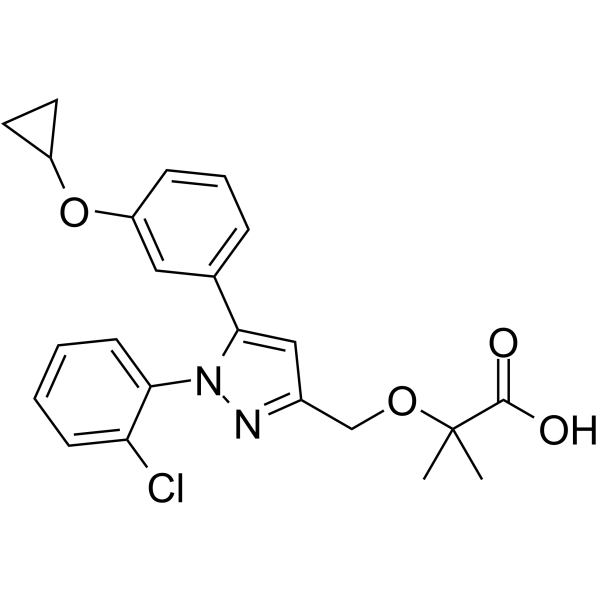
HY-139665
VB124MCT4 Inhibitor -
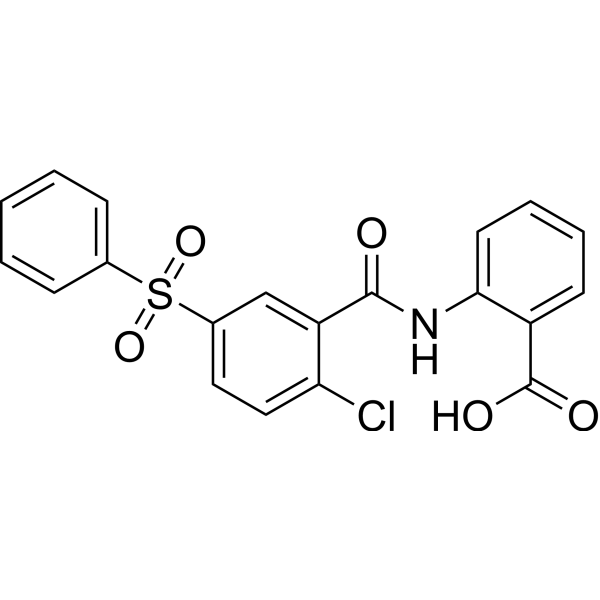
HY-122312
BAY-8002MCT1 Inhibitor -
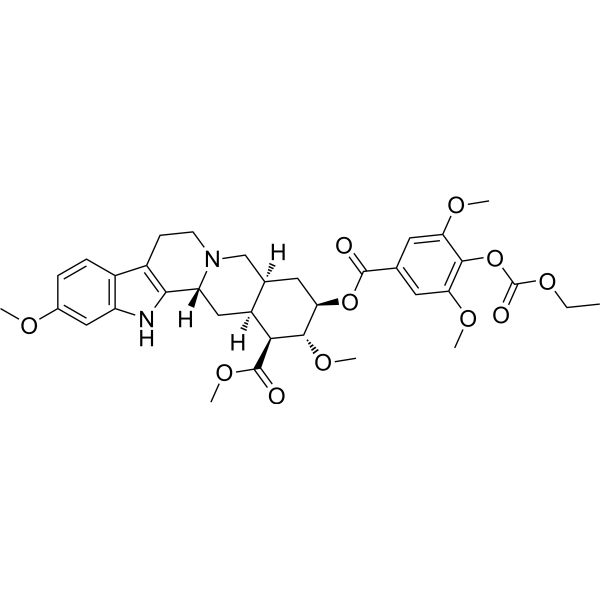
HY-N4115
SyrosingopineMCT1/MCT4 Dual Inhibitor -
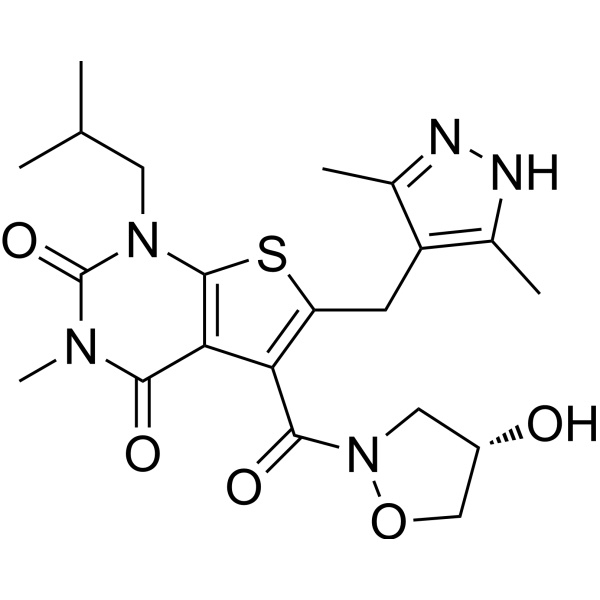
HY-13248
AR-C155858MCT1/2 Inhibitor -
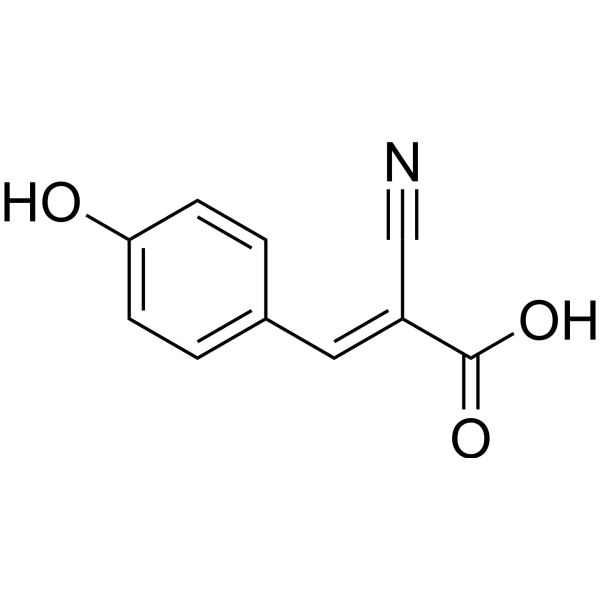
HY-107641
α-Cyano-4-hydroxycinnamic acidMonocarboxylate Transporter Inhibitor -
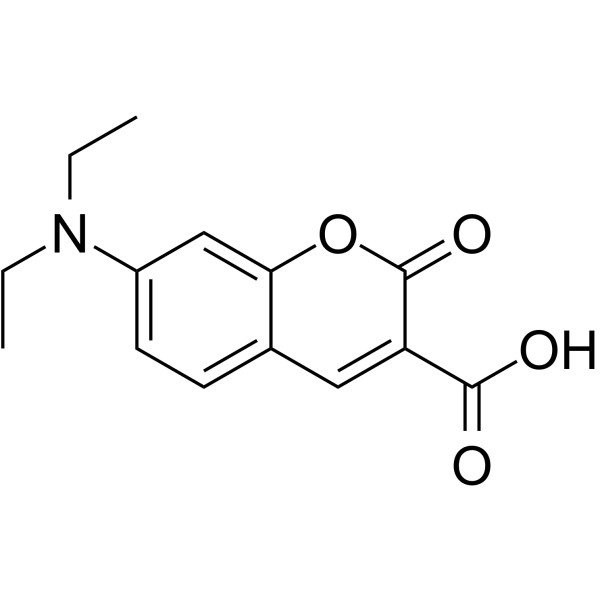
HY-D0067
7ACC1Monocarboxylate Transporter Inhibitor -
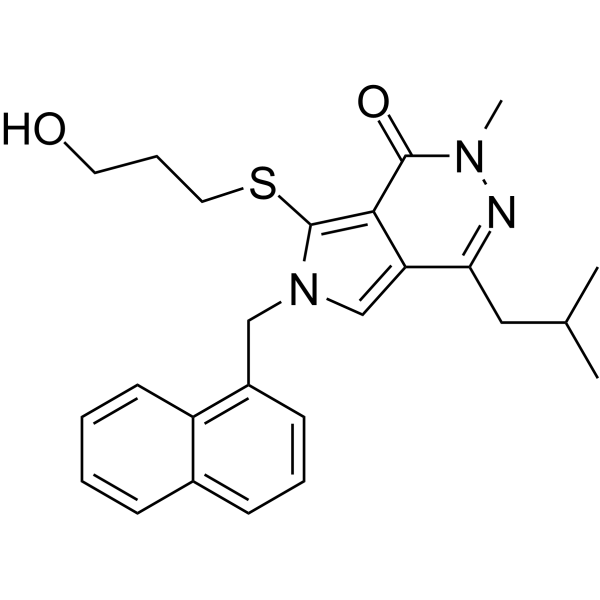
HY-18974
MCT1-IN-2MCT1 Inhibitor -

HY-150314
MCT-IN-1MCT Inhibitor -
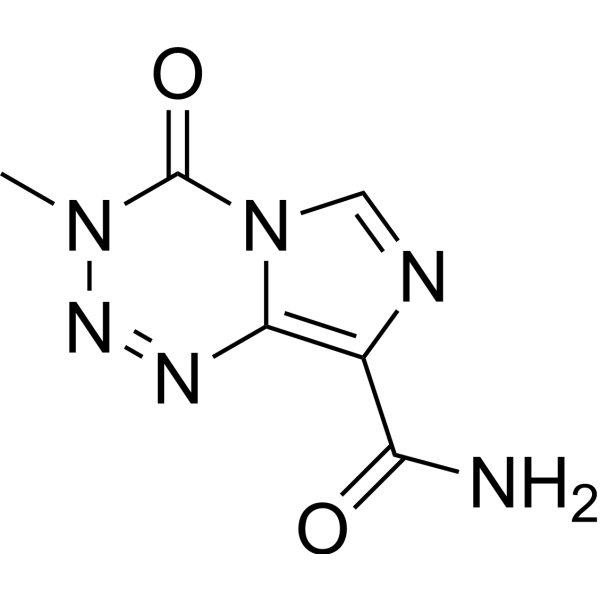
HY-17364
TemozolomideDNA Alkylator -
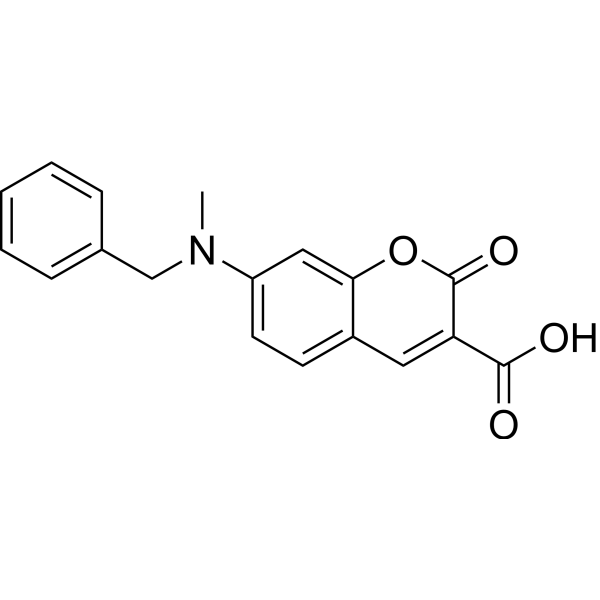
HY-D0713
7ACC2Monocarboxylate Transporter Inhibitor


Biologische Aktivität
Beschreibung
IC50 & Target
|
MCT4 77 nM (IC50) |
MCT4 11 nM (Ki) |
Cellular Effect
|
Cell Line

|
Type | Value | Description | References |
|---|---|---|---|---|
| MDA-MB-231 | IC50 |
1 nM
Compound: 18n
|
Cytotoxicity against human MDA-MB-231 cells assessed as reduction in intracellular lactate accumulation preincubated for 30 mins followed by D(+)glucose and measured after 4 hrs by UHPLC-ESI-Q-Orbitrap-MS analysis
Cytotoxicity against human MDA-MB-231 cells assessed as reduction in intracellular lactate accumulation preincubated for 30 mins followed by D(+)glucose and measured after 4 hrs by UHPLC-ESI-Q-Orbitrap-MS analysis
|
[PMID: 34382802] |
| MDA-MB-231 | IC50 |
11 nM
Compound: 18n
|
Cytotoxicity against human MDA-MB-231 cells assessed as inhibition of cell growth incubated for 6 days by MTS assay
Cytotoxicity against human MDA-MB-231 cells assessed as inhibition of cell growth incubated for 6 days by MTS assay
|
[PMID: 34382802] |
| MIA PaCa-2 | IC50 |
4720 nM
Compound: 18n
|
Cytotoxicity against human MIA PaCa-2 cells assessed as inhibition of cell growth incubated for 6 days by MTS assay
Cytotoxicity against human MIA PaCa-2 cells assessed as inhibition of cell growth incubated for 6 days by MTS assay
|
[PMID: 34382802] |
| MIA PaCa-2 | IC50 |
>25000 nM
Compound: 18n
|
Cytotoxicity against human MIA PaCa-2 cells assessed as reduction in intracellular lactate accumulation preincubated for 30 mins followed by D(+)glucose and measured after 4 hrs by UHPLC-ESI-Q-Orbitrap-MS analysis
Cytotoxicity against human MIA PaCa-2 cells assessed as reduction in intracellular lactate accumulation preincubated for 30 mins followed by D(+)glucose and measured after 4 hrs by UHPLC-ESI-Q-Orbitrap-MS analysis
|
[PMID: 34382802] |
| NCI-H358 | IC50 |
3 nM
Compound: 18n
|
Cytotoxicity against human NCI-H358 cells assessed as reduction in intracellular lactate accumulation preincubated for 30 mins followed by D(+)glucose and measured after 4 hrs by UHPLC-ESI-Q-Orbitrap-MS analysis
Cytotoxicity against human NCI-H358 cells assessed as reduction in intracellular lactate accumulation preincubated for 30 mins followed by D(+)glucose and measured after 4 hrs by UHPLC-ESI-Q-Orbitrap-MS analysis
|
[PMID: 34382802] |
| RT-4 | IC50 |
638 nM
Compound: 18n
|
Cytotoxicity against human RT-4 cells assessed as reduction in intracellular lactate accumulation preincubated for 30 mins followed by D(+)glucose and measured after 4 hrs by UHPLC-ESI-Q-Orbitrap-MS analysis
Cytotoxicity against human RT-4 cells assessed as reduction in intracellular lactate accumulation preincubated for 30 mins followed by D(+)glucose and measured after 4 hrs by UHPLC-ESI-Q-Orbitrap-MS analysis
|
[PMID: 34382802] |
| SNU-398 | IC50 |
>25000 nM
Compound: 18n
|
Cytotoxicity against human SNU-398 cells assessed as reduction in intracellular lactate accumulation preincubated for 30 mins followed by D(+)glucose and measured after 4 hrs by UHPLC-ESI-Q-Orbitrap-MS analysis
Cytotoxicity against human SNU-398 cells assessed as reduction in intracellular lactate accumulation preincubated for 30 mins followed by D(+)glucose and measured after 4 hrs by UHPLC-ESI-Q-Orbitrap-MS analysis
|
[PMID: 34382802] |
In Vitro
MSC-4381 (compound 18n) inhibits lactate efflux in the MDA-MB-231 cell line with an IC50 of 1 nM. The on-target activity is confirmed with a Ki of 11 nM by fluorescence cross-correlation spectroscopy (FCCS)[1].
MSC-4381 does not inhibit lactate efflux to a similar extent in SNU-398 and MiaPaca2, and only 600-fold less in RT-4 cell lines[1].
MedChemExpress (MCE) has not independently confirmed the accuracy of these methods. They are for reference only.
In Vivo
MSC-4381 (30 mg/kg/day; for 15 days) shows no significant antitumor activity[1].
MSC-4381 (0.2 mg/kg; iv) has a T1/2 of 1 hours, a CL of 0.33 L/h kg, a Cmax of 489 ng/mL and a Vss of 0.4 L/kg for mice[1].
MedChemExpress (MCE) has not independently confirmed the accuracy of these methods. They are for reference only.
-
Animal Model:MC38 tumor-bearing C57/BL6 mice[1]
-
Dosage:30 mg/kg
-
Administration:PO; single dose
-
Result:Only combined with MCT1/2 inhibitor exhibited a significant tumoral intracellular lactate accumulation.
-
Animal Model:Mice[1]
-
Dosage:0.2 mg/kg (Pharmacokinetic Analysis)
-
Administration:IV
-
Result:Had a T1/2 of 1 hours, a CL of 0.33 L/h•kg, a Cmax of 489 ng/mL and a Vss of 0.4 L/kg for mice.


Chemical Information
-
CAS. Nr. 2445185-57-7
-
Appearance Solid
-
Molecular Weight 537.97
-
Formel C26H20ClN3O6S
-
Color White to yellow
-
SMILES
O=C(C1=NC=C(C#CC2=CC(Cl)=CC=C2NS(=O)(C3=C4N=CC=CC4=C(OCC)C=C3)=O)C(OC)=C1)O
-
Synonyms
MCT4-IN-1
-
Versand
Room temperature in continental US; may vary elsewhere.
-
Speicherung
Powder -20°C 3 years 4°C 2 years In solvent -80°C 6 months -20°C 1 month


Lösungsmittel & Löslichkeit
In Vitro:
DMSO : 83.33 mg/mL (154.90 mM; ultrasonic and warming and heat to 60°C; Hygroscopic DMSO has a significant impact on the solubility of product, please use newly opened DMSO)
Please refer to the solubility information to select the appropriate solvent. Once prepared, please aliquot and store the solution to prevent product inactivation from repeated freeze-thaw cycles.
Storage method and period of stock solution: -80°C, 6 months; -20°C, 1 month. When stored at -80°C, please use it within 6 months. When stored at -20°C, please use it within 1 month.
Please refer to the solubility information to select the appropriate solvent. Once prepared, please aliquot and store the solution to prevent product inactivation from repeated freeze-thaw cycles.
Storage method and period of stock solution: -80°C, 6 months; -20°C, 1 month. When stored at -80°C, please use it within 6 months. When stored at -20°C, please use it within 1 month.
Konzentration (Stammlösung) × Volumen (Stammlösung) = Konzentration (Ziellösung) × Volumen (Ziellösung)
In Vivo:
Select the appropriate dissolution method based on your experimental animal and administration route.
- For the following dissolution methods, please ensure to first prepare a clear stock solution using an In Vitro approach and then sequentially add co-solvents:
- To ensure reliable experimental results, the clarified stock solution can be appropriately stored based on storage conditions. As for the working solution for In Vivo experiments, it is recommended to prepare freshly and use it on the same day.
- The percentages shown for the solvents indicate their volumetric ratio in the final prepared solution. If precipitation or phase separation occurs during preparation, heat and/or sonication can be used to aid dissolution.
Add each solvent one by one: 10% DMSO 40% PEG300 5% Tween-80 45% Saline
Solubility: ≥ 2.08 mg/mL (3.87 mM); Clear solution
This protocol yields a clear solution of ≥ 2.08 mg/mL (saturation unknown).
Taking 1 mL working solution as an example, add 100 μL DMSO stock solution (20.8 mg/mL) to 400 μL PEG300, and mix evenly; then add 50 μL Tween-80 and mix evenly; then add 450 μL Saline to adjust the volume to 1 mL.
Preparation of Saline: Dissolve 0.9 g sodium chloride in ddH₂O and dilute to 100 mL to obtain a clear Saline solution.
In Vivo Dissolution Calculator
Please enter the basic information of animal experiments:
-
-
-
-
Recommended: Prepare an additional quantity of animals to account for potential losses during experiments.
Please enter your animal formula composition:
-
%DMSO +
Recommended: Keep the proportion of DMSO in working solution below 2% if your animal is weak.
-
%+
-
+%Tween-80 + +
-
%Saline +
The co-solvents required include: DMSO, . All of co-solvents are available by MedChemExpress (MCE). , Tween 80. All of co-solvents are available by MedChemExpress (MCE).
Working solution concentration: 0.22 mg/mL
Method for preparing stock solution: mg drug dissolved in μL DMSO. Stock solution concentration: mg/mL.
1. Take μL DMSO stock solution;
2. Add μL .
μL , mix evenly;
3. Then add μL Tween 80, mix evenly;
4. Then add μL
Please ensure that the stock solution in the first step is dissolved to a clear state, and add co-solvents in sequence. You can use ultrasonic heating (ultrasonic cleaner, recommended frequency 20-40 kHz), vortexing, etc. to assist dissolution.


Reinheit & Dokumentation
-
Data Sheet (277 KB)
-
SDS (252 KB)
- English - EN (252 KB)
- Français - FR (252 KB)
- Deutsch - DE (252 KB)
- Norwegian - NO (252 KB)
- Español - ES (252 KB)
- Swedish - SV (252 KB)
- Italian - IT (252 KB)
- Korean - KR (252 KB)
- Portuguese - PT (252 KB)
-
Handling Instructions (2659 KB)
Verweise


Complete Stock Solution Preparation Table
Please refer to the solubility information to select the appropriate solvent. Once prepared, please aliquot and store the solution to prevent product inactivation from repeated freeze-thaw cycles.
Storage method and period of stock solution: -80°C, 6 months; -20°C, 1 month. When stored at -80°C, please use it within 6 months. When stored at -20°C, please use it within 1 month.
| Optional Solvent | Concentration Solvent Mass | 1 mg | 5 mg | 10 mg | 25 mg |
|---|---|---|---|---|---|
| DMSO | 1 mM | 1.8588 mL | 9.2942 mL | 18.5884 mL | 46.4710 mL |
| 5 mM | 0.3718 mL | 1.8588 mL | 3.7177 mL | 9.2942 mL | |
| 10 mM | 0.1859 mL | 0.9294 mL | 1.8588 mL | 4.6471 mL | |
| 15 mM | 0.1239 mL | 0.6196 mL | 1.2392 mL | 3.0981 mL | |
| 20 mM | 0.0929 mL | 0.4647 mL | 0.9294 mL | 2.3235 mL | |
| 25 mM | 0.0744 mL | 0.3718 mL | 0.7435 mL | 1.8588 mL | |
| 30 mM | 0.0620 mL | 0.3098 mL | 0.6196 mL | 1.5490 mL | |
| 40 mM | 0.0465 mL | 0.2324 mL | 0.4647 mL | 1.1618 mL | |
| 50 mM | 0.0372 mL | 0.1859 mL | 0.3718 mL | 0.9294 mL | |
| 60 mM | 0.0310 mL | 0.1549 mL | 0.3098 mL | 0.7745 mL | |
| 80 mM | 0.0232 mL | 0.1162 mL | 0.2324 mL | 0.5809 mL | |
| 100 mM | 0.0186 mL | 0.0929 mL | 0.1859 mL | 0.4647 mL |


MSC-4381 Related Classifications
HY-132301 Related Classifications
 Powered by Bioz