



BIIB129

Based on 1 Customer Validation
BIIB129 is a covalent, selective, orally active, and brain-penetrant BTK inhibitor (Kd = 0.63 nM). BIIB129 binds to Cys481 and forms a hydrogen bond with Asn484, blocking BCR and FcγR signaling. BIIB129 inhibits B cell activation and proliferation, FcγR-induced microglial proliferation, FcγR-mediated ROS production in neutrophils, FcγR-induced TNF secretion in monocytes, and B cell-mediated antigen presentation to T cells. BIIB129 can be used for research on multiple sclerosis.
For research use only. We do not sell to patients.
- Purity : 99.54%
- CAS No.: 2770960-52-4
- Formula: C19H22N6O2
- Molecular Weight:366.42
-
Storage:
4°C, stored under nitrogen
* In solvent : -80°C, 6 months; -20°C, 1 month (stored under nitrogen)


To place orders, for customer services and technical support, please contact: MedChemExpress USA
Tel: 609-228-6898 E-mail: [email protected] [email protected]


-
 Biological Activity
-
Chemical Information
-
Solvent & Solubility
- Protocols
- Purity & Documentation
- References
-
 Help & FAQs


-
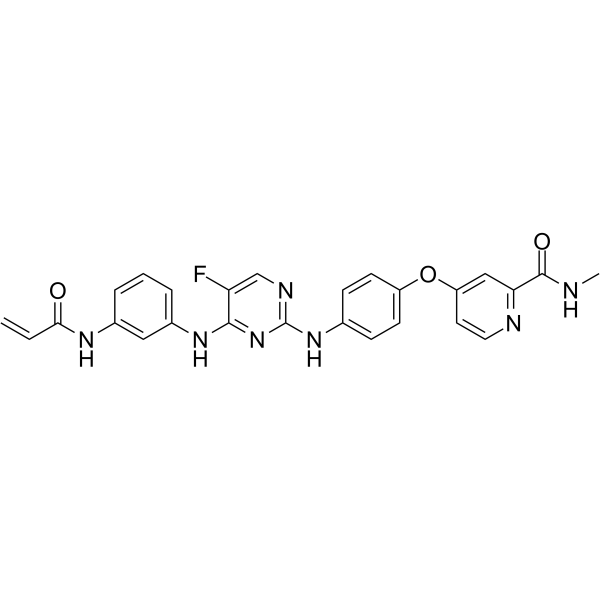
HY-13943
CNX-774 -
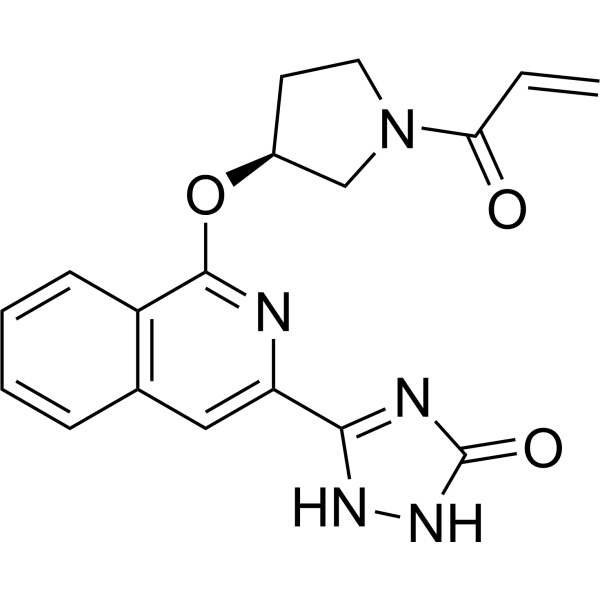
HY-132879
TAK-020Btk Inhibitor -
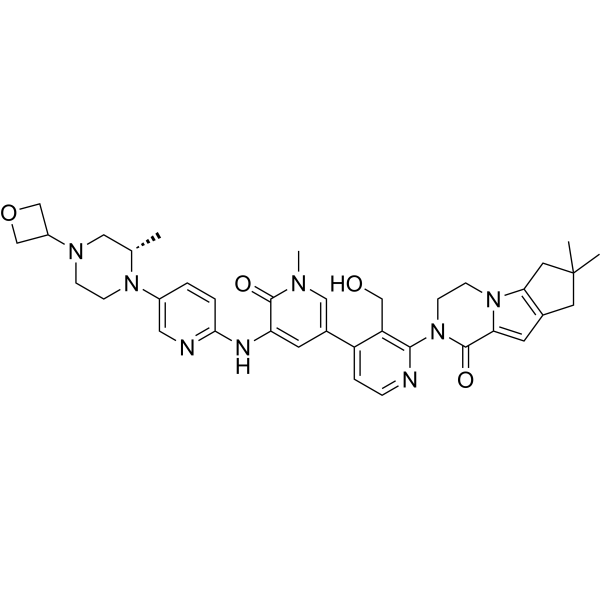
HY-19834
FenebrutinibBtk Inhibitor -
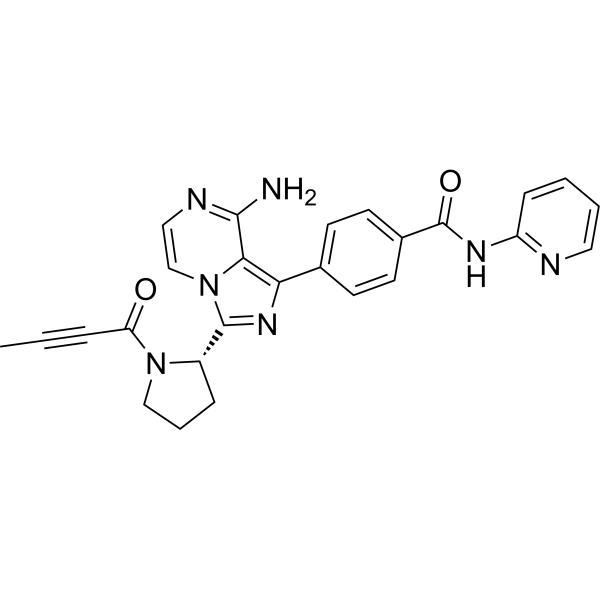
HY-17600
AcalabrutinibBTK Inhibitor -
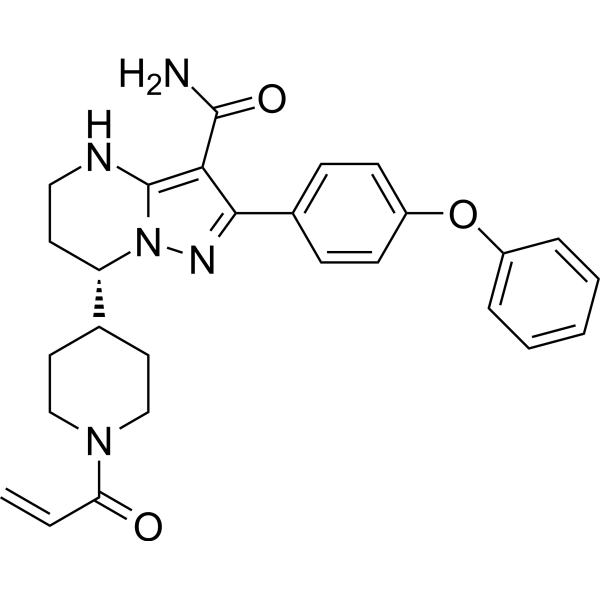
HY-101474A
ZanubrutinibBtk Inhibitor -
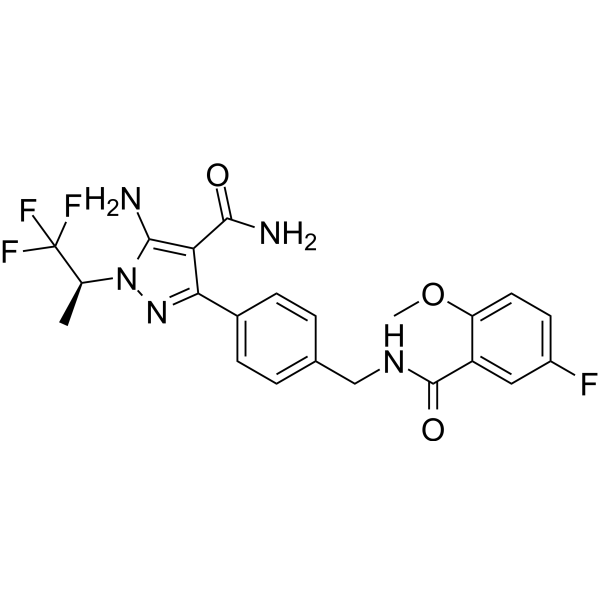
HY-131328
PirtobrutinibBTK Inhibitor -
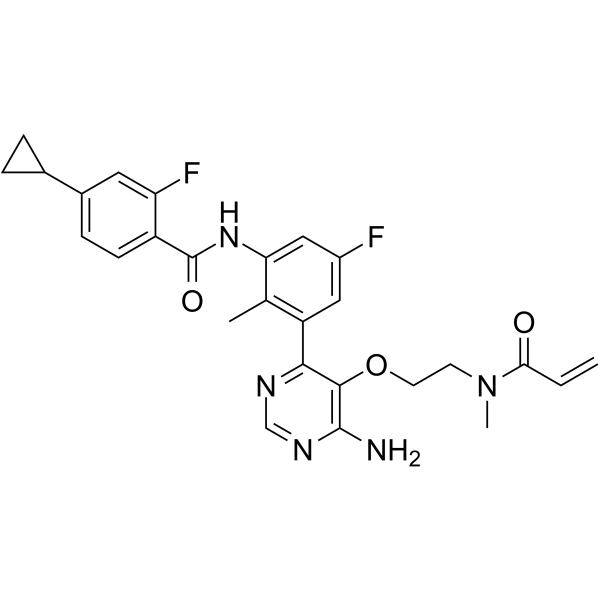
HY-128757
RemibrutinibBTK Inhibitor -
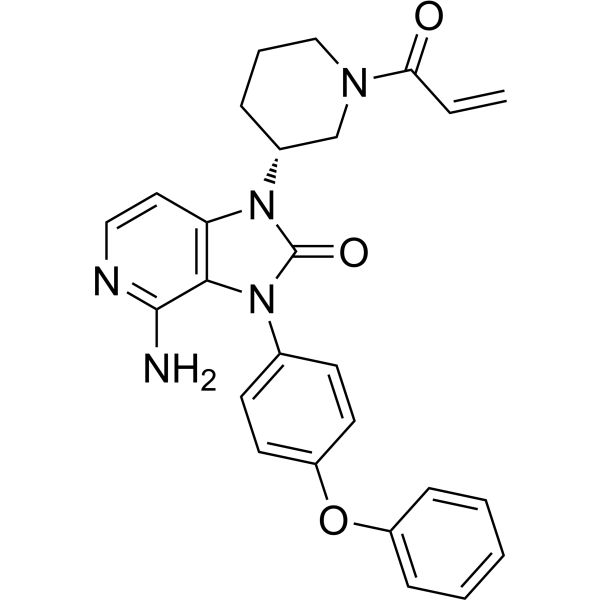
HY-109192
TolebrutinibBTK Inhibitor -
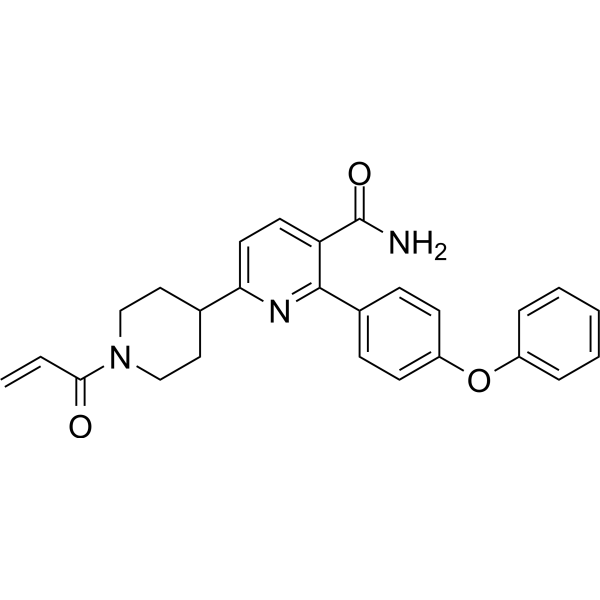
HY-129390
OrelabrutinibBTK Inhibitor -
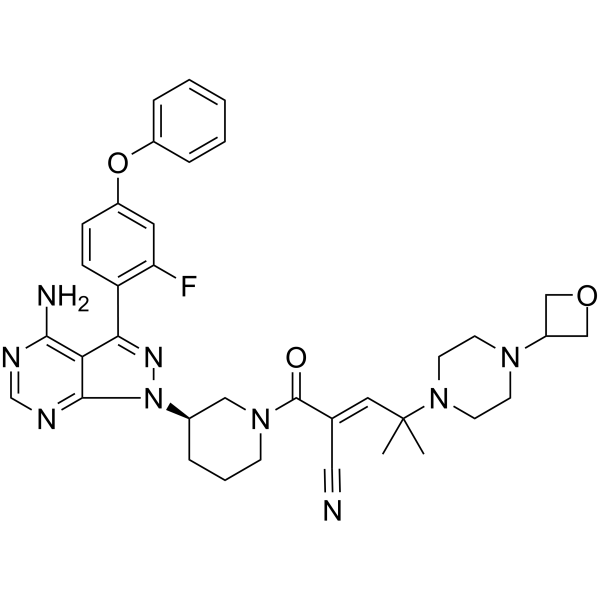
HY-112166
RilzabrutinibBTK Inhibitor -
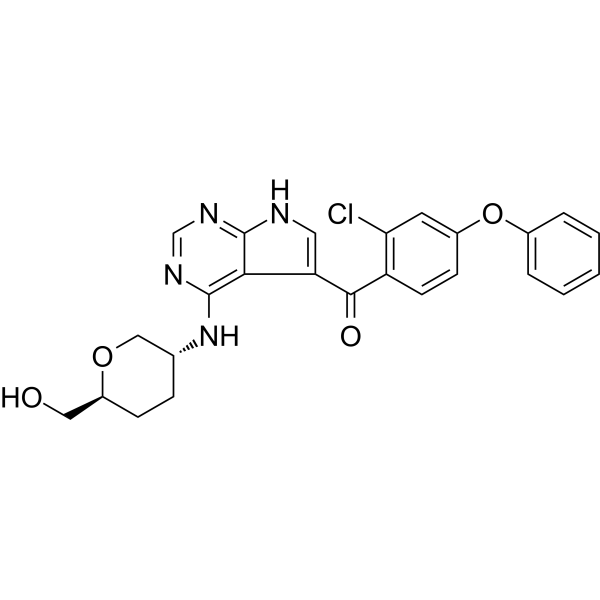
HY-112215
NemtabrutinibBTK Inhibitor -
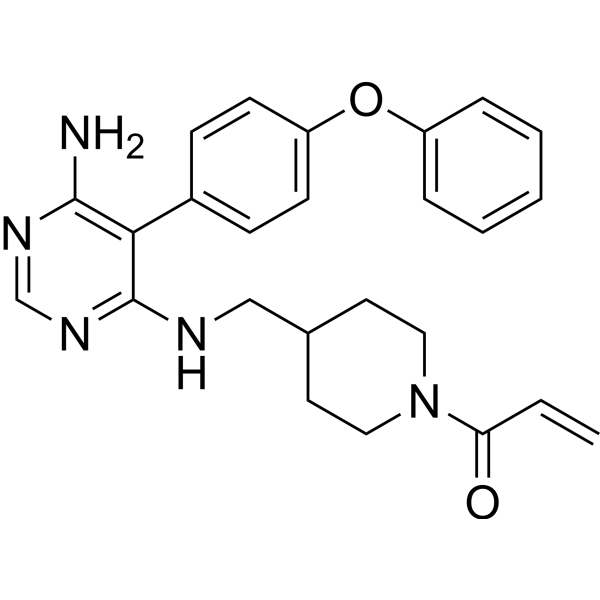
HY-101215
Evobrutinib


Biological Activity
Description
Cellular Effect
|
Cell Line

|
Type | Value | Description | References |
|---|---|---|---|---|
| Microglia | EC50 |
1.5 mg/kg
Compound: 25; BI1B129
|
Inhibition of po dosed FcR binding anti-MOG antibodies treated mouse microglial proliferation administered twice daily
Inhibition of po dosed FcR binding anti-MOG antibodies treated mouse microglial proliferation administered twice daily
|
[PMID: 38712838] |
| Monocyte | IC50 |
3 nM
Compound: 25; BI1B129
|
Inhibition of FcgammaR-mediated TNF secretion in monocytes (unknown origin)
Inhibition of FcgammaR-mediated TNF secretion in monocytes (unknown origin)
|
[PMID: 38712838] |
| Neutrophil | IC50 |
3.2 nM
Compound: 25; BI1B129
|
Inhibition of FcgammaR-mediated ROS production in neutrophils (unknown origin)
Inhibition of FcgammaR-mediated ROS production in neutrophils (unknown origin)
|
[PMID: 38712838] |
| PBMC | IC50 |
13 nM
Compound: 25; BI1B129
|
Inhibition of anti-IgD induced B-cell activation in human PBMCs
Inhibition of anti-IgD induced B-cell activation in human PBMCs
|
[PMID: 38712838] |
| T-cell | IC50 |
1.9 nM
Compound: 25; BI1B129
|
Inhibition of OVA332 to 339 specific T-cells (unknown origin) proliferation assessed as reduction in B-cell mediated antigen presentation to T cells
Inhibition of OVA332 to 339 specific T-cells (unknown origin) proliferation assessed as reduction in B-cell mediated antigen presentation to T cells
|
[PMID: 38712838] |
| TMD8 | IC50 |
0.82 nM
Compound: 25; BI1B129
|
Inhibition of human TMD8 cells proliferation incubated for 35 to 72 hrs by CellTiter-Glo luminescent cell viability assay
Inhibition of human TMD8 cells proliferation incubated for 35 to 72 hrs by CellTiter-Glo luminescent cell viability assay
|
[PMID: 38712838] |
| TMD8 | IC50 |
7.1 nM
Compound: 25; BI1B129
|
Antiproliferative activity against human TMD8 cells by CellTiter-Glo luminescent cell viability assay
Antiproliferative activity against human TMD8 cells by CellTiter-Glo luminescent cell viability assay
|
[PMID: 38712838] |
In Vitro
BIIB129 is highly selective for BTK over other kinases with a reactive cysteine at the 481 position[1].
BIIB129 potently inhibits BCR signaling in Ramos B cells[1].
BIIB129 inhibits NF-κB signaling in TMD8 cells[1].
BIIB129 modulates CD19 and CD36 expression in TMD8 cells[1].
BIIB129 inhibits FcγR signaling in monocytes[1].
BIIB129 (25) inhibits basophil degranulation in human whole blood[1].
MedChemExpress (MCE) has not independently confirmed the accuracy of these methods. They are for reference only.
Parmacokinetics
In Vivo
BIIB129 (0.1-31.7 mg/kg; p.o.; twice daily) exhibits dose-dependent efficacy in inhibiting FcγR-induced microglial proliferation in mice, with an EC50 of 1.5 mg/kg[1].
MedChemExpress (MCE) has not independently confirmed the accuracy of these methods. They are for reference only.
-
Animal Model:NOD.SCID mice (immunodeficient) injected with TMD8 cells[1]
-
Dosage:2.5 mg/kg, 10 mg/kg, 25 mg/kg
-
Administration:p.o.; BID; 2.5 days
-
Result:Induced a dose-response with maximal inhibition at 25 mg/kg.


Chemical Information
-
CAS No. 2770960-52-4
-
Appearance Solid
-
Molecular Weight 366.42
-
Formula C19H22N6O2
-
Color White to off-white
-
SMILES
CN(N=C1)C=C1C2=CN3C(C(O[C@]4(C[C@H](C4)N(C)C(C=C)=O)C)=N2)=CC=N3
-
Shipping
Room temperature in continental US; may vary elsewhere.
-
Storage
4°C, stored under nitrogen
* In solvent : -80°C, 6 months; -20°C, 1 month (stored under nitrogen)


Solvent & Solubility
In Vitro:
DMSO : 50 mg/mL (136.46 mM; Need ultrasonic; Hygroscopic DMSO has a significant impact on the solubility of product, please use newly opened DMSO)
Please refer to the solubility information to select the appropriate solvent. Once prepared, please aliquot and store the solution to prevent product inactivation from repeated freeze-thaw cycles.
Storage method and period of stock solution: -80°C, 6 months; -20°C, 1 month (stored under nitrogen). When stored at -80°C, please use it within 6 months. When stored at -20°C, please use it within 1 month.
Please refer to the solubility information to select the appropriate solvent. Once prepared, please aliquot and store the solution to prevent product inactivation from repeated freeze-thaw cycles.
Storage method and period of stock solution: -80°C, 6 months; -20°C, 1 month (stored under nitrogen). When stored at -80°C, please use it within 6 months. When stored at -20°C, please use it within 1 month.
Concentration (start) × Volume (start) = Concentration (final) × Volume (final)
In Vivo:
Select the appropriate dissolution method based on your experimental animal and administration route.
- For the following dissolution methods, please ensure to first prepare a clear stock solution using an In Vitro approach and then sequentially add co-solvents:
- To ensure reliable experimental results, the clarified stock solution can be appropriately stored based on storage conditions. As for the working solution for In Vivo experiments, it is recommended to prepare freshly and use it on the same day.
- The percentages shown for the solvents indicate their volumetric ratio in the final prepared solution. If precipitation or phase separation occurs during preparation, heat and/or sonication can be used to aid dissolution.
Add each solvent one by one: 10% DMSO 40% PEG300 5% Tween-80 45% Saline
Solubility: ≥ 2.5 mg/mL (6.82 mM); Clear solution
This protocol yields a clear solution of ≥ 2.5 mg/mL (saturation unknown).
Taking 1 mL working solution as an example, add 100 μL DMSO stock solution (25.0 mg/mL) to 400 μL PEG300, and mix evenly; then add 50 μL Tween-80 and mix evenly; then add 450 μL Saline to adjust the volume to 1 mL.
Preparation of Saline: Dissolve 0.9 g sodium chloride in ddH₂O and dilute to 100 mL to obtain a clear Saline solution.
In Vivo Dissolution Calculator
Please enter the basic information of animal experiments:
-
-
-
-
Recommended: Prepare an additional quantity of animals to account for potential losses during experiments.
Please enter your animal formula composition:
-
%DMSO +
Recommended: Keep the proportion of DMSO in working solution below 2% if your animal is weak.
-
%+
-
+%Tween-80 + +
-
%Saline +
The co-solvents required include: DMSO, . All of co-solvents are available by MedChemExpress (MCE). , Tween 80. All of co-solvents are available by MedChemExpress (MCE).
Working solution concentration: 0.22 mg/mL
Method for preparing stock solution: mg drug dissolved in μL DMSO. Stock solution concentration: mg/mL. * In solvent : -80°C, 6 months; -20°C, 1 month (stored under nitrogen)
1. Take μL DMSO stock solution;
2. Add μL .
μL , mix evenly;
3. Then add μL Tween 80, mix evenly;
4. Then add μL
Please ensure that the stock solution in the first step is dissolved to a clear state, and add co-solvents in sequence. You can use ultrasonic heating (ultrasonic cleaner, recommended frequency 20-40 kHz), vortexing, etc. to assist dissolution.


Purity & Documentation
-
Data Sheet (293 KB)
-
SDS (251 KB)
- English - EN (251 KB)
- Français - FR (251 KB)
- Deutsch - DE (251 KB)
- Norwegian - NO (251 KB)
- Español - ES (251 KB)
- Swedish - SV (251 KB)
- Italian - IT (251 KB)
- Korean - KR (251 KB)
- Portuguese - PT (251 KB)
-
Handling Instructions (2659 KB)
References


Complete Stock Solution Preparation Table
Please refer to the solubility information to select the appropriate solvent. Once prepared, please aliquot and store the solution to prevent product inactivation from repeated freeze-thaw cycles.
Storage method and period of stock solution: -80°C, 6 months; -20°C, 1 month (stored under nitrogen). When stored at -80°C, please use it within 6 months. When stored at -20°C, please use it within 1 month.
| Optional Solvent | Concentration Solvent Mass | 1 mg | 5 mg | 10 mg | 25 mg |
|---|---|---|---|---|---|
| DMSO | 1 mM | 2.7291 mL | 13.6455 mL | 27.2911 mL | 68.2277 mL |
| 5 mM | 0.5458 mL | 2.7291 mL | 5.4582 mL | 13.6455 mL | |
| 10 mM | 0.2729 mL | 1.3646 mL | 2.7291 mL | 6.8228 mL | |
| 15 mM | 0.1819 mL | 0.9097 mL | 1.8194 mL | 4.5485 mL | |
| 20 mM | 0.1365 mL | 0.6823 mL | 1.3646 mL | 3.4114 mL | |
| 25 mM | 0.1092 mL | 0.5458 mL | 1.0916 mL | 2.7291 mL | |
| 30 mM | 0.0910 mL | 0.4549 mL | 0.9097 mL | 2.2743 mL | |
| 40 mM | 0.0682 mL | 0.3411 mL | 0.6823 mL | 1.7057 mL | |
| 50 mM | 0.0546 mL | 0.2729 mL | 0.5458 mL | 1.3646 mL | |
| 60 mM | 0.0455 mL | 0.2274 mL | 0.4549 mL | 1.1371 mL | |
| 80 mM | 0.0341 mL | 0.1706 mL | 0.3411 mL | 0.8528 mL | |
| 100 mM | 0.0273 mL | 0.1365 mL | 0.2729 mL | 0.6823 mL |


BIIB129 Related Classifications
HY-163565 Related Classifications
 Powered by Bioz