



ZK164015

Based on 1 Customer Validation
ZK164015 is an estrogen-glucocorticoid receptor chimera that can be used as a compound screening tool to evaluate tissue-selective estrogen activity. ZK164015 was used to evaluate its effects on ER function in osteoblasts in studies based on green fluorescent protein (GFP)-receptor chimeras. In osteoblast-like (ROS and U2OS) and breast cancer (MCF7) cells, ZK164015 showed different effects in response to ER agonists, including modulation of ERE-luc activity and effects on nuclear mobility.
For research use only. We do not sell to patients.
- Purity : 99.94%
- CAS No.: 177583-70-9
- Formula: C30H43NO4S
- Molecular Weight:513.73
-
Storage:Powder -20°C, 3 years , 4°C, 2 years ; In solvent -80°C, 6 months , -20°C, 1 month


To place orders, for customer services and technical support, please contact: MedChemExpress USA
Tel: 609-228-6898 E-mail: [email protected] [email protected]


-
 Biological Activity
-
Chemical Information
-
Solvent & Solubility
- Protocols
- Purity & Documentation
- References
-
 Help & FAQs


-
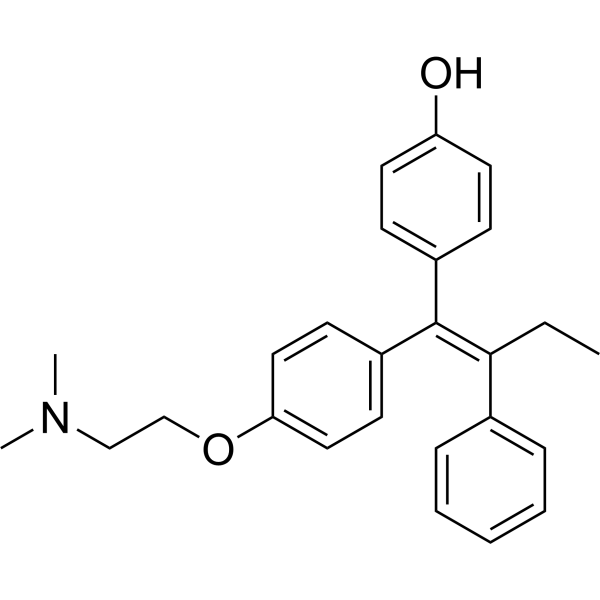
HY-16950
4-HydroxytamoxifenEstrogen Receptor Modulator -
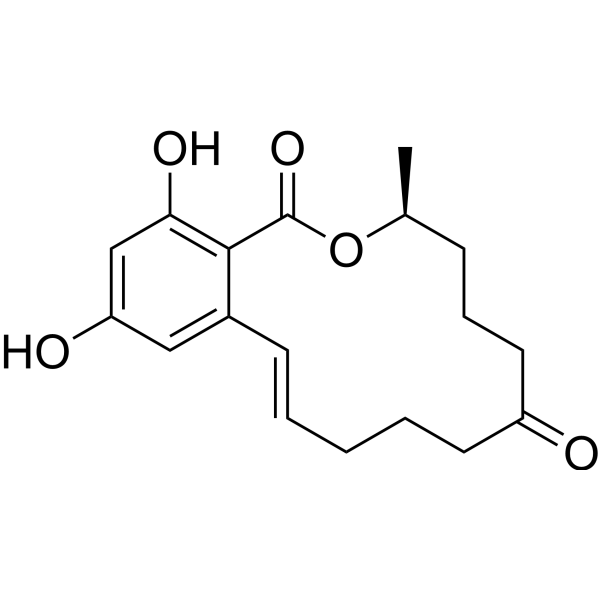
HY-103447
ZearalenoneMycotoxin Compound -
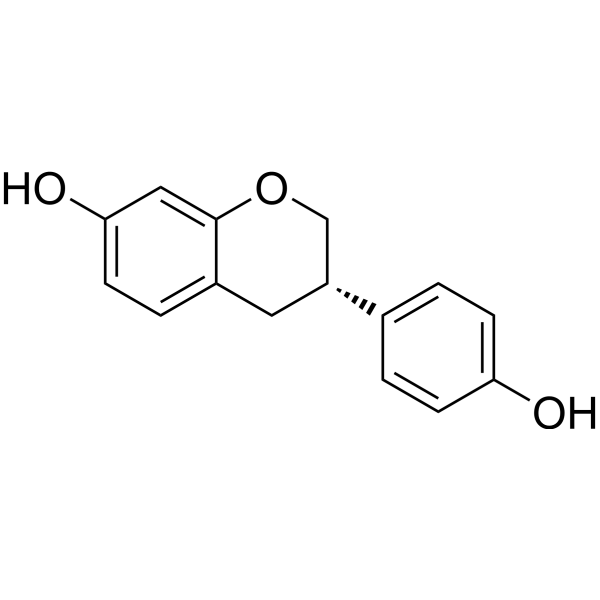
HY-100583
(-)-(S)-EquolEstrogen Receptor β Ligand -
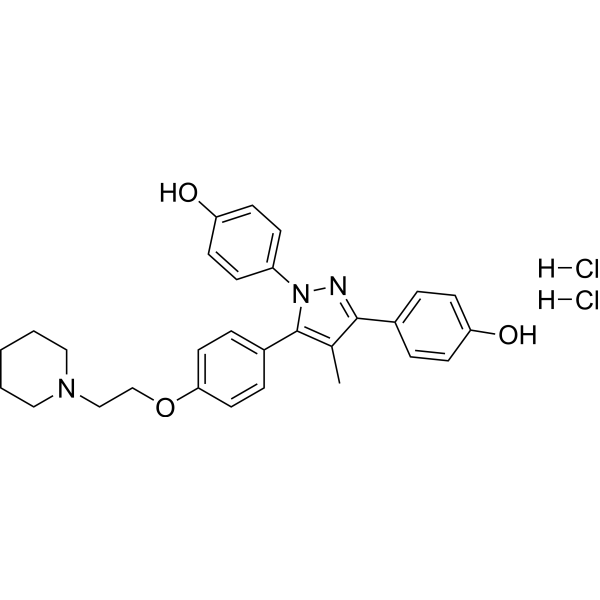
HY-103454
MPP dihydrochlorideER Modulator -

HY-100583R
(-)-(S)-Equol (Standard)Estrogen Receptor β Ligand -
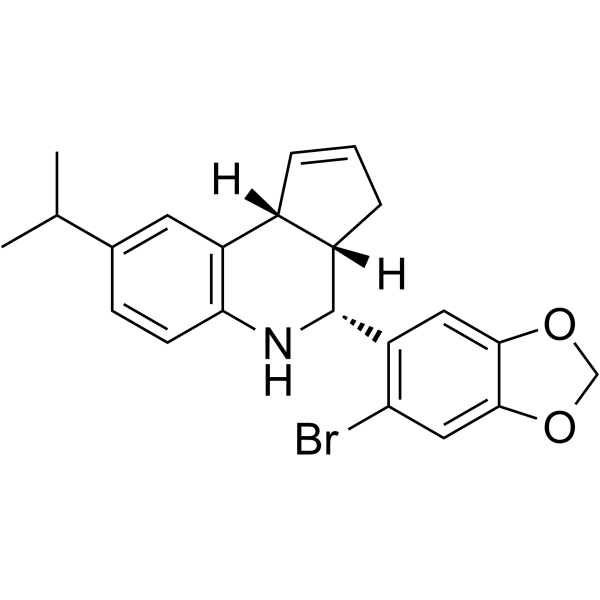
HY-103450
G36GPER/GPR30 Antagonist -
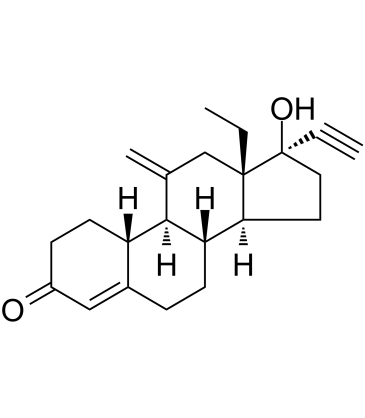
HY-B0652
EtonogestrelProgesterone/ERR Agonist -
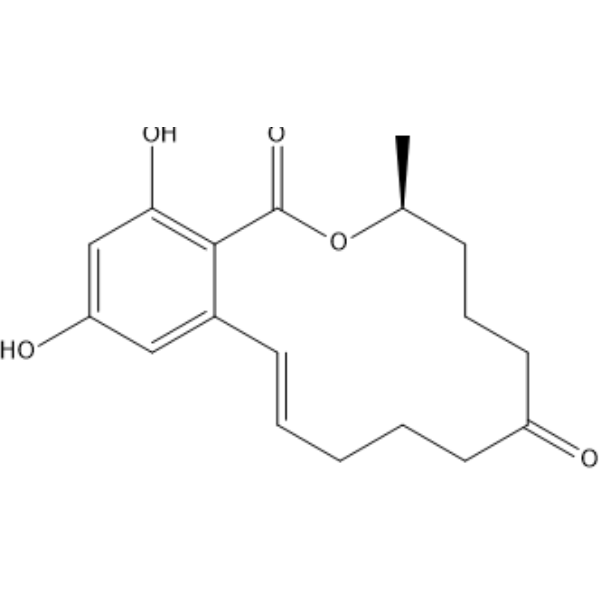
HY-103447R
Zearalenone (Standard) -
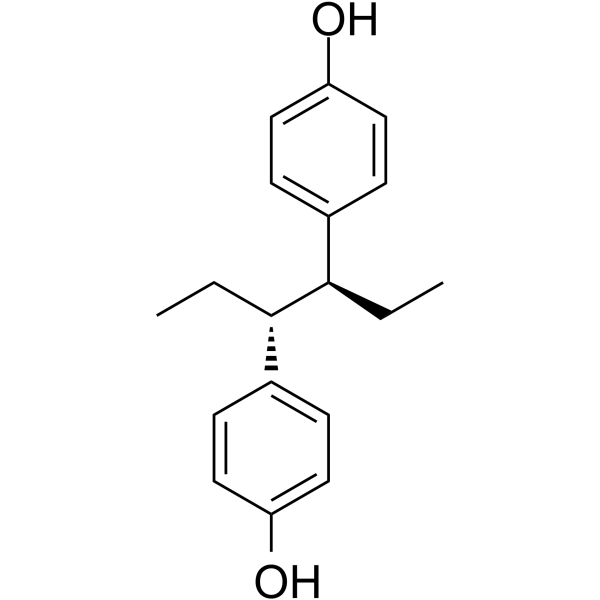
HY-B1662
HexestrolSynthetic Estrogen -

HY-B0487
EthisteroneSteroidal Estrogen -
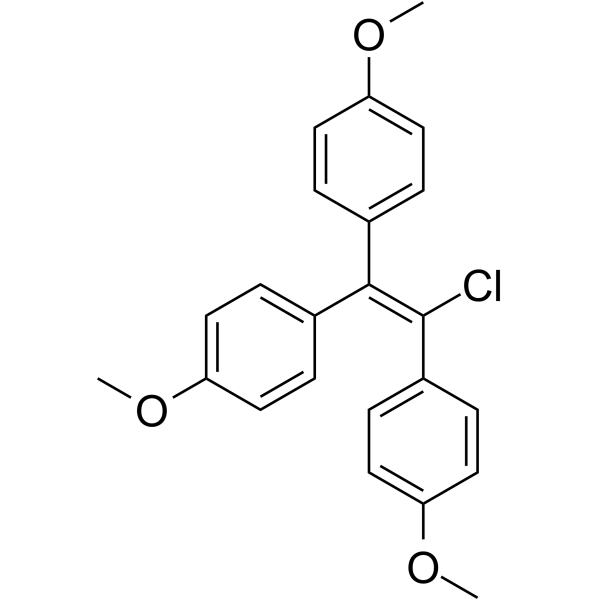
HY-B2158
ChlorotrianiseneEstrogen Receptor Modulator -
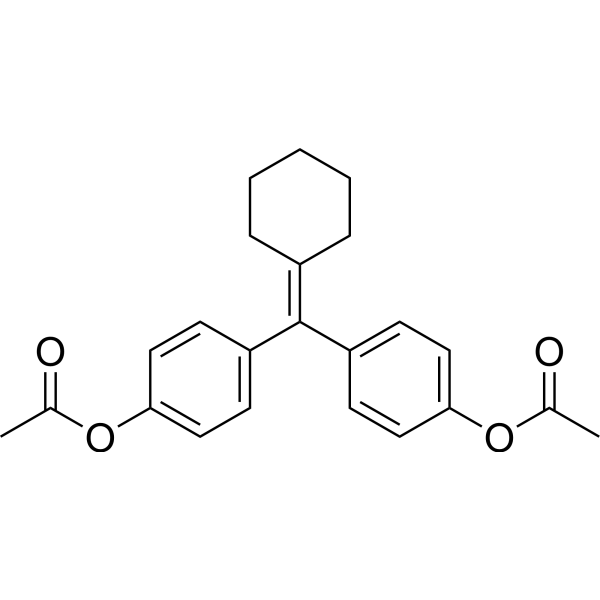
HY-W011100
CyclofenilEstrogen Receptor Modulator


Biological Activity
Description
Cellular Effect
|
Cell Line

|
Type | Value | Description | References |
|---|---|---|---|---|
| Cancer cell lines | IC50 |
0.02 μM
Compound: ZK-164015
|
Inhibition of 10e-9 M E2 stimulated transcriptional activation in ER+MCF-7/2a breast cancer cells
Inhibition of 10e-9 M E2 stimulated transcriptional activation in ER+MCF-7/2a breast cancer cells
|
[PMID: 15324884] |
| Cancer cell lines | IC50 |
0.05 μM
Compound: ZK-164015
|
Inhibition of 10e-9 M E2 stimulated MCF-7 breast cancer cell proliferation
Inhibition of 10e-9 M E2 stimulated MCF-7 breast cancer cell proliferation
|
[PMID: 15324884] |
| Cancer cell lines | IC50 |
1.4 nM
Compound: ZK-164015
|
Inhibition of ER-MDA-MB 231 breast cancer cell proliferation over 200 hr
Inhibition of ER-MDA-MB 231 breast cancer cell proliferation over 200 hr
|
[PMID: 15324884] |


Chemical Information
-
CAS No. 177583-70-9
-
Appearance Solid
-
Molecular Weight 513.73
-
Formula C30H43NO4S
-
Color Off-white to light yellow
-
SMILES
OC1=CC2=C(N(CCCCCCCCCCS(=O)(CCCCC)=O)C(C3=CC=C(O)C=C3)=C2C)C=C1
-
Shipping
Room temperature in continental US; may vary elsewhere.
-
Storage
Powder -20°C 3 years 4°C 2 years In solvent -80°C 6 months -20°C 1 month


Solvent & Solubility
In Vitro:
DMSO : 100 mg/mL (194.65 mM; Need ultrasonic; Hygroscopic DMSO has a significant impact on the solubility of product, please use newly opened DMSO)
Please refer to the solubility information to select the appropriate solvent. Once prepared, please aliquot and store the solution to prevent product inactivation from repeated freeze-thaw cycles.
Storage method and period of stock solution: -80°C, 6 months; -20°C, 1 month. When stored at -80°C, please use it within 6 months. When stored at -20°C, please use it within 1 month.
Please refer to the solubility information to select the appropriate solvent. Once prepared, please aliquot and store the solution to prevent product inactivation from repeated freeze-thaw cycles.
Storage method and period of stock solution: -80°C, 6 months; -20°C, 1 month. When stored at -80°C, please use it within 6 months. When stored at -20°C, please use it within 1 month.
Concentration (start) × Volume (start) = Concentration (final) × Volume (final)

Protocols
-
Research Protocol for Drug Screening technologies
Drug screening technologies are experimental and computational strategies used to identify small molecules or chemical probes that modulate a defined molecular target, signaling pathway, cellular phenotype, disease model, or patient-derived response profile. High-throughput screening tests many compounds in miniaturized assay formats, while quantitative high-throughput screening tests compounds across concentration ranges so that potency and efficacy can be inferred from concentration-response behavior rather than from a single-point signal. The core biological function of a drug-screening strategy is to connect compound exposure with measurable pathway activity, target modulation, cell-state change, viability, cytotoxicity, morphology, or disease-relevant phenotype. Assay performance must be evaluated before screening because hit identification depends on the separation between positive and negative controls, control variability, plate effects, outliers, and the statistical framework
-
Research Protocol for Compound databases
Compound databases support drug-discovery research by organizing chemical structures, identifiers, bioactivity values, targets, annotations, purchasability, and literature-derived evidence into searchable resources for virtual screening, target prediction, repurposing, and hit prioritization. General chemical databases such as PubChem, ChEMBL, DrugBank, BindingDB, and ZINC differ in scope: PubChem emphasizes broad chemical and assay data, ChEMBL and BindingDB emphasize bioactivity and target relationships, DrugBank emphasizes approved and investigational drugs, and ZINC emphasizes purchasable docking-ready compounds. Natural-product and traditional-medicine databases add species source, phytochemical, and ethnopharmacology information, but reviews show that database accessibility, redundancy, inconsistent structure annotation, and uneven curation remain major limitations. Unresolved questions include how to harmonize identifiers across databases, how to remove duplicate or erroneous st
-
ROS/oxidative-stress fluorescent staining
ROS/oxidative-stress fluorescent staining uses cell-permeant fluorogenic probes that become fluorescent after oxidation inside cells or tissues; commonly used examples include DCFH-DA/DCFDA for broad cellular oxidant detection, DHE for superoxide-related signal detection, MitoSOX for mitochondrial superoxide-related signal detection, and CellROX probes for oxidative-stress-associated fluorescence readouts. The assay detects probe oxidation rather than a single ROS species unless the probe and analysis method have been chemically validated for that species. DCFH-DA enters cells, is deacetylated by intracellular esterases to DCFH, and produces fluorescent DCF after oxidation, so the readout is used as an operational measure of total cellular oxidative stress rather than a species-specific ROS measurement. DHE and MitoSOX can report superoxide-related oxidation, but red fluorescence alone can include non-specific ethidium-like oxidation products; HPLC or optimized spectral approaches are
-
Research Protocol for Endocrine Diseases
Endocrine diseases often arise from disrupted hormone production, hormone signaling, or target-tissue responsiveness; for diabetes-focused endocrine disease models, insulin signaling regulates glucose uptake, hepatic glucose output, lipid metabolism, and β-cell compensation. Type 2 diabetes develops through interacting defects in insulin resistance, β-cell dysfunction, adipose inflammation, hepatic glucose overproduction, altered incretin signaling, and ectopic lipid metabolism. A major unresolved question is whether endocrine dysfunction is driven primarily by target-tissue insulin resistance, intrinsic β-cell failure, immune/inflammatory stress, or combined multi-organ failure that differs by disease stage.
-
Breast Cancer Modeling
Breast cancer is a heterogeneous cancer, and it has been distinguished into four subtypes: luminal A, luminal B, HER2-positive and basal-like. Molecular mutations, epigenetic alterations, hormone exposure and immune microenvironment are related to the progression of breast cancer.


Purity & Documentation
-
Data Sheet (267 KB)
-
SDS (251 KB)
- English - EN (251 KB)
- Français - FR (251 KB)
- Deutsch - DE (251 KB)
- Norwegian - NO (251 KB)
- Español - ES (251 KB)
- Swedish - SV (251 KB)
- Italian - IT (251 KB)
- Korean - KR (251 KB)
- Portuguese - PT (251 KB)
-
Handling Instructions (2659 KB)
References


Complete Stock Solution Preparation Table
Please refer to the solubility information to select the appropriate solvent. Once prepared, please aliquot and store the solution to prevent product inactivation from repeated freeze-thaw cycles.
Storage method and period of stock solution: -80°C, 6 months; -20°C, 1 month. When stored at -80°C, please use it within 6 months. When stored at -20°C, please use it within 1 month.
| Optional Solvent | Concentration Solvent Mass | 1 mg | 5 mg | 10 mg | 25 mg |
|---|---|---|---|---|---|
| DMSO | 1 mM | 1.9465 mL | 9.7327 mL | 19.4655 mL | 48.6637 mL |
| 5 mM | 0.3893 mL | 1.9465 mL | 3.8931 mL | 9.7327 mL | |
| 10 mM | 0.1947 mL | 0.9733 mL | 1.9465 mL | 4.8664 mL | |
| 15 mM | 0.1298 mL | 0.6488 mL | 1.2977 mL | 3.2442 mL | |
| 20 mM | 0.0973 mL | 0.4866 mL | 0.9733 mL | 2.4332 mL | |
| 25 mM | 0.0779 mL | 0.3893 mL | 0.7786 mL | 1.9465 mL | |
| 30 mM | 0.0649 mL | 0.3244 mL | 0.6488 mL | 1.6221 mL | |
| 40 mM | 0.0487 mL | 0.2433 mL | 0.4866 mL | 1.2166 mL | |
| 50 mM | 0.0389 mL | 0.1947 mL | 0.3893 mL | 0.9733 mL | |
| 60 mM | 0.0324 mL | 0.1622 mL | 0.3244 mL | 0.8111 mL | |
| 80 mM | 0.0243 mL | 0.1217 mL | 0.2433 mL | 0.6083 mL | |
| 100 mM | 0.0195 mL | 0.0973 mL | 0.1947 mL | 0.4866 mL |


ZK164015 Related Classifications
HY-103455 Related Classifications
 Powered by Bioz