



Mericitabine
Based on 7 publication(s) in Google Scholar
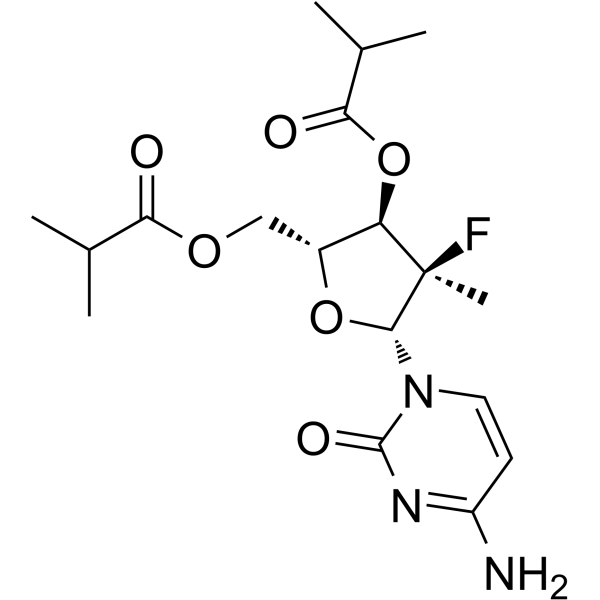
Mericitabine (RG 7128; R-7128) is a nucleoside inhibitor of the HCV NS5B polymerase that acts as an RNA chain terminator and prevents elongation of RNA transcripts during replication.
Nos produits utilisent uniquement pour la recherche. Nous ne vendons pas aux patients.
- Pureté : 99.55%
- CAS No.: 940908-79-2
- Formule: C18H26FN3O6
- Masse moléculaire:399.41
-
Stockage:Powder -20°C, 3 years , 4°C, 2 years ; In solvent -80°C, 2 years , -20°C, 1 year

To place orders, for customer services and technical support, please contact: MedChemExpress USA
Tel: 609-228-6898 E-mail: [email protected] [email protected]


-
 Activité biologique
-
Chemical Information
-
Solvant et solubilité
- Pureté et documentation
- Références
-
 Help & FAQs


-
HY-15602
LedipasvirHCV NS5A Inhibitor -
HY-15236
PSI-6206HCV Inhibitor -
HY-10870
RO-9187HCV Inhibitor -
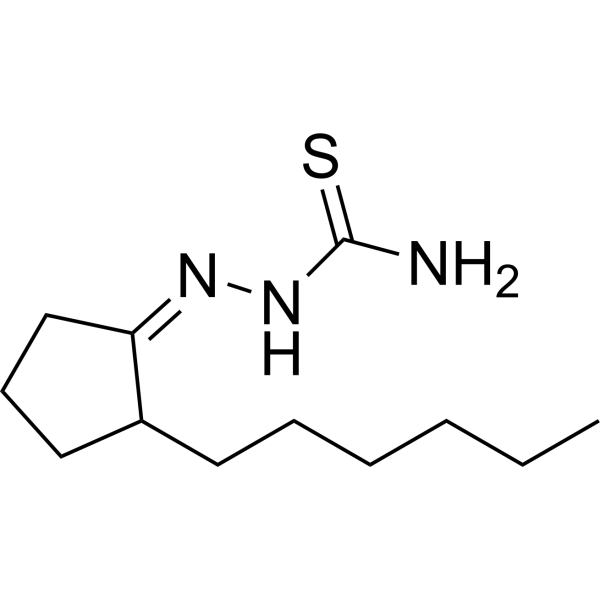
HY-116767
BLT-1SR-BI Inhibitor -
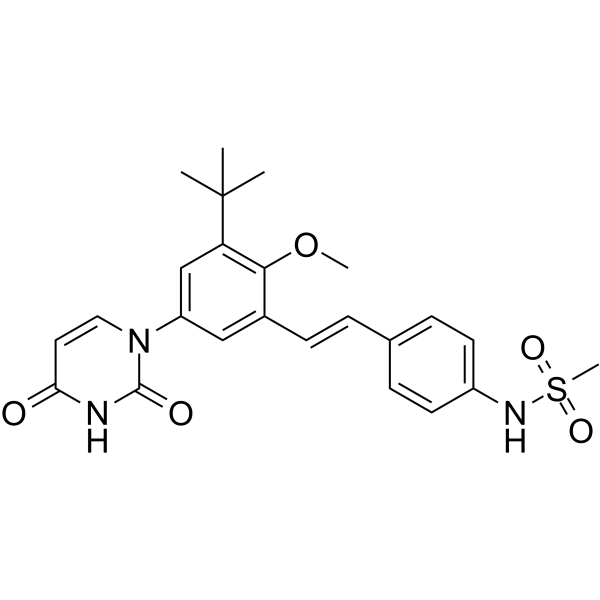
HY-101634
ABT-072NS5B Polymerase Inhibitor -
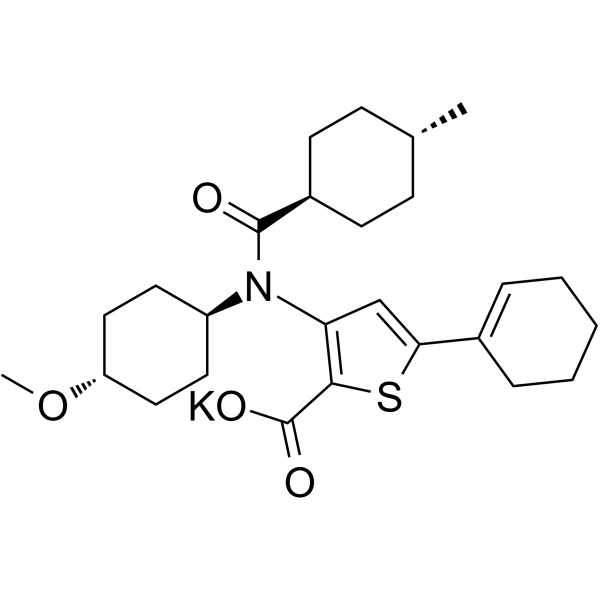
HY-13465
VCH-916HCV Polymerase Inhibitor -
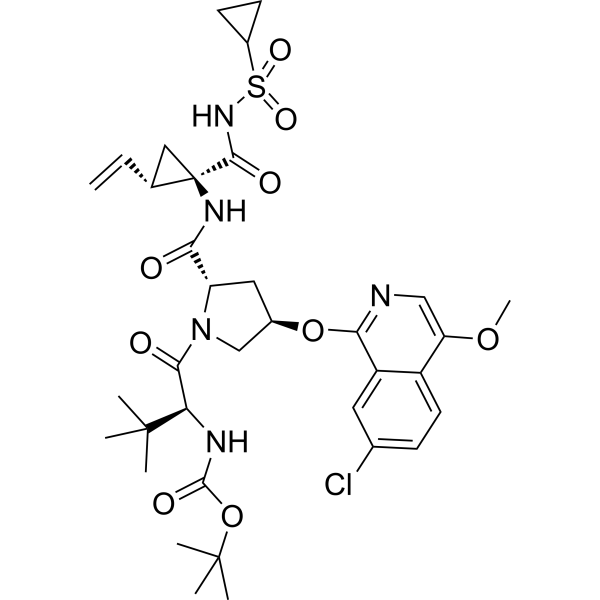
HY-14434
AsunaprevirHCV Protease Inhibitor -
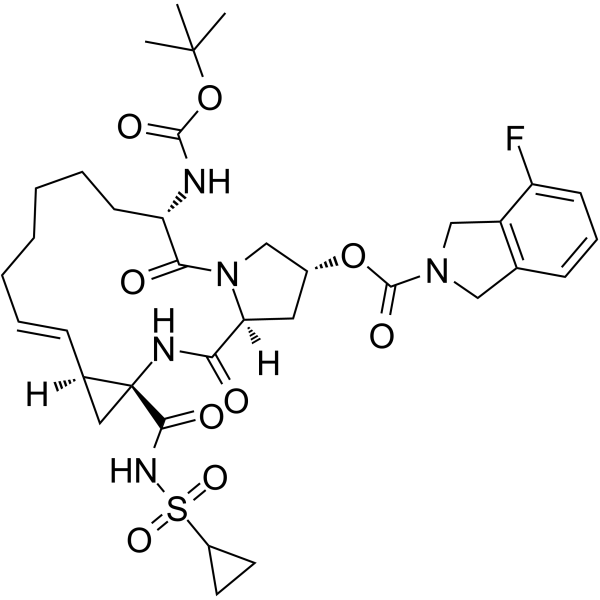
HY-10238
DanoprevirHCV NS3/4A Inhibitor -
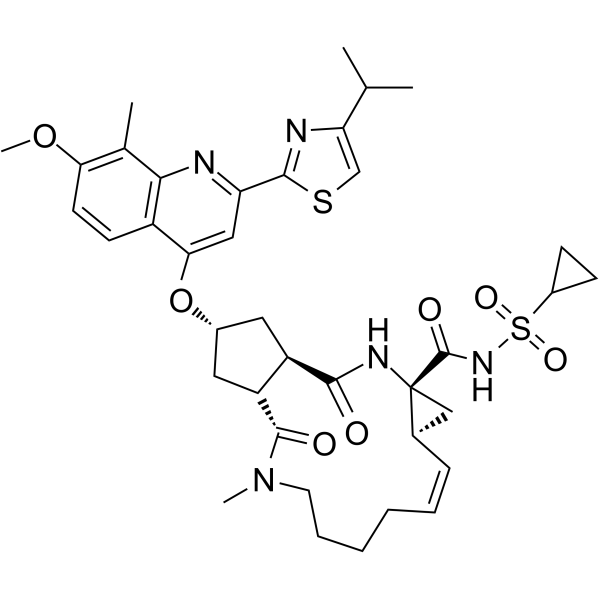
HY-10241
SimeprevirHCV NS3/4A Inhibitor -
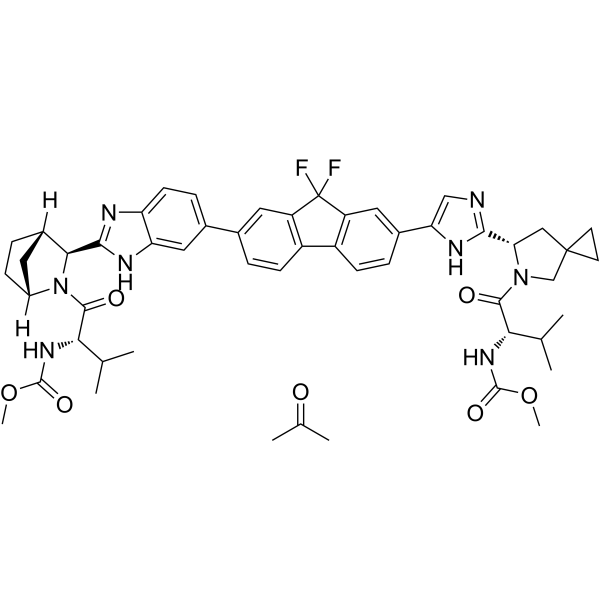
HY-15602A
Ledipasvir (acetone)Hepatitis C Virus NS5A Inhibitor -
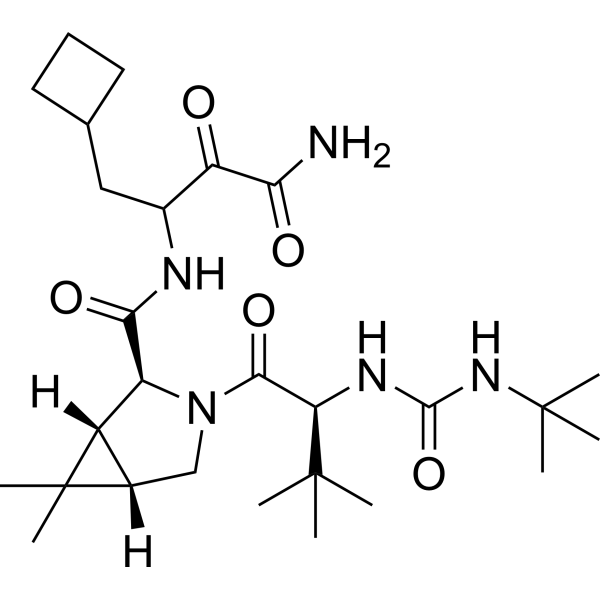
HY-10237
BoceprevirHCV NS3 Protease Inhibitor -

HY-10240R
Mericitabine (Standard)HCV NS5B Polymerase Inhibitor
Publications Citing Use of MedChemExpress (MCE) Mericitabine
More- Sci Rep. 2018 Aug 20;8(1):12469. [Abstract]
- Antiviral Res. 2019 Oct:170:104570. [Abstract]
- Antiviral Res. 2016 Sep:133:119-29. [Abstract]
- Antimicrob Agents Chemother. 2015 Sep;59(9):5483-93. [Abstract]
- Antimicrob Agents Chemother. 2015 May;59(5):2496-507. [Abstract]
- Antimicrob Agents Chemother. 2014 Jun;58(6):3327-34. [Abstract]
- PLoS One. 2016 Jul 21;11(7):e0159511. [Abstract]


Activité biologique
Description
IC50 & Target
HCV NS5B polymerase[1]
Cellular Effect
|
Cell Line

|
Type | Value | Description | References |
|---|---|---|---|---|
| HEp-2 | CC50 |
>44.4 μM
Compound: Mericitabine
|
Cytotoxicity against human Hep2 cells
Cytotoxicity against human Hep2 cells
|
[PMID: 30108897] |
| HEp-2 | CC50 |
>44.44 μM
Compound: Mericitabine
|
Cytotoxicity against human Hep2 cells assessed as reduction in cell viability after 3 days by CellTiter-Glo assay
Cytotoxicity against human Hep2 cells assessed as reduction in cell viability after 3 days by CellTiter-Glo assay
|
[PMID: 30281308] |
| Huh-7 | CC50 |
>100 μM
Compound: 3, RG7128
|
Cytotoxicity against human HuH7 cells
Cytotoxicity against human HuH7 cells
|
[PMID: 21050754] |
| Huh-7 | CC50 |
>44.44 μM
Compound: Mericitabine
|
Cytotoxicity against human HuH7 cells
Cytotoxicity against human HuH7 cells
|
[PMID: 28221790] |
In Vitro
Mericitabine (RG 7128; R-7128) is an oral prodrug of PSI-6130, a cytidine analogue. Pre-clinical observations demonstrated that PSI-6130 has an EC90 value of 4.6±2 μM in the HCV replicon assay. Mericitabine (RG 7128; R-7128) shows high specificity for HCV, minimal cytotoxicity and does not affect mitochondrial DNA. PSI-6130 is converted through phosphorylation by cellular kinases to an active 5′-triphosphate metabolite, which inhibits the NS5B RNA polymerase of HCV. Mericitabine (RG 7128; R-7128) demonstrates a relatively good safety profile and significant potency against HCV-1[2]. Mericitabine is a first-in class nucleoside polymerase inhibitor (NPI), which requires intracellular uptake and phosphorylation to two active triphosphates.Mericitabine (RG 7128; R-7128) is an oral cytidine nucleoside analog prodrug that exhibits strong antiviral effectiveness against the HCV polymerase across all HCV genotypes[3].
MedChemExpress (MCE) has not independently confirmed the accuracy of these methods. They are for reference only.
Essai clinique
| NCT Number | Sponsor | Condition | Start Date |
Phase
|
|---|---|---|---|---|
| NCT01329991 | 2011-05 | PHASE1 |


Chemical Information
-
CAS No. 940908-79-2
-
Appearance Solid
-
Masse moléculaire 399.41
-
Formule C18H26FN3O6
-
Color White to off-white
-
SMILES
O=C1N=C(C=CN1[C@@H]([C@@](C)([C@@H]2OC(C(C)C)=O)F)O[C@@H]2COC(C(C)C)=O)N
-
Synonyms
RG 7128; R-7128; PSI 6130 diisobutyrate
-
Livraison
Room temperature in continental US; may vary elsewhere.
-
Stockage
Powder -20°C 3 years 4°C 2 years In solvent -80°C 2 years -20°C 1 year


Publications (7)
-
Journal Impact Factor
-
Most Recent
-
Sci Rep
HA1077 displays synergistic activity with daclatasvir against hepatitis C virus and suppresses the emergence of NS5A resistance-associated substitutions in mice. [Abstract]2018 Aug 20;8(1):12469. PMID: 30127498 -
Antiviral Res
Antiviral candidates against the hepatitis E virus (HEV) and their combinations inhibit HEV growth in in vitro. [Abstract]2019 Oct:170:104570. PMID: 31362004 -
Antiviral Res
Structure-activity relationships of nucleoside analogues for inhibition of tick-borne encephalitis virus. [Abstract]2016 Sep:133:119-29. PMID: 27476046 -
Antimicrob Agents Chemother
2015 Sep;59(9):5483-93. PMID: 26124166 -
Antimicrob Agents Chemother
Cyclophilin and NS5A inhibitors, but not other anti-hepatitis C virus (HCV) agents, preclude HCV-mediated formation of double-membrane-vesicle viral factories. [Abstract]2015 May;59(5):2496-507. PMID: 25666154 -
Antimicrob Agents Chemother
The combination of alisporivir plus an NS5A inhibitor provides additive to synergistic anti-hepatitis C virus activity without detectable cross-resistance. [Abstract]2014 Jun;58(6):3327-34. PMID: 24687498 -
PLoS One
Cyclophilin Inhibitors Remodel the Endoplasmic Reticulum of HCV-Infected Cells in a Unique Pattern Rendering Cells Impervious to a Reinfection. [Abstract]2016 Jul 21;11(7):e0159511. PMID: 27442520


Solvant et solubilité
In Vitro:
DMSO : 100 mg/mL (250.37 mM; Need ultrasonic; Hygroscopic DMSO has a significant impact on the solubility of product, please use newly opened DMSO)
Please refer to the solubility information to select the appropriate solvent. Once prepared, please aliquot and store the solution to prevent product inactivation from repeated freeze-thaw cycles.
Storage method and period of stock solution: -80°C, 2 years; -20°C, 1 year. When stored at -80°C, please use it within 2 years. When stored at -20°C, please use it within 1 year.
Please refer to the solubility information to select the appropriate solvent. Once prepared, please aliquot and store the solution to prevent product inactivation from repeated freeze-thaw cycles.
Storage method and period of stock solution: -80°C, 2 years; -20°C, 1 year. When stored at -80°C, please use it within 2 years. When stored at -20°C, please use it within 1 year.
Concentration (start) × Volume (start) = Concentration (final) × Volume (final)
In Vivo:
Select the appropriate dissolution method based on your experimental animal and administration route.
- For the following dissolution methods, please ensure to first prepare a clear stock solution using an In Vitro approach and then sequentially add co-solvents:
- To ensure reliable experimental results, the clarified stock solution can be appropriately stored based on storage conditions. As for the working solution for In Vivo experiments, it is recommended to prepare freshly and use it on the same day.
- The percentages shown for the solvents indicate their volumetric ratio in the final prepared solution. If precipitation or phase separation occurs during preparation, heat and/or sonication can be used to aid dissolution.
Add each solvent one by one: 10% DMSO 40% PEG300 5% Tween-80 45% Saline
Solubility: ≥ 2.5 mg/mL (6.26 mM); Clear solution
This protocol yields a clear solution of ≥ 2.5 mg/mL (saturation unknown).
Taking 1 mL working solution as an example, add 100 μL DMSO stock solution (25.0 mg/mL) to 400 μL PEG300, and mix evenly; then add 50 μL Tween-80 and mix evenly; then add 450 μL Saline to adjust the volume to 1 mL.
Preparation of Saline: Dissolve 0.9 g sodium chloride in ddH₂O and dilute to 100 mL to obtain a clear Saline solution.
Add each solvent one by one: 10% DMSO 90% (20% SBE-β-CD in Saline)
Solubility: ≥ 2.5 mg/mL (6.26 mM); Clear solution
This protocol yields a clear solution of ≥ 2.5 mg/mL (saturation unknown).
Taking 1 mL working solution as an example, add 100 μL DMSO stock solution (25.0 mg/mL) to 900 μL 20% SBE-β-CD in Saline, and mix evenly.
Preparation of 20% SBE-β-CD in Saline (4°C, storage for one week): 2 g SBE-β-CD powder is dissolved in 10 mL Saline, completely dissolve until clear.
In Vivo Dissolution Calculator
Please enter the basic information of animal experiments:
-
-
-
-
Recommended: Prepare an additional quantity of animals to account for potential losses during experiments.
Please enter your animal formula composition:
-
%DMSO +
Recommended: Keep the proportion of DMSO in working solution below 2% if your animal is weak.
-
%+
-
+%Tween-80 + +
-
%Saline +
The co-solvents required include: DMSO, . All of co-solvents are available by MedChemExpress (MCE). , Tween 80. All of co-solvents are available by MedChemExpress (MCE).
Working solution concentration: 0.22 mg/mL
Method for preparing stock solution: mg drug dissolved in μL DMSO. Stock solution concentration: mg/mL.
1. Take μL DMSO stock solution;
2. Add μL .
μL , mix evenly;
3. Then add μL Tween 80, mix evenly;
4. Then add μL
Please ensure that the stock solution in the first step is dissolved to a clear state, and add co-solvents in sequence. You can use ultrasonic heating (ultrasonic cleaner, recommended frequency 20-40 kHz), vortexing, etc. to assist dissolution.


Pureté et documentation
-
Fiche technique (279 KB)
-
SDS (252 KB)
- English - EN (252 KB)
- Français - FR (252 KB)
- Deutsch - DE (252 KB)
- Norwegian - NO (252 KB)
- Español - ES (252 KB)
- Swedish - SV (252 KB)
- Italian - IT (252 KB)
- Korean - KR (252 KB)
- Portuguese - PT (252 KB)
-
Instruction de manipulation (2659 KB)
Références
[1]. Le Pogam S, et al. Characterization of HCV quasispecies dynamics upon short term dual-therapy with the HCV NS5B nucleoside polymerase inhibitor mericitabine and the NS3/4 protease inhibitor danoprevir. Antimicrob Agents Chemother. 2012 Nov;56(11):5494-5 [Content Brief]
[2]. Soriano V, et al. Directly acting antivirals against hepatitis C virus. J Antimicrob Chemother. 2011 Aug;66(8):1673-86 [Content Brief]
[3]. Guedj J, et al. Hepatitis C viral kinetics with the nucleoside polymerase inhibitor mericitabine (RG7128). Hepatology. 2012 Apr;55(4):1030-7. [Content Brief]


Complete Stock Solution Preparation Table
Please refer to the solubility information to select the appropriate solvent. Once prepared, please aliquot and store the solution to prevent product inactivation from repeated freeze-thaw cycles.
Storage method and period of stock solution: -80°C, 2 years; -20°C, 1 year. When stored at -80°C, please use it within 2 years. When stored at -20°C, please use it within 1 year.
| Optional Solvent | Concentration Solvent Mass | 1 mg | 5 mg | 10 mg | 25 mg |
|---|---|---|---|---|---|
| DMSO | 1 mM | 2.5037 mL | 12.5185 mL | 25.0369 mL | 62.5923 mL |
| 5 mM | 0.5007 mL | 2.5037 mL | 5.0074 mL | 12.5185 mL | |
| 10 mM | 0.2504 mL | 1.2518 mL | 2.5037 mL | 6.2592 mL | |
| 15 mM | 0.1669 mL | 0.8346 mL | 1.6691 mL | 4.1728 mL | |
| 20 mM | 0.1252 mL | 0.6259 mL | 1.2518 mL | 3.1296 mL | |
| 25 mM | 0.1001 mL | 0.5007 mL | 1.0015 mL | 2.5037 mL | |
| 30 mM | 0.0835 mL | 0.4173 mL | 0.8346 mL | 2.0864 mL | |
| 40 mM | 0.0626 mL | 0.3130 mL | 0.6259 mL | 1.5648 mL | |
| 50 mM | 0.0501 mL | 0.2504 mL | 0.5007 mL | 1.2518 mL | |
| 60 mM | 0.0417 mL | 0.2086 mL | 0.4173 mL | 1.0432 mL | |
| 80 mM | 0.0313 mL | 0.1565 mL | 0.3130 mL | 0.7824 mL | |
| 100 mM | 0.0250 mL | 0.1252 mL | 0.2504 mL | 0.6259 mL |


Mericitabine Related Classifications
HY-10240 Related Classifications
 Powered by Bioz