



Evodiamine
Based on 20 publication(s) in Google Scholar
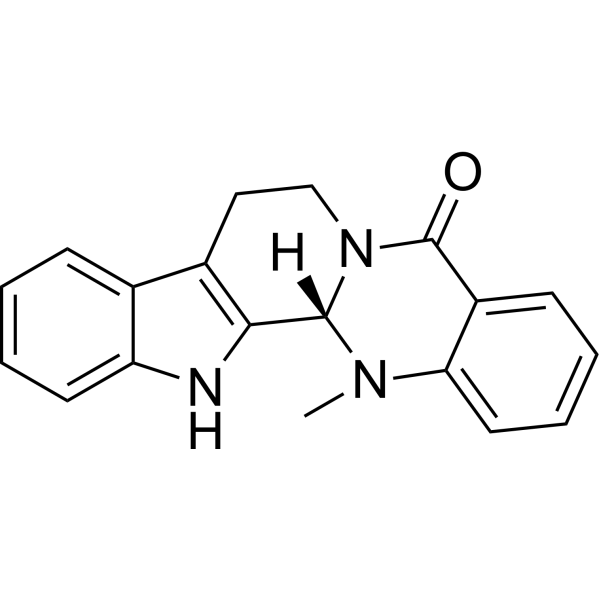
Evodiamine is an alkaloid isolated from the fruit of Evodia rutaecarpa Bentham with diverse biological activities including anti-inflammatory, anti-obesity, and antitumor.
Nur für Forschungszwecke. Wir verkaufen nicht an Patienten.
- Reinheit: 99.97%
- CAS. Nr.: 518-17-2
- Formel: C19H17N3O
- Molecular Weight:303.36
-
Speicherung:Powder -20°C, 3 years , 4°C, 2 years ; In solvent -80°C, 1 year , -20°C, 6 months

To place orders, for customer services and technical support, please contact: MedChemExpress USA
Tel: 609-228-6898 E-mail: [email protected] [email protected]


-
 Biologische Aktivität
-
Chemical Information
-
Lösungsmittel & Löslichkeit
- Protokoll
- Reinheit & Dokumentation
- Verweise
-
 Help & FAQs


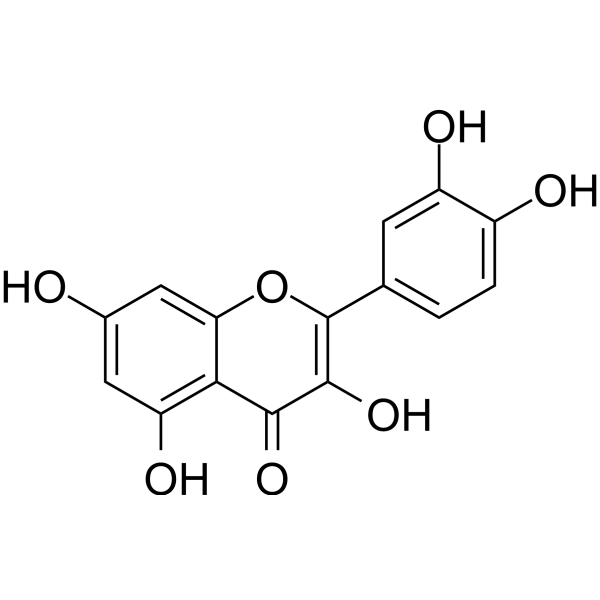
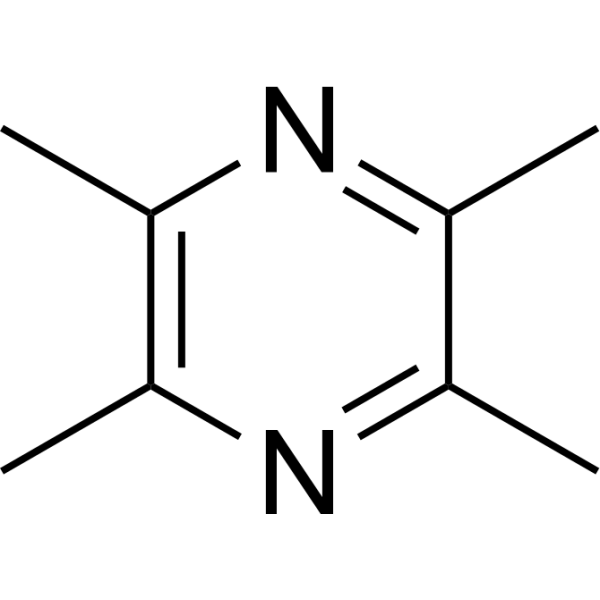
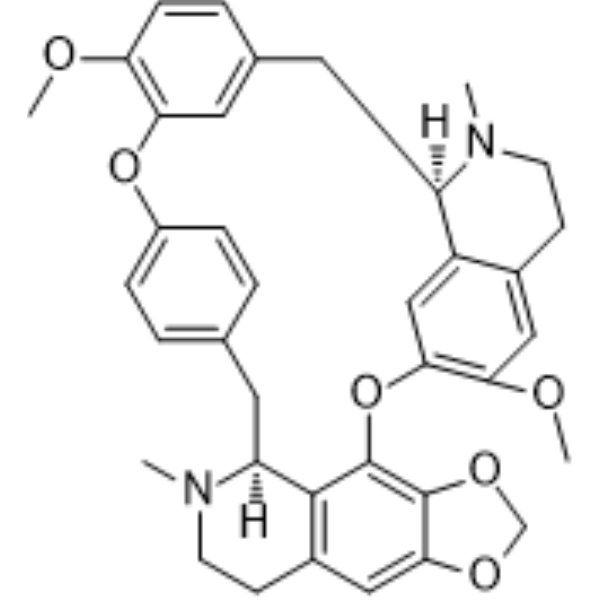
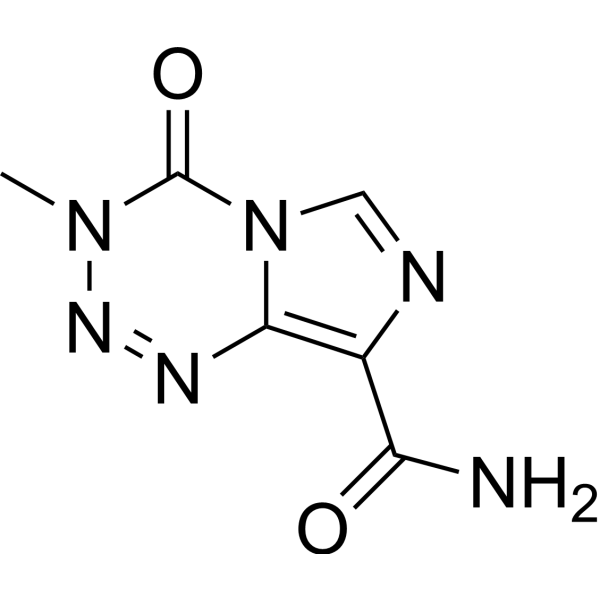
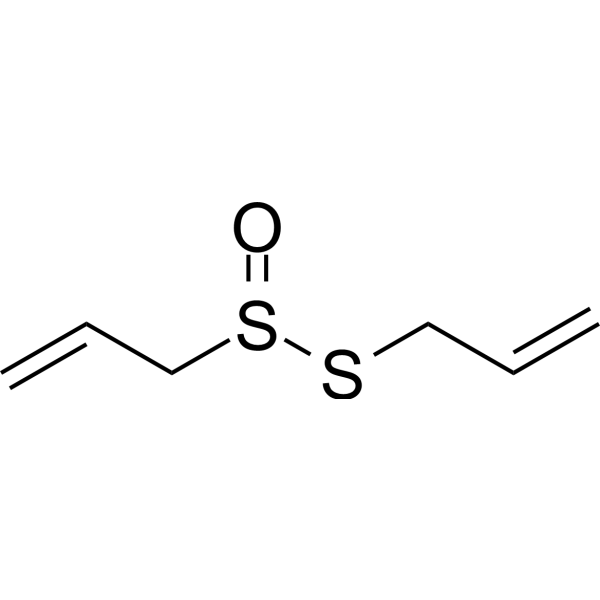
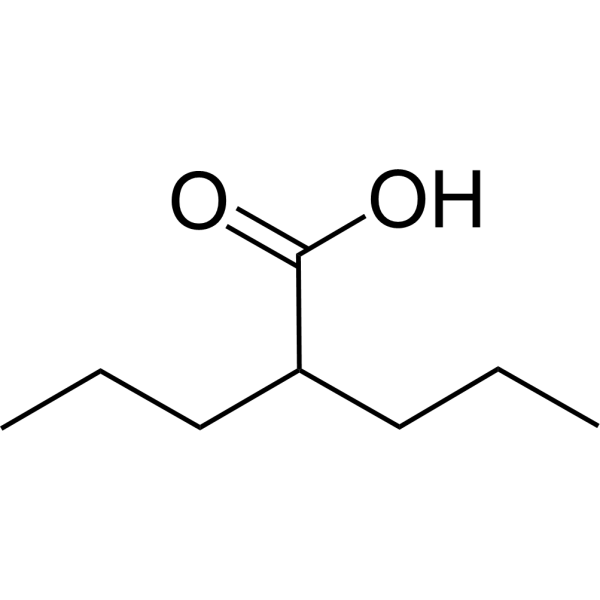
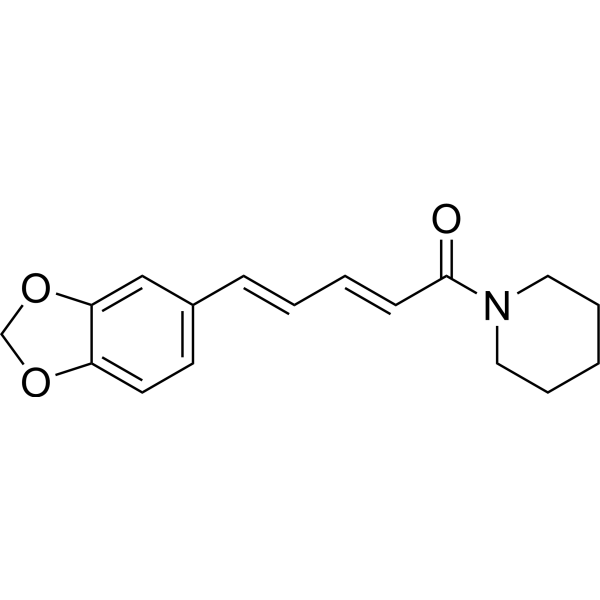
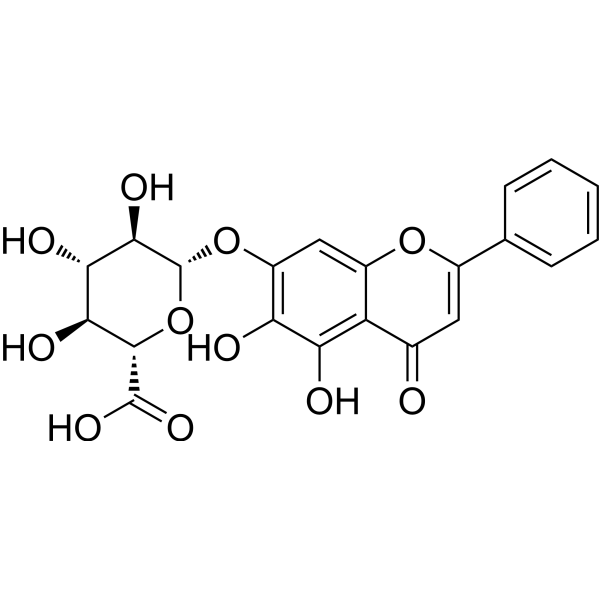
Publications Citing Use of MedChemExpress (MCE) Evodiamine
More- Signal Transduct Target Ther. 2026 Jun 23;11(1):244. [Abstract]
- Adv Funct Mater. 2025 Jun 20.
- J Nanobiotechnology. 2026 Mar 22;24(1):405. [Abstract]
- Pharmacol Res. 2020 May:155:104751. [Abstract]
- Phytomedicine. 2023 Jan:108:154493. [Abstract]
- J Transl Med. 2024 Sep 27;22(1):859. [Abstract]
- View. 2025 Oct 28.
- Phytother Res. 2021 Jun;35(6):3406-3417. [Abstract]
- Am J Chin Med. 2025;53(4):1225-1240. [Abstract]
- J Ethnopharmacol. 2022 Nov 15:298:115586. [Abstract]
- ACS Appl Nano Mater. 2024 Mar 8.
- Eur J Pharmacol. 2026 Aug 28:1031:179179.
- BMC Complement Med Ther. 2023 Dec 1;23(1):433. [Abstract]
- Fish Shellfish Immunol. 2025 Nov:166:110633. [Abstract]
- Curr Issues Mol Biol. 2025 Jul 17;47(7):558. [Abstract]
- Pulm Pharmacol Ther. 2026 Jun:93:102421. [Abstract]
- J Biochem Mol Toxicol. 2025 Nov;39(11):e70541. [Abstract]
- Chem Biol Drug Des. 2023 Jul;102(1):101-114. [Abstract]
- Oncol Lett. 2020 Oct;20(4):121. [Abstract]
- Research Square Preprint. 2024 Apr 2.
 Customer Validation & Images

-
Cell Proliferation/Viability Assay
-
In Vivo Efficacy Study
-
Histological Imaging/Staining
-
Cell Proliferation/Viability Assay
-
Cell Proliferation/Viability Assay


Biologische Aktivität
Beschreibung
Cellular Effect
|
Cell Line

|
Type | Value | Description | References |
|---|---|---|---|---|
| A549 | IC50 |
>200 μM
Compound: 1
|
Antiproliferative activity against human A549 cells assessed as reduction in cell viability incubated for 72 hrs by CCK8 assay
Antiproliferative activity against human A549 cells assessed as reduction in cell viability incubated for 72 hrs by CCK8 assay
|
[PMID: 31880942] |
| A549 | IC50 |
24.67 μM
Compound: EVO
|
Antiproliferative activity against human A549 cells assessed as inhibition of cell growth incubated for 48 hrs by MTT assay
Antiproliferative activity against human A549 cells assessed as inhibition of cell growth incubated for 48 hrs by MTT assay
|
[PMID: 38244939] |
| A549 | IC50 |
9.19 μM
Compound: EVO
|
Antiproliferative activity against human A549 cells assessed as inhibition of cell growth incubated for 48 hrs in presence of erlotinib by MTT assay
Antiproliferative activity against human A549 cells assessed as inhibition of cell growth incubated for 48 hrs in presence of erlotinib by MTT assay
|
[PMID: 38244939] |
| HCT-116 | IC50 |
>200 μM
Compound: 1
|
Antiproliferative activity against human HCT116 cells assessed as reduction in cell viability incubated for 72 hrs by CCK8 assay
Antiproliferative activity against human HCT116 cells assessed as reduction in cell viability incubated for 72 hrs by CCK8 assay
|
[PMID: 31880942] |
| MCF7 | IC50 |
5.4 μM
Compound: 6
|
Antiproliferative activity against human MCF7 cells after 48 to 72 hrs by MTT assay
Antiproliferative activity against human MCF7 cells after 48 to 72 hrs by MTT assay
|
10.1039/C6MD00170J |
| MDA-MB-435 | IC50 |
22.1 μM
Compound: 1
|
Antiproliferative activity against human MDA-MB-435 cells assessed as reduction in cell viability incubated for 72 hrs by CCK8 assay
Antiproliferative activity against human MDA-MB-435 cells assessed as reduction in cell viability incubated for 72 hrs by CCK8 assay
|
[PMID: 31880942] |
| MRC5 | IC50 |
>50 μM
Compound: Evo
|
Cytotoxicity against human MRC5 cells assessed as inhibition of cell growth incubated for 72 hrs by SRB assay
Cytotoxicity against human MRC5 cells assessed as inhibition of cell growth incubated for 72 hrs by SRB assay
|
[PMID: 39151060] |
| MSTO-211H | IC50 |
0.54 μM
Compound: 6
|
Antiproliferative activity against human MSTO-211H cells after 48 to 72 hrs by MTT assay
Antiproliferative activity against human MSTO-211H cells after 48 to 72 hrs by MTT assay
|
10.1039/C6MD00170J |
| NCI-H460 | IC50 |
0.26 μM
Compound: 6
|
Antiproliferative activity against human H460 cells after 48 to 72 hrs by MTT assay
Antiproliferative activity against human H460 cells after 48 to 72 hrs by MTT assay
|
10.1039/C6MD00170J |
| NCI-H460 | IC50 |
13.44 μM
Compound: EVO
|
Antiproliferative activity against human NCI-H460 cells assessed as inhibition of cell growth incubated for 48 hrs in presence of erlotinib by MTT assay
Antiproliferative activity against human NCI-H460 cells assessed as inhibition of cell growth incubated for 48 hrs in presence of erlotinib by MTT assay
|
[PMID: 38244939] |
| NCI-H460 | IC50 |
17.14 μM
Compound: EVO
|
Antiproliferative activity against human NCI-H460 cells assessed as inhibition of cell growth incubated for 48 hrs by MTT assay
Antiproliferative activity against human NCI-H460 cells assessed as inhibition of cell growth incubated for 48 hrs by MTT assay
|
[PMID: 38244939] |
| NCI-H460 | IC50 |
2.6 μM
Compound: 1a
|
Cytotoxicity against human H460 cells after 72 hrs by MTT assay
Cytotoxicity against human H460 cells after 72 hrs by MTT assay
|
[PMID: 24103429] |
| PANC-1 | IC50 |
6.59 μM
Compound: Evo
|
Cytotoxicity against human PANC-1 cells assessed as inhibition of cell growth incubated for 72 hrs by SRB assay
Cytotoxicity against human PANC-1 cells assessed as inhibition of cell growth incubated for 72 hrs by SRB assay
|
[PMID: 39151060] |
| PC-9 | IC50 |
10.22 μM
Compound: EVO
|
Antiproliferative activity against human PC-9 cells assessed as inhibition of cell growth incubated for 48 hrs by MTT assay
Antiproliferative activity against human PC-9 cells assessed as inhibition of cell growth incubated for 48 hrs by MTT assay
|
[PMID: 38244939] |
| PC-9 | IC50 |
2.37 μM
Compound: EVO
|
Antiproliferative activity against human PC-9 cells assessed as inhibition of cell growth incubated for 48 hrs in presence of erlotinib by MTT assay
Antiproliferative activity against human PC-9 cells assessed as inhibition of cell growth incubated for 48 hrs in presence of erlotinib by MTT assay
|
[PMID: 38244939] |
In Vitro
Evodiamine shows cytotoxicity against a variety of human cancer cell-lines by inducing apoptosis. Moreover, it is a naturally multi-targeting antitumor molecule, which exerts the antitumor activity by various molecular mechanism such as caspase-dependent and -independent pathways, sphingomyelin pathway, calcium/JNK signaling, PI3K/Akt/caspase and Fas-L/NF-κB signaling pathways[1].
MedChemExpress (MCE) has not independently confirmed the accuracy of these methods. They are for reference only.
In Vivo
MedChemExpress (MCE) has not independently confirmed the accuracy of these methods. They are for reference only.


Chemical Information
-
CAS. Nr. 518-17-2
-
Appearance Solid
-
Molecular Weight 303.36
-
Formel C19H17N3O
-
Color White to yellow
-
SMILES
O=C1C2=CC=CC=C2N(C)[C@](N1CC3)([H])C4=C3C5=CC=CC=C5N4
-
Synonyms
(+)-Evodiamine; d-Evodiamine
-
Structure Classification
-
Initial Source
-
Versand
Room temperature in continental US; may vary elsewhere.
-
Speicherung
Powder -20°C 3 years 4°C 2 years In solvent -80°C 1 year -20°C 6 months


Publications (20)
-
Journal Impact Factor
-
Most Recent
-
Signal Transduct Target Ther
Large-scale and high-resolution mass spectrometry-based proteomics defines molecular subtypes of nasopharyngeal carcinoma for therapeutic targeting. [Abstract]2026 Jun 23;11(1):244. PMID: 42331772 -
-
J Nanobiotechnology
An oral nanocombinatorial agent exhibits pleiotropic improvement in diabetic nephropathy via modulation of the SCAP/SREBPs pathway. [Abstract]2026 Mar 22;24(1):405. PMID: 41866523
Evodiamine purchased from MedChemExpress. Usage Cited in: J Nanobiotechnology. 2026 Mar 22;24(1):405. [Abstract]
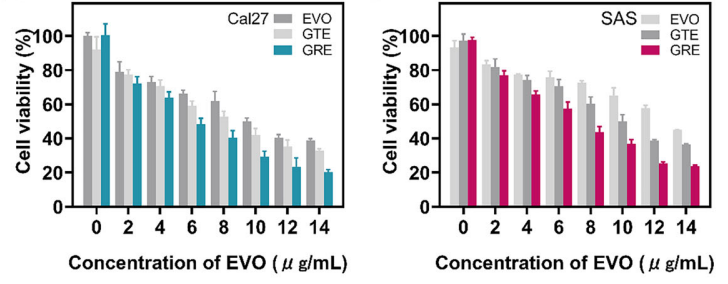
Cal27 and SAS cell viability of tumor cells pretreated by Evodiamine (EVO; 2-14 μg/mL), GTE, and GRE with different concentrations of 24 h.
Evodiamine purchased from MedChemExpress. Usage Cited in: J Nanobiotechnology. 2026 Mar 22;24(1):405. [Abstract]
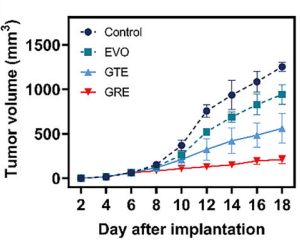
In vivo tumor growth curves of SAS tumor-bearing mice treated with different formulations. Evodiamine (EVO, 4 mg/kg; i.v.; every other day for a total of 6 times) effectively inhibited tumor growth in a mouse oral squamous cell carcinoma model.
Evodiamine purchased from MedChemExpress. Usage Cited in: J Nanobiotechnology. 2026 Mar 22;24(1):405. [Abstract]
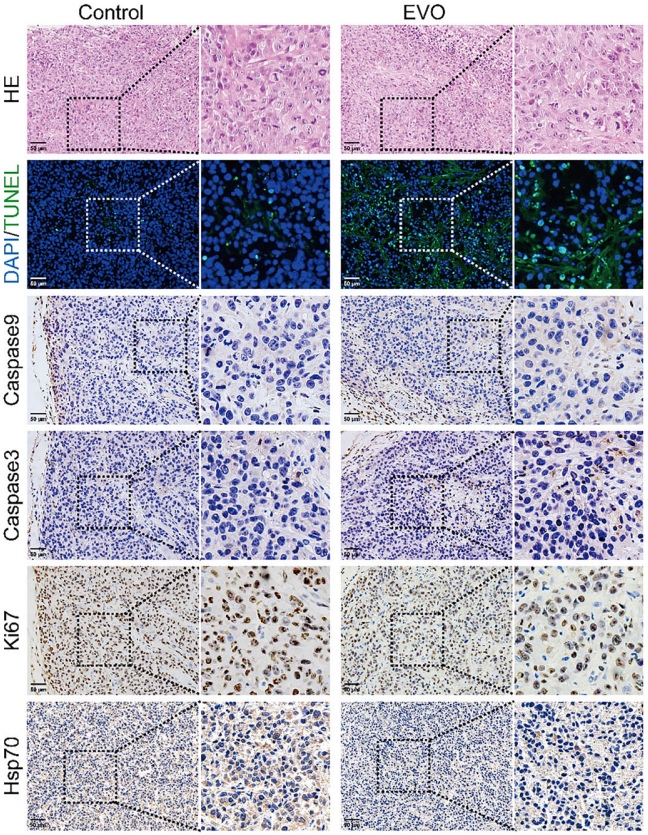
Immunohistochemical analyses of H&E, TUNEL, caspase9, caspase3, Ki67, and Hsp70 for tumor tissues after the last treatment with different formulations in vivo. The results showed that Evodiamine (EVO, 4 mg/kg; i.v.; once every other day for a total of 6 times; mice) confirmed the presence of apoptosis in the tumors of the EVO-treated group. Scale bar: 50 µm.
-
Pharmacol Res
Cardamonin retards progression of autosomal dominant polycystic kidney disease via inhibiting renal cyst growth and interstitial fibrosis. [Abstract]2020 May:155:104751. PMID: 32151678 -
Phytomedicine
Evodiamine inhibits ESCC by inducing M-phase cell-cycle arrest via CUL4A/p53/p21 axis and activating noxa-dependent intrinsic and DR4-dependent extrinsic apoptosis. [Abstract]2023 Jan:108:154493. PMID: 36265256 -
J Transl Med
Evodiamine inhibits proliferation and induces apoptosis of nasopharyngeal carcinoma cells via the SRC/ERBB2-mediated MAPK/ERK signaling pathway. [Abstract]2024 Sep 27;22(1):859. PMID: 39334374 -
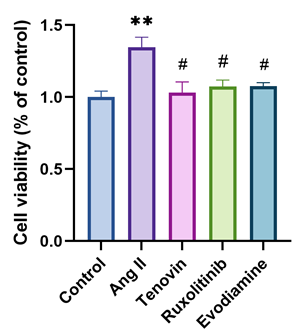
Evodiamine purchased from MedChemExpress. Usage Cited in: View. 2025 Oct 28.
Cell viability assay of MOVAS treated with Ang II and three candidate inhibitors (n = 3). The results showed that Evodiamine (1 µM; 6 h) significantly inhibited Ang II-induced SMC proliferation.
-
Phytother Res
Evodiamine alleviates lipopolysaccharide-induced pulmonary inflammation and fibrosis by activating apelin pathway. [Abstract]2021 Jun;35(6):3406-3417. PMID: 33657655 -
Am J Chin Med
Evodiamine Suppresses Lung Cancer Progression Through Modulating FAK/STAT3/AKT Signaling Pathway. [Abstract]2025;53(4):1225-1240. PMID: 40582716 -
J Ethnopharmacol
Mechanisms of pancreatic tumor suppression mediated by Xiang-lian pill: An integrated in silico exploration and experimental validation. [Abstract]2022 Nov 15:298:115586. PMID: 35931303 -
-
-
BMC Complement Med Ther
Network pharmacology-based strategy to investigate the bioactive ingredients and molecular mechanism of Evodia rutaecarpa in colorectal cancer. [Abstract]2023 Dec 1;23(1):433. PMID: 38041080 -
Fish Shellfish Immunol
Emodin enhances host antiviral immunity against Micropterus salmoides rhabdovirus by activating RLR signaling in largemouth bass. [Abstract]2025 Nov:166:110633. PMID: 40769268 -
Curr Issues Mol Biol
Evodiamine Boosts AR Expression to Trigger Senescence and Halt Proliferation in OSCC Cells. [Abstract]2025 Jul 17;47(7):558. PMID: 40729027 -
Pulm Pharmacol Ther
Evodiamine protects against lung ischemia-reperfusion injury by attenuating SYK-associated TLR4/NLRP3 inflammasome activation and ferroptosis-related injury signatures. [Abstract]2026 Jun:93:102421. PMID: 41951097 -
J Biochem Mol Toxicol
Evodiamine Enhances Chemosensitivity in Colorectal Cancer by Targeting Ribonucleotide Reductase M2. [Abstract]2025 Nov;39(11):e70541. PMID: 41121956 -
Chem Biol Drug Des
Evodiamine inhibits malignant progression of ovarian cancer cells by regulating lncRNA-NEAT1/miR-152-3p/CDK19 axis. [Abstract]2023 Jul;102(1):101-114. PMID: 36892495
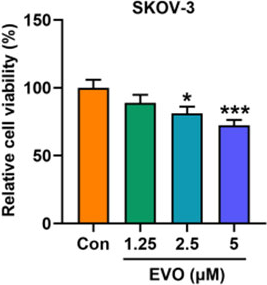
Evodiamine purchased from MedChemExpress. Usage Cited in: Chem Biol Drug Des. 2023 Jul;102(1):101-114. [Abstract]
Evodiamine (EVO; 1.25, 2.5, 5 μM; 48 h) decreased the SKOV3 cell viability in a dose-dependent manner.
-
Oncol Lett
Evodiamine induces reactive oxygen species-dependent apoptosis and necroptosis in human melanoma A-375 cells. [Abstract]2020 Oct;20(4):121. PMID: 32863934 -


Lösungsmittel & Löslichkeit
In Vitro:
DMSO : 10 mg/mL (32.96 mM; Need ultrasonic; Hygroscopic DMSO has a significant impact on the solubility of product, please use newly opened DMSO)
Please refer to the solubility information to select the appropriate solvent. Once prepared, please aliquot and store the solution to prevent product inactivation from repeated freeze-thaw cycles.
Storage method and period of stock solution: -80°C, 1 year; -20°C, 6 months. When stored at -80°C, please use it within 1 year. When stored at -20°C, please use it within 6 months.
Please refer to the solubility information to select the appropriate solvent. Once prepared, please aliquot and store the solution to prevent product inactivation from repeated freeze-thaw cycles.
Storage method and period of stock solution: -80°C, 1 year; -20°C, 6 months. When stored at -80°C, please use it within 1 year. When stored at -20°C, please use it within 6 months.
Konzentration (Stammlösung) × Volumen (Stammlösung) = Konzentration (Ziellösung) × Volumen (Ziellösung)
In Vivo:
Select the appropriate dissolution method based on your experimental animal and administration route.
- For the following dissolution methods, please ensure to first prepare a clear stock solution using an In Vitro approach and then sequentially add co-solvents:
- To ensure reliable experimental results, the clarified stock solution can be appropriately stored based on storage conditions. As for the working solution for In Vivo experiments, it is recommended to prepare freshly and use it on the same day.
- The percentages shown for the solvents indicate their volumetric ratio in the final prepared solution. If precipitation or phase separation occurs during preparation, heat and/or sonication can be used to aid dissolution.
For the following dissolution methods, please prepare the working solution directly:
It is recommended to prepare fresh solutions and use them promptly within a short period of time.
The percentages shown for the solvents indicate their volumetric ratio in the final prepared solution. If precipitation or phase separation occurs during preparation, heat and/or sonication can be used to aid dissolution.
Add each solvent one by one: 50% PEG300 50% Saline
Solubility: 2.5 mg/mL (8.24 mM); Suspended solution; Need ultrasonic
In Vivo Dissolution Calculator
Please enter the basic information of animal experiments:
-
-
-
-
Recommended: Prepare an additional quantity of animals to account for potential losses during experiments.
Please enter your animal formula composition:
-
%DMSO +
Recommended: Keep the proportion of DMSO in working solution below 2% if your animal is weak.
-
%+
-
+%Tween-80 + +
-
%Saline +
The co-solvents required include: DMSO, . All of co-solvents are available by MedChemExpress (MCE). , Tween 80. All of co-solvents are available by MedChemExpress (MCE).
Working solution concentration: 0.22 mg/mL
Method for preparing stock solution: mg drug dissolved in μL DMSO. Stock solution concentration: mg/mL.
1. Take μL DMSO stock solution;
2. Add μL .
μL , mix evenly;
3. Then add μL Tween 80, mix evenly;
4. Then add μL
Please ensure that the stock solution in the first step is dissolved to a clear state, and add co-solvents in sequence. You can use ultrasonic heating (ultrasonic cleaner, recommended frequency 20-40 kHz), vortexing, etc. to assist dissolution.

Protokoll
Cell Assay[1]
Evodiamine is dissolved in DMSO and diluted with appropriate medium before use. The evodiamine-inspired new scaffolds are assayed for growth inhibitory activities toward human cancer cell-lines A549 (lung cancer), MDA-MB-435 (breast cancer) and HCT116 (colon cancer) using the MTT assay. Evodiamine and camptithecin are used as reference drugs[1].
MedChemExpress (MCE) has not independently confirmed the accuracy of these methods. They are for reference only.
Rats: Twelve healthy male Sprague-Dawley rats are randomly divided into 2 groups: the control group (received oral 10 mg/kg dapoxetine alone) and the combination group (10 mg/kg dapoxetine orally co-administered with 100 mg/kg evodiamine). The plasma concentration of dapoxetine and desmethyl dapoxetine are estimated by ultra-performance liquid chromatography-tandem mass spectrometry (UPLC-MS/MS), and different pharmacokinetic parameters are calculated[2].
Mice: A nude mouse xenograft model is established by using 4–6-week-old male BALB/c nude mice. Mice are dosed daily with 20 mg/kg (10 mL/kg) of evodiamine intragastrically, six mice are dosed intraperitoneally with 10 mg/kg of 5-flurouracil (5-FU) twice a week, and six mice are not treated. The tumor volumes are determined by measuring two dimensions, with tumor volume=length×width×width/2. After 2 or 3 weeks of treatment, mice are sacrificed by cervical dislocation under anesthesia with ether, and the tumor tissues are collected[3].
MedChemExpress (MCE) has not independently confirmed the accuracy of these methods. They are for reference only.


Reinheit & Dokumentation
-
Data Sheet (283 KB)
-
SDS (420 KB)
- English - EN (420 KB)
- Français - FR (420 KB)
- Deutsch - DE (420 KB)
- Norwegian - NO (420 KB)
- Español - ES (420 KB)
- Swedish - SV (420 KB)
- Italian - IT (420 KB)
- Korean - KR (420 KB)
- Portuguese - PT (420 KB)
-
Handling Instructions (2659 KB)
Verweise
[1]. Wang S, et al. Scaffold Diversity Inspired by the Natural Product Evodiamine: Discovery of Highly Potent and Multitargeting Antitumor Agents. J Med Chem. 2015 Aug 27;58(16):6678-96. [Content Brief]
[2]. Li RF,et al. Effects of Evodiamine on the Pharmacokinetics of Dapoxetine and Its Metabolite Desmethyl Dapoxetine inRats. Pharmacology. 2016;97(1-2):43-7. [Content Brief]
[3]. Shi L, et al. Evodiamine exerts anti-tumor effects against hepatocellular carcinoma through inhibiting β-catenin-mediated angiogenesis. Tumour Biol. 2016 Sep;37(9):12791-12803. [Content Brief]


Complete Stock Solution Preparation Table
Please refer to the solubility information to select the appropriate solvent. Once prepared, please aliquot and store the solution to prevent product inactivation from repeated freeze-thaw cycles.
Storage method and period of stock solution: -80°C, 1 year; -20°C, 6 months. When stored at -80°C, please use it within 1 year. When stored at -20°C, please use it within 6 months.
| Optional Solvent | Concentration Solvent Mass | 1 mg | 5 mg | 10 mg | 25 mg |
|---|---|---|---|---|---|
| DMSO | 1 mM | 3.2964 mL | 16.4821 mL | 32.9641 mL | 82.4103 mL |
| 5 mM | 0.6593 mL | 3.2964 mL | 6.5928 mL | 16.4821 mL | |
| 10 mM | 0.3296 mL | 1.6482 mL | 3.2964 mL | 8.2410 mL | |
| 15 mM | 0.2198 mL | 1.0988 mL | 2.1976 mL | 5.4940 mL | |
| 20 mM | 0.1648 mL | 0.8241 mL | 1.6482 mL | 4.1205 mL | |
| 25 mM | 0.1319 mL | 0.6593 mL | 1.3186 mL | 3.2964 mL | |
| 30 mM | 0.1099 mL | 0.5494 mL | 1.0988 mL | 2.7470 mL |


Evodiamine Related Classifications
HY-N0114 Related Classifications
 Powered by Bioz