



CBR-470-1
Based on 3 publication(s) in Google Scholar
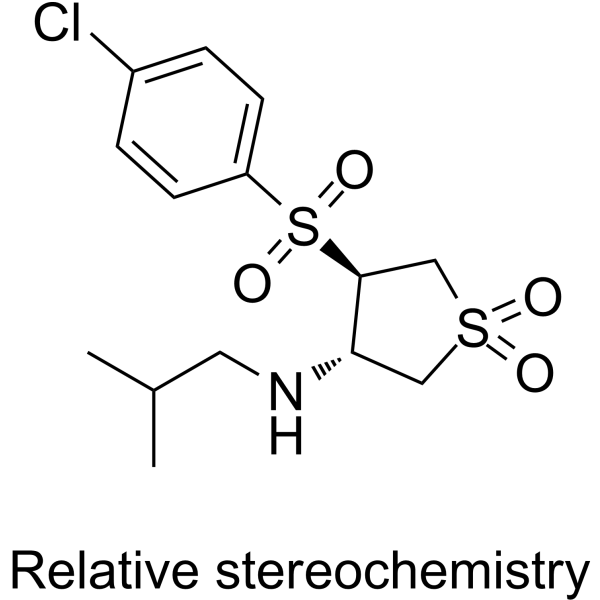
CBR-470-1 is an inhibitor of the glycolytic enzyme phosphoglycerate kinase 1 (PGK1). CBR-470-1 is also a non-covalent Nrf2 activator. CBR-470-1 protects SH-SY5Y neuronal cells against MPP+-induced cytotoxicity through activation of the Keap1-Nrf2 cascade.
Nur für Forschungszwecke. Wir verkaufen nicht an Patienten.
- Reinheit : 98.02%
- CAS. Nr.: 2416095-06-0
- Formel: C14H20ClNO4S2
- Molecular Weight:365.89
-
Speicherung:Powder -20°C, 3 years , 4°C, 2 years ; In solvent -80°C, 6 months , -20°C, 1 month

To place orders, for customer services and technical support, please contact: MedChemExpress USA
Tel: 609-228-6898 E-mail: [email protected] [email protected]


-
 Biologische Aktivität
-
Chemical Information
-
Lösungsmittel & Löslichkeit
- Reinheit & Dokumentation
- Verweise
-
 Help & FAQs


-
HY-13755
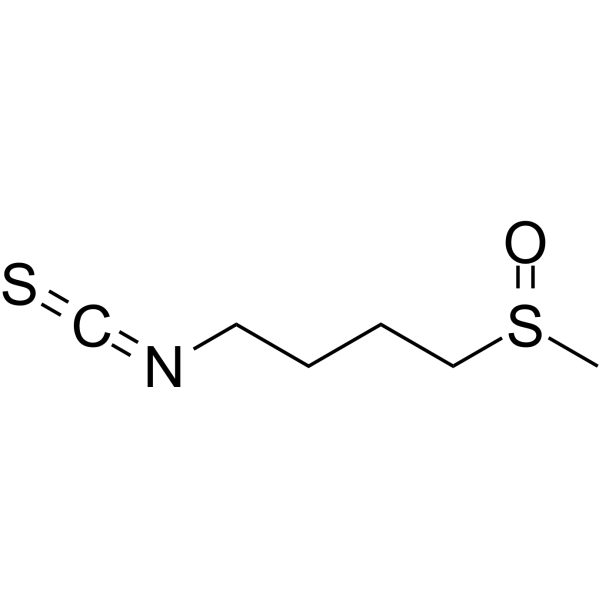
SulforaphaneKeap1/Nrf2/ARE Inducer -
HY-112675
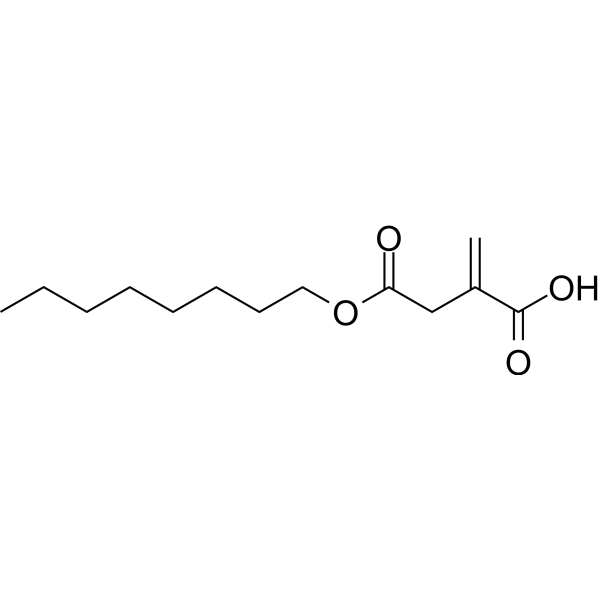
4-Octyl itaconateNrf2 Activator -
HY-15154
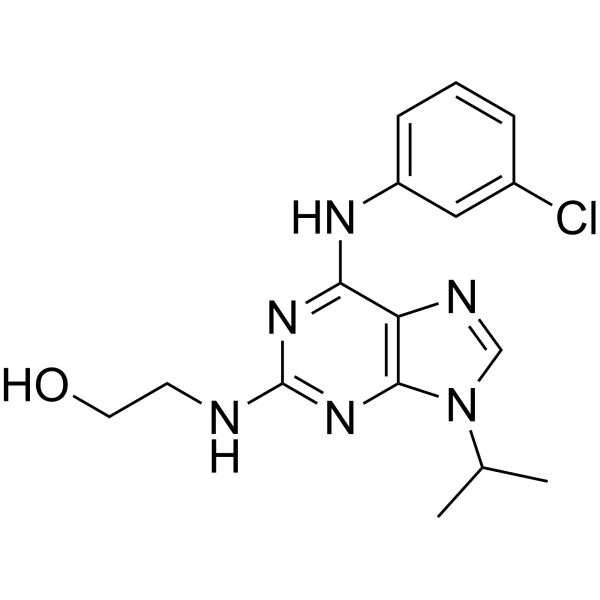
NG 52Cdc28p/Pho85p/PGK1 Inhibitor -
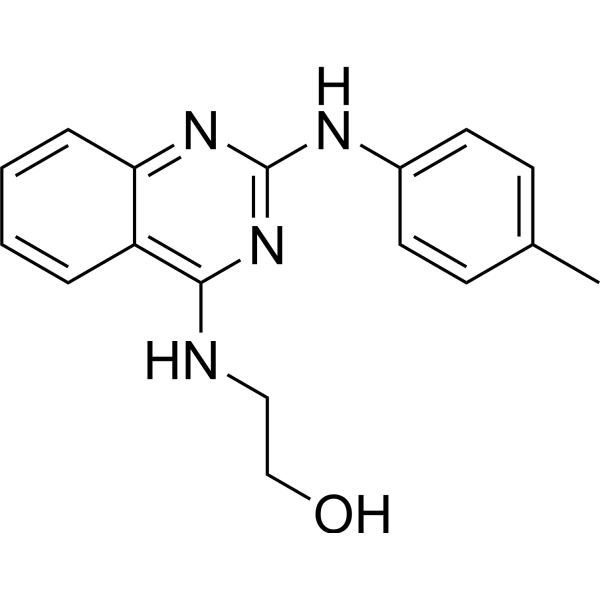
HY-W195984
Z57346765PGK1 Inhibitor -

HY-114118
SemaglutideGLP-1R Agonist -
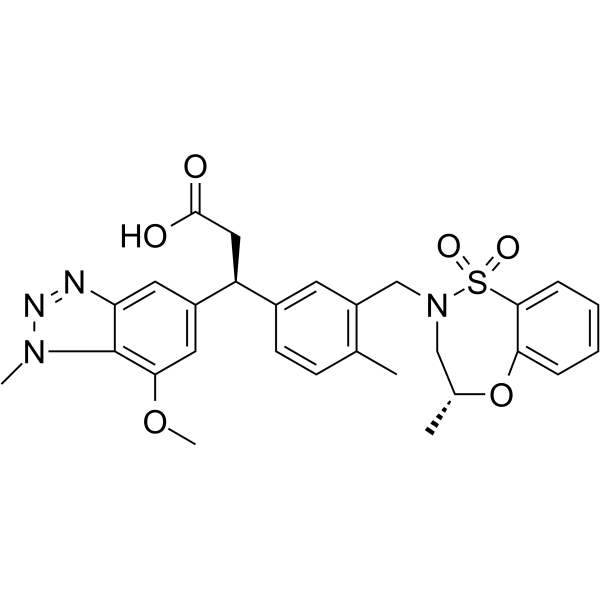
HY-101140
KI696KEAP1/NRF2 Protein-protein Interaction Inhibitor -
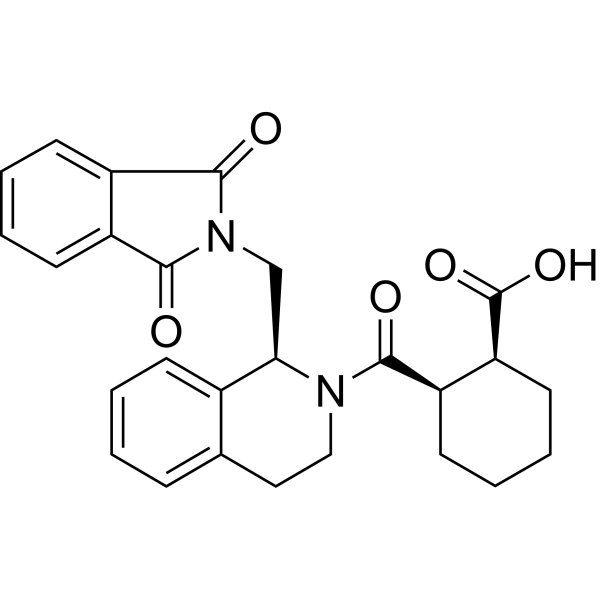
HY-110258
ML334NRF2 Activator -
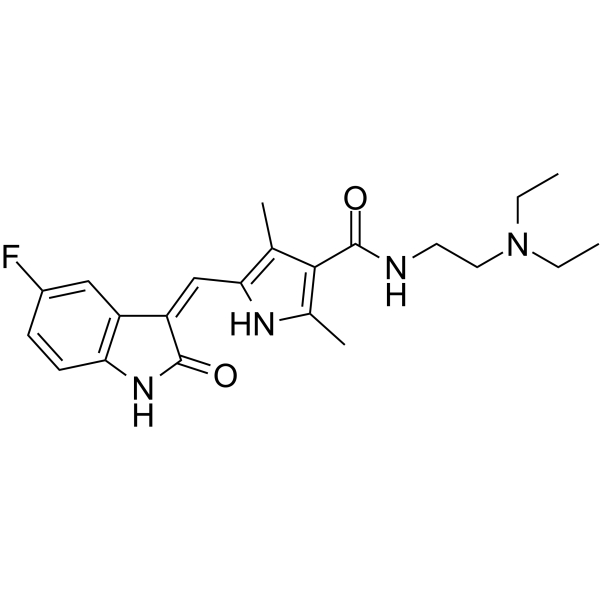
HY-10255A
SunitinibMulti-targeted RTK Inhibitor -
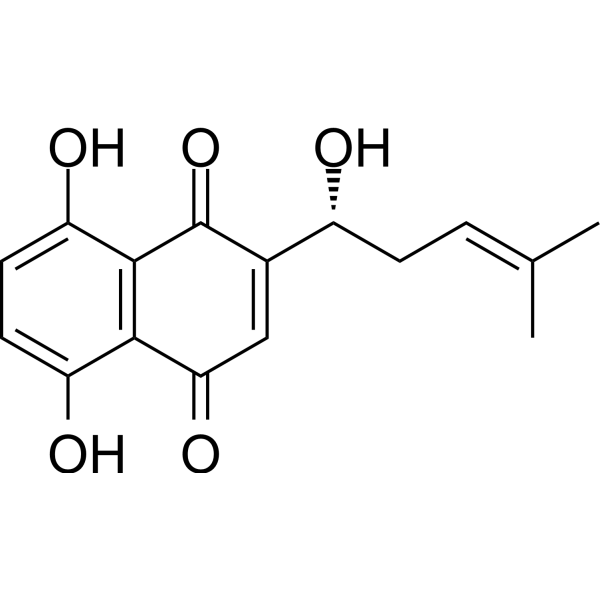
HY-N0822
ShikoninChloride Channel Inhibitor -
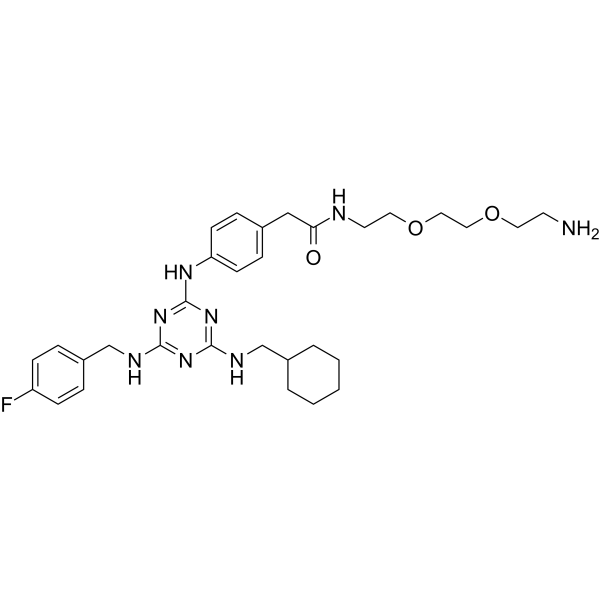
HY-15858
AP-III-a4Enolase Inhibitor -
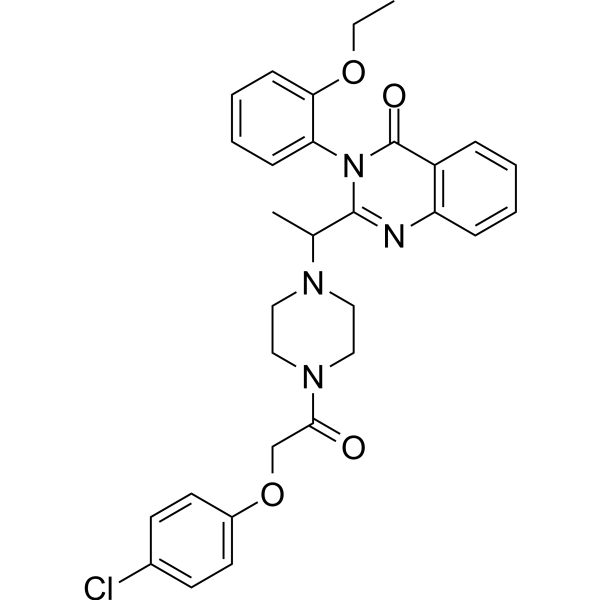
HY-15763
ErastinFerroptosis Inducer -
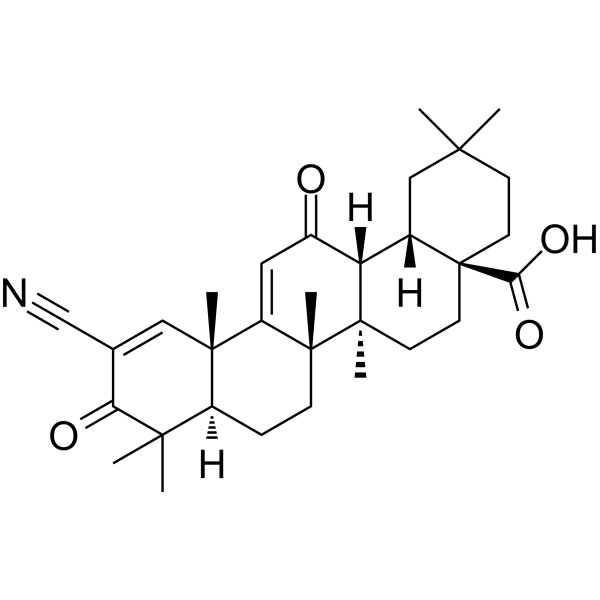
HY-14909
BardoxoloneNrf2 Activator
Publications Citing Use of MedChemExpress (MCE) CBR-470-1
More Customer Validation & Images

-
Cell Proliferation/Viability Assay
-
RT-PCR

-
WB

-
IF


Biologische Aktivität
Beschreibung
IC50 & Target
Keap1-Nrf2[2]
In Vitro
CBR-470-1 (0.01-10 μM; 24 h) has an EC50 of 962 nM in ARE-LUC reporter assay of IMR32 cells[1].
CBR-470-1 (0.5-20 μM; 1-24 h) results in a dose- and time-dependent accumulation of Nrf2 protein in IMR32 cells[1].
CBR-470-1 (10 μM; 4 h) activates Nrf2 signaling cascade in SH-SY5Y cells[2].
CBR-470-1 (10 μM; 2 h) inhibits MPP+-induced oxidative injury in SH-SY5Y neuronal cells[2].
MedChemExpress (MCE) has not independently confirmed the accuracy of these methods. They are for reference only.
-
Cell Line:IMR32 cells
-
Concentration:0.5, 1, 5, 10, 20 μM
-
Incubation Time:1, 2, 4, 8, 24 h
-
Result:Increased the Nrf2 protein in a dose- and time-dependent manner.
Increased both mRNA and protein levels of the Nrf2-responsive genes NQO1 and HMOX1.


Chemical Information
-
CAS. Nr. 2416095-06-0
-
Appearance Solid
-
Molecular Weight 365.89
-
Formel C14H20ClNO4S2
-
Color White to yellow
-
SMILES
CC(C)CN[C@H]([C@@H](S(=O)(C1=CC=C(Cl)C=C1)=O)C2)CS2(=O)=O
-
Versand
Room temperature in continental US; may vary elsewhere.
-
Speicherung
Powder -20°C 3 years 4°C 2 years In solvent -80°C 6 months -20°C 1 month


Publications (3)
-
Journal Impact Factor
-
Most Recent
-
Gastroenterology
2024 May;166(5):772-786.e14. PMID: 38272100 -
Cell Rep
CPSF1 inhibition promotes widespread use of intergenic polyadenylation sites and impairs glycolysis in prostate cancer cells. [Abstract]2025 Jan 22;44(1):115211. PMID: 39847481
CBR-470-1 purchased from MedChemExpress. Usage Cited in: Cell Rep. 2025 Jan 22;44(1):115211. [Abstract]
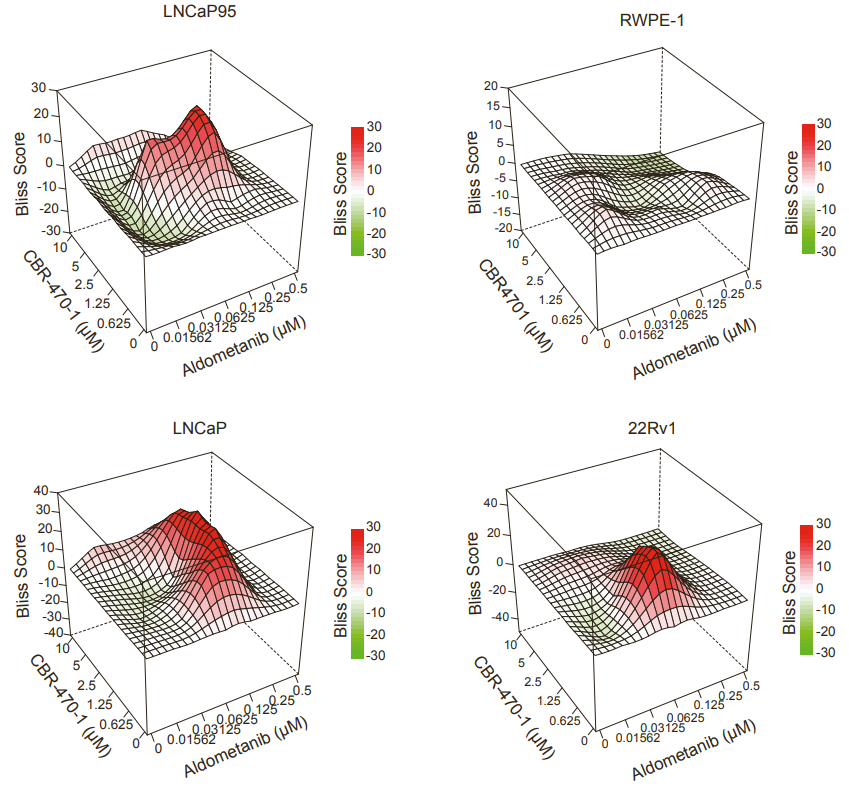
LNCaP95, RWPE-1, LNCaP, and 22Rv1 cells were treated at seeding with CBR-470-1 (0.625–10 μM) in combination with aldometanib (0–0.5 μM) for 7 days, followed by crystal violet staining and combination analysis using SynergyFinder and the Bliss independence model. CBR-470-1 and aldometanib synergistically inhibited the growth of LNCaP95, LNCaP, and 22Rv1 prostate cancer cells, whereas no synergistic effect was observed in benign RWPE-1 prostate epithelial cells.
-
J Agric Food Chem
Chronic Arsenic Exposure Induces Neuroinflammation by Regulating the Nrf2/NLRP3 Inflammasome Signaling Pathway. [Abstract]2025 Dec 17;73(50):31853-31864. PMID: 41353618
CBR-470-1 purchased from MedChemExpress. Usage Cited in: J Agric Food Chem. 2025 Dec 17;73(50):31853-31864. [Abstract]
RT-PCR analysis of Nrf2, HO-1, NLRP3, ASC, Caspase-1, IL-1β, and IL-18 in SHSY5Y cells. The results revealed that pretreating SH-SY5Y cells with CBR-470-1 (10 μM; 4 h) notably reduced the mRNA levels of NLRP3, ASC, Caspase-1, IL-1β, and IL-18 while elevating the mRNA levels of Nrf2 and HO-1 compared to the NaAsO2 group.
CBR-470-1 purchased from MedChemExpress. Usage Cited in: J Agric Food Chem. 2025 Dec 17;73(50):31853-31864. [Abstract]
Total Nrf2, nuclear Nrf2, HO-1, NLRP3, ASC, Caspase-1, IL-1β, and IL-18 protein levels were analyzed by western blotting in SH-SY5Y cells pretreated with CBR-470-1 (10 μM; 4 h). Compared with NaAsO2 alone, CBR-470-1 + NaAsO2 group increased total Nrf2, nuclear Nrf2, and HO-1 protein levels and reduced NLRP3, ASC, Caspase-1, IL-1β, and IL-18 protein levels.
CBR-470-1 purchased from MedChemExpress. Usage Cited in: J Agric Food Chem. 2025 Dec 17;73(50):31853-31864. [Abstract]
Representative immunofluorescence images of Nrf2 and NLRP3 were obtained in SH-SY5Y cells pretreated with CBR-470-1 (10 μM; 4 h). Compared with the NaAsO2 group, the CBR-470-1 + NaAsO2 group showed markedly increased Nrf2 protein distribution and significantly decreased NLRP3 protein distribution.


Lösungsmittel & Löslichkeit
In Vitro:
DMSO : 200 mg/mL (546.61 mM; Need ultrasonic; Hygroscopic DMSO has a significant impact on the solubility of product, please use newly opened DMSO)
Please refer to the solubility information to select the appropriate solvent. Once prepared, please aliquot and store the solution to prevent product inactivation from repeated freeze-thaw cycles.
Storage method and period of stock solution: -80°C, 6 months; -20°C, 1 month. When stored at -80°C, please use it within 6 months. When stored at -20°C, please use it within 1 month.
Please refer to the solubility information to select the appropriate solvent. Once prepared, please aliquot and store the solution to prevent product inactivation from repeated freeze-thaw cycles.
Storage method and period of stock solution: -80°C, 6 months; -20°C, 1 month. When stored at -80°C, please use it within 6 months. When stored at -20°C, please use it within 1 month.
Konzentration (Stammlösung) × Volumen (Stammlösung) = Konzentration (Ziellösung) × Volumen (Ziellösung)
In Vivo:
Select the appropriate dissolution method based on your experimental animal and administration route.
- For the following dissolution methods, please ensure to first prepare a clear stock solution using an In Vitro approach and then sequentially add co-solvents:
- To ensure reliable experimental results, the clarified stock solution can be appropriately stored based on storage conditions. As for the working solution for In Vivo experiments, it is recommended to prepare freshly and use it on the same day.
- The percentages shown for the solvents indicate their volumetric ratio in the final prepared solution. If precipitation or phase separation occurs during preparation, heat and/or sonication can be used to aid dissolution.
Add each solvent one by one: 10% DMSO 40% PEG300 5% Tween-80 45% Saline
Solubility: ≥ 5 mg/mL (13.67 mM); Clear solution
This protocol yields a clear solution of ≥ 5 mg/mL (saturation unknown).
Taking 1 mL working solution as an example, add 100 μL DMSO stock solution (50.0 mg/mL) to 400 μL PEG300, and mix evenly; then add 50 μL Tween-80 and mix evenly; then add 450 μL Saline to adjust the volume to 1 mL.
Preparation of Saline: Dissolve 0.9 g sodium chloride in ddH₂O and dilute to 100 mL to obtain a clear Saline solution.
Add each solvent one by one: 10% DMSO 90% (20% SBE-β-CD in Saline)
Solubility: ≥ 5 mg/mL (13.67 mM); Clear solution
This protocol yields a clear solution of ≥ 5 mg/mL (saturation unknown).
Taking 1 mL working solution as an example, add 100 μL DMSO stock solution (50.0 mg/mL) to 900 μL 20% SBE-β-CD in Saline, and mix evenly.
Preparation of 20% SBE-β-CD in Saline (4°C, storage for one week): 2 g SBE-β-CD powder is dissolved in 10 mL Saline, completely dissolve until clear.
In Vivo Dissolution Calculator
Please enter the basic information of animal experiments:
-
-
-
-
Recommended: Prepare an additional quantity of animals to account for potential losses during experiments.
Please enter your animal formula composition:
-
%DMSO +
Recommended: Keep the proportion of DMSO in working solution below 2% if your animal is weak.
-
%+
-
+%Tween-80 + +
-
%Saline +
The co-solvents required include: DMSO, . All of co-solvents are available by MedChemExpress (MCE). , Tween 80. All of co-solvents are available by MedChemExpress (MCE).
Working solution concentration: 0.22 mg/mL
Method for preparing stock solution: mg drug dissolved in μL DMSO. Stock solution concentration: mg/mL.
1. Take μL DMSO stock solution;
2. Add μL .
μL , mix evenly;
3. Then add μL Tween 80, mix evenly;
4. Then add μL
Please ensure that the stock solution in the first step is dissolved to a clear state, and add co-solvents in sequence. You can use ultrasonic heating (ultrasonic cleaner, recommended frequency 20-40 kHz), vortexing, etc. to assist dissolution.


Reinheit & Dokumentation
-
Data Sheet (282 KB)
-
SDS (251 KB)
- English - EN (251 KB)
- Français - FR (251 KB)
- Deutsch - DE (251 KB)
- Norwegian - NO (251 KB)
- Español - ES (251 KB)
- Swedish - SV (251 KB)
- Italian - IT (251 KB)
- Korean - KR (251 KB)
- Portuguese - PT (251 KB)
-
Handling Instructions (2659 KB)
Verweise
[1]. Bollong MJ, et, al. A metabolite-derived protein modification integrates glycolysis with KEAP1-NRF2 signalling. Nature. 2018 Oct;562(7728):600-604. [Content Brief]
[2]. Zheng J, et, al. PGK1 inhibitor CBR-470-1 protects neuronal cells from MPP+. Aging (Albany NY). 2020 Jul 10;12(13):13388-13399. [Content Brief]


Complete Stock Solution Preparation Table
Please refer to the solubility information to select the appropriate solvent. Once prepared, please aliquot and store the solution to prevent product inactivation from repeated freeze-thaw cycles.
Storage method and period of stock solution: -80°C, 6 months; -20°C, 1 month. When stored at -80°C, please use it within 6 months. When stored at -20°C, please use it within 1 month.
| Optional Solvent | Concentration Solvent Mass | 1 mg | 5 mg | 10 mg | 25 mg |
|---|---|---|---|---|---|
| DMSO | 1 mM | 2.7331 mL | 13.6653 mL | 27.3306 mL | 68.3265 mL |
| 5 mM | 0.5466 mL | 2.7331 mL | 5.4661 mL | 13.6653 mL | |
| 10 mM | 0.2733 mL | 1.3665 mL | 2.7331 mL | 6.8327 mL | |
| 15 mM | 0.1822 mL | 0.9110 mL | 1.8220 mL | 4.5551 mL | |
| 20 mM | 0.1367 mL | 0.6833 mL | 1.3665 mL | 3.4163 mL | |
| 25 mM | 0.1093 mL | 0.5466 mL | 1.0932 mL | 2.7331 mL | |
| 30 mM | 0.0911 mL | 0.4555 mL | 0.9110 mL | 2.2776 mL | |
| 40 mM | 0.0683 mL | 0.3416 mL | 0.6833 mL | 1.7082 mL | |
| 50 mM | 0.0547 mL | 0.2733 mL | 0.5466 mL | 1.3665 mL | |
| 60 mM | 0.0456 mL | 0.2278 mL | 0.4555 mL | 1.1388 mL | |
| 80 mM | 0.0342 mL | 0.1708 mL | 0.3416 mL | 0.8541 mL | |
| 100 mM | 0.0273 mL | 0.1367 mL | 0.2733 mL | 0.6833 mL |


CBR-470-1 Related Classifications
HY-134205A Related Classifications
 Powered by Bioz