



SAR247799
Based on 3 publication(s) in Google Scholar
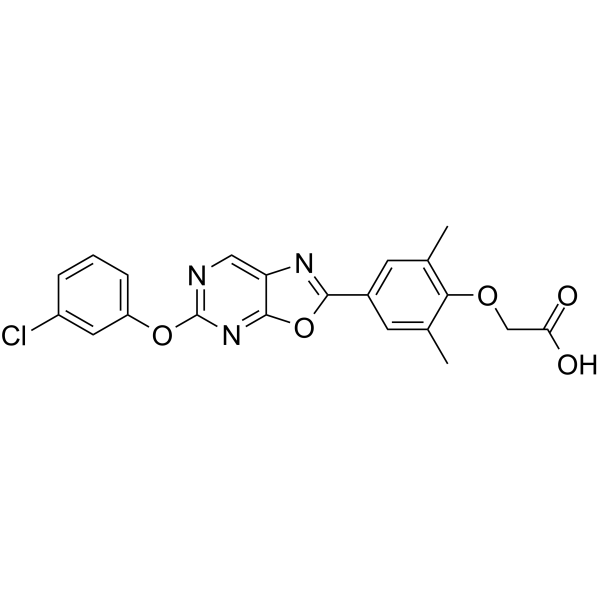
SAR247799 (S1P1 agonist 3) is an oral activity, selective G-protein-biased sphingosine-1 phosphate receptor-1 (S1P1 ) agonist, with EC50s rang from 12.6 to 493 nM in S1P1-overexpressing cells and HUVECs. SAR247799 can be used for the research of endothelial protection, including type-2 diabetes, metabolic syndrome.
Nur für Forschungszwecke. Wir verkaufen nicht an Patienten.
- Reinheit : 99.38%
- CAS. Nr.: 1315311-14-8
- Formel: C21H16ClN3O5
- Molecular Weight:425.82
-
Speicherung:
4°C, sealed storage, away from moisture and light
* In solvent : -80°C, 6 months; -20°C, 1 month (sealed storage, away from moisture and light)

To place orders, for customer services and technical support, please contact: MedChemExpress USA
Tel: 609-228-6898 E-mail: [email protected] [email protected]


-
 Biologische Aktivität
-
Chemical Information
-
Lösungsmittel & Löslichkeit
- Protokoll
- Reinheit & Dokumentation
- Verweise
-
 Help & FAQs


-
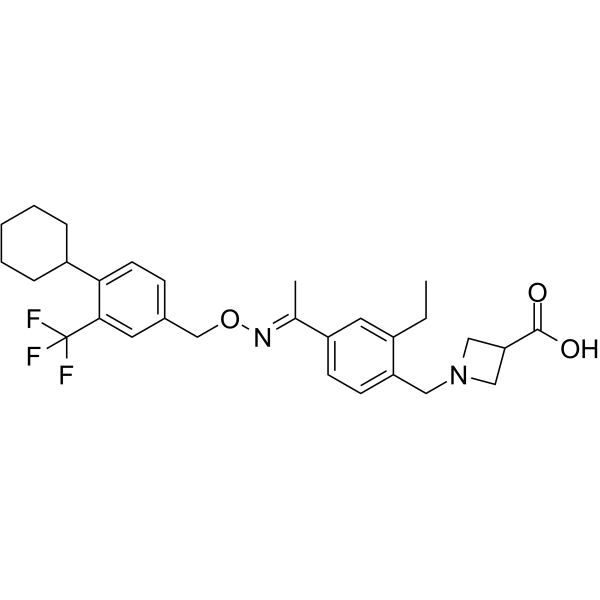
HY-12355
SiponimodS1P1/S1P5 Agonist -
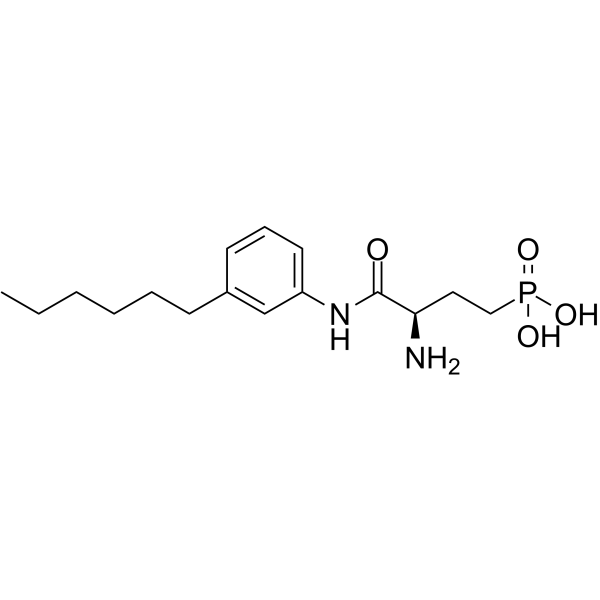
HY-101395
W146S1PR1 Antagonist -
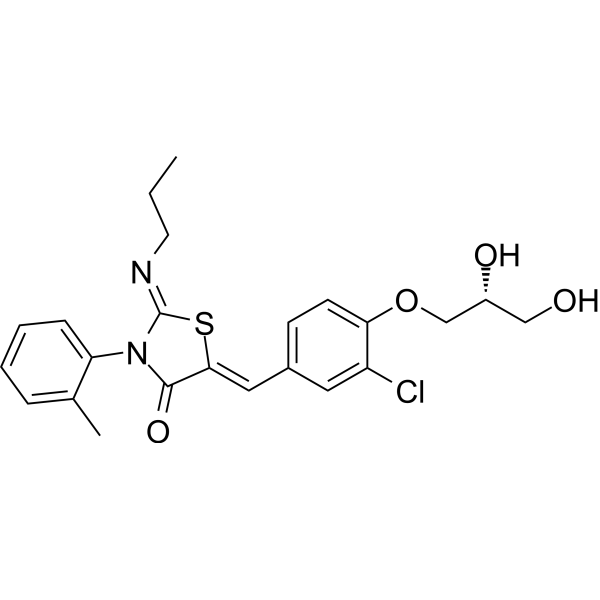
HY-10569
PonesimodS1P1 Agonist -
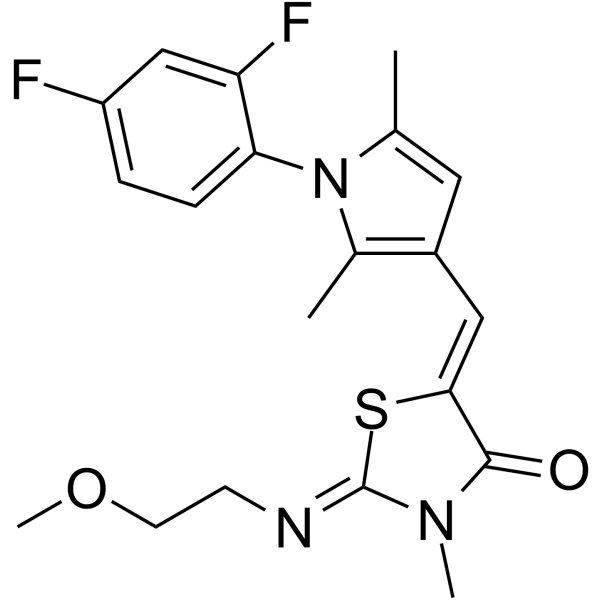
HY-108495
CYM50308S1P4 Receptor Agonist -
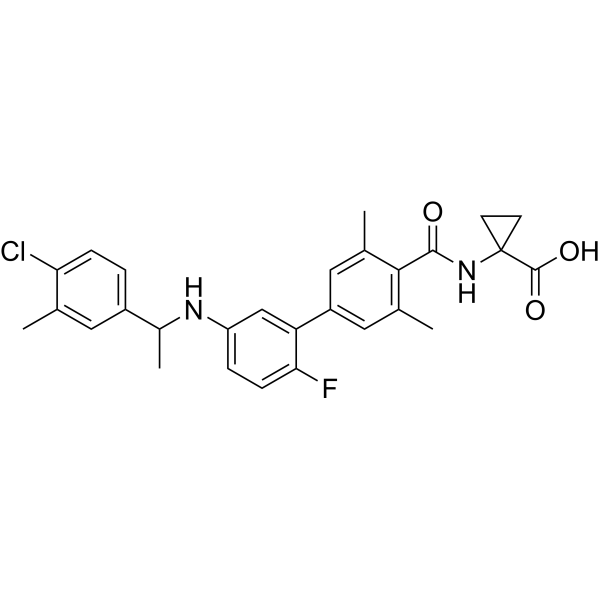
HY-117213
Ex26S1P1 Antagonist -
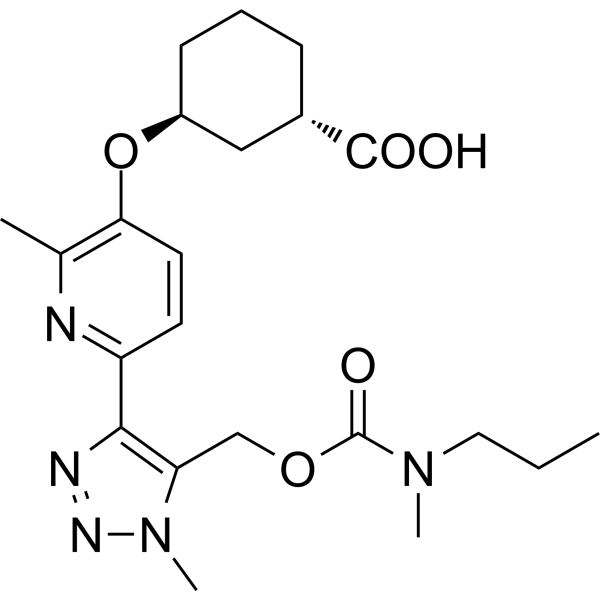
HY-139853
BMS-986278LPA1 Antagonist -
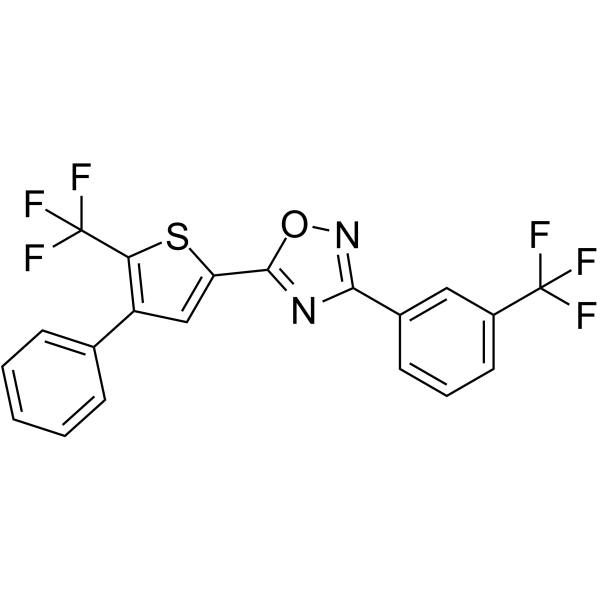
HY-W008947
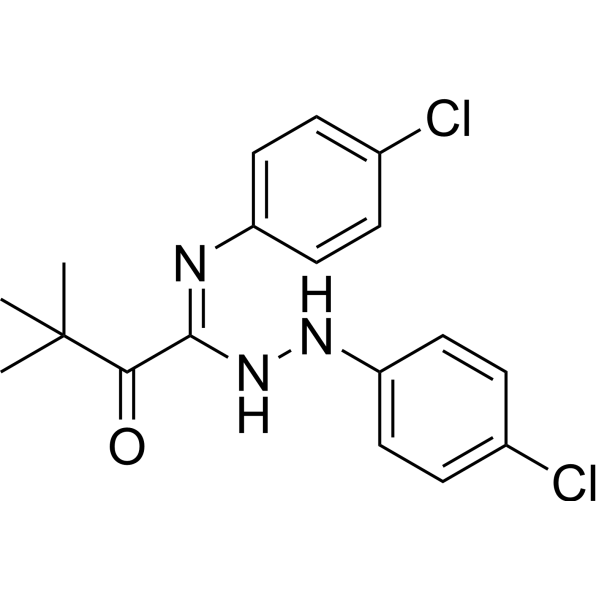
SEW2871S1P1 Agonist -
HY-19736
TY-52156LPL Receptor Antagonist -
HY-10968
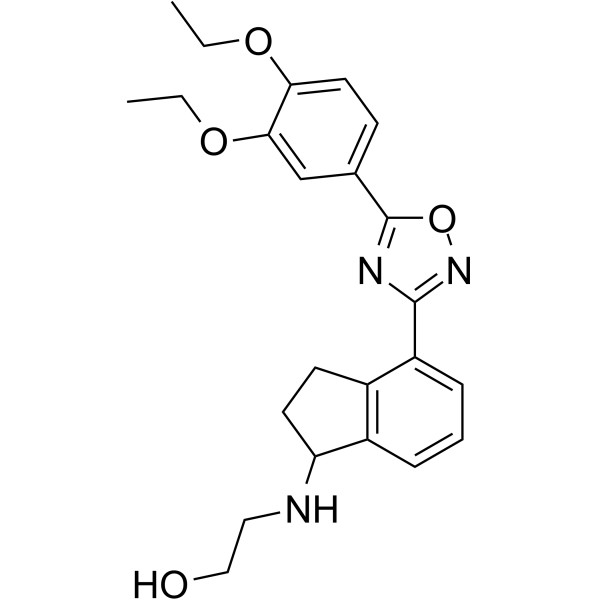
CYM5442S1P1 Receptor Agonist -
HY-12288A
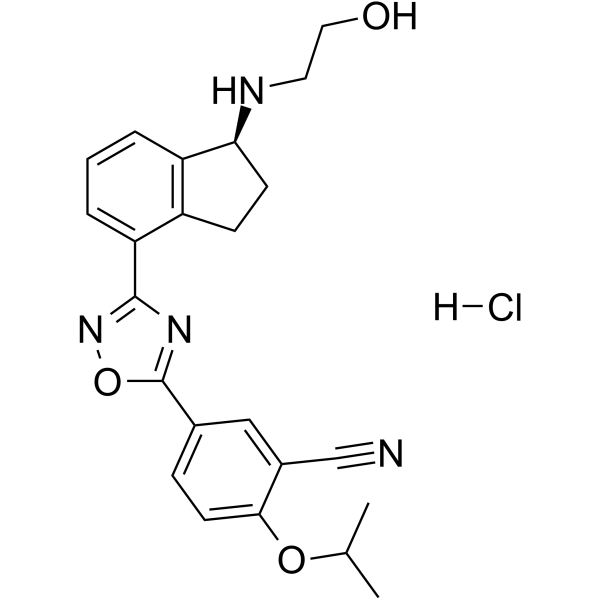
Ozanimod hydrochlorideS1P Receptor Modulator -
HY-16734A
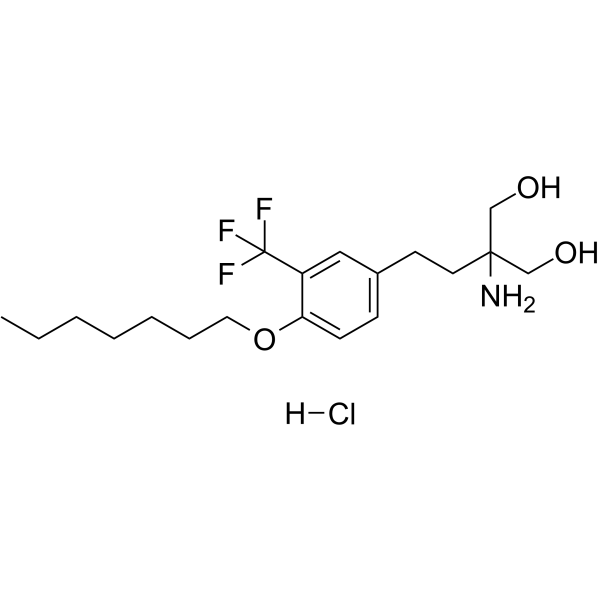
Amiselimod hydrochlorideS1PR1 Modulator -
HY-139310
GLPG2938S1P2 Antagonist
Publications Citing Use of MedChemExpress (MCE) SAR247799
More

Biologische Aktivität
Beschreibung
IC50 & Target
[1]|
S1PR1 12.6-493 nM (EC50) |
In Vitro
SAR247799 (0, 0.003, 0.01, 0.03, 0.1, 0.3, 1, 3, 10 μM; 10 min) induces a concentration-dependent phosphorylation of extracellular-regulated kinase-1/2 (Erk1/2) and protein kinase B (Akt) in HUVECs[1].
SAR247799 (0-10 μM, 8 min) induces impedance change in HUVECs in a dose-dependent manner[1].
SAR247799 (1 μM, 1st) does not cause desensitization demonstrated by Ca2+ flux assay in S1P1-Chinese hamster ovary (CHO) cells[1].
MedChemExpress (MCE) has not independently confirmed the accuracy of these methods. They are for reference only.
In Vivo
SAR247799 (0.3, 1, 3 mg/kg; i.v.) dose dependently increases the coronary conductance ratio in pig model of coronary endothelial dysfunction[1].
SAR247799 (30-min intravenous administration; 8- to 10-week-old farm pig) exposure (Cmax and AUC) increases with dose in pigs. Pharmacokinetic parameters [1]:
| Dose (mg/kg) | N | Cmax (g/mL) | Tmax (h) | Tlast (h) | AUC0-last (g.h/mL) | Cl (L/h/kg) | Vss (L/kg) | T1/2z (h) |
| 1 | 4 | 2.08 (8) | 0.5 [0.5] | [8-48] | 11.8 (46) | 0.113 (75) | 0.516 (11) | 5.62 (57) |
| 3 | 7 | 8.10 (12) | 0.5 [0.5] | [24-72] | 42.2 (23) | 0.0754 (30) | 0.446 (16) | 6.21 (28) |
| 10 | 3 | 36.7 (5) | 0.5 [0.5-0.75] | 72 | 294 (13) | 0.0343 (13) | 0.338 (7) | 7.73 (8) |
| 30 | 6 | 112 (27) | 0.5 [0.5- 1.0] | [48-72] | 908 (16) | 0.0338 (18) | 0.294 (11) | 7.35 (11) |
MedChemExpress (MCE) has not independently confirmed the accuracy of these methods. They are for reference only.
-
Animal Model:Acute kidney injury rats (12 to 15-week-old Fischer rats)[1]
-
Dosage:1 and 3 mg/kg
-
Administration:P.o.; administered 1 hour before renal occlusion.
-
Result:Inhibited the increase in serum creatinine (89 and 96% at 1 and 3 mg/kg) and urea (61 and 85% at 1 and 3 mg/kg).
Protected renal proximal tubules against necrosis and blunted the development of interstitial hemorrhage.
-
Animal Model:Acute kidney injury rats (8- to 12-week-old Fischer rats)[1]
-
Dosage:3 mg/kg
-
Administration:P.o.; twice a day for 7 days and twice a day for 7 day
-
Result:Showed a dosedependent trend for reducing macrophage.
Clinical Trial
| NCT Number | Sponsor | Condition | Start Date |
Phase

|
|---|---|---|---|---|
| NCT01329991 | 2011-05 | PHASE1 |


Chemical Information
-
CAS. Nr. 1315311-14-8
-
Appearance Solid
-
Molecular Weight 425.82
-
Formel C21H16ClN3O5
-
Color Off-white to light yellow
-
SMILES
O=C(O)COC1=C(C)C=C(C2=NC3=CN=C(OC4=CC=CC(Cl)=C4)N=C3O2)C=C1C
-
Synonyms
S1P1 agonist 3
-
Versand
Room temperature in continental US; may vary elsewhere.
-
Speicherung
4°C, sealed storage, away from moisture and light
* In solvent : -80°C, 6 months; -20°C, 1 month (sealed storage, away from moisture and light)


Publications (3)
-
Journal Impact Factor
-
Most Recent
-
PLoS Biol
Structural insights into subtype-specific agonist recognition by sphingosine-1-phosphate receptors. [Abstract]2026 Apr 10;24(4):e3003381. PMID: 41961881 -
Cell Signal
Characterization of functionally relevant G protein-coupled receptors in endometriotic epithelial cells. [Abstract]2025 Sep:133:111876. PMID: 40381972 -


Lösungsmittel & Löslichkeit
In Vitro:
DMSO : 33.33 mg/mL (78.27 mM; Need ultrasonic; Hygroscopic DMSO has a significant impact on the solubility of product, please use newly opened DMSO)
Please refer to the solubility information to select the appropriate solvent. Once prepared, please aliquot and store the solution to prevent product inactivation from repeated freeze-thaw cycles.
Storage method and period of stock solution: -80°C, 6 months; -20°C, 1 month (sealed storage, away from moisture and light). When stored at -80°C, please use it within 6 months. When stored at -20°C, please use it within 1 month.
Please refer to the solubility information to select the appropriate solvent. Once prepared, please aliquot and store the solution to prevent product inactivation from repeated freeze-thaw cycles.
Storage method and period of stock solution: -80°C, 6 months; -20°C, 1 month (sealed storage, away from moisture and light). When stored at -80°C, please use it within 6 months. When stored at -20°C, please use it within 1 month.
Konzentration (Stammlösung) × Volumen (Stammlösung) = Konzentration (Ziellösung) × Volumen (Ziellösung)
In Vivo:
Select the appropriate dissolution method based on your experimental animal and administration route.
- For the following dissolution methods, please ensure to first prepare a clear stock solution using an In Vitro approach and then sequentially add co-solvents:
- To ensure reliable experimental results, the clarified stock solution can be appropriately stored based on storage conditions. As for the working solution for In Vivo experiments, it is recommended to prepare freshly and use it on the same day.
- The percentages shown for the solvents indicate their volumetric ratio in the final prepared solution. If precipitation or phase separation occurs during preparation, heat and/or sonication can be used to aid dissolution.
Add each solvent one by one: 10% DMSO 40% PEG300 5% Tween-80 45% Saline
Solubility: ≥ 2.5 mg/mL (5.87 mM); Clear solution
This protocol yields a clear solution of ≥ 2.5 mg/mL (saturation unknown).
Taking 1 mL working solution as an example, add 100 μL DMSO stock solution (25.0 mg/mL) to 400 μL PEG300, and mix evenly; then add 50 μL Tween-80 and mix evenly; then add 450 μL Saline to adjust the volume to 1 mL.
Preparation of Saline: Dissolve 0.9 g sodium chloride in ddH₂O and dilute to 100 mL to obtain a clear Saline solution.
Add each solvent one by one: 10% DMSO 90% (20% SBE-β-CD in Saline)
Solubility: ≥ 2.5 mg/mL (5.87 mM); Clear solution
This protocol yields a clear solution of ≥ 2.5 mg/mL (saturation unknown).
Taking 1 mL working solution as an example, add 100 μL DMSO stock solution (25.0 mg/mL) to 900 μL 20% SBE-β-CD in Saline, and mix evenly.
Preparation of 20% SBE-β-CD in Saline (4°C, storage for one week): 2 g SBE-β-CD powder is dissolved in 10 mL Saline, completely dissolve until clear.
In Vivo Dissolution Calculator
Please enter the basic information of animal experiments:
-
-
-
-
Recommended: Prepare an additional quantity of animals to account for potential losses during experiments.
Please enter your animal formula composition:
-
%DMSO +
Recommended: Keep the proportion of DMSO in working solution below 2% if your animal is weak.
-
%+
-
+%Tween-80 + +
-
%Saline +
The co-solvents required include: DMSO, . All of co-solvents are available by MedChemExpress (MCE). , Tween 80. All of co-solvents are available by MedChemExpress (MCE).
Working solution concentration: 0.22 mg/mL
Method for preparing stock solution: mg drug dissolved in μL DMSO. Stock solution concentration: mg/mL. * In solvent : -80°C, 6 months; -20°C, 1 month (sealed storage, away from moisture and light)
1. Take μL DMSO stock solution;
2. Add μL .
μL , mix evenly;
3. Then add μL Tween 80, mix evenly;
4. Then add μL
Please ensure that the stock solution in the first step is dissolved to a clear state, and add co-solvents in sequence. You can use ultrasonic heating (ultrasonic cleaner, recommended frequency 20-40 kHz), vortexing, etc. to assist dissolution.


Reinheit & Dokumentation
-
Data Sheet (278 KB)
-
SDS (252 KB)
- English - EN (252 KB)
- Français - FR (252 KB)
- Deutsch - DE (252 KB)
- Norwegian - NO (252 KB)
- Español - ES (252 KB)
- Swedish - SV (252 KB)
- Italian - IT (252 KB)
- Korean - KR (252 KB)
- Portuguese - PT (252 KB)
-
Handling Instructions (2659 KB)
Verweise
[1]. Poirier B, et al. A G protein-biased S1P1 agonist, SAR247799, protects endothelial cells without affecting lymphocyte numbers. Sci Signal. 2020 Jun 2;13(634):eaax8050. [Content Brief]
[2]. Evaristi MF, et al. A G-protein-biased S1P1 agonist, SAR247799, improved LVH and diastolic function in a rat model of metabolic syndrome. PLoS One. 2022 Jan 14;17(1):e0257929. [Content Brief]
[3]. Bergougnan L, et al. Endothelial-protective effects of a G-protein-biased sphingosine-1 phosphate receptor-1 agonist, SAR247799, in type-2 diabetes rats and a randomized placebo-controlled patient trial. Br J Clin Pharmacol. 2021 May;87(5):2303-2320. [Content Brief]
[4]. Bergougnan L, et al. First-in-human study of the safety, tolerability, pharmacokinetics and pharmacodynamics of single and multiple oral doses of SAR247799, a selective G-protein-biased sphingosine-1 phosphate receptor-1 agonist for endothelial protection [Content Brief]


Complete Stock Solution Preparation Table
Please refer to the solubility information to select the appropriate solvent. Once prepared, please aliquot and store the solution to prevent product inactivation from repeated freeze-thaw cycles.
Storage method and period of stock solution: -80°C, 6 months; -20°C, 1 month (sealed storage, away from moisture and light). When stored at -80°C, please use it within 6 months. When stored at -20°C, please use it within 1 month.
| Optional Solvent | Concentration Solvent Mass | 1 mg | 5 mg | 10 mg | 25 mg |
|---|---|---|---|---|---|
| DMSO | 1 mM | 2.3484 mL | 11.7421 mL | 23.4841 mL | 58.7103 mL |
| 5 mM | 0.4697 mL | 2.3484 mL | 4.6968 mL | 11.7421 mL | |
| 10 mM | 0.2348 mL | 1.1742 mL | 2.3484 mL | 5.8710 mL | |
| 15 mM | 0.1566 mL | 0.7828 mL | 1.5656 mL | 3.9140 mL | |
| 20 mM | 0.1174 mL | 0.5871 mL | 1.1742 mL | 2.9355 mL | |
| 25 mM | 0.0939 mL | 0.4697 mL | 0.9394 mL | 2.3484 mL | |
| 30 mM | 0.0783 mL | 0.3914 mL | 0.7828 mL | 1.9570 mL | |
| 40 mM | 0.0587 mL | 0.2936 mL | 0.5871 mL | 1.4678 mL | |
| 50 mM | 0.0470 mL | 0.2348 mL | 0.4697 mL | 1.1742 mL | |
| 60 mM | 0.0391 mL | 0.1957 mL | 0.3914 mL | 0.9785 mL |


SAR247799 Related Classifications
HY-115831 Related Classifications
 Powered by Bioz