



Asciminib
Based on 17 publication(s) in Google Scholar
Asciminib (ABL001) is a potent and selective allosteric BCR-ABL1 inhibitor, which inhibits Ba/F3 cells grown with an IC50 of 0.25 nM.
Nos produits utilisent uniquement pour la recherche. Nous ne vendons pas aux patients.
- Pureté : 99.61%
- CAS No.: 1492952-76-7
- Formule: C20H18ClF2N5O3
- Masse moléculaire:449.84
-
Stockage:Powder -20°C, 3 years , 4°C, 2 years ; In solvent -80°C, 6 months , -20°C, 1 month

To place orders, for customer services and technical support, please contact: MedChemExpress USA
Tel: 609-228-6898 E-mail: [email protected] [email protected]


-
 Activité biologique
-
Chemical Information
-
Solvant et solubilité
- Pureté et documentation
- Références
-
 Help & FAQs


-
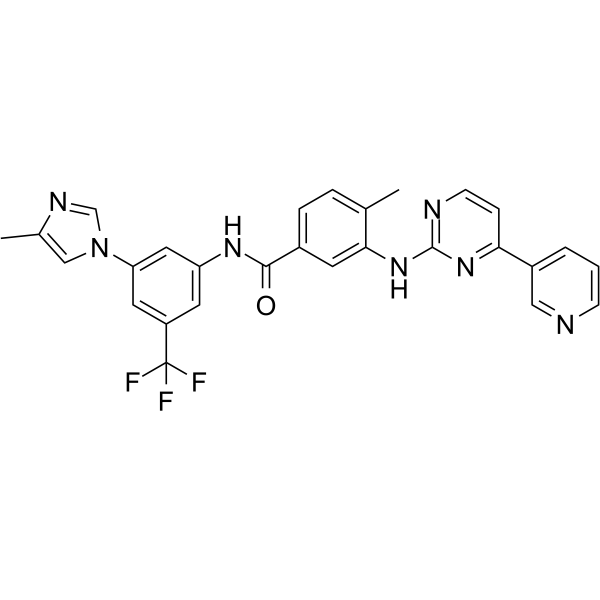
HY-10159
NilotinibBcr-Abl Inhibitor -
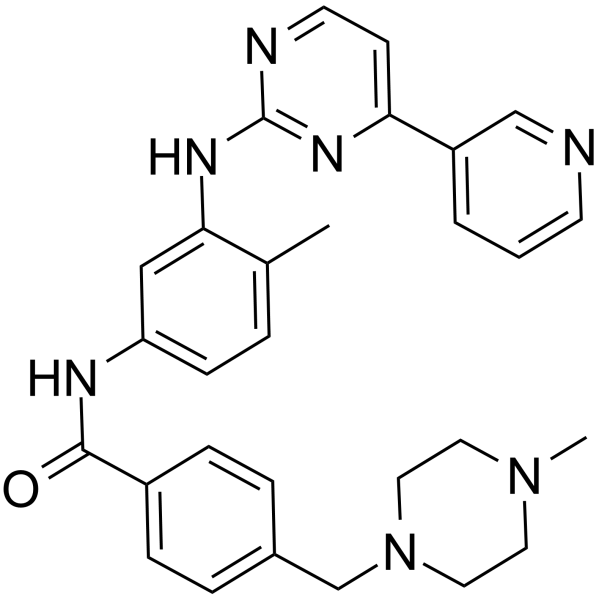
HY-15463
ImatinibTyrosine Kinases Inhibitor -
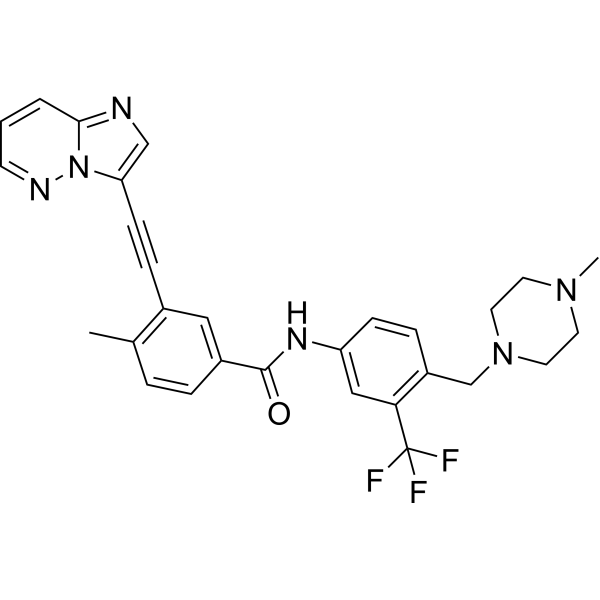
HY-12047
PonatinibMulti-targeted Kinase Inhibitor -
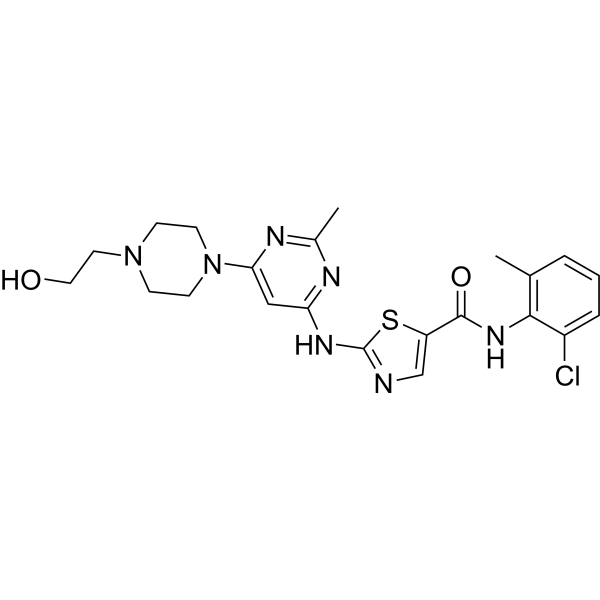
HY-10181
DasatinibSrc/Bcr-Abl Inhibitor -
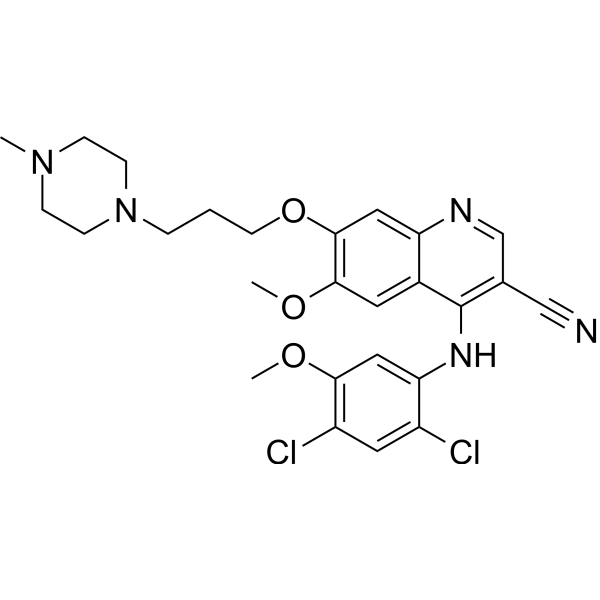
HY-10158
BosutinibSrc/Abl Inhibitor -
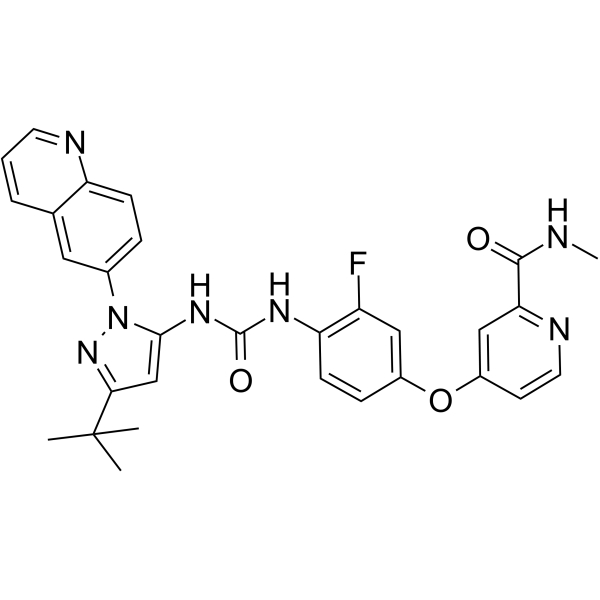
HY-13024
RebastinibKinase Inhibitor -
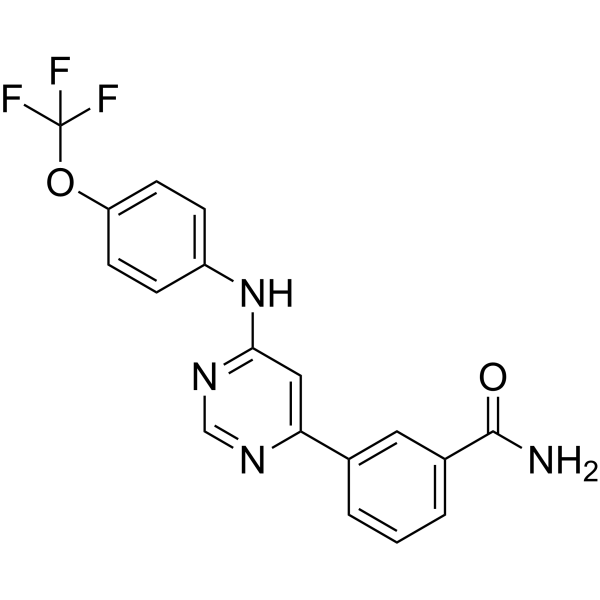
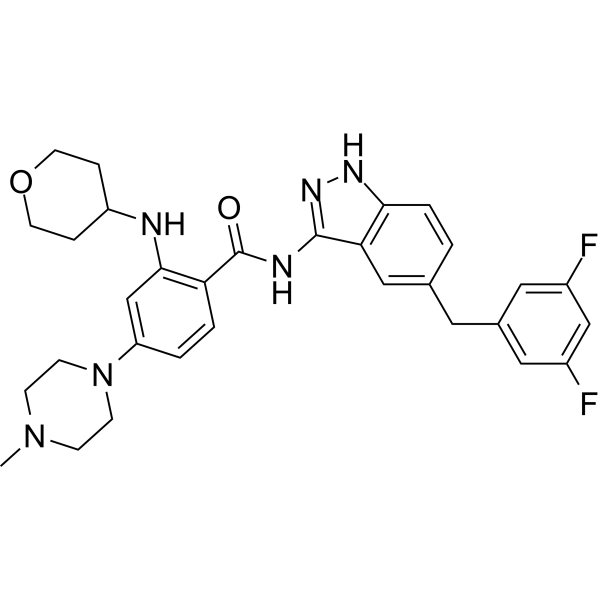
HY-11007
GNF-2Bcr-Abl Inhibitor -
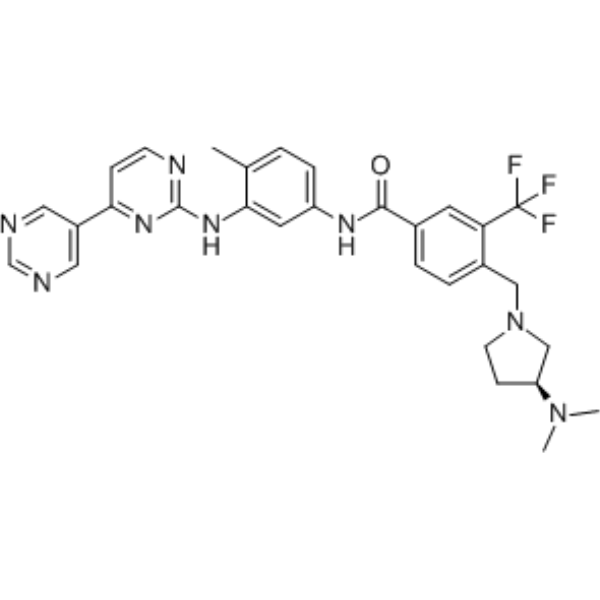
HY-50868
BafetinibLyn/Bcr-Abl Inhibitor -
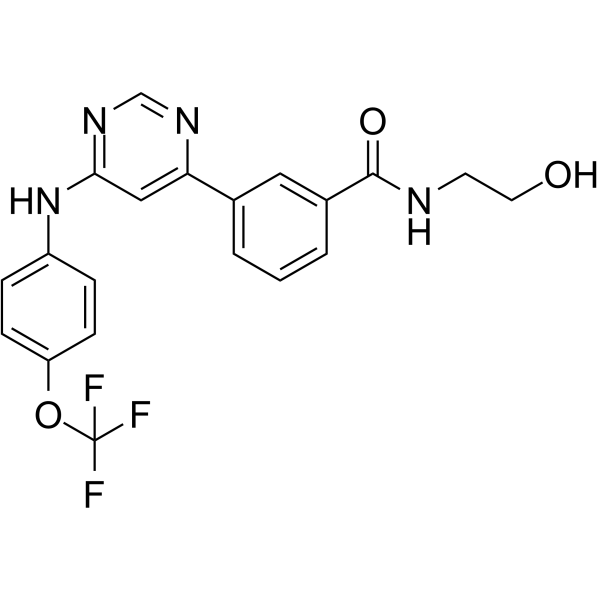
HY-15738
GNF-5Bcr-Abl Inhibitor -
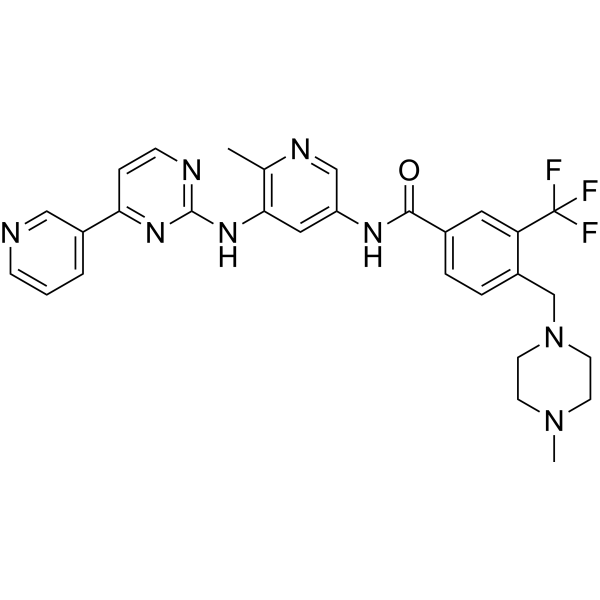
HY-13904
Flumatinibc-Kit Inhibitor -
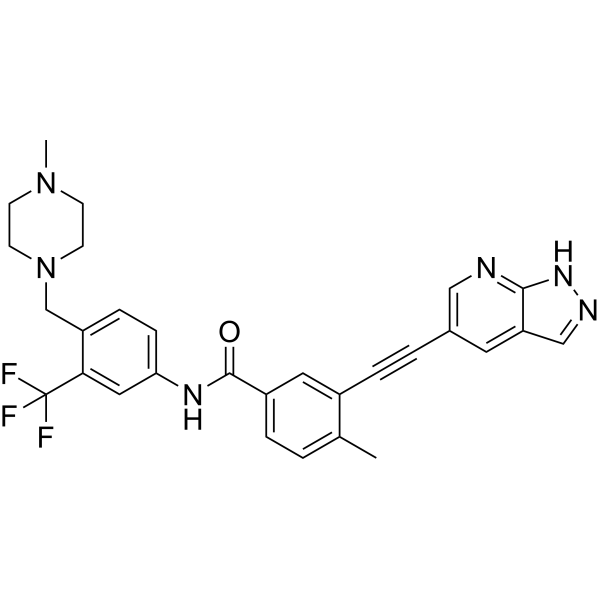
HY-15666
OlverembatinibBcr-Abl Inhibitor -
HY-12678
EntrectinibTrk/ROS1/ALK Inhibitor
Publications Citing Use of MedChemExpress (MCE) Asciminib
More- Nature. 2026 Sep 23.
- Nature. 2026 Jan;649(8098):1032-1041. [Abstract]
- Autophagy. 2025 Jun;21(6):1192-1211. [Abstract]
- Nat Commun. 2026 Feb 12;17(1):1214. [Abstract]
- Adv Sci (Weinh). 2026 Mar 1:e17231. [Abstract]
- Cell Death Dis. 2021 Sep 25;12(10):875. [Abstract]
- Leukemia. 2026 May;40(5):955-969. [Abstract]
- Mol Syst Biol. 2024 Jan;20(1):28-55. [Abstract]
- Cancer Immunol Immunother. 2023 Jun;72(6):1661-1672. [Abstract]
- Sci Rep. 2025 May 30;15(1):18978. [Abstract]
- Cancer Sci. 2025 Apr;116(4):1115-1125. [Abstract]
- J Biol Chem. 2022 Aug;298(8):102238. [Abstract]
- BMC Cancer. 2020 May 7;20(1):397. [Abstract]
- Blood Vessel Thromb Hemost. 2025 Nov 17.
- bioRxiv. 2025 Jun 13:2025.06.13.659082. [Abstract]
- bioRxiv. 2025 Jun 16:2025.06.11.659120. [Abstract]
- bioRxiv. 2025 Jan 30.
 Customer Validation & Images

-
Flow Cytometry
-
IF
-
In Vivo Efficacy Study
-
Histological Imaging/Staining
-
IF


Activité biologique
Description
Cellular Effect
|
Cell Line

|
Type | Value | Description | References |
|---|---|---|---|---|
| BaF3 | GI50 |
>10000 nM
Compound: 1; ABL001
|
Cytotoxicity against mouse BA/F3 cells assessed as cell growth inhibition after 48 hrs by BriteLight luciferase assay
Cytotoxicity against mouse BA/F3 cells assessed as cell growth inhibition after 48 hrs by BriteLight luciferase assay
|
[PMID: 30137981] |
| BaF3 | EC50 |
>10 μM
Compound: Asciminib; ABL001
|
Antiproliferative activity against wild type mouse BA/F3 cells incubated for 3 days by CCK8 assay
Antiproliferative activity against wild type mouse BA/F3 cells incubated for 3 days by CCK8 assay
|
[PMID: 32657579] |
| BaF3 | EC50 |
5.8 nM
Compound: Asciminib; ABL001
|
Protac activity at Cereblon/BCR/ABL T315I mutant (unknown origin) expressed in mouse BaF3 cells assessed as reduction in BCR-ABL T315I mutant driven cell viability incubated for 3 days by CCK8 assay
Protac activity at Cereblon/BCR/ABL T315I mutant (unknown origin) expressed in mouse BaF3 cells assessed as reduction in BCR-ABL T315I mutant driven cell viability incubated for 3 days by CCK8 assay
|
[PMID: 32657579] |
| BaF3 | IC50 |
0.012 μM
Compound: ABL001
|
Antiproliferative activity against mouse BaF3 cells expressing Bcr-Abl T315I mutant assessed as inhibition of cell growth incubated for 72 hrs by CellTiter-Glo luminescent assay
Antiproliferative activity against mouse BaF3 cells expressing Bcr-Abl T315I mutant assessed as inhibition of cell growth incubated for 72 hrs by CellTiter-Glo luminescent assay
|
[PMID: 35561654] |
| HEK293 | IC50 |
>10 μM
Compound: Asciminib
|
Cytotoxicity against HEK293 cells assessed as reduction in cell viability measured after 48 hrs by alamar blue assay
Cytotoxicity against HEK293 cells assessed as reduction in cell viability measured after 48 hrs by alamar blue assay
|
[PMID: 35944901] |
| K562 | IC50 |
0.61 nM
Compound: Asciminib; ABL001
|
Antiproliferative activity against human K562 cells incubated for 3 days by CCK8 assay
Antiproliferative activity against human K562 cells incubated for 3 days by CCK8 assay
|
[PMID: 32657579] |
| K562 | IC50 |
3.9 nM
Compound: ABL001
|
Antiproliferative activity against human K562 cells assessed as inhibition of cell growth incubated for 2 days by CCK8 assay
Antiproliferative activity against human K562 cells assessed as inhibition of cell growth incubated for 2 days by CCK8 assay
|
[PMID: 36306539] |
| K562 | EC50 |
0.26 nM
Compound: Asciminib
|
Antiproliferative activity against human K562 cells assessed as inhibition of cell growth incubated for 3 days in the presence of dasatinib by celltiter-glo 2.0 assay
Antiproliferative activity against human K562 cells assessed as inhibition of cell growth incubated for 3 days in the presence of dasatinib by celltiter-glo 2.0 assay
|
[PMID: 37849551] |
| K562 | EC50 |
0.39 nM
Compound: Asciminib
|
Antiproliferative activity against human K562 cells assessed as inhibition of cell growth incubated for 3 days in the presence of ponatinib by celltiter-glo 2.0 assay
Antiproliferative activity against human K562 cells assessed as inhibition of cell growth incubated for 3 days in the presence of ponatinib by celltiter-glo 2.0 assay
|
[PMID: 37849551] |
| K562 | EC50 |
1.49 nM
Compound: Asciminib
|
Antiproliferative activity against human K562 cells expressing ABL T315I mutant assessed as inhibition of cell growth incubated for 3 days in the presence of ponatinib by celltiter-glo 2.0 assay
Antiproliferative activity against human K562 cells expressing ABL T315I mutant assessed as inhibition of cell growth incubated for 3 days in the presence of ponatinib by celltiter-glo 2.0 assay
|
[PMID: 37849551] |
| K562 | EC50 |
11.99 nM
Compound: Asciminib
|
Antiproliferative activity against human K562 cells expressing ABL T315I mutant assessed as inhibition of cell growth incubated for 3 days in the presence of dasatinib by celltiter-glo 2.0 assay
Antiproliferative activity against human K562 cells expressing ABL T315I mutant assessed as inhibition of cell growth incubated for 3 days in the presence of dasatinib by celltiter-glo 2.0 assay
|
[PMID: 37849551] |
| K562 | EC50 |
7.59 nM
Compound: Asciminib
|
Antiproliferative activity against human K562 cells assessed as inhibition of cell growth incubated for 3 days by celltiter-glo 2.0 assay
Antiproliferative activity against human K562 cells assessed as inhibition of cell growth incubated for 3 days by celltiter-glo 2.0 assay
|
[PMID: 37849551] |
| K562 | EC50 |
88.07 nM
Compound: Asciminib
|
Antiproliferative activity against human K562 cells expressing ABL T315I mutant assessed as inhibition of cell growth incubated for 3 days by celltiter-glo 2.0 assay
Antiproliferative activity against human K562 cells expressing ABL T315I mutant assessed as inhibition of cell growth incubated for 3 days by celltiter-glo 2.0 assay
|
[PMID: 37849551] |
In Vitro
Asciminib binds to the myristoyl pocket of ABL1 and induces the formation of an inactive kinase conformation. NMR and biophysical studies confirm that asciminib binds potently (dissociation constant=0.5-0.8nM) and selectively to the myristoyl pocket of ABL1 and induces the inactive C-terminal helix conformation. Asciminib binding mimics the structural consequences of myristate binding to the N terminus of ABL1. Consistent with this binding site, asciminib exhibits the same non-ATP-competitive biochemical kinetics as the BCR–ABL inhibitor GNF-2 but with approximately 100-fold greater potency. Asciminib lacks activity against more than 60 kinases, including SRC, and is similarly inactive against G-protein-coupled receptors, ion channels, nuclear receptors and transporters. In BCR–ABL1-transformed Ba/F3 cells grown without IL-3, asciminib has an anti-proliferative with IC50 value of 0.25nM. In the CML blast-phase cell line KCL-22, asciminib inhibits phosphorylation of both STAT5 (Tyr694; pSTAT5) and BCR–ABL1 (Tyr245; pBCR–ABL1) after 1h using concentrations that correlate with those required for inhibition of cell proliferation. Asciminib is selectively active against all BCR–ABL1 lines (IC50 value of 1–20nM), irrespective of the presence of either the p210 or the p190 BCR–ABL1 isoform.[1].
MedChemExpress (MCE) has not independently confirmed the accuracy of these methods. They are for reference only.
In Vivo
MedChemExpress (MCE) has not independently confirmed the accuracy of these methods. They are for reference only.
Essai clinique
| NCT Number | Sponsor | Condition | Start Date |
Phase
|
|---|---|---|---|---|
| NCT01329991 | 2011-05 | PHASE1 |


Chemical Information
-
CAS No. 1492952-76-7
-
Appearance Solid
-
Masse moléculaire 449.84
-
Formule C20H18ClF2N5O3
-
Color White to off-white
-
SMILES
O=C(C1=CC(C2=NNC=C2)=C(N3C[C@H](O)CC3)N=C1)NC4=CC=C(OC(F)(Cl)F)C=C4
-
Synonyms
ABL001
-
Livraison
Room temperature in continental US; may vary elsewhere.
-
Stockage
Powder -20°C 3 years 4°C 2 years In solvent -80°C 6 months -20°C 1 month


Publications (17)
-
Journal Impact Factor
-
Most Recent
-
-
Nature
2026 Jan;649(8098):1032-1041. PMID: 41299171
Asciminib purchased from MedChemExpress. Usage Cited in: Nature. 2026 Jan;649(8098):1032-1041. [Abstract]
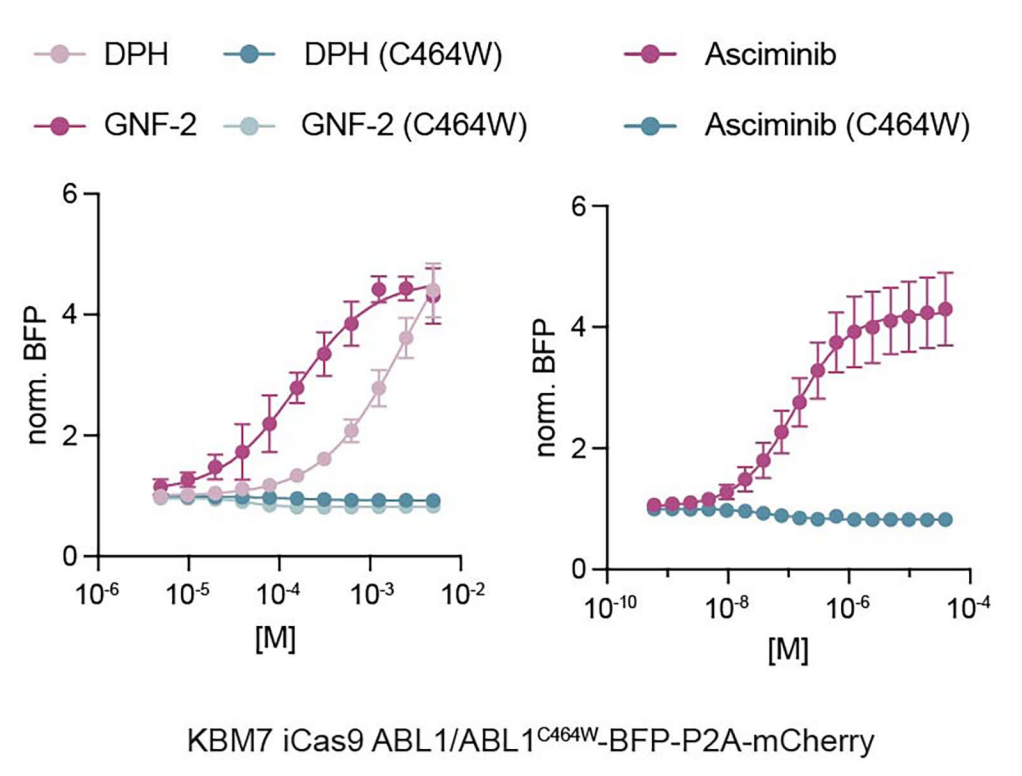
KBM7 iCas9 stability reporter validation for dose-dependent stabilization using Asciminib (10-10-10-4 M) for either ABL1WT or ABL1C464W constructs measured by flow cytometry.
-
Autophagy
Nonreceptor tyrosine kinase ABL1 regulates lysosomal acidification by phosphorylating the ATP6V1B2 subunit of the vacuolar-type H+-ATPase. [Abstract]2025 Jun;21(6):1192-1211. PMID: 39757940
Asciminib purchased from MedChemExpress. Usage Cited in: Autophagy. 2025 Jun;21(6):1192-1211. [Abstract]
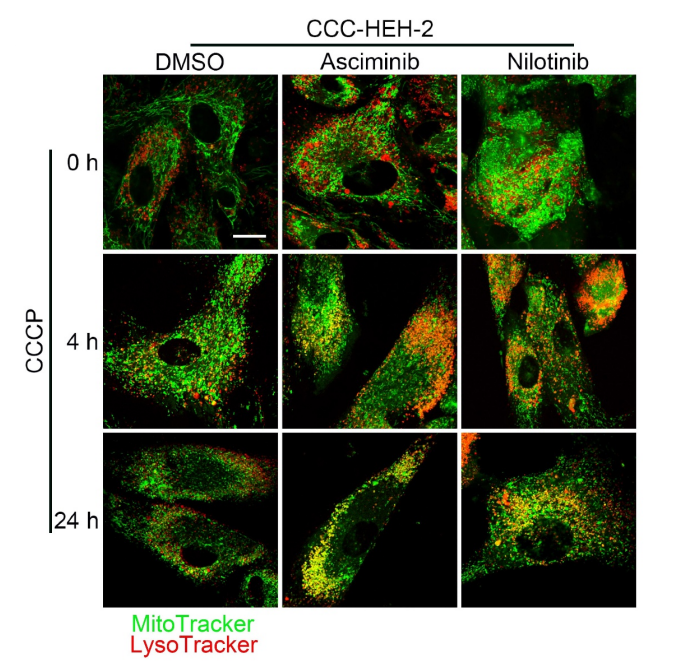
Asciminib (10 μM) caused significant accumulation of mitochondria in lysosomes of CCC-HEH-2 (human embryonic myocardial tissue derived) cells treated with CCCP.
Asciminib purchased from MedChemExpress. Usage Cited in: Autophagy. 2025 Jun;21(6):1192-1211. [Abstract]
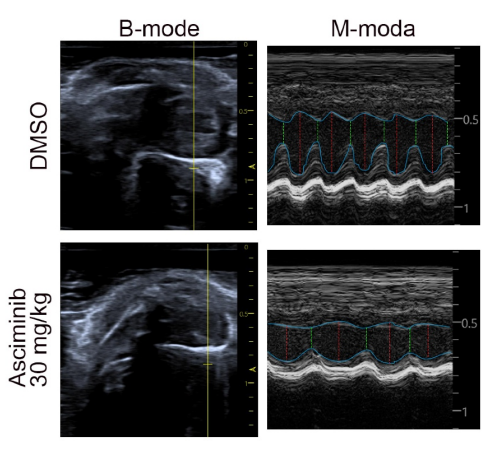
Asciminib (30 mg/kg; i.g.; 6 weeks) resulted in significantly impaired cardiac function in C57BL/6J mice.
Asciminib purchased from MedChemExpress. Usage Cited in: Autophagy. 2025 Jun;21(6):1192-1211. [Abstract]
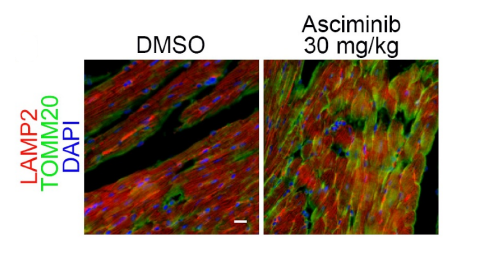
Asciminib (30 mg/kg; i.g.; 6 weeks) increased the colocalization of mitochondria with lysosomes in cardiac sections of C57BL/6J mice.
Asciminib purchased from MedChemExpress. Usage Cited in: Autophagy. 2025 Jun;21(6):1192-1211. [Abstract]
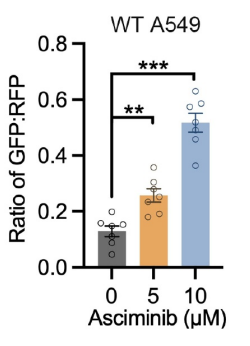
Asciminib (5-10 μM) caused a higher GFP:RFP ratio in the lysosomes of WT A549 cells stably transfected with a puromycin-inducible stubRFP-sensGFP-LC3 lentivirus.
-
Nat Commun
Human iPSC-based Modeling of Pulmonary Fibrosis Reveals p300/CBP Inhibition Suppresses Alveolar Transitional Cell State. [Abstract]2026 Feb 12;17(1):1214. PMID: 41680175 -
Adv Sci (Weinh)
BCR::ABL1-Induced Enhancer Reprogramming Uncovers Hypersensitivity of Ph+B-ALL Cells to Enhancer-Targeting Drugs. [Abstract]2026 Mar 1:e17231. PMID: 41764406 -
Cell Death Dis
Combination of tyrosine kinase inhibitors and the MCL1 inhibitor S63845 exerts synergistic antitumorigenic effects on CML cells. [Abstract]2021 Sep 25;12(10):875. PMID: 34564697 -
Leukemia
BCR::ABL1 tyrosine kinase inhibitors induce ribosome collisions to activate ZAK-dependent ribotoxic stress and apoptosis in chronic myeloid leukemia. [Abstract]2026 May;40(5):955-969. PMID: 41912913 -
Mol Syst Biol
Illuminating phenotypic drug responses of sarcoma cells to kinase inhibitors by phosphoproteomics. [Abstract]2024 Jan;20(1):28-55. PMID: 38177929 -
Cancer Immunol Immunother
Effects of the STAMP-inhibitor asciminib on T cell activation and metabolic fitness compared to tyrosine kinase inhibition by imatinib, dasatinib, and nilotinib. [Abstract]2023 Jun;72(6):1661-1672. PMID: 36602564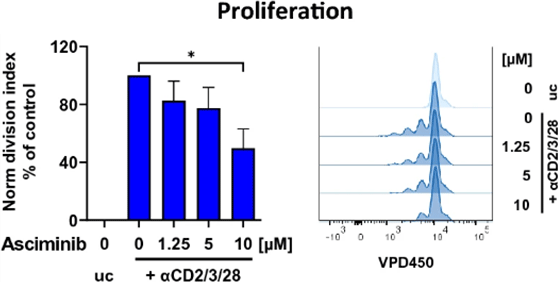
Asciminib purchased from MedChemExpress. Usage Cited in: Cancer Immunol Immunother. 2023 Jun;72(6):1661-1672. [Abstract]
Asciminib (1.25, 5, 10 µM) inhibits proliferation of T cells.
-
Sci Rep
Neddylation status determines the therapeutic sensitivity of tyrosine kinase inhibitors in chronic myeloid leukemia. [Abstract]2025 May 30;15(1):18978. PMID: 40447744 -
Cancer Sci
CML With Mutant ASXL1 Showed Decreased Sensitivity to TKI Treatment via Upregulation of the ALOX5-BLTR Signaling Pathway. [Abstract]2025 Apr;116(4):1115-1125. PMID: 39905783 -
J Biol Chem
Allosteric enhancement of the BCR-Abl1 kinase inhibition activity of nilotinib by cobinding of asciminib. [Abstract]2022 Aug;298(8):102238. PMID: 35809644 -
BMC Cancer
The effects of combination treatments on drug resistance in chronic myeloid leukaemia: an evaluation of the tyrosine kinase inhibitors axitinib and asciminib. [Abstract]2020 May 7;20(1):397. PMID: 32380976 -
-
bioRxiv
2025 Jun 13:2025.06.13.659082. PMID: 40661463 -
bioRxiv
A Hotspot Phosphorylation Site on SHP2 Drives Oncoprotein Activation and Drug Resistance. [Abstract]2025 Jun 16:2025.06.11.659120. PMID: 40667115 -


Solvant et solubilité
In Vitro:
DMSO : 100 mg/mL (222.30 mM; Need ultrasonic; Hygroscopic DMSO has a significant impact on the solubility of product, please use newly opened DMSO)
Please refer to the solubility information to select the appropriate solvent. Once prepared, please aliquot and store the solution to prevent product inactivation from repeated freeze-thaw cycles.
Storage method and period of stock solution: -80°C, 6 months; -20°C, 1 month. When stored at -80°C, please use it within 6 months. When stored at -20°C, please use it within 1 month.
Please refer to the solubility information to select the appropriate solvent. Once prepared, please aliquot and store the solution to prevent product inactivation from repeated freeze-thaw cycles.
Storage method and period of stock solution: -80°C, 6 months; -20°C, 1 month. When stored at -80°C, please use it within 6 months. When stored at -20°C, please use it within 1 month.
Concentration (start) × Volume (start) = Concentration (final) × Volume (final)
In Vivo:
Select the appropriate dissolution method based on your experimental animal and administration route.
- For the following dissolution methods, please ensure to first prepare a clear stock solution using an In Vitro approach and then sequentially add co-solvents:
- To ensure reliable experimental results, the clarified stock solution can be appropriately stored based on storage conditions. As for the working solution for In Vivo experiments, it is recommended to prepare freshly and use it on the same day.
- The percentages shown for the solvents indicate their volumetric ratio in the final prepared solution. If precipitation or phase separation occurs during preparation, heat and/or sonication can be used to aid dissolution.
Add each solvent one by one: 10% DMSO 40% PEG300 5% Tween-80 45% Saline
Solubility: ≥ 2.5 mg/mL (5.56 mM); Clear solution
This protocol yields a clear solution of ≥ 2.5 mg/mL (saturation unknown).
Taking 1 mL working solution as an example, add 100 μL DMSO stock solution (25.0 mg/mL) to 400 μL PEG300, and mix evenly; then add 50 μL Tween-80 and mix evenly; then add 450 μL Saline to adjust the volume to 1 mL.
Preparation of Saline: Dissolve 0.9 g sodium chloride in ddH₂O and dilute to 100 mL to obtain a clear Saline solution.
Add each solvent one by one: 10% DMSO 90% (20% SBE-β-CD in Saline)
Solubility: ≥ 2.5 mg/mL (5.56 mM); Clear solution
This protocol yields a clear solution of ≥ 2.5 mg/mL (saturation unknown).
Taking 1 mL working solution as an example, add 100 μL DMSO stock solution (25.0 mg/mL) to 900 μL 20% SBE-β-CD in Saline, and mix evenly.
Preparation of 20% SBE-β-CD in Saline (4°C, storage for one week): 2 g SBE-β-CD powder is dissolved in 10 mL Saline, completely dissolve until clear.
In Vivo Dissolution Calculator
Please enter the basic information of animal experiments:
-
-
-
-
Recommended: Prepare an additional quantity of animals to account for potential losses during experiments.
Please enter your animal formula composition:
-
%DMSO +
Recommended: Keep the proportion of DMSO in working solution below 2% if your animal is weak.
-
%+
-
+%Tween-80 + +
-
%Saline +
The co-solvents required include: DMSO, . All of co-solvents are available by MedChemExpress (MCE). , Tween 80. All of co-solvents are available by MedChemExpress (MCE).
Working solution concentration: 0.22 mg/mL
Method for preparing stock solution: mg drug dissolved in μL DMSO. Stock solution concentration: mg/mL.
1. Take μL DMSO stock solution;
2. Add μL .
μL , mix evenly;
3. Then add μL Tween 80, mix evenly;
4. Then add μL
Please ensure that the stock solution in the first step is dissolved to a clear state, and add co-solvents in sequence. You can use ultrasonic heating (ultrasonic cleaner, recommended frequency 20-40 kHz), vortexing, etc. to assist dissolution.


Pureté et documentation
-
Fiche technique (276 KB)
-
SDS (396 KB)
- English - EN (396 KB)
- Français - FR (396 KB)
- Deutsch - DE (396 KB)
- Norwegian - NO (396 KB)
- Español - ES (396 KB)
- Swedish - SV (396 KB)
- Italian - IT (396 KB)
- Korean - KR (396 KB)
- Portuguese - PT (396 KB)
-
Instruction de manipulation (2659 KB)
Références


Complete Stock Solution Preparation Table
Please refer to the solubility information to select the appropriate solvent. Once prepared, please aliquot and store the solution to prevent product inactivation from repeated freeze-thaw cycles.
Storage method and period of stock solution: -80°C, 6 months; -20°C, 1 month. When stored at -80°C, please use it within 6 months. When stored at -20°C, please use it within 1 month.
| Optional Solvent | Concentration Solvent Mass | 1 mg | 5 mg | 10 mg | 25 mg |
|---|---|---|---|---|---|
| DMSO | 1 mM | 2.2230 mL | 11.1151 mL | 22.2301 mL | 55.5753 mL |
| 5 mM | 0.4446 mL | 2.2230 mL | 4.4460 mL | 11.1151 mL | |
| 10 mM | 0.2223 mL | 1.1115 mL | 2.2230 mL | 5.5575 mL | |
| 15 mM | 0.1482 mL | 0.7410 mL | 1.4820 mL | 3.7050 mL | |
| 20 mM | 0.1112 mL | 0.5558 mL | 1.1115 mL | 2.7788 mL | |
| 25 mM | 0.0889 mL | 0.4446 mL | 0.8892 mL | 2.2230 mL | |
| 30 mM | 0.0741 mL | 0.3705 mL | 0.7410 mL | 1.8525 mL | |
| 40 mM | 0.0556 mL | 0.2779 mL | 0.5558 mL | 1.3894 mL | |
| 50 mM | 0.0445 mL | 0.2223 mL | 0.4446 mL | 1.1115 mL | |
| 60 mM | 0.0371 mL | 0.1853 mL | 0.3705 mL | 0.9263 mL | |
| 80 mM | 0.0278 mL | 0.1389 mL | 0.2779 mL | 0.6947 mL | |
| 100 mM | 0.0222 mL | 0.1112 mL | 0.2223 mL | 0.5558 mL |


Asciminib Related Classifications
HY-104010 Related Classifications
 Powered by Bioz