



Loxapine
Based on 1 publication(s) in Google Scholar
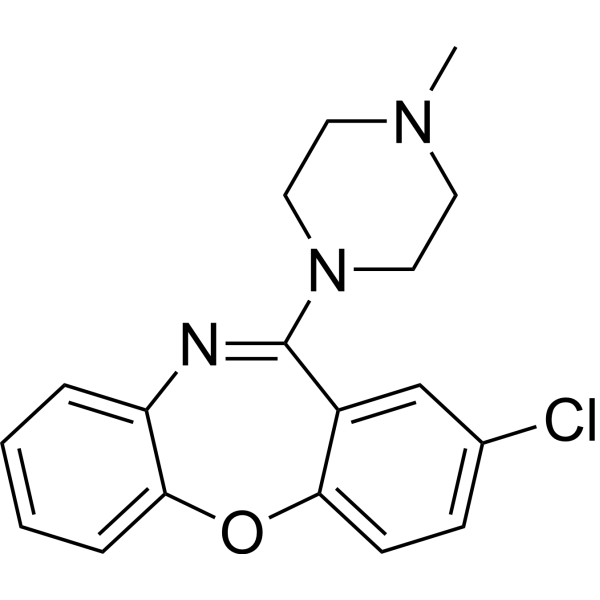
Loxapine is an orally active dopamine inhibitor, 5-HT receptor antagonist and also a dibenzoxazepine anti-psychotic agent.
Nos produits utilisent uniquement pour la recherche. Nous ne vendons pas aux patients.
- Pureté: 99.93%
- CAS No.: 1977-10-2
- Formule: C18H18ClN3O
- Masse moléculaire:327.81
-
Stockage:Powder -20°C, 3 years , 4°C, 2 years ; In solvent -80°C, 2 years , -20°C, 1 year

To place orders, for customer services and technical support, please contact: MedChemExpress USA
Tel: 609-228-6898 E-mail: [email protected] [email protected]


-
 Activité biologique
-
Chemical Information
-
Solvant et solubilité
- Pureté et documentation
- Références
-
 Help & FAQs


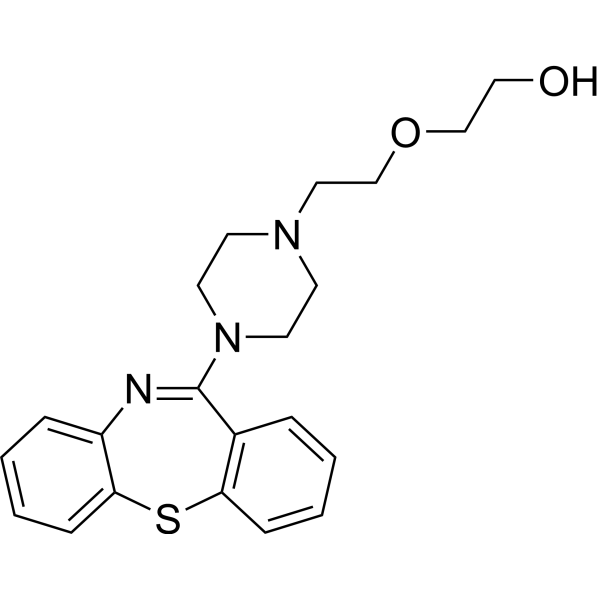
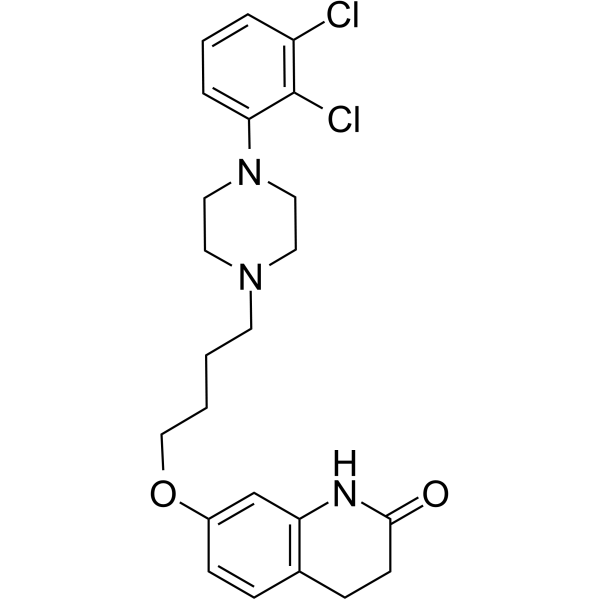
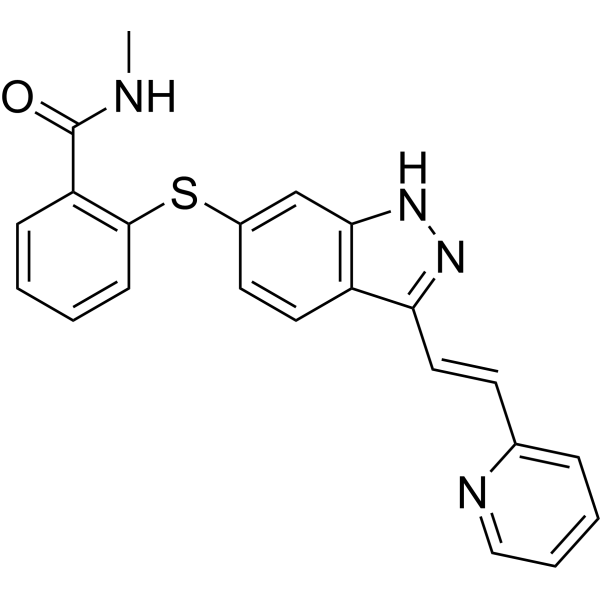
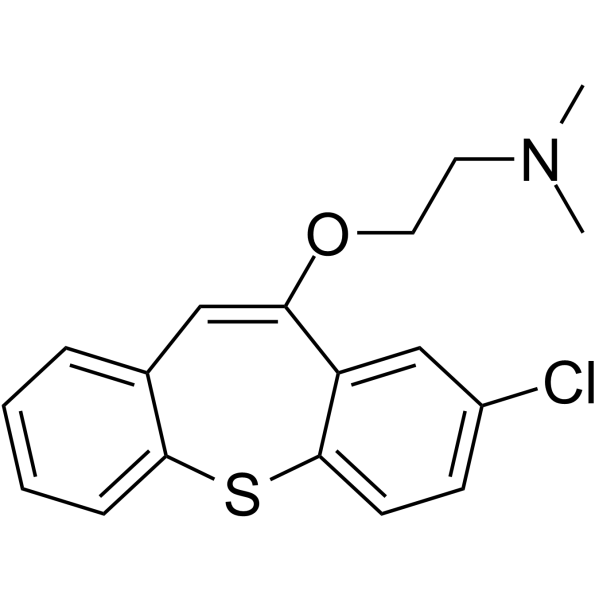
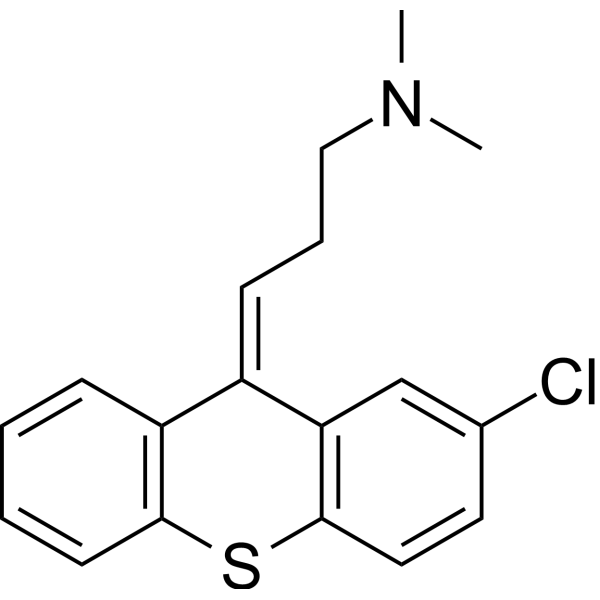
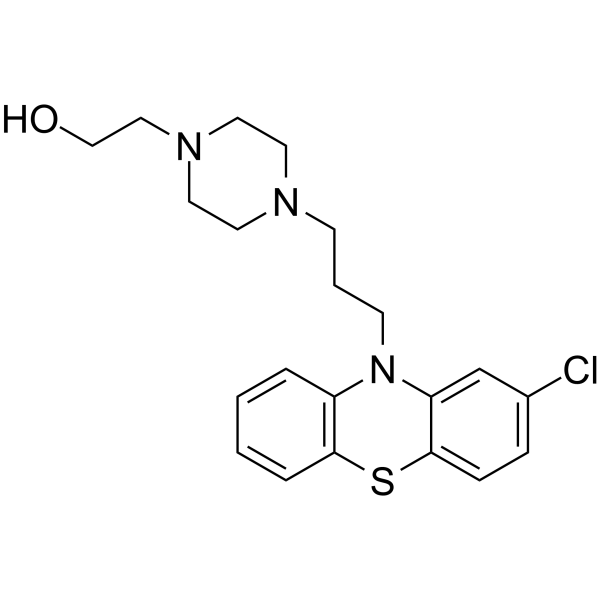
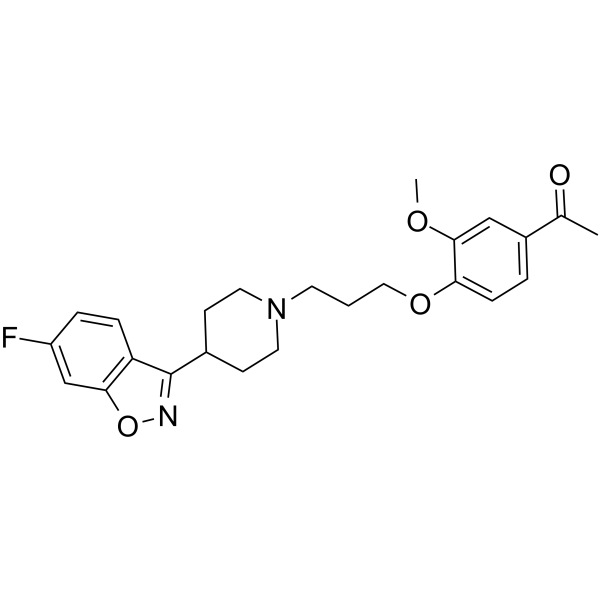
Publications Citing Use of MedChemExpress (MCE) Loxapine
MoreVoir tous les produits spécifiques à Isoform 5-HT Receptor
MoreVoir tous les produits spécifiques à Isoform Dopamine Receptor
More

Activité biologique
|
human 5-HT2 |
Human D4 Receptor |
Human D1 Receptor |
Human D2 Receptor |
|
Cell Line

|
Type | Value | Description | References |
|---|---|---|---|---|
| CHO-K1 | IC50 |
5500 nM
Compound: 1
|
Inhibition of binding of 1.0 nM [3H]pirenzepine to cloned human Muscarinic acetylcholine receptor M1 expressed in membranes from CHO-K1 cells
Inhibition of binding of 1.0 nM [3H]pirenzepine to cloned human Muscarinic acetylcholine receptor M1 expressed in membranes from CHO-K1 cells
|
[PMID: 10377229] |
| RAW264.7 | CC50 |
110.07 μM
Compound: Loxapine
|
Cytotoxicity against mouse RAW264.7 cells assessed as reduction in cell viability incubated for 24 hrs by MTT assay
Cytotoxicity against mouse RAW264.7 cells assessed as reduction in cell viability incubated for 24 hrs by MTT assay
|
[PMID: 38283231] |
In the presence of Loxapine, [3H]ketanserin binds to 5-HT2 receptor in Frontal cortex of brain in human and bovine with Ki value of 6.2 nM and 6.6 nM, respectively. Loxapine has the rank order of potency for the various receptors appears to be as follows: 5-HT2≥D4>>>D1>D2 in comparing competition experiments involving the human membranes[1].
Loxapine (0-20 μM, 24 h or 72 h) reduces IL-1β secretion by LPS-activated mixed glia cultures, reduces IL-2 secretion in mixed glia cultures, and decreases IL-1β and IL-2 secretion in LPS-induced microglia cultures[2].
MedChemExpress (MCE) has not independently confirmed the accuracy of these methods. They are for reference only.
MedChemExpress (MCE) has not independently confirmed the accuracy of these methods. They are for reference only.
-
Animal Model:Adult male Wistar rats (150-175 g)[3]
-
Dosage:5 mg/kg
-
Administration:Intraperitoneal injection, daily for 4 or 10 weeks
-
Result:Induced a very significant reduction (more than 50%) of serotonin (S2) receptor density after 4 weeks or 10 weeks of daily injection, but did not produce any significant increase in dopamine receptor density.
| NCT Number | Sponsor | Condition | Start Date |
Phase
|
|---|---|---|---|---|
| NCT01329991 | Plexxikon| | 2011-05 | PHASE1 |


Chemical Information
-
CAS No. 1977-10-2
-
Appearance Solid
-
Masse moléculaire 327.81
-
Formule C18H18ClN3O
-
Color Light yellow to yellow
-
SMILES
CN1CCN(C2=NC3=CC=CC=C3OC4=CC=C(Cl)C=C24)CC1
-
Livraison
Room temperature in continental US; may vary elsewhere.
-
Stockage
Powder -20°C 3 years 4°C 2 years In solvent -80°C 2 years -20°C 1 year


Publications (1)
-
Journal Impact Factor
-
Most Recent


Solvant et solubilité
DMSO : ≥ 33.33 mg/mL (101.67 mM; Hygroscopic DMSO has a significant impact on the solubility of product, please use newly opened DMSO)
* "≥" means soluble, but saturation unknown.
Please refer to the solubility information to select the appropriate solvent. Once prepared, please aliquot and store the solution to prevent product inactivation from repeated freeze-thaw cycles.
Storage method and period of stock solution: -80°C, 2 years; -20°C, 1 year. When stored at -80°C, please use it within 2 years. When stored at -20°C, please use it within 1 year.
Please refer to the solubility information to select the appropriate solvent. Once prepared, please aliquot and store the solution to prevent product inactivation from repeated freeze-thaw cycles.
Storage method and period of stock solution: -80°C, 2 years; -20°C, 1 year. When stored at -80°C, please use it within 2 years. When stored at -20°C, please use it within 1 year.
Concentration (start) × Volume (start) = Concentration (final) × Volume (final)
Select the appropriate dissolution method based on your experimental animal and administration route.
- For the following dissolution methods, please ensure to first prepare a clear stock solution using an In Vitro approach and then sequentially add co-solvents:
- To ensure reliable experimental results, the clarified stock solution can be appropriately stored based on storage conditions. As for the working solution for In Vivo experiments, it is recommended to prepare freshly and use it on the same day.
- The percentages shown for the solvents indicate their volumetric ratio in the final prepared solution. If precipitation or phase separation occurs during preparation, heat and/or sonication can be used to aid dissolution.
Add each solvent one by one: 10% DMSO 40% PEG300 5% Tween-80 45% Saline
Solubility: ≥ 2.5 mg/mL (7.63 mM); Clear solution
This protocol yields a clear solution of ≥ 2.5 mg/mL (saturation unknown).
Taking 1 mL working solution as an example, add 100 μL DMSO stock solution (25.0 mg/mL) to 400 μL PEG300, and mix evenly; then add 50 μL Tween-80 and mix evenly; then add 450 μL Saline to adjust the volume to 1 mL.
Preparation of Saline: Dissolve 0.9 g sodium chloride in ddH₂O and dilute to 100 mL to obtain a clear Saline solution.
Add each solvent one by one: 10% DMSO 90% (20% SBE-β-CD in Saline)
Solubility: ≥ 2.5 mg/mL (7.63 mM); Clear solution
This protocol yields a clear solution of ≥ 2.5 mg/mL (saturation unknown).
Taking 1 mL working solution as an example, add 100 μL DMSO stock solution (25.0 mg/mL) to 900 μL 20% SBE-β-CD in Saline, and mix evenly.
Preparation of 20% SBE-β-CD in Saline (4°C, storage for one week): 2 g SBE-β-CD powder is dissolved in 10 mL Saline, completely dissolve until clear.
Please enter the basic information of animal experiments:
-
-
-
-
Recommended: Prepare an additional quantity of animals to account for potential losses during experiments.
Please enter your animal formula composition:
-
%DMSO +
Recommended: Keep the proportion of DMSO in working solution below 2% if your animal is weak.
-
%+
-
+%Tween-80 + +
-
%Saline +
The co-solvents required include: DMSO, . All of co-solvents are available by MedChemExpress (MCE). , Tween 80. All of co-solvents are available by MedChemExpress (MCE).
Working solution concentration: 0.22 mg/mL
Method for preparing stock solution: mg drug dissolved in μL DMSO. Stock solution concentration: mg/mL.
1. Take μL DMSO stock solution;
2. Add μL .
μL , mix evenly;
3. Then add μL Tween 80, mix evenly;
4. Then add μL
Please ensure that the stock solution in the first step is dissolved to a clear state, and add co-solvents in sequence. You can use ultrasonic heating (ultrasonic cleaner, recommended frequency 20-40 kHz), vortexing, etc. to assist dissolution.


Pureté et documentation
-
Fiche technique (282 KB)
-
SDS (480 KB)
- English - EN (480 KB)
- Français - FR (480 KB)
- Deutsch - DE (480 KB)
- Norwegian - NO (480 KB)
- Español - ES (480 KB)
- Swedish - SV (480 KB)
- Italian - IT (480 KB)
- Korean - KR (480 KB)
- Portuguese - PT (480 KB)
-
Instruction de manipulation (2659 KB)
Références
[1]. Singh AN, et al. A neurochemical basis for the antipsychotic activity of loxapine: interactions with dopamine D1, D2, D4 and serotonin 5-HT2 receptor subtypes. J Psychiatry Neurosci. 1996 Jan;21(1):29-35. [Content Brief]
[2]. Labuzek K, et al. Chlorpromazine and loxapine reduce interleukin-1beta and interleukin-2 release by rat mixed glial and microglial cell cultures. Eur Neuropsychopharmacol. 2005 Jan;15(1):23-30. [Content Brief]
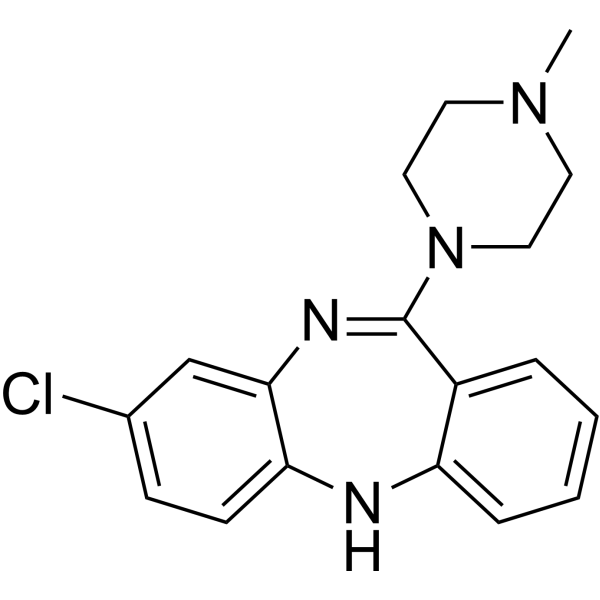
[3]. Lee T, et al. Loxapine and clozapine decrease serotonin (S2) but do not elevate dopamine (D2) receptor numbers in the rat brain. Psychiatry Res. 1984 Aug;12(4):277-85. [Content Brief]
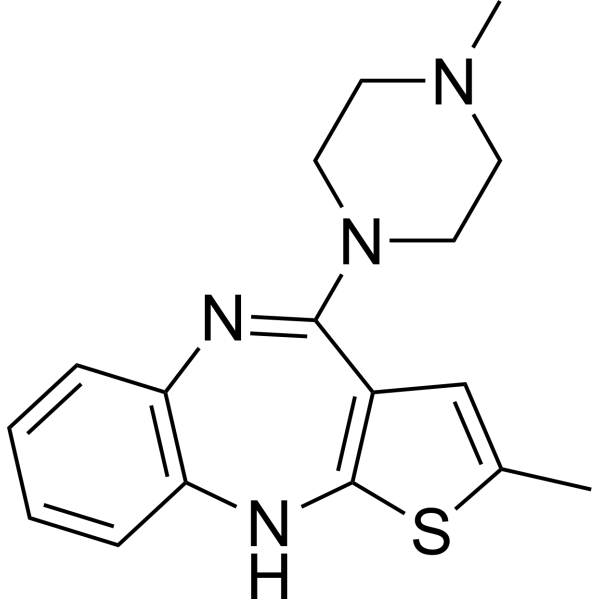
[4]. Kalkman HO, et al. Clozapine inhibits catalepsy induced by olanzapine and loxapine, but prolongs catalepsy induced by SCH 23390 in rats. Naunyn Schmiedebergs Arch Pharmacol. 1997 Mar;355(3):361-4. [Content Brief]
[5]. Keating GM. Loxapine inhalation powder: a review of its use in the acute treatment of agitation in patients with bipolar disorder or schizophrenia. CNS Drugs. 2013 Jun;27(6):479-89. [Content Brief]
[6]. Yang CY, et al. Loxapine, an antipsychotic drug, suppresses intracellular multiple-antibiotic-resistant Salmonella enterica serovar Typhimurium in macrophages. J Microbiol Immunol Infect. 2019 Aug;52(4):638-647. [Content Brief]


Complete Stock Solution Preparation Table
Please refer to the solubility information to select the appropriate solvent. Once prepared, please aliquot and store the solution to prevent product inactivation from repeated freeze-thaw cycles.
Storage method and period of stock solution: -80°C, 2 years; -20°C, 1 year. When stored at -80°C, please use it within 2 years. When stored at -20°C, please use it within 1 year.
| Optional Solvent | Concentration Solvent Mass | 1 mg | 5 mg | 10 mg | 25 mg |
|---|---|---|---|---|---|
| DMSO | 1 mM | 3.0505 mL | 15.2527 mL | 30.5055 mL | 76.2637 mL |
| 5 mM | 0.6101 mL | 3.0505 mL | 6.1011 mL | 15.2527 mL | |
| 10 mM | 0.3051 mL | 1.5253 mL | 3.0505 mL | 7.6264 mL | |
| 15 mM | 0.2034 mL | 1.0168 mL | 2.0337 mL | 5.0842 mL | |
| 20 mM | 0.1525 mL | 0.7626 mL | 1.5253 mL | 3.8132 mL | |
| 25 mM | 0.1220 mL | 0.6101 mL | 1.2202 mL | 3.0505 mL | |
| 30 mM | 0.1017 mL | 0.5084 mL | 1.0168 mL | 2.5421 mL | |
| 40 mM | 0.0763 mL | 0.3813 mL | 0.7626 mL | 1.9066 mL | |
| 50 mM | 0.0610 mL | 0.3051 mL | 0.6101 mL | 1.5253 mL | |
| 60 mM | 0.0508 mL | 0.2542 mL | 0.5084 mL | 1.2711 mL | |
| 80 mM | 0.0381 mL | 0.1907 mL | 0.3813 mL | 0.9533 mL | |
| 100 mM | 0.0305 mL | 0.1525 mL | 0.3051 mL | 0.7626 mL |


Loxapine Related Classifications
HY-17390 Related Classifications
 Powered by Bioz