



Trans-Anethole
Based on 2 publication(s) in Google Scholar
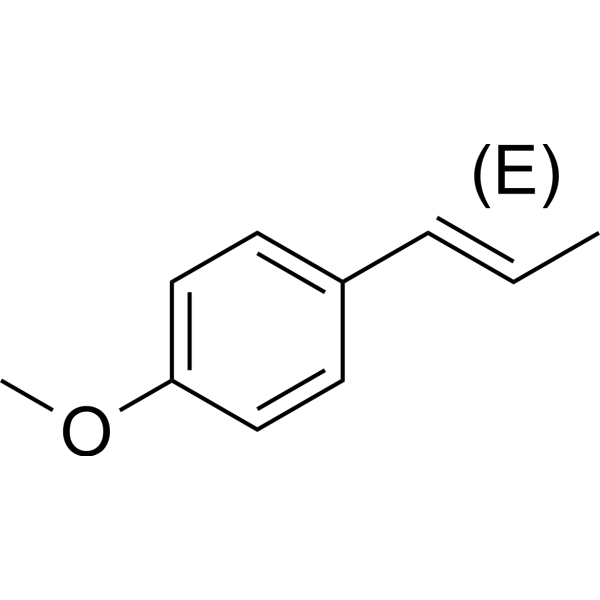
Trans-Anethole ((E)-Anethole) is an orally active phenylpropene derivative found in Foeniculum vulgare that is estrogenic at low concentrations and cytotoxic at high concentrations in tumor cell lines. Trans-Anethole also has anti-aflatoxin, anti-thrombotic and anti-diabetic activities. Trans-Anethole is an important odor component in plants such as fennel, myrtle, liquorice, and camphor.
Nos produits utilisent uniquement pour la recherche. Nous ne vendons pas aux patients.
- Pureté : 99.48%
- CAS No.: 4180-23-8
- Formule: C10H12O
- Masse moléculaire:148.21
-
Stockage:Pure form -20°C, 3 years , 4°C, 2 years ; In solvent -80°C, 6 months , -20°C, 1 month

To place orders, for customer services and technical support, please contact: MedChemExpress USA
Tel: 609-228-6898 E-mail: [email protected] [email protected]


-
 Activité biologique
-
Chemical Information
-
Solvant et solubilité
- Protocole
- Pureté et documentation
- Références
-
 Help & FAQs


-

HY-N0367R
Trans-Anethole (Standard)Endogenous Metabolite -
HY-N6996
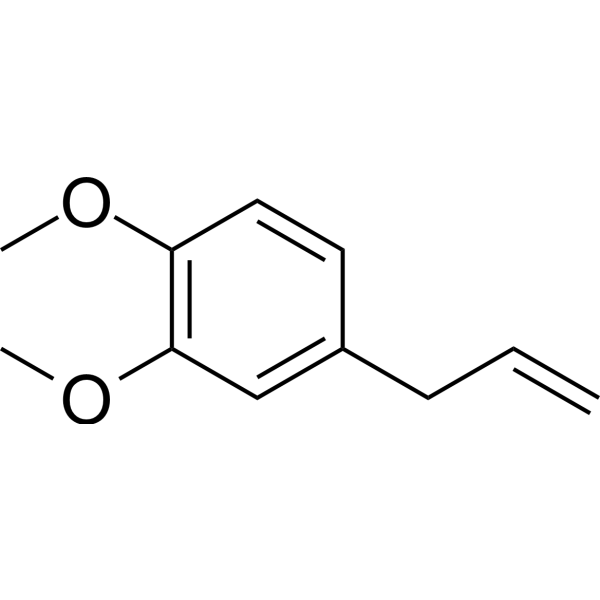
Methyl EugenolAnti-Insect Agent -
HY-N0060
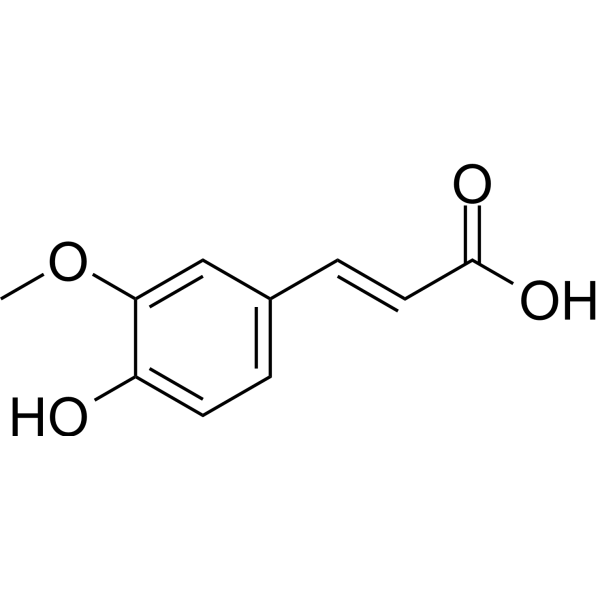
Ferulic acidFGFR1 Inhibitor -

HY-N6996R
Methyl Eugenol (Standard)Anti-Insect Agent -
HY-N1579
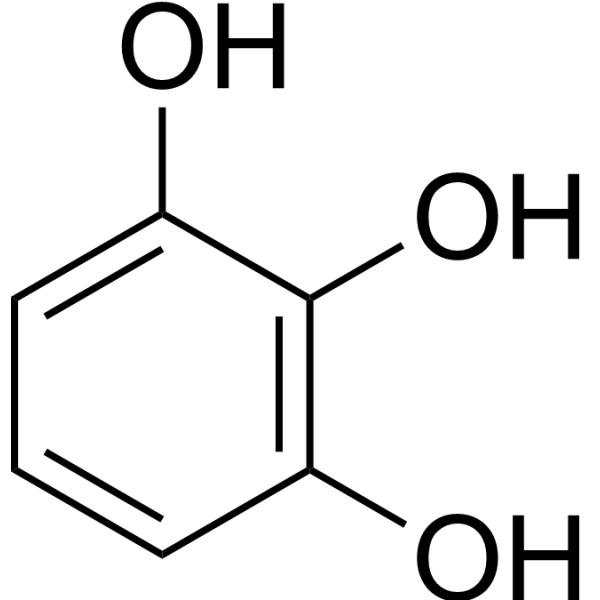
PyrogallolEndogenous Metabolite -

HY-N1579R
Pyrogallol (Standard)Endogenous Metabolite -
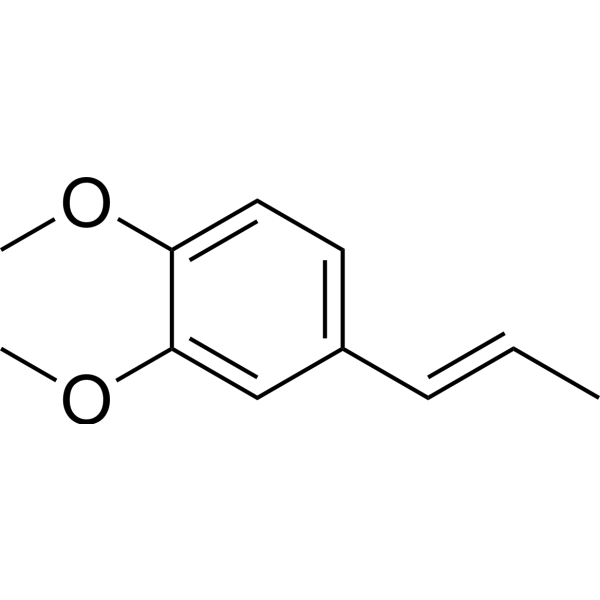
HY-N2439
Methyl isoeugenolIsoeugenol-type Eugenol Analog -
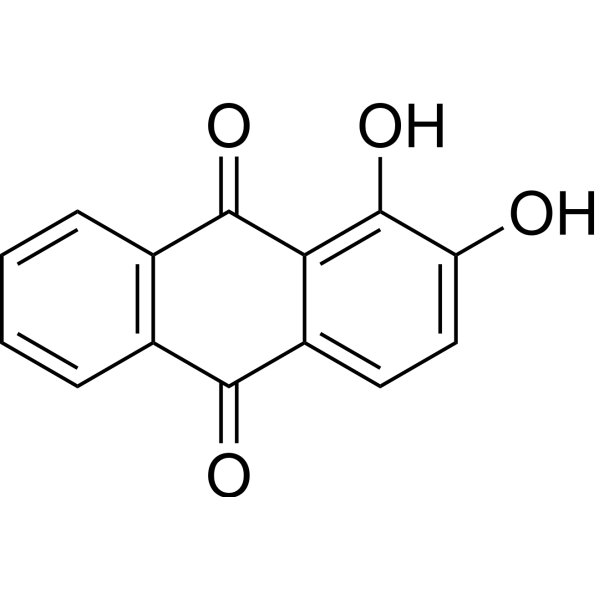
HY-N0563
AlizarinNatural Dye -

HY-N0060R
Ferulic acid (Standard)FGFR1 Inhibitor -

HY-N0563R
Alizarin (Standard)natural dye -
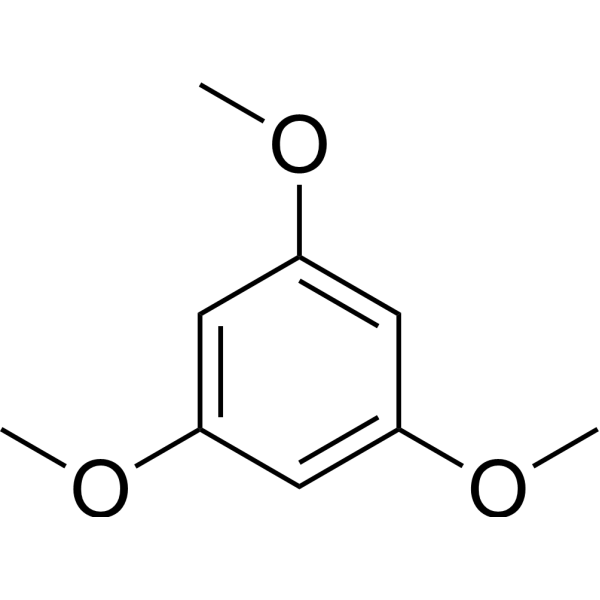
HY-Y0678
1,3,5-TrimethoxybenzeneFree Chlorine/Bromolybdenum Quencher -
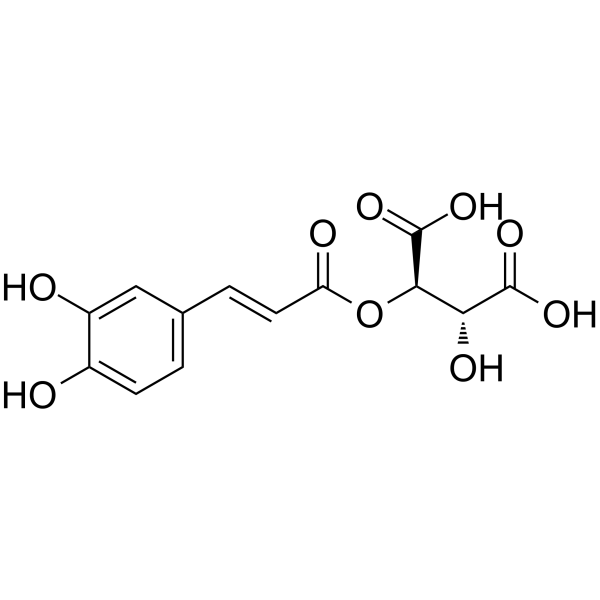
HY-N0321
Caftaric acidAnti-apoptotic Agent
Publications Citing Use of MedChemExpress (MCE) Trans-Anethole
MoreVoir tous les produits spécifiques à Isoform Endogenous Metabolite
More

Activité biologique
Description
In Vitro
Trans-Anethole (0.25-2 mM; 3 h) causes concentration and time-dependent cell death in isolated rat hepatocytes at doses greater than 1 mM[2]. Trans-Anethole (0.25-1 mM; 3 h) produces metabolites 4MCA and 4OHPB sulfate that increases over time in isolated rat hepatocytes cultured at 0.5 and 1 mM doses, while metabolite 4OHPB increases over time only at 1 mM dose[2]. Trans-Anethole (0.5, 1 mM; 3 h) enhances and accelerates the killing of rat hepatocytes in vitro by DCNP (50 mM) and the loss of cellular ATP[2]. Trans-Anethole (0.1 mM; 6 d) has a certain degree of cytotoxicity against human breast cancer MCF-7 cells[2].
MedChemExpress (MCE) has not independently confirmed the accuracy of these methods. They are for reference only.
-
Cell Line:MCF-7 cells
-
Concentration:0.1 mM
-
Incubation Time:6 d
-
Result:Reduced cell viability by 80% compared to untreated cells.
In Vivo
MedChemExpress (MCE) has not independently confirmed the accuracy of these methods. They are for reference only.
-
Animal Model:streptozotocin induced diabetic rats[5].
-
Dosage:20, 40, 80 mg/kg
-
Administration:45 d
-
Result:Inhibited the increase of blood sugar and significantly reverse the insulin level, and the effect is more significant at a dose of 80 mg/kg. Restored the activities of hexokinase and glucose-6-phosphate dehydrogenase, glucose-6-phosphatase and fructose-1,6-bisphosphatase in the liver tissue of diabetic rats to normal levels at a dose of 80 mg/kg. Prevented the decrease of glycogen content in the liver and muscles at a dose of 80 mg/kg.


Chemical Information
-
CAS No. 4180-23-8
-
Appearance <20°C Solid,>21°C Liquid
-
Masse moléculaire 148.21
-
Formule C10H12O
-
Color White to yellow
-
SMILES
COC1=CC=C(/C=C/C)C=C1
-
Synonyms
(E)-Anethole
-
Structure Classification
-
Livraison
Room temperature in continental US; may vary elsewhere.
-
Stockage
Pure form -20°C 3 years 4°C 2 years In solvent -80°C 6 months -20°C 1 month


Publications (2)
-
Journal Impact Factor
-
Most Recent
-
PLoS Biol
2024 Jun 27;22(6):e3002672. PMID: 38935621 -
bioRxiv
An efficient behavioral screening platform classifies natural products and other chemical cues according to their chemosensory valence in C. elegans. [Abstract]2024 Apr 3:2023.06.02.542933. PMID: 37333363


Solvant et solubilité
In Vitro:
DMSO : 100 mg/mL (674.72 mM; Need ultrasonic; Hygroscopic DMSO has a significant impact on the solubility of product, please use newly opened DMSO)
Please refer to the solubility information to select the appropriate solvent. Once prepared, please aliquot and store the solution to prevent product inactivation from repeated freeze-thaw cycles.
Storage method and period of stock solution: -80°C, 6 months; -20°C, 1 month. When stored at -80°C, please use it within 6 months. When stored at -20°C, please use it within 1 month.
Please refer to the solubility information to select the appropriate solvent. Once prepared, please aliquot and store the solution to prevent product inactivation from repeated freeze-thaw cycles.
Storage method and period of stock solution: -80°C, 6 months; -20°C, 1 month. When stored at -80°C, please use it within 6 months. When stored at -20°C, please use it within 1 month.
Concentration (start) × Volume (start) = Concentration (final) × Volume (final)
In Vivo:
Select the appropriate dissolution method based on your experimental animal and administration route.
- For the following dissolution methods, please ensure to first prepare a clear stock solution using an In Vitro approach and then sequentially add co-solvents:
- To ensure reliable experimental results, the clarified stock solution can be appropriately stored based on storage conditions. As for the working solution for In Vivo experiments, it is recommended to prepare freshly and use it on the same day.
- The percentages shown for the solvents indicate their volumetric ratio in the final prepared solution. If precipitation or phase separation occurs during preparation, heat and/or sonication can be used to aid dissolution.
Add each solvent one by one: 10% DMSO 40% PEG300 5% Tween-80 45% Saline
Solubility: ≥ 2.5 mg/mL (16.87 mM); Clear solution
This protocol yields a clear solution of ≥ 2.5 mg/mL (saturation unknown).
Taking 1 mL working solution as an example, add 100 μL DMSO stock solution (25.0 mg/mL) to 400 μL PEG300, and mix evenly; then add 50 μL Tween-80 and mix evenly; then add 450 μL Saline to adjust the volume to 1 mL.
Preparation of Saline: Dissolve 0.9 g sodium chloride in ddH₂O and dilute to 100 mL to obtain a clear Saline solution.
Add each solvent one by one: 10% DMSO 90% (20% SBE-β-CD in Saline)
Solubility: ≥ 2.5 mg/mL (16.87 mM); Clear solution
This protocol yields a clear solution of ≥ 2.5 mg/mL (saturation unknown).
Taking 1 mL working solution as an example, add 100 μL DMSO stock solution (25.0 mg/mL) to 900 μL 20% SBE-β-CD in Saline, and mix evenly.
Preparation of 20% SBE-β-CD in Saline (4°C, storage for one week): 2 g SBE-β-CD powder is dissolved in 10 mL Saline, completely dissolve until clear.
For the following dissolution methods, please prepare the working solution directly:
It is recommended to prepare fresh solutions and use them promptly within a short period of time.
The percentages shown for the solvents indicate their volumetric ratio in the final prepared solution. If precipitation or phase separation occurs during preparation, heat and/or sonication can be used to aid dissolution.
Add each solvent one by one: PBS
Solubility: 50 mg/mL (337.36 mM); Clear solution; Need ultrasonic
In Vivo Dissolution Calculator
Please enter the basic information of animal experiments:
-
-
-
-
Recommended: Prepare an additional quantity of animals to account for potential losses during experiments.
Please enter your animal formula composition:
-
%DMSO +
Recommended: Keep the proportion of DMSO in working solution below 2% if your animal is weak.
-
%+
-
+%Tween-80 + +
-
%Saline +
The co-solvents required include: DMSO, . All of co-solvents are available by MedChemExpress (MCE). , Tween 80. All of co-solvents are available by MedChemExpress (MCE).
Working solution concentration: 0.22 mg/mL
Method for preparing stock solution: mg drug dissolved in μL DMSO. Stock solution concentration: mg/mL.
1. Take μL DMSO stock solution;
2. Add μL .
μL , mix evenly;
3. Then add μL Tween 80, mix evenly;
4. Then add μL
Please ensure that the stock solution in the first step is dissolved to a clear state, and add co-solvents in sequence. You can use ultrasonic heating (ultrasonic cleaner, recommended frequency 20-40 kHz), vortexing, etc. to assist dissolution.


Pureté et documentation
-
Fiche technique (278 KB)
-
SDS (597 KB)
- English - EN (597 KB)
- Français - FR (597 KB)
- Deutsch - DE (597 KB)
- Norwegian - NO (597 KB)
- Español - ES (597 KB)
- Swedish - SV (597 KB)
- Italian - IT (597 KB)
- Korean - KR (597 KB)
- Portuguese - PT (597 KB)
-
Instruction de manipulation (2659 KB)
Références
[1]. Tabanca N, et al. Estrogenic activity of isolated compounds and essential oils of Pimpinella species from Turkey, evaluated using a recombinant yeast screen. Planta Med. 2004 Aug;70(8):728-35. [Content Brief]
[2]. Nakagawa Y, et al. Cytotoxic and xenoestrogenic effects via biotransformation of trans-anethole on isolated rat hepatocytes and cultured MCF-7 human breast cancer cells. Biochem Pharmacol. 2003 Jul 1;66(1):63-73. [Content Brief]
[4]. Tognolini M, et al. Protective effect of Foeniculum vulgare essential oil and anethole in an experimental model of thrombosis. Pharmacological Research 2007; 56: 254-260. [Content Brief]
[5]. Sheikh, et al. Trans-anethole, a terpenoid ameliorates hyperglycemia by regulating key enzymes of carbohydrate metabolism in streptozotocin induced diabetic rats. Biochimie 112 (2015): 57-65. [Content Brief]
[6]. Dhar, et al. Anti-fertility activity and hormonal profile of trans-anethole in rats. Indian journal of physiology and pharmacology 39 (1995): 63-63. [Content Brief]


Complete Stock Solution Preparation Table
Please refer to the solubility information to select the appropriate solvent. Once prepared, please aliquot and store the solution to prevent product inactivation from repeated freeze-thaw cycles.
Storage method and period of stock solution: -80°C, 6 months; -20°C, 1 month. When stored at -80°C, please use it within 6 months. When stored at -20°C, please use it within 1 month.
| Optional Solvent | Concentration Solvent Mass | 1 mg | 5 mg | 10 mg | 25 mg |
|---|---|---|---|---|---|
| DMSO | 1 mM | 6.7472 mL | 33.7359 mL | 67.4718 mL | 168.6796 mL |
| 5 mM | 1.3494 mL | 6.7472 mL | 13.4944 mL | 33.7359 mL | |
| 10 mM | 0.6747 mL | 3.3736 mL | 6.7472 mL | 16.8680 mL | |
| 15 mM | 0.4498 mL | 2.2491 mL | 4.4981 mL | 11.2453 mL | |
| 20 mM | 0.3374 mL | 1.6868 mL | 3.3736 mL | 8.4340 mL | |
| 25 mM | 0.2699 mL | 1.3494 mL | 2.6989 mL | 6.7472 mL | |
| 30 mM | 0.2249 mL | 1.1245 mL | 2.2491 mL | 5.6227 mL | |
| 40 mM | 0.1687 mL | 0.8434 mL | 1.6868 mL | 4.2170 mL | |
| 50 mM | 0.1349 mL | 0.6747 mL | 1.3494 mL | 3.3736 mL | |
| 60 mM | 0.1125 mL | 0.5623 mL | 1.1245 mL | 2.8113 mL | |
| 80 mM | 0.0843 mL | 0.4217 mL | 0.8434 mL | 2.1085 mL | |
| 100 mM | 0.0675 mL | 0.3374 mL | 0.6747 mL | 1.6868 mL |


Trans-Anethole Related Classifications
HY-N0367 Related Classifications
 Powered by Bioz