



Imeglimin
Based on 9 publication(s) in Google Scholar
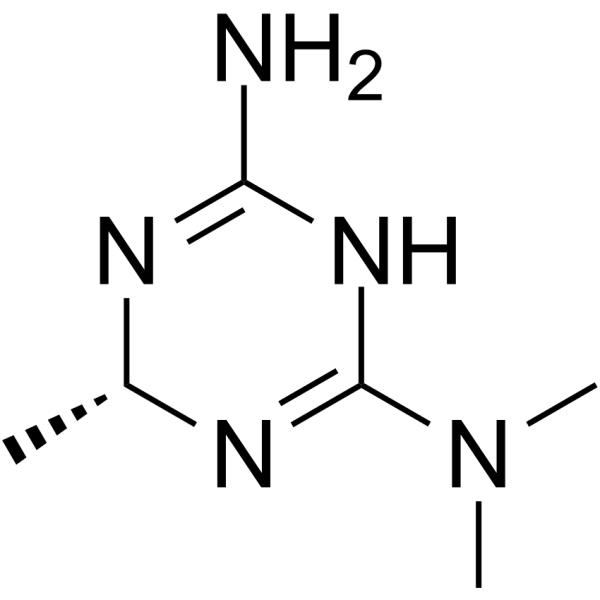
Imeglimin (EMD 387008) is an oral glucose-lowering agent. Imeglimin improves insulin sensitivity. Imeglimin also reduces reactive oxygen species (ROS) production, increases mitochondrial DNA and improves mitochondrial function.
For research use only. We do not sell to patients.
- Purity : 99.10%
- CAS No.: 775351-65-0
- Formula: C6H13N5
- Molecular Weight:155.20
-
Storage:Powder -20°C, 3 years , 4°C, 2 years ; In solvent -80°C, 6 months , -20°C, 1 month

To place orders, for customer services and technical support, please contact: MedChemExpress USA
Tel: 609-228-6898 E-mail: [email protected] [email protected]


-
 Biological Activity
-
Chemical Information
-
Solvent & Solubility
- Protocols
- Purity & Documentation
- References
-
 Help & FAQs


-
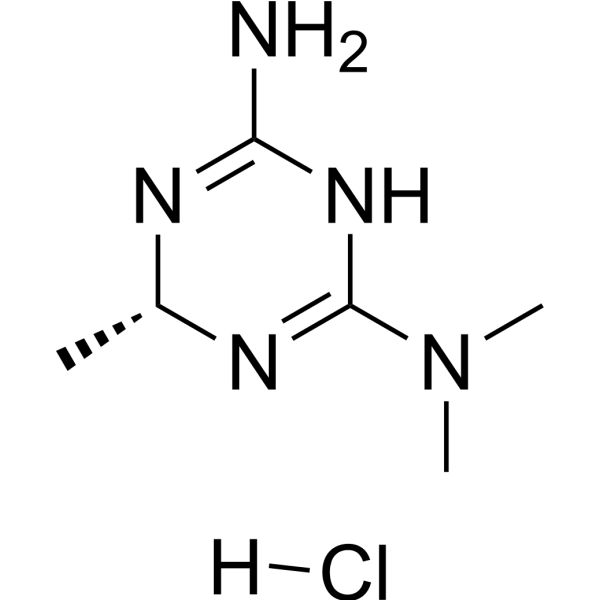
HY-14771A
Imeglimin hydrochlorideAntidiabetic Agent -
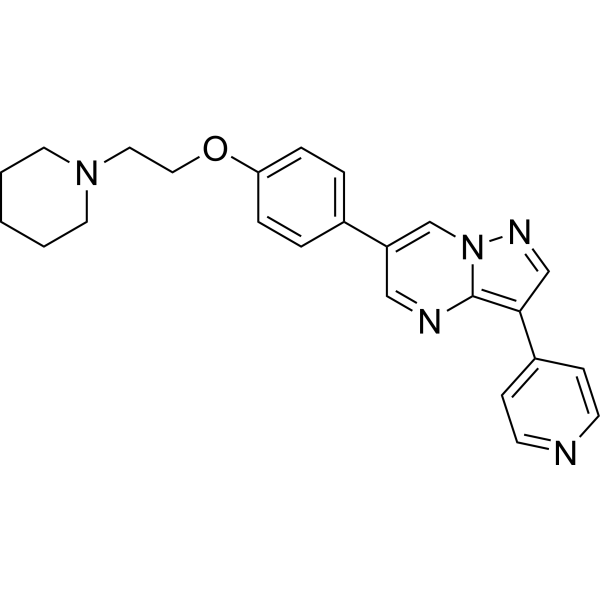
HY-13418A
DorsomorphinAMPK Inhibitor -
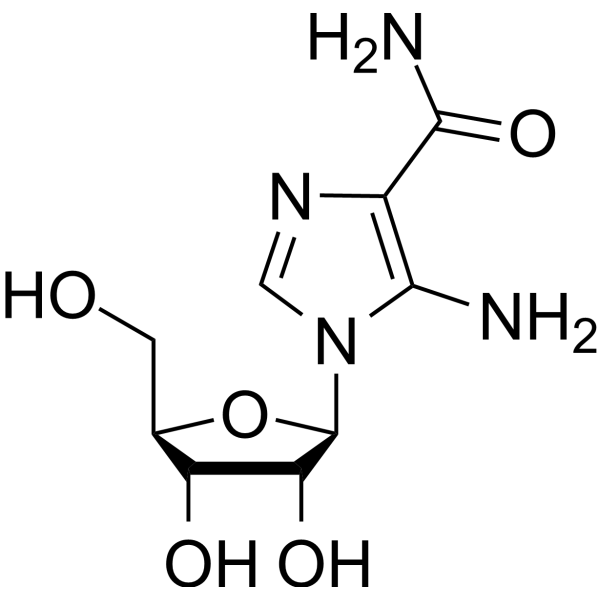
HY-13417
AICARAMPK Activator -
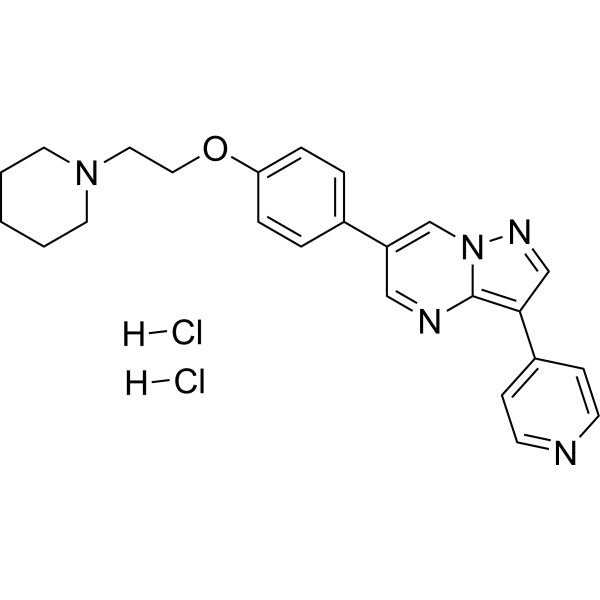
HY-13418
Dorsomorphin dihydrochlorideAMPK Inhibitor -
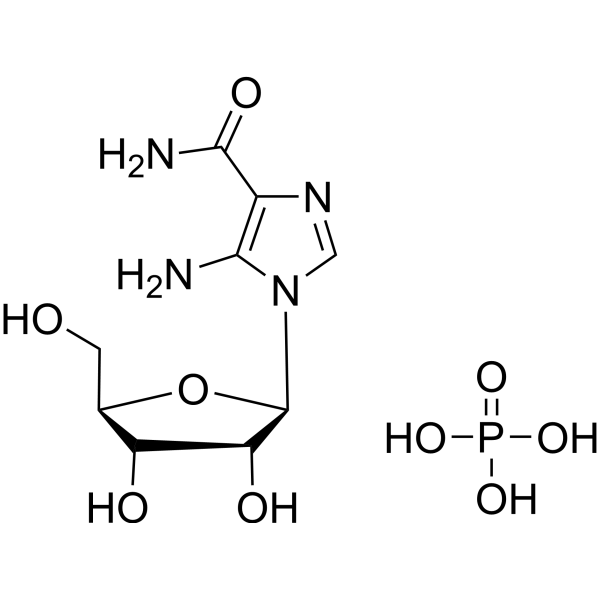
HY-13417A
AICAR phosphateEndogenous Metabolite -
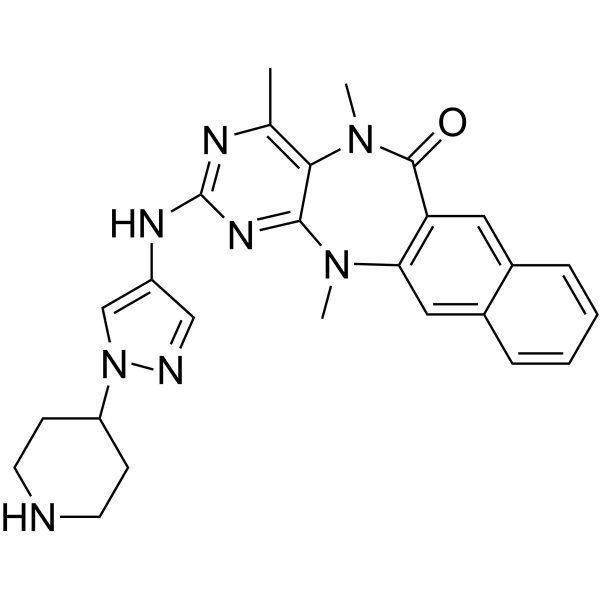
HY-12334
HTH-01-015NUAK1/ARK5 Inhibitor -
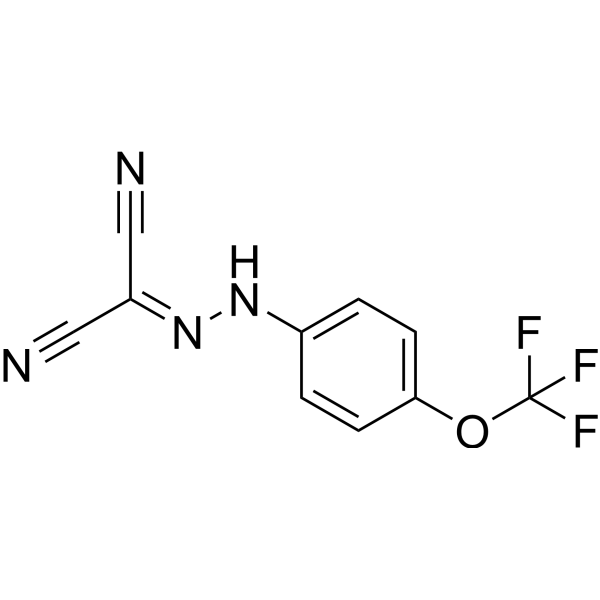
HY-100410
FCCPOXPHOS Uncoupler -

HY-13417R
AICAR (Standard)AMPK Activator -
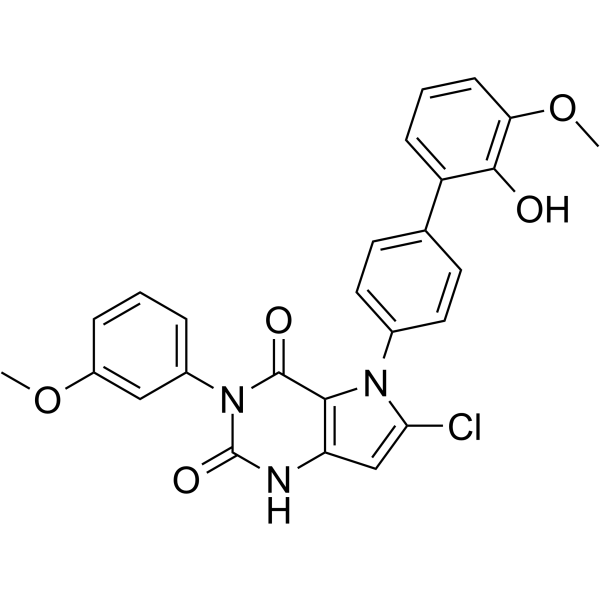
HY-100548
GSK621AMPK Activator -
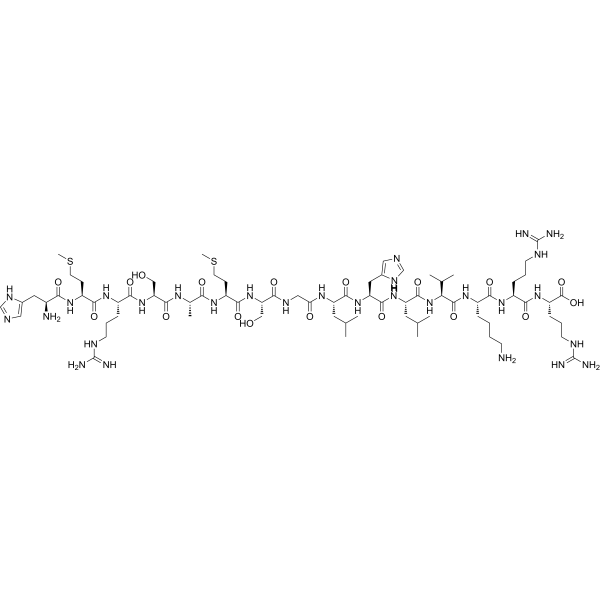
HY-P0136
SAMSAMPK Substrate -
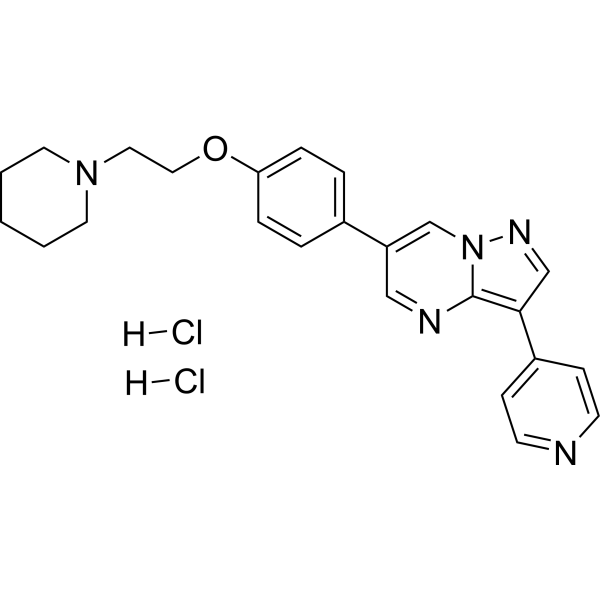
HY-13418G
Dorsomorphin dihydrochloride (GMP)AMPK Inhibitor -
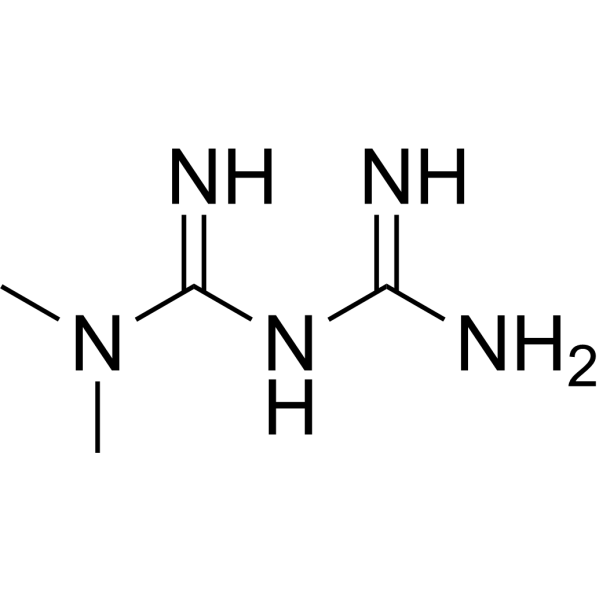
HY-B0627
MetforminAntihyperglycemic Agent
Publications Citing Use of MedChemExpress (MCE) Imeglimin
More- J Clin Invest. 2026 Apr 2;136(12):e196112. [Abstract]
- Cell Rep Med. 2025 Aug 19;6(8):102254. [Abstract]
- Diabetes. 2022 Mar 1;71(3):424-439. [Abstract]
- Mol Neurobiol. 2022 May;59(5):2977-2991. [Abstract]
- Endocrinology. 2023 Jun 26;164(8):bqad095. [Abstract]
- J Diabetes Investig. 2025 Jun 13. [Abstract]
- Cancer Med. 2026 Mar;15(3):e71651. [Abstract]
- FEBS Lett. 2025 Sep 15. [Abstract]
- J Pharmacol Sci. 2025 Dec;159(4):301-309. [Abstract]


Biological Activity
Description
IC50 & Target
ROS; mitochondrial function[1]
In Vitro
Preincubation with Imeglimin (10 mM for 4 h or 100 μM for 24 h) fully prevents tert-butylhydroperoxide (tBH)-induced cell death[2].
MedChemExpress (MCE) has not independently confirmed the accuracy of these methods. They are for reference only. Further protocols information, click here.
-
Cell Line:Human endothelial cells (HMEC-1)
-
Concentration:100 μM and10 mM
-
Incubation Time:100 μM for 24 h, 10 mM for 4 h
-
Result:Prevention of cell death.
In Vivo
MedChemExpress (MCE) has not independently confirmed the accuracy of these methods. They are for reference only.
-
Animal Model:Male C57BL/6JOlaHsd mice (4 weeks old)[1]
-
Dosage:200 mg/kg
-
Administration:Oral gavage; b.i.d.; 6 weeks
-
Result:A slight decrease in body weight and food intake associated with some diarrhea was observed but only during the first few days of treatment.
Clinical Trial
| NCT Number | Sponsor | Condition | Start Date |
Phase

|
|---|---|---|---|---|
| NCT01329991 | Plexxikon| | 2011-05 | PHASE1 |


Chemical Information
-
CAS No. 775351-65-0
-
Appearance Solid
-
Molecular Weight 155.20
-
Formula C6H13N5
-
Color White to off-white
-
SMILES
NC1=N[C@@H](C)N=C(N(C)C)N1
-
Synonyms
EMD 387008
-
Shipping
Room temperature in continental US; may vary elsewhere.
-
Storage
Powder -20°C 3 years 4°C 2 years In solvent -80°C 6 months -20°C 1 month


Publications (9)
-
Journal Impact Factor
-
Most Recent
-
J Clin Invest
Aging-dependent microglial heterogeneity worsens outcomes in models of traumatic brain injury. [Abstract]2026 Apr 2;136(12):e196112. PMID: 41926211 -
Cell Rep Med
2025 Aug 19;6(8):102254. PMID: 40713970 -
Diabetes
Imeglimin Ameliorates β-Cell Apoptosis by Modulating the Endoplasmic Reticulum Homeostasis Pathway. [Abstract]2022 Mar 1;71(3):424-439. PMID: 34588186 -
Mol Neurobiol
Imeglimin Is Neuroprotective Against Ischemic Brain Injury in Rats-a Study Evaluating Neuroinflammation and Mitochondrial Functions. [Abstract]2022 May;59(5):2977-2991. PMID: 35257284 -
Endocrinology
Protective effects of imeglimin and metformin combination therapy on β-cells in db/db male mice. [Abstract]2023 Jun 26;164(8):bqad095. PMID: 37314160 -
J Diabetes Investig
Imeglimin improves hyperglycemia and hypoglycemia-induced cell death and mitochondrial dysfunction in immortalized adult mouse Schwann IMS32 cells. [Abstract]2025 Jun 13. PMID: 40509800 -
Cancer Med
Imeglimin Exerts Anti-Tumor Activity in Multiple Myeloma Through Affecting Energy Metabolism and Downregulating IL-16 Expression. [Abstract]2026 Mar;15(3):e71651. PMID: 41782019 -
FEBS Lett
Imeglimin attenuates liver fibrosis by inhibiting vesicular ATP release from hepatic stellate cells. [Abstract]2025 Sep 15. PMID: 40948113 -
J Pharmacol Sci
Effects of imeglimin on mitochondrial functions and ischemic brain damage in young and aging rats. [Abstract]2025 Dec;159(4):301-309. PMID: 41241441


Solvent & Solubility
In Vitro:
DMSO : 32 mg/mL (206.19 mM; ultrasonic and warming and heat to 60°C; Hygroscopic DMSO has a significant impact on the solubility of product, please use newly opened DMSO)
Please refer to the solubility information to select the appropriate solvent. Once prepared, please aliquot and store the solution to prevent product inactivation from repeated freeze-thaw cycles.
Storage method and period of stock solution: -80°C, 6 months; -20°C, 1 month. When stored at -80°C, please use it within 6 months. When stored at -20°C, please use it within 1 month.
Please refer to the solubility information to select the appropriate solvent. Once prepared, please aliquot and store the solution to prevent product inactivation from repeated freeze-thaw cycles.
Storage method and period of stock solution: -80°C, 6 months; -20°C, 1 month. When stored at -80°C, please use it within 6 months. When stored at -20°C, please use it within 1 month.
Concentration (start) × Volume (start) = Concentration (final) × Volume (final)
In Vivo:
Select the appropriate dissolution method based on your experimental animal and administration route.
- For the following dissolution methods, please ensure to first prepare a clear stock solution using an In Vitro approach and then sequentially add co-solvents:
- To ensure reliable experimental results, the clarified stock solution can be appropriately stored based on storage conditions. As for the working solution for In Vivo experiments, it is recommended to prepare freshly and use it on the same day.
- The percentages shown for the solvents indicate their volumetric ratio in the final prepared solution. If precipitation or phase separation occurs during preparation, heat and/or sonication can be used to aid dissolution.
Add each solvent one by one: 10% DMSO 40% PEG300 5% Tween-80 45% Saline
Solubility: ≥ 3.2 mg/mL (20.62 mM); Clear solution
This protocol yields a clear solution of ≥ 3.2 mg/mL (saturation unknown).
Taking 1 mL working solution as an example, add 100 μL DMSO stock solution (32.0 mg/mL) to 400 μL PEG300, and mix evenly; then add 50 μL Tween-80 and mix evenly; then add 450 μL Saline to adjust the volume to 1 mL.
Preparation of Saline: Dissolve 0.9 g sodium chloride in ddH₂O and dilute to 100 mL to obtain a clear Saline solution.
Add each solvent one by one: 10% DMSO 90% (20% SBE-β-CD in Saline)
Solubility: ≥ 3.2 mg/mL (20.62 mM); Clear solution
This protocol yields a clear solution of ≥ 3.2 mg/mL (saturation unknown).
Taking 1 mL working solution as an example, add 100 μL DMSO stock solution (32.0 mg/mL) to 900 μL 20% SBE-β-CD in Saline, and mix evenly.
Preparation of 20% SBE-β-CD in Saline (4°C, storage for one week): 2 g SBE-β-CD powder is dissolved in 10 mL Saline, completely dissolve until clear.
In Vivo Dissolution Calculator
Please enter the basic information of animal experiments:
-
-
-
-
Recommended: Prepare an additional quantity of animals to account for potential losses during experiments.
Please enter your animal formula composition:
-
%DMSO +
Recommended: Keep the proportion of DMSO in working solution below 2% if your animal is weak.
-
%+
-
+%Tween-80 + +
-
%Saline +
The co-solvents required include: DMSO, . All of co-solvents are available by MedChemExpress (MCE). , Tween 80. All of co-solvents are available by MedChemExpress (MCE).
Working solution concentration: 0.22 mg/mL
Method for preparing stock solution: mg drug dissolved in μL DMSO. Stock solution concentration: mg/mL.
1. Take μL DMSO stock solution;
2. Add μL .
μL , mix evenly;
3. Then add μL Tween 80, mix evenly;
4. Then add μL
Please ensure that the stock solution in the first step is dissolved to a clear state, and add co-solvents in sequence. You can use ultrasonic heating (ultrasonic cleaner, recommended frequency 20-40 kHz), vortexing, etc. to assist dissolution.

Protocols
-
Mitochondrial membrane-potential fluorescent assay
Mitochondrial membrane potential fluorescent assays estimate ΔΨm in living cells using lipophilic cationic dyes such as TMRM, TMRE, rhodamine 123, and JC-1, which accumulate in mitochondria according to membrane polarization; loss of signal after FCCP or CCCP treatment is interpreted as mitochondrial depolarization. TMRM/TMRE and rhodamine 123 are commonly used for semi-quantitative live-cell microscopy or flow cytometry, while JC-1 can report a shift from red aggregate fluorescence to green monomer fluorescence during depolarization; interpretation requires controls because dye concentration, quenching mode, cell type, dye efflux, and mitochondrial mass can affect fluorescence independently of ΔΨm.
-
ROS/oxidative-stress fluorescent staining
ROS/oxidative-stress fluorescent staining uses cell-permeant fluorogenic probes that become fluorescent after oxidation inside cells or tissues; commonly used examples include DCFH-DA/DCFDA for broad cellular oxidant detection, DHE for superoxide-related signal detection, MitoSOX for mitochondrial superoxide-related signal detection, and CellROX probes for oxidative-stress-associated fluorescence readouts. The assay detects probe oxidation rather than a single ROS species unless the probe and analysis method have been chemically validated for that species. DCFH-DA enters cells, is deacetylated by intracellular esterases to DCFH, and produces fluorescent DCF after oxidation, so the readout is used as an operational measure of total cellular oxidative stress rather than a species-specific ROS measurement. DHE and MitoSOX can report superoxide-related oxidation, but red fluorescence alone can include non-specific ethidium-like oxidation products; HPLC or optimized spectral approaches are
-
Research Protocol for Endocrine Diseases
Endocrine diseases often arise from disrupted hormone production, hormone signaling, or target-tissue responsiveness; for diabetes-focused endocrine disease models, insulin signaling regulates glucose uptake, hepatic glucose output, lipid metabolism, and β-cell compensation. Type 2 diabetes develops through interacting defects in insulin resistance, β-cell dysfunction, adipose inflammation, hepatic glucose overproduction, altered incretin signaling, and ectopic lipid metabolism. A major unresolved question is whether endocrine dysfunction is driven primarily by target-tissue insulin resistance, intrinsic β-cell failure, immune/inflammatory stress, or combined multi-organ failure that differs by disease stage.
-
Mitochondrial membrane-potential and mitochondrial mass staining
Mitochondrial membrane potential staining measures the electrochemical polarization across the mitochondrial inner membrane in live cells using lipophilic cationic fluorescent probes; early rhodamine-based work showed that selective mitochondrial dye accumulation is lost when the mitochondrial transmembrane potential is dissipated. JC-1 reports mitochondrial polarization by shifting from green monomer fluorescence to red J-aggregate fluorescence as dye concentration increases within energized mitochondria; therefore, the red/green fluorescence ratio is used as a relative readout of mitochondrial membrane potential. TMRE or TMRM staining provides a single-channel relative readout because these cationic rhodamine esters accumulate in polarized mitochondria, and lower fluorescence indicates reduced mitochondrial polarization when acquisition and dye-loading conditions are controlled. Mitochondrial mass staining is commonly performed with MitoTracker Green FM or related MitoTracker dyes as


Purity & Documentation
-
Data Sheet (276 KB)
-
SDS (251 KB)
- English - EN (251 KB)
- Français - FR (251 KB)
- Deutsch - DE (251 KB)
- Norwegian - NO (251 KB)
- Español - ES (251 KB)
- Swedish - SV (251 KB)
- Italian - IT (251 KB)
- Korean - KR (251 KB)
- Portuguese - PT (251 KB)
-
Handling Instructions (2659 KB)
References
[1]. Vial G, et al. Imeglimin normalizes glucose tolerance and insulin sensitivity and improves mitochondrialfunction in liver of a high-fat, high-sucrose diet mice model. Diabetes. 2015 Jun;64(6):2254-64. [Content Brief]
[2]. Detaille D, et al. Imeglimin prevents human endothelial cell death by inhibiting mitochondrial permeability transition without inhibiting mitochondrial respiration. Cell Death Discov. 2016 Jan 18;2:15072. [Content Brief]


Complete Stock Solution Preparation Table
Please refer to the solubility information to select the appropriate solvent. Once prepared, please aliquot and store the solution to prevent product inactivation from repeated freeze-thaw cycles.
Storage method and period of stock solution: -80°C, 6 months; -20°C, 1 month. When stored at -80°C, please use it within 6 months. When stored at -20°C, please use it within 1 month.
| Optional Solvent | Concentration Solvent Mass | 1 mg | 5 mg | 10 mg | 25 mg |
|---|---|---|---|---|---|
| DMSO | 1 mM | 6.4433 mL | 32.2165 mL | 64.4330 mL | 161.0825 mL |
| 5 mM | 1.2887 mL | 6.4433 mL | 12.8866 mL | 32.2165 mL | |
| 10 mM | 0.6443 mL | 3.2216 mL | 6.4433 mL | 16.1082 mL | |
| 15 mM | 0.4296 mL | 2.1478 mL | 4.2955 mL | 10.7388 mL | |
| 20 mM | 0.3222 mL | 1.6108 mL | 3.2216 mL | 8.0541 mL | |
| 25 mM | 0.2577 mL | 1.2887 mL | 2.5773 mL | 6.4433 mL | |
| 30 mM | 0.2148 mL | 1.0739 mL | 2.1478 mL | 5.3694 mL | |
| 40 mM | 0.1611 mL | 0.8054 mL | 1.6108 mL | 4.0271 mL | |
| 50 mM | 0.1289 mL | 0.6443 mL | 1.2887 mL | 3.2216 mL | |
| 60 mM | 0.1074 mL | 0.5369 mL | 1.0739 mL | 2.6847 mL | |
| 80 mM | 0.0805 mL | 0.4027 mL | 0.8054 mL | 2.0135 mL | |
| 100 mM | 0.0644 mL | 0.3222 mL | 0.6443 mL | 1.6108 mL |


Imeglimin Related Classifications
HY-14771 Related Classifications
 Powered by Bioz