



Degarelix acetate
Based on 11 publication(s) in Google Scholar
Degarelix acetate (FE 200486) is a decapeptide that shows high affinity/selectivity to human gonadotropin-releasing hormone (GnRH) receptor (IC50 = 3 nM). Degarelix acetate (FE 200486) is used for the research of prostate cancer.
Nos produits utilisent uniquement pour la recherche. Nous ne vendons pas aux patients.
- Pureté : 99.67%
- CAS No.: 934016-19-0
- Formule: C84H107ClN18O18
- Masse moléculaire:1692.31
-
Stockage:
Sealed storage, away from moisture.
Powder -80°C, 2 years , -20°C, 1 year* In solvent : -80°C, 6 months; -20°C, 1 month (sealed storage, away from moisture)


To place orders, for customer services and technical support, please contact: MedChemExpress USA
Tel: 609-228-6898 E-mail: [email protected] [email protected]


-
 Activité biologique
-
Chemical Information
-
Solvant et solubilité
- Protocole
- Pureté et documentation
- Références
-
 Help & FAQs


-
HY-16474
RelugolixGnRH Antagonist -
HY-14789
(R)-ElagolixGnRH Receptor Antagonist -
HY-13534
AbarelixGnRH Antagonist -
HY-16168A
DegarelixGnRHR Antagonist -
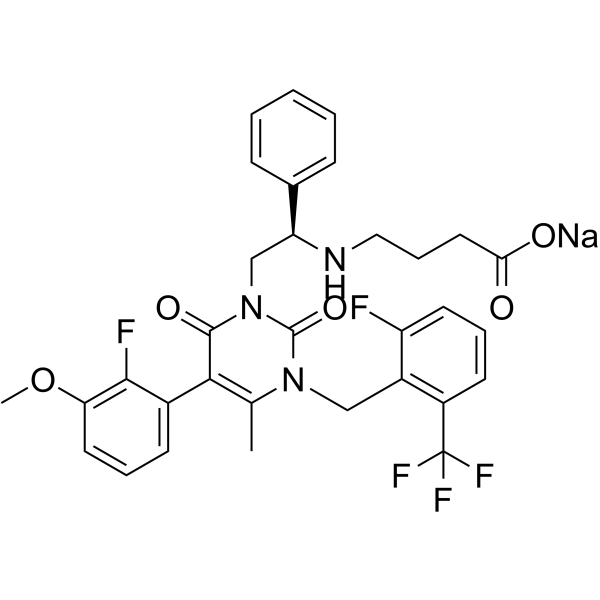
HY-14369
Elagolix sodiumGnRH Receptor Antagonist -
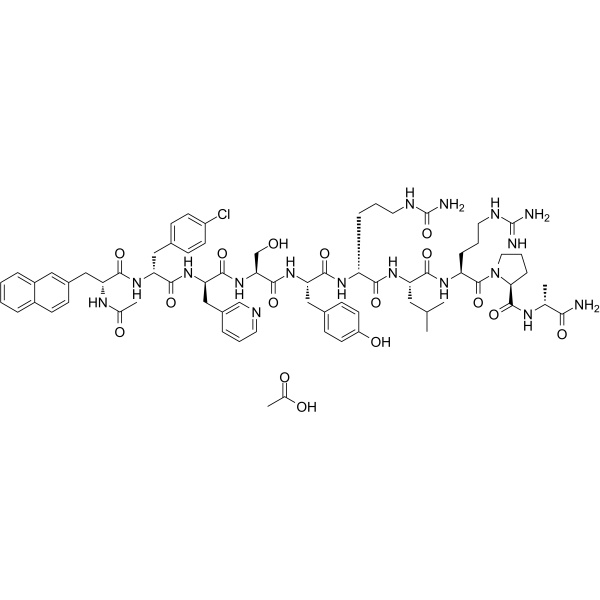
HY-P0009A
Cetrorelix acetateGnRH Receptor Antagonist -
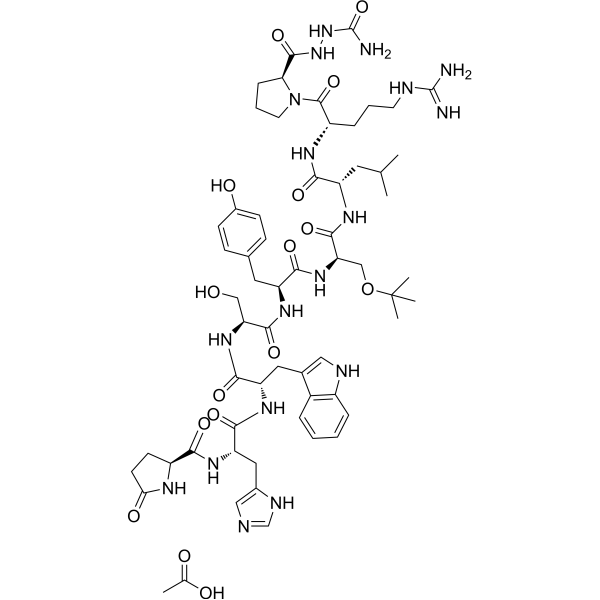
HY-13673A
Goserelin acetateGnRH Agonist -
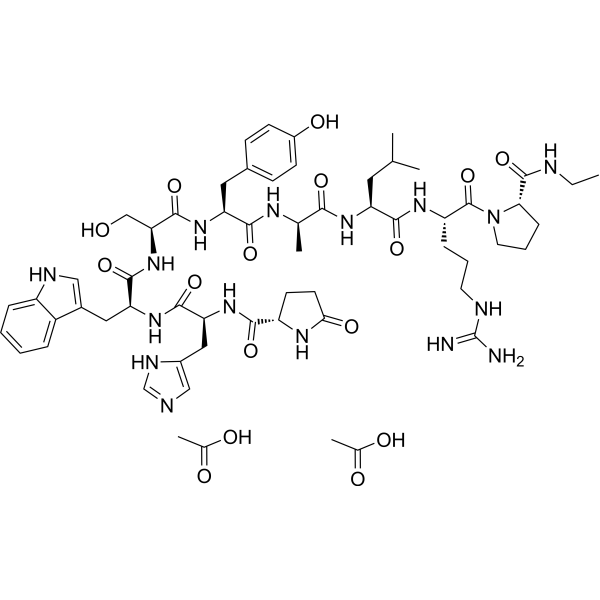
HY-17405
Alarelin AcetateGnRH Receptor Agonist -
HY-16532
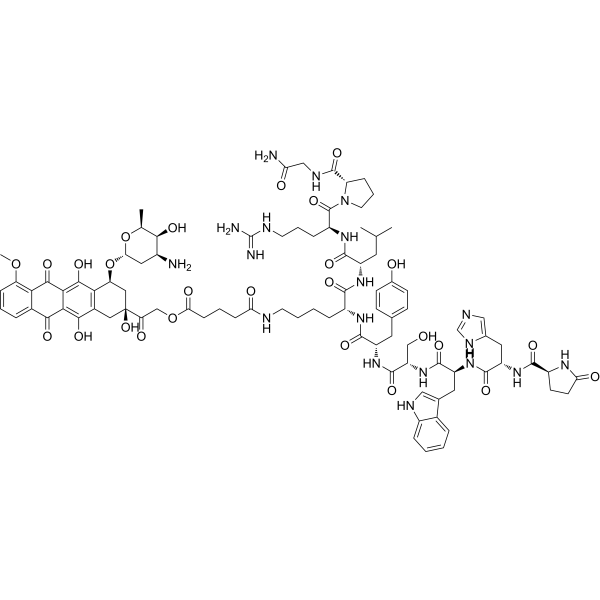
Zoptarelin doxorubicinHybrid Anticancer Agent -

HY-16474R
Relugolix (Standard)GnRH Antagonist -

HY-14789R
(R)-Elagolix (Standard)GnRH Receptor Antagonist -
HY-P0013
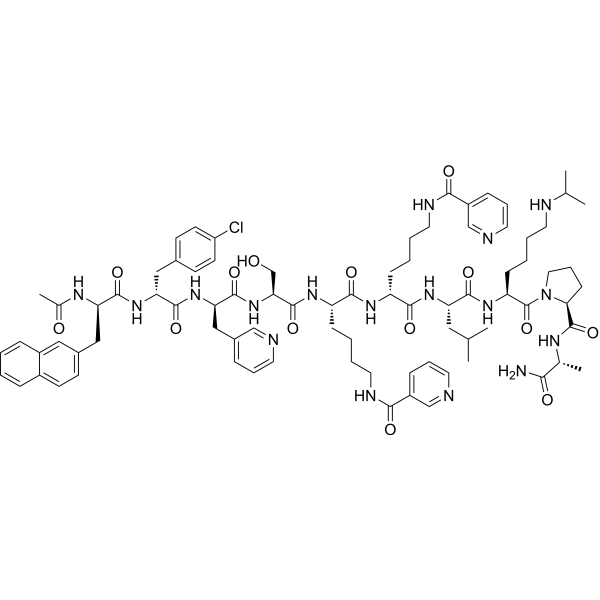
AntideLHRH Antagonist
Publications Citing Use of MedChemExpress (MCE) Degarelix acetate
More- Nat Cell Biol. 2026 Apr;28(4):707-724. [Abstract]
- Cancer Lett. 2023 Jul 1:565:216209. [Abstract]
- Arterioscler Thromb Vasc Biol. 2024 Mar;44(3):698-719. [Abstract]
- FASEB J. 2023 Feb;37(2):e22772. [Abstract]
- J Immunol. 2023 Feb 15;210(4):496-503. [Abstract]
- Microb Pathog. 2024 Dec:197:107046. [Abstract]
- Prostate. 2021 Sep;81(12):902-912. [Abstract]
- Res Sq. 2025 Apr 07.
- SSRN. 2024 May 22.
- bioRxiv. 2023 May 23:2023.05.23.540590. [Abstract]
- Research Square Preprint. 2020 Mar 27.
 Customer Validation & Images

-
ELISA
-
In Vivo Efficacy Study
-
Histological Imaging/Staining
-
In Vivo Efficacy Study
-
Cell Proliferation/Viability Assay


Activité biologique
Description
In Vitro
Degarelix (FE 200486) shows only very weak histamine-releasing properties and the lowest capacity for histamine release among the antagonists of LHRH, including Cetrorelix (HY-P0009), Abarelix (HY-13534), and Ganirelix (HY-P1628)[3].
Degarelix (1 nM-10 μM, 0-72 h) reduces cell viability in all prostate cell lines (WPE1-NA22, WPMY-1, BPH-1, VCaP cells), with the exception of the PC-3 cells[4].
Degarelix (10 μM, 0-72 h) exerts a direct effect on prostate cell growth through apoptosis[4].
MedChemExpress (MCE) has not independently confirmed the accuracy of these methods. They are for reference only. Further protocols information, click here.
-
Cell Line:WPMY-1, WPE1-NA22, BPH-1, LNCaP and VCaP.
-
Concentration:1 nM-10 μM.
-
Incubation Time:48-72 h
-
Result:WPMY-1 cells at 48 and 72h, WPE1-NA22 cells at 72 hours, BPH-1 cells at 48 and 72h, LNCaP cells at 48 and 72h. Reduced cell viability in all prostate cell lines, with the exception of the PC-3 cells.
-
Cell Line:WPE1-NA22, BPH-1, LNCaP and VCaP.
-
Concentration:10 μM.
-
Incubation Time:24, 48 and 72 h.
-
Result:Induced a significant increase on caspase 3/7 activation.
In Vivo
Degarelix (FE 200486 free base) is stable when incubated in microsomes and cryopreserved hepatocytes from animal liver tissue. In rat and dog, most of the degarelix dose is eliminated within 48 h via urine and feces in equal amounts (40-50% in each matrix), whereas in monkey the major route of excretion is fecal (50%) and renal (22%)[6].
MedChemExpress (MCE) has not independently confirmed the accuracy of these methods. They are for reference only.
-
Animal Model:Male Sprague-Dawley rats, castrated[5].
-
Dosage:0.3, 1, 3 and 10 μg/kg or 12.5, 50, and 200 μg/kg.
-
Administration:Subcutaneous injection, once.
-
Result:For the 50 μg/kg and 200 μg/kg doses, t1/2 of absorption values were 4 min and 30 min, Tmax values were 1 h and 5 h, and apparent plasma disappearance t1/2 values were 12 h and 67 h, respectively.
Produced a dose-dependent decrease in plasma testosterone levels with a minimal effective dose of 1 μg/kg.


Chemical Information
-
CAS No. 934016-19-0
-
Appearance Solid
-
Masse moléculaire 1692.31
-
Formule C84H107ClN18O18
-
Color White to off-white
-
SMILES
C[C@H](C(N)=O)NC([C@H]1N(C([C@H](CCCCNC(C)C)NC([C@H](CC(C)C)NC([C@@H](CC2=CC=C(NC(N)=O)C=C2)NC([C@H](CC3=CC=C(NC([C@H](CC(N4)=O)NC4=O)=O)C=C3)NC([C@H](CO)NC([C@@H](CC5=CC=CN=C5)NC([C@@H](CC6=CC=C(Cl)C=C6)NC([C@@H](CC7=CC=C8C=CC=CC8=C7)NC(C)=O)=O)=O)=O)=O)=O)=O)=O)=O)CCC1)=O.O=C(O)C
-
Synonyms
FE 200486
-
Livraison
Room temperature in continental US; may vary elsewhere.
-
Stockage
Sealed storage, away from moisture
Powder -80°C 2 years -20°C 1 year * In solvent : -80°C, 6 months; -20°C, 1 month (sealed storage, away from moisture)


Publications (11)
-
Journal Impact Factor
-
Most Recent
-
Nat Cell Biol
An extracellular vesicle-mediated mitochondrial transfer network critical for testosterone synthesis. [Abstract]2026 Apr;28(4):707-724. PMID: 41760931 -
Cancer Lett
SOX2 expression in prostate cancer drives resistance to nuclear hormone receptor signaling inhibition through the WEE1/CDK1 signaling axis. [Abstract]2023 Jul 1:565:216209. PMID: 37169162 -
Arterioscler Thromb Vasc Biol
FSH Is Responsible for Androgen Deprivation Therapy-Associated Atherosclerosis in Mice by Exaggerating Endothelial Inflammation and Monocyte Adhesion. [Abstract]2024 Mar;44(3):698-719. PMID: 38205641
Degarelix acetate purchased from MedChemExpress. Usage Cited in: Arterioscler Thromb Vasc Biol. 2024 Mar;44(3):698-719. [Abstract]
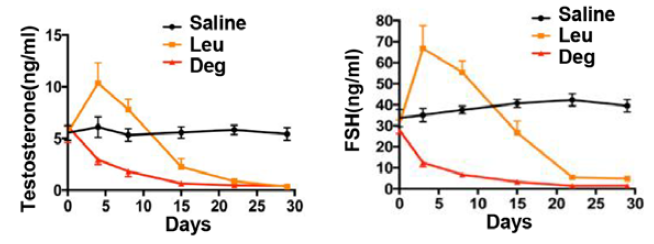
Serum levels of testosterone and follicle-stimulating hormone (FSH) in mice were assessed by ELISA. Degarelix (Deg) (50 mg/kg; s.c.; once a month) rapidly reduced FSH and testosterone levels in high-fat diet–fed male ApoE−/− mice.
Degarelix acetate purchased from MedChemExpress. Usage Cited in: Arterioscler Thromb Vasc Biol. 2024 Mar;44(3):698-719. [Abstract]
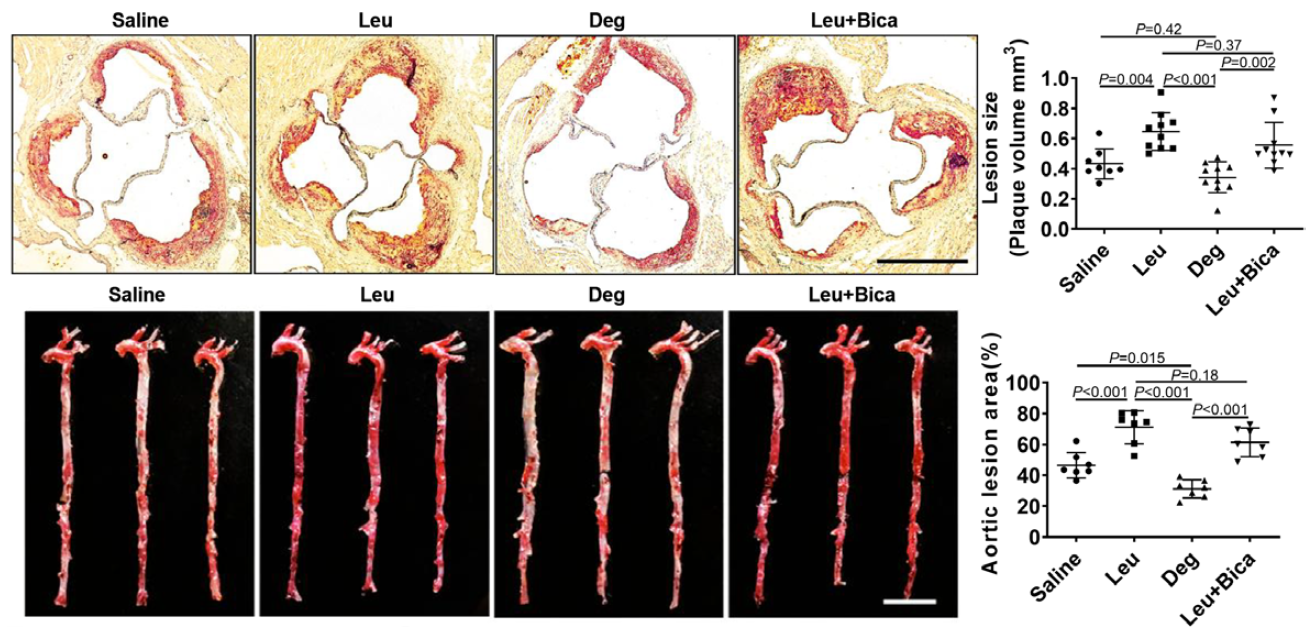
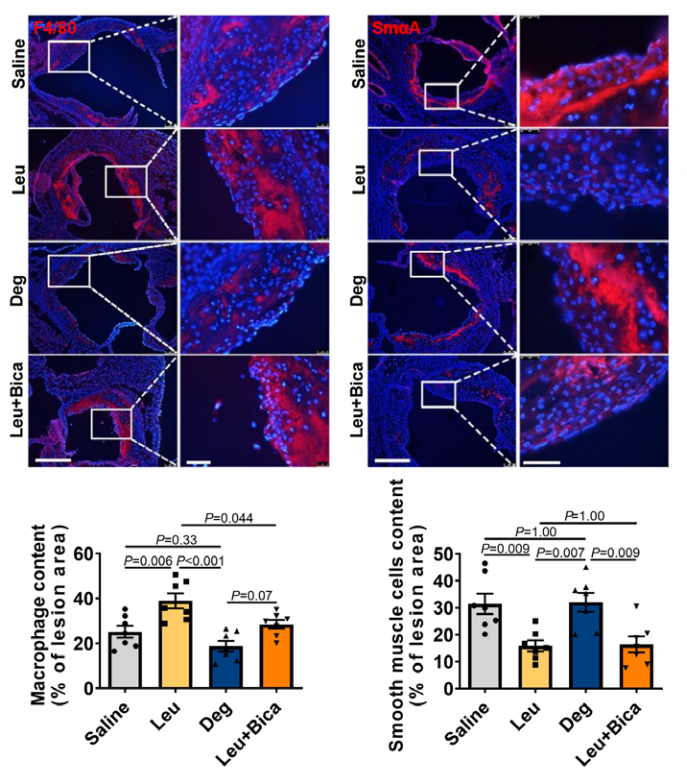
The Degarelix (Deg) (50 mg/kg; s.c.; once a month) group showed similar or even smaller atherosclerotic lesions in the aortic root and aortic tree of high-fat diet–fed male ApoE−/− mice compared with the saline group.
Degarelix acetate purchased from MedChemExpress. Usage Cited in: Arterioscler Thromb Vasc Biol. 2024 Mar;44(3):698-719. [Abstract]
SmαA (smooth muscle α-actin) and F4/80 immunostaining (red) on the plaques of aortic roots of mice. Degarelix (Deg) (50 mg/kg; s.c.; once a month) barely changed macrophage contents, smooth muscle cells and collagen contents.
-
FASEB J
Circadian disruption impairs glucose homeostasis in male but not in female mice and is dependent on gonadal sex hormones. [Abstract]2023 Feb;37(2):e22772. PMID: 36645117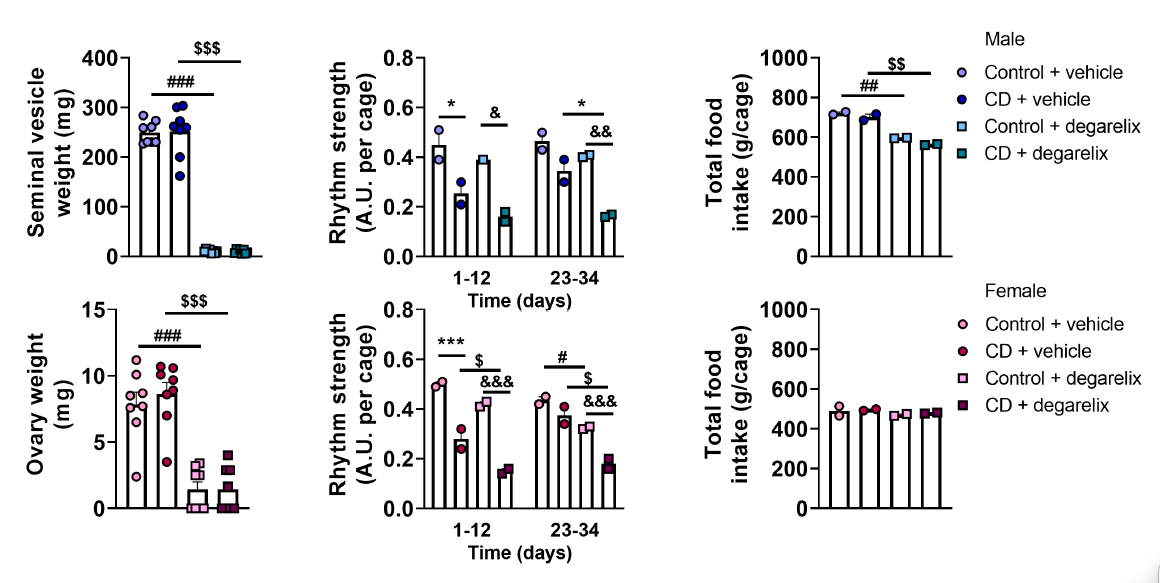
Degarelix acetate purchased from MedChemExpress. Usage Cited in: FASEB J. 2023 Feb;37(2):e22772. [Abstract]
Degarelix (25 mg/kg; s.c.; at days 1 and 29) decreased seminal vesicle and ovary weight, suppressed gonadal sex hormone production, and reduced rhythm strength and total food intake in male and female C57BL/6J mice.
-
J Immunol
2023 Feb 15;210(4):496-503. PMID: 36548468 -
Microb Pathog
2024 Dec:197:107046. PMID: 39433139
Degarelix acetate purchased from MedChemExpress. Usage Cited in: Microb Pathog. 2024 Dec:197:107046. [Abstract]
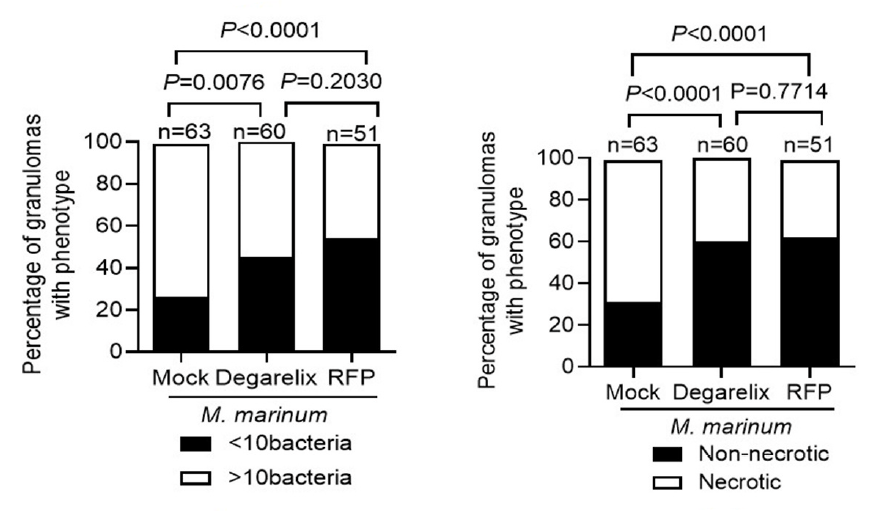
Degarelix (10 mg/kg; p.o.; once daily for 14 d) supplementation led to a lower bacterial burden and less granuloma formation in zebrafish adults infected with M. marinum compared to those fish treated with mock, while degarelix therapeutic effects were similar to RFP effects.
Degarelix acetate purchased from MedChemExpress. Usage Cited in: Microb Pathog. 2024 Dec:197:107046. [Abstract]
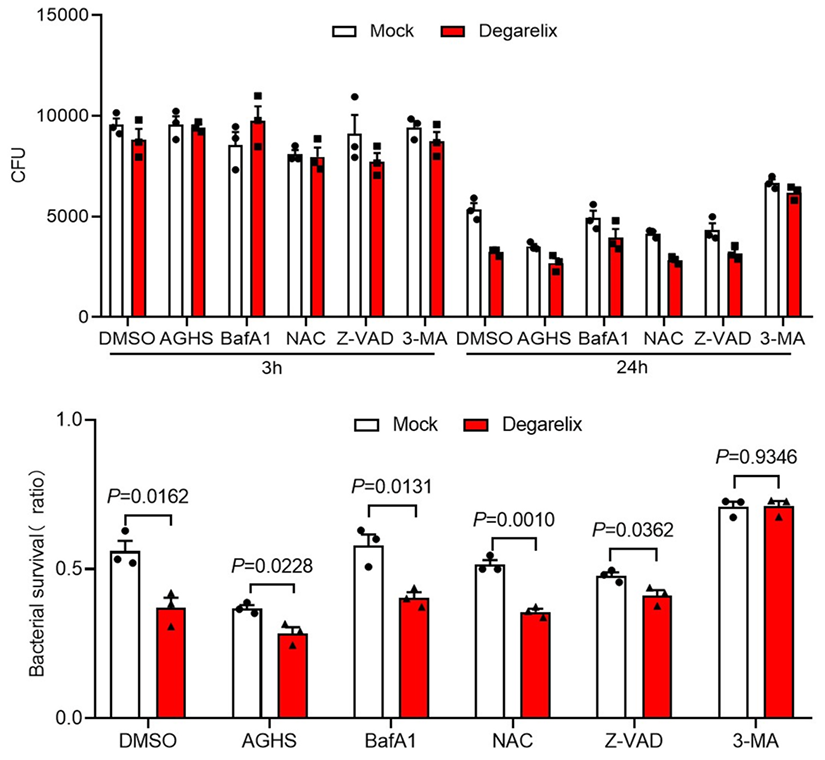
BMDMs pretreated with degarelix (1 μM), aminoguanidine hydrochloride (AGHS, 100 μM), BafA1 (100 nM), NAC (5 mM), Z-VAD (20 μM), or 3-MA (5 mM) were infected with H37Rv (MOI = 2). At different time points after infection, bacterial survival was calculated by dividing the CFU at 24 h by the CFU at 3 h.
-
Prostate
Gonadotropin-releasing hormone antagonist associated with lower cardiovascular risk compared with gonadotropin-releasing hormone agonist in prostate cancer: A nationwide cohort and in vitro study. [Abstract]2021 Sep;81(12):902-912. PMID: 34196430 -
-
-
bioRxiv
Suppression of tumor cell lactate-generating signaling pathways eradicates murine PTEN/p53-deficient aggressive-variant prostate cancer via macrophage phagocytosis. [Abstract]2023 May 23:2023.05.23.540590. PMID: 37292972 -


Solvant et solubilité
In Vitro:
H2O : 20 mg/mL (11.82 mM; Need ultrasonic)
DMSO : 10 mg/mL (5.91 mM; ultrasonic and warming and heat to 60°C; Hygroscopic DMSO has a significant impact on the solubility of product, please use newly opened DMSO)
Please refer to the solubility information to select the appropriate solvent. Once prepared, please aliquot and store the solution to prevent product inactivation from repeated freeze-thaw cycles.
Storage method and period of stock solution: -80°C, 6 months; -20°C, 1 month (sealed storage, away from moisture). When stored at -80°C, please use it within 6 months. When stored at -20°C, please use it within 1 month.
* Note: If you choose water as the stock solution, please dilute it to the working solution, then filter and sterilize it with a 0.22 μm filter before use.
Please refer to the solubility information to select the appropriate solvent. Once prepared, please aliquot and store the solution to prevent product inactivation from repeated freeze-thaw cycles.
Storage method and period of stock solution: -80°C, 6 months; -20°C, 1 month (sealed storage, away from moisture). When stored at -80°C, please use it within 6 months. When stored at -20°C, please use it within 1 month.
* Note: If you choose water as the stock solution, please dilute it to the working solution, then filter and sterilize it with a 0.22 μm filter before use.
Concentration (start) × Volume (start) = Concentration (final) × Volume (final)
In Vivo:
Select the appropriate dissolution method based on your experimental animal and administration route.
- For the following dissolution methods, please ensure to first prepare a clear stock solution using an In Vitro approach and then sequentially add co-solvents:
- To ensure reliable experimental results, the clarified stock solution can be appropriately stored based on storage conditions. As for the working solution for In Vivo experiments, it is recommended to prepare freshly and use it on the same day.
- The percentages shown for the solvents indicate their volumetric ratio in the final prepared solution. If precipitation or phase separation occurs during preparation, heat and/or sonication can be used to aid dissolution.
Add each solvent one by one: 10% DMSO 40% PEG300 5% Tween-80 45% Saline
Solubility: ≥ 1 mg/mL (0.59 mM); Clear solution
This protocol yields a clear solution of ≥ 1 mg/mL (saturation unknown).
Taking 1 mL working solution as an example, add 100 μL DMSO stock solution (10.0 mg/mL) to 400 μL PEG300, and mix evenly; then add 50 μL Tween-80 and mix evenly; then add 450 μL Saline to adjust the volume to 1 mL.
Preparation of Saline: Dissolve 0.9 g sodium chloride in ddH₂O and dilute to 100 mL to obtain a clear Saline solution.
Add each solvent one by one: 10% DMSO 90% (20% SBE-β-CD in Saline)
Solubility: 1 mg/mL (0.59 mM); Suspended solution; Need ultrasonic
This protocol yields a suspended solution of 1 mg/mL. Suspended solution can be used for oral and intraperitoneal injection.
Taking 1 mL working solution as an example, add 100 μL DMSO stock solution (10.0 mg/mL) to 900 μL 20% SBE-β-CD in Saline, and mix evenly.
Preparation of 20% SBE-β-CD in Saline (4°C, storage for one week): 2 g SBE-β-CD powder is dissolved in 10 mL Saline, completely dissolve until clear.
In Vivo Dissolution Calculator
Please enter the basic information of animal experiments:
-
-
-
-
Recommended: Prepare an additional quantity of animals to account for potential losses during experiments.
Working solution concentration: 0.22 mg/mL
This product has good water solubility, please refer to the measured solubility data in water/PBS/Saline for details.

Protocole
-
Research Protocol for Endocrine Diseases
Endocrine diseases often arise from disrupted hormone production, hormone signaling, or target-tissue responsiveness; for diabetes-focused endocrine disease models, insulin signaling regulates glucose uptake, hepatic glucose output, lipid metabolism, and β-cell compensation. Type 2 diabetes develops through interacting defects in insulin resistance, β-cell dysfunction, adipose inflammation, hepatic glucose overproduction, altered incretin signaling, and ectopic lipid metabolism. A major unresolved question is whether endocrine dysfunction is driven primarily by target-tissue insulin resistance, intrinsic β-cell failure, immune/inflammatory stress, or combined multi-organ failure that differs by disease stage.


Pureté et documentation
-
Fiche technique (283 KB)
-
SDS (418 KB)
- English - EN (418 KB)
- Français - FR (418 KB)
- Deutsch - DE (418 KB)
- Norwegian - NO (418 KB)
- Español - ES (418 KB)
- Swedish - SV (418 KB)
- Italian - IT (418 KB)
- Korean - KR (418 KB)
- Portuguese - PT (418 KB)
-
Instruction de manipulation (2659 KB)
Références
[2]. Degarelix.
[3]. Rick FG, et al. An update on the use of degarelix in the treatment of advanced hormone-dependent prostate cancer. Onco Targets Ther. 2013 Apr 16;6:391-402. [Content Brief]
[4]. Sakai M, et al. In search of the molecular mechanisms mediating the inhibitory effect of the GnRH antagonistdegarelix on human prostate cell growth. PLoS One. 2015 Mar 26;10(3):e0120670. [Content Brief]
[5]. Broqua P, et al. Pharmacological profile of a new, potent, and long-acting gonadotropin-releasing hormoneantagonist: degarelix. J Pharmacol Exp Ther. 2002 Apr;301(1):95-102. [Content Brief]
[6]. Sonesson A, et al. Metabolite profiles of degarelix, a new gonadotropin-releasing hormone receptor antagonist, in rat, dog, and monkey. Drug Metab Dispos. 2011 Oct;39(10):1895-903. [Content Brief]


Complete Stock Solution Preparation Table
Please refer to the solubility information to select the appropriate solvent. Once prepared, please aliquot and store the solution to prevent product inactivation from repeated freeze-thaw cycles.
Storage method and period of stock solution: -80°C, 6 months; -20°C, 1 month (sealed storage, away from moisture). When stored at -80°C, please use it within 6 months. When stored at -20°C, please use it within 1 month.
| Optional Solvent | Concentration Solvent Mass | 1 mg | 5 mg | 10 mg | 25 mg |
|---|---|---|---|---|---|
| DMSO / H2O | 1 mM | 0.5909 mL | 2.9545 mL | 5.9091 mL | 14.7727 mL |
| 5 mM | 0.1182 mL | 0.5909 mL | 1.1818 mL | 2.9545 mL | |
| H2O | 10 mM | 0.0591 mL | 0.2955 mL | 0.5909 mL | 1.4773 mL |
* Note: If you choose water as the stock solution, please dilute it to the working solution, then filter and sterilize it with a 0.22 μm filter before use.


Degarelix acetate Related Classifications
HY-16168 Related Classifications
 Powered by Bioz