



Casein hydrolysate

Based on 1 Customer Validation
Casein hydrolysate is an orally effective, multi-functional mixture of bioactive peptides, a hydrolysis product of casein (HY-125865), containing ACE inhibitors and immunomodulatory target regulators, among others. Casein hydrolysate releases short-chain bioactive peptides through enzymatic hydrolysis of casein, increasing cellular glutathione and catalase levels, enhancing ConA-induced IL-2 production, and exhibiting metal ion chelation, free radical scavenging, antibacterial, and mineral absorption-promoting effects. Casein hydrolysate lowers blood pressure by inhibiting angiotensin-converting enzyme (ACE) and reducing bradykinin degradation.
For research use only. We do not sell to patients.
- CAS No.: 65072-00-6
-
Storage:Powder -20°C, 3 years , 4°C, 2 years ; In solvent -80°C, 6 months , -20°C, 1 month


To place orders, for customer services and technical support, please contact: MedChemExpress USA
Tel: 609-228-6898 E-mail: [email protected] [email protected]


-
 Biological Activity
-
Chemical Information
- Protocols
- Purity & Documentation
- References
-
 Help & FAQs


-
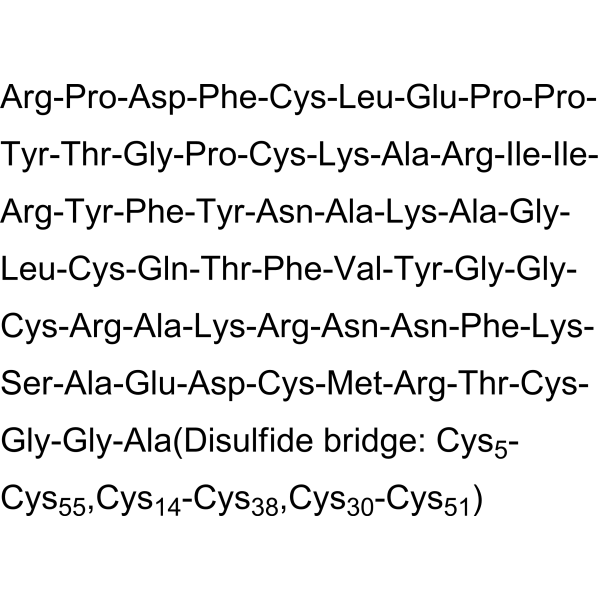
HY-P0017
AprotininBPTI Inhibitor -
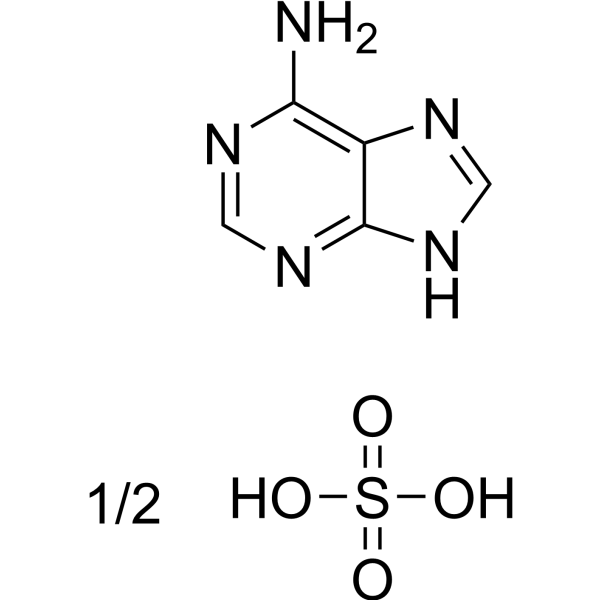
HY-B0152B
Adenine hemisulfateNucleobase -

HY-Y1365
GelatinsNatural Materials -
HY-150278
Peptone from caseinCasein Hydrolysis -

HY-Y1365D
Bovine Gelatin,suitable for cell cultureBiochemical Assay Reagent -

HY-Y1365L
Porcine skin Gelatin,suitable for cell culture(high gel strength)Biochemical Assay Reagent -

HY-Y1365E
Porcine skin Gelatin,suitable for cell culture(medium gel strength)Biochemical Assay Reagent -

HY-Y1365C
Fish Gelatin,suitable for cell cultureNatural Biopolymer -

HY-125865
CaseinPhosphoprotein -

HY-W133898
TryptoneMedium Carbon/Nitrogen Source -

HY-P2995
HemoglobinIron-containing Protein -

HY-NP009
α-LactalbuminGlobular Whey Protein


Biological Activity
Description
IC50 & Target
|
IL-2 |
In Vitro
Casein hydrolysate inhibits lipid peroxidation at concentrations of 0.05-0.5 mg/mL, and can chelate Fe2+, scavenging peroxyl radicals and hydroxyl radicals[1].
The IC50 value of casein hydrolysate (0-50% (v/v); 24 h) on Jurkat T cells ranges from 19.5%-66.8% (v/v), and does not affect cell membrane integrity at concentrations ≤1% (v/v)[2].
Casein hydrolysate (0.05% (v/v); 24 h) significantly increased GSH content in Jurkat cells in antioxidant experiments, but did not affect superoxide dismutase (SOD) activity[2].
Casein hydrolysate (0.05% (v/v); 24 h) neither produced genotoxicity nor protected cells from H2O2-induced DNA damage in Caco-2 cell comet assays[2].
MedChemExpress (MCE) has not independently confirmed the accuracy of these methods. They are for reference only. Further protocols information, click here.
-
Cell Line:Human Jurkat T cells
-
Concentration:0%, 0.05%, 0.10%, 0.25%, 0.50%, 1.3%, 2.5%, 5.0%, 10.0%, 25.0%, 50.0% (v/v)
-
Incubation Time:
-
Result:Exerted concentration-dependent effects on the viability of Jurkat T cells after 24 hours of treatment. The IC50 values ranged from 19.5% to 66.8% (v/v) (protein-based IC50: 1%-5.1% w/v), with hydrolysates f and g showing the lowest IC50.
Hydrolysates a, c, and d did not induce 50% cell death, and no significant increase in LDH release was observed at concentrations ≤1% (v/v), indicating no impairment of cell membrane integrity.
In Vivo
Casein hydrolysate-derived peptide Leu-Lys-Pro-Asp-Meth (100 μg/kg; i.v.; single dose; immediately after administration) reduces blood pressure by 30 mmHg in spontaneously hypertensive rats (SHR), and its hydrolysis product Leu-Lys-Pro (30 μg/kg; intravenous injection; single dose; immediately after administration) reduces blood pressure by 50 mmHg[1].
Casein phosphopeptides (CPP) from casein hydrolysate inhibits bone resorption, stimulates bone mineralization, and promotes calcium integration into bone tissue in a decalcified bone matrix rat model[1].
Casein hydrolysate-related immunomodulatory peptide-derived IgY prevents bacterial adhesion to the intestinal epithelium and dose-dependently prevents enterotoxigenic E. coli infection in a colostrum-deficient piglet model of enterotoxigenic E. coli infection[1].
Casein hydrolysate stimulates the production of superoxide anions by leukocytes and enhances non-specific immune defense in an Atlantic salmon (Salmo salar) immunostimulation model[1].
MedChemExpress (MCE) has not independently confirmed the accuracy of these methods. They are for reference only.
-
Animal Model:Spontaneously Hypertensive Rats (SHR) hypertension model & Normotensive rats normal blood pressure model[1]
-
Dosage:Ile-Pro-Pro/Val-Pro-Pro peptides: ≤5 mg/kg; 10 mg/kg for normotensive rats
-
Administration:Single oral administration
-
Result:At doses up to 5 mg/kg significantly decreased systolic blood pressure in SHR 6 to 8 hours post-administration.
A dose of 10 mg/kg showed no effect on systolic blood pressure in normotensive rats, indicating dose-dependent and model-specific antihypertensive activity.
Clinical Trial
| NCT Number | Sponsor | Condition | Start Date |
Phase

|
|---|---|---|---|---|
| NCT01329991 | Plexxikon| | 2011-05 | PHASE1 |


Chemical Information
-
CAS No. 65072-00-6
-
Appearance Solid
-
Color Off-white to light yellow
-
SMILES
[Casein hydrolysate]
-
Shipping
Room temperature in continental US; may vary elsewhere.
-
Storage
Powder -20°C 3 years 4°C 2 years In solvent -80°C 6 months -20°C 1 month

Protocols
-
Research Protocol for Infectious Diseases
Infectious-disease experiments test how pathogens interact with host barriers, innate immune receptors, inflammatory signaling, pathogen replication, and tissue injury; pattern-recognition receptors such as TLRs, RIG-I-like receptors, NOD-like receptors, and inflammasomes detect microbial molecules and activate NF-κB, interferon, and cytokine responses. The central hypothesis is that infection severity reflects the balance between pathogen burden and host response: protective inflammation restricts pathogen growth, whereas excessive or mislocalized inflammation contributes to tissue damage and disease phenotype. Unresolved questions include which host pathways are protective versus pathogenic, why some infection models fail to translate to human disease, and which combined readouts best predict clinically relevant infection outcomes.


Purity & Documentation
-
Data Sheet (272 KB)
-
SDS (393 KB)
- English - EN (393 KB)
- Français - FR (393 KB)
- Deutsch - DE (393 KB)
- Norwegian - NO (393 KB)
- Español - ES (393 KB)
- Swedish - SV (393 KB)
- Italian - IT (393 KB)
- Korean - KR (393 KB)
- Portuguese - PT (393 KB)
-
Handling Instructions (2659 KB)
References

Calculators
Concentration (start) × Volume (start) = Concentration (final) × Volume (final)


Casein hydrolysate Related Classifications
HY-126404 Related Classifications
 Powered by Bioz