



Glycitin
Based on 8 publication(s) in Google Scholar
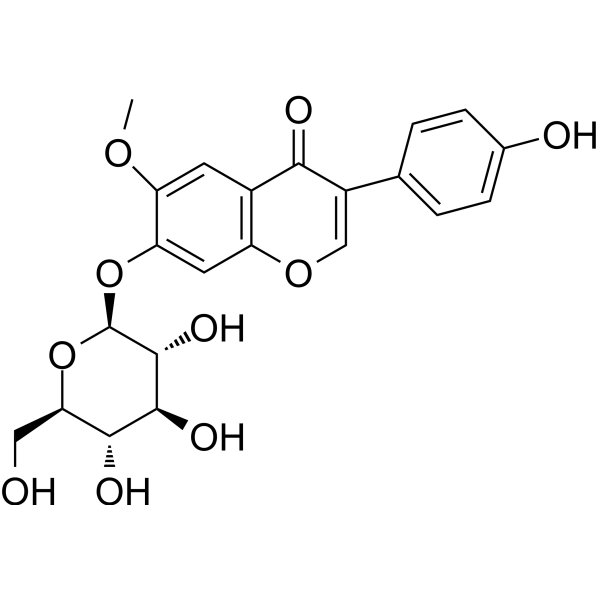
Glycitin (Glycitein 7-O-β-glucoside) is a natural isoflavone with antibacterial, antiviral, anticancer, anti-inflammation, anti-aging and estrogenic effects. Glycitin may regulate osteoblasts through TGF-β or AKT signaling pathways in bone marrow stem cells (BMSCs).
For research use only. We do not sell to patients.
- Purity : 99.71%
- CAS No.: 40246-10-4
- Formula: C22H22O10
- Molecular Weight:446.40
-
Storage:Powder -20°C, 3 years , 4°C, 2 years ; In solvent -80°C, 2 years , -20°C, 1 year

To place orders, for customer services and technical support, please contact: MedChemExpress USA
Tel: 609-228-6898 E-mail: [email protected] [email protected]


-
 Biological Activity
-
Chemical Information
-
Solvent & Solubility
- Protocols
- Purity & Documentation
- References
-
 Help & FAQs


-
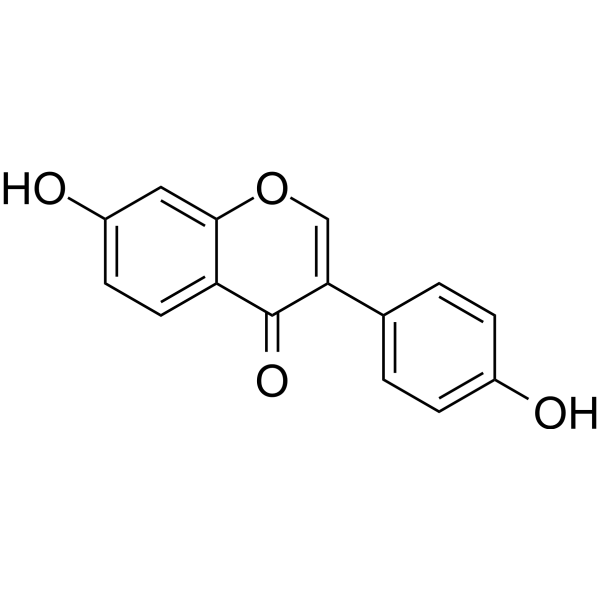
HY-N0019
DaidzeinEndogenous Metabolite -
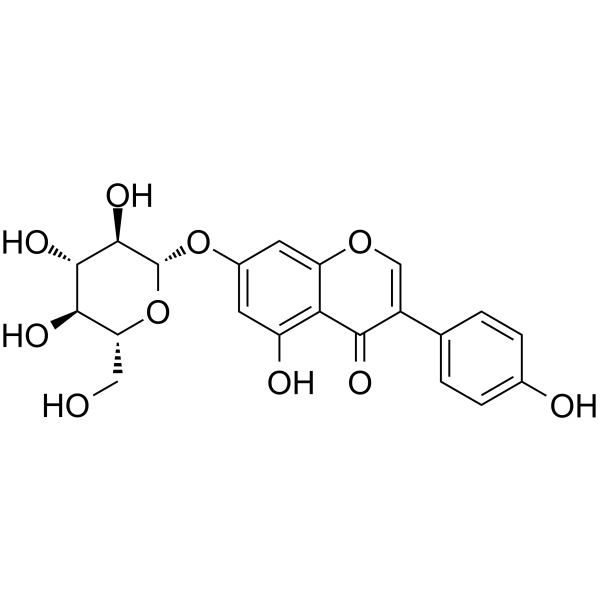
HY-N0595
GenistinAnti-Adipogenic/Anti-Lipogenic Agent -
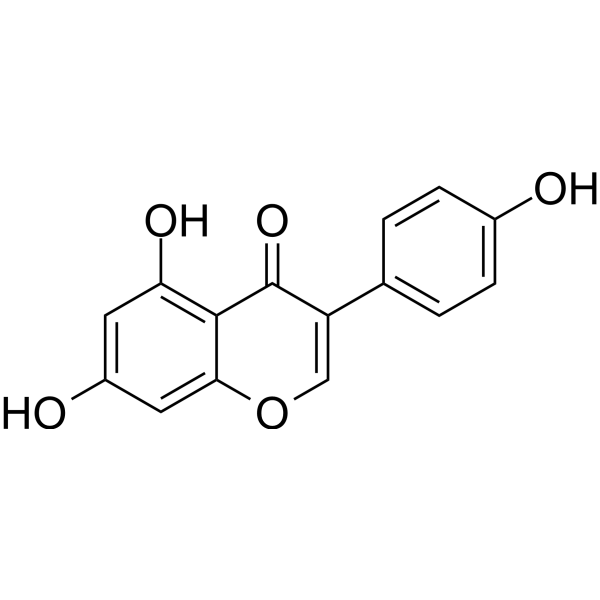
HY-14596
GenisteinAutophagy Inducer -
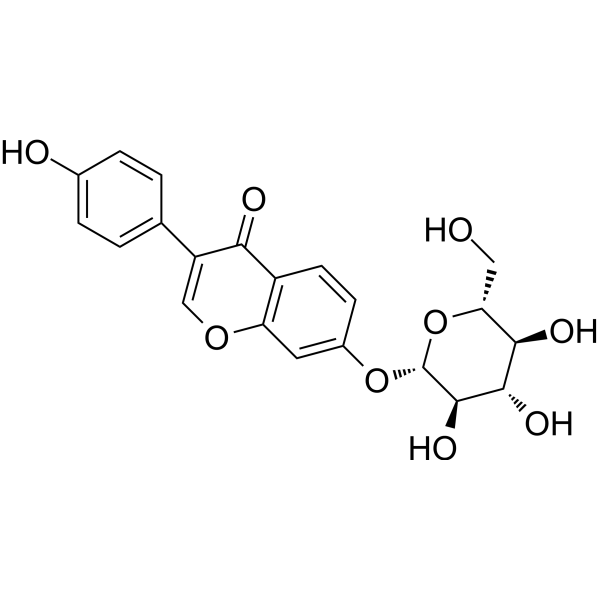
HY-N0018
DaidzinReverse Transcriptase Inhibitor -
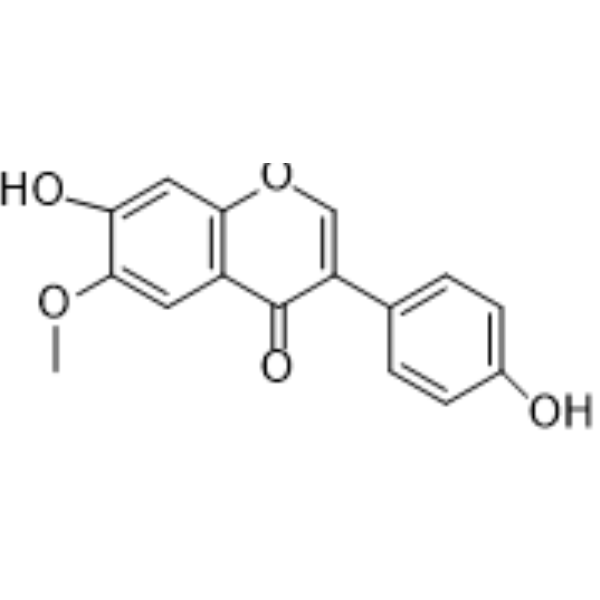
HY-N0016
GlyciteinApoptosis Inducer -
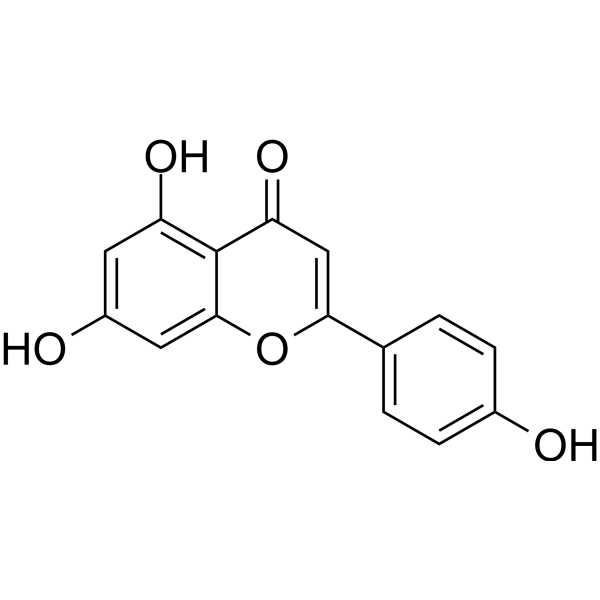
HY-N1201
ApigeninCytochrome P450 Inhibitor -

HY-N0012R
Glycitin (Standard)Soy Isoflavone -
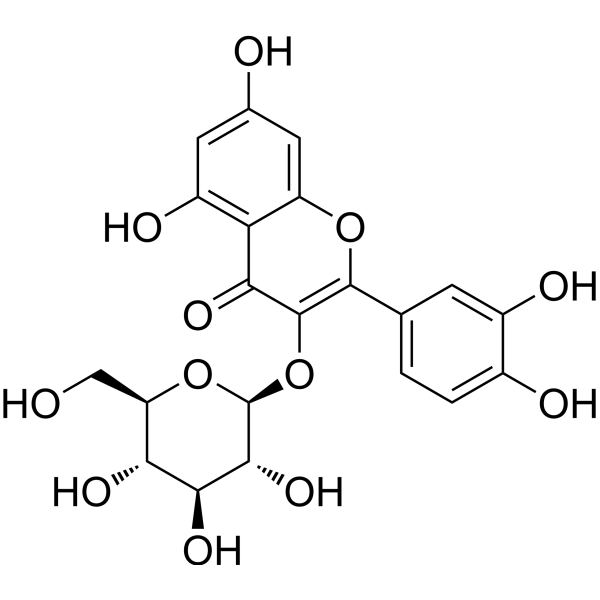
HY-N1445
IsoquercitrinNO Synthase Inhibitor -
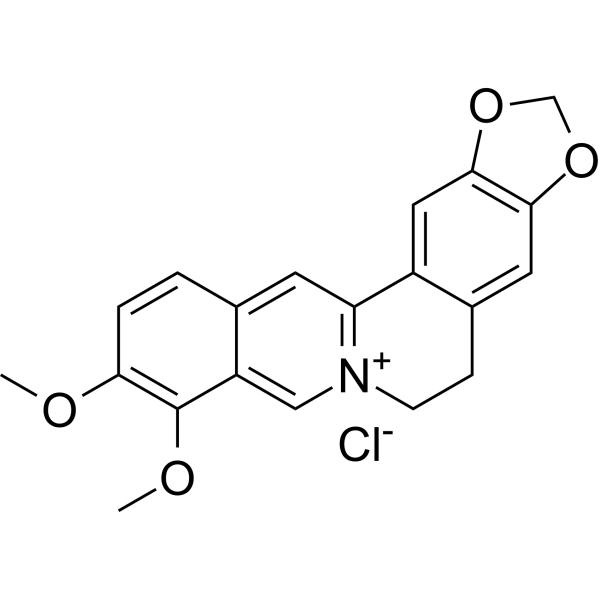
HY-18258
Berberine chlorideAntibiotic -
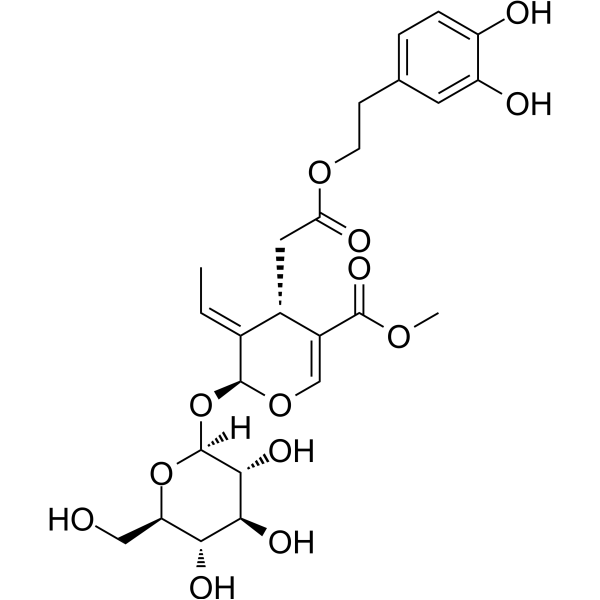
HY-N0292
OleuropeinApoptosis Inducer -
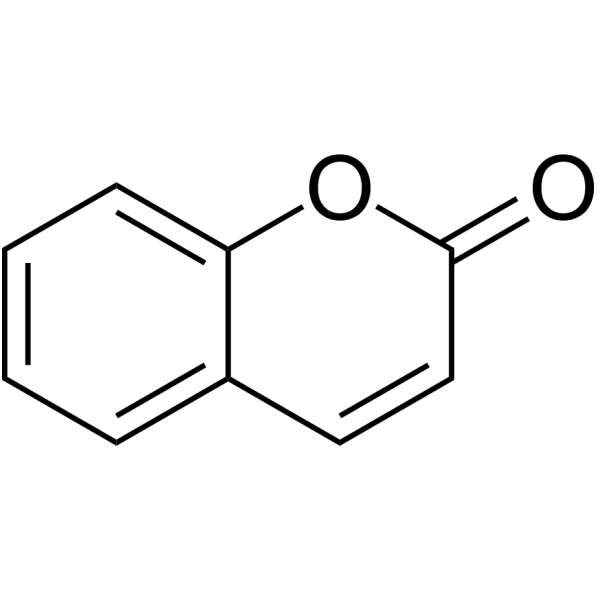
HY-N0709
CoumarinAnti-inflammatory Agent -
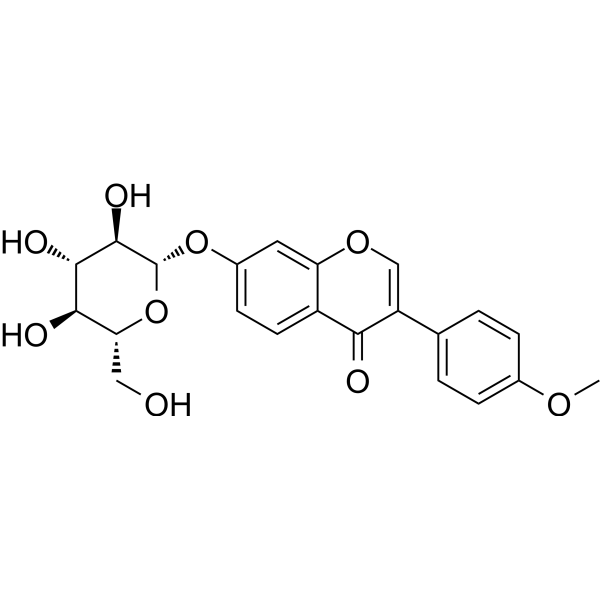
HY-N0270
OnoninIsoflavonoid
Publications Citing Use of MedChemExpress (MCE) Glycitin
More- Cell Metab. 2024 Nov 5;36(11):2367-2382.e5. [Abstract]
- Food Chem. 2026 Jul 30:518:149561. [Abstract]
- Food Chem. 2025 Dec 30:497:146992. [Abstract]
- Food Chem. 2025 Oct 15:489:144992. [Abstract]
- Ind Crops Prod. 2025 Dec 11;239:122458.
- Int Immunopharmacol. 2026 Oct 1:186:117069.
- Comput Biol Chem. 2025 Aug:117:108419. [Abstract]
- Vet Microbiol. 2026 May:316:110992. [Abstract]


Biological Activity
Description
In Vitro
Glycitin (0.01-10 μM; 7 days) increases cell proliferation and promoted osteoblast formation from BMSCs[1].
Glycitin (0, 0.5, 1 and 5 μM) activates the gene expression of Col I and ALP in BMSCs. Glycitin suppresses protein expression of TGF-β and AKT in BMSCs[1].
MedChemExpress (MCE) has not independently confirmed the accuracy of these methods. They are for reference only. Further protocols information, click here.
-
Cell Line:Bone marrow stem cells (BMSCs)
-
Concentration:0.01, 0.5, 1, 5 and 10 µM
-
Incubation Time:7 days
-
Result:Increased cell proliferation and promoted osteoblast formation from BMSCs.
In Vivo
MedChemExpress (MCE) has not independently confirmed the accuracy of these methods. They are for reference only.
-
Animal Model:BALB/c male mice (6-8 weeks old, 18-22 g weight) treated with LPS[2]
-
Dosage:5 mg/kg, 10 mg/kg and 20 mg/kg
-
Administration:Intraperitoneal injection; three times (once every 8 h)
-
Result:Obviously alleviated the lung injury induced by LPS.


Chemical Information
-
CAS No. 40246-10-4
-
Appearance Solid
-
Molecular Weight 446.40
-
Formula C22H22O10
-
Color White to off-white
-
SMILES
O[C@H]1[C@H](O)[C@@H](CO)O[C@@H](OC2=CC(OC=C(C3=CC=C(O)C=C3)C4=O)=C4C=C2OC)[C@@H]1O
-
Synonyms
Glycitein 7-O-β-glucoside
-
Structure Classification
-
Initial Source
-
Shipping
Room temperature in continental US; may vary elsewhere.
-
Storage
Powder -20°C 3 years 4°C 2 years In solvent -80°C 2 years -20°C 1 year


Publications (8)
-
Journal Impact Factor
-
Most Recent
-
Cell Metab
Dietary-timing-induced gut microbiota diurnal oscillations modulate inflammatory rhythms in rheumatoid arthritis. [Abstract]2024 Nov 5;36(11):2367-2382.e5. PMID: 39260371 -
Food Chem
Distribution profiles of 12 isoflavone monomers in Chinese soybeans from saline-alkali and ordinary soils and subsequent supercritical CO₂ extraction optimization. [Abstract]2026 Jul 30:518:149561. PMID: 42114489 -
Food Chem
Effects of sun drying combined with baking processes on the flavor quality of Chongqing Tuocha raw tea. [Abstract]2025 Dec 30:497:146992. PMID: 41285060 -
Food Chem
Flavonoid-mediated metabolic underpinning quality variation in red bud-sport pear mutants. [Abstract]2025 Oct 15:489:144992. PMID: 40466530 -
-
-
Comput Biol Chem
Targeting quorum sensing in Pseudomonas aeruginosa with high-affinity inhibitors: A high-throughput screening and in-silico analysis. [Abstract]2025 Aug:117:108419. PMID: 40088808 -
Vet Microbiol
The Chinese medicine monomer Schisandrin C inhibits PRRSV infection by regulating the OGT-PI3K/AKT/mTOR signaling pathway. [Abstract]2026 May:316:110992. PMID: 41865607


Solvent & Solubility
In Vitro:
DMSO : ≥ 100 mg/mL (224.01 mM; Hygroscopic DMSO has a significant impact on the solubility of product, please use newly opened DMSO)
* "≥" means soluble, but saturation unknown.
Please refer to the solubility information to select the appropriate solvent. Once prepared, please aliquot and store the solution to prevent product inactivation from repeated freeze-thaw cycles.
Storage method and period of stock solution: -80°C, 2 years; -20°C, 1 year. When stored at -80°C, please use it within 2 years. When stored at -20°C, please use it within 1 year.
Please refer to the solubility information to select the appropriate solvent. Once prepared, please aliquot and store the solution to prevent product inactivation from repeated freeze-thaw cycles.
Storage method and period of stock solution: -80°C, 2 years; -20°C, 1 year. When stored at -80°C, please use it within 2 years. When stored at -20°C, please use it within 1 year.
Concentration (start) × Volume (start) = Concentration (final) × Volume (final)
In Vivo:
Select the appropriate dissolution method based on your experimental animal and administration route.
- For the following dissolution methods, please ensure to first prepare a clear stock solution using an In Vitro approach and then sequentially add co-solvents:
- To ensure reliable experimental results, the clarified stock solution can be appropriately stored based on storage conditions. As for the working solution for In Vivo experiments, it is recommended to prepare freshly and use it on the same day.
- The percentages shown for the solvents indicate their volumetric ratio in the final prepared solution. If precipitation or phase separation occurs during preparation, heat and/or sonication can be used to aid dissolution.
Add each solvent one by one: 10% DMSO 40% PEG300 5% Tween-80 45% Saline
Solubility: ≥ 2.5 mg/mL (5.60 mM); Clear solution
This protocol yields a clear solution of ≥ 2.5 mg/mL (saturation unknown).
Taking 1 mL working solution as an example, add 100 μL DMSO stock solution (25.0 mg/mL) to 400 μL PEG300, and mix evenly; then add 50 μL Tween-80 and mix evenly; then add 450 μL Saline to adjust the volume to 1 mL.
Preparation of Saline: Dissolve 0.9 g sodium chloride in ddH₂O and dilute to 100 mL to obtain a clear Saline solution.
Add each solvent one by one: 10% DMSO 90% (20% SBE-β-CD in Saline)
Solubility: ≥ 2.5 mg/mL (5.60 mM); Clear solution
This protocol yields a clear solution of ≥ 2.5 mg/mL (saturation unknown).
Taking 1 mL working solution as an example, add 100 μL DMSO stock solution (25.0 mg/mL) to 900 μL 20% SBE-β-CD in Saline, and mix evenly.
Preparation of 20% SBE-β-CD in Saline (4°C, storage for one week): 2 g SBE-β-CD powder is dissolved in 10 mL Saline, completely dissolve until clear.
In Vivo Dissolution Calculator
Please enter the basic information of animal experiments:
-
-
-
-
Recommended: Prepare an additional quantity of animals to account for potential losses during experiments.
Please enter your animal formula composition:
-
%DMSO +
Recommended: Keep the proportion of DMSO in working solution below 2% if your animal is weak.
-
%+
-
+%Tween-80 + +
-
%Saline +
The co-solvents required include: DMSO, . All of co-solvents are available by MedChemExpress (MCE). , Tween 80. All of co-solvents are available by MedChemExpress (MCE).
Working solution concentration: 0.22 mg/mL
Method for preparing stock solution: mg drug dissolved in μL DMSO. Stock solution concentration: mg/mL.
1. Take μL DMSO stock solution;
2. Add μL .
μL , mix evenly;
3. Then add μL Tween 80, mix evenly;
4. Then add μL
Please ensure that the stock solution in the first step is dissolved to a clear state, and add co-solvents in sequence. You can use ultrasonic heating (ultrasonic cleaner, recommended frequency 20-40 kHz), vortexing, etc. to assist dissolution.

Protocols
-
Research Protocol for Infectious Diseases
Infectious-disease experiments test how pathogens interact with host barriers, innate immune receptors, inflammatory signaling, pathogen replication, and tissue injury; pattern-recognition receptors such as TLRs, RIG-I-like receptors, NOD-like receptors, and inflammasomes detect microbial molecules and activate NF-κB, interferon, and cytokine responses. The central hypothesis is that infection severity reflects the balance between pathogen burden and host response: protective inflammation restricts pathogen growth, whereas excessive or mislocalized inflammation contributes to tissue damage and disease phenotype. Unresolved questions include which host pathways are protective versus pathogenic, why some infection models fail to translate to human disease, and which combined readouts best predict clinically relevant infection outcomes.
-
Research Protocol for Inflammation-related Diseases
The NLRP3 inflammasome is a cytosolic innate immune signaling platform that integrates priming signals and danger-signal activation to promote caspase-1 activation, maturation of IL-1β and IL-18, and gasdermin D-mediated pyroptotic cell death. The core experimental logic is to determine whether inflammatory disease phenotypes are driven by increased NLRP3 expression, ASC-containing inflammasome assembly, caspase-1 cleavage, GSDMD cleavage, and extracellular release of IL-1β/IL-18 rather than by nonspecific cell injury alone. The pathway is strongly linked to inflammation-related disease phenotypes because monosodium urate crystals activate NALP3/NLRP3 inflammasome signaling in gout-like crystal inflammation, cholesterol crystals activate NLRP3 inflammasomes in atherogenesis models, and DSS-induced intestinal inflammation has been reported to involve NLRP3 inflammasome activity. However, experimental colitis studies also show context-dependent protective effects of NLRP3 inflammasome co


Purity & Documentation
-
Data Sheet (290 KB)
-
SDS (393 KB)
- English - EN (393 KB)
- Français - FR (393 KB)
- Deutsch - DE (393 KB)
- Norwegian - NO (393 KB)
- Español - ES (393 KB)
- Swedish - SV (393 KB)
- Italian - IT (393 KB)
- Korean - KR (393 KB)
- Portuguese - PT (393 KB)
-
Handling Instructions (2659 KB)
References
[1]. Zhang L, et al. Glycitin regulates osteoblasts through TGF-β or AKT signaling pathways in bone marrow stem cells. Exp Ther Med. 2016 Nov;12(5):3063-3067. [Content Brief]
[2]. Yu Chen, et al. Glycitin alleviates lipopolysaccharide-induced acute lung injury via inhibiting NF-κB and MAPKs pathway activation in mice. Int Immunopharmacol. 2019 Oct:75:105749. [Content Brief]


Complete Stock Solution Preparation Table
Please refer to the solubility information to select the appropriate solvent. Once prepared, please aliquot and store the solution to prevent product inactivation from repeated freeze-thaw cycles.
Storage method and period of stock solution: -80°C, 2 years; -20°C, 1 year. When stored at -80°C, please use it within 2 years. When stored at -20°C, please use it within 1 year.
| Optional Solvent | Concentration Solvent Mass | 1 mg | 5 mg | 10 mg | 25 mg |
|---|---|---|---|---|---|
| DMSO | 1 mM | 2.2401 mL | 11.2007 mL | 22.4014 mL | 56.0036 mL |
| 5 mM | 0.4480 mL | 2.2401 mL | 4.4803 mL | 11.2007 mL | |
| 10 mM | 0.2240 mL | 1.1201 mL | 2.2401 mL | 5.6004 mL | |
| 15 mM | 0.1493 mL | 0.7467 mL | 1.4934 mL | 3.7336 mL | |
| 20 mM | 0.1120 mL | 0.5600 mL | 1.1201 mL | 2.8002 mL | |
| 25 mM | 0.0896 mL | 0.4480 mL | 0.8961 mL | 2.2401 mL | |
| 30 mM | 0.0747 mL | 0.3734 mL | 0.7467 mL | 1.8668 mL | |
| 40 mM | 0.0560 mL | 0.2800 mL | 0.5600 mL | 1.4001 mL | |
| 50 mM | 0.0448 mL | 0.2240 mL | 0.4480 mL | 1.1201 mL | |
| 60 mM | 0.0373 mL | 0.1867 mL | 0.3734 mL | 0.9334 mL | |
| 80 mM | 0.0280 mL | 0.1400 mL | 0.2800 mL | 0.7000 mL | |
| 100 mM | 0.0224 mL | 0.1120 mL | 0.2240 mL | 0.5600 mL |


Glycitin Related Classifications
HY-N0012 Related Classifications
 Powered by Bioz