



Helioxanthin 8-1
Based on 2 publication(s) in Google Scholar
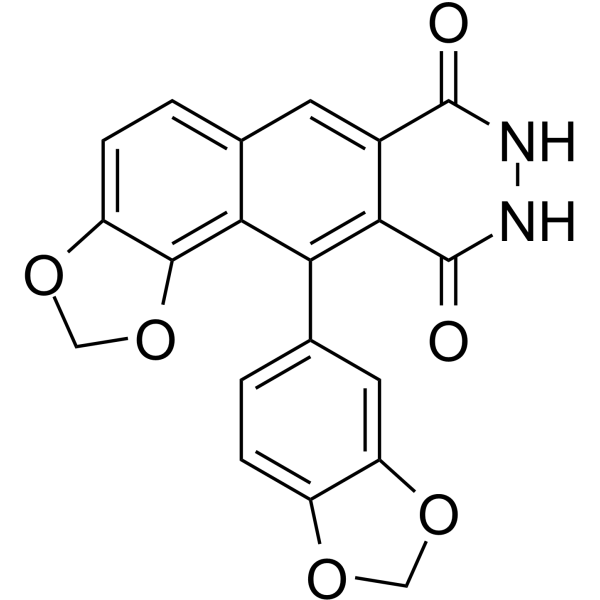
Helioxanthin 8-1(Helioxanthin analogue 8-1) is an anti-HBV agent. Helioxanthin 8-1 exhibits anti-hepatitis B virus activity in both in vitro human hepatitis B virus models and animal models. Helioxanthin 8-1 inhibits the synthesis of duck hepatitis B virus (DHBV) DNA, covalently closed circular DNA, RNA and proteins, thereby blocking DHBV replication. Helioxanthin 8-1 shows higher cytotoxicity in virus-induced cells than in non-induced cells. Helioxanthin 8-1 can be used in studies related to hepatitis B virus infection.
For research use only. We do not sell to patients.
- Purity : 98.0%
- CAS No.: 840529-13-7
- Formula: C20H12N2O6
- Molecular Weight:376.32
-
Storage:Powder -20°C, 3 years , 4°C, 2 years ; In solvent -80°C, 6 months , -20°C, 1 month

To place orders, for customer services and technical support, please contact: MedChemExpress USA
Tel: 609-228-6898 E-mail: [email protected] [email protected]


-
 Biological Activity
-
Chemical Information
-
Solvent & Solubility
- Protocols
- Purity & Documentation
- References
-
 Help & FAQs


-
HY-16679
Helioxanthin derivative 5-4-2HBV Inhibitor -
HY-13623
EntecavirHBV Inhibitor -
HY-16678
HelioxanthinAntiviral Agent -
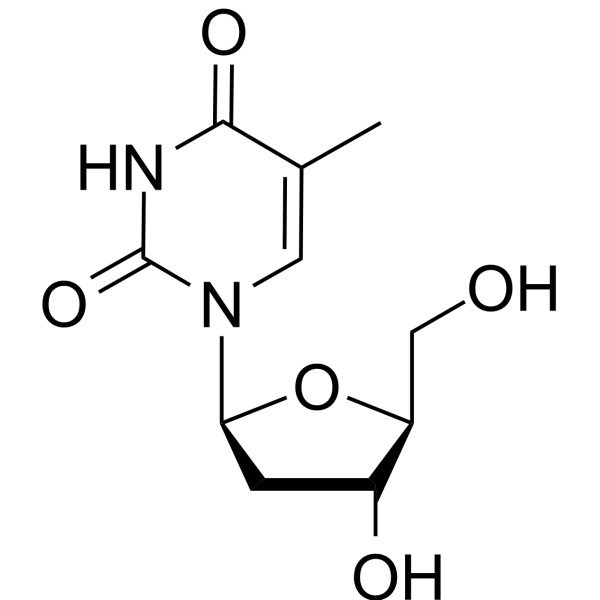
HY-B0017
TelbivudineHBV Replication Inhibitor -
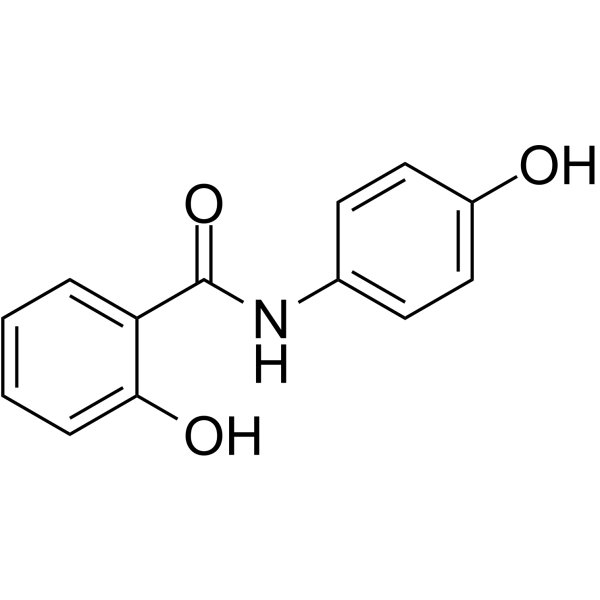
HY-B2116
OsalmidHBV Inhibitor -
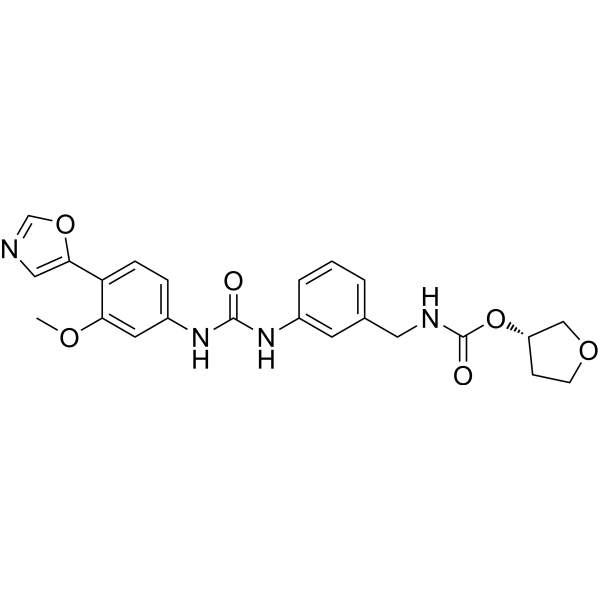
HY-13986
MerimepodibIMPDH Inhibitor -
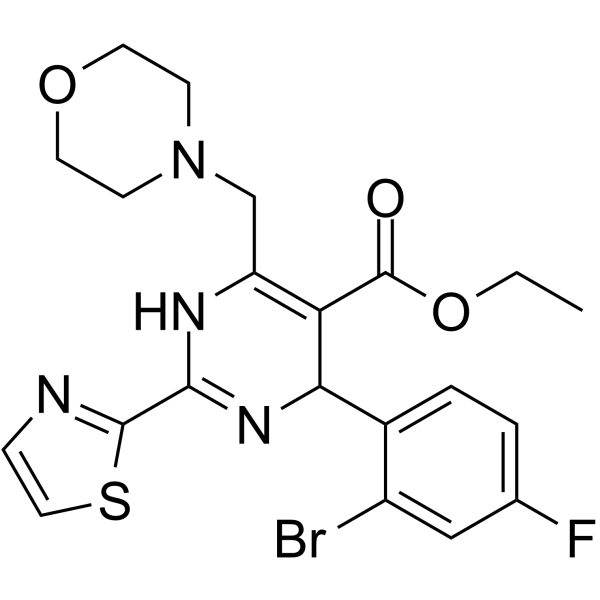
HY-108917
MorphothiadinHBV Inhibitor -
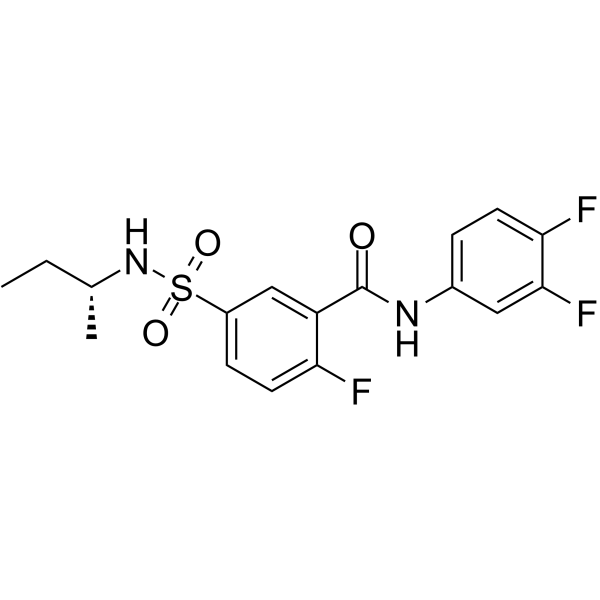
HY-112142
AB-423 -
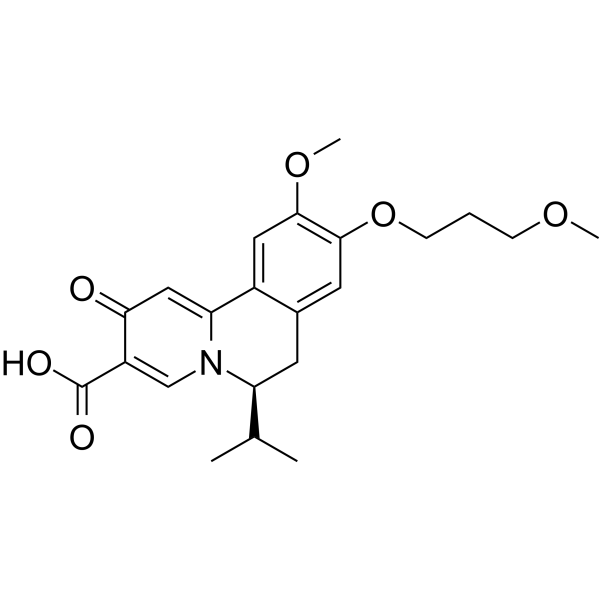
HY-117650A
RG7834HBV Inhibitor -
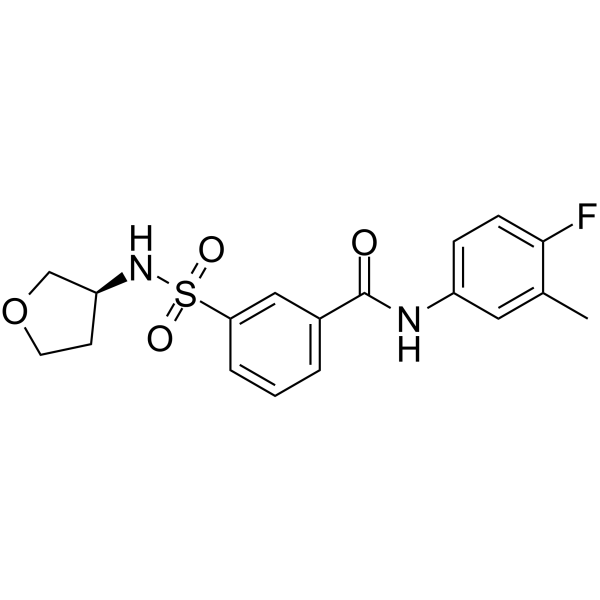
HY-112564
JNJ-632HBV CAM -
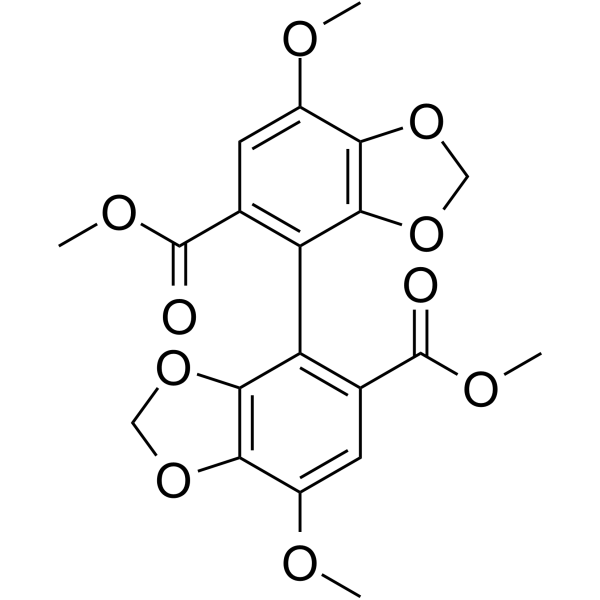
HY-W018791
BifendateAntioxidant, Anti-HBV Agent -
HY-100029
Bay 41-4109HBV Inhibitor
Publications Citing Use of MedChemExpress (MCE) Helioxanthin 8-1
More

Biological Activity
Description
Cellular Effect
|
Cell Line

|
Type | Value | Description | References |
|---|---|---|---|---|
| HepG2 | CC50 |
29 μM
Compound: 45505
|
Cytotoxicity against HBV transfected human HepG2 cells by MTT assay
Cytotoxicity against HBV transfected human HepG2 cells by MTT assay
|
[PMID: 17488817] |
| HepG2 | IC50 |
>1 μM
Compound: 45505
|
Inhibition of HBV promoter in human HepG2 cells by luciferase reporter gene assay
Inhibition of HBV promoter in human HepG2 cells by luciferase reporter gene assay
|
[PMID: 17488817] |
| HepG2 2.2.15 | IC50 |
0.08 μM
Compound: 8-1
|
Antiviral activity against HBV in ayw wild type HepG2(2.2.15) cells assessed as inhibition of viral DNA replication
Antiviral activity against HBV in ayw wild type HepG2(2.2.15) cells assessed as inhibition of viral DNA replication
|
[PMID: 17488817] |
| HepG2 2.2.15 | IC50 |
0.3 μM
Compound: 8-1
|
Antiviral activity against HBV in human HepG2(2.2.15) cells assessed as inhibition of viral pre-genomic RNA replication
Antiviral activity against HBV in human HepG2(2.2.15) cells assessed as inhibition of viral pre-genomic RNA replication
|
[PMID: 17488817] |
| HepG2 2.2.15 | IC50 |
0.9 μM
Compound: 8-1
|
Antiviral activity against HBV in human HepG2(2.2.15) cells assessed as inhibition of viral 2.4/2.1RNA replication
Antiviral activity against HBV in human HepG2(2.2.15) cells assessed as inhibition of viral 2.4/2.1RNA replication
|
[PMID: 17488817] |
| HepG2 2.2.15 | CC50 |
9 μM
Compound: 45505
|
Cytotoxicity against HBV transfected human ayw wild type HepG2(2.2.15) cells by MTT assay
Cytotoxicity against HBV transfected human ayw wild type HepG2(2.2.15) cells by MTT assay
|
[PMID: 17488817] |
| HepG2 2.2.15 | CC50 |
9 μM
Compound: 5
|
Cytotoxicity against human HepG2(2.2.15) cells assessed as reduction in cell viability after 3 days by methylene blue assay
Cytotoxicity against human HepG2(2.2.15) cells assessed as reduction in cell viability after 3 days by methylene blue assay
|
[PMID: 28383274] |
In Vitro
Helioxanthin 8-1 (0.1-3 μM; 6 days) potently inhibits DHBV replication in induced dstet5 cells, with an IC50 value of 0.25 μM against viral DNA, 0.1 μM against viral RNA, and 0.1 μM against core protein. It also reduces cccDNA levels in a dose-dependent manner[1].
Helioxanthin 8-1 (0.03-0.3 μM; 6 days, in combination with 3TC) exhibits additive anti-DHBV activity in dstet5 cells when used in combination with 3TC (HY-B0250). Enhanced viral DNA inhibition is observed across the combined concentration range, with a CI value of 0.82[1].
Helioxanthin 8-1 (10-50 μM; 3 days) exhibits higher cytotoxicity towards virus-induced dstet5 cells (CC50 = 18 μM) than towards uninduced dstet5 cells (CC50 = 45 μM)[1].
Helioxanthin 8-1 (100 μM; 48 h) reduces the viability of Vero cells (ATCC CCL-81) to 70.6%, with a CC50 value of >100 μM[2].
MedChemExpress (MCE) has not independently confirmed the accuracy of these methods. They are for reference only. Further protocols information, click here.
-
Cell Line:doxycycline-induced (viral replication active) and non-induced (no viral replication) dstet5 cells
-
Concentration:10, 30, 50 μM
-
Incubation Time:3 days (after 3 days of induction or non-induction)
-
Result:Had a mean ± sd CC50 of 18 μM in viral-induced dstet5 cells.
Had a mean ± sd CC50 of 45 μM in non-induced dstet5 cells.
-
Cell Line:Vero cells (ATCC CCL-81)
-
Concentration:100 μM
-
Incubation Time:48 h
-
Result:Reduced Vero cell viability to 70.6%.
Exhibited a CC50 value of >100 μM.


Chemical Information
-
CAS No. 840529-13-7
-
Appearance Solid
-
Molecular Weight 376.32
-
Formula C20H12N2O6
-
Color Light yellow to yellow
-
SMILES
O=C1NNC(C2=C(C3=CC=C(OCO4)C4=C3)C5=C6C(OCO6)=CC=C5C=C21)=O
-
Synonyms
Helioxanthin analogue 8-1
-
Shipping
Room temperature in continental US; may vary elsewhere.
-
Storage
Powder -20°C 3 years 4°C 2 years In solvent -80°C 6 months -20°C 1 month


Publications (2)
-
Journal Impact Factor
-
Most Recent
-
Microorganisms
2021 Feb 25;9(3):471. PMID: 33668694 -
ACS Infect Dis
Discovery of New Hepatitis B Virus Capsid Assembly Modulators by an Optimal High-Throughput Cell-Based Assay. [Abstract]2019 May 10;5(5):778-787. PMID: 30761887


Solvent & Solubility
In Vitro:
DMSO : 10 mg/mL (26.57 mM; Need ultrasonic; Hygroscopic DMSO has a significant impact on the solubility of product, please use newly opened DMSO)
Please refer to the solubility information to select the appropriate solvent. Once prepared, please aliquot and store the solution to prevent product inactivation from repeated freeze-thaw cycles.
Storage method and period of stock solution: -80°C, 6 months; -20°C, 1 month. When stored at -80°C, please use it within 6 months. When stored at -20°C, please use it within 1 month.
Please refer to the solubility information to select the appropriate solvent. Once prepared, please aliquot and store the solution to prevent product inactivation from repeated freeze-thaw cycles.
Storage method and period of stock solution: -80°C, 6 months; -20°C, 1 month. When stored at -80°C, please use it within 6 months. When stored at -20°C, please use it within 1 month.
Concentration (start) × Volume (start) = Concentration (final) × Volume (final)
In Vivo:
Select the appropriate dissolution method based on your experimental animal and administration route.
- For the following dissolution methods, please ensure to first prepare a clear stock solution using an In Vitro approach and then sequentially add co-solvents:
- To ensure reliable experimental results, the clarified stock solution can be appropriately stored based on storage conditions. As for the working solution for In Vivo experiments, it is recommended to prepare freshly and use it on the same day.
- The percentages shown for the solvents indicate their volumetric ratio in the final prepared solution. If precipitation or phase separation occurs during preparation, heat and/or sonication can be used to aid dissolution.
Add each solvent one by one: 10% DMSO 40% PEG300 5% Tween-80 45% Saline
Solubility: ≥ 1 mg/mL (2.66 mM); Clear solution
This protocol yields a clear solution of ≥ 1 mg/mL (saturation unknown).
Taking 1 mL working solution as an example, add 100 μL DMSO stock solution (10.0 mg/mL) to 400 μL PEG300, and mix evenly; then add 50 μL Tween-80 and mix evenly; then add 450 μL Saline to adjust the volume to 1 mL.
Preparation of Saline: Dissolve 0.9 g sodium chloride in ddH₂O and dilute to 100 mL to obtain a clear Saline solution.
Add each solvent one by one: 10% DMSO 90% (20% SBE-β-CD in Saline)
Solubility: ≥ 1 mg/mL (2.66 mM); Clear solution
This protocol yields a clear solution of ≥ 1 mg/mL (saturation unknown).
Taking 1 mL working solution as an example, add 100 μL DMSO stock solution (10.0 mg/mL) to 900 μL 20% SBE-β-CD in Saline, and mix evenly.
Preparation of 20% SBE-β-CD in Saline (4°C, storage for one week): 2 g SBE-β-CD powder is dissolved in 10 mL Saline, completely dissolve until clear.
In Vivo Dissolution Calculator
Please enter the basic information of animal experiments:
-
-
-
-
Recommended: Prepare an additional quantity of animals to account for potential losses during experiments.
Please enter your animal formula composition:
-
%DMSO +
Recommended: Keep the proportion of DMSO in working solution below 2% if your animal is weak.
-
%+
-
+%Tween-80 + +
-
%Saline +
The co-solvents required include: DMSO, . All of co-solvents are available by MedChemExpress (MCE). , Tween 80. All of co-solvents are available by MedChemExpress (MCE).
Working solution concentration: 0.22 mg/mL
Method for preparing stock solution: mg drug dissolved in μL DMSO. Stock solution concentration: mg/mL.
1. Take μL DMSO stock solution;
2. Add μL .
μL , mix evenly;
3. Then add μL Tween 80, mix evenly;
4. Then add μL
Please ensure that the stock solution in the first step is dissolved to a clear state, and add co-solvents in sequence. You can use ultrasonic heating (ultrasonic cleaner, recommended frequency 20-40 kHz), vortexing, etc. to assist dissolution.

Protocols
-
Research Protocol for Infectious Diseases
Infectious-disease experiments test how pathogens interact with host barriers, innate immune receptors, inflammatory signaling, pathogen replication, and tissue injury; pattern-recognition receptors such as TLRs, RIG-I-like receptors, NOD-like receptors, and inflammasomes detect microbial molecules and activate NF-κB, interferon, and cytokine responses. The central hypothesis is that infection severity reflects the balance between pathogen burden and host response: protective inflammation restricts pathogen growth, whereas excessive or mislocalized inflammation contributes to tissue damage and disease phenotype. Unresolved questions include which host pathways are protective versus pathogenic, why some infection models fail to translate to human disease, and which combined readouts best predict clinically relevant infection outcomes.
-
Cell Cytotoxicity Assay
Cytotoxicity assays are usually based on the assessment of cell membrane damage, which can also be indirectly detected by measuring cell viability. Detection methods include MTT assay, CKK-8 assay, LDH assay and ATP assay, etc.
-
Mammalian live/dead viability and cytotoxicity staining
Live/dead viability and cytotoxicity staining assays are based on the simultaneous detection of intracellular esterase activity in metabolically active (viable) cells and membrane integrity loss in non-viable cells. In commonly used dual-staining approaches, membrane-permeant fluorogenic substrates are converted by intracellular esterases into fluorescent products in live cells, while impermeant DNA-binding dyes selectively enter cells with compromised plasma membranes and label nucleic acids in dead or dying cells, enabling discrimination between viable and non-viable populations by fluorescence microscopy or flow cytometry.
-
Cell Viability Determination by MTT Colorimetric Assay
The following protocol uses the MTT colorimetric assay as a classic literature-established method for assessing cell viability/metabolic activity in cultured mammalian cells. MTT[3-(4,5-dimethylthiazol-2-yl)-2,5-diphenyltetrazolium bromide] is reduced by metabolically active cells to a colored formazan product; the amount of formazan is quantified spectrophotometrically and provides an indirect measure of metabolically active viable cells. Importantly, MTT reduction reflects cellular oxidoreductase/metabolic activity rather than an absolute direct count of living cells, so changes in cellular metabolism can alter the signal independently of cell number.


Purity & Documentation
-
Data Sheet (282 KB)
-
SDS (252 KB)
- English - EN (252 KB)
- Français - FR (252 KB)
- Deutsch - DE (252 KB)
- Norwegian - NO (252 KB)
- Español - ES (252 KB)
- Swedish - SV (252 KB)
- Italian - IT (252 KB)
- Korean - KR (252 KB)
- Portuguese - PT (252 KB)
-
Handling Instructions (2659 KB)
References
[1]. Ying C, et al. Helioxanthin analogue 8-1 inhibits duck hepatitis B virus replication in cell culture. Antivir Chem Chemother. 2010;21(2):97-103. [Content Brief]
[2]. Stefanik M, et al. Antiviral Activity of Vacuolar ATPase Blocker Diphyllin against SARS-CoV-2. Microorganisms. 2021;9(3):471. Published 2021 Feb 25. [Content Brief]


Complete Stock Solution Preparation Table
Please refer to the solubility information to select the appropriate solvent. Once prepared, please aliquot and store the solution to prevent product inactivation from repeated freeze-thaw cycles.
Storage method and period of stock solution: -80°C, 6 months; -20°C, 1 month. When stored at -80°C, please use it within 6 months. When stored at -20°C, please use it within 1 month.
| Optional Solvent | Concentration Solvent Mass | 1 mg | 5 mg | 10 mg | 25 mg |
|---|---|---|---|---|---|
| DMSO | 1 mM | 2.6573 mL | 13.2866 mL | 26.5731 mL | 66.4328 mL |
| 5 mM | 0.5315 mL | 2.6573 mL | 5.3146 mL | 13.2866 mL | |
| 10 mM | 0.2657 mL | 1.3287 mL | 2.6573 mL | 6.6433 mL | |
| 15 mM | 0.1772 mL | 0.8858 mL | 1.7715 mL | 4.4289 mL | |
| 20 mM | 0.1329 mL | 0.6643 mL | 1.3287 mL | 3.3216 mL | |
| 25 mM | 0.1063 mL | 0.5315 mL | 1.0629 mL | 2.6573 mL |


Helioxanthin 8-1 Related Classifications
HY-16680 Related Classifications
 Powered by Bioz