



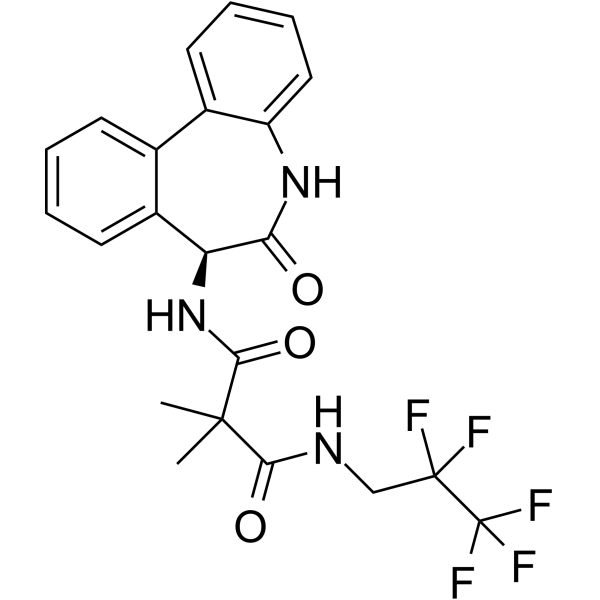
RO4929097
Based on 21 publication(s) in Google Scholar
RO4929097 is an orally active γ secretase inhibitor with an IC50 of 4 nM, inhibiting cellular processing of Aβ40 and Notch with EC50 of 14 nM and 5 nM, respectively.
Para uso exclusivo en investigación. No vendemos a pacientes.
- Pureza : 98.64%
- No. CAS: 847925-91-1
- Fòrmula: C22H20F5N3O3
- Peso molecular:469.40
-
Almacenamiento:
4°C, stored under nitrogen
* In solvent : -80°C, 1 year; -20°C, 6 months (stored under nitrogen)

To place orders, for customer services and technical support, please contact: MedChemExpress USA
Tel: 609-228-6898 E-mail: [email protected] [email protected]


-
 Actividad biológica
-
Chemical Information
-
Solvente y solubilidad
- Protocolo
- Pureza y Documentación
- Referencias
-
 Help & FAQs


-
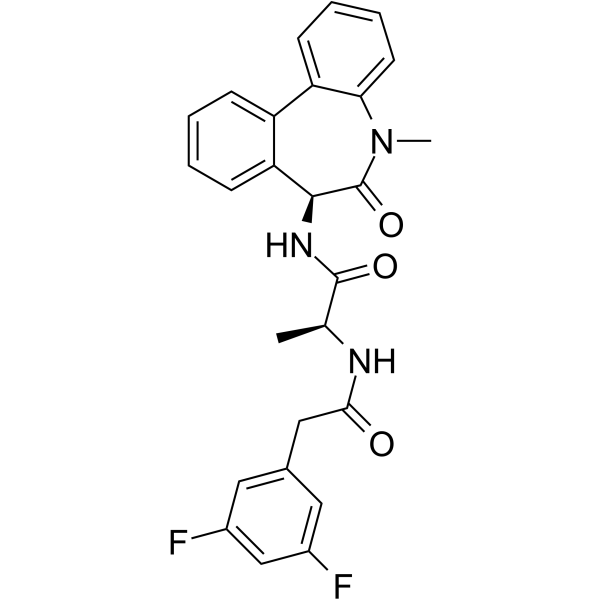
HY-13526
YO-01027γ-secretase Inhibitor -
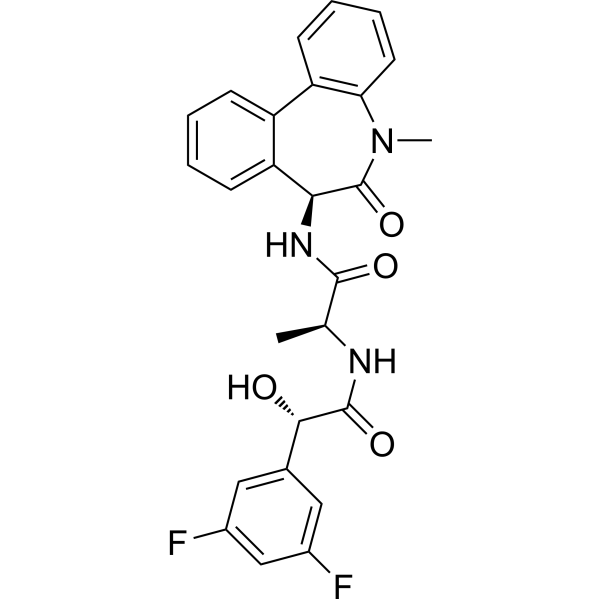
HY-50752
LY-411575γ-secretase Inhibitor -
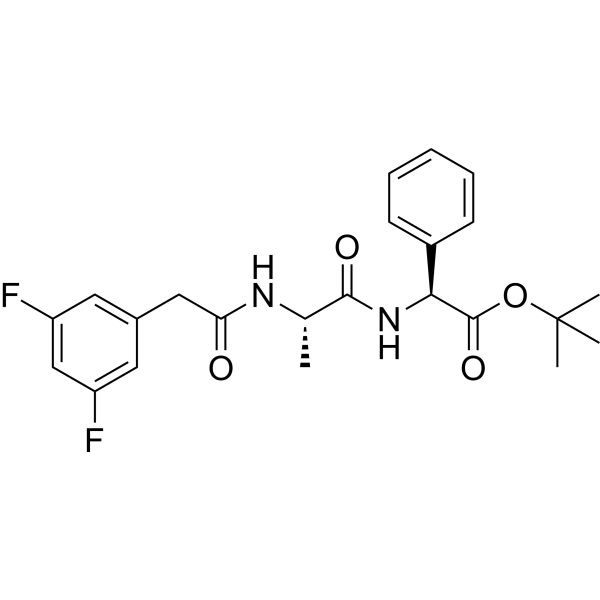
HY-13027
DAPTγ-secretase Inhibitor -
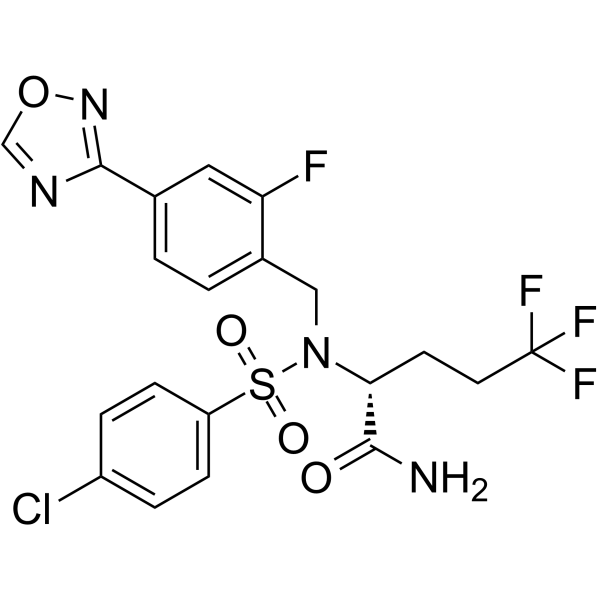
HY-50845
Avagacestatγ-secretase Inhibitor -
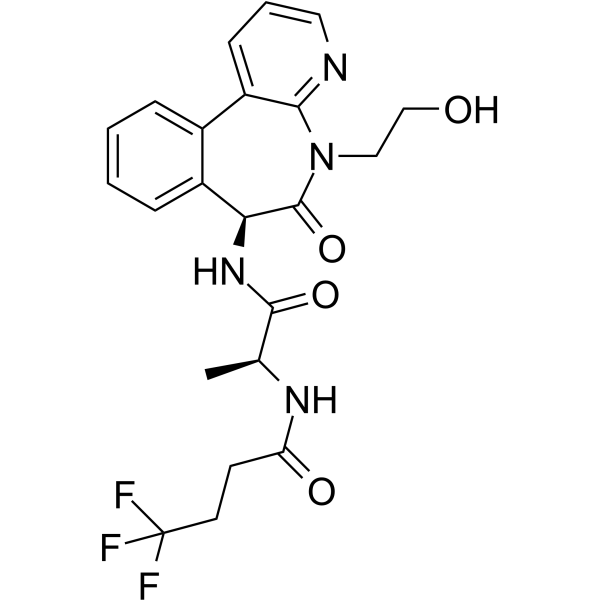
HY-12449
CrenigacestatNotch/γ-secretase Inhibitor -
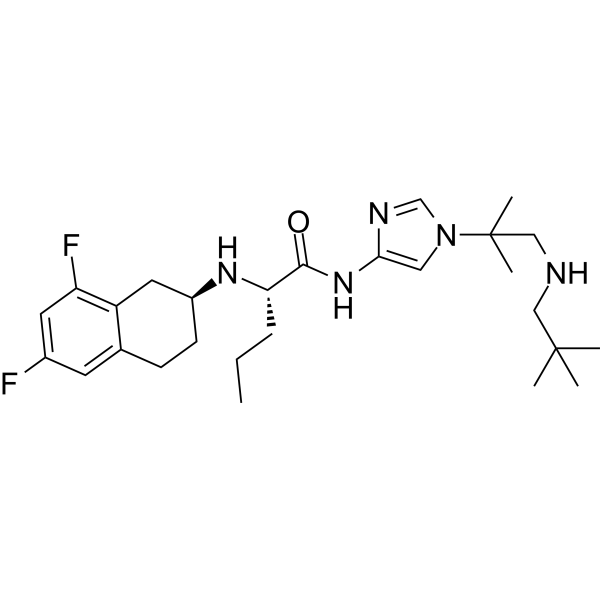
HY-15185
Nirogacestatγ-Secretase Inhibitor -
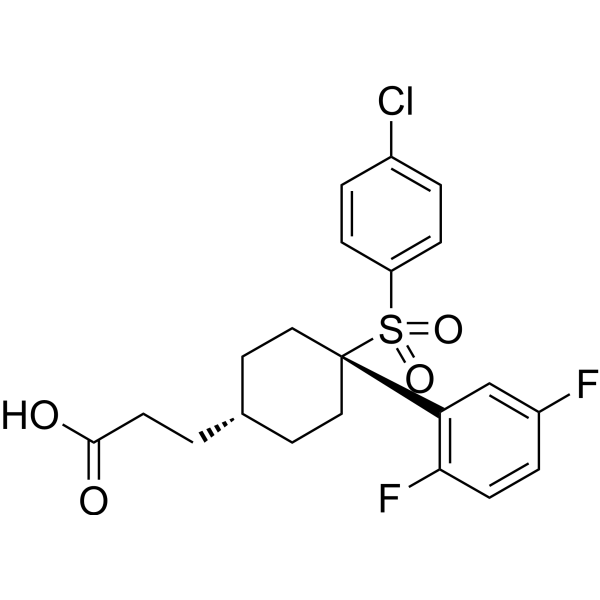
HY-10974
MK-0752 -
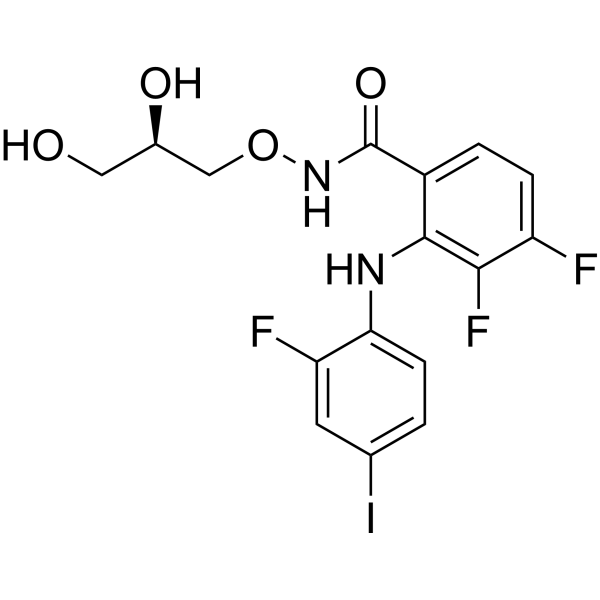
HY-10254
MirdametinibMEK Inhibitor -
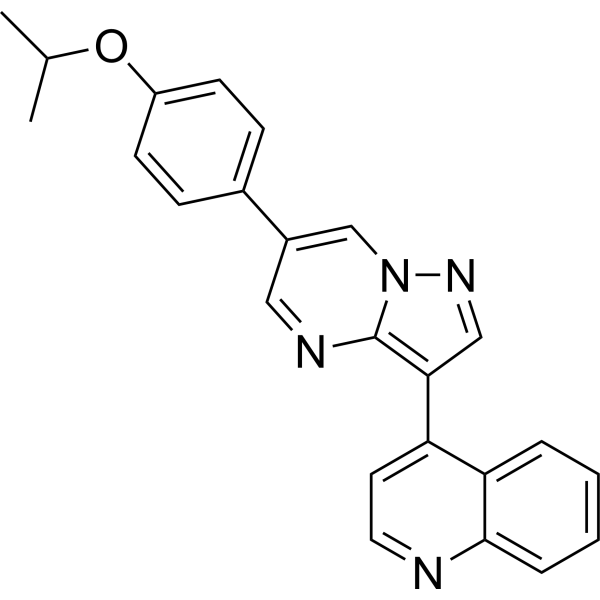
HY-12273
DMH-1BMP Inhibitor -
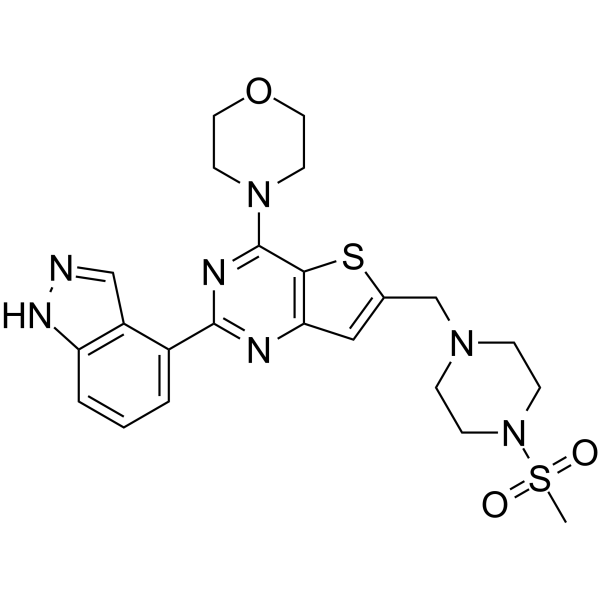
HY-50094
PictilisibPI3Kα/δ Inhibitor -
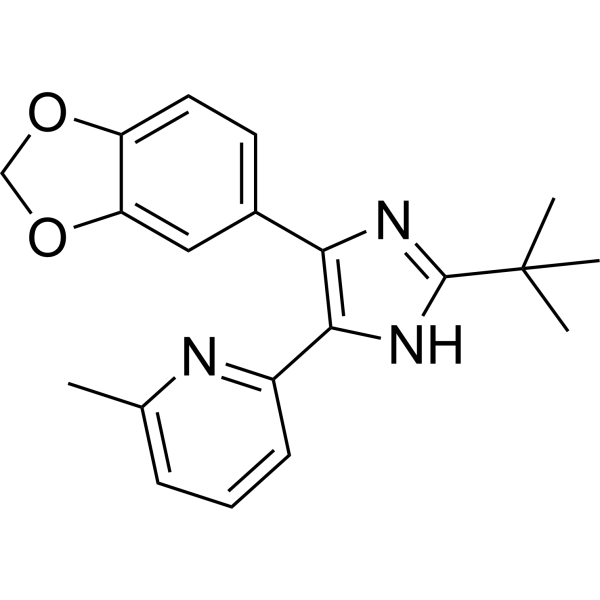
HY-13521
SB-505124ALK4/5/7 Inhibitor -
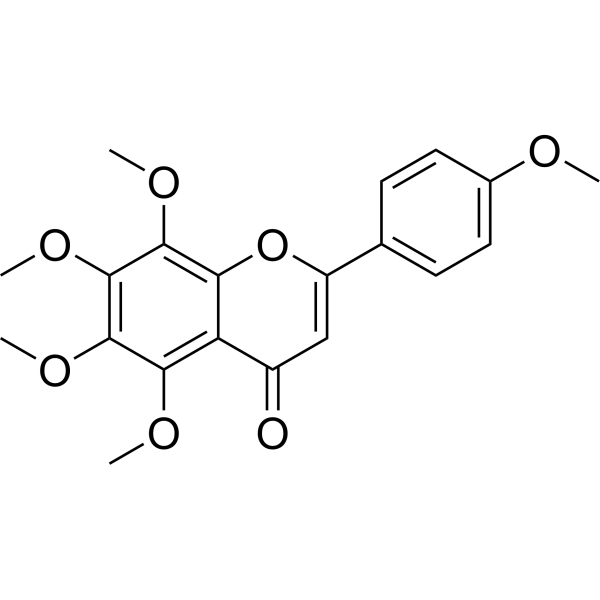
HY-N0133
TangeretinApoptosis Inducer
Publications Citing Use of MedChemExpress (MCE) RO4929097
More- Sci Bull. 2025 Apr 15;70(7):1126-1138. [Abstract]
- Nat Commun. 2025 Jul 8;16(1):6302. [Abstract]
- Theranostics. 2019 Oct 12;9(25):7566-7582. [Abstract]
- J Exp Clin Cancer Res. 2019 Dec 30;38(1):505. [Abstract]
- Cell Rep Med. 2025 Jul 15;6(7):102208. [Abstract]
- J Immunother Cancer. 2026 Jun 28;14(6):e013127.
- Cell Commun Signal. 2021 Nov 15;19(1):112. [Abstract]
- J Transl Med. 2023 Mar 31;21(1):236. [Abstract]
- Cell Chem Biol. 2025 Oct 16;32(10):1235-1248.e34. [Abstract]
- Cell Chem Biol. 2022 Aug 18;29(8):1260-1272.e8. [Abstract]
- Neural Regen Res. 2023 Feb;18(2):445-450. [Abstract]
- Cell Syst. 2018 Apr 25;6(4):424-443.e7. [Abstract]
- Int J Mol Sci. 2023 Jun 13;24(12):10094. [Abstract]
- Sci Rep. 2024 Nov 26;14(1):29286. [Abstract]
- FASEB J. 2017 Sep;31(9):3774-3786. [Abstract]
- J Biol Chem. 2019 Jul 19;294(29):11276-11285. [Abstract]
- Development. 2021 Nov 1;148(21):dev199940. [Abstract]
- ACS Med Chem Lett. 2015 Jun 22;6(8):948-52. [Abstract]
- Oncol Lett. 2020 Dec;20(6):379. [Abstract]
- bioRxiv. 2025 Aug 8:2025.08.08.669417. [Abstract]
- Patent. US20180263995A1.
 Customer Validation & Images

-
RT-PCR
-
Cell Imaging/Staining
-
Flow Cytometry
-
WB
-
Cell Migration/Invasion Assay


Actividad biológica
Descripciòn
IC50 & Target
IC50: 4 nM (γ secretase)[1]
Cellular Effect
|
Cell Line

|
Type | Value | Description | References |
|---|---|---|---|---|
| HEK293 | EC50 |
14 nM
Compound: 12; RO4929097
|
Inhibition of gamma secretase in HEK293 cells expressing APP695 assessed as reduction in amyloid beta (1 to 40 residues) by ELISA
Inhibition of gamma secretase in HEK293 cells expressing APP695 assessed as reduction in amyloid beta (1 to 40 residues) by ELISA
|
[PMID: 27045975] |
| HEK293 | EC50 |
5 nM
Compound: 12; RO4929097
|
Inhibition of gamma secretase mediated Notch1 signaling in HEK293 cells expressing truncated human Notch1 by luciferase reporter gene assay
Inhibition of gamma secretase mediated Notch1 signaling in HEK293 cells expressing truncated human Notch1 by luciferase reporter gene assay
|
[PMID: 27045975] |
In Vitro
RO4929097 inhibits the production of ICN reducing the expression of the downstream Notch target, Hes1, producing a less transformed morphology in A549 cells. RO4929097 inhibits Notch processing in human tumor-derived cells[1].RO4929097 (1 μM) inhibits the growth of breast cancer cells, and the inhibition is 20% for SUM149 and 10% for SUM190 cells. RO4929097 does not have a marked effect in invasiveness of SUM149 cells. RO4929097 significantly reduces colony formation by both cell lines with the effect being more notable in SUM149 than by SUM190 cells[2]. RO4929097 inhibits proliferation, anchorage independent growth, and sphere formation of primary melanoma cells in vitro[3].
MedChemExpress (MCE) has not independently confirmed the accuracy of these methods. They are for reference only.
In Vivo
MedChemExpress (MCE) has not independently confirmed the accuracy of these methods. They are for reference only.
Ensayo clínico
| NCT Number | Sponsor | Condition | Start Date |
Phase
|
|---|---|---|---|---|
| NCT01329991 | 2011-05 | PHASE1 |


Chemical Information
-
No. CAS 847925-91-1
-
Appearance Solid
-
Peso molecular 469.40
-
Fòrmula C22H20F5N3O3
-
Color White to off-white
-
SMILES
O=C(C(C)(C(NCC(F)(C(F)(F)F)F)=O)C)N[C@H]1C2=CC=CC=C2C3=CC=CC=C3NC1=O
-
Envío
Room temperature in continental US; may vary elsewhere.
-
Almacenamiento
4°C, stored under nitrogen
* In solvent : -80°C, 1 year; -20°C, 6 months (stored under nitrogen)


Publications (21)
-
Journal Impact Factor
-
Most Recent
-
Sci Bull
Tumor cell-derived N-acetyl-aspartyl-glutamate reshapes the tumor microenvironment to facilitate breast cancer metastasis. [Abstract]2025 Apr 15;70(7):1126-1138. PMID: 39800628 -
Nat Commun
2025 Jul 8;16(1):6302. PMID: 40628749 -
Theranostics
The hepatocyte-specifically expressed lnc-HSER alleviates hepatic fibrosis by inhibiting hepatocyte apoptosis and epithelial-mesenchymal transition. [Abstract]2019 Oct 12;9(25):7566-7582. PMID: 31695787 -
J Exp Clin Cancer Res
Musashi2 contributes to the maintenance of CD44v6+ liver cancer stem cells via notch1 signaling pathway. [Abstract]2019 Dec 30;38(1):505. PMID: 31888685 -
Cell Rep Med
CLDN4 palmitoylation promotes hepatic-to-biliary lineage transition and lenvatinib resistance in hepatocellular carcinoma. [Abstract]2025 Jul 15;6(7):102208. PMID: 40592346 -
-
Cell Commun Signal
2021 Nov 15;19(1):112. PMID: 34781973
RO4929097 purchased from MedChemExpress. Usage Cited in: Cell Commun Signal. 2021 Nov 15;19(1):112. [Abstract]
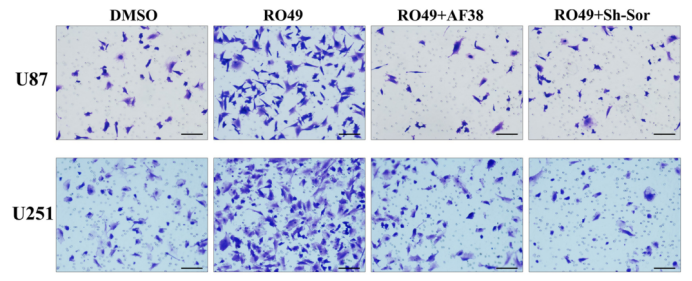
Transwell assays to detect the invasion ability of U87 and U251 cells when treated with RO4909497 alone, combined with AF38469 or with down-regulation of Sortilin in U87 and U251 cell.
-
J Transl Med
The stromal-tumor amplifying STC1-Notch1 feedforward signal promotes the stemness of hepatocellular carcinoma. [Abstract]2023 Mar 31;21(1):236. PMID: 37004088 -
Cell Chem Biol
2025 Oct 16;32(10):1235-1248.e34. PMID: 41056949 -
Cell Chem Biol
Lenalidomide bypasses CD28 co-stimulation to reinstate PD-1 immunotherapy by activating Notch signaling. [Abstract]2022 Aug 18;29(8):1260-1272.e8. PMID: 35732177 -
Neural Regen Res
Sox11b regulates the migration and fate determination of Müller glia-derived progenitors during retina regeneration in zebrafish. [Abstract]2023 Feb;18(2):445-450. PMID: 35900444
RO4929097 purchased from MedChemExpress. Usage Cited in: Neural Regen Res. 2023 Feb;18(2):445-450. [Abstract]
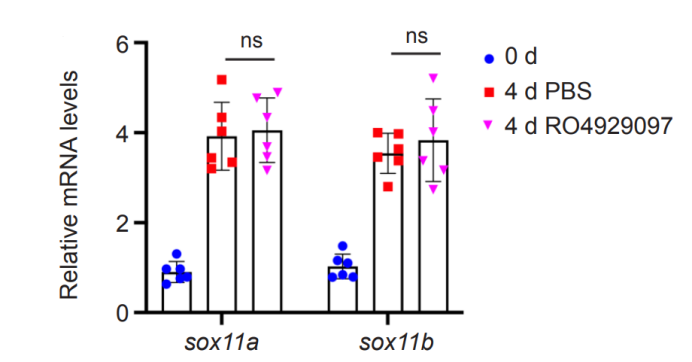
qPCR showed the relative mRNA expression levels of sox11a and sox11b in PBS-or RO4929097(250 μM)-treated retinas at 4 dpi.
RO4929097 purchased from MedChemExpress. Usage Cited in: Neural Regen Res. 2023 Feb;18(2):445-450. [Abstract]
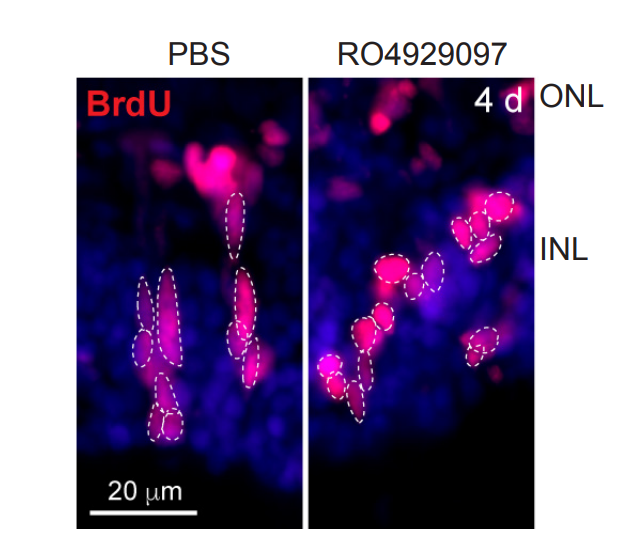
BrdU immunofluorescence showed that RO4929097 (250 μM)-treated MGPCs exhibited a more rounded morphology. Outlines of MGPC nuclei are indicated by white dotted lines.
-
Cell Syst
A Library of Phosphoproteomic and Chromatin Signatures for Characterizing Cellular Responses to Drug Perturbations. [Abstract]2018 Apr 25;6(4):424-443.e7. PMID: 29655704 -
Int J Mol Sci
Cdk4 Regulates Glioblastoma Cell Invasion and Stemness and Is Target of a Notch Inhibitor Plus Resveratrol Combined Treatment. [Abstract]2023 Jun 13;24(12):10094. PMID: 37373242
RO4929097 purchased from MedChemExpress. Usage Cited in: Int J Mol Sci. 2023 Jun 13;24(12):10094. [Abstract]
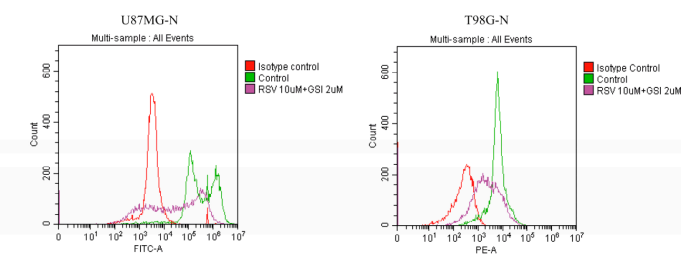
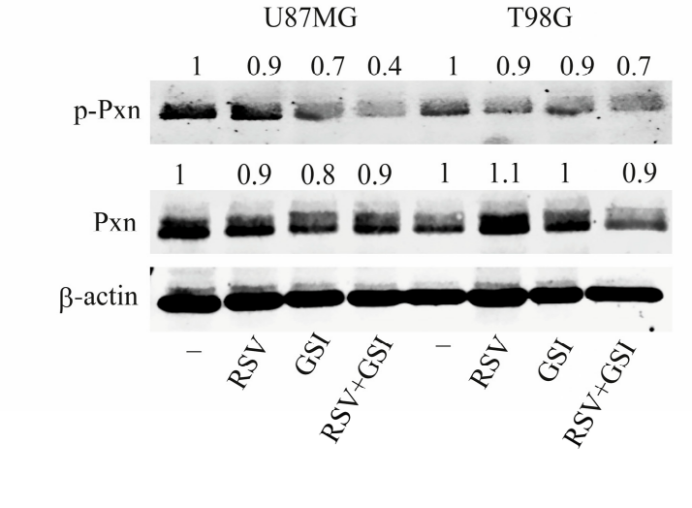
Flow cytometry analysis of U87MG-N CD44+ and T98G-N CD133+ subpopulations cultured in the presence of vehicle (-) or RSV+ (GSI) (2 μM).
RO4929097 purchased from MedChemExpress. Usage Cited in: Int J Mol Sci. 2023 Jun 13;24(12):10094. [Abstract]
U87MG and T98G cells were treated with vehicle (-) or 10 μM RSV and/or 2 μM RO4929097 (GSI) for 24 h, and immunoblotting was carried out.
-
Sci Rep
The neuroepithelial origin of ovarian carcinomas explained through an epithelial-mesenchymal-ectodermal transition enhanced by cisplatin. [Abstract]2024 Nov 26;14(1):29286. PMID: 39592661 -
FASEB J
MiR-2392 suppresses metastasis and epithelial-mesenchymal transition by targeting MAML3 and WHSC1 in gastric cancer. [Abstract]2017 Sep;31(9):3774-3786. PMID: 28512191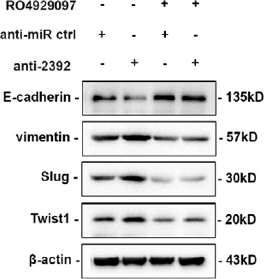
RO4929097 purchased from MedChemExpress. Usage Cited in: FASEB J. 2017 Sep;31(9):3774-3786. [Abstract]
Western blot analysis of E-cadherin, vimentin, Slug, and Twist1 in BGC823 cells treated with RO4929097 in addition to miR-2392 inhibition.
-
J Biol Chem
Individual and combined presenilin 1 and 2 knockouts reveal that both have highly overlapping functions in HEK293T cells. [Abstract]2019 Jul 19;294(29):11276-11285. PMID: 31167792 -
Development
Alveolar progenitor differentiation and lactation depends on paracrine inhibition of notch via ROBO1/CTNNB1/JAG1. [Abstract]2021 Nov 1;148(21):dev199940. PMID: 34758082 -
ACS Med Chem Lett
High-Throughput Screening of Patient-Derived Cultures Reveals Potential for Precision Medicine in Glioblastoma. [Abstract]2015 Jun 22;6(8):948-52. PMID: 26288699 -
Oncol Lett
Notch3 is involved in the proliferation of renal cancer cells via regulation of cell cycle progression and HIF-2α. [Abstract]2020 Dec;20(6):379. PMID: 33154777 -
bioRxiv
2025 Aug 8:2025.08.08.669417. PMID: 40855884 -


Solvente y solubilidad
In Vitro:
DMSO : ≥ 49 mg/mL (104.39 mM; Hygroscopic DMSO has a significant impact on the solubility of product, please use newly opened DMSO)
* "≥" means soluble, but saturation unknown.
Please refer to the solubility information to select the appropriate solvent. Once prepared, please aliquot and store the solution to prevent product inactivation from repeated freeze-thaw cycles.
Storage method and period of stock solution: -80°C, 1 year; -20°C, 6 months (stored under nitrogen). When stored at -80°C, please use it within 1 year. When stored at -20°C, please use it within 6 months.
Please refer to the solubility information to select the appropriate solvent. Once prepared, please aliquot and store the solution to prevent product inactivation from repeated freeze-thaw cycles.
Storage method and period of stock solution: -80°C, 1 year; -20°C, 6 months (stored under nitrogen). When stored at -80°C, please use it within 1 year. When stored at -20°C, please use it within 6 months.
Concentration (start) × Volume (start) = Concentration (final) × Volume (final)
In Vivo:
Select the appropriate dissolution method based on your experimental animal and administration route.
- For the following dissolution methods, please ensure to first prepare a clear stock solution using an In Vitro approach and then sequentially add co-solvents:
- To ensure reliable experimental results, the clarified stock solution can be appropriately stored based on storage conditions. As for the working solution for In Vivo experiments, it is recommended to prepare freshly and use it on the same day.
- The percentages shown for the solvents indicate their volumetric ratio in the final prepared solution. If precipitation or phase separation occurs during preparation, heat and/or sonication can be used to aid dissolution.
Add each solvent one by one: 10% DMSO 40% PEG300 5% Tween-80 45% Saline
Solubility: ≥ 2.5 mg/mL (5.33 mM); Clear solution
This protocol yields a clear solution of ≥ 2.5 mg/mL (saturation unknown).
Taking 1 mL working solution as an example, add 100 μL DMSO stock solution (25.0 mg/mL) to 400 μL PEG300, and mix evenly; then add 50 μL Tween-80 and mix evenly; then add 450 μL Saline to adjust the volume to 1 mL.
Preparation of Saline: Dissolve 0.9 g sodium chloride in ddH₂O and dilute to 100 mL to obtain a clear Saline solution.
In Vivo Dissolution Calculator
Please enter the basic information of animal experiments:
-
-
-
-
Recommended: Prepare an additional quantity of animals to account for potential losses during experiments.
Please enter your animal formula composition:
-
%DMSO +
Recommended: Keep the proportion of DMSO in working solution below 2% if your animal is weak.
-
%+
-
+%Tween-80 + +
-
%Saline +
The co-solvents required include: DMSO, . All of co-solvents are available by MedChemExpress (MCE). , Tween 80. All of co-solvents are available by MedChemExpress (MCE).
Working solution concentration: 0.22 mg/mL
Method for preparing stock solution: mg drug dissolved in μL DMSO. Stock solution concentration: mg/mL. * In solvent : -80°C, 1 year; -20°C, 6 months (stored under nitrogen)
1. Take μL DMSO stock solution;
2. Add μL .
μL , mix evenly;
3. Then add μL Tween 80, mix evenly;
4. Then add μL
Please ensure that the stock solution in the first step is dissolved to a clear state, and add co-solvents in sequence. You can use ultrasonic heating (ultrasonic cleaner, recommended frequency 20-40 kHz), vortexing, etc. to assist dissolution.


Pureza y Documentación
-
Ficha de datos (284 KB)
-
SDS (393 KB)
- English - EN (393 KB)
- Français - FR (393 KB)
- Deutsch - DE (393 KB)
- Norwegian - NO (393 KB)
- Español - ES (393 KB)
- Swedish - SV (393 KB)
- Italian - IT (393 KB)
- Korean - KR (393 KB)
- Portuguese - PT (393 KB)
-
Instrucciones de manejo (2659 KB)
Referencias
[1]. Luistro L, et al. Preclinical profile of a potent gamma-secretase inhibitor targeting notch signaling with in vivo efficacy and pharmacodynamic properties. Cancer Res. 2009, 69(19), 7672-7680. [Content Brief]
[2]. Debeb BG, et al. Pre-clinical studies of Notch signaling inhibitor RO4929097 in inflammatory breast cancer cells. Breast Cancer Res Treat. 2012. [Content Brief]
[3]. Huynh C, et al. The novel gamma secretase inhibitor RO4929097 reduces the tumor initiating potential of melanoma. PLoS One. 2011, 6(9), e25264. [Content Brief]


Complete Stock Solution Preparation Table
Please refer to the solubility information to select the appropriate solvent. Once prepared, please aliquot and store the solution to prevent product inactivation from repeated freeze-thaw cycles.
Storage method and period of stock solution: -80°C, 1 year; -20°C, 6 months (stored under nitrogen). When stored at -80°C, please use it within 1 year. When stored at -20°C, please use it within 6 months.
| Optional Solvent | Concentration Solvent Mass | 1 mg | 5 mg | 10 mg | 25 mg |
|---|---|---|---|---|---|
| DMSO | 1 mM | 2.1304 mL | 10.6519 mL | 21.3038 mL | 53.2595 mL |
| 5 mM | 0.4261 mL | 2.1304 mL | 4.2608 mL | 10.6519 mL | |
| 10 mM | 0.2130 mL | 1.0652 mL | 2.1304 mL | 5.3259 mL | |
| 15 mM | 0.1420 mL | 0.7101 mL | 1.4203 mL | 3.5506 mL | |
| 20 mM | 0.1065 mL | 0.5326 mL | 1.0652 mL | 2.6630 mL | |
| 25 mM | 0.0852 mL | 0.4261 mL | 0.8522 mL | 2.1304 mL | |
| 30 mM | 0.0710 mL | 0.3551 mL | 0.7101 mL | 1.7753 mL | |
| 40 mM | 0.0533 mL | 0.2663 mL | 0.5326 mL | 1.3315 mL | |
| 50 mM | 0.0426 mL | 0.2130 mL | 0.4261 mL | 1.0652 mL | |
| 60 mM | 0.0355 mL | 0.1775 mL | 0.3551 mL | 0.8877 mL | |
| 80 mM | 0.0266 mL | 0.1331 mL | 0.2663 mL | 0.6657 mL | |
| 100 mM | 0.0213 mL | 0.1065 mL | 0.2130 mL | 0.5326 mL |


RO4929097 Related Classifications
HY-11102 Related Classifications
 Powered by Bioz