



Halicin
Based on 2 publication(s) in Google Scholar
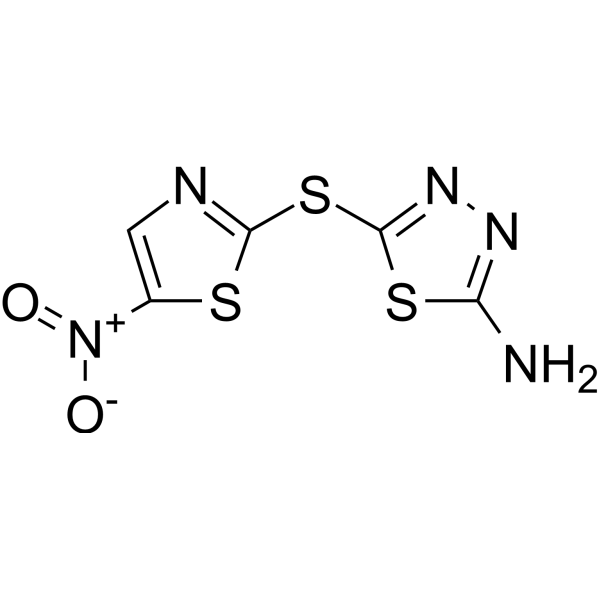
Halicin (SU3327) is a potent, selective and substrate-competitive JNK inhibitor with an IC50 of 0.7 μM. Halicin also inhibits protein-protein interactions between JNK and JNK Interacting Protein (JIP) with an IC50 of 239 nM. Halicin shows less active against p38α and Akt kinase.
Para uso exclusivo en investigación. No vendemos a pacientes.
- Pureza : 98.92%
- No. CAS: 40045-50-9
- Fòrmula: C5H3N5O2S3
- Peso molecular:261.30
-
Almacenamiento:Powder -20°C, 3 years , 4°C, 2 years ; In solvent -80°C, 2 years , -20°C, 1 year

To place orders, for customer services and technical support, please contact: MedChemExpress USA
Tel: 609-228-6898 E-mail: [email protected] [email protected]


-
 Actividad biológica
-
Chemical Information
-
Solvente y solubilidad
- Pureza y Documentación
- Referencias
-
 Help & FAQs


-
HY-13022
CC-401 hydrochlorideJNK Inhibitor -
HY-16379
PacritinibJAK2/FLT3 Inhibitor -
HY-B0778
Milbemycin oximeParasite Inhibitor -
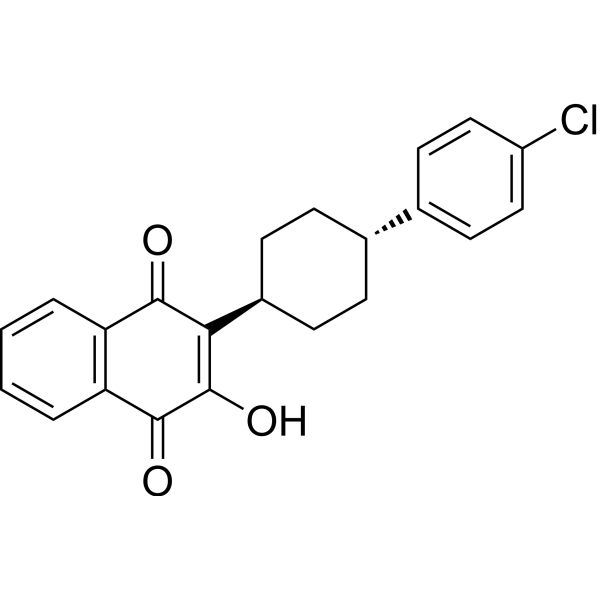
HY-13832
AtovaquoneAntimalarial Agent -
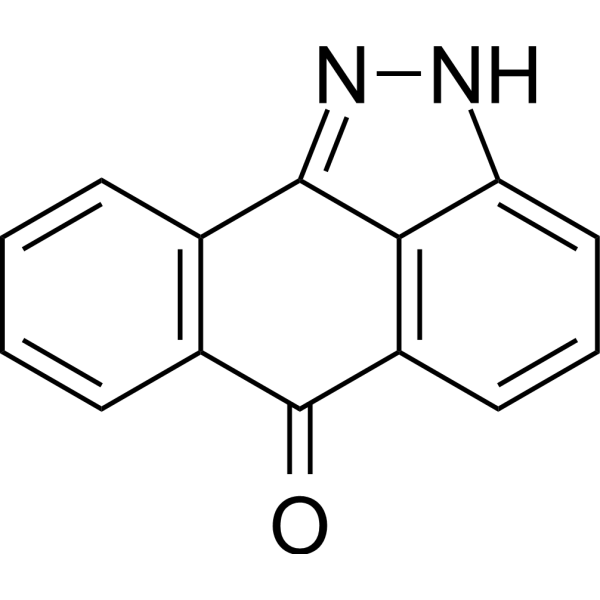
HY-12041
SP600125JNK Inhibitor -
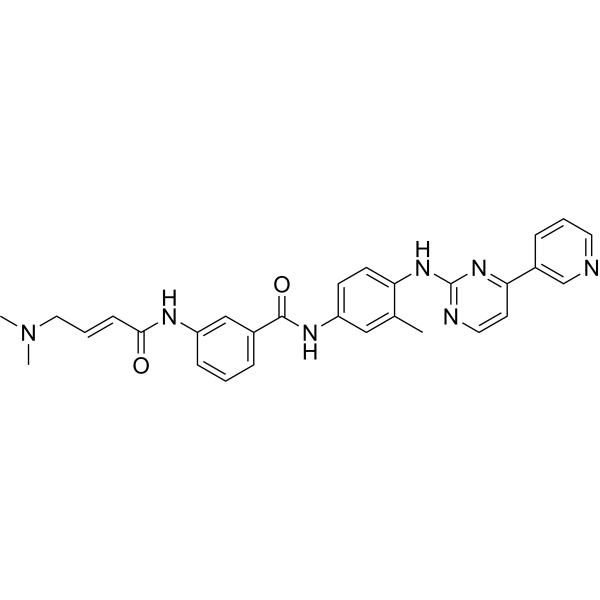
HY-13319
JNK-IN-8JNK Inhibitor -
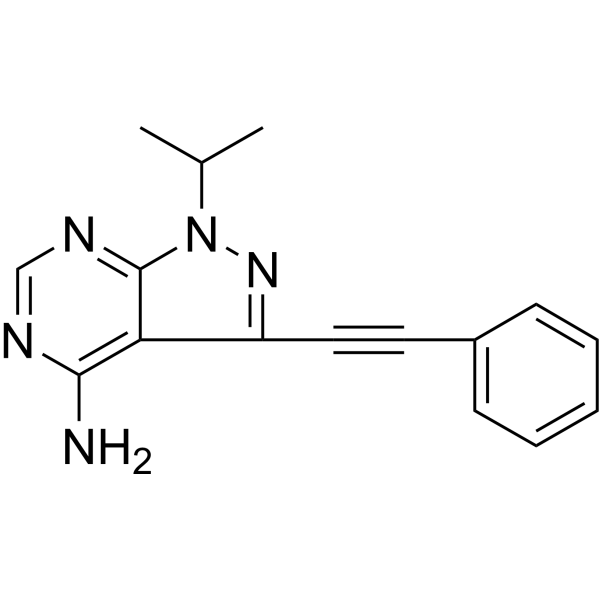
HY-110193
SPP-86RET Inhibitor -
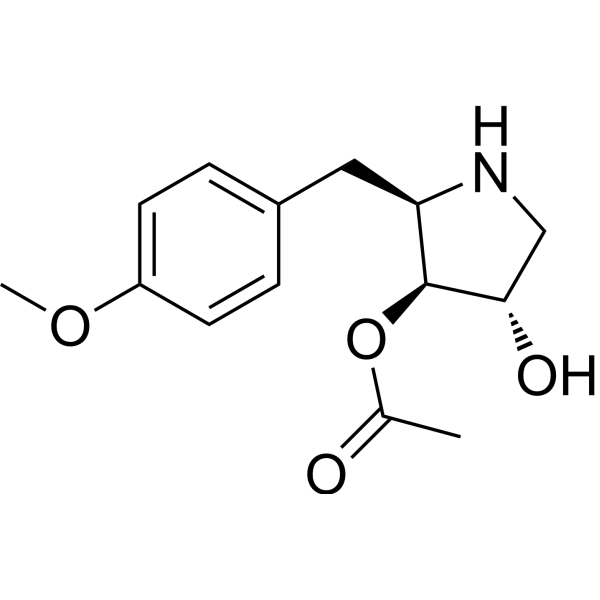
HY-18982
AnisomycinProtein Synthesis Inhibitor -
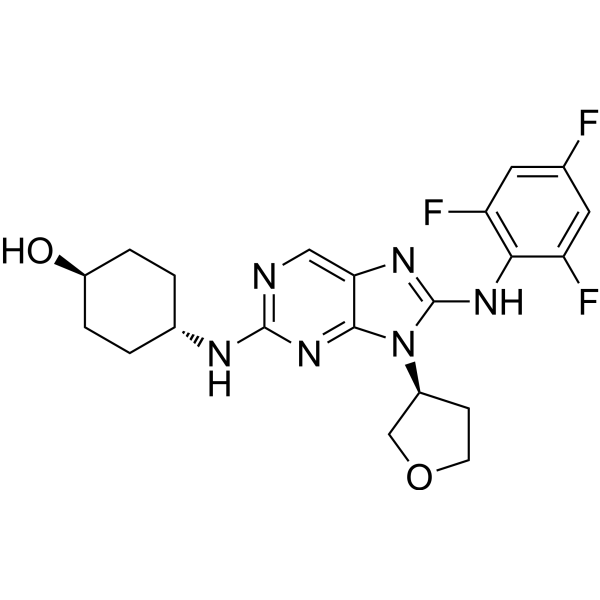
HY-15495
Tanzisertib -
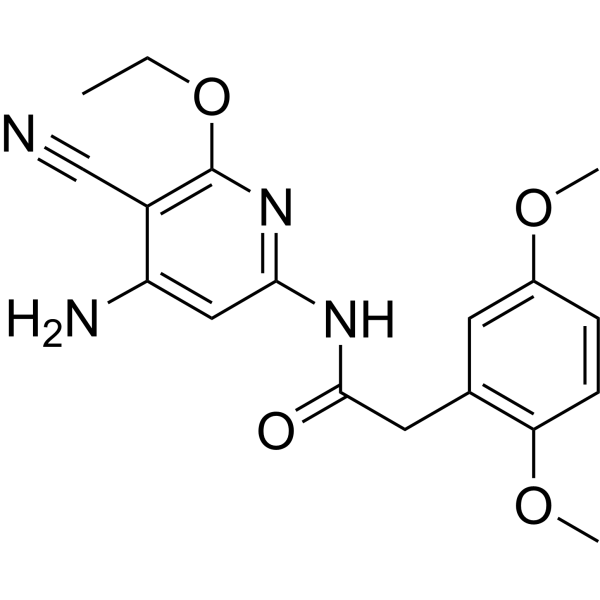
HY-107598
JNK Inhibitor VIIIJNK Inhibitor -
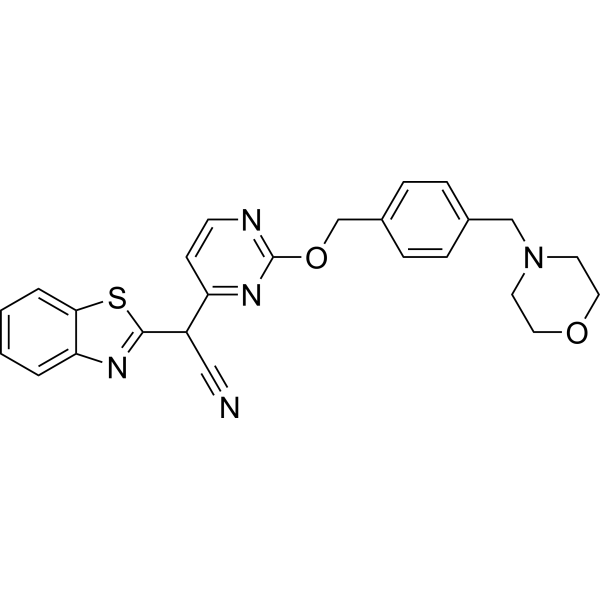
HY-14761
BentamapimodJNK Inhibitor -
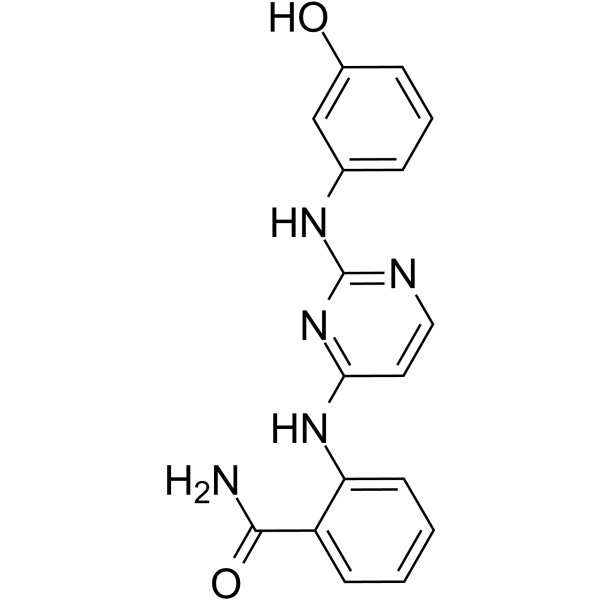
HY-15737
DB07268JNK Inhibitor
Publications Citing Use of MedChemExpress (MCE) Halicin
More

Actividad biológica
Descripciòn
IC50 & Target
IC50: 0.7 μM (JNK); 239 nM (JNK-JIP interactions)[1]
Cellular Effect
|
Cell Line

|
Type | Value | Description | References |
|---|---|---|---|---|
| HeLa | EC50 |
6.23 μM
Compound: 9
|
Inhibition of TNF-alpha-stimulated JNK phosphorylation expressed in HeLa cells by time-resolved FRET assay
Inhibition of TNF-alpha-stimulated JNK phosphorylation expressed in HeLa cells by time-resolved FRET assay
|
[PMID: 19271755] |
In Vitro
Halicin (compound 9) is able to inhibit TNF-α stimulated phosphorylation of c-Jun in HeLa cells (EC50 = 6.23 μM)[1].
Halicin (25 nM) pretreatment of? human-derived cerebral microvascular endothelial cells (hCMEC/D3) effectively reduces LPS-induced polymorphonuclear leukocytes (PMN) rolling/adhesion to hCMEC/D3, prevents activation of AP-1, and significantly reduces expression of VCAM-1[3].
MedChemExpress (MCE) has not independently confirmed the accuracy of these methods. They are for reference only.
In Vivo
Halicin (Compound 9) has favorable microsomal and plasma stability (T1/2 = 27 min)[1].
MedChemExpress (MCE) has not independently confirmed the accuracy of these methods. They are for reference only.
-
Animal Model:Male BKS.Cg-+Leprdb/+Leprdb/OlaHsd db/db mice (11-week-old ) injected with insulin[1]
-
Dosage:25 mg/kg
-
Administration:Intraperitoneal injection
-
Result:Resulted in a statistically significant reduction in blood glucose levels.


Chemical Information
-
No. CAS 40045-50-9
-
Appearance Solid
-
Peso molecular 261.30
-
Fòrmula C5H3N5O2S3
-
Color Light yellow to yellow
-
SMILES
NC1=NN=C(S1)SC2=NC=C([N+]([O-])=O)S2
-
Synonyms
SU3327
-
Envío
Room temperature in continental US; may vary elsewhere.
-
Almacenamiento
Powder -20°C 3 years 4°C 2 years In solvent -80°C 2 years -20°C 1 year


Publications (2)
-
Journal Impact Factor
-
Most Recent
-
Biol Pharm Bull
Phosphatidylserine-Specific Phospholipase A1 Alleviates Lipopolysaccharide-Induced Macrophage Inflammation by Inhibiting MAPKs Activation. [Abstract]2022 Aug 1;45(8):1061-1068. PMID: 35650027 -


Solvente y solubilidad
In Vitro:
DMSO : 62.5 mg/mL (239.19 mM; Need ultrasonic; Hygroscopic DMSO has a significant impact on the solubility of product, please use newly opened DMSO)
Please refer to the solubility information to select the appropriate solvent. Once prepared, please aliquot and store the solution to prevent product inactivation from repeated freeze-thaw cycles.
Storage method and period of stock solution: -80°C, 2 years; -20°C, 1 year. When stored at -80°C, please use it within 2 years. When stored at -20°C, please use it within 1 year.
Please refer to the solubility information to select the appropriate solvent. Once prepared, please aliquot and store the solution to prevent product inactivation from repeated freeze-thaw cycles.
Storage method and period of stock solution: -80°C, 2 years; -20°C, 1 year. When stored at -80°C, please use it within 2 years. When stored at -20°C, please use it within 1 year.
Concentration (start) × Volume (start) = Concentration (final) × Volume (final)
In Vivo:
Select the appropriate dissolution method based on your experimental animal and administration route.
- For the following dissolution methods, please ensure to first prepare a clear stock solution using an In Vitro approach and then sequentially add co-solvents:
- To ensure reliable experimental results, the clarified stock solution can be appropriately stored based on storage conditions. As for the working solution for In Vivo experiments, it is recommended to prepare freshly and use it on the same day.
- The percentages shown for the solvents indicate their volumetric ratio in the final prepared solution. If precipitation or phase separation occurs during preparation, heat and/or sonication can be used to aid dissolution.
Add each solvent one by one: 10% DMSO 40% PEG300 5% Tween-80 45% Saline
Solubility: ≥ 2.08 mg/mL (7.96 mM); Clear solution
This protocol yields a clear solution of ≥ 2.08 mg/mL (saturation unknown).
Taking 1 mL working solution as an example, add 100 μL DMSO stock solution (20.8 mg/mL) to 400 μL PEG300, and mix evenly; then add 50 μL Tween-80 and mix evenly; then add 450 μL Saline to adjust the volume to 1 mL.
Preparation of Saline: Dissolve 0.9 g sodium chloride in ddH₂O and dilute to 100 mL to obtain a clear Saline solution.
Add each solvent one by one: 10% DMSO 90% (20% SBE-β-CD in Saline)
Solubility: ≥ 2.08 mg/mL (7.96 mM); Clear solution
This protocol yields a clear solution of ≥ 2.08 mg/mL (saturation unknown).
Taking 1 mL working solution as an example, add 100 μL DMSO stock solution (20.8 mg/mL) to 900 μL 20% SBE-β-CD in Saline, and mix evenly.
Preparation of 20% SBE-β-CD in Saline (4°C, storage for one week): 2 g SBE-β-CD powder is dissolved in 10 mL Saline, completely dissolve until clear.
In Vivo Dissolution Calculator
Please enter the basic information of animal experiments:
-
-
-
-
Recommended: Prepare an additional quantity of animals to account for potential losses during experiments.
Please enter your animal formula composition:
-
%DMSO +
Recommended: Keep the proportion of DMSO in working solution below 2% if your animal is weak.
-
%+
-
+%Tween-80 + +
-
%Saline +
The co-solvents required include: DMSO, . All of co-solvents are available by MedChemExpress (MCE). , Tween 80. All of co-solvents are available by MedChemExpress (MCE).
Working solution concentration: 0.22 mg/mL
Method for preparing stock solution: mg drug dissolved in μL DMSO. Stock solution concentration: mg/mL.
1. Take μL DMSO stock solution;
2. Add μL .
μL , mix evenly;
3. Then add μL Tween 80, mix evenly;
4. Then add μL
Please ensure that the stock solution in the first step is dissolved to a clear state, and add co-solvents in sequence. You can use ultrasonic heating (ultrasonic cleaner, recommended frequency 20-40 kHz), vortexing, etc. to assist dissolution.


Pureza y Documentación
-
Ficha de datos (276 KB)
-
SDS (393 KB)
- English - EN (393 KB)
- Français - FR (393 KB)
- Deutsch - DE (393 KB)
- Norwegian - NO (393 KB)
- Español - ES (393 KB)
- Swedish - SV (393 KB)
- Italian - IT (393 KB)
- Korean - KR (393 KB)
- Portuguese - PT (393 KB)
-
Instrucciones de manejo (2659 KB)
Referencias
[1]. De SK, et al. Design, synthesis, and structure-activity relationship of substrate competitive, selective, and in vivo active triazole and thiadiazole inhibitors of the c-Jun N-terminal kinase. J Med Chem. 2009 Apr 9;52(7):1943-52. [Content Brief]
[2]. Augustine C, et al. Traumatic injury elicits JNK-mediated human astrocyte retraction in vitro. Neuroscience. 2014 Aug 22;274:1-10. [Content Brief]
[3]. Serizawa F, et al. Pretreatment of human cerebrovascular endothelial cells with CO-releasing molecule-3 interferes with JNK/AP-1 signaling and suppresses LPS-induced proadhesive phenotype. Microcirculation. 2015 Jan;22(1):28-36. [Content Brief]


Complete Stock Solution Preparation Table
Please refer to the solubility information to select the appropriate solvent. Once prepared, please aliquot and store the solution to prevent product inactivation from repeated freeze-thaw cycles.
Storage method and period of stock solution: -80°C, 2 years; -20°C, 1 year. When stored at -80°C, please use it within 2 years. When stored at -20°C, please use it within 1 year.
| Optional Solvent | Concentration Solvent Mass | 1 mg | 5 mg | 10 mg | 25 mg |
|---|---|---|---|---|---|
| DMSO | 1 mM | 3.8270 mL | 19.1351 mL | 38.2702 mL | 95.6755 mL |
| 5 mM | 0.7654 mL | 3.8270 mL | 7.6540 mL | 19.1351 mL | |
| 10 mM | 0.3827 mL | 1.9135 mL | 3.8270 mL | 9.5675 mL | |
| 15 mM | 0.2551 mL | 1.2757 mL | 2.5513 mL | 6.3784 mL | |
| 20 mM | 0.1914 mL | 0.9568 mL | 1.9135 mL | 4.7838 mL | |
| 25 mM | 0.1531 mL | 0.7654 mL | 1.5308 mL | 3.8270 mL | |
| 30 mM | 0.1276 mL | 0.6378 mL | 1.2757 mL | 3.1892 mL | |
| 40 mM | 0.0957 mL | 0.4784 mL | 0.9568 mL | 2.3919 mL | |
| 50 mM | 0.0765 mL | 0.3827 mL | 0.7654 mL | 1.9135 mL | |
| 60 mM | 0.0638 mL | 0.3189 mL | 0.6378 mL | 1.5946 mL | |
| 80 mM | 0.0478 mL | 0.2392 mL | 0.4784 mL | 1.1959 mL | |
| 100 mM | 0.0383 mL | 0.1914 mL | 0.3827 mL | 0.9568 mL |


Halicin Related Classifications
HY-107597 Related Classifications
 Powered by Bioz