



Plecanatide

Based on 1 Customer Validation
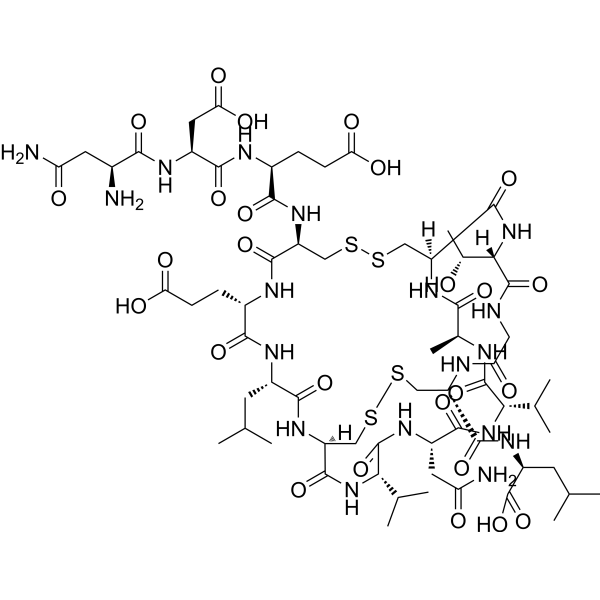
Plecanatide, an analogue of Uroguanylin, is an orally active guanylate cyclase-C (GC-C) receptor agonist. Plecanatide activates GC-C receptors to stimulate cGMP synthesis with an EC50 of 190 nM in T84 cells assay. Plecanatide shows anti-inflammatory activity in models of murine colitis.
Para uso exclusivo en investigación. No vendemos a pacientes.
- Pureza : 99.93%
- No. CAS: 467426-54-6
- Fòrmula: C65H104N18O26S4
- Peso molecular:1681.89
-
Almacenamiento:
Sealed storage, away from moisture.
Powder -80°C, 2 years , -20°C, 1 year* In solvent : -80°C, 6 months; -20°C, 1 month (sealed storage, away from moisture)

To place orders, for customer services and technical support, please contact: MedChemExpress USA
Tel: 609-228-6898 E-mail: [email protected] [email protected]


-
 Actividad biológica
-
Chemical Information
-
Solvente y solubilidad
- Protocolo
- Pureza y Documentación
- Referencias
-
 Help & FAQs


-
HY-17584
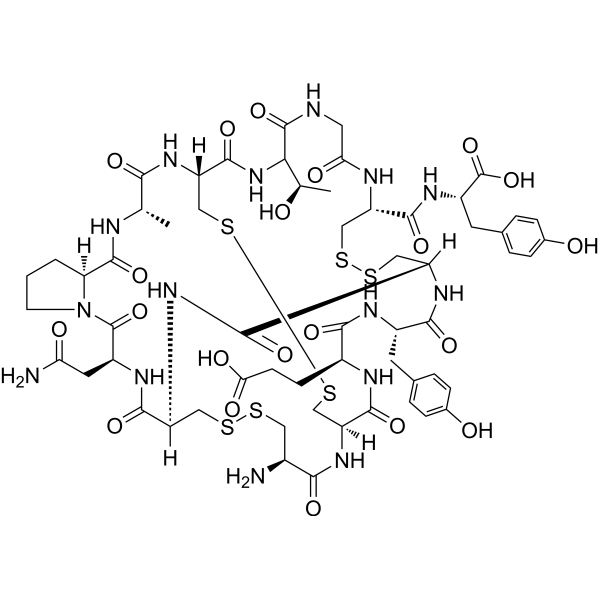
LinaclotideGuanylate Cyclase Agonist -
HY-P3099
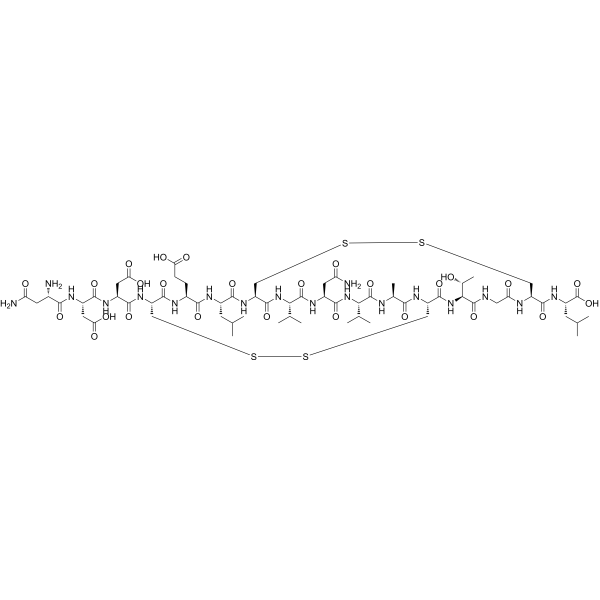
Uroguanylin (human)Endogenous Peptide Hormone -
HY-16774
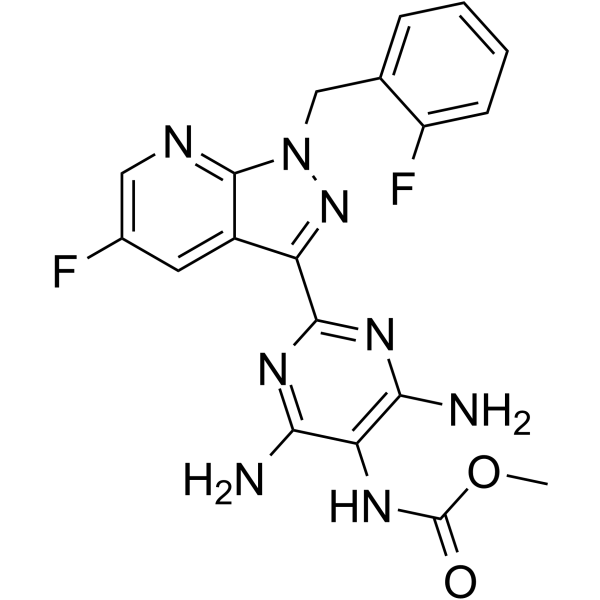
VericiguatsCG Stimulator -
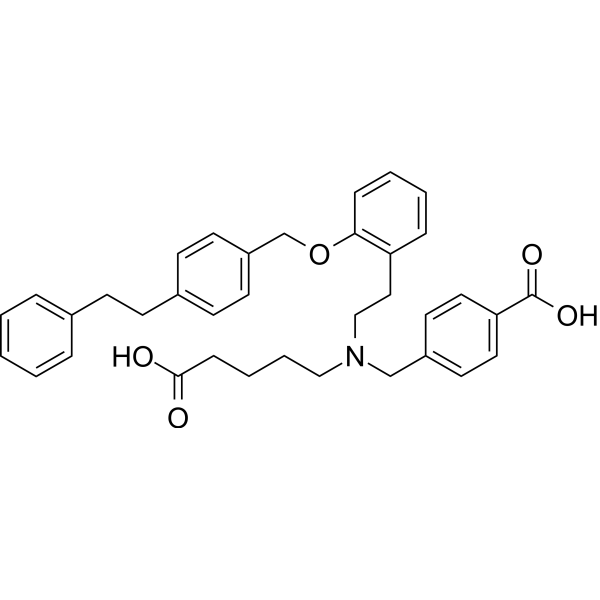
HY-14181
CinaciguatGuanylate Cyclase Activator -
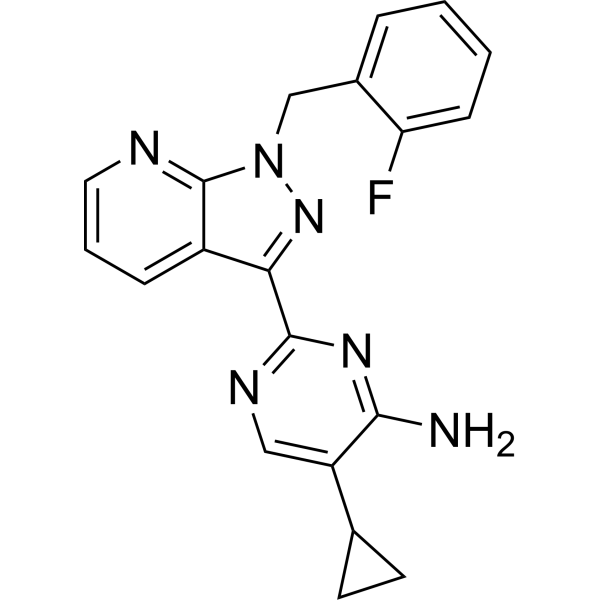
HY-12376
BAY 41-2272Guanylate Cyclase Activator -
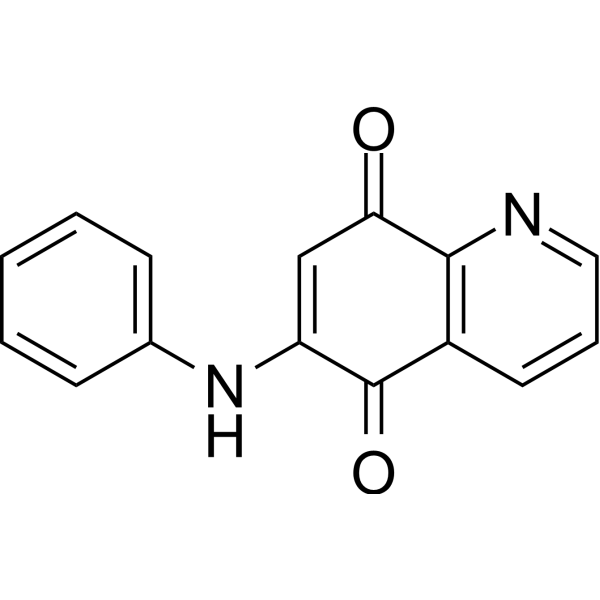
HY-W013386
LY83583sGC Inhibitor -
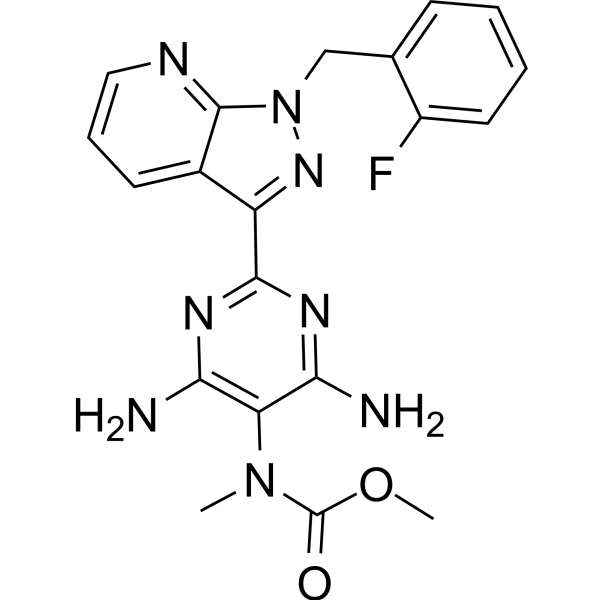
HY-14779
Riociguat -
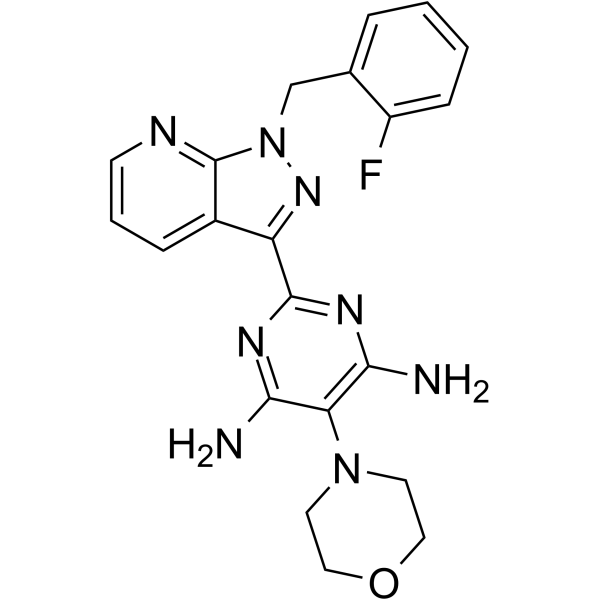
HY-W062836
BAY 41-8543sGC Stimulator -
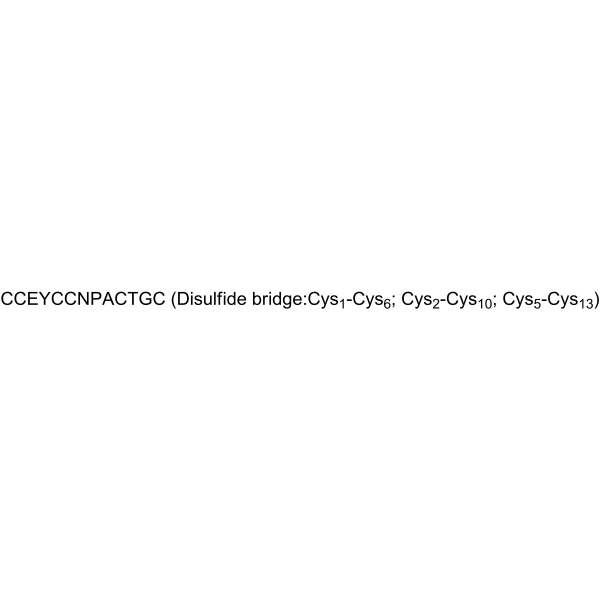
HY-P3282
MM 419447Guanylate Cyclase-C Agonist -

HY-16774R
Vericiguat (Standard)sCG Stimulator -
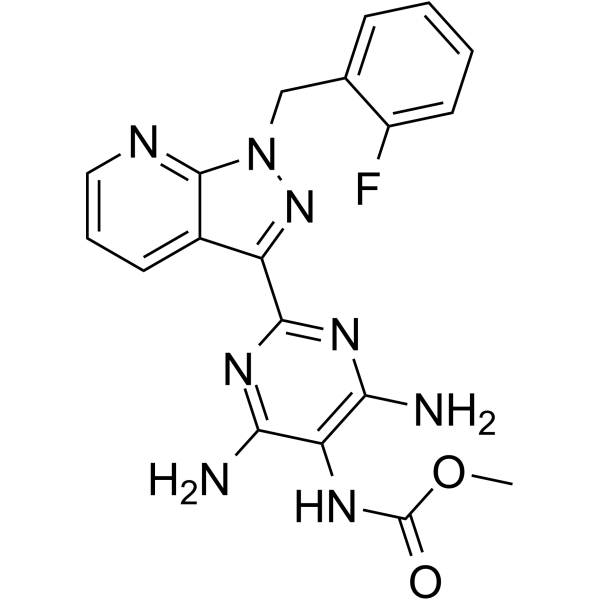
HY-78237
NelociguatGuanylate Cyclase Activator -
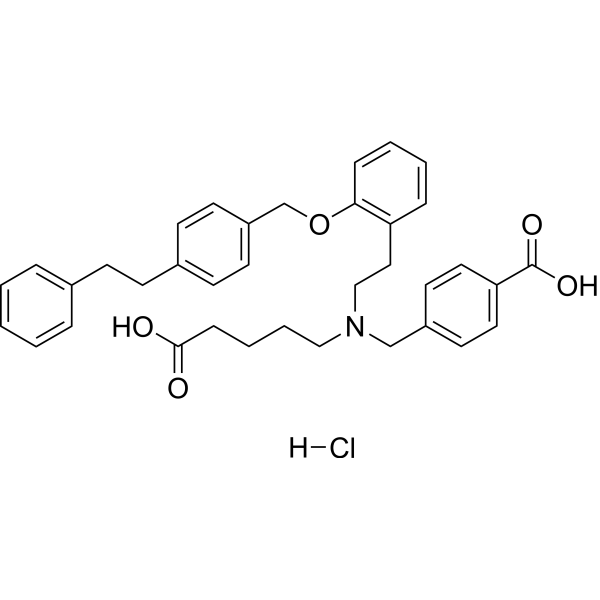
HY-14181A
Cinaciguat hydrochlorideGuanylate Cyclase Activator


Actividad biológica
Descripciòn
IC50 & Target
EC50: 190 nM (guanylate cyclase-C)[1]
In Vitro
In Vivo
Plecanatide (0.005-5 mg/kg, once daily for 7 days) also shows anti-inflammatory activity in dextran sulfate sodium (DSS) and trinitrobenzene sulfonic (TNBS)-induced colitis in BDF-1 mice[1].
MedChemExpress (MCE) has not independently confirmed the accuracy of these methods. They are for reference only.
-
Animal Model:Female BALB/c mice (2-4 month old) are induced colitis by TNBS[1]
-
Dosage:0, 0.5 and 2.5 mg/kg
-
Administration:P.o. for 7 days
-
Result:Effectively reduced colitis severity scores as compared to vehicle treatment.


Chemical Information
-
No. CAS 467426-54-6
-
Appearance Solid
-
Peso molecular 1681.89
-
Fòrmula C65H104N18O26S4
-
Color White to off-white
-
Sequence
Asn-Asp-Glu-Cys-Glu-Leu-Cys-Val-Asn-Val-Ala-Cys-Thr-Gly-Cys-Leu (Disulfide bridge: Cys4-Cys12; Cys7-Cys15)
-
Sequence Shortening
NDECELCVNVACTGCL (Disulfide bridge: Cys4-Cys12; Cys7-Cys15)
-
Envío
Room temperature in continental US; may vary elsewhere.
-
Almacenamiento
Sealed storage, away from moisture
Powder -80°C 2 years -20°C 1 year * In solvent : -80°C, 6 months; -20°C, 1 month (sealed storage, away from moisture)


Solvente y solubilidad
In Vitro:
DMSO : 100 mg/mL (59.46 mM; Need ultrasonic; Hygroscopic DMSO has a significant impact on the solubility of product, please use newly opened DMSO)
Please refer to the solubility information to select the appropriate solvent. Once prepared, please aliquot and store the solution to prevent product inactivation from repeated freeze-thaw cycles.
Storage method and period of stock solution: -80°C, 6 months; -20°C, 1 month (sealed storage, away from moisture). When stored at -80°C, please use it within 6 months. When stored at -20°C, please use it within 1 month.
Please refer to the solubility information to select the appropriate solvent. Once prepared, please aliquot and store the solution to prevent product inactivation from repeated freeze-thaw cycles.
Storage method and period of stock solution: -80°C, 6 months; -20°C, 1 month (sealed storage, away from moisture). When stored at -80°C, please use it within 6 months. When stored at -20°C, please use it within 1 month.
Concentration (start) × Volume (start) = Concentration (final) × Volume (final)


Pureza y Documentación
-
Ficha de datos (281 KB)
-
SDS (396 KB)
- English - EN (396 KB)
- Français - FR (396 KB)
- Deutsch - DE (396 KB)
- Norwegian - NO (396 KB)
- Español - ES (396 KB)
- Swedish - SV (396 KB)
- Italian - IT (396 KB)
- Korean - KR (396 KB)
- Portuguese - PT (396 KB)
-
Instrucciones de manejo (2659 KB)
Referencias
[1]. Shailubhai K,et, al. Plecanatide and dolcanatide, novel guanylate cyclase-C agonists, ameliorate gastrointestinal inflammation in experimental models of murine colitis. World J Gastrointest Pharmacol Ther. 2015 Nov 6;6(4):213-22. [Content Brief]
[2]. Rao SSC. Plecanatide: a new guanylate cyclase agonist for the treatment of chronic idiopathic constipation. Therap Adv Gastroenterol. 2018 Jun 8;11:1756284818777945. [Content Brief]
[3]. Shailubhai K, et, al. Plecanatide, an oral guanylate cyclase C agonist acting locally in the gastrointestinal tract, is safe. Dig Dis Sci. 2013 Sep;58(9):2580-6. [Content Brief]


Complete Stock Solution Preparation Table
Please refer to the solubility information to select the appropriate solvent. Once prepared, please aliquot and store the solution to prevent product inactivation from repeated freeze-thaw cycles.
Storage method and period of stock solution: -80°C, 6 months; -20°C, 1 month (sealed storage, away from moisture). When stored at -80°C, please use it within 6 months. When stored at -20°C, please use it within 1 month.
| Optional Solvent | Concentration Solvent Mass | 1 mg | 5 mg | 10 mg | 25 mg |
|---|---|---|---|---|---|
| DMSO | 1 mM | 0.5946 mL | 2.9728 mL | 5.9457 mL | 14.8642 mL |
| 5 mM | 0.1189 mL | 0.5946 mL | 1.1891 mL | 2.9728 mL | |
| 10 mM | 0.0595 mL | 0.2973 mL | 0.5946 mL | 1.4864 mL | |
| 15 mM | 0.0396 mL | 0.1982 mL | 0.3964 mL | 0.9909 mL | |
| 20 mM | 0.0297 mL | 0.1486 mL | 0.2973 mL | 0.7432 mL | |
| 25 mM | 0.0238 mL | 0.1189 mL | 0.2378 mL | 0.5946 mL | |
| 30 mM | 0.0198 mL | 0.0991 mL | 0.1982 mL | 0.4955 mL | |
| 40 mM | 0.0149 mL | 0.0743 mL | 0.1486 mL | 0.3716 mL | |
| 50 mM | 0.0119 mL | 0.0595 mL | 0.1189 mL | 0.2973 mL |


Plecanatide Related Classifications
HY-108741 Related Classifications
 Powered by Bioz