



Teropavimab

Based on 1 Customer Validation
Teropavimab (3BNC117-LS) is a broadly neutralizing antibody targeting the CD4-binding site of the HIV-1 envelope. Teropavimab binds to the CD4-binding site of HIV-1 gp120 to neutralize viruses, including multidrug-resistant HIV-1. Teropavimab can be used in studies related to HIV-1 infection and multidrug-resistant HIV-1 infection.
For research use only. We do not sell to patients.
- Purity : 99.70%
- CAS No.: 2417213-72-8
- Molecular Weight:145.889 kDa
-
Storage:
Please store the product under the recommended conditions in the Certificate of Analysis.


To place orders, for customer services and technical support, please contact: MedChemExpress USA
Tel: 609-228-6898 E-mail: [email protected] [email protected]


-
 Biological Activity
-
Chemical Information
- Protocols
- Purity & Documentation
- References
-
 Help & FAQs






Biological Activity
Description
Isotype
Human IgG1 kappa
Recommend Isotype Controls
Species Reactivity
Human
|
HIV-1 |
In Vitro
Teropavimab (3BNC117-LS) (50 μg/mL) neutralizes 77.78% of PBMC-derived primary HIV-1 clade A, C, and D isolates with a geometric mean IC50 of 3.62 μg/mL in TZM-bl cells[1].
Teropavimab (3BNC117-LS) neutralizes pseudotyped SHIVAD8-EO in TZM-bl cells with an IC50 of 0.09 μg/mL, exhibiting activity equivalent to native 3BNC117[2].
Teropavimab neutralizes replication-competent SHIVAD8-EO in TZM-bl cells with an IC50 of 0.11 μg/mL, exhibiting activity equivalent to native 3BNC117[2].
MedChemExpress (MCE) has not independently confirmed the accuracy of these methods. They are for reference only. Further protocols information, click here.
In Vivo
Teropavimab (7.5 mg/kg; s.c.; single dose, administered in combination with 10-1074-LS) confers protection against repeated low-dose mucosal SHIVAD8-E0 challenge in rhesus macaques, with a median time to virus acquisition of 20 weeks[2].
MedChemExpress (MCE) has not independently confirmed the accuracy of these methods. They are for reference only.
-
Animal Model:Macaca mulatta (Indian genetic origin, 2-4 years of age, negative for MHC alleles Mamu-A01, Mamu-B08, and Mamu-B17)[2]
-
Dosage:20 mg/kg
-
Administration:i.v.; single dose
-
Result:Delayed median time to virus acquisition to 17 weeks (range 11-23 weeks).
Reduced serum concentrations to undetectable levels between weeks 16 and 22 in five of six recipients; one recipient had undetectable levels by week 5 due to anti-antibody responses.
Achieved a median serum-neutralizing activity of 1:2,538 at 1 week post-infusion.
Extended median serum half-life to 2.8 weeks, a 2.0-fold increase compared to native 3BNC117.
Confirmed significantly greater resistance to SHIVAD8-E0 acquisition compared to untreated controls (P = 0.004).
-
Animal Model:Macaca mulatta (Indian genetic origin, 2-4 years of age, negative for MHC alleles Mamu-A01, Mamu-B08, and Mamu-B17)[2]
-
Dosage:7.5 mg/kg (administered in combination with 7.5 mg/kg 10-1074-LS)
-
Administration:s.c.; single dose
-
Result:Delayed median time to virus acquisition to 20 weeks (range 15-24 weeks for five of six macaques).
Reduced serum concentrations to undetectable levels between weeks 5 and 9 in five of six recipients; one recipient maintained measurable levels until week 18.
Induced anti-Teropavimab antibodies in four of six macaques 4 to 6 weeks post-administration, leading to rapid clearance of the antibody.
Confirmed significantly greater resistance to SHIVAD8-E0 acquisition compared to untreated controls (P = 0.004).
Clinical Trial
| NCT Number | Sponsor | Condition | Start Date |
Phase

|
|---|---|---|---|---|
| NCT01329991 | Plexxikon| | 2011-05 | PHASE1 |
Accession
Conjugated
Unconjugated
Reconsititution
The product can be reconstituted/diluted with sterile PBS or saline.
Format
-
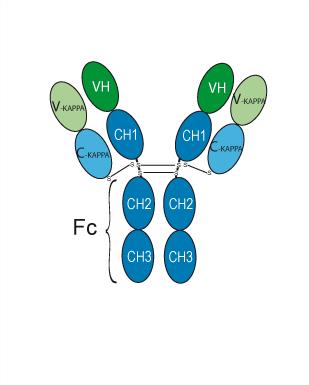
Human IgG1 kappa
Application
ELISA, FACS, Functional assay
Verified Bioactivity
-
 Immobilized Envelope glycoprotein gp120 Protein, HIV-1 (AAC31819, HEK293, His, HY-P76390) can bind Teropavimab. The EC50 for this effect is 196.4 ng/mL.


Chemical Information
-
CAS No. 2417213-72-8
-
Appearance Liquid
-
Molecular Weight 145.889 kDa
-
Color Colorless to light yellow
-
SMILES
[Teropavimab]
-
Synonyms
3BNC117-LS; GS-5423
-
Shipping
Shipping with dry ice.
-
Formulation
Please refer to the lot-specific COA for specific buffer information.
-
Storage
Please store the product under the recommended conditions in the Certificate of Analysis.

Protocols
-
Research Protocol for Infectious Diseases
Infectious-disease experiments test how pathogens interact with host barriers, innate immune receptors, inflammatory signaling, pathogen replication, and tissue injury; pattern-recognition receptors such as TLRs, RIG-I-like receptors, NOD-like receptors, and inflammasomes detect microbial molecules and activate NF-κB, interferon, and cytokine responses. The central hypothesis is that infection severity reflects the balance between pathogen burden and host response: protective inflammation restricts pathogen growth, whereas excessive or mislocalized inflammation contributes to tissue damage and disease phenotype. Unresolved questions include which host pathways are protective versus pathogenic, why some infection models fail to translate to human disease, and which combined readouts best predict clinically relevant infection outcomes.


Purity & Documentation
-
Data Sheet (263 KB)
-
SDS (252 KB)
- English - EN (252 KB)
- Français - FR (252 KB)
- Deutsch - DE (252 KB)
- Norwegian - NO (252 KB)
- Español - ES (252 KB)
- Swedish - SV (252 KB)
- Italian - IT (252 KB)
- Korean - KR (252 KB)
- Portuguese - PT (252 KB)
-
Inhibitory Antibodies User Guide (603 KB)
References
[1]. Lorenzi JCC, et al. Neutralizing Activity of Broadly Neutralizing anti-HIV-1 Antibodies against Primary African Isolates. Journal of virology. 2021 Mar 01;95(5):e01909-20. [Content Brief]
[2]. Gautam R, et al. A single injection of crystallizable fragment domain-modified antibodies elicits durable protection from SHIV infection. Nature medicine. 2018 May;24(5):610-616. [Content Brief]
[3]. Eron JJ, et al. Safety of teropavimab and zinlirvimab with lenacapavir once every 6 months for HIV treatment: a phase 1b, randomised, proof-of-concept study. Lancet HIV. 2024 Mar;11(3):e146-e155. [Content Brief]
[4]. Ogbuagu O, et al. Efficacy and safety of lenacapavir, teropavimab, and zinlirvimab: week-26 primary outcome results from a multicentre, open-label, randomised, active-controlled, phase 2 study. Lancet Microbe. 2026 Mar;7(3):101283. [Content Brief]
[5]. Spagnuolo V, et al. Teropavimab and zinlirvimab sensitivity in people living with multidrug-resistant HIV-1: data from the PRESTIGIO Registry. Microbiology spectrum. 2025 Oct 07;13(10):e0277724. [Content Brief]

Calculators
Concentration (start) × Volume (start) = Concentration (final) × Volume (final)


Teropavimab Related Classifications
HY-P99564 Related Classifications
 Powered by Bioz