



Palosuran
Based on 4 publication(s) in Google Scholar
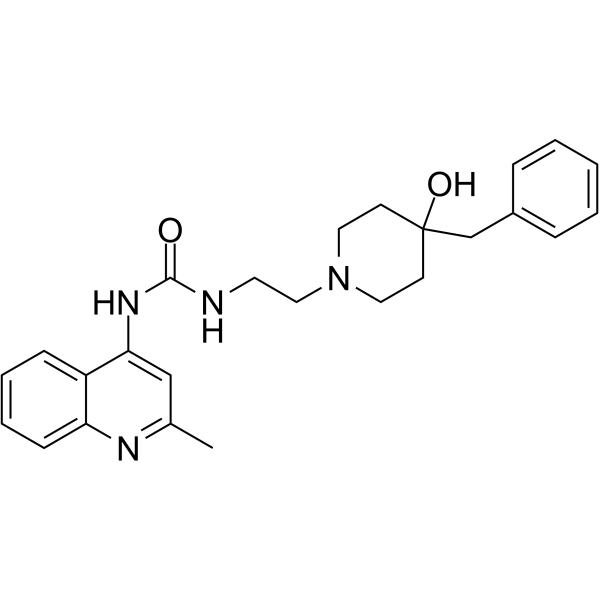
Palosuran (ACT-058362) is a potent, selective, and orally active antagonist of urotensin II receptor, with an IC50 of 3.6 nM for CHO cell membranes expressing human recombinant receptors. Palosuran can improves pancreatic and renal function in diabetic rats.
연구목적의 판매만을 진행합니다. 환자를 대상으로 한 판매는 하지 않습니다.
- Purity : 99.78%
- CAS No.: 540769-28-6
- 화학식: C25H30N4O2
- 분자량:418.53
-
보관:Powder -20°C, 3 years , 4°C, 2 years ; In solvent -80°C, 6 months , -20°C, 1 month

To place orders, for customer services and technical support, please contact: MedChemExpress USA
Tel: 609-228-6898 E-mail: [email protected] [email protected]


-
 Biological Activity
-
Chemical Information
-
용액&용해도
- 순도&문서
- References
-
 Help & FAQs


-
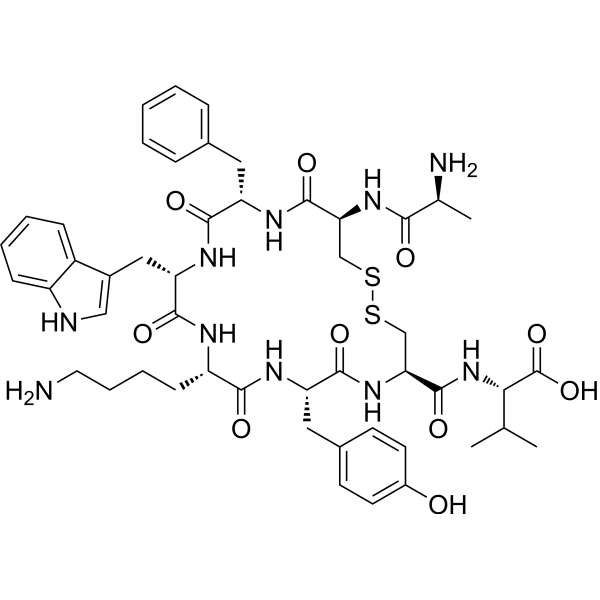
HY-P1165
Urotensin II-related peptideUrotensin II Anague -
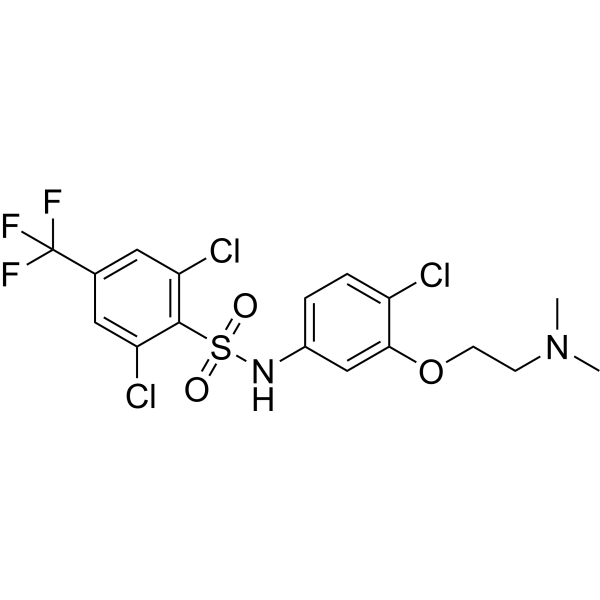
HY-10664
SB-611812Urotensin Receptor Antagonist -
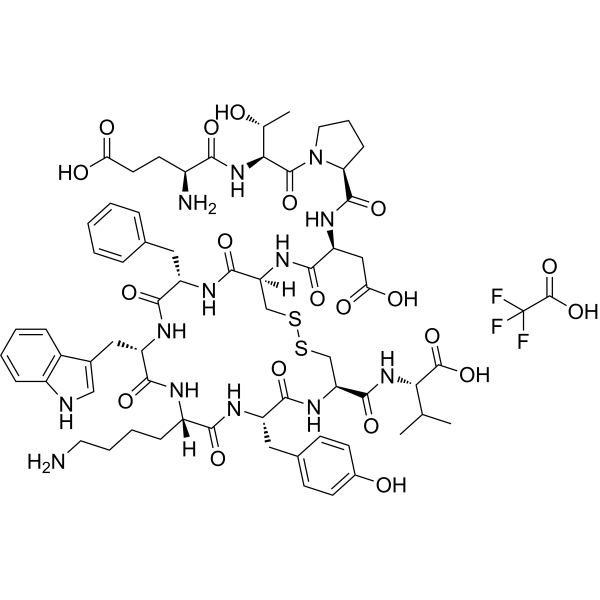
HY-P1164A
Urotensin II (114-124), human TFAUrotensin Receptor Agonist -

HY-10655R
Palosuran (Standard)Urotensin II Antagonist -
HY-16561
ResveratrolPolyphenolic Phytoalexin -
HY-B0636
Triamcinolone acetonideAnti-Inflammatory Agent -
HY-13632
ExemestaneAromatase Inhibitor -
HY-16561R
Resveratrol (Standard) -
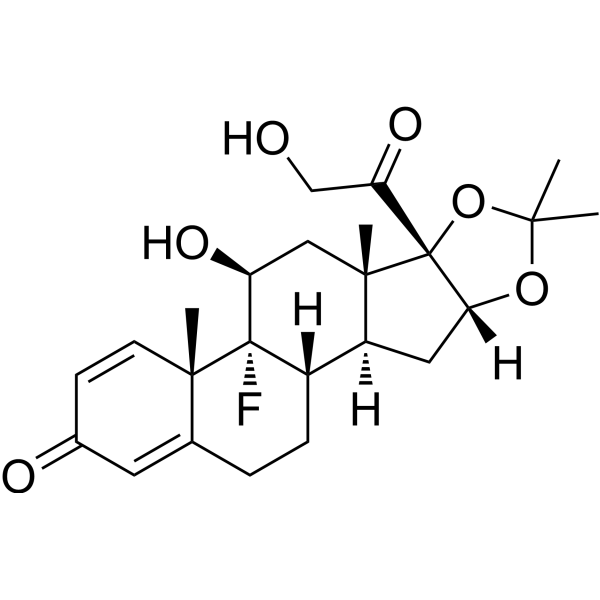
HY-B0636R
Triamcinolone acetonide (Standard) -
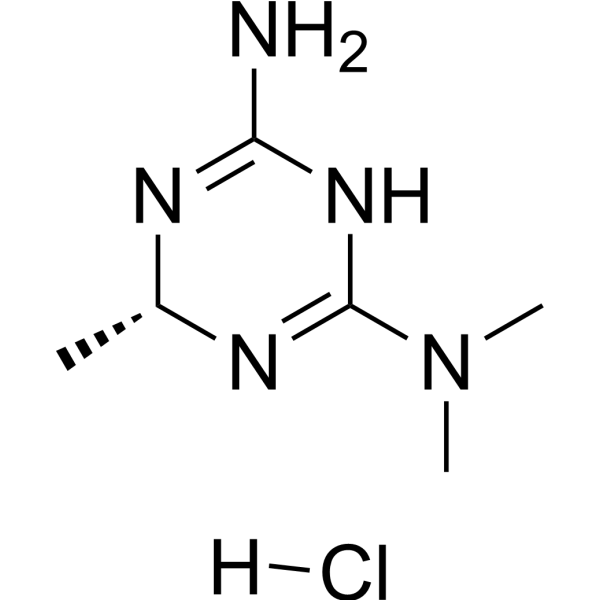
HY-14771A
Imeglimin hydrochlorideAntidiabetic Agent -

HY-13571AR
Beclometasone dipropionate (Standard)Glucocorticoid Receptor Agonist -
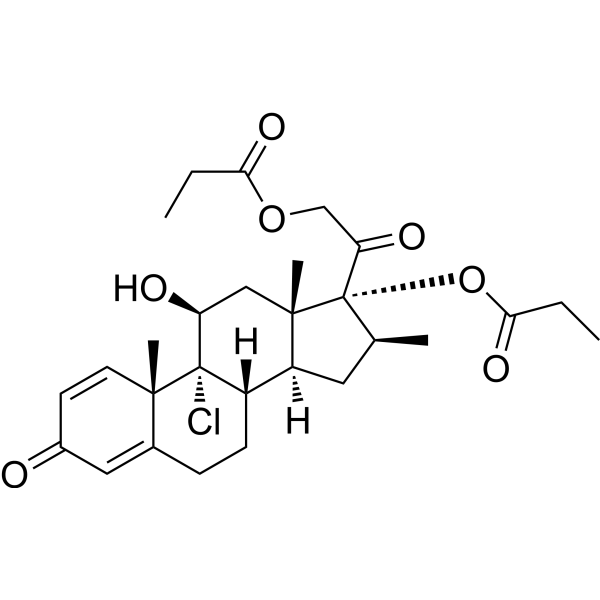
HY-13571A
Beclometasone dipropionateGlucocorticoid Receptor Agonist
Publications Citing Use of MedChemExpress (MCE) Palosuran
More

Biological Activity
제품 설명
IC50 & Target
IC50: 3.6 nM (human urotensin II receptor)[1]
Cellular Effect
|
Cell Line

|
Type | Value | Description | References |
|---|---|---|---|---|
| CHO | IC50 |
39 nM
Compound: 1
|
Antagonist activity at recombinant human urotensin2 receptor expressed in CHO cells assessed as inhibition of urotensin2-stimulated Ca2+ mobilization incubated 10 mins prior to urotensin2 stimulation measured after 10 mins by fluorometric analysis
Antagonist activity at recombinant human urotensin2 receptor expressed in CHO cells assessed as inhibition of urotensin2-stimulated Ca2+ mobilization incubated 10 mins prior to urotensin2 stimulation measured after 10 mins by fluorometric analysis
|
[PMID: 23453841] |
| CHO-K1 | IC50 |
>75000 nM
Compound: 9, Palosuran
|
Antagonist activity at rat urotensin 2 receptor expressed in CHOK1 cells assessed as inhibition of urotensin 2-induced intracellular calcium mobilization after 1 hr by FLIPR assay
Antagonist activity at rat urotensin 2 receptor expressed in CHOK1 cells assessed as inhibition of urotensin 2-induced intracellular calcium mobilization after 1 hr by FLIPR assay
|
[PMID: 19731961] |
| U2OS | IC50 |
<5 nM
Compound: 1
|
Displacement of [125I]-U2 from recombinant human urotensin2 receptor expressed in human U2OS cells after 30 mins by gamma counting analysis
Displacement of [125I]-U2 from recombinant human urotensin2 receptor expressed in human U2OS cells after 30 mins by gamma counting analysis
|
[PMID: 23453841] |
In Vitro
Palosuran (8 h) inhibits 125I-U-II binding to human UT receptor, with IC50s of 46.2 nM on TE 671 cells and 86 nM on recombinant CHO cells[1].
Palosuran inhibits Ca2+ mobilization in response to human U-II in CHO cells expressing human and rat UT receptor with IC50s of 17 and >10000 nM, respectively[1].
Palosuran (0.12-10000 nM; 20 min) inhibits human U-II induced MAPK phosphorylation in a dose-dependent manner in recombinant CHO cells, with an IC50 of 150 nM[1].
MedChemExpress (MCE) has not independently confirmed the accuracy of these methods. They are for reference only.
In Vivo
Palosuran (300 mg/kg/d; p.o. for 16 weeks) improves the survival, increases insulin, and slows the increase in glycemia, glycosylated hemoglobin, and serum lipids in streptozotocin-induced diabetic rats[2].
MedChemExpress (MCE) has not independently confirmed the accuracy of these methods. They are for reference only.
-
Animal Model:Male Wistar rats with renal ischemia and reperfusion[1]
-
Dosage:20 mg/kg/h for 135 min
-
Administration:I.v. (continuous infusion) for 135 min
-
Result:Restored renal blood flow to baseline values at 30 min after reperfusion and by 60 min increased renal blood flow by 12% above baseline values.
Did not significantly alter mean arterial blood pressure (MAP) and heart rate (HR).


Chemical Information
-
CAS No. 540769-28-6
-
Appearance Solid
-
분자량 418.53
-
화학식 C25H30N4O2
-
Color White to pink
-
SMILES
OC(CC1=CC=CC=C1)(CC2)CCN2CCNC(NC3=CC(C)=NC4=CC=CC=C34)=O
-
Synonyms
ACT-058362
-
선적
Room temperature in continental US; may vary elsewhere.
-
보관
Powder -20°C 3 years 4°C 2 years In solvent -80°C 6 months -20°C 1 month


Publications (4)
-
Journal Impact Factor
-
Most Recent
-
Nat Commun
The urotensin II receptor triggers an early meningeal response and a delayed macrophage-dependent vasospasm after subarachnoid hemorrhage in male mice. [Abstract]2024 Sep 29;15(1):8430. PMID: 39341842 -
Pharmacol Res
Urotensin receptor acts as a novel target for ameliorating fasting-induced skeletal muscle atrophy. [Abstract]2022 Nov:185:106468. PMID: 36167277 -
Bioorg Chem
Identification of FTY720 and COH29 as novel topoisomerase I catalytic inhibitors by experimental and computational studies. [Abstract]2024 Jun:147:107412. PMID: 38696845 -
Endocrinology
Inhibition of A-Type K+ Channels by Urotensin-II Induces Sensory Neuronal Hyperexcitability Through the PKCα-ERK Pathway. [Abstract]2018 May 1;159(5):2253-2263. PMID: 29648633


용액&용해도
In Vitro:
DMSO : 50 mg/mL (119.47 mM; Need ultrasonic; Hygroscopic DMSO has a significant impact on the solubility of product, please use newly opened DMSO)
Please refer to the solubility information to select the appropriate solvent. Once prepared, please aliquot and store the solution to prevent product inactivation from repeated freeze-thaw cycles.
Storage method and period of stock solution: -80°C, 6 months; -20°C, 1 month. When stored at -80°C, please use it within 6 months. When stored at -20°C, please use it within 1 month.
Please refer to the solubility information to select the appropriate solvent. Once prepared, please aliquot and store the solution to prevent product inactivation from repeated freeze-thaw cycles.
Storage method and period of stock solution: -80°C, 6 months; -20°C, 1 month. When stored at -80°C, please use it within 6 months. When stored at -20°C, please use it within 1 month.
Concentration (start) × Volume (start) = Concentration (final) × Volume (final)
In Vivo:
Select the appropriate dissolution method based on your experimental animal and administration route.
- For the following dissolution methods, please ensure to first prepare a clear stock solution using an In Vitro approach and then sequentially add co-solvents:
- To ensure reliable experimental results, the clarified stock solution can be appropriately stored based on storage conditions. As for the working solution for In Vivo experiments, it is recommended to prepare freshly and use it on the same day.
- The percentages shown for the solvents indicate their volumetric ratio in the final prepared solution. If precipitation or phase separation occurs during preparation, heat and/or sonication can be used to aid dissolution.
Add each solvent one by one: 10% DMSO 40% PEG300 5% Tween-80 45% Saline
Solubility: ≥ 1.67 mg/mL (3.99 mM); Clear solution
This protocol yields a clear solution of ≥ 1.67 mg/mL (saturation unknown).
Taking 1 mL working solution as an example, add 100 μL DMSO stock solution (16.7 mg/mL) to 400 μL PEG300, and mix evenly; then add 50 μL Tween-80 and mix evenly; then add 450 μL Saline to adjust the volume to 1 mL.
Preparation of Saline: Dissolve 0.9 g sodium chloride in ddH₂O and dilute to 100 mL to obtain a clear Saline solution.
Add each solvent one by one: 10% DMSO 90% (20% SBE-β-CD in Saline)
Solubility: 1.67 mg/mL (3.99 mM); Suspended solution; Need ultrasonic
This protocol yields a suspended solution of 1.67 mg/mL. Suspended solution can be used for oral and intraperitoneal injection.
Taking 1 mL working solution as an example, add 100 μL DMSO stock solution (16.7 mg/mL) to 900 μL 20% SBE-β-CD in Saline, and mix evenly.
Preparation of 20% SBE-β-CD in Saline (4°C, storage for one week): 2 g SBE-β-CD powder is dissolved in 10 mL Saline, completely dissolve until clear.
In Vivo Dissolution Calculator
Please enter the basic information of animal experiments:
-
-
-
-
Recommended: Prepare an additional quantity of animals to account for potential losses during experiments.
Please enter your animal formula composition:
-
%DMSO +
Recommended: Keep the proportion of DMSO in working solution below 2% if your animal is weak.
-
%+
-
+%Tween-80 + +
-
%Saline +
The co-solvents required include: DMSO, . All of co-solvents are available by MedChemExpress (MCE). , Tween 80. All of co-solvents are available by MedChemExpress (MCE).
Working solution concentration: 0.22 mg/mL
Method for preparing stock solution: mg drug dissolved in μL DMSO. Stock solution concentration: mg/mL.
1. Take μL DMSO stock solution;
2. Add μL .
μL , mix evenly;
3. Then add μL Tween 80, mix evenly;
4. Then add μL
Please ensure that the stock solution in the first step is dissolved to a clear state, and add co-solvents in sequence. You can use ultrasonic heating (ultrasonic cleaner, recommended frequency 20-40 kHz), vortexing, etc. to assist dissolution.


순도&문서
-
Data Sheet (274 KB)
-
SDS (393 KB)
- English - EN (393 KB)
- Français - FR (393 KB)
- Deutsch - DE (393 KB)
- Norwegian - NO (393 KB)
- Español - ES (393 KB)
- Swedish - SV (393 KB)
- Italian - IT (393 KB)
- Korean - KR (393 KB)
- Portuguese - PT (393 KB)
-
Handling Instructions (2659 KB)
References
[1]. Clozel M, et al. Pharmacology of the urotensin-II receptor antagonist palosuran (ACT-058362; 1-[2-(4-benzyl-4-hydroxy-piperidin-1-yl)-ethyl]-3-(2-methyl-quinolin-4-yl)-urea sulfate salt): first demonstration of a pathophysiological role of the urotensin System. J Pharmacol Exp Ther. 2004 Oct;311(1):204-12. [Content Brief]
[2]. Clozel M, et al. The urotensin-II receptor antagonist palosuran improves pancreatic and renal function in diabetic rats. J Pharmacol Exp Ther. 2006 Mar;316(3):1115-21. [Content Brief]


Complete Stock Solution Preparation Table
Please refer to the solubility information to select the appropriate solvent. Once prepared, please aliquot and store the solution to prevent product inactivation from repeated freeze-thaw cycles.
Storage method and period of stock solution: -80°C, 6 months; -20°C, 1 month. When stored at -80°C, please use it within 6 months. When stored at -20°C, please use it within 1 month.
| Optional Solvent | Concentration Solvent Mass | 1 mg | 5 mg | 10 mg | 25 mg |
|---|---|---|---|---|---|
| DMSO | 1 mM | 2.3893 mL | 11.9466 mL | 23.8931 mL | 59.7329 mL |
| 5 mM | 0.4779 mL | 2.3893 mL | 4.7786 mL | 11.9466 mL | |
| 10 mM | 0.2389 mL | 1.1947 mL | 2.3893 mL | 5.9733 mL | |
| 15 mM | 0.1593 mL | 0.7964 mL | 1.5929 mL | 3.9822 mL | |
| 20 mM | 0.1195 mL | 0.5973 mL | 1.1947 mL | 2.9866 mL | |
| 25 mM | 0.0956 mL | 0.4779 mL | 0.9557 mL | 2.3893 mL | |
| 30 mM | 0.0796 mL | 0.3982 mL | 0.7964 mL | 1.9911 mL | |
| 40 mM | 0.0597 mL | 0.2987 mL | 0.5973 mL | 1.4933 mL | |
| 50 mM | 0.0478 mL | 0.2389 mL | 0.4779 mL | 1.1947 mL | |
| 60 mM | 0.0398 mL | 0.1991 mL | 0.3982 mL | 0.9955 mL | |
| 80 mM | 0.0299 mL | 0.1493 mL | 0.2987 mL | 0.7467 mL | |
| 100 mM | 0.0239 mL | 0.1195 mL | 0.2389 mL | 0.5973 mL |


Palosuran Related Classifications
HY-10655 Related Classifications
 Powered by Bioz