



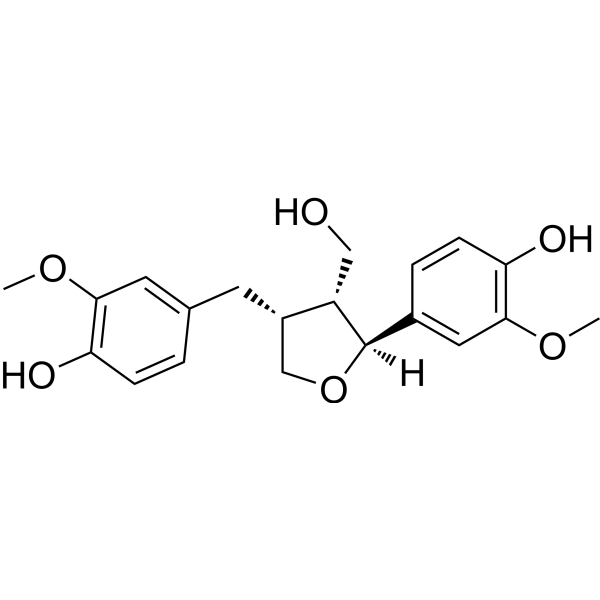
Lariciresinol
Based on 1 publication(s) in Google Scholar
Lariciresinol is an orally active ingredient. Lariciresinol can be isolated from Arabidopsis thaliana. Lariciresinol inhibits α-glucosidase activity (IC50 of 6.97 μM; Ki of 0.046 μM). Lariciresinol dereases Bcl-2, upregulates Bax and induces Apoptosis. Lariciresinol regulates TGF-β and NF-κB pathways. Lariciresinol has antitumor activity against liver cancer, gastric cancer, and breast cancer. Lariciresinol shows antifungal activity and anti-diabetic activity.
연구목적의 판매만을 진행합니다. 환자를 대상으로 한 판매는 하지 않습니다.
- Purity: 99.46%
- CAS No.: 27003-73-2
- 화학식: C20H24O6
- 분자량:360.40
-
보관:
4°C, protect from light
* In solvent : -80°C, 6 months; -20°C, 1 month (protect from light)

To place orders, for customer services and technical support, please contact: MedChemExpress USA
Tel: 609-228-6898 E-mail: [email protected] [email protected]


-
 Biological Activity
-
Chemical Information
-
용액&용해도
- 순도&문서
- References
-
 Help & FAQs


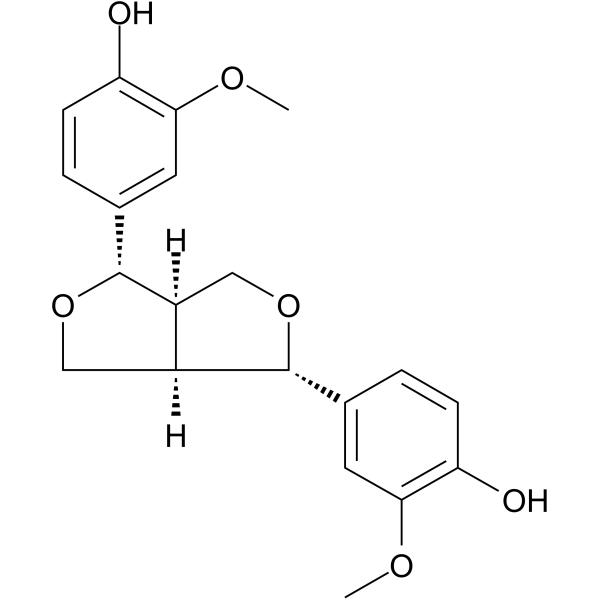
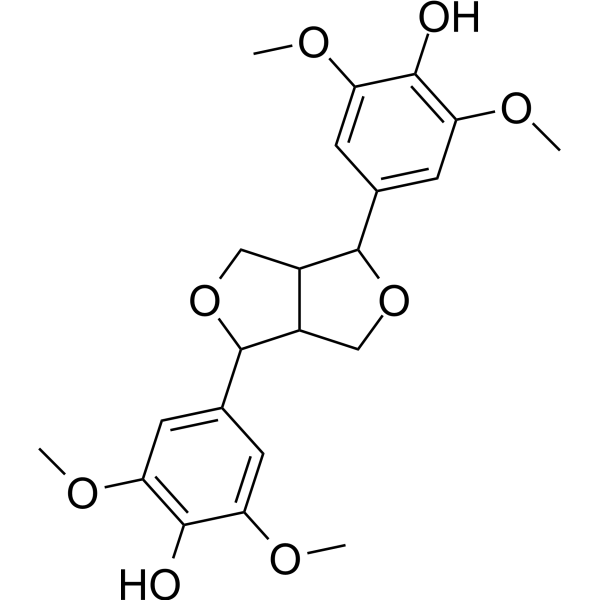
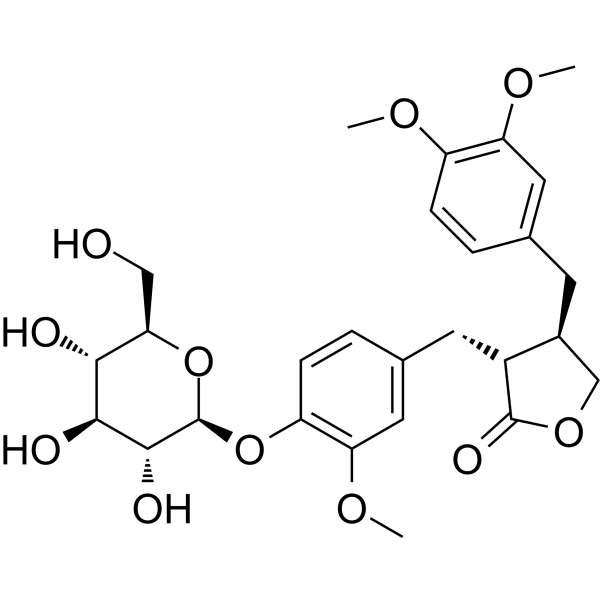

Publications Citing Use of MedChemExpress (MCE) Lariciresinol
More

Biological Activity
|
α‑glucosidase 6.97 μM (IC50) |
α‑glucosidase 0.046 μM (Ki) |
|
Cell Line

|
Type | Value | Description | References |
|---|---|---|---|---|
| A549 | IC50 |
24.51 μM
Compound: 4
|
Anticancer activity against human A549 cells by SRB assay
Anticancer activity against human A549 cells by SRB assay
|
[PMID: 21420296] |
| A549 | IC50 |
>30 μM
Compound: 4
|
Cytotoxicity against human A549 cells by SRB assay
Cytotoxicity against human A549 cells by SRB assay
|
[PMID: 26988298] |
| BV-2 | IC50 |
51.8 μM
Compound: 4
|
Antiinflammatory activity in mouse BV2 cells assessed as inhibition of lipopolysaccharide induced NO production
Antiinflammatory activity in mouse BV2 cells assessed as inhibition of lipopolysaccharide induced NO production
|
[PMID: 21420296] |
| BV-2 | IC50 |
72.58 μM
Compound: 4
|
Anti-neuroinflammatory activity in LPS-activated mouse BV2 cells assessed as inhibition of NO production after 24 hrs by Griess assay
Anti-neuroinflammatory activity in LPS-activated mouse BV2 cells assessed as inhibition of NO production after 24 hrs by Griess assay
|
[PMID: 26988298] |
| P388 | ED50 |
0.38 μg/mL
Compound: 2
|
Cytotoxicity against mouse P388 cells
Cytotoxicity against mouse P388 cells
|
[PMID: 3783168] |
| RAW264.7 | IC50 |
0.252 mM
Compound: 14
|
Antiinflammatory activity in mouse RAW264.7 cells assessed as inhibition of LPS-induced nitric oxide production after 24 hrs
Antiinflammatory activity in mouse RAW264.7 cells assessed as inhibition of LPS-induced nitric oxide production after 24 hrs
|
[PMID: 18986199] |
| RAW264.7 | IC50 |
0.252 μM/mL
Compound: 14
|
Antiinflammatory activity in mouse RAW264.7 cells assessed as inhibition of LPS-induced nitric oxide production after 24 hrs
Antiinflammatory activity in mouse RAW264.7 cells assessed as inhibition of LPS-induced nitric oxide production after 24 hrs
|
[PMID: 18986199] |
| RAW264.7 | IC50 |
>50 μM
Compound: 22
|
Antiinflammatory activity against mouse RAW264.7 cells assessed as inhibition of LPS-induced NO production after 24 hrs by Griess method
Antiinflammatory activity against mouse RAW264.7 cells assessed as inhibition of LPS-induced NO production after 24 hrs by Griess method
|
[PMID: 24035341] |
| RAW264.7 | IC50 |
>50 μM
Compound: 20
|
Antiinflammatory activity in mouse RAW264.7 assessed as inhibition of LPS-induced NO production preincubated for 30 mins followed by LPS stimulation measured after 24 hrs by Griess reagent based assay
Antiinflammatory activity in mouse RAW264.7 assessed as inhibition of LPS-induced NO production preincubated for 30 mins followed by LPS stimulation measured after 24 hrs by Griess reagent based assay
|
[PMID: 33939429] |
| SK-MEL-2 | IC50 |
>30 μM
Compound: 4
|
Anticancer activity against human SK-MEL-2 cells by SRB assay
Anticancer activity against human SK-MEL-2 cells by SRB assay
|
[PMID: 21420296] |
| SK-MEL-2 | IC50 |
>30 μM
Compound: 4
|
Cytotoxicity against human SK-MEL-2 cells by SRB assay
Cytotoxicity against human SK-MEL-2 cells by SRB assay
|
[PMID: 26988298] |
| SK-OV-3 | IC50 |
>30 μM
Compound: 4
|
Anticancer activity against human SKOV3 cells by SRB assay
Anticancer activity against human SKOV3 cells by SRB assay
|
[PMID: 21420296] |
| SK-OV-3 | IC50 |
>30 μM
Compound: 4
|
Cytotoxicity against human SKOV3 cells by SRB assay
Cytotoxicity against human SKOV3 cells by SRB assay
|
[PMID: 26988298] |
| XF498 | IC50 |
11.65 μM
Compound: 4
|
Anticancer activity against human XF498 cells by SRB assay
Anticancer activity against human XF498 cells by SRB assay
|
[PMID: 21420296] |
| XF498 | IC50 |
>30 μM
Compound: 4
|
Cytotoxicity against human XF498 cells by SRB assay
Cytotoxicity against human XF498 cells by SRB assay
|
[PMID: 26988298] |
Lariciresinol (100-400 µg/mL, 24-72 h) induces apoptosis in HepG2 cells via mitochondrial-mediated apoptosis pathway[2].
Lariciresinol (72 h) induces morphological changes, decreases cell growth, survival, proliferation and increases apoptosis in SKBr3 cells[3].
Lariciresinol (10-40 µM, 24 h) inhibits migration-invasion of patient-derived hypertrophic scar fibroblasts via preventing accumulation of collagen[4].
Lariciresinol shows antifungal activity against C. albicans, T. beigelii, and M. furfur with MIC values of 25, 12.5 and 25 μg/mL, respectively[5].
Lariciresinol inhibits α-glucosidase activity with an IC50 value of 6.97 µM and a Ki value of 0.046 µM[6].
Lariciresinol activates insulin signaling leading to glucose transporter 4 (GLUT4) translocation and augmentes glucose uptake in C2C12 cells[6].
MedChemExpress (MCE) has not independently confirmed the accuracy of these methods. They are for reference only.
-
Cell Line:HepG2
-
Concentration:100, 200, 400 µg/mL
-
Incubation Time:24, 48, 72 h
-
Result:Increased the ratios of cells in early and late apoptosis.
Increased apoptosis in a concentration- and time-dependent manner.
Lariciresinol (10-30 mg/kg, i.p., 28 days) inhibits complete Freund's adjuvant-induced arthritis in rats by regulating TGF-β and NF-κB pathways[7].
Lariciresinol (3-15 mg/kg body weight, p.o., daily, 9 weeks (tumor bearing rats); 20-100 ppm, diet, p.o., 5 weeks (E2-maintained ovariectomized athymic mice bearing orthotopic MCF-7 tumors)) inhibits tumor growth and tumor angiogenesis in mammary tumor bearing rats and E2-maintained ovariectomized athymic mice bearing orthotopic MCF-7 tumors[8].
MedChemExpress (MCE) has not independently confirmed the accuracy of these methods. They are for reference only.
-
Animal Model:Streptozotocin (HY-13753)-treated diabetic mice[6]
-
Dosage:10 mg/kg
-
Administration:Oral gavage (p.o.), 3 weeks
-
Result:Decreased blood glucose levels and increased insulin levels.
Improved pancreatic islet size, increased GLUT4 expression.
Enhanced insulin signaling in skeletal muscle.


Chemical Information
-
CAS No. 27003-73-2
-
Appearance Solid
-
분자량 360.40
-
화학식 C20H24O6
-
Color White to off-white
-
SMILES
OC[C@@H]1[C@](C(C=C2)=CC(OC)=C2O)([H])OC[C@@H]1CC(C=C3)=CC(OC)=C3O
-
Structure Classification
-
선적
Room temperature in continental US; may vary elsewhere.
-
보관
4°C, protect from light
* In solvent : -80°C, 6 months; -20°C, 1 month (protect from light)


Publications (1)
-
Journal Impact Factor
-
Most Recent


용액&용해도
DMSO : 100 mg/mL (277.47 mM; Need ultrasonic; Hygroscopic DMSO has a significant impact on the solubility of product, please use newly opened DMSO)
Methanol : 25 mg/mL (69.37 mM; Need ultrasonic)
Please refer to the solubility information to select the appropriate solvent. Once prepared, please aliquot and store the solution to prevent product inactivation from repeated freeze-thaw cycles.
Storage method and period of stock solution: -80°C, 6 months; -20°C, 1 month (protect from light). When stored at -80°C, please use it within 6 months. When stored at -20°C, please use it within 1 month.
Please refer to the solubility information to select the appropriate solvent. Once prepared, please aliquot and store the solution to prevent product inactivation from repeated freeze-thaw cycles.
Storage method and period of stock solution: -80°C, 6 months; -20°C, 1 month (protect from light). When stored at -80°C, please use it within 6 months. When stored at -20°C, please use it within 1 month.
Concentration (start) × Volume (start) = Concentration (final) × Volume (final)


순도&문서
-
Data Sheet (281 KB)
-
SDS (398 KB)
- English - EN (398 KB)
- Français - FR (398 KB)
- Deutsch - DE (398 KB)
- Norwegian - NO (398 KB)
- Español - ES (398 KB)
- Swedish - SV (398 KB)
- Italian - IT (398 KB)
- Korean - KR (398 KB)
- Portuguese - PT (398 KB)
-
Handling Instructions (2659 KB)
References
[1]. Nakatsubo T, et al. Characterization of Arabidopsis thaliana pinoresinol reductase, a new type of enzyme involved in lignan biosynthesis. J Biol Chem. 2008;283(23):15550-15557. [Content Brief]
[2]. Ma ZJ, et al. Lariciresinol induces apoptosis in HepG2 cells via mitochondrial-mediated apoptosis pathway. Eur J Pharmacol. 2018 Feb 15;821:1-10. [Content Brief]
[5]. Hwang B, et al. Antifungal activity of lariciresinol derived from Sambucus williamsii and their membrane-active mechanisms in Candida albicans. Biochem Biophys Res Commun. 2011 Jul 8;410(3):489-93. [Content Brief]
[6]. Alam MB, et al. Lariciresinol Displays Anti-Diabetic Activity through Inhibition of α-Glucosidase and Activation and Enhancement of Insulin Signaling. Mol Nutr Food Res. 2022 Jul;66(13):e2100751. [Content Brief]
[7]. Zhao X, et al. Lariciresinol protects rats from complete Freund's adjuvant induced arthritis in rats via modulation of transforming growth factor-β and nuclear factor kappa B pathway: An in vivo and in silico study. Chem Biol Drug Des. 2023 Jul;102(1):168-176. [Content Brief]
[8]. Saarinen NM, et al. Dietary lariciresinol attenuates mammary tumor growth and reduces blood vessel density in human MCF-7 breast cancer xenografts and carcinogen-induced mammary tumors in rats. Int J Cancer. 2008 Sep 1;123(5):1196-204. [Content Brief]


Complete Stock Solution Preparation Table
Please refer to the solubility information to select the appropriate solvent. Once prepared, please aliquot and store the solution to prevent product inactivation from repeated freeze-thaw cycles.
Storage method and period of stock solution: -80°C, 6 months; -20°C, 1 month (protect from light). When stored at -80°C, please use it within 6 months. When stored at -20°C, please use it within 1 month.
| Optional Solvent | Concentration Solvent Mass | 1 mg | 5 mg | 10 mg | 25 mg |
|---|---|---|---|---|---|
| Methanol / DMSO | 1 mM | 2.7747 mL | 13.8735 mL | 27.7469 mL | 69.3674 mL |
| 5 mM | 0.5549 mL | 2.7747 mL | 5.5494 mL | 13.8735 mL | |
| 10 mM | 0.2775 mL | 1.3873 mL | 2.7747 mL | 6.9367 mL | |
| 15 mM | 0.1850 mL | 0.9249 mL | 1.8498 mL | 4.6245 mL | |
| 20 mM | 0.1387 mL | 0.6937 mL | 1.3873 mL | 3.4684 mL | |
| 25 mM | 0.1110 mL | 0.5549 mL | 1.1099 mL | 2.7747 mL | |
| 30 mM | 0.0925 mL | 0.4624 mL | 0.9249 mL | 2.3122 mL | |
| 40 mM | 0.0694 mL | 0.3468 mL | 0.6937 mL | 1.7342 mL | |
| 50 mM | 0.0555 mL | 0.2775 mL | 0.5549 mL | 1.3873 mL | |
| 60 mM | 0.0462 mL | 0.2312 mL | 0.4624 mL | 1.1561 mL | |
| DMSO | 80 mM | 0.0347 mL | 0.1734 mL | 0.3468 mL | 0.8671 mL |
| 100 mM | 0.0277 mL | 0.1387 mL | 0.2775 mL | 0.6937 mL |


Lariciresinol Related Classifications
HY-N3405 Related Classifications
 Powered by Bioz