468 Results for "

barks

" in MedChemExpress (MCE) Product Catalog:
Products (468)

468 Results for "barks" in MCE Product Catalog:

Cat. No.: HY-N7125S
CAS No.: 1083053-34-2
연구분야:  

Others

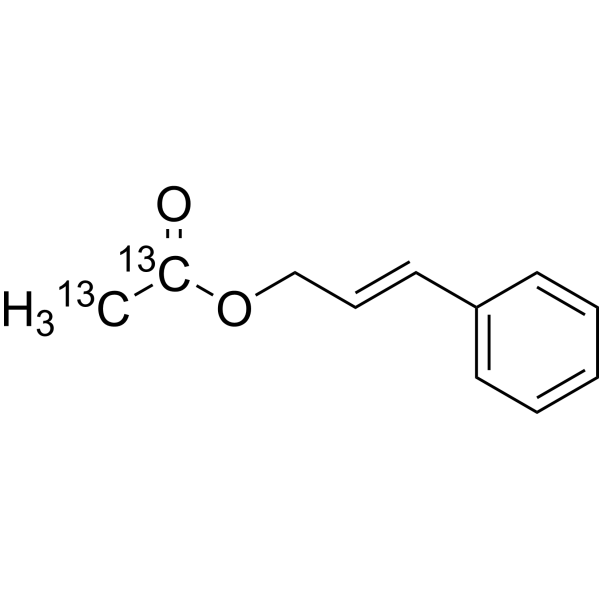
Cinnamyl acetate- 13C2 is the 13C-labeled Cinnamyl acetate (HY-N7125). Cinnamyl acetate is a phenylpropanoid ester fragrance ingredient that serves as a precursor for the synthesis of Chloramphenicol (HY-B0239) and butyrolactone costunolide, and possesses antioxidant activity. Cinnamyl acetate is used in the food, cosmetics, personal care, and pharmaceutical industries .
loading...
    loading...
Cat. No.: HY-N19640
CAS No.: 71129-71-0
(20S)-18,20-Epoxydigitoxigenin α-L-thvetoside is a cardenolide glycoside found in the bark of Thevetia peruviana. (20S)-18,20-Epoxydigitoxigenin α-L-thvetoside is a tumor necrosis factor (TNF)-related apoptosis-inducing ligand (TRAIL) resistance-overcoming agent. (20S)-18,20-Epoxydigitoxigenin α-L-thvetoside synergistically sensitizes TRAIL-resistant gastric adenocarcinoma cells to TRAIL, reducing cell viability when combined with TRAIL. (20S)-18,20-Epoxydigitoxigenin α-L-thvetoside can be used for the research of human gastric adenocarcinoma .
loading...
    loading...
Cat. No.: HY-N10091
CAS No.: 1607828-35-2
Target:  

Apoptosis

연구분야:  

Others

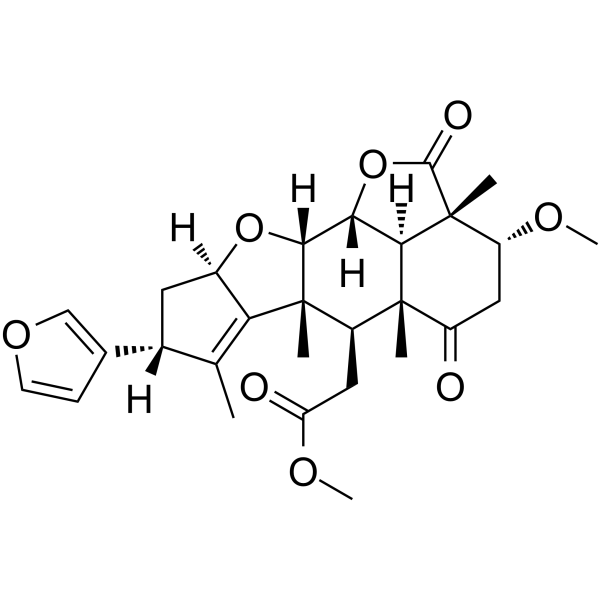
2,3-Dihydro-3α-methoxynimbolide is a limonoid compound isolated from the extracts of bark, leaves, roots, and seeds of Azadirachta indica A. Juss. var. siamensis Valeton. 2,3-Dihydro-3α-methoxynimbolide exhibits potent cyto-toxicities against one or more cell lines. 2,3-Dihydro-3α-methoxynimbolide activates caspases-3, -8, and -9, while increases the ratio of Bax/Bcl-2. 2,3-Dihydro-3α-methoxynimbolide induces apoptosis via both mitochondrial and death receptor pathways in AZ521 .
loading...
    loading...
Cat. No.: HY-126027
CAS No.: 498-15-7
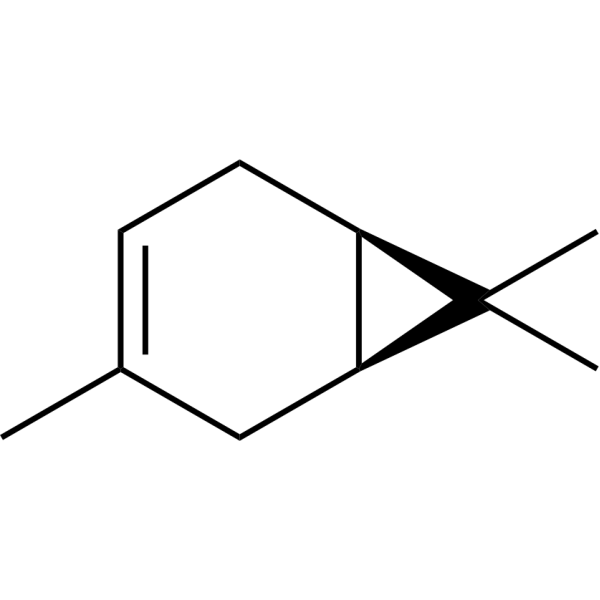
(+)-3-Carene is the (+)-enantiomer of 3-Carene (HY-N6663). (+)-3-Carene is a conifer metabolite associated with insect resistance in conifers. (+)-3-Carene can be used in studies related to pest control .
loading...
    loading...
Cat. No.: HY-116136
CAS No.: 119290-87-8
Synonyms: NP1302
Acanthoic acid (NP1302) is an orally active pimarane-type diterpenoid. Acanthoic acid is isolated from the root bark of Araliaceae family plant Eleutherococcus senticosus (Siberian ginseng). Acanthoic acid activates LXR and FXR. Acanthoic acid activates the AMPK-LKB1, SIRT1, and p38 MAPK signaling pathways and increases the phosphorylation level of ACC. Acanthoic acid downregulates the expression of SREBP-1, CYP2E1, HIF-1α, and PPARγ, and upregulates the expression of PPARα. Acanthoic acid induces Apoptosis by activating Caspase-3, promoting PARP cleavage, and downregulating Bcl-xL. Acanthoic acid exhibits antioxidant, anti-fibrotic, and hepatoprotective effects. It reduces lipid accumulation and lipogenesis. Acanthoic acid is used in studies on non-alcoholic fatty liver disease, alcoholic liver disease, acute promyelocytic leukemia, and Acetaminophen-induced hepatotoxicity .
loading...
    loading...
Cat. No.: HY-N17896
CAS No.: 123564-49-8
Pinoresinol-4-O-β-D-apiosyl-(1→2)β-D-glucoside is a lignan compound and a melanogenesis inhibitor with low cytotoxicity. Pinoresinol-4-O-β-D-apiosyl-(1→2)β-D-glucoside is isolable from the stem bark of Acer buergerianum (Acer buergerianum). Pinoresinol-4-O-β-D-apiosyl-(1→2)β-D-glucoside effectively inhibits the melanogenesis process in α-MSH (HY-P0252)-stimulated B16 melanoma cells. Pinoresinol-4-O-β-D-apiosyl-(1→2)β-D-glucoside exhibits extremely high safety towards normal cells, and serves as an ideal tool molecule for studying melanoma mechanisms and developing related whitening products .
loading...
    loading...
Cat. No.: HY-126465
CAS No.: 640-28-8
Agathic acid is an orally active diterpenoid resin acid that can be isolated from coniferous plants such as Agathis and Araucaria. Agathic acid exhibits anti-inflammatory, antibacterial, antioxidant, and antitumor activities. Agathic acid can be used in research on bacterial infections, inflammation, and cancer .
loading...
    loading...
Cat. No.: HY-N19083
Category:  

Extract

Target:  

Bacterial

Tecomella undulata Extract, also known as Rohida extract, is a valuable botanical extract derived from the bark and leaves of the Tecomella undulata plant native to the Indian Thar Desert and is rich in bioactive compounds such as flavonoids, quinones, triterpenoids, and other phytochemicals that contribute to its diverse therapeutic properties. This extract is widely recognized for its hepatoprotective effects demonstrated through its ability to protect against liver damage induced by toxins such as paracetamol and carbon tetrachloride by normalizing elevated liver enzyme levels reducing oxidative stress and improving liver function. Additionally, it exhibits significant anti-inflammatory activity comparable to standard drugs like indomethacin and has been used to treat conditions like ascites and hepatosplenomegaly while also showing immunomodulatory effects by enhancing both humoral and cell-mediated immune responses and possessing antimicrobial properties that make it effective against various pathogens. Recent research suggests that Tecomella undulata may have potential in managing nonalcoholic steatohepatitis (NASH) by reducing body weight insulin resistance and improving liver function markers making it a versatile natural remedy with significant applications in hepatoprotection anti-inflammation and immune support.
loading...
    loading...

