



Poly-L-ornithine hydrobromide (MW 5000-15000)

Based on 1 Customer Validation
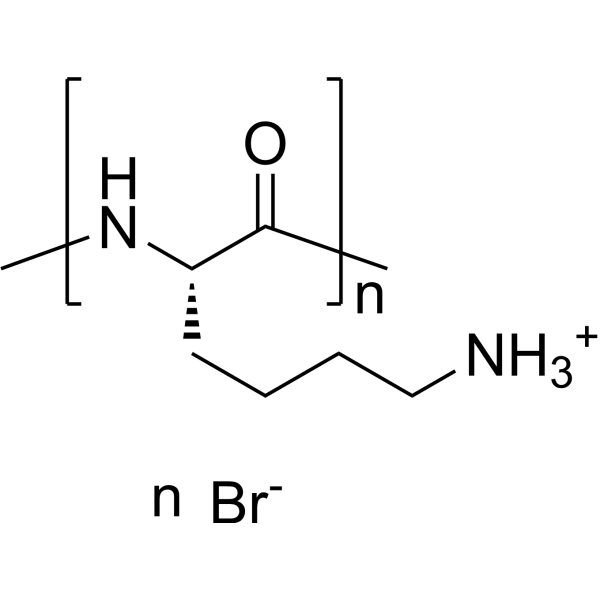
Poly-L-ornithine (hydrobromide) (MW 5000-15000) (L-Ornithine homopolymer (hydrobromide) (MW 5000-15000)) is a biochemical reagent that can be used as a biological material or organic compound for life science related research.
For research use only. We do not sell to patients.
- CAS No.: 27378-49-0
- Formula: (C5H12N2O2)n.xHBr
- Molecular Weight:5000-15000
-
Storage:
-20°C, sealed storage, away from moisture
* In solvent : -80°C, 6 months; -20°C, 1 month (sealed storage, away from moisture)


To place orders, for customer services and technical support, please contact: MedChemExpress USA
Tel: 609-228-6898 E-mail: [email protected] [email protected]


-
 Biological Activity
-
Chemical Information
- Purity & Documentation
- References
-
 Help & FAQs


-

HY-126436A
Poly-L-ornithine hydrobromide (MW 30000-70000) -

HY-126436B
Poly-L-ornithine hydrobromide (MW>100000) -
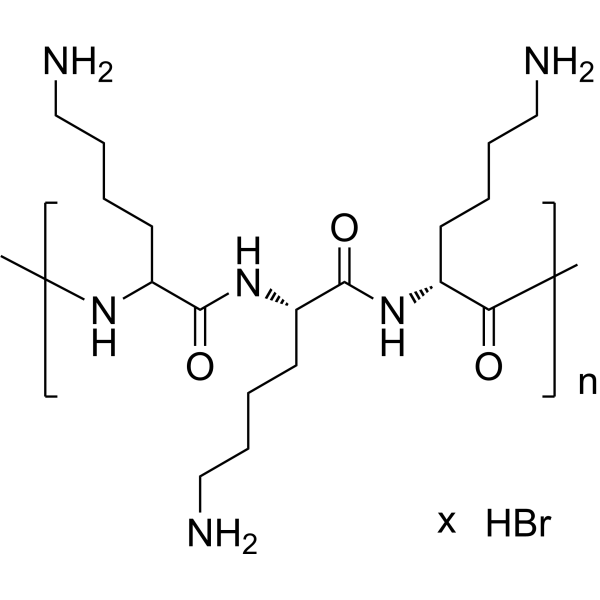
HY-139201A
Poly-D-lysine hydrobromide (MW 70000-150000) -

HY-126437J
Poly-L-lysine solution (0.01%, sterile-filtered, MW 150000-300000) -

HY-126437E
Poly-L-lysine hydrobromide (MW 15000-30000) -

HY-126437H
Poly-L-lysine hydrobromide (MW 4000-15000) -

HY-126437K
Poly-L-lysine solution (0.01%, sterile-filtered, MW 70000-150000) -
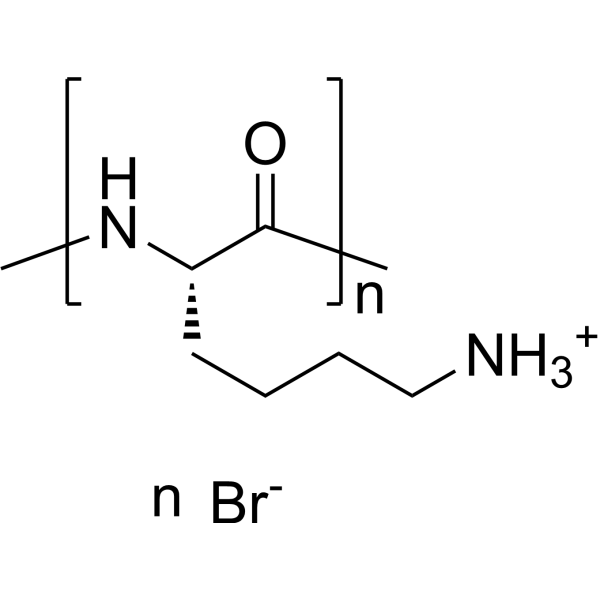
HY-126437B
Poly-L-lysine hydrobromide (MW 70000-150000) -
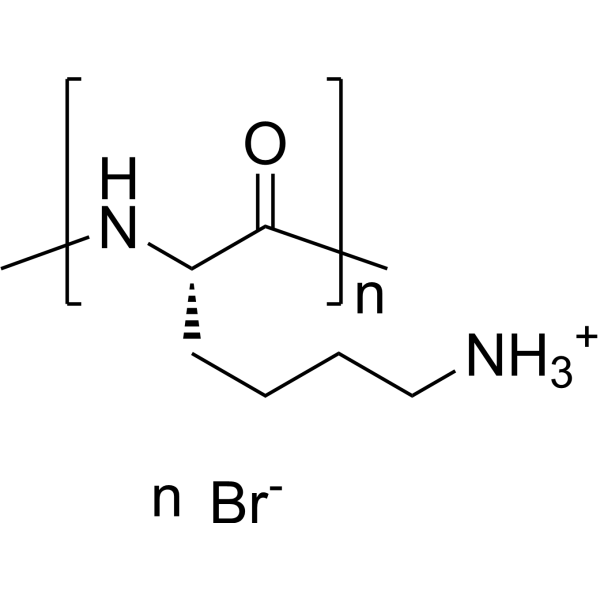
HY-126437C
Poly-L-lysine hydrobromide (MW 150000-300000) -
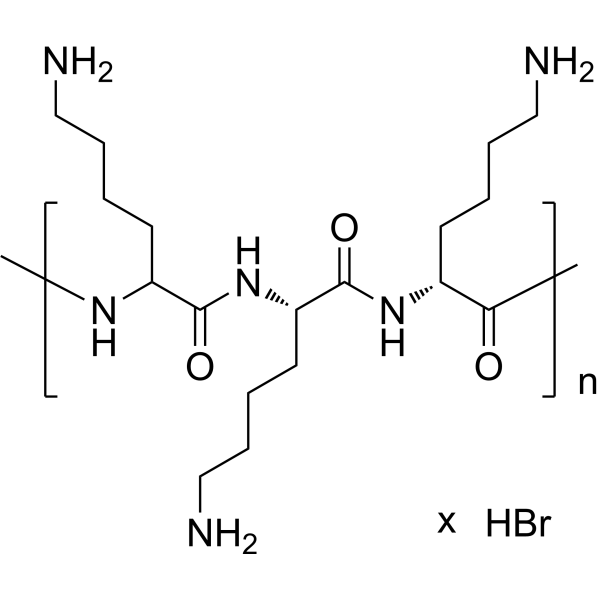
HY-139201
Poly-D-lysine hydrobromide (MW 30000-70000) -
HY-126437
Poly-L-lysine hydrobromide (MW 30000-70000) -

HY-126437I
Poly-L-lysine hydrobromide (MW 1000-5000)


Biological Activity
Description
In Vitro
-
Cell Line:human umbilical vein endothelial cells (HUVECs)
-
Concentration:A/N ratio = 1.75
-
Incubation Time:24 h
-
Result:Exhibited a significantly lower colocalization ratio (~27%) of mRNA with late endolysosomes compared to parent BP-PLO (~65%) and TP-nCCP/PLO (~89%).
In Vivo
-
Animal Model:C57BL/6J (8-week-old male, 20-25 g, lysolecithin-induced spinal cord focal demyelination)[2]
-
Dosage:20 µg/mL; 100 µg/mL; 500 µg/mL
-
Administration:intraspinal; co-injection with lysolecithin at time of injury
-
Result:Promoted myelin regeneration and recovery of motor function at 100 μg/mL; and excessively high concentration (500 μg/mL) was actually harmful.


Chemical Information
-
CAS No. 27378-49-0
-
Appearance Solid
-
Molecular Weight 5000-15000
-
Formula (C5H12N2O2)n.xHBr
-
Color White to off-white
-
SMILES
CC([C@@H](N)CCCNC)=O.[n].[x].Br
-
Synonyms
L-Ornithine homopolymer hydrobromide (MW 5000-15000)
-
Shipping
Room temperature in continental US; may vary elsewhere.
-
Storage
-20°C, sealed storage, away from moisture
* In solvent : -80°C, 6 months; -20°C, 1 month (sealed storage, away from moisture)


Purity & Documentation
-
Data Sheet (265 KB)
-
SDS (394 KB)
- English - EN (394 KB)
- Français - FR (394 KB)
- Deutsch - DE (394 KB)
- Norwegian - NO (394 KB)
- Español - ES (394 KB)
- Swedish - SV (394 KB)
- Italian - IT (394 KB)
- Korean - KR (394 KB)
- Portuguese - PT (394 KB)
-
Handling Instructions (2659 KB)
References

Calculators
Concentration (start) × Volume (start) = Concentration (final) × Volume (final)


Poly-L-ornithine hydrobromide (MW 5000-15000) Related Classifications
HY-126436C Related Classifications
 Powered by Bioz