



2258 Results for "

Immunity

" in MedChemExpress (MCE) Product Catalog:
Products (2258)

2258 Results for "Immunity" in MCE Product Catalog:

Cat. No.: HY-14519AR
CAS No.: 7413-34-5
Synonyms: Amethopterin disodium (Standard); CL14377 disodium (Standard); WR19039 disodium (Standard)
Methotrexate disodium (Standard) (Amethopterin disodium (Standard); CL14377 disodium (Standard); WR19039 disodium (Standard)) is the analytical standard of Methotrexate disodium (HY-14519A). This product is intended for research and analytical applications. Methotrexate disodium (Amethopterin disodium; CL14377 disodium; WR19039 disodium) is an orally active antifolate (Antifolate). Methotrexate disodium inhibits dihydrofolate reductase (DHFR), blocks tetrahydrofolate production, suppresses purine/pyrimidine synthesis and transmethylation, and causes intracellular accumulation of AICAR. Methotrexate disodium promotes extracellular adenosine release, regulates the cytokine network, and inhibits the alarmin function of HMGB1. Methotrexate disodium induces apoptosis and cytotoxicity, upregulates the expression of iNOS and COX-2, suppresses hippocampal neurogenesis, and induces pulmonary fibrosis. Methotrexate disodium is used in the research of various immune and inflammation-related diseases such as arthritis, psoriasis, systemic lupus erythematosus, as well as pulmonary fibrosis and breast cancer .
loading...
    loading...
Cat. No.: HY-148511
CAS No.: 147063-80-7
Synonyms: CMP-001
Vidutolimod (CMP-001) is a virus-like particle containing a TLR9 activator . Vidutolimod induces human peripheral blood mononuclear cells to secrete IFNα, and upregulates the gene expression of CXCL10, PDL1, IDO and CD80. Vidutolimod activates TLR9, which in turn triggers plasmacytoid dendritic cell activation, production of IFNγ and TNFα, induction of CXCL10, and recruitment of antitumor T cells. Vidutolimod causes influenza-like symptoms, hypotension and tumor regression, and its activity depends on the presence of anti- antibodies. Vidutolimod modulates monocyte function, promotes CD4 T cell proliferation, and activates multiple immune cell types in an environment with anti-Qβ antibodies. Vidutolimod prolongs the survival of tumor-bearing mice. Vidutolimod is used in research related to advanced melanoma, head and neck squamous cell carcinoma, and advanced non-small cell lung cancer .
loading...
    loading...
Cat. No.: HY-150229
CAS No.: 2803699-70-7
Purity:  98.84%
Target:  

Liposome

Research Areas:  

Cancer

306-N16B is a selective lung-targeted lipid nanoparticle that reversibly targets lung endothelial cells and specific immune cells through selective adsorption of a protein corona mediated by differences in tail structure (such as fibrinogen β/γ chain). 306-N16B binds to specific plasma proteins in the blood to form a protein corona, which guides the particles to be enriched in the lungs, releases mRNA and promotes target cell gene expression, exerts efficient lung cell transfection activity, and can precisely regulate gene delivery of different cell types in the lungs (such as endothelial cells and macrophages). 306-N16B can be used in gene therapy technologies for hereditary lung diseases including pulmonary lymphangioleiomyomatosis (LAM), restoring tumor suppressor function by delivering Tsc2 mRNA, and can also be used for lung-specific mRNA vaccines and gene editing therapies .
loading...
    loading...
Cat. No.: HY-16142
CAS No.: 188969-00-8
Synonyms: EMD 121974 hydrochloride
Cilengitide hydrochloride (EMD 121974 hydrochloride) is an integrin (integrin) inhibitor with blood-brain barrier permeability, with IC50 values against human targets as follows: 0.61 nM for αvβ3, 8.4 nM for αvβ5, 14.9 nM for α5β1, 5400 nM for αIIbβ3, 2050 nM for αvβ6, 2350 nM for αvβ8. Cilengitide hydrochloride inhibits the binding of integrins to vitronectin, fibronectin, fibrinogen and LAP (TGF-β), and serves as an internal standard for solid-phase integrin binding assays. Cilengitide hydrochloride inhibits tumor cell viability, induces apoptosis, reduces the phosphorylation levels of STAT3, AKT and mTOR, downregulates the expression of PD-L1, inhibits cell viability and angiogenesis, regulates anti-tumor immune responses and slows tumor growth. Cilengitide hydrochloride can be used in research related to glioblastoma, melanoma, advanced solid tumors and refractory brain tumors .
loading...
    loading...
Cat. No.: HY-175073
Ganglioside GT1b bovine trisodium is a trisialic acid ganglioside. Ganglioside GT1b bovine trisodium binds to botulinum toxin type A (BTxA), BTxA heavy chain, and tetanus toxin with IC50 values of 11, 0.74, and 7.2 μM, respectively. Ganglioside GT1b bovine trisodium acts as a TLR2 agonist, leading to microglial activation, increased expression of pro-inflammatory factors, and increased pain sensitivity in spinal microglia. Ganglioside GT1b bovine trisodium also reduces the production of IL-6, IL-10, IgG, IgM, and IgA in human peripheral blood mononuclear cells (PBMCs). Ganglioside GT1b bovine trisodium increases extracellular glutamate levels in neural cell models. Ganglioside GT1b bovine trisodium has potential applications in research on immune system diseases and nervous system diseases .
loading...
    loading...
Cat. No.: HY-182048
Target:  

PD-1/PD-L1 mTOR

Research Areas:  

Cancer

PD-1/PD-L1-IN-62 is a PD-L1 inhibitor and mTOR modulator. PD-1/PD-L1-IN-62 inhibits PD-L1 with an IC50 of 6.9 nM and abrogates immune suppression mediated by the PD-1/PD-L1 pathway. By inhibiting mTOR phosphorylation and downregulating the downstream target SREBP1, PD-1/PD-L1-IN-62 significantly reduces cholesterol and triglyceride levels to decrease lipid accumulation. PD-1/PD-L1-IN-62 promotes the infiltration of CD3 +CD8 + T cells into tumor tissues, thereby effectively inhibiting tumor growth. PD-1/PD-L1-IN-62 can be used for the research of hepatocellular carcinoma .
loading...
    loading...
Cat. No.: HY-18234B
CAS No.: 24365-47-7
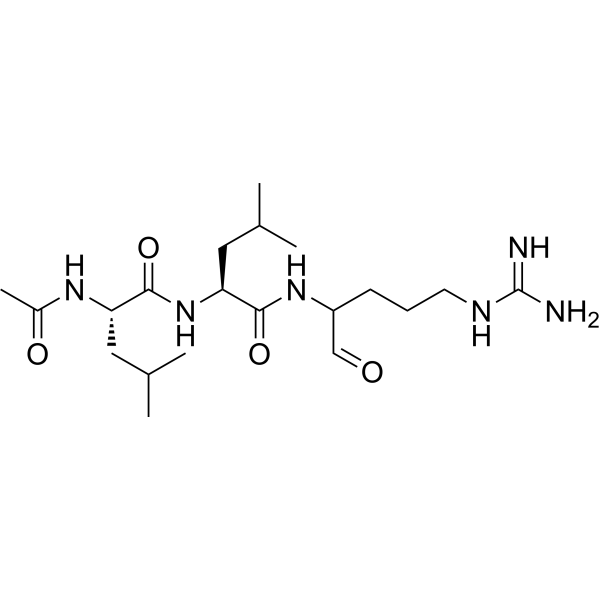
Leupeptin Ac-LL is a broad-spectrum protease inhibitor . By inhibiting the activation of the PTEN/PI3K/Akt/NF-κB/ERK1/2/p38 signaling pathway, Leupeptin Ac-LL significantly reduces LPS-induced NO and ROS production, mitochondrial membrane potential hyperpolarization, phagocytic activity, pro-inflammatory cytokine release, and M1 polarization in mouse peritoneal macrophages, and reverses autophagic flux impairment. It also decreases Concanavalin A (HY-P2149)-induced proliferation index of mouse splenic lymphocytes and the Th1/IL-10 and Th2/IL-10 cytokine ratios, thereby modulating innate and adaptive immune responses. Leupeptin Ac-LL inhibits blood coagulation and tumorigenesis in mouse skin. Leupeptin Ac-LL can be used in research on chronic inflammatory diseases and skin tumorigenesis .
loading...
    loading...
Cat. No.: HY-18234C
CAS No.: 24125-16-4
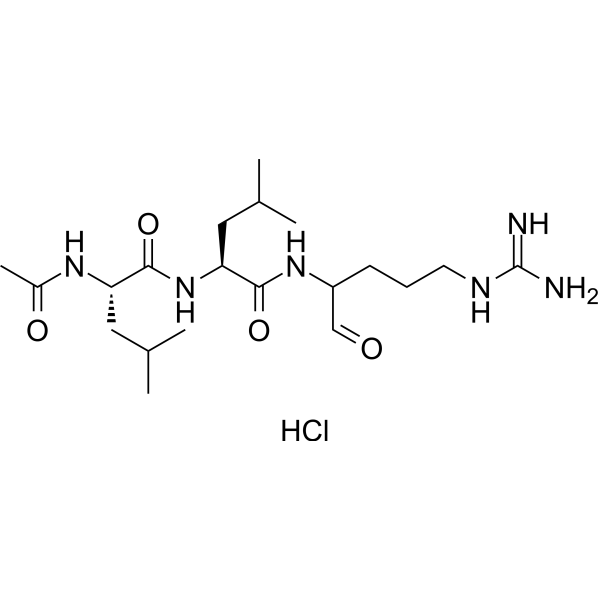
Leupeptin Ac-LL hydrochloride is a broad-spectrum protease inhibitor . By inhibiting the activation of the PTEN/PI3K/Akt/NF-κB/ERK1/2/p38 signaling pathway, Leupeptin Ac-LL hydrochloride significantly reduces LPS-induced NO and ROS production, mitochondrial membrane potential hyperpolarization, phagocytic activity, pro-inflammatory cytokine release, and M1 polarization in mouse peritoneal macrophages, and reverses autophagic flux impairment. It also decreases Concanavalin A (HY-P2149)-induced proliferation index of mouse splenic lymphocytes and the Th1/IL-10 and Th2/IL-10 cytokine ratios, thereby modulating innate and adaptive immune responses. Leupeptin Ac-LL hydrochloride inhibits blood coagulation and tumorigenesis in mouse skin. Leupeptin Ac-LL hydrochloride can be used in research on chronic inflammatory diseases and skin tumorigenesis .
loading...
    loading...
Cat. No.: HY-182470
CAS No.: 486414-32-8
Target:  

CDK

AG-012986 (dihydrochloride) is a pan-CDK inhibitor with Ki values of 44 nM (CDK1), 9.2 nM (CDK4), 94 nM (CDK2), and IC50 values of 22 nM (CDK5), 4 nM (CDK9). AG-012986 (dihydrochloride) causes apoptosis of T-cells by targeting upstream kinases in the p38 Mitogen-activated protein kinase (MAPK) pathway and impairing cellular survival. AG-012986 (dihydrochloride) induces cell cycle arrest, retinoblastoma protein hypophosphorylation, and reduces Ki-67 expression. AG-012986 (dihydrochloride) exerts antiproliferative activity in tumor cells, demonstrates antitumor efficacy in human xenograft models, and causes retinal and peripheral neurotoxicity, plus immune cell toxicity. AG-012986 (dihydrochloride) can be used for the research of colon carcinoma, non-small cell lung carcinoma, lung carcinoma, breast carcinoma, ovarian tumor, pancreatic carcinoma, osteosarcoma, lymphoma, leukemia, retinotoxicity .
loading...
    loading...
Cat. No.: HY-183370
Research Areas:  

Inflammation/Immunology

JAK2/STAT3-IN-2 is an orally active JAK2/STAT3 inhibitor. JAK2/STAT3-IN-2 inhibits the phosphorylation of tyrosine residues in JAK2 and STAT3, blocks downstream signal transduction, disrupts the dimerization and nuclear translocation of STAT3, and suppresses pro-inflammatory transcriptional activity. JAK2/STAT3-IN-2 inhibits the expression of IL-17A and IL-17F, reduces immune cell infiltration, and inhibits the production of NO simultaneously. JAK2/STAT3-IN-2 exerts a protective effect in a mouse model of ulcerative colitis induced by DSS (HY-116282C). JAK2/STAT3-IN-2 can be used for the research of ulcerative colitis .
loading...
    loading...
Cat. No.: HY-B1953S
CAS No.: 1793071-39-2
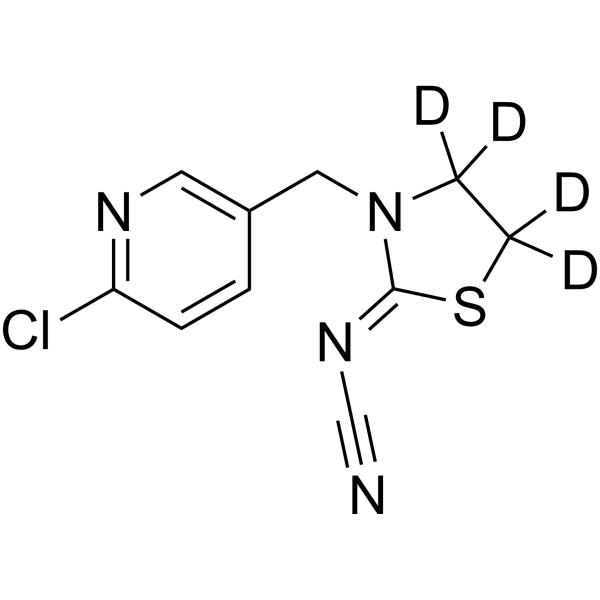
Thiacloprid-d4 is the deuterium labeled Thiacloprid. Thiacloprid is an orally active neurotoxic insecticide and also a nAChR agonist. Thiacloprid reduces the viability of healthy cells, depletes reduced glutathione, and increases MDA levels, thereby inducing cytotoxicity and oxidative stress damage. In practical applications, Thiacloprid has lower acute toxicity to honeybees than other compounds of the same class such as Imidacloprid (HY-B0838), but it still significantly impairs the learning and memory function, immune capacity and survival status of honeybees. Thiacloprid induces intestinal microbial dysbiosis and reduces survival rate in middle-aged honeybees, increases the risk of premature collapse in bumblebee colonies, and significantly decreases the final colony weight and reproductive output. Thiacloprid is used in broad-spectrum agricultural pest control, often alone or in combination with Deltamethrin (HY-B1971), and meets the pest management needs of various crops including potatoes, cabbages, various fruits and vegetables, and nuts .
loading...
    loading...
Cat. No.: HY-B2035R
CAS No.: 51218-49-6
Pretilachlor (Standard) is the analytical standard of Pretilachlor (HY-B2035). This product is intended for research and analytical applications. Pretilachlor is a chloroacetamide herbicide with biological activities including endocrine disruption, oxidative stress induction, apoptosis induction, and immunotoxicity. Pretilachlor exerts its effects by interfering with hormone metabolism, inducing oxidative stress, activating apoptotic pathways, and inhibiting immune functions. Pretilachlor upregulates the transcription of P53, Mdm2, and Bbc3, and increases the activities of Caspase3 and Caspase9; it upregulates the transcription of genes in the HPG/HPT axis and the activity of aromatase; it induces oxidative stress, elevates ROS levels, and upregulates CAT, SOD, and GPX. Pretilachlor downregulates the transcription of CXCL-C1C, IL-1β, and IL-8. Pretilachlor disrupts the normal physiological processes and embryonic development of fish, exhibiting significant toxicity. Pretilachlor can be used in studies related to weeding, environmental pollution, and behavioral toxicity in fish .
loading...
    loading...
Cat. No.: HY-D1056B1
Synonyms: LPS, from bacterial (Proteus vulgaris)
Lipopolysaccharides, from Proteus vulgaris are lipopolysaccharide endotoxins and TLR-4 activators derived from Proteus vulgaris, classified as S-type LPS, which can activate pathogen-associated molecular patterns (PAMP) of the immune system and induce cellular secretion of migrasomes. Lipopolysaccharides, from Proteus vulgaris exhibit a typical three-part structure: O-antigen, core oligosaccharide, and lipid A. Lipopolysaccharides, from Proteus vulgaris possess a unique molecular structure and chitosan affinity (Kb=2.72 μM), surpassing that of Yersinia pseudotuberculosis (Kb=6.06 μM) and Escherichia coli (Kb=79.50 μM) .
It is recommended to prepare a solution with concentration ≥2 mg/mL. Vortex thoroughly for more than 10 minutes. Due to the adsorption characteristics of LPS, silanized container or low adsorption centrifuge tubes should be used for aliquoting and storage, and mix thoroughly before use.
loading...
    loading...
Cat. No.: HY-E70115A
Target:  

Fungal Bacterial

Research Areas:  

Infection

Feruloyl esterase, Acetivibrio cellulolyticus is a subclass of carboxylesterases that hydrolyzes the ester linkages between hydroxycinnamic acids and arabinoxylan/pectin polysaccharides in plant cell walls. Feruloyl esterase, Acetivibrio cellulolyticus can hydrolyze ethyl ferulate to release ferulic acid, disrupt plant cell wall structure, promote fiber swelling, and facilitate cellulase hydrolysis. Feruloyl esterase, Acetivibrio cellulolyticus synergizes with xylanase by removing ferulic acid side chains, thereby promoting efficient hydrolysis of xylan into monomers. Feruloyl esterase, Acetivibrio cellulolyticus acts as a virulence factor for Verticillium dahliae VdFAE and Magnaporthe oryzae Fae1, facilitating host infection and colonization. Feruloyl esterase, Acetivibrio cellulolyticus promotes the degradation of cotton GhDFR through binding to its NADPH domain, thereby inhibiting flavonoid-mediated innate immunity and inducing cell death in Nicotiana benthamiana. Feruloyl esterase, Acetivibrio cellulolyticus can be used in studies related to verticillium wilt and rice blast .
loading...
    loading...
Cat. No.: HY-P11928
CAS No.: 3121532-43-9
Target:  

CCR ERK

Research Areas:  

Cancer

TC6-D3 is a proteolysis-resistant peptide and also a CC chemokine receptor 7 (CCR7) inhibitor, with a Kd value of 403 nM against mouse targets. TC6-D3 blocks the interaction between CCR7 and its ligands CCL19 and CCL21, and inhibits the activation of the ERK1/2 pathway. TC6-D3 reduces the migratory capacity of tumor cells in vitro. TC6-D3 inhibits tumor growth and lymph node metastasis in vivo. TC6-D3 restores T cell cytotoxicity, promotes CD8+ T cell infiltration, and enhances anti-tumor immune responses. TC6-D3 can be used in studies related to lymph node metastasis .
loading...
    loading...
Cat. No.: HY-P990802

Target:  

CD3

Anti-Mouse CD3ε Antibody (145-2C11) is an orally active anti-mouse CD3ε IgG1 monoclonal antibody. Anti-Mouse CD3ε Antibody (145-2C11) can improve the function of regulatory T cells (Tregs). Anti-Mouse CD3ε Antibody (145-2C11) relieves inflammatory response by inhibiting the production of pro-inflammatory cytokines and increasing the secretion of anti-inflammatory factors. Anti-Mouse CD3ε Antibody (145-2C11) can be used for researches on metabolic and immune system conditions such as diabetes and lupus. The recommend isotype control of Anti-Mouse CD3ε Antibody (145-2C11): Armenian hamster IgG, Isotype Control (HY-P990305) .
loading...
    loading...
Cat. No.: HY-P990811

Target:  

Influenza Virus

Research Areas:  

Infection

Anti-Influenza A virus NP Antibody (H16-L10-4R5 (HB-65)) is mouse-derived IgG2a κ type antibody inhibitor, targeting to influenza virus nucleoprotein. Anti-Influenza A virus NP Antibody (H16-L10-4R5 (HB-65)) reacts with influenza virus nucleoprotein (NP). Anti-Influenza A virus NP Antibody (H16-L10-4R5 (HB-65)) can induce passive immunity to influenza A virus. Anti-Influenza A virus NP Antibody (H16-L10-4R5 (HB-65)) can be used for the detections of western blot, flow cytometry and immunohistochemistry in Influenza A virus infection .
loading...
    loading...
Cat. No.: HY-P991266

Research Areas:  

Inflammation/Immunology

SM-17 is a human monoclonal antibody targeting IL-17RB. SM-17 binds to human IL-17RB, inhibits the dimerization of IL-17RA/IL-17RB, blocks IL-25-induced phosphorylation of ERK1/2 and STAT5, and suppresses Th2-mediated inflammatory responses. SM-17 inhibits the secretion of IL-5, IL-9, IL-13 and IL-4, impairs the proliferation/expansion of ILC2 and Th2 cells, and restores filaggrin expression. SM-17 reduces immune cell infiltration, epidermal hyperplasia, goblet cell hyperplasia, collagen deposition, ear swelling and scratching behavior in animal models. SM-17 can be used in research related to atopic dermatitis and allergic asthma .
loading...
    loading...
Cat. No.: HY-P99146
Anti-Mouse TCR gamma/delta Antibody (UC7-13D5) is an anti-mouse TCR gamma/delta IgG monoclonal antibody. Anti-Mouse TCR gamma/delta Antibody (UC7-13D5) can enter the blood-brain barrier. Anti-Mouse TCR gamma/delta Antibody (UC7-13D5) effectively depletes γδ T cells and reduces macrophage and neutrophil infiltration. Anti-Mouse TCR gamma/delta Antibody (UC7-13D5) can reduce the immune response of transplants. Anti-Mouse TCR gamma/delta Antibody (UC7-13D5) can be used for researches on inflammation conditions, virus infection and cancer such as arthritis, JHM virus and breast cancer .
loading...
    loading...
Cat. No.: HY-P9996
CAS No.: 2445259-99-2
Synonyms: LY3434172; IBI-318

Target:  

PD-1/PD-L1

Research Areas:  

Cancer

Reozalimab (LY3434172; IBI-318) is an IgG1 monoclonal antibody targeting PD-1/PD-L1, with an IC50 of 2.27 nM and an EC50 of 0.080 nM against human PD-1, as well as an IC50 of 0.75 nM and an EC50 of 0.455 nM against human PD-L1. Reozalimab blocks the binding of PD-1 to PD-L1/PD-L2, as well as the binding of PD-L1 to PD-1/CD80, thereby inhibiting the inhibitory signal transduction of the PD-1 pathway. Reozalimab enhances the functional activation of T cells and induces anti-tumor activity in mouse tumor models reconstituted with human immune cells. Reozalimab can be used in research related to cancers such as non-small cell lung cancer and ovarian cancer .
loading...
    loading...

