

2255 Results for "

Immunity

" in MedChemExpress (MCE) Product Catalog:
Products (2255)

2255 Results for "Immunity" in MCE Product Catalog:

Cat. No.: HY-D3227
CAS No.: 2677830-11-2
HOTN is a hypochlorous acid (HClO) Fluorescent indicator. HOTN is oxidized by HClO, causing cleavage of its Py +-N + moiety and a change in hydrophobicity, which in turn triggers aggregation-induced emission to generate a strong fluorescent signal. HOTN is used for in vivo imaging of inflammation and hepatocellular carcinoma, as these diseases typically result in high levels of HClO .
loading...
    loading...
Cat. No.: HY-P11000
Research Areas:  

Others

INF7TAT is an amphipathic cell-penetrating peptide that mediates intracellular delivery of CRISPR ribonucleoproteins. INF7TAT achieves endosomal escape via the INF7 fragment and cell binding via the TAT fragment. It enables intracellular delivery into primary human T cells and hematopoietic stem and progenitor cells, facilitating gene knockout and AAV-mediated homology-directed repair. INF7TAT can be used for genome editing-related research .
loading...
    loading...
Cat. No.: HY-P11000A
Research Areas:  

Others

INF7TAT acetate is an amphipathic cell-penetrating peptide that mediates intracellular delivery of CRISPR ribonucleoproteins. INF7TAT acetate achieves endosomal escape via the INF7 fragment and cell binding via the TAT fragment. It enables intracellular delivery into primary human T cells and hematopoietic stem and progenitor cells, facilitating gene knockout and AAV-mediated homology-directed repair. INF7TAT acetate can be used for genome editing-related research .
loading...
    loading...
Cat. No.: HY-P991396

Target:  

Tim3

Research Areas:  

Cancer

LY-3321367 is a humanized IgG1 monoclonal antibody targeting TIM-3. LY-3321367 partially blocks the formation of the TIM-3/GAL-9 complex, completely blocks the binding of TIM-3 to phosphatidylserine, but does not block the formation of the TIM-3/CEACAM-1 complex. LY-3321367 is applicable to research related to various solid tumors, such as small cell lung cancer .
loading...
    loading...
Cat. No.: HY-149043
CAS No.: 1451079-18-7
Target:  

NF-κB

Research Areas:  

Metabolic Disease

NIK-IN-1 (Compound 2) is an inhibitor of NF-κB-inducing kinase (NIK). NIK-IN-1 is used for research on hepatic inflammatory diseases and acute liver injury .
loading...
    loading...
Cat. No.: HY-185565
CAS No.: 2691796-92-4
Target:  

PD-1/PD-L1 CXCR

Research Areas:  

Cancer

PD-1/PD-L1-IN-63 is an orally active PD-1/PD-L1 inhibitor with an IC50 of 9.1 nM. PD-1/PD-L1-IN-63 blocks the PD-1/PD-L1 interaction, induces cancer cell death and inhibits tumor growth. PD-1/PD-L1-IN-63 can be used in the research of melanoma .
loading...
    loading...
Cat. No.: HY-76476
CAS No.: 86087-23-2
Synonyms: (+)-3-Hydroxytetrahydrofuran
Research Areas:  

Others

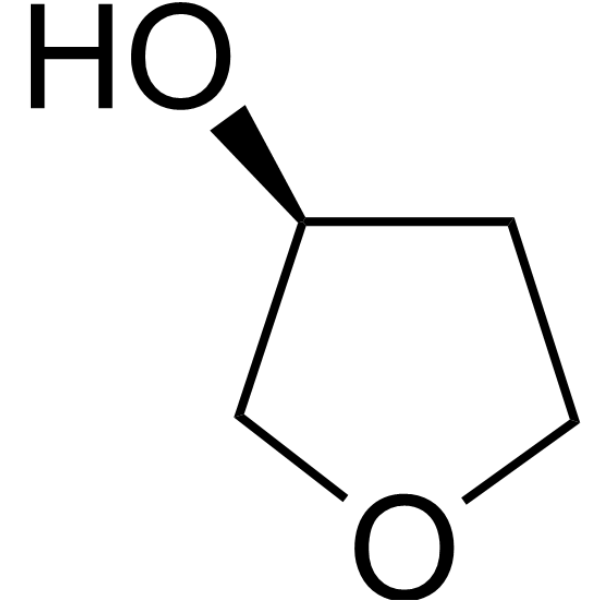
(S)-Tetrahydrofuran-3-ol ((+)-3-Hydroxytetrahydrofuran) is a secondary alcohol and the (S)-enantiomer of Tetrahydrofuran-3-ol. (S)-Tetrahydrofuran-3-ol serves as a crucial chiral alcohol intermediate for the human immunodeficiency virus inhibitor Amprenavir (HY-17430). (S)-Tetrahydrofuran-3-ol is applicable to researches on chiral biocatalysis and synthesis of HIV protease inhibitor intermediates .
loading...
    loading...
Cat. No.: HY-76476R
CAS No.: 86087-23-2
Synonyms: (+)-3-Hydroxytetrahydrofuran (Standard)
Research Areas:  

Others

(S)-Tetrahydrofuran-3-ol (Standard) ((+)-3-Hydroxytetrahydrofuran (Standard)) is the analytical standard of (S)-Tetrahydrofuran-3-ol (HY-76476). This product is intended for research and analytical applications. (S)-Tetrahydrofuran-3-ol ((+)-3-Hydroxytetrahydrofuran) is a secondary alcohol and the (S)-enantiomer of Tetrahydrofuran-3-ol. (S)-Tetrahydrofuran-3-ol serves as a crucial chiral alcohol intermediate for the human immunodeficiency virus inhibitor Amprenavir (HY-17430). (S)-Tetrahydrofuran-3-ol is applicable to researches on chiral biocatalysis and synthesis of HIV protease inhibitor intermediates .
loading...
    loading...
Cat. No.: HY-N7700
CAS No.: 15769-56-9
Synonyms: G2013
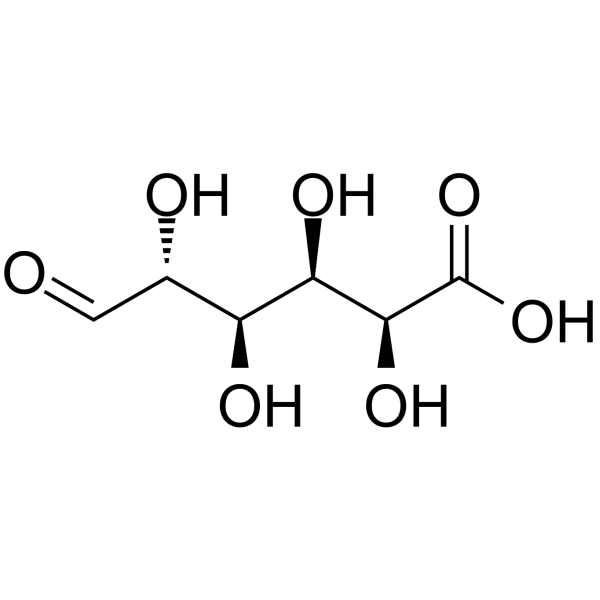
Guluronic acid (G2013) is an orally active oxidative stress regulator and anti-inflammatory agent that exerts pharmacological effects by down-regulating various pro-inflammatory and oxidative stress-related genes (such as TLR4, NF-κB, iNOS, etc.) and inhibiting the activities of COX-2, MMPs and VEGF. Low-dose Guluronic acid up-regulates the expression of immunoregulatory genes SHIP1 and SOCS1, thereby effectively inhibiting cancer-related inflammation, tumor angiogenesis, cell adhesion and metastasis, while reducing the accumulation of immunosuppressive cells. Guluronic acid significantly prolongs the survival time of tumor-bearing hosts within a concentration range without direct cytotoxicity, demonstrating favorable safety. Guluronic acid has involved in the research of multiple sclerosis, ankylosing spondylitis, breast cancer and other inflammatory diseases .
loading...
    loading...
Cat. No.: HY-P990953
CAS No.: 2640279-10-1
Synonyms: Gen1047
Target:  

CD3

Research Areas:  

Cancer

Zubotamig (Gen1047) is an CD3E/VTCN1-targeting Ig(G1 -κ_G1 -λ2) type chimeric human antibody. The recommed isotype control is Human IgG1 kappa, Isotype Control (HY-P99001). Zubotamig induces T-cell mediated cytotoxicity of B7H4-positive tumor cells, triggers T-cell activation, and induces cytokine release from T cells in the presence of B7H4-expressing tumor cells. Zubotamig demonstrates antitumor activity in mouse patient-derived xenograft (PDX) models. Zubotamig can be used for the research of solid cancers (including breast, ovarian and lung cancer) .
loading...
    loading...
Cat. No.: HY-P991745

Target:  

CCR

Research Areas:  

Cancer

Anti-Mouse CCR2 Antibody (C2Mab-6) is a monoclonal antibody targeting mouse CC chemokine receptor type 2 (mCCR2), with a KD value of 0.18-1.6 nM. Anti-Mouse CCR2 Antibody (C2Mab-6) exhibits high binding affinity to cells expressing mCCR2 and shows no reactivity to parental CHO-K1 cells. Anti-Mouse CCR2 Antibody (C2Mab-6) recognizes the amino acid region spanning positions 1-19 of mCCR2, and its key binding epitope includes Asp3, Asn4, Met6, Pro8, Gln9 and Phe10. Anti-Mouse CCR2 Antibody (C2Mab-6) can be used in leukemia-related research .
loading...
    loading...
Cat. No.: HY-112624E
CAS No.: 9004-54-0
Synonyms: Dextran 0.8; Dextran D0.8; Dextran T0.8(MW 640-960)
Dextran T0.8 (Dextran 0.8; Dextran T0.8(MW 640-960)) is a food additive with a porous network structure that exhibits strong hydration capacity and low browning activity. Dextran T0.8 (MW 800) can improve the coagulation of dairy products and is used as a prebiotic in baked goods. Dextran T0.8 (MW 800) is non-toxic to HeLa cells at a concentration of ~500 μg/mL and has a low relative browning rate in the Maillard reaction. The Dextran series of compounds are also natural polysaccharide drug carriers that can be connected to drugs through covalent bonding methods such as ester bonds, amide bonds or click chemistry, or self-assembled to form carriers such as nanoparticles and hydrogels. Dextran is biodegradable and biocompatible, and can achieve targeted delivery and controlled release of drugs. Dextran derivatives can prolong the half-life of drugs, increase local concentrations, and reduce the activity of immune clearance .
loading...
    loading...
Cat. No.: HY-112624J
CAS No.: 9004-54-0
Synonyms: Dextran 4; Dextran D4; Dextran T4(MW 3200-4800)
Dextran 4,000 is a mucus rheology modifier. The dextran molecules in Dextran 4,000 can reduce the cross-link density of mucus through osmotic effects and hydrogen bond substitution, and reduce viscoelasticity and improve the mucociliary/cough clearance index by destroying the DNA-mucin network structure in mucus. Dextran 4,000 has the ability to improve the rheological properties and clearance ability of cystic fibrosis (CF) sputum, and can be used in the study of inhalation therapy or aerosol delivery of mucostatic respiratory diseases. The Dextran series of compounds are also natural polysaccharide drug carriers that can be connected to drugs through covalent bonding methods such as ester bonds, amide bonds or click chemistry, or self-assembled to form carriers such as nanoparticles and hydrogels. Dextran is biodegradable and biocompatible, and can achieve targeted delivery and controlled release of drugs. Dextran derivatives can prolong the half-life of drugs, increase local concentrations, and reduce the activity of immune clearance .
loading...
    loading...
Cat. No.: HY-114243
CAS No.: 1382469-39-7
Purity:  98.28%
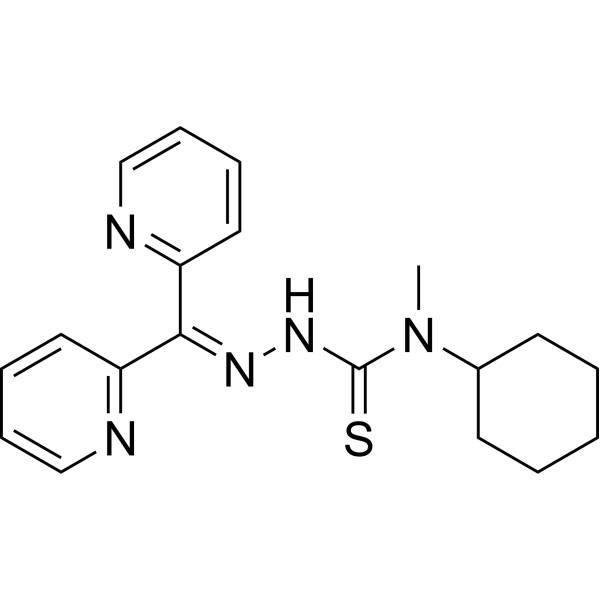
DpC is a selective, orally active iron chelator with anticancer activity. DpC acts on signaling pathway-related targets such as JNK, NF-κB, and its activity is competitively inhibited by another iron chelator Dp44mT (HY-18973). By chelating intracellular iron and copper ions in tumor cells to form redox-active complexes, DpC induces oxidative stress, activates the JNK, NF-κB pathways and downregulates IκBα, upregulates the expressions of neuroglobin and cytoglobin, activates caspase 3/9 to induce tumor cell apoptosis. It also overcomes P-glycoprotein-mediated multidrug resistance through a lysosome-targeting mechanism, and exhibits broad-spectrum synergistic effects when combined with various chemotherapeutic agents. DpC inhibits tumor metastasis and increases TNF-α levels in the tumor microenvironment to enhance endogenous immune responses. DpC is applicable to the research of various malignancies including neuroblastoma, pancreatic cancer, prostate cancer, lung cancer, and breast cancer .
loading...
    loading...
Cat. No.: HY-114243A
CAS No.: 1382469-40-0
DpC hydrochloride is a selective, orally active iron chelator with anticancer activity. DpC hydrochloride acts on signaling pathway-related targets such as JNK, NF-κB, and its activity is competitively inhibited by another iron chelator Dp44mT (HY-18973). By chelating intracellular iron and copper ions in tumor cells to form redox-active complexes, DpC hydrochloride induces oxidative stress, activates the JNK, NF-κB pathways and downregulates IκBα, upregulates the expressions of neuroglobin and cytoglobin, activates caspase 3/9 to induce tumor cell apoptosis. It also overcomes P-glycoprotein-mediated multidrug resistance through a lysosome-targeting mechanism, and exhibits broad-spectrum synergistic effects when combined with various chemotherapeutic agents. DpC hydrochloride inhibits tumor metastasis and increases TNF-α levels in the tumor microenvironment to enhance endogenous immune responses. DpC hydrochloride is applicable to the research of various malignancies including neuroblastoma, pancreatic cancer, prostate cancer, lung cancer, and breast cancer .
loading...
    loading...
Cat. No.: HY-119715
CAS No.: 486414-35-1
Target:  

CDK Apoptosis

Research Areas:  

Inflammation/Immunology Cancer

AG-012986 is a pan-CDK inhibitor with Ki values of 44 nM (CDK1), 9.2 nM (CDK4), 94 nM (CDK2), and IC50 values of 22 nM (CDK5), 4 nM (CDK9). AG-012986 causes apoptosis of T-cells by targeting upstream kinases in the p38 Mitogen-activated protein kinase (MAPK) pathway and impairing cellular survival. AG-012986 induces cell cycle arrest, retinoblastoma protein hypophosphorylation, and reduces Ki-67 expression. AG-012986 exerts antiproliferative activity in tumor cells, demonstrates antitumor efficacy in human xenograft models, and causes retinal and peripheral neurotoxicity, plus immune cell toxicity. AG-012986 can be used for the research of colon carcinoma, non-small cell lung carcinoma, lung carcinoma, breast carcinoma, ovarian tumor, pancreatic carcinoma, osteosarcoma, lymphoma, leukemia, retinotoxicity .
loading...
    loading...
Cat. No.: HY-125101A
CAS No.: 1257792-42-9
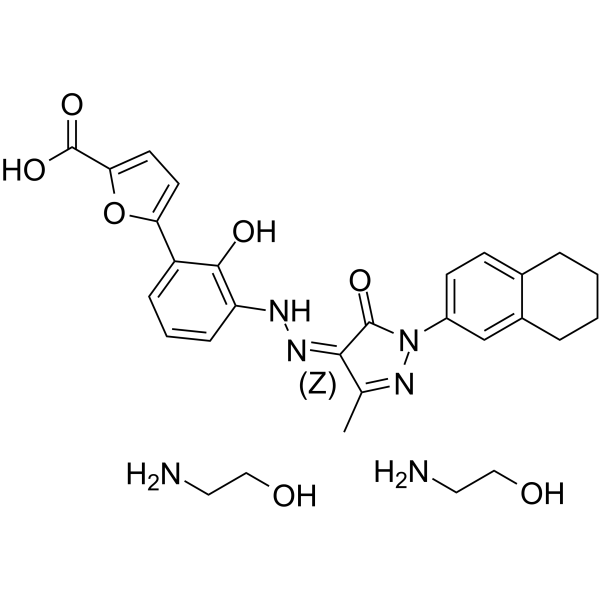
Rafutrombopag (Hetrombopag) diolamine is an orally active nonpeptide thrombopoietin receptor (TPOR/MPL) agonist. Rafutrombopag diolamine can chelate iron and alleviate iron overload while promoting haematopoiesis. Rafutrombopag diolamine specifically stimulates proliferation and differentiation of human TPOR-expressing cells, including 32D-MPL and human hematopoietic stem cells through stimulation of STAT, PI3K and ERK signalling pathways. Rafutrombopag diolamine effectively up-regulates G1-phase-related proteins, including p-RB, Cyclin D1 and CDK4/6, normalizes progression of the cell cycle, and prevents apoptosis by modulating BCL-XL/BAK expression in 32D-MPL cells. Rafutrombopag diolamine protects cardiomyocyte survival from oxidative stress damage as an enhancer of stem cells. Rafutrombopag diolamine can be used for the study of immune thrombocytopenia and oxidative stress-related cardiovascular disease .
loading...
    loading...
Cat. No.: HY-126855S
CAS No.: 1332881-66-9
Synonyms: 7-Sulfocholic acid-d4
Cholic acid 7-sulfate-d4 (7-Sulfocholic acid-d4) is the deuterium labeled Cholic acid 7-sulfate (HY-126855). Cholic acid 7-sulfate is a selective agonist targeting TGR5 (EC50=0.17 μM) and a ligand for MHC class I-related protein (MR1). As a gut-restricted TGR5 agonist, cholic acid 7-sulfate binds to TGR5 on enteroendocrine L cells, induces GLP-1 secretion, and improves glucose tolerance in a TGR5-dependent manner. Cholic acid 7-sulfate also acts as an endogenous ligand for MR1, promoting the survival of mucosal-associated invariant T cells MAIT and the expression of homeostatic gene signatures, affecting MAIT cell development and function. Cholic acid 7-sulfate is mainly used in the research of diabetes and MAIT cell-related immune regulation .
loading...
    loading...
Cat. No.: HY-14519AR
CAS No.: 7413-34-5
Synonyms: Amethopterin disodium (Standard); CL14377 disodium (Standard); WR19039 disodium (Standard)
Methotrexate disodium (Standard) (Amethopterin disodium (Standard); CL14377 disodium (Standard); WR19039 disodium (Standard)) is the analytical standard of Methotrexate disodium (HY-14519A). This product is intended for research and analytical applications. Methotrexate disodium (Amethopterin disodium; CL14377 disodium; WR19039 disodium) is an orally active antifolate (Antifolate). Methotrexate disodium inhibits dihydrofolate reductase (DHFR), blocks tetrahydrofolate production, suppresses purine/pyrimidine synthesis and transmethylation, and causes intracellular accumulation of AICAR. Methotrexate disodium promotes extracellular adenosine release, regulates the cytokine network, and inhibits the alarmin function of HMGB1. Methotrexate disodium induces apoptosis and cytotoxicity, upregulates the expression of iNOS and COX-2, suppresses hippocampal neurogenesis, and induces pulmonary fibrosis. Methotrexate disodium is used in the research of various immune and inflammation-related diseases such as arthritis, psoriasis, systemic lupus erythematosus, as well as pulmonary fibrosis and breast cancer .
loading...
    loading...
Cat. No.: HY-148511
CAS No.: 147063-80-7
Synonyms: CMP-001
Vidutolimod (CMP-001) is a virus-like particle containing a TLR9 activator . Vidutolimod induces human peripheral blood mononuclear cells to secrete IFNα, and upregulates the gene expression of CXCL10, PDL1, IDO and CD80. Vidutolimod activates TLR9, which in turn triggers plasmacytoid dendritic cell activation, production of IFNγ and TNFα, induction of CXCL10, and recruitment of antitumor T cells. Vidutolimod causes influenza-like symptoms, hypotension and tumor regression, and its activity depends on the presence of anti- antibodies. Vidutolimod modulates monocyte function, promotes CD4 T cell proliferation, and activates multiple immune cell types in an environment with anti-Qβ antibodies. Vidutolimod prolongs the survival of tumor-bearing mice. Vidutolimod is used in research related to advanced melanoma, head and neck squamous cell carcinoma, and advanced non-small cell lung cancer .
loading...
    loading...

