2543 Results for "

Class

" in MedChemExpress (MCE) Product Catalog:
Products (2543)

2543 Results for "Class" in MCE Product Catalog:

Cat. No.: HY-N2362S8
Synonyms: DL-2-Aminopropionic acid-d7
DL-Alanine-d7 (DL-2-Aminopropionic acid-d7) is deuterium labeled DL-Alanine. DL-alanine, an orally active amino acid, is the racemic compound of L- and D-alanine. DL-alanine is employed both as a reducing and a capping agent, used with silver nitrate aqueous solutions for the production of nanoparticles. DL-alanine can be used for the research of transition metals chelation, such as Cu(II), Zn(II), Cd(11). DL-alanine, a sweetener, is classed together with glycine and sodium saccharin. DL-alanine plays a key role in the glucose-alanine cycle between tissues and liver .
loading...
    loading...
Cat. No.: HY-P10352A
Target:  

Bacterial

Research Areas:  

Infection

Pediocin PA-1 TFA is a class IIa bacteriocin that specifically binds to membrane proteins of susceptible Gram-positive bacteria (such as Listeria monocytogenes) to form voltage-independent hydrophilic pores, leading to dissipation of proton motive force, ATP depletion and cell death. Pediocin PA-1 TFA shows no significant activity against intact Gram-negative bacteria, strains carrying immunity genes and obligate anaerobic commensal gut microbiota, and its bactericidal function depends on the integrity of disulfide bonds, with activity lost upon reduction. Pediocin PA-1 TFA can be used not only as a food biopreservative but also for research on listeriosis .
loading...
    loading...
Cat. No.: HY-P2915A
Research Areas:  

Infection

Protocatechuate 3,4-Dioxygenase, Bacteria is a dioxygenase. Protocatechuate 3,4-Dioxygenase, Bacteria belongs to the non-heme iron dioxygenase class. Protocatechuate 3,4-Dioxygenase, Bacteria catalyzes the cleavage of the aromatic ring of 3,4-dihydroxybenzoate, attaching two atoms of molecular oxygen to the compound to generate β-carboxy-cis,cis-muconate. Protocatechuate 3,4-Dioxygenase, Bacteria is a key enzyme in the β-ketoadipic acid pathway. Protocatechuate 3,4-Dioxygenase, Bacteria is found in marine bacteria associated with Roseobacter. Protocatechuate 3,4-Dioxygenase, Bacteria can be isolated from Pseudomonas aeruginosa .
loading...
    loading...
Cat. No.: HY-P3070
CAS No.: 132326-74-0
Target:  

MHC

Research Areas:  

Infection Others

H2-D b restricted epitopes VSV Nucleoprotein (52-59) is a 9-mer peptide derived from the nucleoprotein of Vesicular Stomatitis Virus (VSV). H2-D b restricted epitopes VSV Nucleoprotein (52-59) binds to MHC class I molecules and presents itself to CD8+ T cells, thereby activating cytotoxic T lymphocytes (CTLs), which can recognize and kill cells expressing the corresponding antigen. H2-D b restricted epitopes VSV Nucleoprotein (52-59) can be used in the development of CTL vaccines against Ebola virus .
loading...
    loading...
Cat. No.: HY-W001240
CAS No.: 1993-03-9
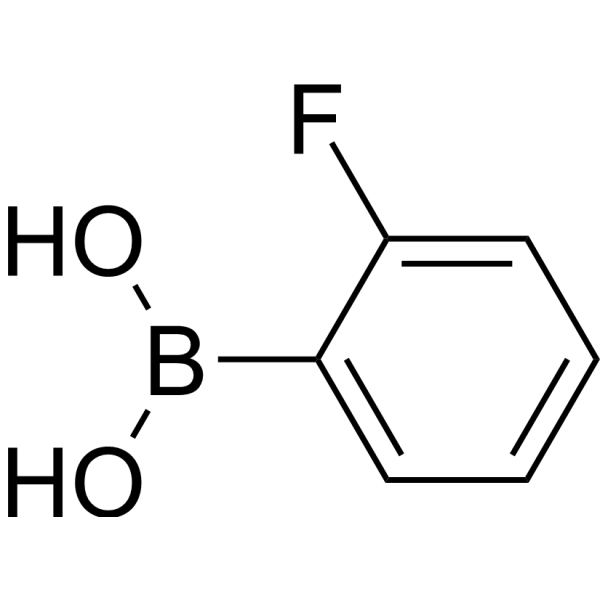
2-Fluorophenylboronic acid is an organic synthesis intermediate belonging to the fluorinated arylboronic acid class. The electron-withdrawing fluorine substituent in 2-Fluorophenylboronic acid reduces its pKa, thereby enhancing boronate bond formation with diols. 2-Fluorophenylboronic acid serves as a key synthetic intermediate for inhibitors of Plasmodium phosphatidylinositol 4-kinase IIIβ (PI4K). 2-Fluorophenylboronic acid can also be used to functionalize linear polyglycerols for constructing dual dynamic covalent cross-linked hydrogels that support 3D tumor spheroid culture of various cancer cells. 2-Fluorophenylboronic acid is applicable to research related to malaria and tumors .
loading...
    loading...
Cat. No.: HY-W013222
CAS No.: 55066-53-0
Research Areas:  

Others

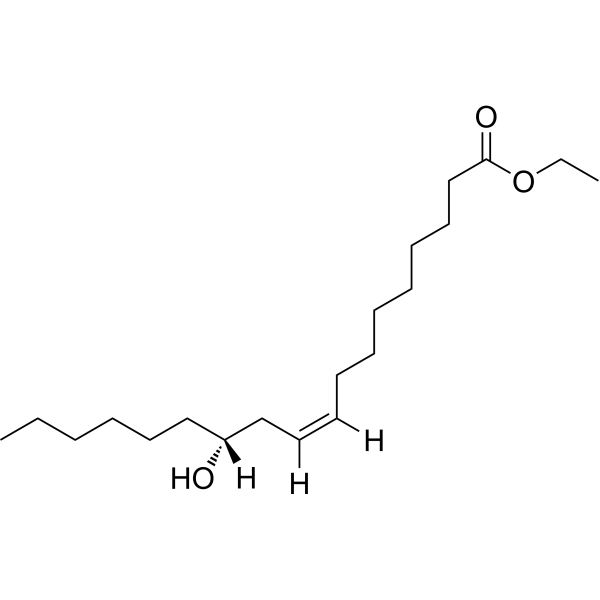
(R,Z)-Ethyl 12-hydroxyoctadec-9-enoate is a naturally occurring organic compound belonging to the class of fatty acid esters. It is derived from oleic acid, a common unsaturated fatty acid found in various animal and plant sources. (R,Z)-Ethyl 12-hydroxyoctadec-9-enoate contains an ethyl group and a hydroxyl group at specific positions in the fatty acid chain. It has various applications in industry and biomedicine, especially as a precursor for the synthesis of other bioactive compounds. (R,Z)-Ethyl 12-hydroxyoctadec-9-enoate is also used in the formulation of certain types of cosmetic and personal care products, such as skin creams and lotions.
loading...
    loading...
Cat. No.: HY-W016638
CAS No.: 479500-35-1
Synonyms: 1-Butyl-1-methylpyrrolidin-1-ium chloride
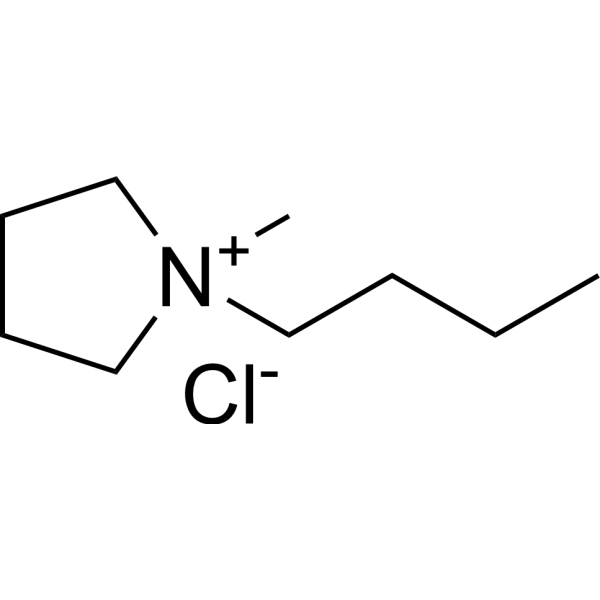
1-Butyl-1-methylpyrrolidin-1-ium chloride, also known as BMIM chloride, belongs to the class of ionic liquids and consists of a positively charged pyrrolidine cation and a negatively charged chloride anion. This compound is commonly used as a solvent for various chemical reactions, especially those involving organic compounds and metals. Its unique physical and chemical properties, such as low volatility, high thermal stability, and tunable solubility, make it useful in a range of applications in catalysis, electrochemistry, and separation science. Furthermore, 1-butyl-1-methylpyrrolidin-1-ium chloride may have potential applications as a green solvent in energy storage devices and various industrial processes.
loading...
    loading...
Cat. No.: HY-W250129
CAS No.: 94695-48-4
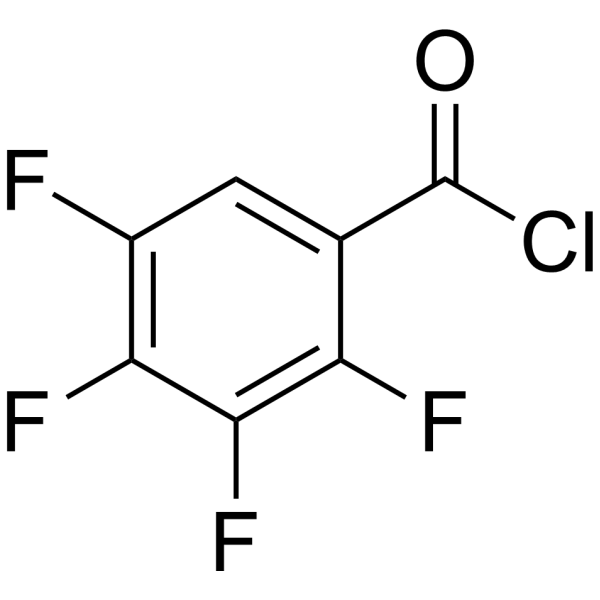
2,3,4,5-Tetrafluorobenzoyl chloride is a fluorinated organic compound that belongs to the class of benzoyl chlorides. It is a colorless liquid with a pungent smell and is mainly used as an intermediate in the synthesis of various pharmaceutical and pesticide compounds. 2,3,4,5-Tetrafluorobenzoyl chloride is an acylating agent that can react with a variety of nucleophiles, including amines, alcohols, and thiols, to form amides, esters, or thioesters, respectively. Its unique fluorine-containing structure can impart desired properties to target molecules, such as increased lipophilicity or increased stability against metabolic degradation. However, due to its high reactivity and potential health hazards, proper safety measures and handling procedures must be followed when using this compound.
loading...
    loading...
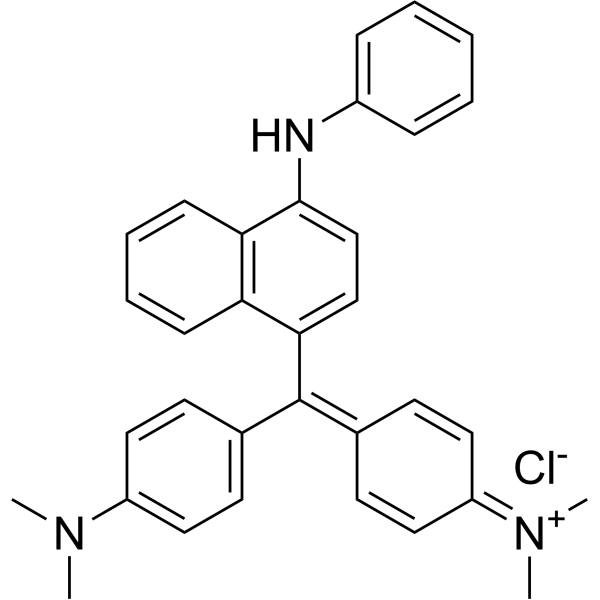
Cat. No.: HY-W250147
CAS No.: 2580-56-5
Synonyms: Victoria blue B
Basic blue 26 (Victoria blue B) is a synthetic cationic dye belonging to the class of triarylmethane dyes. It has a bright blue color and is commonly used as a colorant for a variety of applications, including textiles, paper and leather. Basic Blue 26 is also used as a biological stain for DNA and protein detection in laboratories. Due to its ability to bind negatively charged materials, it can be used as an indicator of the presence of specific molecules in biological samples. However, Basic blue 26 has been reported to have potentially harmful effects on human health and the environment and its use is regulated in some countries. Proper handling and disposal procedures are necessary to minimize its impact on the environment.
loading...
    loading...
Cat. No.: HY-L196
4,585 compounds

Protein Kinases (PTKs) are a class of phosphotransferases that phosphorylate proteins. Protein kinases participate in many signal transduction pathways including those involved with growth, differentiation, and cell division. Protein kinase not only plays an important role in the process of cell activation, but also its abnormal expression is closely related to the pathogenesis of many diseases. So far, the protein kinase family has become one of the most important drug targets. The most common drug targets include ALK, B-Raf, BCR-Abl, EGFR, and VEGFR.

MCE designs a unique collection of 4,585 bioactive compounds targeting protein kinases, which is an important tool for the development of drug targeting protein kinases.

Cat. No.: HY-P70881
Purity:  ≥ 95%, as determined by reducing SDS-PAGE.
Synonyms: FCGRT; Major Histocompatibility Complex Class I-Like Fc Receptor; Fc Gamma Receptor And Transporter; Neonatal Crystallizable Fc Receptor FcRn Splice Variant 6; Neonatal Fc Receptor; Neonatal Crystallizable Fc Receptor FcRn Splice Variant 5; FcRn; Neonatal
Species:  
Cynomolgus
Source:  
HEK293
loading...
    loading...
Cat. No.: HY-P72071
Purity:  ≥ 90%, as determined by reducing SDS-PAGE.
Synonyms: ADH1B; Alcohol Dehydrogenase 2 (Class I), Beta Polypeptide; Prev. ADH2; Aldehyde Reductase; All-Trans-Retinol Dehydrogenase [NAD(+)] ADH1B; ADH, Beta Subunit; Epididymis Secretory Protein Li 117; HEL-S-117; Alcohol Dehydrogenase Subunit Beta; Alcohol Dehy
Species:  
Human
Source:  
E. coli
loading...
    loading...
Cat. No.: HY-P75200
Purity:  ≥ 95%, as determined by reducing SDS-PAGE.
Synonyms: FCGRT; Major Histocompatibility Complex Class I-Like Fc Receptor; Fc Gamma Receptor And Transporter; Neonatal Crystallizable Fc Receptor FcRn Splice Variant 6; Neonatal Fc Receptor; Neonatal Crystallizable Fc Receptor FcRn Splice Variant 5; FcRn; Neonatal
Species:  
Mouse
Source:  
HEK293
loading...
    loading...
Cat. No.: HY-P75760
Purity:  ≥ 95%, as determined by reducing SDS-PAGE.
Synonyms: FCGRT; Major Histocompatibility Complex Class I-Like Fc Receptor; Fc Gamma Receptor And Transporter; Neonatal Crystallizable Fc Receptor FcRn Splice Variant 6; Neonatal Fc Receptor; Neonatal Crystallizable Fc Receptor FcRn Splice Variant 5; FcRn; Neonatal
Species:  
Rat
Source:  
HEK293
loading...
    loading...
Cat. No.: HY-P75761
Purity:  ≥ 85%, as determined by reducing SDS-PAGE.
Synonyms: FCGRT; Major Histocompatibility Complex Class I-Like Fc Receptor; Fc Gamma Receptor And Transporter; Neonatal Crystallizable Fc Receptor FcRn Splice Variant 6; Neonatal Fc Receptor; Neonatal Crystallizable Fc Receptor FcRn Splice Variant 5; FcRn; Neonatal
Species:  
Rat
Source:  
HEK293
loading...
    loading...
Cat. No.: HY-P76150
Purity:  ≥ 95%, as determined by reducing SDS-PAGE.
Synonyms: ANP32A; Putative HLA-DR-Associated Protein I; Prev. C15orf1; Acidic Nuclear Phosphoprotein Pp32; Mapmodulin; PHAP1; PHAPI; Acidic Leucine-Rich Nuclear Phosphoprotein 32 Family Member; LANP; Putative Human HLA Class II Associated Protein I; MAPM; Cerebella
Species:  
Human
Source:  
E. coli
loading...
    loading...
Cat. No.: HY-P76919
Purity:  ≥ 95%, as determined by reducing SDS-PAGE.
Synonyms: FCGRT; Major Histocompatibility Complex Class I-Like Fc Receptor; Fc Gamma Receptor And Transporter; Neonatal Crystallizable Fc Receptor FcRn Splice Variant 6; Neonatal Fc Receptor; Neonatal Crystallizable Fc Receptor FcRn Splice Variant 5; FcRn; Neonatal
Species:  
Cynomolgus
Source:  
HEK293
loading...
    loading...
Cat. No.: HY-P76921
Purity:  ≥ 95%, as determined by reducing SDS-PAGE.
Synonyms: FCGRT; Major Histocompatibility Complex Class I-Like Fc Receptor; Fc Gamma Receptor And Transporter; Neonatal Crystallizable Fc Receptor FcRn Splice Variant 6; Neonatal Fc Receptor; Neonatal Crystallizable Fc Receptor FcRn Splice Variant 5; FcRn; Neonatal
Species:  
Cynomolgus
Source:  
HEK293
loading...
    loading...
Cat. No.: HY-P702283
Purity:  ≥ 90%, as determined by reducing SDS-PAGE.
Synonyms: FZD3; Frizzled Family Receptor 3; Frizzled Class Receptor 3; Frizzled (Drosophila) Homolog 3; Fz-3; Frizzled Homolog 3 (Drosophila); Frizzled-3; Frizzled Homolog 3; Frizzled 3, Seven Transmembrane Spanning Receptor; HFz3
Species:  
Human
Source:  
E. coli Cell-free
loading...
    loading...
Cat. No.: HY-P704265
Purity:  ≥ 95%, as determined by reducing SDS-PAGE.
Synonyms: FCGRT; Major Histocompatibility Complex Class I-Like Fc Receptor; Fc Gamma Receptor And Transporter; Neonatal Crystallizable Fc Receptor FcRn Splice Variant 6; Neonatal Fc Receptor; Neonatal Crystallizable Fc Receptor FcRn Splice Variant 5; FcRn; Neonatal
Species:  
Cynomolgus
Source:  
HEK293
loading...
    loading...

