354 Results for "

MSPE-GC-MS/MS method

" in MedChemExpress (MCE) Product Catalog:
Products (354)

354 Results for "MSPE-GC-MS/MS method" in MCE Product Catalog:

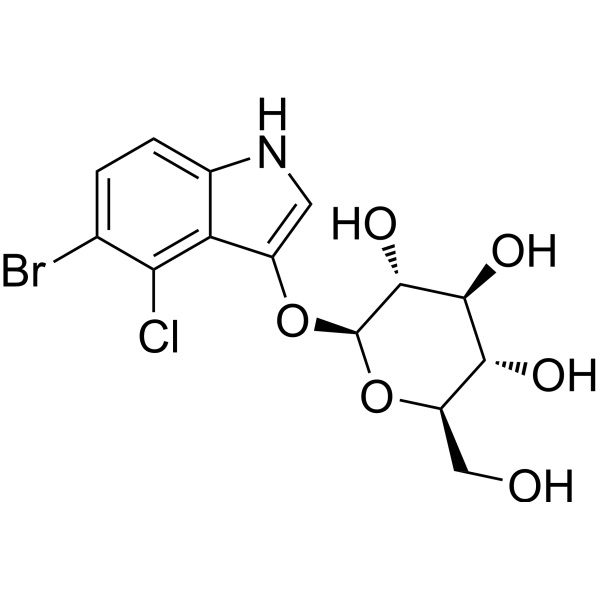
Cat. No.: HY-137779
CAS No.: 15548-60-4
Purity:  99.11%
5-Bromo-4-chloro-3-indolyl β-D-glucopyranoside, a chromogenic substrate for the detection of β-galactosidase activity. It is commonly used in molecular biology techniques such as gene expression analysis and reporter gene analysis. When β-galactosidase cleaves X-Gluc, a blue precipitate is produced, which can be observed by microscopy or other detection methods. X-Gluc has high sensitivity and specificity for the detection of β-galactosidase activity, making it a widely used tool in molecular biology research.
loading...
    loading...
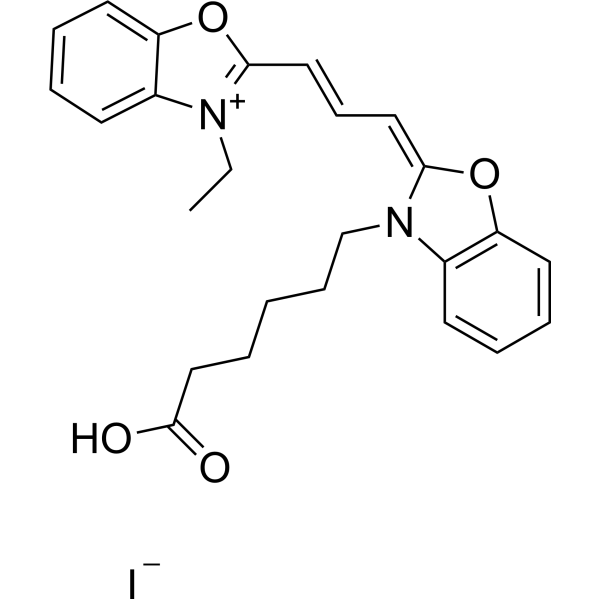
Cat. No.: HY-D1054
CAS No.: 186205-37-8
Synonyms: Cyanine2 Iodide
Target:  

Fluorescent Dye

Research Areas:  

Others

Cy2 Iodide is a CY dye. CY, short for Cyanine, is a compound consisting of two nitrogen atoms connected by an odd number of methyl units. Cyanine compounds have the characteristics of long wavelength, adjustable absorption and emission, high extinction coefficient, good water solubility and relatively simple synthesis . CY dyes are of en used for the labeling of proteins, antibodies and small molecular compounds. For the labeling of protein antibodies, the combination can be completed through a simple mixing reaction. Below, we introduce the labeling method of protein antibody labeling, which has certain reference significance .
loading...
    loading...
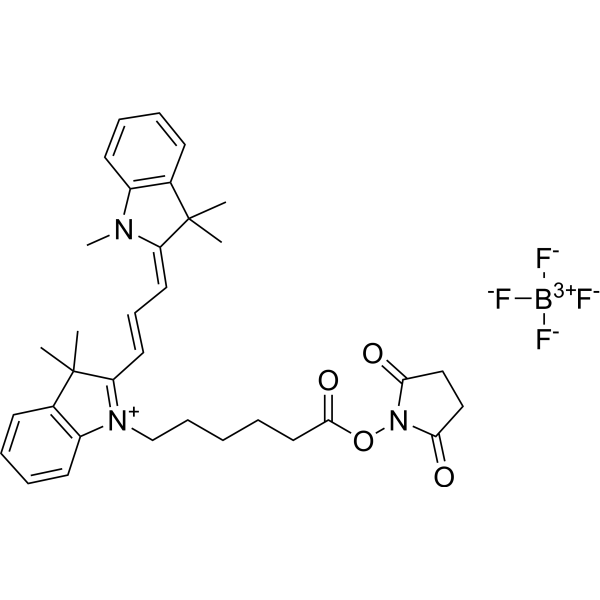
Cat. No.: HY-D1388
CAS No.: 2632339-91-2
Cy3 NHS ester is a CY dye. CY, short for Cyanine, is a compound consisting of two nitrogen atoms connected by an odd number of methyl units. Cyanine compounds have the characteristics of long wavelength, adjustable absorption and emission, high extinction coefficient, good water solubility and relatively simple synthesis . CY dyes are of en used for the labeling of proteins, antibodies and small molecular compounds. For the labeling of protein antibodies, the combination can be completed through a simple mixing reaction. Below, we introduce the labeling method of protein antibody labeling, which has certain reference significance .
loading...
    loading...
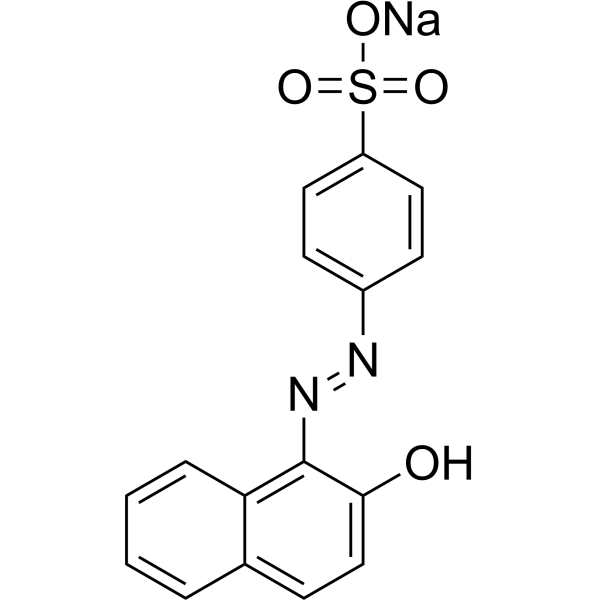
Cat. No.: HY-N1442
CAS No.: 633-96-5
Synonyms: Orange II; D&C Orange NO. 4
Acid Orange 7 (Orange II; D&C Orange NO. 4) is an azo dye widely used in the textile, food and cosmetic industries. Acid Orange 7 is mainly used as a colorant by combining with fibers and other substances through azo bonds. Acid Orange 7 has a maximum absorption wavelength at 484-485 nm, and the concentration is measured using a UV-visible spectrophotometer. Acid Orange 7 is difficult to degrade and has a certain degree of toxicity. It is often used to study various sewage treatment technologies and photocatalytic degradation reactions, and to evaluate the removal effects of different treatment methods on organic pollutants .
loading...
    loading...
Cat. No.: HY-N7059R
CAS No.: 96-82-2
Lactobionic acid (Standard) is an analytical standard for lactobionic acid. This product is intended for use in research and analytical applications. Lactobionic acid is a bionic acid that can be naturally found in the Caspian Sea yogurt and chemically constituted of a gluconic acid bonded to a galactose. Lactobionic acid has antioxidant, antimicrobial, chelating, stabilizer, acidulant, and moisturizing properties. Lactobionic acid can be obtained by electrolytic methods, microbial fermentation or biocatalytic approaches. Lactobionic acid can be used in foodstuffs, to produce new functional products and against food-borne pathogens. Lactobionic acid inhibits DNA repair and protein synthesis, induction of oxidative stress and inhibition of metabolic pathways against MRSA .
loading...
    loading...
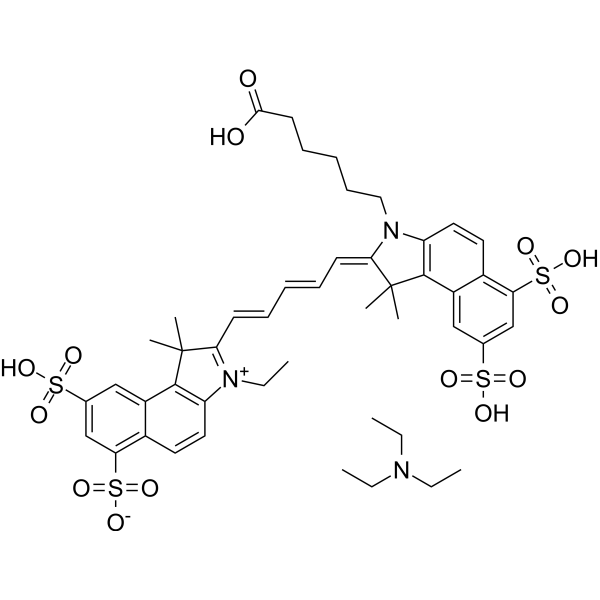
Cat. No.: HY-W753198
Target:  

Fluorescent Dye

Research Areas:  

Others

CY5 triethylamine is a CY dye. CY, short for Cyanine, is a compound consisting of two nitrogen atoms connected by an odd number of methyl units. Cyanine compounds have the characteristics of long wavelength, adjustable absorption and emission, high extinction coefficient, good water solubility and relatively simple synthesis . CY dyes are of en used for the labeling of proteins, antibodies and small molecular compounds. For the labeling of protein antibodies, the combination can be completed through a simple mixing reaction. Below, we introduce the labeling method of protein antibody labeling, which has certain reference significance .
loading...
    loading...
Cat. No.: HY-L112
156 compounds

Chemotherapy is one of the most common treatments for cancer. It can be used alone for some types of cancer or in combination with other treatments such as radiation or surgery. Chemotherapy drugs usually target cells at different phases of the cell cycle and inhibit tumor proliferation and avoid cancer cell invasion and metastasis. It is a cancer treatment method that kills cancer cells with drugs.

Chemotherapeutic agents can be classified into alkylating agents, antimetabolites, antimicrotubular agents, antibiotics, etc. according to the mechanism of action. MCE offers a unique collection of 156 chemotherapy drugs, which is a useful tool for cancer treatment research.

Cat. No.: HY-K0611

MCE Modified Van Gieson Staining Kit employs Celestine Blue and Mayer’s hematoxylin for nuclear staining, providing clearer and more stable nuclear visualization while facilitating longer preservation of stained sections. Ponceau S is used for collagen fiber staining, offering stable coloration and strong resistance to fading. This method enables effective differentiation between collagen fibers and muscle fibers, and can assist in distinguishing collagen fiber–derived tumors from myogenic tumors to a certain extent. It is also suitable for observing tissue or organ injury, repair processes, and the degree of fibrosis.

loading...
    loading...
Cat. No.: HY-L038
2,574 compounds

Stem cells, which are found in all multi-cellular organisms, can divide and differentiate into diverse special cell types and can self-renew to produce more stem cells. To be useful in therapy, stem cells must be converted into desired cell types as necessary which is called induced differentiation or directed differentiation. Understanding and using signaling pathways for differentiation is an important method in successful regenerative medicine. Small molecules or growth factors induce the conversion of stem cells into appropriate progenitor cells, which will later give rise to the desired cell type. There is a variety of signal molecules and molecular families that may affect the establishment of germ layers in vivo, such as fibroblast growth factors (FGFs); the wnt family or superfamily of transforming growth factors β (TGFβ) and bone morphogenetic proteins (BMP). Unfortunately, for now, a high cost of recombinant factors is likely to limit their use on a larger scale in medicine. The more promising technique focuses on the use of small molecules. These small molecules can be used for either activating or deactivating specific signaling pathways. They enhance reprogramming efficiency by creating cells that are compatible with the desired type of tissue. It is a cheaper and non-immunogenic method.

MCE Differentiation Inducing Compound Library contains a unique collection of 2,574 compounds that act on signaling pathways for differentiation. These compounds are potential stimulators for induced differentiation. This library is a useful tool for researching directed differentiation and regenerative medicine.

Cat. No.: HY-112498A
CAS No.: 2892098-34-7
Synonyms: Cyanine3 NHS ester bromide
Target:  

Fluorescent Dye

Research Areas:  

Others

Cy3 NHS ester bromide is a CY dye. CY, short for Cyanine, is a compound consisting of two nitrogen atoms connected by an odd number of methyl units. Cyanine compounds have the characteristics of long wavelength, adjustable absorption and emission, high extinction coefficient, good water solubility and relatively simple synthesis . CY dyes are of en used for the labeling of proteins, antibodies and small molecular compounds. For the labeling of protein antibodies, the combination can be completed through a simple mixing reaction. Below, we introduce the labeling method of protein antibody labeling, which has certain reference significance .
loading...
    loading...
Cat. No.: HY-129836R
CAS No.: 26889-93-0
Research Areas:  

Infection

L-Amoxicillin (Standard) is the analytical standard of L-Amoxicillin. This product is intended for research and analytical applications. L-Amoxicillin is an antibiotic with activity against a wide range of bacterial infections. L-Amoxicillin is commonly used in antibacterial combinations when used in combination with the β-lactamase inhibitor potassium clavulanic acid. The related substances analysis method for L-Amoxicillin has been developed and validated according to the International Conference on Harmonization (ICH) guidelines, ensuring its effectiveness and accuracy in mixtures. L-Amoxicillin and some of its impurities have been further analyzed in stress testing and stability studies, providing support for optimizing its application .
loading...
    loading...
Cat. No.: HY-155169
CAS No.: 128253-12-3
Target:  

Endogenous Metabolite

Research Areas:  

Inflammation/Immunology

hLTA4H/hLTA4S-IN-1 is a possible dual inhibitor that has the activity of inhibiting both human leukotriene hydrolase (hLTA4H) and human leukotriene C4 synthase (hLTC4S). hLTA4H/hLTA4S-IN-1 was identified by computer-assisted methods and is able to effectively interfere with the leukotriene biosynthesis pathway in cells. hLTA4H/hLTA4S-IN-1 can be used to study inflammatory responses .
loading...
    loading...
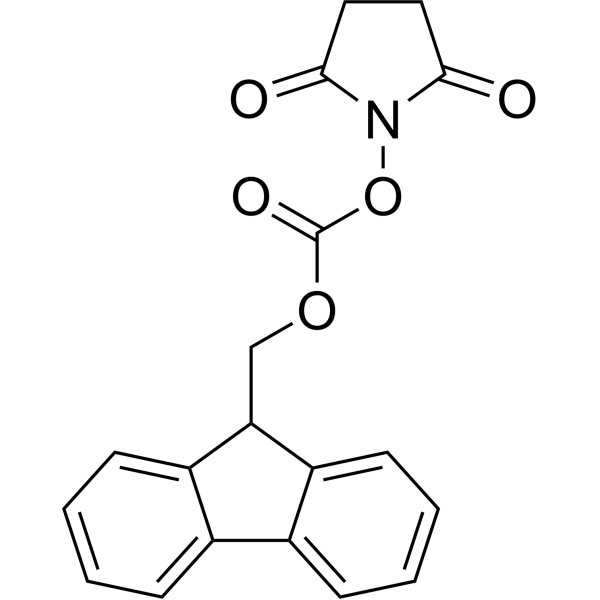
Cat. No.: HY-79647
CAS No.: 82911-69-1
Synonyms: N-(Fmoc-oxy)succinimide
Fmoc-OSu (N-(Fmoc-oxy)succinimide) is an acylating agent that targets amino groups (-NH2). It can selectively protect the amino groups of amino acids by covalently binding with primary or secondary amines through nucleophilic substitution reactions. Fmoc-OSu forms a stable amide bond with the amino group to avoid side reactions of the amino group in peptide synthesis. It can also be used as a fluorescent labeling reagent to react with glycosylamines for efficient labeling of N-sugar chains. Fmoc-OSu can be used as an Fmoc protection strategy in peptide synthesis, and as a fluorescent labeling and analysis method for N-sugar chains .
loading...
    loading...
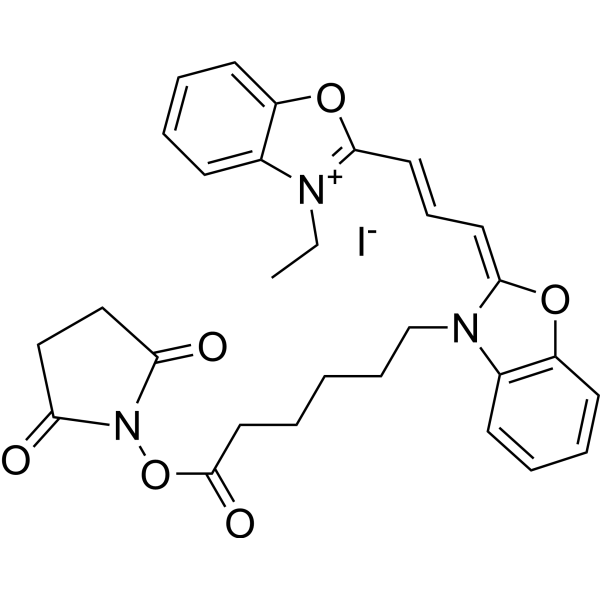
Cat. No.: HY-D0826
CAS No.: 186205-33-4
Synonyms: Cyanine2 Succinimidyl Ester Iodide
Target:  

Fluorescent Dye

Research Areas:  

Others

Cy2-SE Iodide is a CY dye. CY, short for Cyanine, is a compound consisting of two nitrogen atoms connected by an odd number of methyl units. Cyanine compounds have the characteristics of long wavelength, adjustable absorption and emission, high extinction coefficient, good water solubility and relatively simple synthesis . CY dyes are of en used for the labeling of proteins, antibodies and small molecular compounds. For the labeling of protein antibodies, the combination can be completed through a simple mixing reaction. Below, we introduce the labeling method of protein antibody labeling, which has certain reference significance .
loading...
    loading...
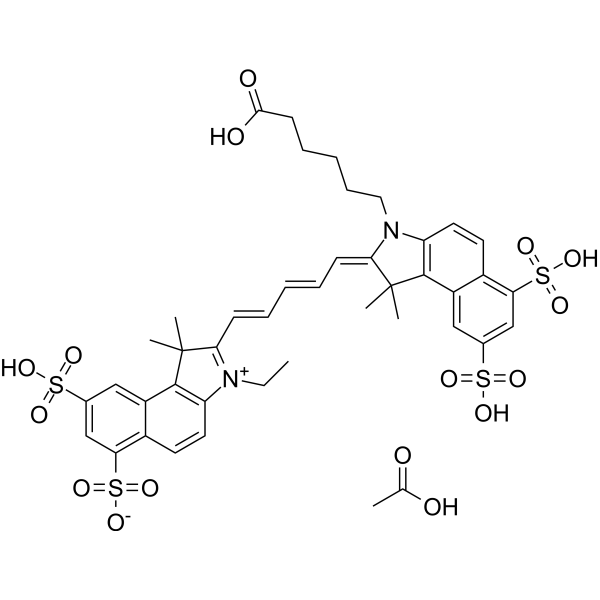
Cat. No.: HY-D0924A
Synonyms: Sulfo-Cyanine5.5 acetate
Cy5.5 acetate is a CY dye. CY, short for Cyanine, is a compound consisting of two nitrogen atoms connected by an odd number of methyl units. Cyanine compounds have the characteristics of long wavelength, adjustable absorption and emission, high extinction coefficient, good water solubility and relatively simple synthesis . CY dyes are of en used for the labeling of proteins, antibodies and small molecular compounds. For the labeling of protein antibodies, the combination can be completed through a simple mixing reaction. Below, we introduce the labeling method of protein antibody labeling, which has certain reference significance .
loading...
    loading...
Cat. No.: HY-D0924B
Synonyms: Sulfo-Cyanine5.5 TEA
Cy5.5 TEA is a CY dye. CY, short for Cyanine, is a compound consisting of two nitrogen atoms connected by an odd number of methyl units. Cyanine compounds have the characteristics of long wavelength, adjustable absorption and emission, high extinction coefficient, good water solubility and relatively simple synthesis . CY dyes are of en used for the labeling of proteins, antibodies and small molecular compounds. For the labeling of protein antibodies, the combination can be completed through a simple mixing reaction. Below, we introduce the labeling method of protein antibody labeling, which has certain reference significance .
loading...
    loading...
Cat. No.: HY-D1323
CAS No.: 2409591-45-1
Synonyms: Cy5.5 maleimide chloride
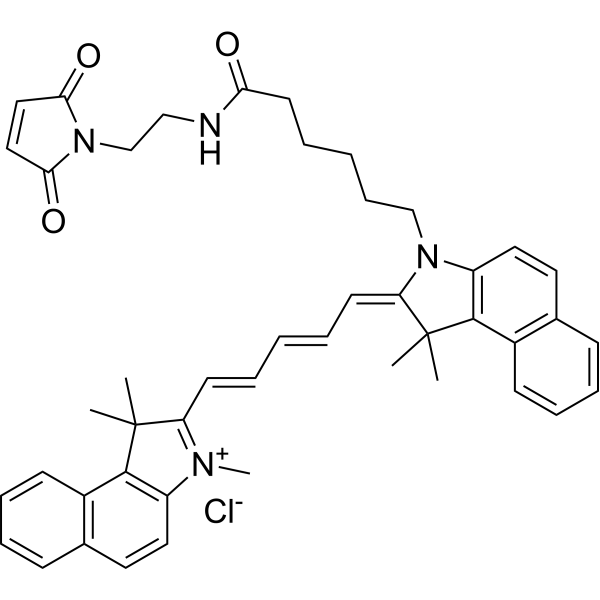
Cyanine5.5 maleimide chloride is a CY dye. CY, short for Cyanine, is a compound consisting of two nitrogen atoms connected by an odd number of methyl units. Cyanine compounds have the characteristics of long wavelength, adjustable absorption and emission, high extinction coefficient, good water solubility and relatively simple synthesis . CY dyes are of en used for the labeling of proteins, antibodies and small molecular compounds. For the labeling of protein antibodies, the combination can be completed through a simple mixing reaction. Below, we introduce the labeling method of protein antibody labeling, which has certain reference significance .
loading...
    loading...
Cat. No.: HY-D1566
CAS No.: 3071093-57-4
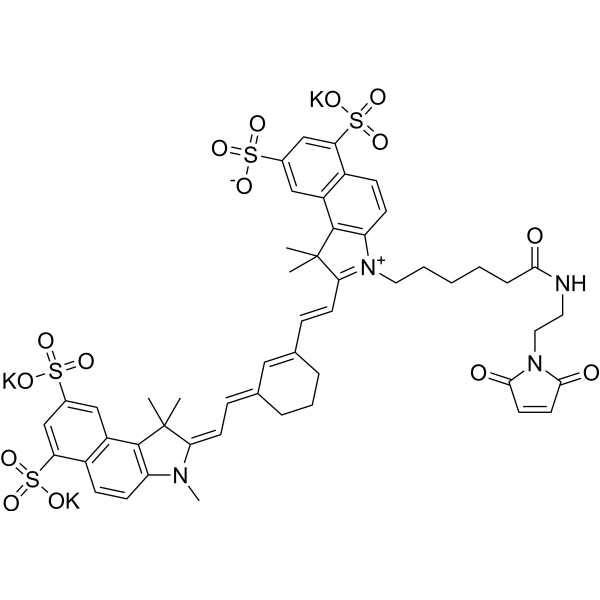
Sulfo-Cy7.5 maleimide is a CY dye. CY, short for Cyanine, is a compound consisting of two nitrogen atoms connected by an odd number of methyl units. Cyanine compounds have the characteristics of long wavelength, adjustable absorption and emission, high extinction coefficient, good water solubility and relatively simple synthesis . CY dyes are of en used for the labeling of proteins, antibodies and small molecular compounds. For the labeling of protein antibodies, the combination can be completed through a simple mixing reaction. Below, we introduce the labeling method of protein antibody labeling, which has certain reference significance .
loading...
    loading...
Cat. No.: HY-DY1064
CAS No.: 146368-11-8
Target:  

Fluorescent Dye

Research Areas:  

Others

CY5 (solution) is a CY dye. CY, short for Cyanine, is a compound consisting of two nitrogen atoms connected by an odd number of methyl units. Cyanine compounds have the characteristics of long wavelength, adjustable absorption and emission, high extinction coefficient, good water solubility and relatively simple synthesis . CY dyes are of en used for the labeling of proteins, antibodies and small molecular compounds. For the labeling of protein antibodies, the combination can be completed through a simple mixing reaction. Below, we introduce the labeling method of protein antibody labeling, which has certain reference significance .
Solvent and concentration: DMSO: 10 mM
loading...
    loading...
Cat. No.: HY-DY1065
CAS No.: 943298-08-6
Target:  

Fluorescent Dye

Research Areas:  

Others

CY7 (solution) is a CY dye. CY, short for Cyanine, is a compound consisting of two nitrogen atoms connected by an odd number of methyl units. Cyanine compounds have the characteristics of long wavelength, adjustable absorption and emission, high extinction coefficient, good water solubility and relatively simple synthesis . CY dyes are of en used for the labeling of proteins, antibodies and small molecular compounds. For the labeling of protein antibodies, the combination can be completed through a simple mixing reaction. Below, we introduce the labeling method of protein antibody labeling, which has certain reference significance .
Solvent and concentration: DMSO: 10 mM
loading...
    loading...

