3472 Results for "

Prothrombin complex concentrate

" in MedChemExpress (MCE) Product Catalog:
Products (3472)

3472 Results for "Prothrombin complex concentrate" in MCE Product Catalog:

Cat. No.: HY-W1143867
CAS No.: 2226-71-3
4’-Phosphopantetheine is an orally active coenzyme A (CoA) precursor. 4’-Phosphopantetheine is membrane-permeable and acts as a CoA precursor, a prosthetic group, and a reactive oxygen species (ROS) inhibitor. 4’-Phosphopantetheine binds covalently to rat liver fatty acid synthase, modifies the conserved serine residue in the PKS/NRPS carrier protein domain, and serves as a substrate for CoA synthase and PPAT. 4’-Phosphopantetheine undergoes non-catalytic exchange on rat liver fatty acid synthase, with a faster turnover rate than that of the enzyme complex, and restores intracellular CoA levels in cells with impaired de novo biosynthesis. 4’-Phosphopantetheine rescues phenotypes induced by CoA deficiency, normalizes PKAN-related biomarkers, restores mitochondrial enzyme activity, and alleviates vascular endothelial damage. 4’-Phosphopantetheine shows biological stability in serum, acts as a prosthetic group and degradation product of ACP, and inhibits the formation of atherosclerotic plaques. 4’-Phosphopantetheine can be used in the research of brain iron accumulation neurodegenerative diseases, pantothenate kinase-associated neurodegeneration, CoASY protein-associated neurodegenerative diseases, coronary heart disease, and atherosclerosis .
loading...
    loading...
Cat. No.: HY-L246
1,039 compounds

Tonifying traditional Chinese medicines occupy a central position in the traditional medical system, with their core value lying in the regulation of the body's functional state. Modern pharmacological studies have confirmed that these medicinal materials and their monomeric components possess multiple biological activities, including bidirectional immune regulation, anti-aging and lifespan extension, neuroprotection and cognitive enhancement, as well as hematopoietic and metabolic regulation. According to the traditional Chinese medicine theory of “strengthening the body’s resistance and consolidating the foundation”, tonifying medicines are mainly classified into four major categories: Qi-tonifying, Blood-tonifying, Yin-tonifying, and Yang-tonifying. This compound library strictly follows this classification system for compound collection.

Monomeric compounds derived from traditional Chinese medicines demonstrate excellent drug-like properties. They naturally possess structural diversity and clearly defined pharmacological activities, which help improve screening success rates and make them ideal tools for studying multi-target synergistic effects. This library contains 1,039 compounds, providing a material basis for investigating synergistic interactions among compounds (network pharmacology) and facilitating the development of multi-target therapeutic strategies for complex diseases such as cancer, neurodegenerative disorders, and metabolic syndrome.

Cat. No.: HY-P703733
Pureté:  ≥ 95%, as determined by reducing SDS-PAGE.
Synonyms: BTN2A1; BTN2.1; Butyrophilin Subfamily 2 Member A1; Butyrophilin, Subfamily 2, Member A1; BT2.1; BK14H9.1; BTF1; DJ3E1.1; BTN3A1; CD277; Butyrophilin Subfamily 3 Member A1; DJ45P21.3 (Butyrophilin, Subfamily 3, Member A1); BTF5; Butyrophilin, Subfamily 3,
Species:  
Human
Source:  
HEK293
loading...
    loading...
Cat. No.: HY-169378
Target:  

PROTACs c-Myc

Domaines de recherche:  

Cancer

CSI86 is a c-MYC PROTAC degrader. CSI86 inhibits the proliferation of various cancer cells and exhibits excellent cellular uptake capacity. CSI86 maintains stability for 72 h in cell culture medium. CSI86 can be used in studies related to breast cancer and prostate cancer .
loading...
    loading...
Cat. No.: HY-187200
Domaines de recherche:  

Infection

SP-393D is an amidoxime-based prodrug inhibitor targeting dengue virus NS2B/NS3. The EC50 values of SP-393D in Huh7 cells infected with DENV-1, DENV-2, DENV-3 and DENV-4 are 1.41, 0.066, 0.66 and 0.071 μM, respectively, while its CC50 against Huh7 cells is >100 μM. SP-393D exhibits pan-serotypic activity against dengue virus serotypes 1, 2, 3 and 4. SP-393D binds to the allosteric pocket of dengue virus NS2B/NS3 protease and generates additional hydrogen bonding interactions. SP-393D can be used in studies related to dengue virus infection .
loading...
    loading...
Cat. No.: HY-P991150
CAS No.: 2981477-39-6

Target:  

Interleukin Related

Domaines de recherche:  

Inflammation/Immunology

Ompekimig is an immunoglobulin monoclonal antibody that targets IL-4, IL-13, IL-33. Ompekimig shows potential for use in immune-mediated inflammatory diseases such as asthma and atopic dermatitis .
loading...
    loading...
Cat. No.: HY-P72368
Pureté:  ≥ 95%, as determined by reducing SDS-PAGE.
Synonyms: FCGRT; Major Histocompatibility complex Class I-Like Fc Receptor; Fc Gamma Receptor And Transporter; Neonatal Crystallizable Fc Receptor FcRn Splice Variant 6; Neonatal Fc Receptor; Neonatal Crystallizable Fc Receptor FcRn Splice Variant 5; FcRn; Neonatal Fragment Crystallizable Fc Receptor FcRn; IgG Fc Fragment Receptor Transporter Alpha Chain; Immunoglobulin Receptor, Intestinal, Heavy Chain; IgG Receptor FcRn Large Subunit P51; Neonatal Fc-Receptor For Ig; FcgammaRn; FCRN Alpha-Chain; Heavy Chain Of The Major Histocompatibility complex Class I-Like Fc Receptor; FcRn Alpha Chain; Transmembrane Alpha Chain Of The Neonatal Receptor; Alpha-Chain; Fc Fragment Of IgG, Receptor, Transporter, Alpha; FCRN; Fc Fragment Of IgG Receptor And Transporter; B2M; Beta 2-Microglobulin; Beta-2-Microglobulin; Beta-2-Microglobin; Beta Chain Of MHC Class I Molecules; AMYLD6; Beta 2-Microglobulin Protein; MHC1D4; Human Nkt Tcr Alpha Chain; IMD43; Human Nkt Tcr Beta Chain
Species:  
Human
Source:  
HEK293
loading...
    loading...
Cat. No.: HY-P86815
Synonyms: ATP/GTP binding protein antibody; Cleavage and polyadenylation factor I subunit 1 antibody; CLP 1 antibody; clp1 antibody; CLP1 cleavage and polyadenylation factor I subunit homolog antibody; CLP1, cleavage and polyadenylation factor I subunit, homolog (S. cerevisiae) antibody; CLP1, yeast, homolog of antibody; CLP1_HUMAN antibody; hClp1 antibody; Homolog of yeast CFIA subunit Clp1p antibody; ATP/GTP binding protein antibody; Cleavage and polyadenylation factor I subunit 1 antibody; CLP 1 antibody; clp1 antibody; CLP1 cleavage and polyadenylation factor I subunit homolog antibody; CLP1, cleavage and polyadenylation factor I subunit, homolog (S. cerevisiae) antibody; CLP1, yeast, homolog of antibody; CLP1_HUMAN antibody; hClp1 antibody; Homolog of yeast CFIA subunit Clp1p antibody; Polyadenylation factor Clp1 antibody; Polynucleotide kinase Clp1 antibody; Polyribonucleotide 5' hydroxyl kinase Clp1 antibody; Polyribonucleotide 5''-hydroxyl-kinase Clp1 antibody; Pre mRNA cleavage complex II protein Clp1 antibody; Pre-mRNA cleavage complex II protein Clp1 antibody;

Host:  

Rabbit

Application:  

WB, IHC-P, FC

Reactivity:  

Human, Mouse, Rat

loading...
    loading...
Cat. No.: HY-P992155
Synonyms: Arevirumab-3

Target:  

Arenavirus

Domaines de recherche:  

Infection

Arevirumab (Arevirumab-3) is a pan-lineage neutralizing human monoclonal antibody cocktail (8.9F, 12.1F, 37.D). Arevirumab protects cynomolgus monkeys from severe Lassa fever caused by lineage II and III LASV isolates. Arevirumab is applicable to research related to Lassa fever .
loading...
    loading...
Cat. No.: HY-169385
CAS No.: 2925060-81-5
Domaines de recherche:  

Cancer

ATC-324 is an bivalent AR (Androgen Receptor) degrader based on the protein degradation technology platform AUTOphagy-TArgeting Chimera (AUTOTAC). ATC-324 induces the formation of AR/p62 complex, leading to autophagy-lysosomal degradation of AR. ATC-324 can reduce nuclear AR levels and downregulate target gene expression of AR and AR-v7, and also has a degradation effect on common AR mutants in PCa . ATC-324 is composed of target-binding ligand (TBL) Enzalutamide (HY-70002) and p62/SQSTM1 autophagy-targeting ligand (ATL) YT 6-2 analog-1 (HY-169386), connected by Boc-NH-PEG4-CH2CH2NH2 (HY-W008352). Among them, the active control of the target protein ligand is Enzalutamide carboxylic acid (HY-70002B), and the conjugate composed of the autophagy-targeting ligand and the linker is YT 6-2-PEG3-C2-NH2 (HY-169387).
loading...
    loading...
Cat. No.: HY-178736S
Synonyms: DLPE-d46; 1,2-Dilauroyl-sn-glycero-3-PE-d46
1,2-Dilauroyl-sn-glycero-3-phosphoethanolamine-d46 (DLPE-d46; 1,2-Dilauroyl-sn-glycero-3-PE-d46) is the deuterium labeled 1,2-Dilauroyl-sn-glycero-3-phosphoethanolamine. 1,2-Dilauroyl-sn-glycero-3-phosphoethanolamine (DLPE; 1,2-Dilauroyl-sn-glycero-3-PE) is an anionic phospholipid. 1,2-Dilauroyl-sn-glycero-3-phosphoethanolamine promotes the endocytosis of liposome-DNA complexes into target cells, and subsequently mediates membrane fusion between liposome carriers and endosomes to deliver DNA into the nucleus. 1,2-Dilauroyl-sn-glycero-3-phosphoethanolamine is a component of anionic artificial viral envelope liposomes, which deliver plasmid DNA to hepatoma cells without serum inhibition. 1,2-Dilauroyl-sn-glycero-3-phosphoethanolamine enables the construction of biocompatible non-viral gene delivery vector systems. 1,2-Dilauroyl-sn-glycero-3-phosphoethanolamine is applicable for liposome synthesis .
loading...
    loading...
Cat. No.: HY-W015954R
CAS No.: 24347-58-8
(2R,3R)-Butane-2,3-diol (Standard) is the analytical standard of (2R,3R)-Butane-2,3-diol (HY-W015954). This product is intended for research and analytical applications. (2R,3R)-Butane-2,3-diol is a non-covalent, reversible agonist targeting lanthanum (La 3+)-sensitive calcium channels in bacteria (e.g., Escherichia coli) with an EC50 of approximately 25 mM. (2R,3R)-Butane-2,3-diol binds to calcium channel proteins or related complexes, induces channel opening, promotes extracellular calcium influx, and triggers intracellular calcium transients, which may regulate bacterial physiological activities such as growth, metabolism, and signal transduction. (2R,3R)-Butane-2,3-diol mediates bacterial-host cell signaling interactions and affects the metabolic balance of intestinal microorganisms, and can be used to study lactose intolerance and other related diseases .
loading...
    loading...
Cat. No.: HY-L018
458 compounds

The transforming growth factor beta (TGF-β) signaling pathway is involved in many cellular processes in both the adult organism and the developing embryo including cell growth, cell differentiation, apoptosis, cellular homeostasis and other cellular functions. The TGF-β superfamily comprises TGF-βs, bone morphogenetic proteins (BMPs), activins and related proteins. Signaling begins with the binding of a TGF beta superfamily ligand to a TGF beta type II receptor. The type II receptor is a serine/threonine receptor kinase, which catalyzes the phosphorylation of the Type I receptor. The type I receptor then phosphorylates receptor-regulated SMADs (R-SMADs) which can now bind the coSMAD (e.g. SMAD4). R-SMAD/coSMAD complexes accumulate in the nucleus where they act as transcription factors and participate in the regulation of target gene expression. Deregulation of TGF-β signaling contributes to developmental defects and human diseases, including cancers, some bone diseases, chronic kidney disease, etc.

MCE designs a unique collection of 458 TGF-beta/Smad signaling pathway compounds. TGF-beta/Smad Compound Library acts as a useful tool for TGF-beta/Smad-related drug screening and disease research.

Cat. No.: HY-L936V0
11412 compounds

Molecular Glue Virtual Library is constructed using generative AI technology, integrating the structural features, activity data of known molecular glues, and interaction information of ternary complexes (target protein-E3-molecular glue). Endowed with structural novelty, drug-likeness, diversity and synthesizability, it is applicable to molecular glue-based AI drug screening and large-scale virtual screening.

MCE builds this library based on high-quality molecular building blocks by virtue of robust computing power, coupled with rigorous reaction rules and optimized compound generation strategies. To ensure library quality, molecules with high synthetic difficulty, poor drug-likeness, PAINS and other undesirable molecules are excluded first. Subsequently, scaffold-based compound analysis is performed to screen drug-like diverse molecules for synthesizability evaluation; those with excessively high synthetic difficulty are removed, ultimately forming a large-scale molecular glue virtual library with structural diversity, synthesizability and drug-likeness.

Compounds in the library can be synthesized in only 1-2 chemical reaction steps. With MCE’s experienced chemical synthesis team, custom synthesis of different scales from milligram to kilogram can be easily achieved to meet diverse customer needs.

Cat. No.: HY-P83718
Synonyms: FLJ25321 antibody; HC5 antibody; KIAA1838 antibody; Macropain subunit C5 antibody; Multicatalytic endopeptidase complex subunit C5 antibody; Proteasome (prosome macropain) subunit beta type 1 antibody; Proteasome beta 1 subunit antibody; Proteasome component C5 antibody; Proteasome gamma chain antibody; Proteasome subunit beta type 1 antibody; Proteasome subunit beta type-1 antibody; Proteasome subunit HC5 antibody; PSB1_HUMAN antibody; PSC5 antibody; PSMB 1 antibody; PSMB1 antibody

Host:  

Rabbit

Application:  

WB, IHC-P, ICC/IF, FC

Reactivity:  

Human, Mouse, Rat

loading...
    loading...
Cat. No.: HY-P85514
Synonyms: Basic transcription factor 2 62 kDa subunit; Basic transcription factor 62 kDa subunit; BTF 2; BTF2; BTF2 p62; General transcription factor IIH polypeptide 1; General transcription factor IIH subunit 1; General transcription factor IIH, polypeptide 1, 62kDa; gtf2h1; TF2H1; TF2H1_HUMAN; TFB1; TFIIH; TFIIH basal transcription factor complex p62 subunit.

Host:  

Mouse

Application:  

WB, IP, ICC/IF

Reactivity:  

Human

loading...
    loading...
Cat. No.: HY-P811903
Synonyms: RMND5A; Required For Meiotic Nuclear Division 5 Homolog A; P44CTLH; GID2A; RMD5; GID2; E3 Ubiquitin-Protein Transferase RMND5A; 44-KD Protein Coding For CTLH Motif; GID complex Subunit 2 Homolog A; Protein RMD5 Homolog A; FLJ13910; Required For Meiotic Nuclear Division 5 Homolog A (S. Cerevisiae); C-Terminal To LisH Motif, 44 KDa; EC 2.3.2.27; CTLH

Host:  

Mouse

Application:  

WB

Reactivity:  

Human, Mouse, Rat

loading...
    loading...
Cat. No.: HY-131384
CAS No.: 34262-64-1
Synonyms: 8,11,14-Icosatriynoic acid
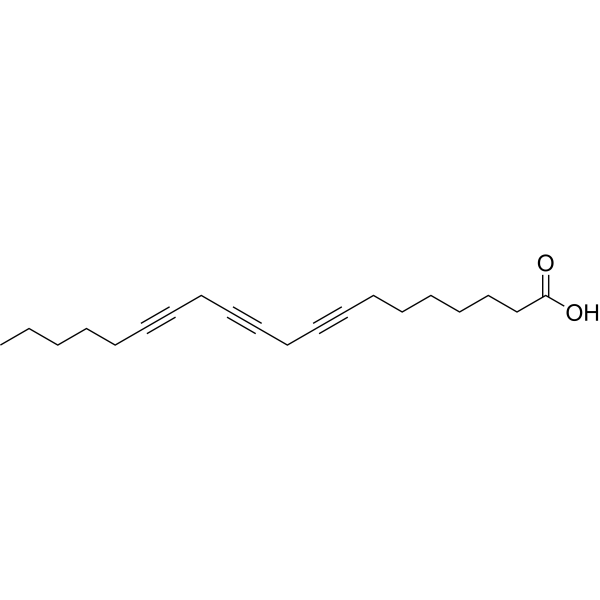
8,11,14-Eicosatriynoic Acid, as an inhibitor of prostaglandin, leukotriene biosynthesis, and arachidonic acid-induced platelet aggregation, blocks human 12-lipoxygenase (12-LO), cyclooxygenase (COX)and 5-lipoxygenase (5-LO) with IC50 values of 0.46 μM, 14 μMand 25 μM, respectively. In addition, 8,11,14-Eicosatriynoic Acid inhibits the action of slow-reacting substances of allergic reactions, with IC50 value of 10 μM. Lipoxygenase is widely found in fungi, plants and animals. 12-LO involves in many important disease states and may play a role in oxidative glutamate toxicity. COX enzymes play complex roles in human physiology and pathology involving the neuronal, immune, renal, cardiovascular, gastrointestinal and reproductive systems. COX enzymes are blocked by aspirin and a variety of other NSAIDs, which makes them clinically important. 5-LO involves in cancer pathology. It is expressed by a variety of cancer cells, including colon, lung, breast, and prostate cancers, and promotes cancer cell growth and neovascularization . 8,11,14-Eicosatriynoic acid is a click chemistry reagent, it contains an Alkyne group and can undergo copper-catalyzed azide-alkyne cycloaddition (CuAAc) with molecules containing Azide groups.
loading...
    loading...
Cat. No.: HY-170524
CAS No.: 3052313-73-9
Domaines de recherche:  

Infection

TDI-015051 is a highly selective, orally active antiviral agent that targets the coronavirus NSP14 guanine-N7 methyltransferase. TDI-015051 binds to substrates in a non-competitive manner and forms a stable ternary complex, precisely blocking the capping and methylation processes of viral mRNA. TDI-015051 potently inhibits a variety of coronaviruses (including SARS-CoV-2 and MERS). By impairing viral replication and translation and inducing a moderate type I interferon-mediated immune response, it significantly reduces pulmonary viral load and exhibits a synergistic effect with Nirmatrelvir (HY-138687). In addition, TDI-015051 does not inhibit non-coronavirus methyltransferases, and the drug-resistant mutations it induces impair viral fitness, demonstrating excellent antiviral properties and safety. TDI-015051 can be used for research on COVID-19 and the replication mechanism of coronaviruses .The IC50 values of TDI-015051 against SARS-CoV-2, α-hCoV-NL63, α-hCoV-229E, β-hCoV-MERS are 0.15 nM, 1.7 nM, 2.6 nM and 3.6 nM, respectively, and the Ka value against SARS-CoV-2 is 0.061 nM .
loading...
    loading...
Cat. No.: HY-170820
CAS No.: 3006788-11-7
XYD049 is a CRBN-based molecular glue degrader targeting GSPT1, with a DC50 of 19 nM. XYD049 mediates the formation of a ternary complex between CRBN and GSPT1, thereby triggering CRBN- and proteasome-dependent degradation of GSPT1. By degrading GSPT1, XYD049 downregulates castration-resistant prostate cancer (CRPC)-related oncogenes, including BCL2, CDK2, E2F3, EGFR, HSP90B1, TMPRSS2, AR, AR-V7, PSA and c-Myc. XYD049 inhibits cancer cell growth and suppresses tumor growth in mice. XYD049 can be used for research on castration-resistant prostate cancer. XYD049 consists of a linker (black part) NH2-C5-NH-Boc (HY-W004710), a CRBN-based E3 ligase ligand (blue part) Thalidomide 4-fluoride (HY-41547), and a target protein ligand (red part) GSPT1 ligand-1 (HY-170821), among which the E3 ligase ligand plus linker forms the conjugate E3 Ligase Ligand-linker Conjugate 158 (HY-170822) .
loading...
    loading...

