38 Results for "

CT26 model

" in MedChemExpress (MCE) Product Catalog:
Products (38)

38 Results for "CT26 model" in MCE Product Catalog:

Cat. No.: HY-169363
Research Areas:  

Cancer

PD-L1 degrader-2 (Compound B3) is an orally active AUTAC degrader, that degrades PD-L1 through autophagy-lysosome pathway with a DC50 of 0.5 μM. PD-L1 degrader-2 exhibits inhibitory activity against PD-1/PD-L1 interaction with an IC50 of 22.8 nM. PD-L1 degrader-2 upregulates the expressions of Atg9b, Lamp1 and Mitf, and activates the autophagy lysosome system. PD-L1 degrader- exhibits antitumor efficacy in CT26 mouse model . (Pink: autophagy-lysosome activator (HY-159894); Black: linker (HY-W015088); Blue: PD-L1 ligand (HY-169365))
loading...
    loading...
Cat. No.: HY-178032
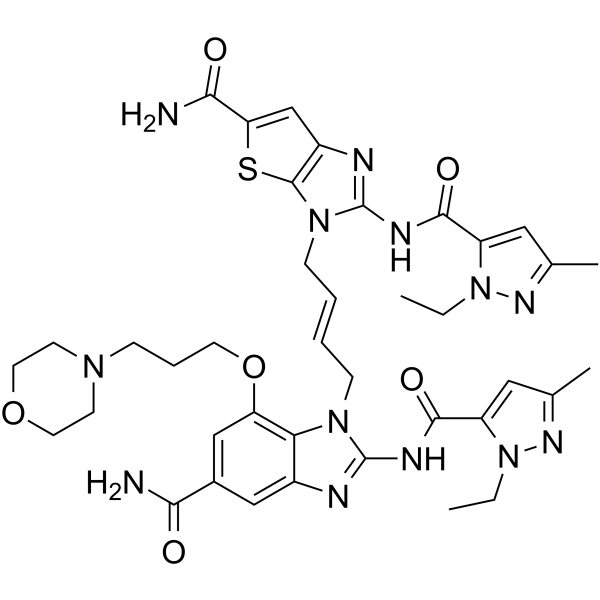
PARP1-IN-44, an Olaparib (HY-10162) derivative, is an orally active PARP1 inhibitor (IC50 = 0.6 nM), and also inhibits PARP2 (IC50 = 1.0 nM) and PARP7 (IC50 = 7.5 nM). PARP1-IN-44 has selective antiproliferative activity against BRCA-deficient cancer cells with minimal toxicity to normal cells. PARP1-IN-44 induces G2/M phase arrest, promotes apoptosis, elevates ROS levels, disrupts mitochondrial membrane potential. PARP1-IN-44 suppresses PARylation while increasing γH2AX accumulation. PARP1-IN-44 activates the cGAS-STING pathway, upregulating IFN-β and CXCL10 expression. PARP1-IN-44 enhancing CD8+ T cell infiltration in a CT26 tumor mouse model, demonstrating robust in vivo antitumor efficacy .
loading...
    loading...
Cat. No.: HY-139716
CAS No.: 2928463-39-0
Target:  

NF-κB

Research Areas:  

Inflammation/Immunology

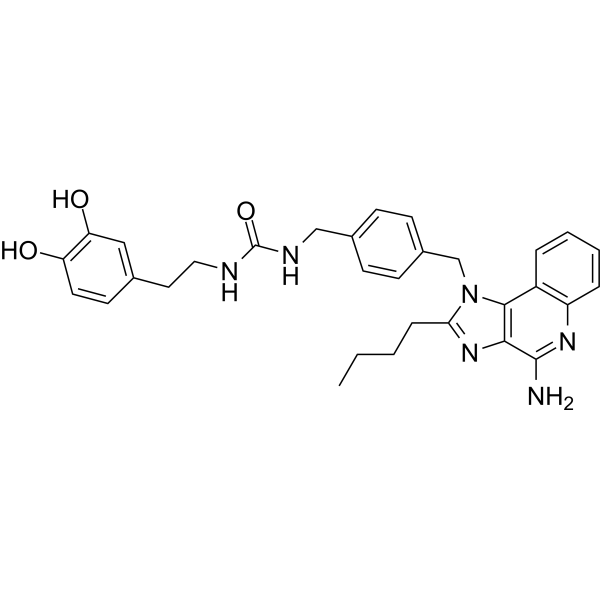
IMD-catechol is a novel imidazoquinolinone-NF-κB immunomodulator dimer that improves efficacy in a CT26 mouse colon carcinoma tumor model while eliciting minimal adjuvant toxicity.
loading...
    loading...
Cat. No.: HY-169918
CAS No.: 2924065-12-1
Target:  

SHP2

Research Areas:  

Cancer

SHP2-IN-34 (compound A8) is a phenyl urea SHP2 inhibitor with anti-cancer activity. SHP2-IN-34 significantly suppresses tumor growth in CT26 mouse model .
loading...
    loading...
Cat. No.: HY-172453
Research Areas:  

Cancer

XW-032 is an apo-IDO1 inhibitor, with an IC50 of 21 nM. XW-032 (TGI = 63%) exhibits potent in vivo anti-tumor efficacy in the CT26 syngeneic mouse model and is expected to be applied in the research of the field of cancer .
loading...
    loading...
Cat. No.: HY-147834
CAS No.: 2653337-73-4
Target:  

STING

Research Areas:  

Cancer

STING agonist-9 (Compound 45) is a potent STING agonist with an EC50 of 1.2 nM and 32.82 μM against h-STING and m-STING, respectively. STING agonist-9 shows antitumor activity .
loading...
    loading...
Cat. No.: HY-175195
CAS No.: 2913578-04-6
Adenosine receptor antagonist 6 is an orally active and selective A2A adenosine receptor (A2AAR) antagonist, with a Ki of 19.18 nM. Adenosine receptor antagonist 6 inhibits 5’-N-ethylcarboxamide adenosine (NECA) (HY-103173)-mediated cAMP production (IC50 = 0.089 μM) and immunosuppression, while promoting IL-2 and IFN-γ secretion. Adenosine receptor antagonist 6 abolishes the immunosuppressive effects of adenosine on T-cell activation and cytokine release. Adenosine receptor antagonist 6 inhibits tumor growth in a CT26/MC38 xenograft model. Adenosine receptor antagonist 6 can be used for the study of colon cancer .
loading...
    loading...
Cat. No.: HY-145280A
CAS No.: 2310286-60-1
Research Areas:  

Cancer

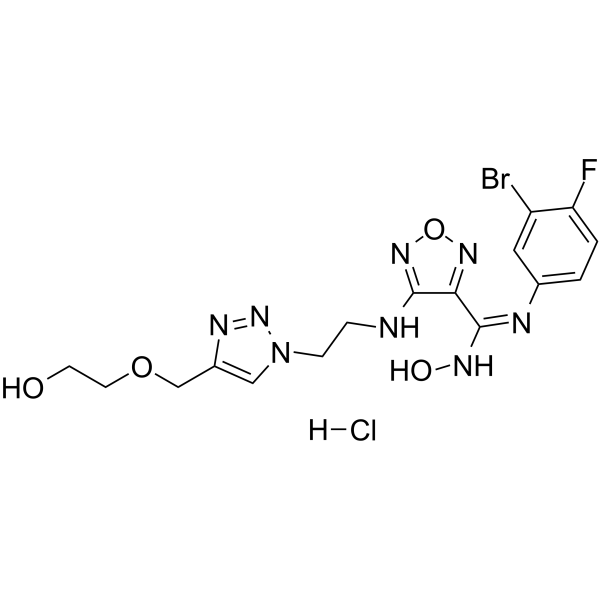
IDO1/2-IN-1 hydrochloride (compound 4t) is the first potent IDO1/IDO2 dual inhibitor with IC50s of 28 nM and 144 nM for IDO1 and IDO2, respectively. IDO1/2-IN-1 hydrochloride exhibits antitumor activies. Orally active .
loading...
    loading...
Cat. No.: HY-151506
CAS No.: 2274812-94-9
Target:  

Liposome

Research Areas:  

Cancer

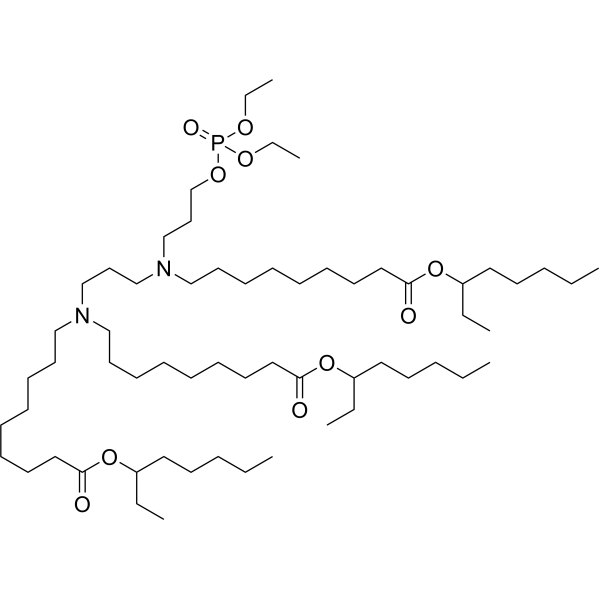
Phospholipid PL1 is a phospholipid-derived nanoparticle, can deliver costimulatory receptor mRNA (CD137 or OX40) to T cells. Phospholipid PL1 could induce the activation of various immune cells, including T cells and dendritic cells (DCs) in order to boost antitumor immunity .
loading...
    loading...
Cat. No.: HY-159905
CAS No.: 3048537-48-7
Target:  

MAP4K

Research Areas:  

Inflammation/Immunology

HPK1-IN-54 is a potent HPK1 (Hematopoietic Progenitor Kinase 1) inhibitor that enhances T cell activation and proliferation by inhibiting HPK1 activity, thereby exhibiting antitumor effects. Its IC50 value against HPK1 is 2.67 nM, with excellent selectivity over the MAP4K family (>100-fold) and other selected kinases (>300-fold). HPK1-IN-54 displayed moderate in vivo clearance and reasonable oral exposure in mice and rats. Additionally, HPK1-IN-54 demonstrated strong antitumor efficacy in a CT26 murine colon cancer model and synergistic effects when combined with anti-PD-1 (HY-P9902A). HPK1-IN-54 shows promise for research in the field of immunotherapy .
loading...
    loading...
Cat. No.: HY-169480
CAS No.: 3003022-09-8
Target:  

Liposome

Research Areas:  

Infection Cancer

Lipid C2 is an ionizable cationic lipid that has been used in the formation of lipid nanoparticles (LNP) for mRNA delivery in vivo. LNPs containing Lipid C2 and encapsulating an mRNA reporter selectively accumulate in the liver and spleen but not the heart, lungs, or kidneys in mice. LNP containing Lipid C2 and encapsulating mRNA encoding the Epstein-Barr virus (EBV) protein latent membrane protein 2 (LMP-2), in combination with an anti-programmed cell death protein 1 (PD-1) antibody, decrease tumor volume and reverse T cell exhaustion, as well as increase the percentage of CD3 +CD8 + central and CD3 +CD8 + effector memory T cells and decrease the percentage of CD3 + T cells expressing Pd-1, in the spleen in a CT26 murine EBV-infected colon cancer model .
loading...
    loading...
Cat. No.: HY-185098
CAS No.: 2007110-15-6
Research Areas:  

Cancer

PD1-PDL1-IN-4 (compound 19) is a potent and orally active PD1-PDL1 inhibitor that modulates TIGIT and PD-1 signalling pathways. PD1-PDL1-IN-4 can rescue CD8 + T cell and mouse splenocyte proliferation. PD1-PDL1-IN-4 inhibits tumor growth in a CT26 syngeneic colon adenocarcinoma mouse model. PD1-PDL1-IN-4 can be used for research on colon cancer .
loading...
    loading...
Cat. No.: HY-183328
Target:  

MNK Bcl-2 Family

Research Areas:  

Cancer

MNK1/2-IN-11 is a potent, selective and orally active MNK1/2 inhibitor with MNK1 IC50 of 1.2 nM, MNK2 IC50 of 1.3 nM. MNK1/2-IN-11 reduces eukaryotic translation initiation factor 4E phosphorylation, decreases Mcl-1 and Cyclin D1 expression. MNK1/2-IN-11 inhibits tumor growth in mouse CT26 colorectal tumor models. MNK1/2-IN-11 can be used for the research of colorectal cancer .
loading...
    loading...
Cat. No.: HY-184118
CAS No.: 693829-95-7
Target:  

GSK-3 STAT

Research Areas:  

Cancer

ADGRL1-IN-1 is a ADGRL1 inhibitor. ADGRL1-IN-1 activates the GSK3β-STAT1 signaling axis. ADGRL1-IN-1 induces anti-tumor immunity in a CT26 colorectal cancer mouse model. ADGRL1-IN-1 can be used in studies related to colorectal cancer .
loading...
    loading...
Cat. No.: HY-172674
Target:  

MAP4K

Research Areas:  

Cancer

HPK1-IN-59 (compound 39) is an orally active HPK1 inhibitor with an IC50 of 0.70 nM. HPK1-IN-59 has favorable oral bioavailability in mice .
loading...
    loading...
Cat. No.: HY-181877
Target:  

HDAC Adenosine Receptor

Research Areas:  

Cancer

IHCH-3185 is an orally active class I HDAC inhibitor (HDAC1 IC50 =102.9 nM) and A2AR antagonist (A2AR Ki =7.6 nM). IHCH-3185 reverses immune gene silencing by inducing histone acetylation and blocks the adenosine signaling pathway to relieve T-cell suppression. IHCH-3185 exhibits antiproliferative activity, induces cell cycle arrest, and significantly improves the tumor microenvironment. IHCH-3185 reduces the proportion of regulatory T cells, increases the CD8 +/Treg ratio, and upregulates the expression of key factors such as H2-K1, Cxcl9 and Cxcl10. IHCH-3185 shows significant antitumor potential in CT26 and MC38 mouse tumor models and is suitable for related cancer research .
loading...
    loading...
Cat. No.: HY-182759
MN33-47 is a multi-target anti-tumor compound with broad-spectrum anti-proliferative activity. MN33-47 relieves the inhibition of the mitochondrial apoptosis pathway by downregulating the anti-apoptotic protein Bcl-2, while activating caspase-3 and inhibiting Topoisomerase I activity, thereby promoting its degradation through the ubiquitin-proteasome and autophagy-lysosome pathways. MN33-47 can also induce DNA cross-linking and G2/M cell cycle arrest, inhibit cancer cell migration and activate the mitochondrial apoptosis pathway, thus exerting potent anti-tumor effects. MN33-47 can improve the water solubility of SN-38 (HY-13704), and exhibits dose-dependent tumor growth inhibition effects in CT26 tumor-bearing mouse models without obvious toxic and side effects. MN33-47 can be used in related studies on colorectal adenocarcinoma, cervical adenocarcinoma, hepatocellular carcinoma, alveolar basal epithelial adenocarcinoma, gastric cancer and colon cancer .
loading...
    loading...
Cat. No.: HY-P11771
Research Areas:  

Others

KS-487 is a cyclic peptide targeting LRP1 that binds to cluster IV (CL4) domain of LRP1 and facilitates molecular delivery to brain tissue via receptor-mediated transcytosis (RMT). The EC50 of KS-487 binding to human LRP1 (CL4) is 10.5 nM. Compared with Angiopep-2, KS-487 exhibits enhanced brain selectivity and can be used in studies related to brain-targeted delivery systems .
loading...
    loading...

