




49 Results for "

Neutral pH

" in MedChemExpress (MCE) Product Catalog:
Products (49)

49 Results for "Neutral pH" in MCE Product Catalog:

Cat. No.: HY-106991A
CAS No.: 210584-54-6
Purity:  ≥95.0%
Synonyms: S-303 dihydrochloride
Target:  

HIV Bacterial CHIKV

Research Areas:  

Infection

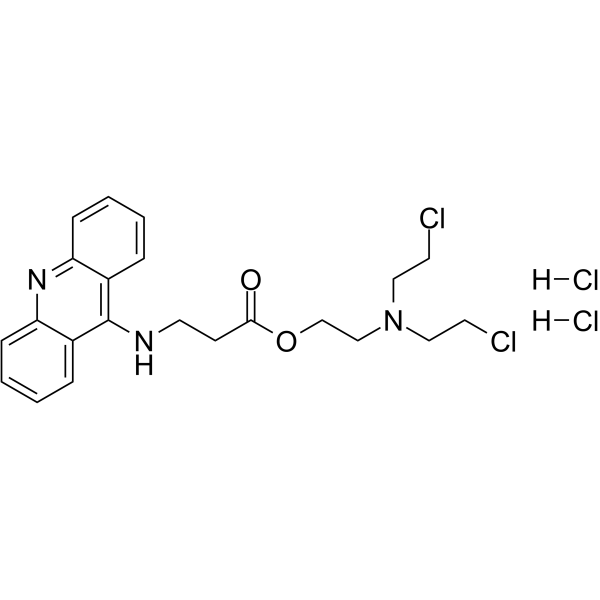
Amustaline (S-303) dihydrochloride, a nucleic acid-targeted alkylator, is an efficient pathogen inactivation agent for blood components containing red blood cells. Amustaline dihydrochloride has three components: an acridine anchor (an intercalator that targets nucleic acids non-covalently), an effector (a bis-alkylator group that reacts with nucleophiles), and a linker (a small flexible carbon chain containing a labile ester bond that hydrolyzes at neutral pH to yield non-reactive breakdown products) .
loading...
    loading...
Cat. No.: HY-P2776
CAS No.: 9001-51-8
Target:  

Hexokinase

Research Areas:  

Metabolic Disease

Hexokinase, microorganism is a hexokinase derived from microorganisms. It catalyzes the phosphorylation of glucose at the C6 position using ATP and Mg 2+, exhibits broad substrate specificity, and demonstrates thermal stability under neutral to weakly alkaline pH and high-temperature conditions. Hexokinase, microorganism uses ATP as the primary phosphate donor for sugar phosphorylation reactions. Hexokinase, microorganism belongs to the prokaryotic hexokinase family and catalyzes sugar phosphorylation reactions in carbohydrate metabolism .
loading...
    loading...
Cat. No.: HY-D1457
CAS No.: 152584-38-8
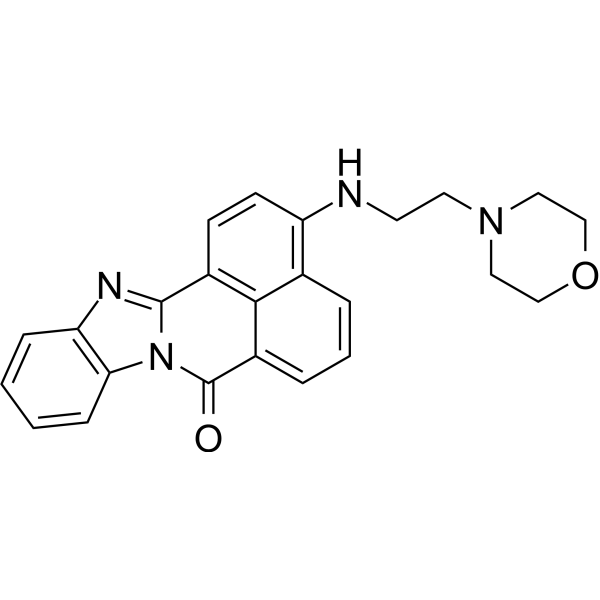
DND-189, a low-pH fluorescent probe, is sensitive to neutral and low pH range. DND-189 can be used to measure the pH of acidic organelles .
loading...
    loading...
Cat. No.: HY-DY1061
CAS No.: 158757-84-7
BODIPY 558/568 C12 (solution) is a BODIPY dye. BODIPY dye is a small molecule dye with strong ultraviolet absorption ability, its fluorescence peak is relatively sharp, and the quantum yield is high. They are relatively insensitive to the polarity and pH of the environment and are relatively stable under different physiological conditions. Due to its structural asymmetry, BODIPY derives a variety of structural products. BODIPY lipid droplet dyes can well pass through the cell membrane into the cell, and localize the neutral lipids in the cell to specifically stain the lipid droplets, which can be used for labeling of live cells and fixed cells . Maximum excitation/emission wavelength: 558/568 nm .
Solvent and concentration: DMSO: 2 mM
loading...
    loading...
Cat. No.: HY-D2465
Target:  

Fluorescent Dye

Research Areas:  

Infection

CY5-Dextran (MW60-80k) is a fluorescent probe formed by covalent conjugation of the cyanine dye Cy5 to dextran. It is a pH-insensitive fluid-phase endocytosis tracer (the pH of endosomal lumen is precisely quantified by the fluorescence ratio of FITC/Cy5). CY5-Dextran (MW60-80k) is internalized by cells via a clathrin-independent fluid-phase pinocytosis pathway, and is sequentially evidenced by early endosomes, late endosomes are transported to lysosomes. CY5-D I cannot pass through the limited pore size formed by uncoating of human rhinovirus type 2 (HRV2), but can be released into the neutral cytoplasm upon adenovirus-mediated endosomal rupture, thus distinguishing between the two viral modes of "pore-forming escape" and "lysis escape". CY5-Dextran (MW60) -80k) has an excitation wavelength of 635 nm, and it can also be used for time-lapse imaging of endocytosis dynamics of stromal cells in tissues such as rat salivary glands under in vivo two-photon microscopy .
loading...
    loading...
Cat. No.: HY-D0812
CAS No.: 125-31-5
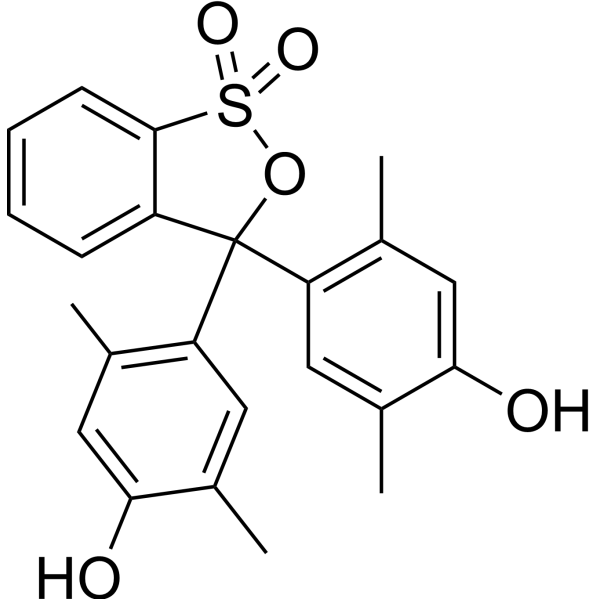
Xylenol Blue is a sulfonephthalein dye. It exhibits observable color changes in response to variations in pH. Xylenol Blue undergoes two distinct color transitions across two specific pH ranges: an acidic range and an alkaline range. In a neutral solution, Xylenol Blue appears yellow (at pH 8); in a strongly acidic medium, its color shifts to red (at pH 2.8); and in an alkaline medium, the yellow hue transitions to blue (at pH 9.6) .
loading...
    loading...
Cat. No.: HY-137303
CAS No.: 26400-33-9
Purity:  99.51%
Synonyms: FAGLA
Target:  

Bacterial

Research Areas:  

Others

FA-Gly-Leu-NH2 (FAGLA) is a dipeptide substrate for proteases that can be hydrolyzed by thermophilic proteases and neutral proteases, showing pH-dependent variations in kcat/Km .
loading...
    loading...
Cat. No.: HY-P5174
Target:  

Sodium Channel

Research Areas:  

Neurological Disease

MitTx is a complex formed by MitTx-α and MitTx-β. MitTx is an ASIC1 channel activator with EC50 values of 9.4 and 23 nM for ASIC1a and ASIC1b isoforms, respectively. MitTx is highly selective for ASIC1 isoforms at neutral pH. Under acidic conditions, MitTx greatly enhances proton-evoked ASIC2a channel activation .
loading...
    loading...
Cat. No.: HY-W251598I
CAS No.: 144-55-8
Synonyms: Sodium hydrogen carbonate, meets analytical specification of pH. Eur., BP, USP, FCC, E500
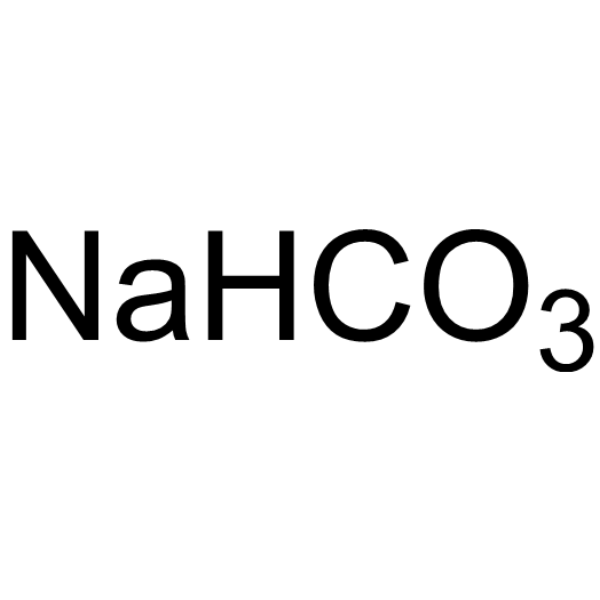
Sodium bicarbonate, meets analytical specification of Ph. Eur., BP, USP, FCC, E500 is an inorganic salt that is neutral to slightly alkaline and easily decomposes when exposed to moisture in the air. Sodium bicarbonate can maintain the pH of the culture medium, thereby affecting the expression of inducible nitric oxide synthase (iNOS) and nitric oxide (NO) production in macrophages and reversing the acidosis of the tumor microenvironment. Sodium bicarbonate is widely used in the fields of food, medicine, cosmetics, etc. Its main uses include buffers, flavoring agents, disinfectants, pharmaceuticals, and proton gradient regulators. Sodium bicarbonate is also commonly used as an antacid to inhibit gastrointestinal diseases, neutralize gastric acid, and reduce gastric discomfort .
loading...
    loading...
Cat. No.: HY-D0252
CAS No.: 2303-01-7
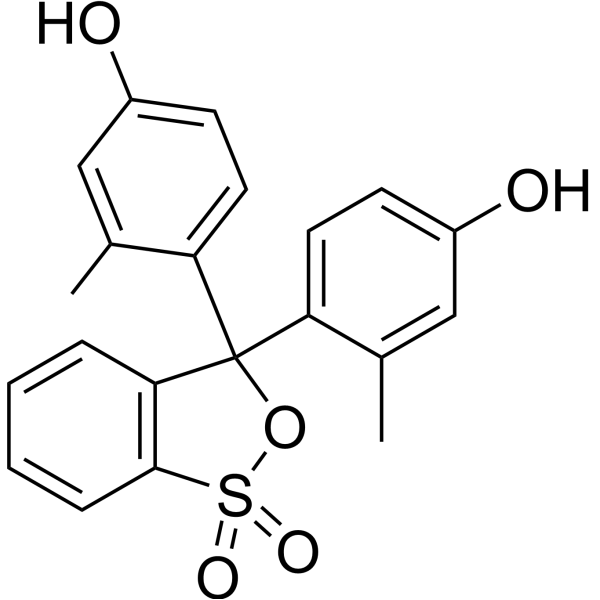
m-Cresol purple is a pH indicator dye with large cross section and halochromic property in neutral pH range .
loading...
    loading...
Cat. No.: HY-Y0537J
CAS No.: 7447-40-7
Potassium chloride, meets analytical specification of Ph. Eur., BP, USP, FCC, E508, ≤0.0001% Al is a neutral potassium salt that can be used for buffer preparation, and can be used in biochemical research .
loading...
    loading...
Cat. No.: HY-P11309
CAS No.: 957365-81-0
Research Areas:  

Neurological Disease

QL6 peptide is a self-assembling peptide. QL6 peptide can self-assembles into β-sheets bridging the cavity at neutral pH and improves the inhibitory environment by reducing inflammation and tissue scaring. QL6 peptide can be used for synthesis nanofiber scaffolds for spinal cord injuries (SCI) research .
loading...
    loading...
Cat. No.: HY-D1224A
CAS No.: 99792-50-4
Synonyms: CPRG sodium
Chlorophenol red-β-D-galactopyranoside (CPRG) sodium is an efficient and sensitive chromogenic substrate for β-galactosidase (HY-P2869), widely used in colorimetric assays. Chlorophenol red-β-D-galactopyranoside sodium itself appears pale yellow. When it is specifically hydrolyzed by β-galactosidase, it releases chlorophenol red. The released chlorophenol red turns purple-red under alkaline or neutral pH conditions. This color change from yellow to red can be quantitatively detected at wavelengths of 540-572 nm using visible spectrophotometry .
loading...
    loading...
Cat. No.: HY-135078
CAS No.: 17460-13-8
Synonyms: NSC 270912
Target:  

DNA/RNA Synthesis

Research Areas:  

Others

2,5-Deoxyfructosazine is a pyrazine derivative that can be found in cured tobacco and is used as a flavoring agent in the food and tobacco industry. Pyrazines, including 2,5-deoxyfructosazine, can be produced either by pyrolytic decomposition of natural compounds or by the reaction of sugars with alcoholic ammonia. 2,5-Deoxyfructosazine is also formed by the breakdown of D-glucosamine at neutral pH. Like glucosamine, 2,5-deoxyfructosazine has DNA strand breakage activity and strongly inhibits IL-2 production by Jurkat cells stimulated with phytohemagglutinin (IC50=~1.25 mM).
loading...
    loading...
Cat. No.: HY-P5172
Target:  

Sodium Channel

Research Areas:  

Neurological Disease

MitTx-alpha is a subunit of MitTx. MitTx is a potent, persistent, and selective agonist for acid-sensing ion channels (ASICs). MitTx is highly selective for the ASIC1 subtype at neutral pH; under more acidic conditions (pH<6.5), MitTx massively potentiates (>100-fold) proton-evoked activation of ASIC2a channels .
loading...
    loading...
Cat. No.: HY-P11055
CAS No.: 2169935-95-7
Target:  

Bacterial

Research Areas:  

Infection

IKFQFHFD is a pH-responsive and self-assembling peptide. IKFQFHFD is biocompatible at neutral pH and becomes an antimicrobial peptide-like molecular structure only at acidic pH. IKFQFHFD can be used for chronic wounds (venous ulcers, diabetic ulcers, and pressure ulcers) induced by biofilm infections research .
loading...
    loading...
Cat. No.: HY-155754
CAS No.: 90290-58-7
Target:  

ATP Synthase

Research Areas:  

Others

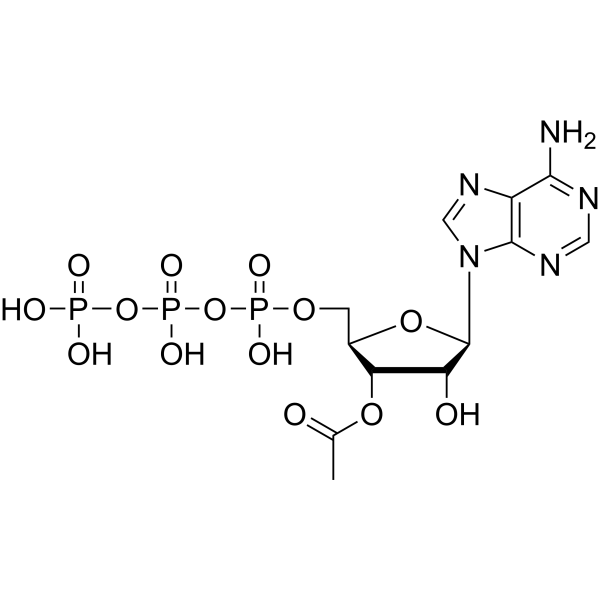
3’-Acetate-ATP, an ATP analogue, is ATP acetylation product with an maxima uv absorption at 259 nm in water at neutral pH. 3’-Acetate-ATP exerts a blocking effect on nucleic acid polymerization .
loading...
    loading...
Cat. No.: HY-158190
Synonyms: Rose Bengal Medium
Rose-Bengal Chloramphenicol Agar is a selective medium for the enumeration of yeasts and moulds from a wide variety of foodstuffs. The medium has a neutral pH and chloramphenicol is used as a selective agent to suppress the growth of bacteria .
loading...
    loading...
Cat. No.: HY-167735
CAS No.: 3785-44-2
Synonyms: Bisdequalinium diacetate
Target:  

Bacterial

Research Areas:  

Infection

Salvizol (Bisdequalinium diacetate) is a chemotherapeutic agent with a broad spectrum of bactericidal activity, effective in the apical third of root canals. Salvizol possesses the ability to dissolve organic dentin matrix, facilitating mineralization and tubule exposure. Salvizol maintains a neutral pH, ensuring biological compatibility while exhibiting significant cleansing potency.
loading...
    loading...
Cat. No.: HY-E70330
CAS No.: 70851-98-8
Target:  

Endogenous Metabolite

Research Areas:  

Others

Neutral Proteinase, Bacillus sp. is a biocatalyst and a key enzyme in new biocatalyst technology. Enzyme engineering focuses on enhancing enzyme reaction kinetics, substrate selectivity, and activity under harsh conditions such as low or high pH. By introducing stimulus responsiveness to these enzyme modifications, dynamic control of activity is also possible .
loading...
    loading...

