36 Results for "

bifunctional molecule

" in MedChemExpress (MCE) Product Catalog:
Products (36)

36 Results for "bifunctional molecule" in MCE Product Catalog:

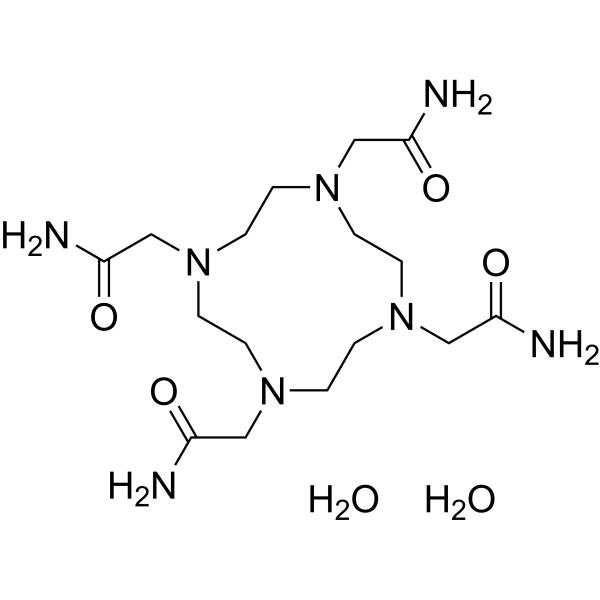
Cat. No.: HY-W088413A
DOTA-amide (dihydrate) is a Bifunctional Chelators (BFCs). DOTA-amide (dihydrate) binds to the Affibody molecule ZHER2:S1. Its complex binds specifically to HER2 and can be used to detect bone metastases, which are common in prostate cancer .
loading...
    loading...
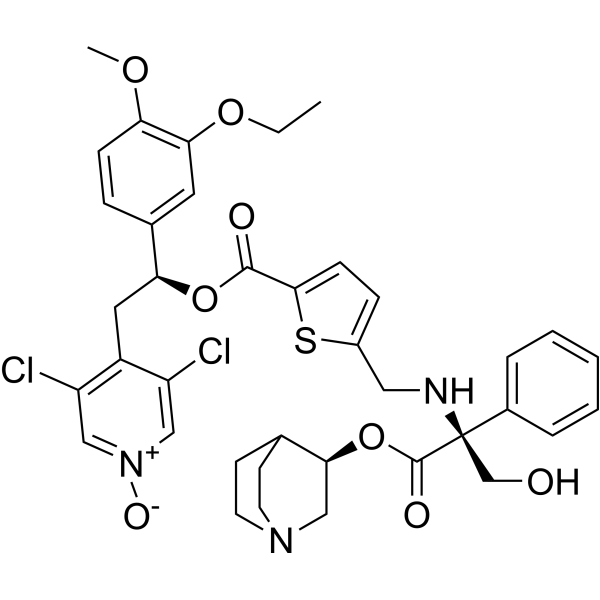
Cat. No.: HY-155819
Research Areas:  

Inflammation/Immunology

M3/PDE4 modulator-1 (compound 10f) is a bifunctional molecule that is an M3 mAChR antagonist and a PDE4 inhibitor. M3/PDE4 modulator-1 (10-1000 nM/kg; iv) reduces cysteine eosinophil influx in the OVA rat model .
loading...
    loading...
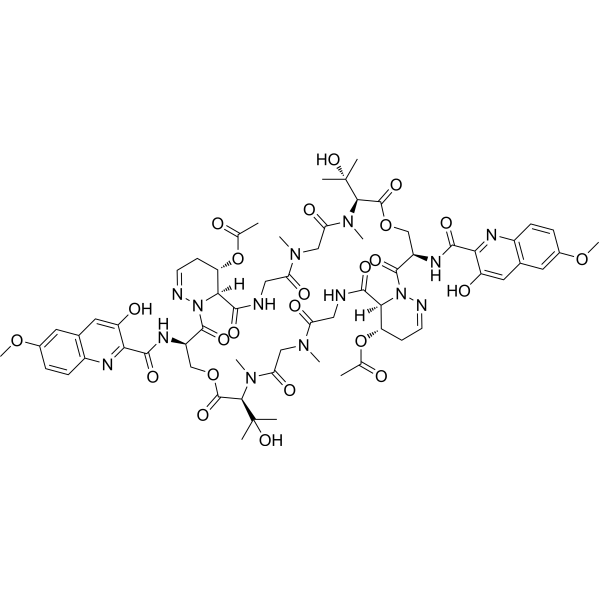
Cat. No.: HY-130050
CAS No.: 75580-37-9
Synonyms: BBM-928 A
Luzopeptin A (BBM-928 A) is an actinoleukin-like antitumor antibiotic. Luzopeptin A is a bifunctional DNA intercalator which can interact with isolated DNA molecules. Luzopeptin A induces an unwinding-rewinding process of the closed superhelical PM2 DNA. Luzopeptin A is active against HIV-1 and HIV-2 reverse transcriptase with IC50s of 7 nM and 68 nM for HIV-1 RT and HIV-2 RT, respectively .
loading...
    loading...
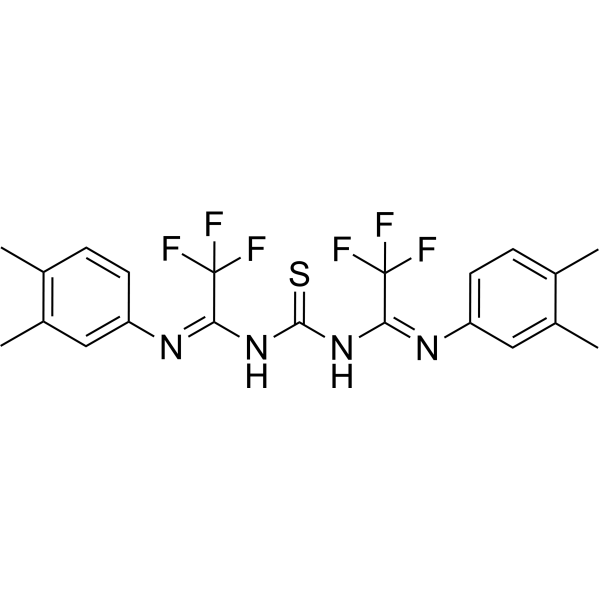
Cat. No.: HY-149558
Target:  

Apoptosis CXCR

Research Areas:  

Cancer

CXCR4-IN-2 (compound A1) is a bifunctional fluorinated small molecule that is a potent CXCR4 inhibitor with anticancer activity. CXCR4-IN-2 has cytotoxic (IC50: 60 μg/mL; 72 h) and antiproliferative effects on mouse colorectal cancer (CRC) cells. CXCR4-IN-2 induces cell arrest in the G2/M phase and induces apoptosis .
loading...
    loading...
Cat. No.: HY-153665
CAS No.: 2761446-55-1
Purity:  99.45%
Research Areas:  

Cancer

Deg-1 is a bifunctional probe with a cleavage group and a covalent binding group. Deg-1 binds covalently to target nucleic acids and acts as a click degrader to cleave nucleic acid molecules, exhibiting the potential to selectively cleave target nucleic acids intracellularly. Deg-1 contains an azide group that can undergo copper-catalyzed azide-alkyne cycloaddition (CuAAc) with alkynyl groups, as well as strain-promoted alkyne-azide cycloaddition (SPAAC) with DBCO or BCN. Deg-1 can be used in studies related to acute myeloid leukemia and RNA function .
loading...
    loading...
Cat. No.: HY-L222
1,213 compounds

Linkers play a necessary role in the physicochemical properties and biological activity of the bifunctional molecule. These linkers are not a simply connection of two functional modules together, but its design and nature directly affect the stability, activity, selectivity, pharmacokinetics, and ultimately the therapeutic efficacy of the entire molecule. The length of the linker determines the extent of interaction between the two ligands and thus the maximum activity of the PROTAC molecule.

MCE has collected 1,213 PROTAC Linkers can be used for the design and synthesis of bifunctional molecules.

Cat. No.: HY-L951
505 compounds

Macrocyclic scaffolds are increasingly valued in modern drug discovery for their exceptional activity against undruggable targets (proteases, kinases, PPIs). 2026 marks a key commercial breakthrough for oral macrocyclic peptides: enlicitide, the world’s first oral PCSK9 macrocyclic peptide, has received FDA approval. Macrocyclic candidates targeting KRAS and other classic undruggable targets have also entered clinical development, validating macrocyclization as an effective strategy to overcome druggability barriers.

Two core R&D directions lead current macrocyclic drug design: AI-driven de novo generation and structural optimization of small-molecule macrocycles, and macrocyclic peptides based on sequence design and conformational engineering. Macrocycle druggability hinges on embedded linkers, which determine cyclization efficiency, final conformation and drug-like properties. Bifunctional reaction orthogonality is the core linker selection criterion. Our linker library enables stepwise intramolecular cyclization with suppressed side reactions, accommodates varied ring sizes, and covers three key reaction systems: amide condensation, nucleophilic substitution and CuAAC click chemistry.

Built on classical macrocyclization systems, the library is processed through reaction classification, bifunctional orthogonality evaluation, novelty clustering and redundancy removal, with PROTAC long-chain and ADC cleavable linkers explicitly excluded. Featuring rigid, semi-rigid and flexible scaffolds, it is widely applicable to small-molecule macrocycle synthesis and linear peptide cyclization.

Cat. No.: HY-183981
Research Areas:  

Others

RNA binder 4 is an RNA-binding agent that can be used for the synthesis of MJ-NR-27 (HY-183980). MJ-NR-27 is a bifunctional ribonuclease-targeting chimera (RIBOTAC) small molecule that targets NRAS mRNA containing a G-quadruplex structure, and it can be used in cancer research .
loading...
    loading...
Cat. No.: HY-171342
CAS No.: 2893765-20-1
Mal-C2-amide-C10-tri-GalNAc is an asialoglycoprotein receptor (ASGPR) binding ligand fragment and a component of lysosome-targeted bifunctional molecules. Mal-C2-amide-C10-tri-GalNAc is used in the research of autoimmune diseases .
loading...
    loading...
Cat. No.: HY-189227
CAS No.: 2504234-62-0
Research Areas:  

Others

E3 Ligase Ligand-linker Conjugate 242 (compound m51) is an E3 ligase-ligand conjugate that serves as an intermediate for the synthesis of bifunctional degraders, such as BRD9 PROTAC/IMiD degraders. E3 Ligase Ligand-linker Conjugate 242 can be used for the construction of PROTAC molecules and related research .
loading...
    loading...
Cat. No.: HY-181038
Target:  

Bacterial

Research Areas:  

Infection

Rifabutin-vonoprazan conjugate 1 is an orally active acid-responsive bifunctional molecule. Rifabutin-vonoprazan conjugate 1 exhibits anti-Helicobacter pylori activity (MIC ≤ 0.125 μg/mL) and acid-suppressive effects (acid inhibition rate > 85% at a dose of 2 mg/kg). Rifabutin-vonoprazan conjugate 1 also demonstrates anti-ulcer activity. Rifabutin-vonoprazan conjugate 1 can be used in research related to Helicobacter pylori infection and gastric ulcer .
loading...
    loading...
Cat. No.: HY-138642B
CAS No.: 2614417-52-4
Synonyms: rel-ARV-471; rel-PF-07850327
Research Areas:  

Cancer

(Rac)-Vepdegestrant is the relative configuration of Vepdegestrant (HY-138642). Vepdegestrant is an orally active PROTAC estrogen receptor degrader against breast cancer. Vepdegestrant is a hetero-bifunctional molecule that facilitates the interactions between estrogen receptor alpha and an intracellular E3 ligase complex. Vepdegestrant leads to the ubiquitylation and subsequent degradation of estrogen receptors via the proteasome. Vepdegestrant robustly degrades ER in ER-positive breast cancer cell lines with a half-maximal degradation concentration (DC50) of about 2 nM .
loading...
    loading...
Cat. No.: HY-182964
WY165 is a bifunctional molecule comprising TR79, an activator of the mitochondrial protease complex caseinolytic protease P (ClpP), linked to desthiobiotin. WY165 mediates selective degradation of monomeric streptavidin (mSA) and its fusion proteins localized to the mitochondrial matrix with a DC50 of 197 nM. WY165 restores mitochondrial morphology by reducing the level of mSA fused to short transmembrane protein 1 (mSA-STMP1) in cells overexpressing mSA-STMP1. WY165 can be used for research in cancer, neurodegenerative diseases, cardiovascular diseases, and metabolic diseases .
loading...
    loading...
Cat. No.: HY-138642R
CAS No.: 2229711-68-4
Synonyms: ARV-471 (Standard); PF-07850327 (Standard)
Research Areas:  

Cancer

Vepdegestrant (Standard) is the analytical standard of Vepdegestrant (HY-138642). This product is intended for research and analytical applications. Vepdegestrant (ARV-471) is an orally active PROTAC estrogen receptor degrader against breast cancer. Vepdegestrant is a hetero-bifunctional molecule that facilitates the interactions between estrogen receptor alpha and an intracellular E3 ligase complex. Vepdegestrant leads to the ubiquitylation and subsequent degradation of estrogen receptors via the proteasome. Vepdegestrant robustly degrades ER in ER-positive breast cancer cell lines with a half-maximal degradation concentration (DC50) of about 2 nM .
loading...
    loading...
Cat. No.: HY-183980
Research Areas:  

Cancer

MJ-NR-27 is a bifunctional small molecule of ribonuclease-targeting chimera (RIBOTAC) that targets NRAS mRNA containing a G-quadruplex structure. MJ-NR-27 uses RNase L ligand 3 (HY-177030) as the RNase L ligand, RNA binder 4 (HY-183981) as the RNA binder, and Bis-PEG3-acid (HY-126891) as the linker. MJ-NR-27 achieves target RNA degradation by recruiting ribonuclease RNase L, and significantly induces morphological changes in tumor cells. MJ-NR-27 can be used in cancer research .
loading...
    loading...
Cat. No.: HY-181607
Target:  

YAP

Research Areas:  

Others

TEAD ligand-Linker Conjugate 3 (the blue structure + black structure of A536 in the literature) is a conjugate of a TEAD1-targeting ligand and a linker. TEAD ligand-Linker Conjugate 3 can be coupled with an IAP ligand (HY-181531) to form an IAP-recruiting bifunctional protein degrader (IPD) (HY-181594), also known as a SNIPER degrader. This TEAD SNIPER simultaneously binds to the TEAD1 palmitoylation pocket and the BIR3 domain of cIAP1 to form a ternary complex, efficiently inducing the ubiquitination and degradation of both TEAD1 and cIAP1 (DC50=110 nM, Dmax=51%; IC50=122 nM for cIAP1). TEAD ligand-Linker Conjugate 3 and its synthesized SENIPER molecule can be utilized in research on Hippo pathway dysregulation-related diseases, such as NF2-mutant tumors .
loading...
    loading...

