31 Results for "

lysosomal function

" in MedChemExpress (MCE) Product Catalog:
Products (31)

31 Results for "lysosomal function" in MCE Product Catalog:

Cat. No.: HY-168554
STING Degrader-3 is a PROTAC-like STING degrader with a DC50 of 2.58 μM in THP-1 cells. STING Degrader-3 degrades STING protein via the lysosomal pathway. STING Degrader-3 functions as a non-degradative inhibitor in macrophages. STING Degrader-3 reduces the phosphorylation levels of TBK1 and IRF3, and downregulates the expression of IFN-β, CXCL10, IL-6, TNFα, IL-1β, ISG15 and ISG56. STING Degrader-3 exhibits renoprotective properties in a cisplatin-induced acute kidney injury model. STING Degrader-3 can be used in studies related to acute kidney injury. ((Pink: STING ligand (HY-168676); Blue: CRBN ligand (HY-126457); Black: linker (HY-W123015); CRBN ligand + linker: (HY-168677)) .
loading...
    loading...
Cat. No.: HY-138813R
Synonyms: SU-12662 hydrochloride (Standard)
Research Areas:  

Cancer

Glycochenodeoxycholic acid sodium salt (Standard) is the analytical standard of Glycochenodeoxycholic acid sodium salt. This product is intended for research and analytical applications. Glycochenodeoxycholic acid sodium salt (Sodium glycochenodeoxycholate) is a relatively toxic bile salt generated in the liver from chenodeoxycholic acid and glycine. Glycochenodeoxycholic acid sodium salt inhibits Autophagosome formation and impairs lysosomal function by inhibiting lysosomal proteolysis and increasing lysosomal pH in human normal liver cells, leading to the Apoptosis of human hepatocyte cells. Glycochenodeoxycholic acid sodium salt induces stemness and chemoresistance via activating STAT3 signaling pathway in hepatocellular carcinoma cells (HCC). Glycochenodeoxycholic acid sodium salt is promising for research in the field of cholestasis desease, hepatocellular carcinoma and primary sclerosing cholangitis (PSC) .
loading...
    loading...
Cat. No.: HY-203817
CAS No.: 1807988-46-0
Research Areas:  

Cancer

IITZ-02 is a lysosomotropic Autophagy inhibitor. IITZ-02 enhances autophagosome accumulation but inhibits autophagosomal degradation by impairing lysosomal function, finally inducing the inhibition of autophagy. IITZ-02 abolishes mitochondrial membrane potential and induces apoptosis through the mitochondria-mediated pathway. IITZ-02 has a potent antitumor activity in MDA-MB-231 xenograft mouse models. IITZ-02 can be used for cancers research .
loading...
    loading...
Cat. No.: HY-173150
CAS No.: 106928-29-4
Hapalindole Q (Compound (+)-1) is an autophagy (Autophagy) inhibitor targeting YAP1. Hapalindole Q binds to the Hippo pathway transcription factor YAP1 with a Kd of 9.13 μM and induces its degradation via the chaperone-mediated autophagy (CMA) pathway. This process inhibits Rab7-mediated fusion of autophagosomes and lysosomes, thereby reducing overall autophagy levels without affecting lysosomal function. Hapalindole Q holds promise for research in cancer (e.g., liver cancer, breast cancer, etc.) .
loading...
    loading...
Cat. No.: HY-101349
CAS No.: 156337-32-5
L 741742 is a highly selective and brain-penetrant D4 dopamine receptor antagonist, with Ki values of 3.5 nM, 770 nM and >1700 nM for human D4, D3 and D2 receptors, respectively. L 741742 suppresses PDGFRβ, ERK1/2, and mTOR signaling pathways, and impairs autophagic flux while disrupting lysosomal function.L 741742 induces G0/G1 cell-cycle arrest and apoptosis, promotes neuronal differentiation of normal human neural stem cells, selectively inhibits growth and clonogenic potential of glioblastoma neural stem cells and primary glioblastoma tumor cells, exerts synergistic effects with Temozolomide (TMZ) (HY-17364) against glioblastoma neural stem cells in vitro, and inhibits glioblastoma neural stem cell xenograft growth in immunocompromised mice. L 741742 can be used for the research of schizophrenia and glioblastoma .
loading...
    loading...
Cat. No.: HY-101349A
CAS No.: 874882-93-6
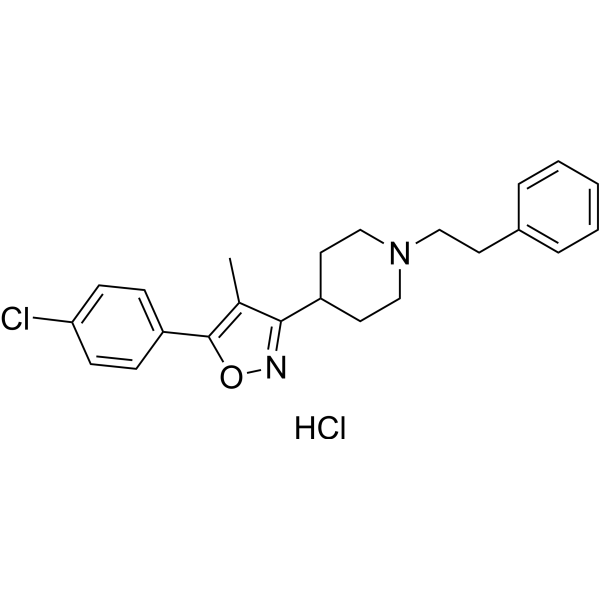
L 741742 hydrochloride is a highly selective and brain-penetrant D4 dopamine receptor antagonist, with Ki values of 3.5 nM, 770 nM and >1700 nM for human D4, D3 and D2 receptors, respectively. L 741742 hydrochloride suppresses PDGFRβ, ERK1/2, and mTOR signaling pathways, and impairs autophagic flux while disrupting lysosomal function.L 741742 hydrochloride induces G0/G1 cell-cycle arrest and apoptosis, promotes neuronal differentiation of normal human neural stem cells, selectively inhibits growth and clonogenic potential of glioblastoma neural stem cells and primary glioblastoma tumor cells, exerts synergistic effects with Temozolomide (TMZ) (HY-17364) against glioblastoma neural stem cells in vitro, and inhibits glioblastoma neural stem cell xenograft growth in immunocompromised mice. L 741742 hydrochloride can be used for the research of schizophrenia and glioblastoma .
loading...
    loading...
Cat. No.: HY-180899
CAS No.: 2249043-42-1
Research Areas:  

Neurological Disease

CHI3L1-IN-5 (Compound Z17) is a highly selective CHI3L1 inhibitor with a KD value of 6 μM. CHI3L1-IN-5 restores the clearance ability of astrocytes by rejuvenating lysosomal function and uptake. CHI3L1-IN-5 alleviates neuroinflammation by inhibiting the NF-κB pathway. CHI3L1-IN-5 can be used for research on Alzheimer's disease .
loading...
    loading...
Cat. No.: HY-185306
CAS No.: 4636-83-3
Synonyms: PP 745
Research Areas:  

Metabolic Disease

Morfamquat dichloride (PP 745) is a bipyridine herbicide. Acute poisoning by Morfamquat dichloride strongly stimulates the reticuloendothelial system, causes lysosomal membrane damage and enzyme leakage, and interferes with the function of hepatocyte Golgi apparatus and related glucose metabolic pathways. Morfamquat dichloride significantly increases the activities of acid phosphatase and β-glucuronidase, exerting toxic effects on mice, while pre-administration of vitamin E alleviates such toxicity .
loading...
    loading...
Cat. No.: HY-184491
CAS No.: 3108130-51-1
TLX activator-1 is a highly selective TLX activator with an EC50 of 0.010 μM. TLX activator-1 regulates gene expression, upregulates genes related to ATP production and lysosomal function, and inhibits genes associated with inflammatory signaling pathways and Apoptotic signaling pathways. TLX activator-1 exhibits anti-neurodegenerative activity. TLX activator-1 can be used for the research of neurodegenerative diseases .
loading...
    loading...
Cat. No.: HY-183781
Target:  

RIP kinase Necroptosis

Research Areas:  

Inflammation/Immunology

RIPK1-IN-41 is an orally active RIPK1 inhibitor with an IC50 of 92 nM and a KD of 106.8 nM. RIPK1-IN-41 reduces the phosphorylation level of RIPK1, inhibits necrosome formation, blocks the activation of RIPK3 and MLKL, maintains mitochondrial and lysosomal functions, preserves cell membrane integrity, and suppresses necroptosis. RIPK1-IN-41 alleviates hypothermia and multi-organ damage in a mouse model of systemic inflammatory response syndrome induced by mTNF-α. RIPK1-IN-41 is applicable to research related to systemic inflammatory response syndrome .
loading...
    loading...
Cat. No.: HY-182037
Research Areas:  

Cancer

Multi-target kinase-IN-9 is a multi-target enzyme inhibitor with antiproliferative and antiangiogenic activities, and exhibits remarkable selectivity against hepatocellular carcinoma cells. By broadly binding to the active sites or ATP-binding regions of multiple key enzymes including DNA polymerase β, Pyruvate Kinase M2 (PKM2), Multi-target kinase-IN-9 comprehensively disrupts DNA repair and replication, glycolysis, chromatin dynamics and transcriptional programs, and blocks the self-renewal of cancer stem cells. Multi-target kinase-IN-9 induces genomic instability, lysosomal dysfunction and autophagic flux impairment, thereby triggering tumor cell death, effectively inhibiting tumor proliferation, invasion, metastasis and angiogenesis, and significantly reducing tumor volume in xenograft models. Multi-target kinase-IN-9 is applicable to hepatocellular carcinoma-related research .
loading...
    loading...

