106 Results for "

molecular model

" in MedChemExpress (MCE) Product Catalog:
Products (106)

106 Results for "molecular model" in MCE Product Catalog:

Cat. No.: HY-159098
dWIZ-1 is an orally active molecular glue and chemical probe targeting the WIZ transcription factor, which based on an IMiD backbone, binding to human WIZ with an affinity of 3.5 μM. dWIZ-1 recruits WIZ to the cereblon-DDB1 complex via its ZF7 domain, thereby triggering proteasome-dependent degradation of WIZ. dWIZ-1 significantly induces fetal hemoglobin expression in erythroblasts while reducing the level of inhibitory H3K9 dimethylation at WIZ binding sites such as the β-globin locus. Meanwhile, dWIZ-1 does not affect the proliferation and differentiation of erythroblasts, and no cytotoxicity is observed in in vitro cells or cynomolgus monkey models. dWIZ-1 serves as a critical tool molecule for investigating the mechanism and underlying pathways of sickle cell disease .
loading...
    loading...
Cat. No.: HY-112624H
CAS No.: 9004-54-0
Synonyms: Dextran 2; Dextran D2; Dextran T2(MW 1600-2400)
Dextran T2 (Dextran 2; Dextran T2(MW 1600-2400)) is a natural high molecular weight polysaccharide, the glycosidic bonds in its structure can be recognized by endo-dextranase and exo-dextranase. Dextran T2 (MW 2,000) breaks the glycosidic bonds in the enzymatic hydrolysis mechanism, releasing products such as D-glucose, Isomaltose (IM2), and Isomaltotriose (IM3). Dextran T2 (MW 2,000) can be used as a model substrate to characterize the catalytic properties of dextranase (such as optimal pH, temperature and product specificity), and to study enzymatic mechanism research and polysaccharide degradation pathways in glycobiology. The Dextran series of compounds are also a natural polysaccharide drug carrier, which can be connected to drugs through covalent bonding methods such as ester bonds, amide bonds or click chemistry, or self-assembled to form carriers such as nanoparticles and hydrogels. Dextran is biodegradable and biocompatible, and can achieve targeted delivery and controlled release of drugs. Dextran derivatives can prolong drug half-life, increase local concentration and reduce immune clearance activity .
loading...
    loading...
Cat. No.: HY-119264A
CAS No.: 1094210-96-4
Purity:  99.83%
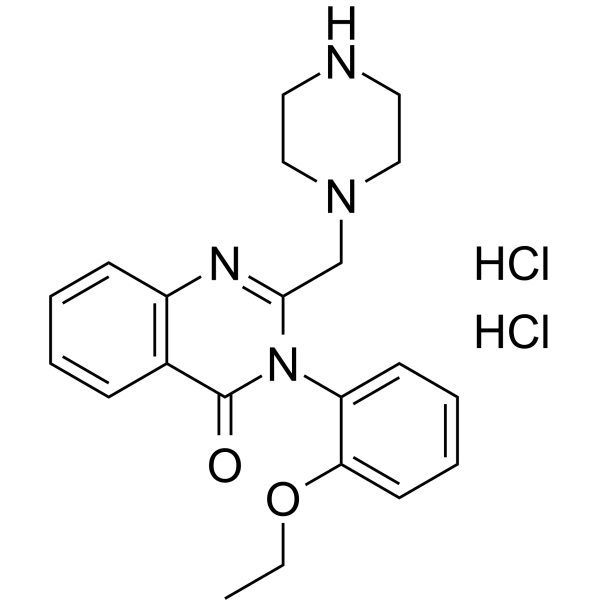
PRLX-93936 dihydrochloride is a molecular Glues that binds to and reprograms the TRIM21 ubiquitin ligase to degrade nuclear pore complexes. PRLX-93936 dihydrochloride binds to TRIM21, forms a ternary complex with TRIM21 and NUP98, and mediates the ubiquitination and proteasomal degradation of NUP98 and other nuclear pore complex proteins. PRLX-93936 dihydrochloride induces the loss of short-lived cytoplasmic mRNA transcripts, triggers cancer cell apoptosis (Apoptosis), and inhibits the activated Ras pathway. PRLX-93936 dihydrochloride inhibits HIF-1 under hypoxic conditions (IC50 = 0.09 μM in cell-based reporter gene assay). PRLX-93936 dihydrochloride suppresses tumor growth in mouse models and improves survival rates in mouse models of multiple myeloma. PRLX-93936 dihydrochloride is applicable to research related to pancreatic cancer and multiple myeloma .
loading...
    loading...
Cat. No.: HY-160777
CAS No.: 1630820-51-7
Synonyms: Galeterone 3β-imidazole
Research Areas:  

Cancer

VNPP433-3β (Galeterone 3β-imidazole) is an orally active molecular glue degrader, which degrades androgen receptor (AR) and its splice variants (AR-Vs) and MAP kinase-interacting serine/threonine protein kinase Mnk1/2. VNPP433-3β induces cell apoptosis. VNPP433-3β inhibits tumor growth in the CWR22Rv1 xenograft mouse model. VNPP433-3β can be used for the study of castration resistant prostate cancer (CRPC) and pancreatic ductal adenocarcinoma (PDAC) .
loading...
    loading...
Cat. No.: HY-173351
CAS No.: 2901806-51-5
Research Areas:  

Cancer

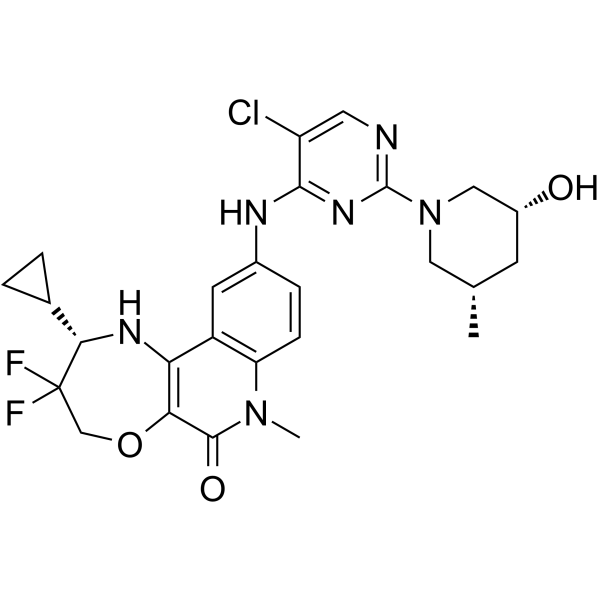
G-6599 is a covalent molecular glue degrader targeting SMARCA2/SMARCA4, with DC50 values of 0.017 nM and 0.057 nM against SMARCA2 and SMARCA4 in SW1573 cells, respectively. G-6599 exhibits proteome selectivity for SMARCA2, SMARCA4, and PBRM1. G-6599 induces the assembly of the SMARCA2-FBXO22 ternary complex, enabling ubiquitination and proteasomal degradation of both proteins via the ubiquitin-proteasome pathway without the need for biotransformation. G-6599 shows antiproliferative effects in relevant cancer cell models. G-6599 can be used for research on androgen-dependent prostate cancer and SMARCA4-mutant non-small cell lung cancer .
loading...
    loading...
Cat. No.: HY-P1571
CAS No.: 158475-79-7
Synonyms: NP 396
Target:  

Arenavirus

Research Areas:  

Inflammation/Immunology

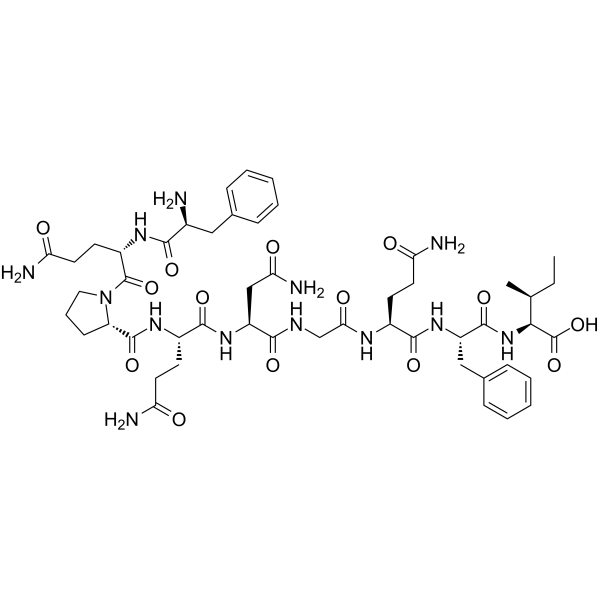
Nucleoprotein (396-404) is the 396 to 404 fragment of lymphocytic choriomeningitis virus (LCMV). Nucleoprotein (396-404) is the H-2D(b)-restricted immunodominant epitope and can be used as a molecular model of viral antigen .
loading...
    loading...
Cat. No.: HY-146185
CAS No.: 2378853-66-6
Purity:  99.61%
Target:  

Molecular Glues BCL6

Research Areas:  

Cancer

CCT373566 is an orally active BCL6 Molecular glue degrader with a DC50 of 0.7 nM. CCT373566 induces proteasomal degradation of BCL6 by promoting the formation of higher-order BCL6 complexes recognizable by E3 ligases. CCT373566 reduces tumor growth in lymphoma xenograft models. CCT373566 can be used in research related to diffuse large B-cell lymphoma .
loading...
    loading...
Cat. No.: HY-17655
TBE56, a molecular glue, is a BACH1 degrader, with an EC50 of 44 nM. TBE56 is a weak NRF2 inducer and the biotinylated TBE31. TBE56 interacts and promotes the degradation of BACH1 via a mechanism involving the E3 ligase FBX022. TBE56 reduces intracellular Fe 2+ accumulation, ROS generation, and malondialdehyde (MDA) content, while increasing GSH/GSSG ratio and upregulating GPX4 in Prominin-2-overexpressed BMSCs. TBE56 significantly ameliorates intervertebral disc degeneration (IVDD) in puncture-induced SD rat IVDD model. TBE56 can be used for the study of intervertebral disc degeneration (IVDD) .
loading...
    loading...
Cat. No.: HY-177435
Target:  

FAP

Research Areas:  

Inflammation/Immunology

FAPI-800CW is a near-infrared (NIR) fluorescent-labeled fibroblast activation protein (FAP) inhibitor. FAPI-800CW shows specific uptake in inflamed paws in collagen-induced arthritis (CIA) model mice. FAPI-800CW can be used for in vivo molecular imaging of FAP expression in inflammatory diseases such as rheumatoid arthritis (RA) to monitor joint inflammation and disease activity .
loading...
    loading...
Cat. No.: HY-172930
CAS No.: 2991021-08-8
PVTX-405 is a selective and oral active IKZF2 molecular glue degrader with a DC50  of  0.7 nM and a Dmax of 91%. PVTX-405 enhances degradation efficiency, significantly reduces off-target degradation, and alleviates hERG inhibition with IC50 of 48 µM. PVTX-405 significantly inhibits the growth of MC38 tumors, with greater synergistic anti-cancer efficacy in combination with immune checkpoint therapies (ICTs) (anti-PD1 or anti-LAG3) in the MC38 mouse tumor xenograft model using Crbn 391V C57BL/6 mice .
loading...
    loading...
Cat. No.: HY-P10792
CAS No.: 1644155-35-0
Target:  

EGFR

Research Areas:  

Cancer

HER2-targeted peptide H6F is a HER2 targeting peptide that binds to HER2 to target breast cancer cells, with the amino acid sequence YLFFVFER. The HER2-targeted peptide H6F can be conjugated with the bifunctional chelating agent hydrazinonicotinamide (HYNIC) for radiolabeling with 99mTc. Single-photon emission computed tomography (SPECT) imaging shows that the labeled HER2-targeted peptide H6F specifically accumulates in HER2-positive MDA-MBA-453 tumor-bearing mice models. The HER2-targeted peptide H6F can be used for tumor molecular imaging studies .
loading...
    loading...
Cat. No.: HY-108610C
CAS No.: 83542-43-2
Synonyms: (S)-ET-18-OCH3
Target:  

Apoptosis

Research Areas:  

Cancer

(S)-Edelfosine ((S)-ET-18-OCH3) is the (S)-enantiomer of Edelfosine (ET-18-OCH3) (HY-108610C). Edelfosine is a selective antitumour lipid targeting apoptosis through intracellular activation of Fas/CD95 Death receptor .
loading...
    loading...
Cat. No.: HY-113553
CAS No.: 102185-28-4
Synonyms: (p-Aminophenyl)phosphocholine; p-Aminophenylphosphorylcholine; 4-APPC
Research Areas:  

Others

4-Aminophenylphosphorylcholine ((p-Aminophenyl) phosphocholine; p-Aminophenylphosphorylcholine; 4-APPC) is a phosphatidylcholine derivative that serves as a coupling ligand and antigen probe. When conjugated with gold nanoclusters, the phosphocholine head epitope of 4-Aminophenylphosphorylcholine is specifically recognized by anti-Pc IgM and CRP. It can be covalently coupled to human serum albumin (HSA) or glutathione-protected gold nanoclusters (Au-GSH) via covalent chemistry, respectively. The 4-Aminophenylphosphorylcholine-HSA complex acts as an ELISA coating antigen for detecting endogenous anti-Pc IgM antibodies in plasma; 4-Aminophenylphosphorylcholine-modified Au-GSH can be used to construct an ultra-stealthy NIR-II fluorescent gold nanocluster probe for imaging-related studies in mouse breast cancer and colon cancer models .
loading...
    loading...
Cat. No.: HY-70006A
CAS No.: 1239339-17-3
Synonyms: TOK-001 hydrochloride; VN-124-1 hydrochloride
Galeterone (TOK-001) hydrochloride is a potent, orally active molecular glue degrader, which degrades androgen receptor (AR) and its splice variants (AR-Vs) and MAP kinase-interacting serine/threonine protein kinase Mnk1/2. Galeterone hydrochloride also functions as a CYP17 inhibitor (IC50 = 47 nM). Galeterone hydrochloride induces cell apoptosis. Galeterone hydrochloride inhibits tumor growth in human prostate cancer xenograft mouse models. Galeterone hydrochloride can be used for castration resistant prostate cancer (CRPC) and pancreatic ductal adenocarcinoma (PDAC) research [1][2].
loading...
    loading...
Cat. No.: HY-175845
CAS No.: 2787582-78-7
Research Areas:  

Cancer

Scr-IN-2 is an effective c-Scr inhibitor with an IC50 of 302 nM. Scr-IN-2 exhibits nanomolar-level anti-breast cancer activity. Scr-IN-2 increases the level of ROS in cells, induces mitochondrial damage, G1 phase arrest, and apoptosis. Scr-IN-2 can be used in the research of breast cancer .
loading...
    loading...
Cat. No.: HY-177750
CAS No.: 2417647-40-4
TD-522 is a potent and selective molecular glue GSPT1 degrader, with a DC50 of 0.269 nM. TD-522 exhibits strong anti-proliferative effects and induces apoptosis in acute myeloid leukemia (AML) and diffuse large B-cell lymphoma (DLBCL) cells. TD-522 suppresses tumor growth in a TMD-8 xenograft model. TD-522 can be used for AML and DLBCL research .
loading...
    loading...
Cat. No.: HY-13072R
CAS No.: 871357-89-0
Synonyms: AS-703569 (Standard); R-763 (Standard)
Research Areas:  

Cancer

Cenisertib (Standard) is the analytical standard of Cenisertib. This product is intended for research and analytical applications. Cenisertib (AS-703569) is an ATP-competitive multi-kinase inhibitor that blocks the activity of Aurora-kinase-A/B, ABL1, AKT, STAT5 and FLT3. Cenisertib induces major growth-inhibitory effects by blocking the activity of several different molecular targets in neoplastic mast cells (MC). Cenisertib inhibits tumor growth in xenograft models of pancreatic, breast, colon, ovarian, and lung tumors and leukemia .
loading...
    loading...
Cat. No.: HY-156675
CAS No.: 2119725-22-1
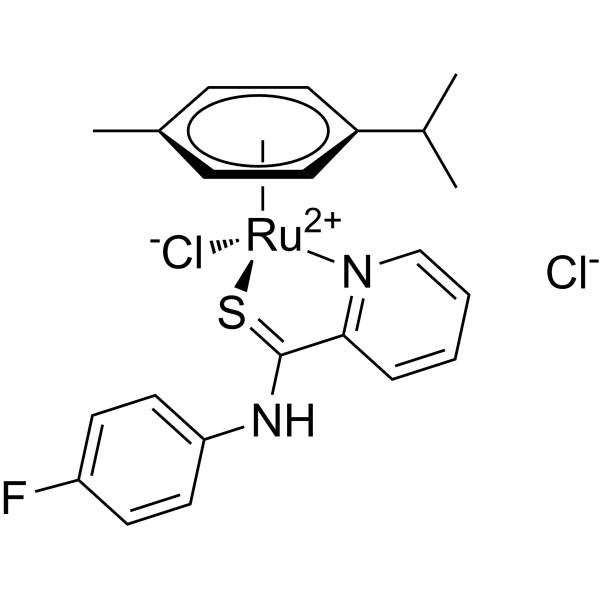
Plecstatin‑1 is a metal complex that drives the aggregation and collapse of the plectin network, and disrupts the cytoskeletal structures of α‑tubulin and F‑actin. Plecstatin-1 triggers oxidative stress, mediates the phosphorylation of eIF2α, and induces molecular features associated with immunogenic cell death, including calreticulin membrane exposure, membrane localization of HSP70/HSP90, ATP secretion, and HMGB‑1 release. Plecstatin-1 induces apoptosis via the intrinsic mitochondrial pathway and exerts anti-invasive activity. Plecstatin‑1 inhibits sphere proliferation and reduces clonogenicity in the 3D tumor spheroid model of colon cancer cells. Plecstatin-1 is applicable to relevant research on colorectal cancer .
loading...
    loading...
Cat. No.: HY-179221
Target:  

HIV

Research Areas:  

Infection

HIV-1-IN-89 (Compound 20a-D) is a prodrug of 20a (an HIV-1 protease inhibitor). HIV-1-IN-89 has better pharmacokinetic properties. HIV-1-IN-89 can be used for studying the resistance to HIV-1 .
loading...
    loading...
Cat. No.: HY-178941
DHODH-IN-32 (Compound A1) is a DHODH inhibitor. DHODH-IN-32 shows significant cytotoxicity against NCI-60 cell lines, especially being sensitive to breast cancer, prostate cancer and leukemia cell lines. DHODH-IN-32 can induce cell apoptosis by activating the Caspase pathway. DHODH-IN-32 causes G0/G1 phase cell cycle arrest and inhibits cellular metabolism by ROS. DHODH-IN-32 exhibits significant anti-tumor properties in mouse breast cancer models. DHODH-IN-32 can be used for the study of breast cancer .
loading...
    loading...

