37 Results for "

sugar phosphate ester intermediate

" in MedChemExpress (MCE) Product Catalog:
Products (37)

37 Results for "sugar phosphate ester intermediate" in MCE Product Catalog:

Cat. No.: HY-111095S2
CAS No.: 1224440-85-0
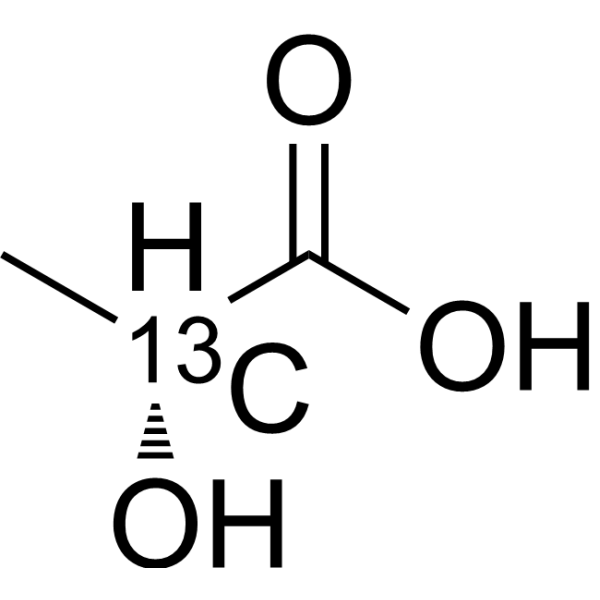
Synonyms: (R)-2-Hydroxypropionic acid-13C-1; D-Lactic acid-13C-1
D-(-)-Lactic acid- 13C-1 is the 13C labeled D-(-)-Lactic acid. D-(-)-Lactic acid is a normal intermediate in the fermentation (oxidation, metabolism) of sugar. D-(-)-Lactic acid is identified to be a competitive inhibitor of ProDH (proline dehydrogenase) in plants .
loading...
    loading...
Cat. No.: HY-128753S7
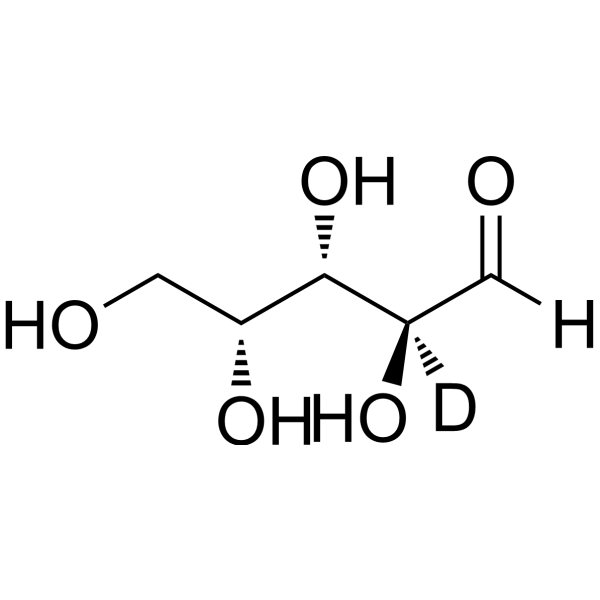
D-Lyxose-d-1 is the deuterium labeled D-Lyxose. D-Lyxose is an endogenous metabolite. D-Lyxose is a rare pentose sugar with significant potential for drug synthesis. D-Lyxose can be used as a starting material for anti-tumor drugs such as alpha galactose ceramide immunostimulants. D-Lyxose can be used as a precursor for L-nucleoside analogs for the development of antiviral drugs. D-Lyxose can be used as a synthetic intermediate for other rare sugars such as L-ribose .
loading...
    loading...
Cat. No.: HY-128748R
CAS No.: 56-82-6
DL-Glyceraldehyde (Standard) is the analytical standard of DL-Glyceraldehyde. This product is intended for research and analytical applications. DL-Glyceraldehyde is a bioactive substance involved in cellular energy metabolism and a key intermediate in sugar metabolism pathways (such as glycolysis and gluconeogenesis). During glycolysis, DL-Glyceraldehyde is converted by enzymes into other metabolites to provide energy for cells; during gluconeogenesis, DL-Glyceraldehyde participates in the synthesis of glucose as a precursor. In the field of medical research, DL-Glyceraldehyde can be used to study diseases related to sugar metabolism, such as diabetes, tumors, etc .
loading...
    loading...
Cat. No.: HY-128753R
CAS No.: 1114-34-7
D-Lyxose (Standard) is the analytical standard of D-Lyxose. This product is intended for research and analytical applications. D-Lyxose is an endogenous metabolite. D-Lyxose is a rare pentose sugar with significant potential for drug synthesis. D-Lyxose can be used as a starting material for anti-tumor drugs such as alpha galactose ceramide immunostimulants. D-Lyxose can be used as a precursor for L-nucleoside analogs for the development of antiviral drugs. D-Lyxose can be used as a synthetic intermediate for other rare sugars such as L-ribose .
loading...
    loading...
Cat. No.: HY-128753S3
CAS No.: 70849-22-8
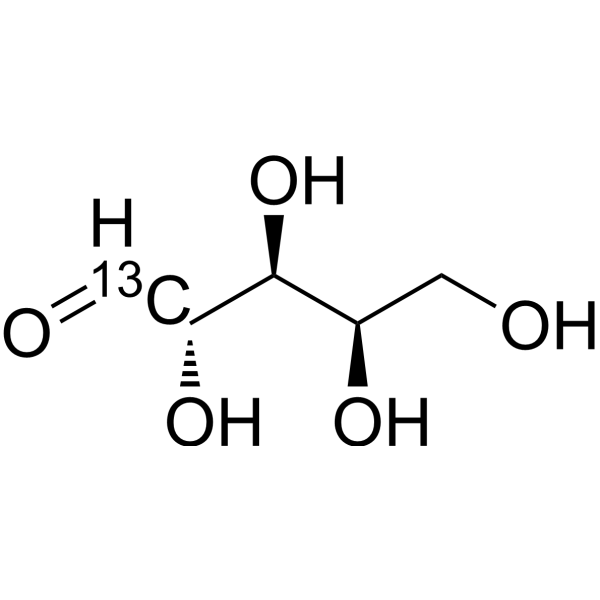
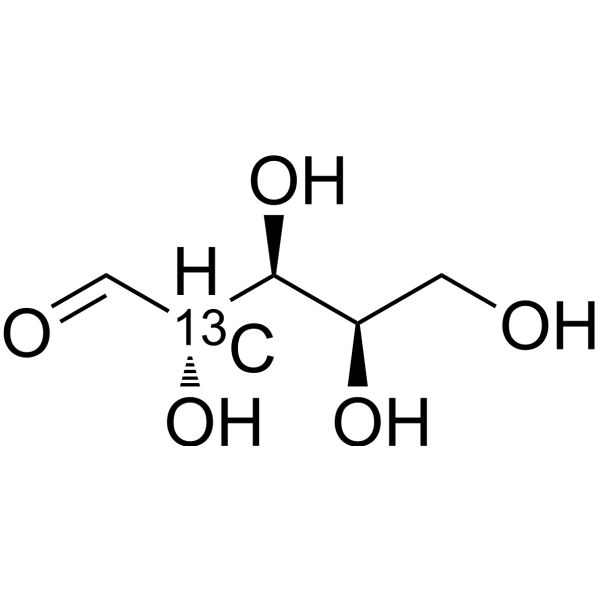
D-Lyxose- 13C-2 is the 13C labeled D-Lyxose. D-Lyxose is an endogenous metabolite. D-Lyxose is a rare pentose sugar with significant potential for drug synthesis. D-Lyxose can be used as a starting material for anti-tumor drugs such as alpha galactose ceramide immunostimulants. D-Lyxose can be used as a precursor for L-nucleoside analogs for the development of antiviral drugs. D-Lyxose can be used as a synthetic intermediate for other rare sugars such as L-ribose .
loading...
    loading...
Cat. No.: HY-128753S4
CAS No.: 83379-39-9
D-Lyxose- 13C-3 is the 13C labeled D-Lyxose. D-Lyxose is an endogenous metabolite. D-Lyxose is a rare pentose sugar with significant potential for drug synthesis. D-Lyxose can be used as a starting material for anti-tumor drugs such as alpha galactose ceramide immunostimulants. D-Lyxose can be used as a precursor for L-nucleoside analogs for the development of antiviral drugs. D-Lyxose can be used as a synthetic intermediate for other rare sugars such as L-ribose .
loading...
    loading...
Cat. No.: HY-128753S5
CAS No.: 139657-61-7
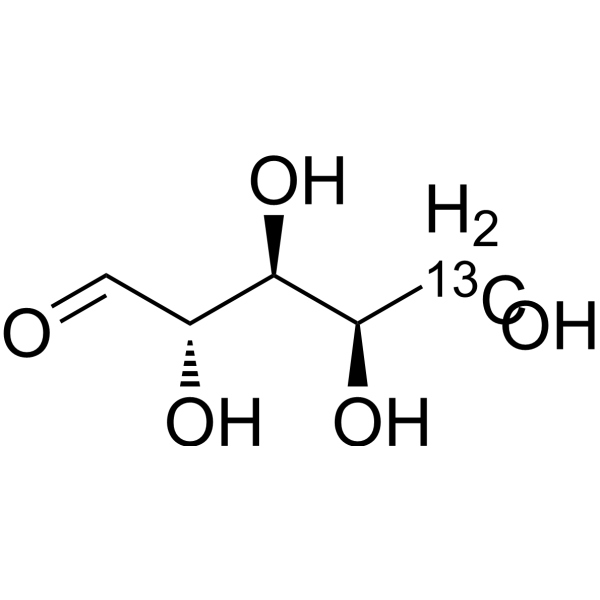
D-Lyxose- 13C-4 is the 13C labeled D-Lyxose. D-Lyxose is an endogenous metabolite. D-Lyxose is a rare pentose sugar with significant potential for drug synthesis. D-Lyxose can be used as a starting material for anti-tumor drugs such as alpha galactose ceramide immunostimulants. D-Lyxose can be used as a precursor for L-nucleoside analogs for the development of antiviral drugs. D-Lyxose can be used as a synthetic intermediate for other rare sugars such as L-ribose .
loading...
    loading...
Cat. No.: HY-W725496
CAS No.: 103213-47-4
D-Fructose 6-phosphate dipotassium is an endogenous metabolite in saliva that affects cell growth and autophagy; it can be hydrolyzed by Fructose-1,6-bisphosphatase (FBPase). D-Fructose 6-phosphate dipotassium can be converted into D-glucose 6-phosphate (HY-112537) by the action of phosphoglucose isomerase. D-Fructose 6-phosphate dipotassium is a sugar intermediate in the glycolysis pathway and the pentose phosphate pathway. D-Fructose 6-phosphate dipotassium can be used to study Lewy body dementia .
loading...
    loading...
Cat. No.: HY-113407C
Target:  

Drug Intermediate

Research Areas:  

Metabolic Disease

D-Fructose-6-phosphate disodium monohydrate is an intermediate of Glycolysis. D-Fructose-6-phosphate disodium monohydrate is the precursor for the synthesis of amino sugars, such as galactosamine and glucosamine .
loading...
    loading...
Cat. No.: HY-E71497
Research Areas:  

Others

2-Dehydro-3-deoxy-D-arabinonate dehydratase (EC 4.2.1.141) participates in pentose oxidation pathways that convert pentose sugars to the tricarboxylic acid cycle intermediate 2-oxoglutarate.
loading...
    loading...
Cat. No.: HY-113272A
CAS No.: 551-85-9
Synonyms: D-Ru5P
Research Areas:  

Metabolic Disease

D-Ribulose 5-phosphate is an important sugar phosphate that participates in multiple metabolic pathways. D-Ribulose 5-phosphate serves as an intermediate in the pentose phosphate pathway and also acts as a substrate for D-Arabinose 5-phosphate isomerase (GutQ/KdsD) .
loading...
    loading...
Cat. No.: HY-156231
CAS No.: 2855124-81-9
Target:  

Drug Intermediate

Research Areas:  

Others

Glc-GlcNAc-oxazoline is a disaccharide intermediate that can introduce an azide side chain onto the sugar moiety. Glc-GlcNAc-oxazoline can be used in studies related to the synthesis of antibody-drug conjugates (ADC) via click chemistry .
loading...
    loading...
Cat. No.: HY-113407CS
D-Fructose-6-phosphate disodium monohydrate- 13C6 is the 13C-labeled D-Fructose-6-phosphate disodium monohydrate (HY-113407C). D-Fructose-6-phosphate disodium monohydrate is an intermediate of Glycolysis. D-Fructose-6-phosphate disodium monohydrate is the precursor for the synthesis of amino sugars, such as galactosamine and glucosamine .
loading...
    loading...
Cat. No.: HY-184860
CAS No.: 3913-64-2
Synonyms: (2S)-Hydroxypropanal
Target:  

Endogenous Metabolite

Research Areas:  

Metabolic Disease

L-Lactaldehyde ((2S)-Hydroxypropanal) is a chiral aldehyde, metabolic intermediate, and enzyme substrate. L-Lactaldehyde is oxidized to L-lactate by NAD-dependent lactaldehyde dehydrogenase. L-Lactaldehyde is reduced to L-1,2-propanediol by NADH/NADPH-dependent oxidoreductases. L-Lactaldehyde is used in studies of microbial sugar metabolism and carbonyl metabolism .
loading...
    loading...
Cat. No.: HY-113407B
CAS No.: 918149-30-1
D-Fructose 6-phosphate disodium hydrate is an endogenous metabolite. D-Fructose 6-phosphate disodium hydrate can be obtained by hydrolysis of Fructose-1,6-bisphosphatase (FBPase). D-Fructose-6-phosphate disodium hydrate is a sugar intermediate in the glycolysis pathway and the pentose phosphate pathway. D-Fructose-6-phosphate disodium hydrate can be used to detect glucosamine-6-phosphate synthase and TAL activities. D-Fructose 6-phosphate disodium hydrate can be used to study Lewy body dementia .
loading...
    loading...
Cat. No.: HY-134902A
Synonyms: UDP-α-6N3-glucose disodium; 6-Azidoglucose-UDP disodium
UDP-6-azido-6-Deoxy-D-Glc disodium (UDP-α-6N3-glucose; 6-Azidoglucose-UDP disodium) is a UDP-sugar donor . UDP-6-azido-6-Deoxy-D-Glc disodium is used for the selective labeling of 5-hmC in genomic DNA. UDP-6-azido-6-Deoxy-D-Glc disodium enables glyco-diversification modification of saponin intermediates and click chemistry-based derivatization .
loading...
    loading...
Cat. No.: HY-L252
76 compounds

Carbohydrate metabolism serves as a central hub for energy supply and biosynthesis in living organisms and plays a critical role in the onset and progression of various diseases. In recent years, studies have shown that tumor cells reprogram their energy metabolism through aerobic glycolysis (the Warburg effect) to support rapid proliferation. Immune cells also rely on specific carbohydrate metabolic pathways to regulate their activation and differentiation states, while disorders such as diabetes and metabolic syndrome arise directly from dysregulation of carbohydrate metabolism. In addition, enzymes and key metabolic nodes involved in carbohydrate metabolism have become important targets for drug discovery, and therapeutic strategies targeting glycolysis, the pentose phosphate pathway, and energy metabolism are continuously advancing the treatment of cancer and metabolic diseases. Therefore, systematic analysis of carbohydrate metabolic networks and their associated metabolites is of great significance for elucidating disease mechanisms and developing novel therapeutic approaches.

The MCE Carbohydrate Metabolism Metabolite Library is constructed based on classical carbohydrate metabolic pathways and contains 76 metabolites. It systematically integrates key metabolic networks, including glycolysis, the pentose phosphate pathway, the tricarboxylic acid (TCA) cycle, monosaccharide metabolism, and sugar acid interconversions. The library comprehensively covers core metabolic nodes from glucose uptake and utilization to energy production and biosynthesis, while also incorporating important upstream and downstream intermediates. It enables accurate representation of intracellular metabolic flux dynamics and is well suited for applications such as metabolic flux analysis, target validation, and mechanistic studies. Furthermore, it provides robust support for multi-omics integration and the development of precision intervention strategies.

