



Fatty Ester Standards

- Formula: C₁₈H₃₆O₂
- Molecular Weight: 284.48
Ethyl palmitate (Standard) is the analytical standard of Ethyl palmitate. This product is intended for research and analytical applications. Ethyl palmitate, a fatty acid ethyl ester (FAEE), shows a marked preference for the synthesis of ethyl palmitate and ethyl oleate over other FAEEs in human subjects after ethanol consumption. Ethyl palmitate is used as a hair- and skin-conditioning agent.
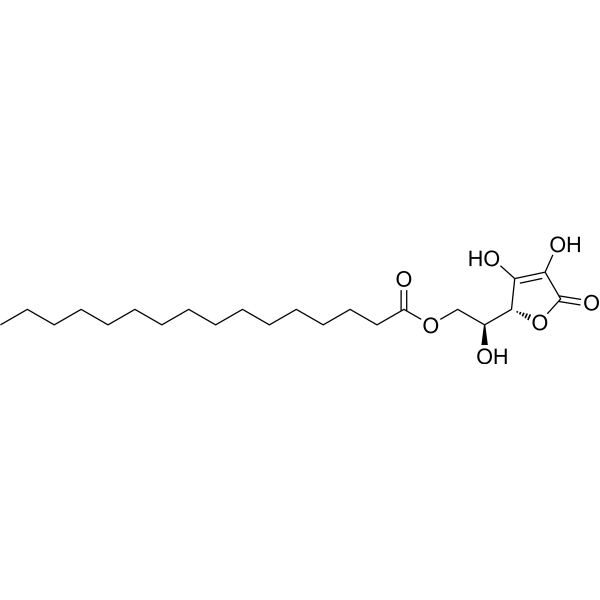
- Formula: C22H38O7
- Molecular Weight: 414.53
Ascorbyl palmitate (Standard) is the analytical standard of Ascorbyl palmitate. This product is intended for research and analytical applications. Ascorbyl palmitate is an ester formed from ascorbic acid and palmitic acid creating an vitamin C, it is also used as an antioxidant food additive.

- Formula: C21H41NO4
- Molecular Weight: 371.55
Tetradecanoylcarnitine (Standard) is the analytical standard of Tetradecanoylcarnitine. This product is intended for research and analytical applications. Tetradecanoylcarnitine is a human carnitine involved in β-oxidation of long-chain fatty acids.

- Formula: C10H18O2
- Molecular Weight: 170.25
δ-Decalactone (Standard) is the analytical standard of δ-Decalactone (HY-W016979 ). This product is intended for research and analytical applications. δ-Decalactone is a hydrophobic natural cyclic lactone aroma compound with a creamy-coconut-peach aroma. It serves as a flavoring agent and a renewable monomer for ring-opening polymerization to prepare homopolymers and amphiphilic block copolymers, and it can self-assemble into degradable micelles for the encapsulation of hydrophobic molecules. δ-Decalactone is used in food flavoring and polymer materials research.

- Formula: C20H40O2
- Molecular Weight: 312.54
Ethyl stearate (Standard) is the analytical standard of Ethyl stearate. This product is intended for research and analytical applications. Ethyl stearate is an ester compound produced by the reaction of ethanol and stearic acid. It is commonly used as a flavoring agent in various foods such as baked goods, beverages and desserts. Ethyl stearate is also used as a fragrance ingredient in the manufacture of perfume, cologne and personal care products. Additionally, it has applications in industrial settings such as the production of lubricants and plasticizers.

- Formula: C₂₁H₃₂O₂
- Molecular Weight: 316.48
Eicosapentaenoic acid methyl ester (Standard) is the analytical standard of Eicosapentaenoic acid methyl ester (HY-W011311). This product is intended for research and analytical applications. Eicosapentaenoic acid methyl ester is a degradation product of monogalactosyldiacylglycerol (Compound 1). Compound 1 can be isolated from the marine diatom Phaeodactylum tricornutum. Compound 1 induces Apoptosis.
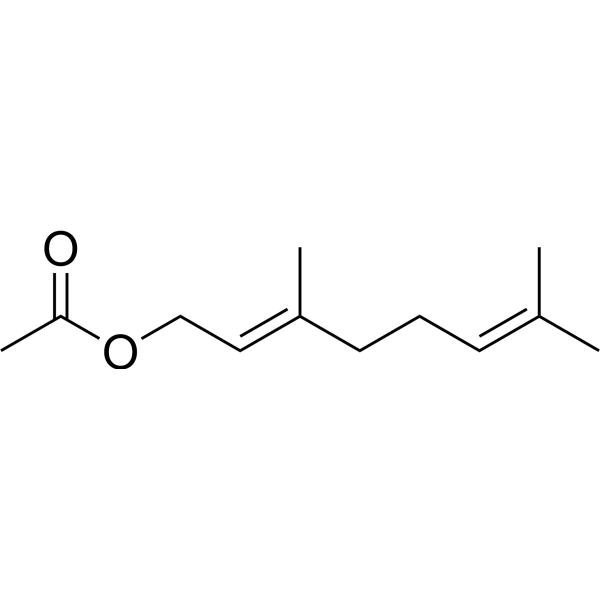
- Formula: C12H20O2
- Molecular Weight: 196.29
Geranyl acetate (Standard) is the analytical standard of Geranyl acetate. This product is intended for research and analytical applications. Geranyl acetate, an acyclic monoterpene ester derived from geraniol, is widely used in the cosmetics industry due to its pleasant scent. Geranyl acetate can induces cell apoptosis.

- Formula: C19H38O2
- Molecular Weight: 298.51
Isopropyl palmitate (Standard) is the analytical standard of Isopropyl palmitate. This product is intended for research and analytical applications. Isopropyl palmitate is an fatty acid ester. Isopropyl palmitate can be used for design and characterization of bioactive bilayer films. The bilayer membrane not only has the ability to scavenge free radicals and inhibit lipid peroxidation, but also can inhibit the growth of known foodborne pathogens. Isopropyl palmitate can be used as an excipient, such as lubricant, oily carrier, solvent, controlled-release transdermal film. Pharmaceutical excipients, or pharmaceutical auxiliaries, refer to other chemical substances used in the pharmaceutical process other than pharmaceutical ingredients. Pharmaceutical excipients generally refer to inactive ingredients in pharmaceutical preparations, which can improve the stability, solubility and processability of pharmaceutical preparations. Pharmaceutical excipients also affect the absorption, distribution, metabolism, and elimination (ADME) processes of co-administered drugs.

- Formula: C32H64O2
- Molecular Weight: 480.86
Hexadecyl palmitate (Standard) is the analytical standard of Hexadecyl palmitate. This product is intended for research and analytical applications. Hexadecyl palmitate is an organic compound commonly used in the cosmetic industry as an emollient, thickener and skin conditioning agent. Cetyl palmitate is derived from a mixture of cetyl alcohol (a fatty alcohol) and palmitic acid (a saturated fatty acid). It is often used in skin care products such as moisturizers, lotions, and creams to improve their texture and Helps them glide smoothly on the skin. In addition to its use in cosmetics, cetyl palmitate is used in other industries including pharmaceuticals, food additives and lubricants. Overall, it's considered safe for use in personal care products, but like any other ingredient, it may cause irritation or an allergic reaction in some people.

- Formula: C16H28O2
- Molecular Weight: 252.39
(9Z,11E)-Prodlure (Standard) is the analytical standard of (9Z,11E)-Prodlure. This product is intended for research and analytical applications. (9Z,11E)-Prodlure ((9Z,11E)-Tetradecadien-1-yl acetate) is the main component of the sex pheromone of female Spodoptera littoralis[1].

- Formula: C15H29NO4
- Molecular Weight: 287.40
L-Octanoylcarnitine (Standard) is the analytical standard of L-Octanoylcarnitine. This product is intended for research and analytical applications. L-Octanoylcarnitine is a plasma metabolite and a physiologically active form of octanoylcarnitine. L-Octanoylcarnitine can be used for the research of breast cancer.
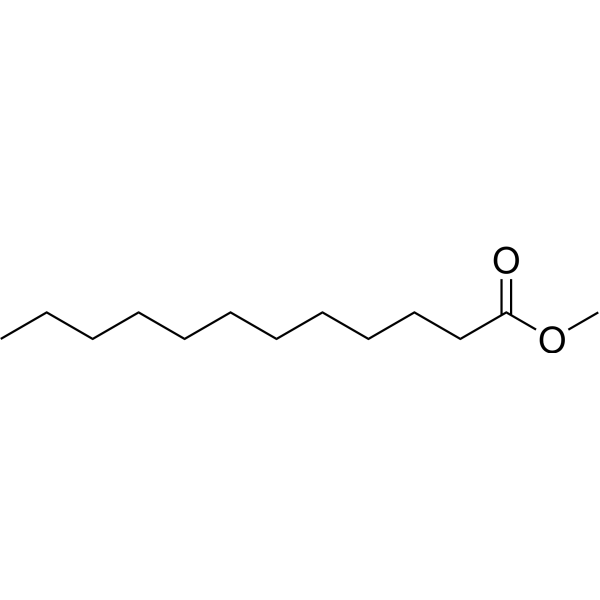
- Formula: C₁₃H₂₆O₂
- Molecular Weight: 214.34
Methyl laurate (Standard) is the analytical standard of Methyl laurate. This product is intended for research and analytical applications. Methyl laurate, a 12-carbon saturated fatty acid, is an esterified version of lauric acid.
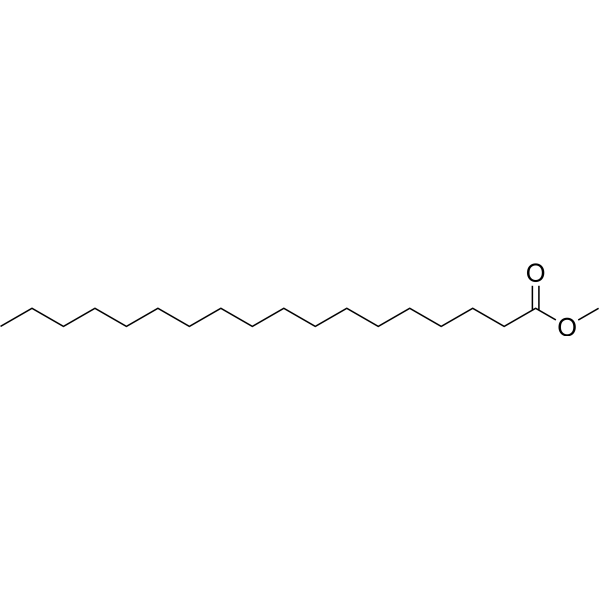
- Formula: C₁₉H₃₈O₂
- Molecular Weight: 298.50
Methyl stearate (Standard) is the analytical standard of Methyl stearate. This product is intended for research and analytical applications. Methyl stearate, isolated from Rheum palmatum L. is a compopent of of soybean and rapeseed biodiesels.

- Formula: C₁₅H₃₀O₂
- Molecular Weight: 242.40
Methyl myristate (Standard) is the analytical standard of Methyl myristate. This product is intended for research and analytical applications. Methyl myristate is a saturated fatty acid methyl ester obtained from the esterification of myristic acid. Methyl myristate shows a high melanin induction in B16F10 melanoma.
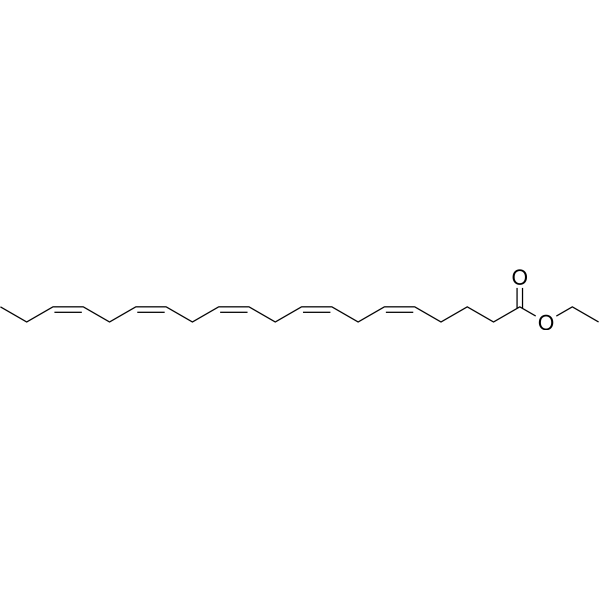
- Formula: C22H34O2
- Molecular Weight: 330.50
Eicosapentaenoic acid ethyl ester (Standard) is the analytical standard of Eicosapentaenoic acid ethyl ester. This product is intended for research and analytical applications. Eicosapentaenoic acid ethyl ester is an omega-3 fatty acid agent.

- Formula: C16H32O2
- Molecular Weight: 256.42
Tetradecyl acetate (Standard) is the analytical standard of Tetradecyl acetate. This product is intended for research and analytical applications. Tetradecyl acetate is a sex pheromone produced by Ctenopseustis obliquana females. Tetradecyl acetate can be used to disrupt the mating of pest species[1][2].

- Formula: C7H14O3
- Molecular Weight: 146.19
Methyl 2-hydroxy-4-methylvalerate (Standard) is the analytical standard of Methyl 2-hydroxy-4-methylvalerate. This product is intended for research and analytical applications. Methyl 2-hydroxy-4-methylvalerate is one of dominant volatile compounds in Zhenjiang aromatic vinegar. Methyl 2-hydroxy-4-methylvalerate is used for charting flavour biosynthesis networks of vinegar microbiota[1].

- Formula: C34H66O4
- Molecular Weight: 538.89
Flumethrin (Standard) is the analytical standard of Flumethrin. This product is intended for research and analytical applications. 9-PAHSA is an orally active endogenous GPR120 agonist (EC50=18 μM). 9-PAHSA significantly inhibits LPS-induced inflammatory responses by blocking the NF-κB pathway. 9-PAHSA induces adipocyte browning, enhances glucose uptake and reduces lipid accumulation, while improving mitochondrial function and the survival rate of steatotic hepatocytes. In terms of neuroprotection, 9-PAHSA regulates the expression of REST and BDNF in the prefrontal cortex of diabetic mice, and effectively prevents spatial working memory deficits and abnormal social behaviors. 9-PAHSA does not directly regulate insulin secretion or improve systemic insulin sensitivity, and possesses specific anti-inflammatory, metabolic regulatory and neuroprotective properties. 9-PAHSA can be used in the research of diabetes-related cognitive impairment, obesity and non-alcoholic fatty liver disease.

- Formula: C29H49NO5
- Molecular Weight: 491.70
Ginsenoside F2 (Standard) is the analytical standard of Ginsenoside F2. This product is intended for research and analytical applications. Ginsenoside F2, a metabolite from Ginsenoside Rb1, induces apoptosis accompanied by protective autophagy in breast cancer stem cells.

- Formula: C8H16O2
- Molecular Weight: 144.21
DPPC (Standard) is the analytical standard of DPPC. This product is intended for research and analytical applications. DPPC (129Y83) is a phosphoglyceride that can be used to prepare lipid monolayers, bilayers, and liposomes. DPPC is the main lipid component of pulmonary surfactant. Dppc-liposome can be effectively used as a delivery vector to induce an immune response against GSL antigen in mice.



