

52 Results for "

synaptic proteins

" in MedChemExpress (MCE) Product Catalog:
Products (52)

52 Results for "synaptic proteins" in MCE Product Catalog:

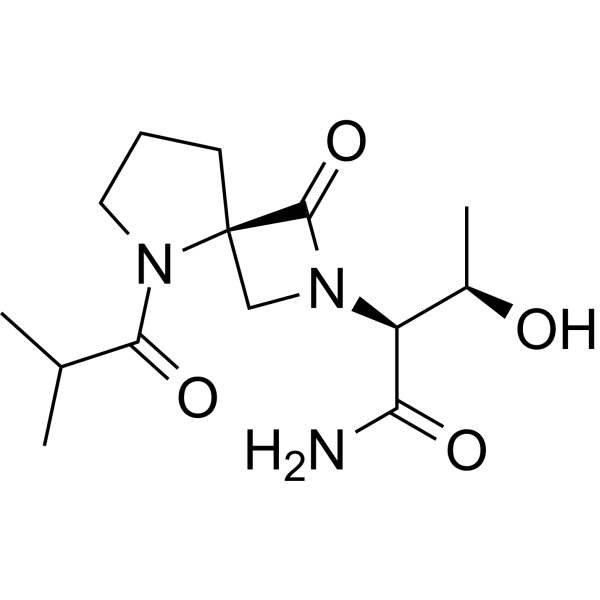
Cat. No.: HY-135741
CAS No.: 2012536-16-0
Purity:  98.77%
NYX-2925 is an orally active, blood-brain barrier-permeable NMDAR modulator, with EC50 values of 55 pM, 28 fM, 11 pM and 55 pM against NR2A, NR2B, NR2C and NR2D, respectively . NYX-2925 enhances synaptic plasticity, long-term potentiation, metaplasticity, structural plasticity, learning ability, memory capacity and circadian rhythm amplitude. NYX-2925 regulates the signaling pathways of Src kinase, EIF2, mTOR, CDK5 and protein kinase A (PKA). NYX-2925 increases the levels of PSD-95, GluA1, activated Src and synaptic GluN2B . NYX-2925 is used in the research of neuropathic pain, fibromyalgia, painful diabetic peripheral neuropathy, post-traumatic stress disorder, cognitive impairment, depression, age-related cognitive decline and NMDAR-mediated central nervous system diseases .
loading...
    loading...
Cat. No.: HY-P1297
CAS No.: 120066-38-8
Target:  

CRFR

Research Areas:  

Neurological Disease

CRF(6-33)(human) is a CRF binding protein (CRF-BP) ligand inhibitor. CRF(6-33)(human) competitively binds the CRF-BP but not the post-synaptic CRF receptors. CRF(6-33)(human) has anti-obesity effect .
loading...
    loading...
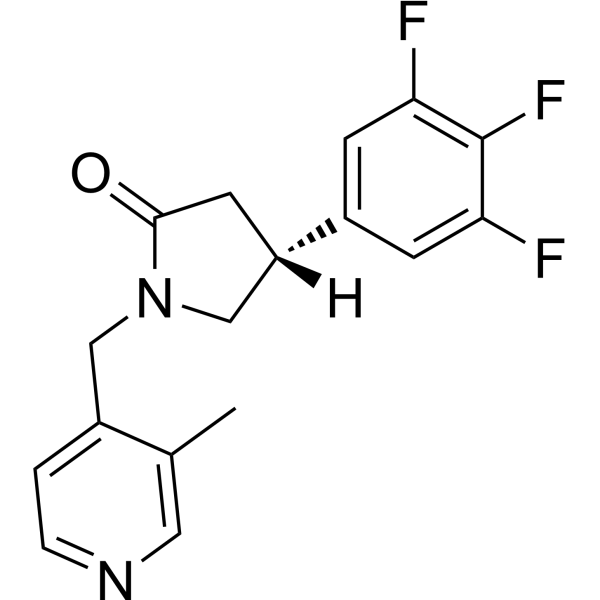
Cat. No.: HY-136873
CAS No.: 2242957-52-2
Purity:  99.62%
Research Areas:  

Neurological Disease

UCB-J is a ligand for synaptic vesicle protein 2A (SV2A) with pIC50 values for human and rat SV2A of 8.15 and 7.6 respectively. UCB-J can be used to display and quantify the total synaptic density throughout the brain .
loading...
    loading...
Cat. No.: HY-137108
CAS No.: 160385-87-5
Target:  

PKA PKG

Research Areas:  

Neurological Disease

Sp-8-pCPT-cGMPS is a potent cyclic guanosine monophosphate-gated channel agonist and a lipophilic activator of protein kinase G (types I α, I β, and II) and protein kinase A type II with excellent cell membrane permeability and phosphodiesterase stability. Sp-8-pCPT-cGMPS can be used to study the role of cGMP in neural plasticity and synaptic transmission .
loading...
    loading...
Cat. No.: HY-B0106S
CAS No.: 1133229-29-4
Synonyms: UCB L059-d6
Levetiracetam-d6 is the deuterium labeled Levetiracetam. Levetiracetam, an antiepileptic agent, binds the synaptic vesicle protein SV2A. Levetiracetam enhances Temozolomide effect on glioblastoma stem cell proliferation and apoptosis. Levetiracetam modulates HDAC levels ultimately silencing MGMT, thus increasing Temozolomide effectiveness. A chemosensitizer agent .
loading...
    loading...
Cat. No.: HY-109009A
CAS No.: 1294001-37-8
Synonyms: (S)-UCB-0942
Target:  

GABA Receptor

Research Areas:  

Neurological Disease

(S)-Padsevonil is the S-enantiomer of Padsevonil (HY-109009).Padsevonil (UCB0942) is a potent antiepileptic agent that selectively acts on presynaptic and postsynaptic targets. Padsevonil binds to synaptic vesicular protein 2 (SV2) with high affinity. Padsevonil is also a positive allosteric modulator and partial agonist of GABAAR, with high potency against α1 and α5 receptors. Padsevonil has antiepileptic effects in a variety of rodent models .
loading...
    loading...
Cat. No.: HY-176866
CAS No.: 2222756-46-7
Target:  

HDAC

Research Areas:  

Neurological Disease

Rodin-A is an orally active, brain-penetrant and selective histone deacetylase (HDAC)-co-repressor of repressor element-1 silencing transcription factor (CoREST) complex inhibitor with an IC50 value of 1.80 μM for the CoREST complex, 0.15 μM for HDAC1, and 0.43 μM for HDAC2. Rodin-A increases the acetylation level of histone H3K9, upregulates the expression of neuron-related genes, thereby promoting the increase in dendritic spine density, the colocalization of synaptic proteins (SV2A and PSD95), and the improvement of hippocampal long-term potentiation (LTP), exerting synaptic protection and repair activity. Rodin-A is promising for research of neurodegenerative diseases related to synaptic dysfunction, especially Alzheimer’s disease .
loading...
    loading...
Cat. No.: HY-P1363S1
β-Amyloid (1-42), human, Ala( 13C3, 15N) TFA is the 13C and 15N-labeled β-Amyloid (1-42), human (HY-P1363A). β-Amyloid (1-42) (Amyloid β-peptide (1-42)), human, a 42-amino acid peptide that has not been treated with HFIP, is a brain-penetrant amyloid protein fragment, which can be used in research on Alzheimer's disease and Down’s syndrome. β-Amyloid (1-42), human remaining as a monomer exhibits antioxidant and neuroprotective effects. β-Amyloid (1-42), human, after being monomericized by HFIP and dissolved in DMSO to form the stock solution, on the one hand, can form soluble oligomers (AβOs) when incubated at 4 °C, which have synaptic toxicity and neurotoxicity; on the other hand, it can be incubated at 37 °C to form insoluble fibrils, with lower neurotoxicity, and participating in the oxidative damage process. Aβ42 oligomers bind to various neuronal surface receptors (such as PrPc, mGluR5, NMDA receptors, etc.), triggering oxidative stress, calcium homeostasis imbalance, and synaptic toxicity via activating downstream signaling pathways, leading to neuronal dysfunction and death .
loading...
    loading...
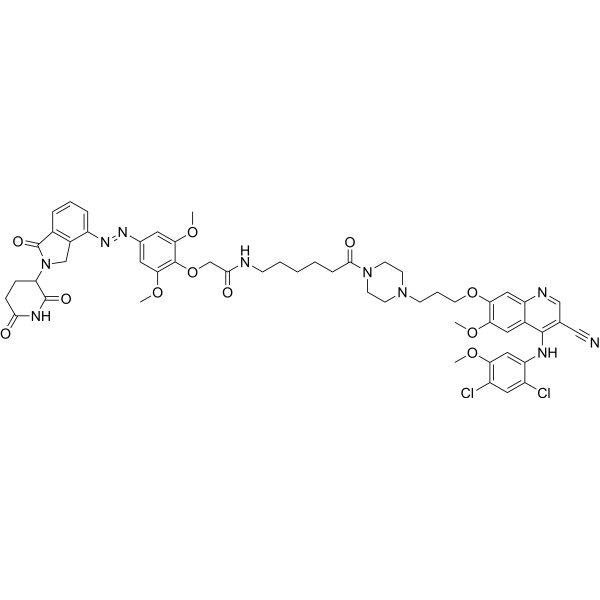
Cat. No.: HY-156104
CAS No.: 2481744-33-4
Target:  

PROTACs CaMK

Research Areas:  

Neurological Disease

CaMKIIα-PHOTAC is a photochemically targeted chimera (PHOTAC) targeting Ca2+/calmodulin-dependent protein kinase II α (CaMKIIα). Molecules such as PHOTAC can catalyze the ubiquitination and degradation of target proteins through the endogenous proteasome under specific wavelengths of light. CaMKIIα-PHOTAC reduces synaptic function under light conditions, and it attenuates the intensity of evoked field excitatory postsynaptic potentials in the mouse hippocampus in response to physiological stimuli. CaMKIIα-PHOTAC plays a critical role in maintaining long-term potentiation and memory capacity in subcellular dendritic domains .
loading...
    loading...
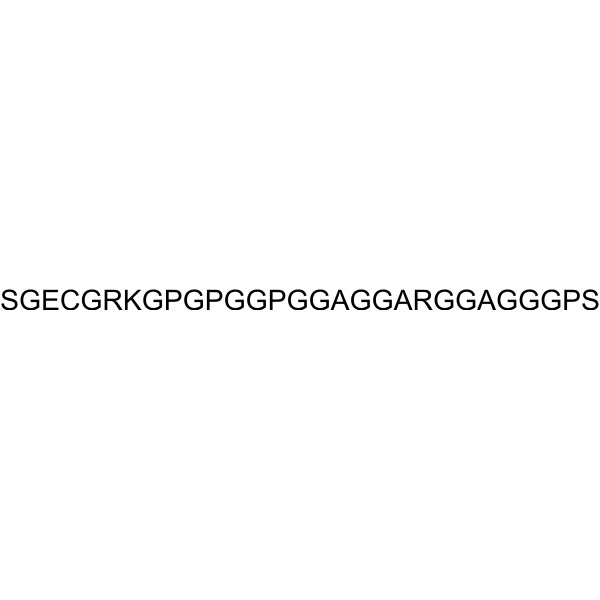
Cat. No.: HY-P1716
CAS No.: 149471-11-4
Target:  

PKC

Research Areas:  

Neurological Disease

Neuropeptide DF2 is a DRNFLRFamide neuropeptide orignally isolated from crayfish. which enhances transmitter release and stimulates the amplitude of excitatory post-synaptic potentials (EPSP) through the calcium/calmodulin-dependent protein kinase .
loading...
    loading...
Cat. No.: HY-176867
Target:  

HDAC

Research Areas:  

Neurological Disease

Rodin-B is a selective histone deacetylase (HDAC)-co-repressor of repressor element-1 silencing transcription factor (CoREST) complex inhibitor with an IC50 value of 0.50 μM for the CoREST complex, 0.27 μM for HDAC1, and 0.28 μM for HDAC2. Rodin-B increases the acetylation level of histone H3K9, upregulates the expression of neuron-related genes, thereby promoting the increase in dendritic spine density, the colocalization of synaptic proteins (SV2A and PSD95), and the improvement of hippocampal long-term potentiation (LTP), exerting synaptic protection and repair activity. Rodin-B is promising for research of neurodegenerative diseases related to synaptic dysfunction, especially Alzheimer’s disease .
loading...
    loading...
Cat. No.: HY-P2471
Target:  

Calmodulin

Research Areas:  

Neurological Disease

Neurogranin (48-76), mouse is a peptide corresponding to residues 48-76 of Neurogranin. Neurogranin, a calmodulin-binding protein, is exclusively expressed in the post-synapse, and mediates NMDAR driven synaptic plasticity by regulating the calcium-calmodulin (Ca 2+-CaM) pathway .
loading...
    loading...
Cat. No.: HY-B0106S1
CAS No.: 1217851-16-5
Synonyms: UCB L059-d3
Levetiracetam-d3 is the deuterium labeled Levetiracetam. Levetiracetam, an antiepileptic agent, binds the synaptic vesicle protein SV2A. Levetiracetam enhances Temozolomide effect on glioblastoma stem cell proliferation and apoptosis. Levetiracetam modulates HDAC levels ultimately silencing MGMT, thus increasing Temozolomide effectiveness. A chemosensitizer agent .
loading...
    loading...
Cat. No.: HY-12772R
CAS No.: 112559-91-8
Synonyms: Itraconazole metabolite Hydroxy Itraconazole (Standard); R-63373 (Standard)
Research Areas:  

Others

Levetiracetam (Standard) is the analytical standard of Levetiracetam. This product is intended for research and analytical applications. Levetiracetam, an antiepileptic agent, binds the synaptic vesicle protein SV2A. Levetiracetam enhances Temozolomide effect on glioblastoma stem cell proliferation and apoptosis. Levetiracetam modulates HDAC levels ultimately silencing MGMT, thus increasing Temozolomide effectiveness. A chemosensitizer agent .
loading...
    loading...
Cat. No.: HY-P1297A
Target:  

CRFR

Research Areas:  

Neurological Disease

CRF(6-33)(human) TFA is a CRF binding protein (CRF-BP) ligand inhibitor. CRF(6-33)(human) TFA competitively binds the CRF-BP but not the post-synaptic CRF receptors. CRF(6-33)(human) TFA has anti-obesity effect .
loading...
    loading...
Cat. No.: HY-P1057
CAS No.: 243843-43-8
Target:  

iGluR

Research Areas:  

Neurological Disease

Pep4c is an inactive control peptide for Pep2m (HY-P1058). Pep4c lacks functional activity to disrupt Protein Interacting with C Kinase 1 (PICK1)-AMPA receptor (GluA2) or N-ethylmaleimide-sensitive factor (NSF)-GluA2 interactions. Pep4c is used as a negative control in experiments to validate the specificity of Pep2m's effects on AMPA receptor trafficking and synaptic plasticity [1] [2] [3] [4] [5] [6].
loading...
    loading...
Cat. No.: HY-N8210R
CAS No.: 446-71-9
Homoeriodictyol (Standard) is the analytical standard of Homoeriodictyol (HY-N8210). This product is intended for research and analytical applications. Homoeriodictyol is an orally active, bitter-tasting flavanone that can penetrate the blood-brain barrier. Homoeriodictyol enhances synaptic-related protein expression through NCOA4-mediated ferritin autophagy. Homoeriodictyol improves memory impairment in mice by inhibiting the NLRP3 inflammasome. Homoeriodictyol protects human endothelial cells from oxidative damage by activating Nrf2 and inhibiting mitochondrial dysfunction. Homoeriodictyol enhances ROS activity and induces apoptosis, exhibiting anticancer effects. Homoeriodictyol inhibits the survival and migration of androgen-resistant prostate cancer cells in vitro. Homoeriodictyol exerts antinociceptive activity in mice in vivo .
loading...
    loading...
Cat. No.: HY-N6663R
CAS No.: 13466-78-9
3-Carene (Standard) is the analytical standard of 3-Carene (HY-N6663). This product is intended for research and analytical applications. 3-Carene is an orally active TCA cycle enzyme inhibitor. 3-Carene inhibits succinate dehydrogenase and malate dehydrogenase as well as pyruvate kinase, disrupting energy metabolism. 3-Carene disrupts cell wall and cell membrane integrity, leading to potassium ion leakage, protein leakage, membrane depolarization, ATP depletion, morphological disruption, and cell lysis. 3-Carene interferes with amino acid metabolism, pantothenate and CoA biosynthesis, purine and pyrimidine metabolism, and aminoacyl-tRNA biosynthesis. 3-Carene enhances GABA receptor-mediated synaptic responses. 3-Carene can be used in research on bacterial infections, inflammation, anxiety, and sleep disorders .
loading...
    loading...
Cat. No.: HY-136873A
CAS No.: 1604786-87-9
Research Areas:  

Neurological Disease

(Rac)-UCB-J (Compound 23) is a ligand for synaptic vesicle protein 2A (SV2A), with a pIC50 value of 8.2. (Rac)-UCB-J can be used as a PET tracer for SV2A to assist in the diagnosis of epilepsy research .
loading...
    loading...
Cat. No.: HY-FLB0106
CAS No.: 102767-28-2
Synonyms: UCB L059 solution
Levetiracetam solution is mainly composed of Levetiracetam (HY-B0106). Levetiracetam, an antiepileptic agent, binds the synaptic vesicle protein SV2A. Levetiracetam enhances Temozolomide effect on glioblastoma stem cell proliferation and apoptosis. Levetiracetam modulates HDAC levels ultimately silencing MGMT, thus increasing Temozolomide effectiveness. A chemosensitizer agent .
loading...
    loading...

